
2027 MPA Accreditation: Best Online NASPAA-Accredited Programs

Co-Founder and Chief Data Scientist
The Master of Public Administration attracts a wide range of professionals, with about 27% being early in their careers and over 70% being established, mid-career veterans. Regardless of where you are in your professional life, choosing an online MPA is a high-stakes decision. The critical question is how to find a program that employers will respect and that will actually lead to advancement. Investing your time and money in the wrong degree is a risk no one can afford.
That’s why our career planning experts, with over a decade of experience, built this guide. We focus on the single most important factor for quality: NASPAA accreditation. While other factors like program length or no-GRE options are critical, they mean little without this quality guarantee. This guide will help you find the best NASPAA accredited online programs and give you the confidence to choose the right one for your future.
What are the benefits of getting an online NASPAA-accredited MPA program?
- It prepares you for influential leadership roles in government and nonprofit organizations, where you can manage programs that drive meaningful social good.
- You can expect strong earning potential, with an average salary of $96,596 and top earners exceeding $121,500 annually.
- The online format provides the flexibility to earn this career-advancing credential without having to pause your professional life.
What can I expect from an online NASPAA-accredited MPA program?
You should expect a challenging, graduate-level curriculum that is identical in quality to what you would find in an on-campus program. The standards are just as high.
The main difference is the delivery method. Most programs offer an "asynchronous" format, which means you can complete coursework on your own schedule within a given week. Some also have "synchronous" elements, requiring you to log in for live, scheduled online class sessions. This flexibility is a major benefit, but it requires strong self-discipline to stay on track.
This gold standard is now available in many flexible formats. Many of these elite, NASPAA accredited online programs are designed to be completed in just one year, while others have removed the GRE as a barrier to entry, which we explore in our other guides. The key is that all top programs demand a serious commitment.
Where can I work with an online NASPAA-accredited MPA program?
An online NASPAA-accredited MPA opens doors to leadership roles across the public, nonprofit, and private sectors. Your specific career path will often be shaped by your chosen specialization, allowing you to target roles that fit your passion and expertise. Data on graduates with degrees in public policy and social services highlights the main employment sectors:
- Community and Social Services: This is the largest area, employing 29% of graduates in roles focused on direct community impact, program management, and advocacy.
- Management: A significant 16% of graduates work in management occupations, which span government agencies, healthcare organizations, and private corporations.
- Government: While not a separate category in this data set, a large portion of MPA graduates work in public administration. For example, 75% of urban and regional planners, a key MPA career, are employed by local government.
- Education and Healthcare: These sectors also employ a substantial number of graduates, with 9% in educational roles and 8% in healthcare practitioner and technical positions.
How much can I make with an online NASPAA-accredited MPA program?
Salaries vary based on your sector, specialization, and years of experience, but this credential is the key to unlocking the highest pay grades in public service.
As of 2024, several key career paths for MPA graduates show high earning potential:
- Political Scientist (Federal Government): Median annual salary of $151,630.
- Public Administrator: Average annual salary of $96,596, with top earners exceeding $121,500.
- Urban and Regional Planner (Architectural & Engineering Services): Median annual salary of $91,610.
- List of the Best Online NASPAA-Accredited MPA Programs for 2027 List of Programs
- How long does it take to complete an online NASPAA-accredited MPA program? Completion Time
- How does an online NASPAA-accredited MPA program compare to an on-campus program? How does an online NASPAA-accredited MPA program compare to an on-campus program?
- What is the average cost of an online NASPAA-accredited MPA program? Program Cost
- What are the financial aid options for students enrolling in an online NASPAA-accredited MPA program? Financial Aid
- What are the prerequisites for enrolling in an online NASPAA-accredited MPA program? What are the prerequisites for enrolling in an online NASPAA-accredited MPA program?
- What courses are typically in an online NASPAA-accredited MPA program? What courses are typically in an online NASPAA-accredited MPA program?
- What types of specializations are available in an online NASPAA-accredited MPA program? Specialization
- How to Choose the Best Online NASPAA-Accredited MPA Program How to Choose the Best Online NASPAA-Accredited MPA Program
- What career paths are available for graduates of an online NASPAA-accredited MPA program? Career Paths
- How does an online NASPAA-accredited MPA compare to other online graduate degrees? How does an online NASPAA-accredited MPA compare to other online graduate degrees?
- What is the job market for graduates of an online NASPAA-accredited MPA program? Job Market
List of the Best Online NASPAA-Accredited MPA Programs for 2027
How do we rank schools?
Recognizing that paying for a degree is a significant investment, our ranking methodology ensures that students can make informed decisions based on comprehensive and transparent information. The ranking draws upon reliable sources such as the IPEDS database, Peterson's database, the College Scorecard database, and The National Center for Education Statistics.
These sources provide a robust foundation of data to evaluate and rank online NASPAA-accredited MPA programs. For more details on our methodology, please visit Research.com’s methodology page.
1. University of Central Florida – Online Master of Public Administration, MPA
The University of Central Florida prepares students for public service leadership through a curriculum focused on strategic planning, policy, and financial management. The program emphasizes real-world experience, incorporating service-learning and community partnerships to cultivate practical skills for immediate career application and advancement.
- Program Length: Varies
- Required Credits to Graduate: 42
- Cost per Credit: $327.32 (in-state); $1,234.15 (out-of-state)
- Accreditation: Network of Schools of Public Policy, Affairs and Administration (NASPAA)
2. Louisiana State University – Online Master of Public Administration
Louisiana State University offers a versatile, non-thesis MPA designed to build core competencies in policy analysis, organizational leadership, and problem-solving. The program is structured to prepare both new and experienced candidates for impactful careers across the nonprofit, public, and private sectors.
- Program Length: Varies
- Required Credits to Graduate: 36
- Cost per Credit: $730
- Accreditation: Network of Schools of Public Policy, Affairs, and Administration (NASPAA)
3. University of North Dakota – Master's in Public Administration MPA
The University of North Dakota focuses on developing public policy leaders who can navigate the complex ethical and managerial challenges facing modern organizations. The curriculum provides a strong foundation in budgeting and human resources, with a unique option to add a health administration focus.
- Program Length: 2 years
- Required Credits to Graduate: 36
- Cost per Credit: $536.27
- Accreditation: Network of Schools of Public Policy, Affairs, and Administration (NASPAA)
4. The Pennsylvania State University - World Campus – Master of Public Administration
Focused on organizational governance, finance, and administration, the practice-oriented MPA at Penn State World Campus equips students with skills they can apply right away. The curriculum blends theory with hands-on learning, helping professionals implement new strategies directly in their workplaces.
- Program Length: 3-5 years
- Required Credits to Graduate: 39
- Cost per Credit: $1,037
- Accreditation: Network of Schools of Public Policy, Affairs, and Administration (NASPAA)
5. American University, Washington, D.C. – Online Master of Public Administration and Policy
American University offers a powerful, blended MPA and MPP program that leverages its deep connections to the nation's capital. The curriculum is designed to transform students into public service leaders by mastering analytical frameworks and ethical values for effective policy implementation.
- Program Length: 24 months
- Required Credits to Graduate: 36
- Cost per Credit: $2,080
- Accreditation: Network of Schools of Public Policy, Affairs and Administration (NASPAA)
6. Tennessee State University – Master of Public Administration
Tailored for working professionals, the fully online MPA at Tennessee State University draws on the school’s location in the state capital to provide distinctive networking opportunities. The curriculum builds core competencies for effective leadership and management across both public and nonprofit sectors.
- Program Length: 2 years
- Required Credits to Graduate: 36
- Cost per Credit: $868
- Accreditation: Network of Schools of Public Policy, Affairs and Administration (NASPAA)
7. University of Southern California - Price – Master of Public Administration Online (MPA-OL)
The University of Southern California's Price School offers a prestigious online MPA that combines rigorous coursework with two mandatory on-campus residencies for networking. The curriculum focuses on developing key analytical and communication skills that professionals can immediately apply to make a social impact.
- Program Length: Varies
- Required Credits to Graduate: 40
- Cost per Credit: $2,467
- Accreditation: Network of Schools of Public Policy, Affairs and Administration (NASPAA)
8. Augusta University – Online Master of Public Administration
Augusta University delivers a high-value, socially conscious MPA program focused on preparing ethical leaders to build more equitable and resilient communities. The curriculum balances scholarship and practice, providing an interdisciplinary skill set that professionals can apply immediately in their roles.
- Program Length: Varies
- Required Credits to Graduate: 36
- Cost per Credit: $236 (in-state); $822 (out-of-state)
- Accreditation: Network of Schools of Public Policy, Affairs and Administration (NASPAA)
9. Northeastern University – Master of Public Administration
Equipping students to tackle the emerging challenges facing today’s cities, the MPA at Northeastern University takes an experiential, research-based approach to public service. The curriculum emphasizes leadership and analytical skills while leveraging partnerships that provide valuable co-op and capstone opportunities.
- Program Length: 1.5 years
- Required Credits to Graduate: 40
- Cost per Credit: $1,056
- Accreditation: Network of Schools of Public Policy, Affairs and Administration (NASPAA)
10. University of Nebraska Omaha – Master of Public Administration
The University of Nebraska Omaha offers a prestigious MPA that serves as a gateway to transforming society through a career in public service. The program connects students with a community of scholars and practitioners, strengthening their ability to lead public and nonprofit institutions effectively.
- Program Length: 2.5 years
- Concentrations: Public Management; Nonprofit Management; and Public & Social Policy
- Required Credits to Graduate: 39
- Cost per Credit: $421 (in-state); $890 (out-of-state)
- Accreditation: Network of Schools of Public Policy, Affairs and Administration (NASPAA)
How long does it take to complete an online NASPAA-accredited MPA program?
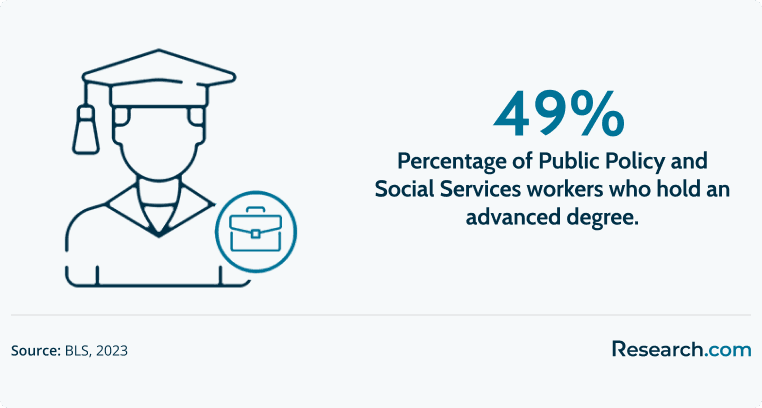
In the public service sector, an advanced degree is quickly becoming the standard. In fact, 49% of all professionals working in public policy and social services hold one. So, what is the time commitment to earn that essential credential? Most online NASPAA-accredited MPA programs take between 18 and 24 months to complete if you are studying full-time. Similar to web development programs online, the actual time to completion can vary depending on course load, transfer credits, and personal circumstances.
However, the "best" pace really depends on your personal and professional circumstances.
Choosing the Right Pace for Your Career Stage
Most universities understand that their students have different needs and offer several timelines. Accelerated programs are designed for those who can handle a heavier course load and want to finish faster; some institutions even offer the shortest online degree in public administration options that can be completed in just 12 months.
The standard 18-to-24-month track is ideal for recent graduates who are treating their master's program like a full-time commitment. For working professionals, part-time options provide the most flexibility, allowing you to take fewer classes per semester and extend the program over three or even four years.
This significant representation of advanced degree holders in the field underscores why this time investment is so critical for career advancement:
How does an online NASPAA-accredited MPA program compare to an on-campus program?
For any program accredited by NASPAA, the academic quality, the curriculum, the faculty standards, and the final diploma are all equivalent. Your diploma will not say "online." Programs such as MBA international business online follow the same principle, ensuring that online students receive the same rigorous instruction and credential value as on-campus learners.
Employers who value this accreditation—which includes federal, state, and major nonprofit organizations—view the degree exactly the same as one earned on campus. The best NASPAA accredited online programs are held to the exact same rigorous standards as their traditional counterparts.
The Difference is Experience, Not Quality
It comes down to the learning experience and what fits your life. On-campus programs offer organic, face-to-face interaction with peers and professors. The networking happens naturally in hallways and study groups.
Online programs, on the other hand, offer unparalleled flexibility. You can fit your studies around your work and family commitments. Networking in an online environment is more intentional—you build connections through discussion boards, group projects, and virtual events—but it also connects you with a more geographically diverse cohort of professionals.
NASPAA accreditation is the great equalizer here. It ensures the academic core is identical, so you can confidently choose the format that works best for you.
What is the average cost of an online NASPAA-accredited MPA program?
Based on our analysis, the average total tuition for an online NASPAA-accredited MPA is between $37,000 and $45,000. Programs such as MPA online no GRE follow similar tuition patterns, allowing students to pursue an advanced degree without standardized test requirements while considering cost and ROI.
However, the full range is quite wide, from as low as $8,500 to nearly $99,000. A common misconception is that online programs are always cheaper, but that's not the case. The biggest factor in cost is the type of institution—whether it's a public or private university—not the delivery format.
Thinking in Terms of ROI, Not Just Cost
A lower-cost program might seem appealing, but a more expensive degree from a university with a powerful alumni network and renowned faculty could open doors to higher-paying jobs much faster.
The smartest way to evaluate cost is to weigh it against the program's potential to advance your career. Consider the faculty's connections, the career services offered, and the success of its graduates. This is an investment in your future, and the program with the best long-term value is often the wisest choice.
What are the financial aid options for students enrolling in an online NASPAA-accredited MPA program?
As an online student, you are eligible for the same financial aid opportunities as on-campus students. A wide range of options can help make your degree a manageable investment.
Here are the primary sources of funding you should explore.
Federal Financial Aid (FAFSA)
Your first step should always be to fill out the Free Application for Federal Student Aid (FAFSA). This determines your eligibility for federal assistance, including Direct Unsubsidized Loans and Grad PLUS Loans, which are the most common ways students fund their graduate education.
University Scholarships and Grants
Most universities offer their own scholarships and grants specifically for graduate students. These can be based on academic merit, financial need, or your chosen specialization. This is free money that doesn't need to be repaid, so be sure to check the financial aid office website for every program you apply to.
Employer Tuition Assistance
If you are currently employed, especially in the public or nonprofit sector, check with your human resources department. Many organizations offer tuition assistance or reimbursement programs for employees seeking to advance their skills with a relevant degree.
A Game-Changer: The Public Service Loan Forgiveness (PSLF) Program
For anyone planning a career in government or with a qualifying nonprofit, the PSLF program is a powerful tool. After you make 120 qualifying monthly payments on your federal student loans while working full-time for a public service employer, the remaining balance on your loans can be forgiven. This program can dramatically reduce the long-term cost of your MPA.
What are the prerequisites for enrolling in an online NASPAA-accredited MPA program?
While every university has its own specific requirements, most online NASPAA-accredited MPA programs ask for a standard set of materials. Similar to pursuing a master's degree in web design development online, these programs emphasize the importance of having a completed undergraduate degree, relevant documentation, and supporting materials to ensure readiness for graduate-level coursework.
You will typically need:
- A bachelor's degree from an accredited institution.
- Official transcripts from all undergraduate and graduate coursework.
- A current resume or curriculum vitae (CV).
- Two to three letters of recommendation.
- A personal statement or essay.
A common myth is that you need a political science or public administration undergrad degree to be a strong candidate. That’s simply not true. Another point of anxiety for many is the GRE, but you'll find that many excellent programs no longer require it.
Beyond the Checklist: What Admissions Committees Really Look For
The trend in graduate admissions is a move away from a narrow focus on test scores and toward a "holistic review." This means they are looking at the whole picture of who you are. Your professional experience, volunteer work, and the passion you demonstrate in your personal statement carry significant weight.
Admissions committees want to see your commitment to public service and your potential for leadership. They actively seek students from diverse academic backgrounds because it enriches the classroom discussions. In fact, successful public service leaders come from a wide range of academic backgrounds, as data on urban planners shows:
What courses are typically in an online NASPAA-accredited MPA program?
A NASPAA-accredited MPA curriculum is designed to give you a comprehensive toolkit for leading in the public and nonprofit sectors. It's a practical degree, and you'll find the coursework is focused on real-world skills. A graduate degree is the standard for advancement in many public service fields, and these are the core courses that make it so valuable.
You can expect a curriculum built around these key areas:
- Public Policy Analysis: Learning how to evaluate the effectiveness of government and nonprofit programs.
- Public Budgeting & Finance: Mastering the skills to manage public funds responsibly and ethically.
- Research Methods & Data Analysis: Gaining the quantitative skills to make data-informed decisions.
- Ethics: Grounding your decision-making in the principles of public service.
- Public Management & Leadership: Developing the skills to lead teams and manage complex organizations.
The Skill That Matters Most: Evidence-Based Policy
While all these courses are critical, the most important trend in the field today is the shift toward "evidence-based policy." This means that decisions are no longer made on intuition alone; they must be backed by data.
Modern MPA programs have a strong emphasis on program evaluation and quantitative analysis to meet this demand. This is what makes graduates so valuable. While some career paths might focus more on public relations, for example a fast-track online public relations master's degree, the core of public administration is now about proving what works. Mastering these data skills is the surest way to future-proof your career in public service.
What types of specializations are available in an online NASPAA--accredited MPA program?
A general MPA is good, but a specialized MPA that aligns with your career goals is what makes you a high-value, in-demand candidate.
Universities are constantly developing new specializations to meet market needs, but most programs offer concentrations in these key areas.
Nonprofit Management
This specialization prepares you for leadership roles in the nonprofit sector. Coursework focuses on fundraising, grant writing, board governance, and program management for mission-driven organizations.
Public Financial Management
For those who are strong with numbers, this specialization is always in high demand. You'll dive deep into public budgeting, debt management, and financial analysis, preparing for roles like a finance director or budget analyst.
Urban Planning & Community Development
This path focuses on how to develop and revitalize communities. You'll study land use, transportation, housing policy, and sustainable development. Choosing a specialization in a high-demand field like this can have a significant impact on earning potential, with top-paying states for urban planners offering salaries well over six figures.
High-Growth Spotlight: Environmental and Energy Policy
As issues like climate change become more urgent, the demand for experts in environmental and energy policy is soaring. This is an excellent specialization for future-proofing your career, and many universities now offer accelerated energy policy degree programs online.
Choosing a specialization in a high-demand field can have a significant impact on earning potential, as seen in the top-paying states for urban planners:
How to Choose the Best Online NASPAA-Accredited MPA Program
With so many excellent programs available, how do you decide which one is right for you? It's easy to get lost in university rankings, but the "best" program is always the one that is the best personal fit for your specific career goals.
Here is a simple, four-step framework to guide your decision.
- Start with NASPAA Accreditation. This is your non-negotiable first step. Only consider programs that are accredited, as this is your guarantee of quality and your protection against diploma mills.
- Align Specializations with Your Career Goals. Look at the specialization options and the specific courses within them. Does the program have deep expertise in the exact area you want to work in, whether that's nonprofit management or urban planning?
- Evaluate Faculty and Alumni Networks. Research the professors in your specialization. Are they former practitioners with real-world experience? Where do graduates of the program work? The strength of a program's network is a huge part of its long-term value.
- Find Your Personal "Program Fit." This is about the practical details that match your life and learning style. This fit includes key logistical factors for the best NASPAA accredited online programs. For example, the best program for one person might be an accelerated one-year option, while the best for another might be a part-time program that doesn't require the GRE.
What career paths are available for graduates of an online NASPAA-accredited MPA program?
The MPA is fundamentally a leadership degree. It's designed to take you beyond entry-level roles and prepare you for a career trajectory toward executive positions where you can shape policy and lead organizations. With a wave of retirements in the public sector, there is a significant leadership vacuum, and MPA graduates are perfectly positioned to fill it.
Here are some of the key career paths you can pursue.
Leadership in Government
This is the most traditional path, with roles at the local, state, and federal levels. Graduates often become City Managers, responsible for the entire administrative oversight of a city, or Policy Analysts, who research and advise elected officials on critical issues. A large number of graduates find a home in local government; for instance, 75% of all urban and regional planners work for local government agencies.
Driving Change in the Nonprofit Sector
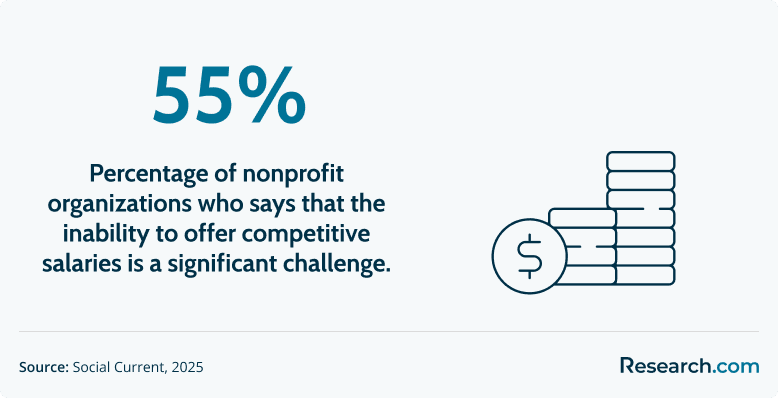
For those passionate about a specific cause, the nonprofit sector offers a direct path to making an impact. An MPA can prepare you to be an Executive Director, leading the organization's mission and strategy, or a Program Manager, running the specific initiatives that serve the community. While rewarding, it's important to be aware of the financial realities; 55% of nonprofits cite salary competitiveness as a workforce challenge.
A Niche in National Security
A growing and high-impact field for MPA graduates is in national security and intelligence. For those interested in this path, many universities offer specialized programs, and it's worth exploring the top online master's degree programs in intelligence as well.
While rewarding, it's important to be aware of the financial realities in the nonprofit sector, where salary competitiveness can be a challenge:
How does an online NASPAA-accredited MPA compare to other online graduate degrees?
While both online NASPAA-accredited MPAs and other graduate degrees deliver advanced knowledge, the MPA is distinct in its emphasis on public service, policy development, and ethical governance. Unlike business-focused programs that center on profit-driven objectives, the MPA curriculum is tailored toward producing leaders for government, nonprofit organizations, and community institutions. This specialized focus equips graduates with the skills to navigate regulatory frameworks and address social challenges, underscoring its long-term value in sectors where societal impact is prioritized. For a broader perspective on similar online degrees with a cost-sensitive approach, explore cheap online MBA USA.
What is the job market for graduates of an online NASPAA-accredited MPA program?
The market is stable, with strong growth in specific, high-demand areas like management and data analysis.
The "silver tsunami" is a major factor here; with the average age of a public administrator being nearly 45, a wave of retirements is creating a significant leadership vacuum. This is a sharp contrast to more academic fields like political science, which is projected to see a job decline. This makes versatile, skills-based NASPAA accredited online programs a much more resilient career investment.
Future-Proofing Your Career in Public Service
The two biggest trends driving the job market are the demand for data-driven decision-making and the need for a new generation of leaders. An accredited MPA is designed to meet both of these needs head-on. The degree equips you with the quantitative skills to manage programs effectively and the leadership training to step into the roles being vacated by retirees.
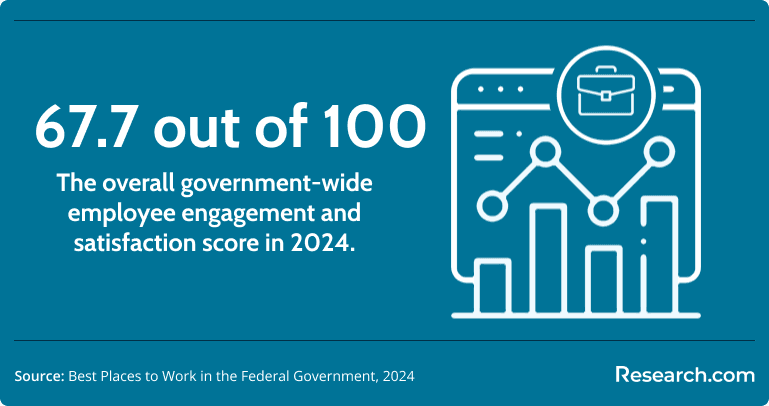
This combination of skills makes MPA graduates highly sought after. They are seen as practical problem-solvers who can bring accountability and efficiency to public service. For those interested in a field with steady growth, exploring specific roles like urban planning jobs is an excellent next step. Beyond job numbers, the public sector work environment itself shows a solid level of employee satisfaction:
Here’s What Graduates Have to Say about Their Online NASPAA-Accredited MPA Program
- Robert: "I’d been a project manager in the state transportation department for a decade, but all the director-level jobs went to people with master's degrees. The online MPA was my way of leveling the playing field without uprooting my family. I remember using a case study from my public finance class to identify a flaw in one of our vendor proposals; that was the moment my boss started seeing me as a future leader."
- Nikolai: "For years, I was frustrated by the opaque zoning laws and permitting processes that affected my small construction business. I enrolled in the MPA to finally understand the system from the inside. It was completely eye-opening. Now, I can advocate for my industry more effectively, and I’ve even been appointed to a local economic development board. I could run my business by day and become a better civic leader by night."
- Leif: "My background is in environmental science, and I was publishing research that went nowhere. I realized that to make a real impact, I needed to understand the policy world. The online MPA was like a translator, teaching me how to turn my data into compelling policy briefs. The program’s focus on stakeholder engagement was a revelation, and I could continue my fieldwork the entire time."
Key Findings
- An advanced degree is the new standard for career advancement in public service, with 49% of professionals in public policy and social services already holding one.
- The financial return on this degree is significant, as graduates in public administration earn an average annual salary of $96,596.
- Earning potential in top-tier federal government roles is even higher, with political scientists, a common career path for MPA graduates, earning a median salary of $151,630.
- The degree provides a direct pipeline to stable government careers, exemplified by the fact that 75% of all urban and regional planners are employed by local government.
- With the average age of a public administrator being nearly 45, a wave of retirements is creating a significant leadership vacuum for qualified MPA graduates to fill.
- Confirming the value of diverse academic backgrounds, data shows the field of urban planning alone draws thousands of professionals from majors in social sciences (9,416), architecture (8,579), and business (4,286).
References:
- Council on Foundations. (2024, June 4). 2024 grantmaker salary and benefits report shows turnover down, salary increases in wake of pandemic. Retrieved September 23, 2025, from https://cof.org/news/2024-grantmaker-salary-and-benefits-report-shows-turnover-down-salary-increases-wake-pandemic
- Data USA. (n.d.-a). Public administration. Retrieved September 23, 2025, from https://datausa.io/profile/naics/public-administration
- Data USA. (n.d.-b). Urban & regional planners. Retrieved September 23, 2025, from https://datausa.io/profile/soc/urban-regional-planners
- Fundamental Business Insights. (2024, May). Urban planning software and services market. Retrieved September 23, 2025, from https://www.fundamentalbusinessinsights.com/industry-report/urban-planning-software-and-services-market-11649
- Organisation for Economic Co-operation and Development. (2024). OECD regulatory policy outlook 2024. OECD Publishing. https://www.oecd.org/content/dam/oecd/en/publications/reports/2024/04/oecd-regulatory-policy-outlook-2024_a754bf4c/56b60e39-en.pdf
- Partnership for Public Service. (n.d.). Government-wide findings. Best Places to Work in the Federal Government. Retrieved September 23, 2025, from https://bestplacestowork.org/analysis/government-wide-findings-overall/
- PayScale. (n.d.). Master of public administration (MPA) degree. Retrieved September 23, 2025, from https://www.payscale.com/research/US/Degree=Master_of_Public_Administration_(MPA)/Salary
- Social Current. (2025, February 12). Navigating workforce challenges: 2025 trends and solutions for the social sector. Retrieved September 23, 2025, from https://www.social-current.org/2025/02/navigating-workforce-challenges-2025-trends-and-solutions-for-the-social-sector
- U.S. Bureau of Labor Statistics. (2024, September 6). Field of degree: Public policy and social services. Occupational Outlook Handbook. Retrieved September 23, 2025, from https://www.bls.gov/ooh/field-of-degree/public-policy-and-social-services/public-policy-and-social-services-field-of-degree.htm
- U.S. Bureau of Labor Statistics. (2024, September 6). Political scientists. Occupational Outlook Handbook. Retrieved September 23, 2025, from https://www.bls.gov/ooh/life-physical-and-social-science/political-scientists.htm
- U.S. Bureau of Labor Statistics. (2024, September 6). Urban and regional planners. Occupational Outlook Handbook. Retrieved September 23, 2025, from https://www.bls.gov/ooh/life-physical-and-social-science/urban-and-regional-planners.htm
- U.S. Bureau of Labor Statistics. (2024, April 3). Occupational employment and wages, May 2023: 19-3051 Urban and regional planners. Occupational Employment Statistics. Retrieved September 23, 2025, from https://www.bls.gov/oes/2023/may/oes193051.htm
- U.S. Bureau of Labor Statistics. (2024, April 3). Occupational employment and wages, May 2023: 19-3094 Political scientists. Occupational Employment Statistics. Retrieved September 23, 2025, from https://www.bls.gov/oes/2023/may/oes193094.htm
- U.S. Department of Labor, Employment and Training Administration. (n.d.-a). 19-3051.00 - Urban and regional planners. O*NET OnLine. Retrieved September 23, 2025, from https://www.onetonline.org/link/summary/19-3051.00
- U.S. Department of Labor, Employment and Training Administration. (n.d.-b). 19-3094.00 - Political scientists. O*NET OnLine. Retrieved September 23, 2025, from https://www.onetonline.org/link/summary/19-3094.00
- ZipRecruiter. (n.d.-a). Political scientists salary. Retrieved September 23, 2025, from https://www.ziprecruiter.com/Salaries/Political-Scientists-Salary
- ZipRecruiter. (n.d.-b). Public administration salary. Retrieved September 23, 2025, from https://www.ziprecruiter.com/Salaries/Public-Administration-Salary
- ZipRecruiter. (n.d.-c). Urban and regional planner salary. Retrieved September 23, 2025, from https://www.ziprecruiter.com/Salaries/Urban-And-Regional-Planner-Salary
Other Things You Should Know About Online NASPAA-Accredited MPA Programs
Students can build professional networks in online MPA programs by participating in virtual discussions and group projects, engaging with faculty during office hours, joining professional organizations, and attending both virtual and in-person industry events. Online platforms also offer forums and networking opportunities to connect with peers and alumni.
When selecting an online MPA program in 2027, students should prioritize NASPAA accreditation for quality assurance, evaluate program flexibility to accommodate their schedules, review faculty credentials, and consider networking opportunities. Additionally, they should examine the curriculum for relevance to their career goals and verify any available career services.
NASPAA-accredited online MPA programs in 2027 may require standardized tests like the GRE or GMAT for admission. However, some programs offer waivers based on prior academic performance or professional experience, so it's important to check specific program requirements.


