
2027 NHA ExCPT vs. PTCB PTCE: Pharmacy Technician Certifications

Co-Founder and Chief Data Scientist
If you are planning to become a certified pharmacy technician, you have likely come across the two main certification exams: the NHA ExCPT and the PTCB PTCE. Both credentials validate your skills and knowledge to work safely and effectively in a pharmacy setting, but they differ in format, eligibility, and recognition.
Understanding these differences is essential to choosing the right path for your career goals. In this guide, we will break down the NHA ExCPT vs. PTCB PTCE exams, compare their structure, difficulty, and benefits, and help you decide which certification best fits your professional ambitions. You will know exactly which test aligns with your experience level, state requirements, and long-term pharmacy career plans.
What are the benefits of Pharmacy Technician Certifications (CPhT?
- Certification opens doors to pharmacy roles in hospitals, retail pharmacies, and mail-order facilities, and may qualify you for senior technician or supervisory positions.
- Certified pharmacy technicians earn a median annual salary of around $40,000, often higher than uncertified peers.
- Certification demonstrates verified knowledge and skills, increasing employer trust and job security.
- You can prepare for the PTCB or NHA certification exams through online pharmacy technician programs, allowing you to study at your own pace while gaining real-world experience.
What can I expect from a Pharmacy Technician Certification?
Pharmacy technician certifications validate an individual’s knowledge, skills, and professionalism in assisting pharmacists with dispensing medications and managing pharmacy operations. The two primary national credentials in the United States are the Pharmacy Technician Certification Exam (PTCE), offered by the Pharmacy Technician Certification Board (PTCB), and the Exam for the Certification of Pharmacy Technicians (ExCPT), administered by the National Healthcareer Association (NHA).
Both certifications demonstrate competency in areas such as pharmacy law, medication safety, and prescription processing. Earning certification not only meets employer and state requirements but also enhances career prospects, salary potential, and advancement opportunities. Many students now prepare through online pharmacy technician programs, which offer flexible learning options and access to exam-focused training. Understanding these certification pathways is the first step toward a rewarding and recognized career in pharmacy.
Where can I work with a Pharmacy Technician Certification?
Graduates with pharmacy technician certifications can work in a variety of healthcare settings where medications are prepared, dispensed, and managed. The most common employers include retail pharmacies, where technicians handle prescriptions, process insurance claims, and assist customers. Many also find positions in hospital and clinical pharmacies, supporting pharmacists in compounding medications, managing inventory, and preparing sterile products. Some work in long-term care facilities, ensuring patients receive the correct medications on time.
Beyond traditional pharmacy roles, certified technicians can pursue opportunities in pharmaceutical manufacturing, mail-order and specialty pharmacies, or insurance companies that require medication verification expertise. With experience, some advance to lead technician or supervisory positions, or move into pharmacy informatics and regulatory compliance. The diversity of available work environments allows certified pharmacy technicians to find stable and rewarding roles that align with their interests and career goals.
How much can I make with a Pharmacy Technician Certification?
Graduates who earn pharmacy technician certification can expect competitive pay across various settings. According to the U.S. Bureau of Labor Statistics (BLS), the median annual wage for pharmacy technicians was about $40,300 in 2023, with the top 10 percent earning over $54,000 per year.
Entry-level technicians, especially those new to the field or working in retail pharmacies, generally earn between $33,000 and $37,000 annually. However, certified technicians often receive higher starting pay than uncertified ones, as employers value formal credentials that demonstrate verified skills and professionalism.
Salaries can vary depending on the work environment and location. Hospital and federal pharmacies typically offer higher wages, with median earnings ranging from $45,000 to $50,000, while retail pharmacies usually fall slightly below the national average. Additionally, technicians in metropolitan areas or states like California, Washington, and Alaska tend to earn the most due to higher demand and cost of living.
- What is the difference between PTCB and NHA pharmacy technician certifications? PTCB vs NHA Certifications
- Is the Certified Pharmacy Technician (CPhT) designation required for pharmacy jobs? Is the Certified Pharmacy Technician (CPhT) designation required for pharmacy jobs?
- Does a pharmacy technician license differ from a national CPhT certification? Does a pharmacy technician license differ from a national CPhT certification?
- What are the major certifying bodies for pharmacy technicians in the United States? Pharmacy Tech Certifications
- What are the eligibility requirements for the PTCB and NHA pharmacy technician certifications? Certification Requirements
- How many questions are on the PTCB PTCE vs NHA ExCPT exams? How many questions are on the PTCB PTCE vs NHA ExCPT exams?
- Which exam is harder: PTCB PTCE or NHA ExCPT? Exam Comparison
- Is certification required for career advancement in pharmacy settings? Career Advancement
- How do state requirements affect choosing between PTCE vs ExCPT? State Requirements
- What continuing education is required for PTCB-certified technicians? What continuing education is required for PTCB-certified technicians?
What is the difference between PTCB and NHA pharmacy technician certifications?
The two most recognized pharmacy technician certifications in the U.S. are the Pharmacy Technician Certification Exam (PTCE) from the Pharmacy Technician Certification Board (PTCB) and the Exam for the Certification of Pharmacy Technicians (ExCPT) from the National Healthcareer Association (NHA).
- PTCB PTCE: Established in 1995, the PTCE is widely recognized across the country and often preferred by state boards and employers. It tests core pharmacy knowledge, regulations, and medication safety.
- NHA ExCPT: Launched in 2009, the ExCPT also certifies pharmacy technicians through a national exam. It is accepted in many states and is popular among students who complete online pharmacy technician courses or NHA-affiliated training programs.
Both NHA ExCPT certification and PTCB PTCE certification demonstrate that a technician has the knowledge and skills needed to assist pharmacists safely and effectively. While both certifications qualify you to work as a pharmacy technician, the PTCB PTCE is more universally recognized and often the safer choice for state mobility.
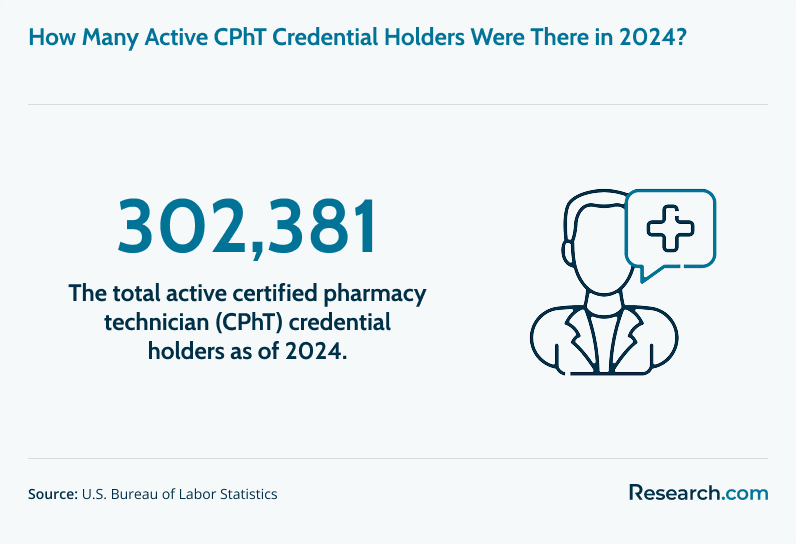
The NHA ExCPT is equally valid but may not be accepted in every state, so the best option often depends on where you plan to work. As of 2024, there were 302,381 active Certified Pharmacy Technician (CPhT) credential holders nationwide.
Is the Certified Pharmacy Technician (CPhT) designation required for pharmacy jobs?
The requirement for the Certified Pharmacy Technician (CPhT) designation is not universal across the United States; it varies significantly by state and employer. Some states only require registration, while others mandate certification for licensure. If you want to learn more about the steps to becoming certified, check out how to become a pharmacy technician for a complete guide to the process, including education, training, and exam preparation.
In 2024, pharmacy technicians held about 490,400 jobs across the United States, with pharmacies and drug retailers employing 52% of the workforce. Here is a breakdown of whether the CPhT is required and why it is highly recommended.
The State-by-State Requirement
The regulation of pharmacy technicians (registration, licensure, or certification) is determined by each state's Board of Pharmacy.
- States that Require National Certification (CPhT): Many states mandate that pharmacy technicians must be nationally certified as a condition of their state licensure or registration. Examples of states that require this as part of their licensing process include Utah, Texas, and New Mexico.
- States with No Certification Requirement: Some states only require a technician to register or be licensed with the State Board of Pharmacy, but not necessarily obtain the national CPhT certification. They may allow the technician to work under the supervision of a pharmacist after completing on-the-job training or a board-approved program. Examples of states with historically fewer or no certification requirements include Hawaii, Delaware, and Pennsylvania.
- States with a Trainee Period: Many states allow you to work as a "Pharmacy Technician Trainee" or "Provisional Technician" for a set period, during which you must pass a national certification exam to maintain your state registration.
You must always check the State Board of Pharmacy in the state where you plan to work to get the most current and definitive requirements. State regulations change frequently. If you are considering long-term education, you might also explore pharmacy school online to advance into higher-level pharmacy roles.
The Employer Requirement
Even if your state does not legally require CPhT certification, your prospective employer most likely will loo for it for the following reasons:
- Higher Standard: Certification demonstrates a validated level of competency and knowledge in areas like medication safety, federal laws, and pharmacy calculations, which employers value.
- Hospital and Advanced Roles: Hospitals, specialty pharmacies, and institutional settings (which often handle more complex compounding and dispensing) almost always require national certification.
- Job Preference and Compensation: A CPhT designation often makes you a more competitive job candidate, qualifies you for higher-level or senior technician roles, and can lead to a slightly higher starting wage or pay differential compared to non-certified technicians.
- Interstate Mobility: If you are certified, you can more easily transfer your credentials and obtain a new license/registration if you move to another state, as both the PTCB and NHA certifications are nationally recognized.
Pharmacy technicians work in a variety of healthcare and retail settings that rely on their expertise in medication management and customer service. The chart below highlights the largest employers of pharmacy technicians across the United States. Interestingly, when comparing certification paths, the debate can feel similar to the pharmd vs pharmacist discussion — one focuses on educational achievement, while the other defines the professional title and legal scope of practice.
Does a pharmacy technician license differ from a national CPhT certification?
Yes. A pharmacy technician license and a national Certified Pharmacy Technician (CPhT) certification are two different credentials that serve separate purposes. A license is issued by a state board of pharmacy and legally allows you to work as a pharmacy technician in that state. If you are still deciding between similar career paths, it helps to understand the difference between pharmacy technician and medical assistant to ensure your chosen role aligns with your interests and goals.
The CPhT certification, on the other hand, is a national credential earned by passing either the PTCB PTCE or the NHA ExCPT exam. It verifies your professional knowledge, skills, and competency but does not by itself grant the right to work in a state. In many states, certification is a prerequisite for licensure or registration, meaning you may need both to legally practice. In short, certification proves your qualifications, while a license grants you the legal authority to use those qualifications in a specific location.
What are the major certifying bodies for pharmacy technicians in the United States?
The two primary certifying bodies for pharmacy technicians in the United States are the Pharmacy Technician Certification Board (PTCB) and the National Healthcareer Association (NHA). Both organizations offer nationally recognized credentials that validate a technician’s knowledge and competency. If cost is a concern, you can explore free pharmacy technician certification options that provide affordable or low-cost training programs to help you qualify for the exam.
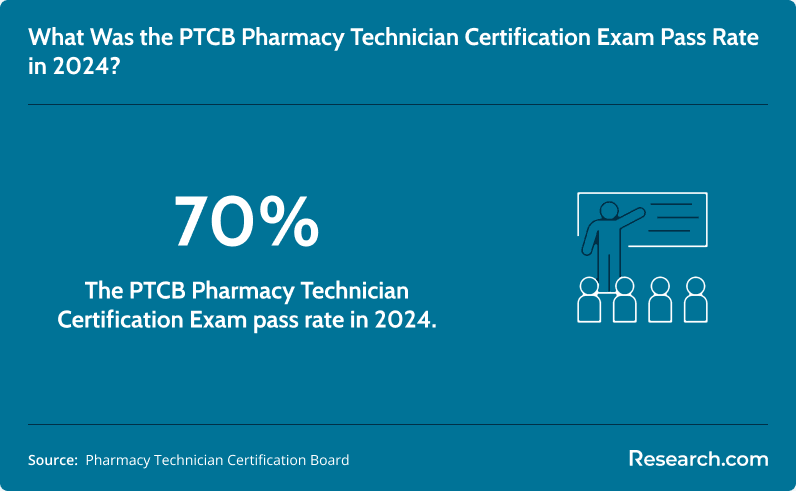
The PTCB, established in 1995, administers the Pharmacy Technician Certification Exam (PTCE), which is widely accepted across most states and preferred by many employers and hospital systems. The PTCB PTCE recorded a 70% pass rate in 2024, indicating a solid success rate for well-prepared candidates.
The National Healthcareer Association (NHA), founded in 1989, offers the Exam for the Certification of Pharmacy Technicians (ExCPT). This exam provides an alternative route to earning the Certified Pharmacy Technician (CPhT) title and is accepted by a growing number of state boards.
While both certifications qualify candidates for similar roles, the PTCB’s PTCE is slightly more recognized nationwide. However, the NHA’s ExCPT remains a strong option, especially for students completing NHA-affiliated training programs or working in states that recognize both certifications. For those interested in expanding their credentials even further, fields like coding vs cyber security salary analysis show how specialized certifications can also lead to strong career growth and better pay across technical industries.
What are the eligibility requirements for the PTCB and NHA pharmacy technician certifications?
Pharmacy Technician Certification Board (PTCB) – PTCE
To sit for the Pharmacy Technician Certification Exam (PTCE):
- Education: High school diploma or equivalent (GED).
- Training/Experience: Completion of a PTCB-recognized education/training program or equivalent work experience.
- Age: No minimum age beyond education requirement, but most candidates are 18+.
- Background: Must fully disclose any criminal convictions or disciplinary actions; certain violations may disqualify applicants.
National Healthcareer Association (NHA) – ExCPT
To sit for the Examination for the Certification of Pharmacy Technicians (ExCPT):
- Education: High school diploma or equivalent (GED).
- Training/Experience: Completion of a pharmacy technician training program or at least 1 year of work experience within the past 3 years.
- Age: Must be at least 18 years old.
- Background: Must comply with NHA’s candidate code of ethics and eligibility policy; criminal convictions may affect eligibility.
Those seeking faster routes to certification may consider fastest online pharmacy technician certification programs, which allow you to complete training and qualify for national exams in a shorter timeframe.
How many questions are on the PTCB PTCE vs NHA ExCPT exams?
The total number of questions on the PTCB and NHA exams are very similar, but they differ slightly in the number of scored questions and the total time allotted.
Here is a breakdown of the question count and format for both the PTCB's Pharmacy Technician Certification Exam (PTCE) and the NHA's Exam for the Certification of Pharmacy Technicians (ExCPT):
| FEATURE | PTCB (PTCE) | NHA (ExCPT) |
| Total Questions | 90 | 120 |
| Scored Questions | 80 | 100 |
| Unscored Questions | 10 (experimental questions) | 20 (pre-test questions) |
| Exam Time | 1 hour and 50 minutes (2 hours total with tutorial/survey) | 2 hours and 10 minutes |
| Format | Multiple-choice | Multiple-choiceExport to Sheets |
The PTCB PTCE has slightly fewer questions (90) and a shorter testing time, with 10 unscored pilot questions that don’t affect your results. In contrast, the NHA ExCPT includes 100 questions, all of which are scored, and gives candidates more time to complete the exam. This makes the ExCPT a bit longer and more comprehensive in format, while the PTCE is leaner but includes trial questions for future test development.
Which exam is harder: PTCB PTCE or NHA ExCPT?
Determining which exam is "harder" between the PTCB PTCE and the NHA ExCPT is highly subjective, but there are differences in content focus and pass rates that can inform your decision.
Many industry professionals and past test-takers often perceive the PTCB PTCE as the more rigorous or "gold standard" exam, though data suggests a higher pass rate for the PTCE in recent years.
| PTCB (PTCE) | NHA (ExCPT) | |
| Pass Rate (Recent Data) | Generally higher (e.g., around 70% in 2021/2022) | Generally lower (e.g., around 63-64% in 2021-2023) |
| Content Focus | Broader scope, including greater weight on Medications (40%) and Patient Safety/Quality Assurance (26.25%). Often perceived to cover more hospital/inpatient scenarios. | Heavier focus on the Dispensing Process (up to 55%) and practical duties. Traditionally geared more toward retail pharmacy operations. |
| Industry Perception | Widely considered the industry gold standard. Often preferred or required by hospitals and larger pharmacy chains. | A highly respected and nationally recognized certification, but sometimes viewed as the alternative to the PTCB. |
Despite the slightly higher pass rate, the PTCE is still widely regarded in the pharmacy technician community as the more challenging and comprehensive exam, which is why it often carries more weight with certain employers, particularly in a hospital setting.
Is certification required for career advancement in pharmacy settings?
Yes, certification is a major factor for career advancement in pharmacy settings, even when it’s not legally required.
Here’s why:
- Employer Preference: Most large employers prefer or require certification (CPhT) for promotions, specialty roles, or supervisory positions.
- Scope of Work: Certified pharmacy technicians are often trusted with advanced tasks such as sterile compounding, medication reconciliation, or inventory management.
- Salary Impact: Certified techs generally earn more than uncertified ones, especially in hospital and specialty pharmacy settings.
- Mobility: Certification makes it easier to transfer jobs across states and healthcare systems, giving you more career options.
- Specialization Opportunities: With PTCB in particular, you can pursue advanced certificates, which strengthen your qualifications for higher-level roles.
Pharmacy technician salaries can vary depending on factors such as experience, certification, and work setting. The chart below shows the median annual wages for pharmacy technicians in 2024 across different industries.
How do state requirements affect choosing between PTCE vs ExCPT?
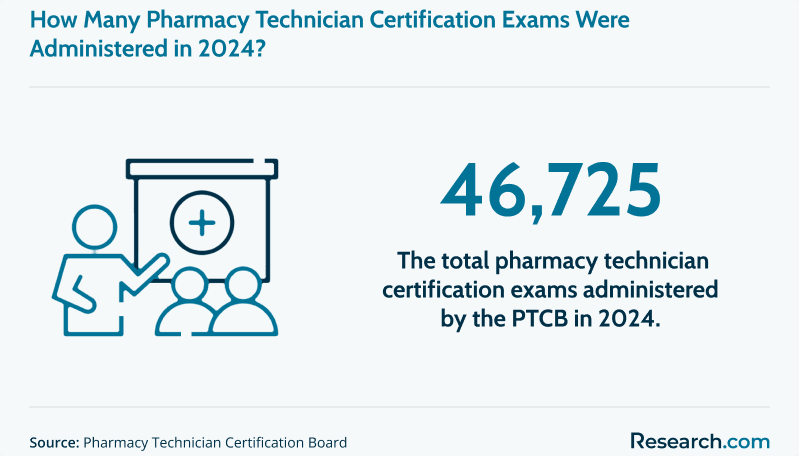
The PTCB administered 46,725 total PTCE exams during 2024, reflecting steady interest in national pharmacy technician certification. State requirements are the primary determinant when choosing between the PTCE from the PTCB and the ExCPT from the NHA. While both exams grant the nationally recognized CPhT credential, each state's Board of Pharmacy (BoP) maintains final authority over which certifications it accepts for state licensure or registration.
Many states now recognize both the PTCE and the ExCPT, making the choice flexible. However, you must first verify your specific state's regulations, as some may still prefer or only recognize the more established PTCB certification, particularly for advanced roles or as a requirement for reciprocity if you move. Failing to check your local BoP requirements could mean the certification you earn is not valid for practice in your area.
Beyond simple acceptance, state regulations indirectly affect your choice by influencing the eligibility pathways for each exam. The PTCE requires either a PTCB-Recognized Education Program or 500 hours of work experience, while the ExCPT may require completion of any approved training program or a higher 1,200 hours of work experience.
A state may require you to follow a specific training curriculum or pass a background check, which could align more easily with the pre-approved training programs of one certifying body over the other. Similarly, the decision between educational pathways often mirrors the masters vs MBA choice in business—where both lead to advanced credentials, but each serves slightly different professional goals and industries.
Therefore, your current level of experience and the type of education program you completed (BoP-approved vs. PTCB-recognized) are the practical factors that are often guided by state-level career progression rules and should be weighed against the specific requirements of both the PTCE and the ExCPT.
What continuing education is required for PTCB-certified technicians?
The continuing education (CE) requirements for the PTCB PTCE certification and the NHA ExCPT certification are nearly identical in their core structure.
Both organizations require technicians to renew their certification every two years to ensure they maintain competency and stay current with industry practices. It is crucial for technicians to meet these CE requirements within their specific two-year recertification cycle. While the overall goal is the same, the specific rules for the type of CE accepted vary slightly, primarily in the number of hours that must be pharmacy technician-specific.
Common CPhT Continuing Education Requirements
The continuing education (CE) requirements for the Certified Pharmacy Technician (CPhT) credential from both the PTCB and the NHA are nearly identical in their core structure. Both organizations require technicians to renew their certification every two years to ensure they maintain competency and stay current with industry practices. It is crucial for technicians to meet these CE requirements within their specific two-year recertification cycle. While the overall goal is the same, the specific rules for the type of CE accepted vary slightly, primarily in the number of hours that must be pharmacy technician-specific.
CPhT Continuing Education Requirements
Both the PTCB (PTCE) and the NHA (ExCPT) mandate the following CE requirements for recertification candidates:
- Total Hours: A minimum of 20 hours of continuing education must be completed.
- Pharmacy Law: At least 1 hour of the total must be in the subject of Pharmacy Law (ACPE Topic 03).
- Patient Safety: At least 1 hour of the total must be in the subject of Patient Safety (ACPE Topic 05).
Key Differences in CE Acceptance
The main difference lies in how each organization designates accepted CE content:
- PTCB (PTCE): Requires a minimum of 15 hours to be technician-specific (ACPE 'T' designation) and allows a maximum of 5 hours to be pharmacist-specific (ACPE 'P' designation), provided the content is relevant to the PTCE exam content outline.
- NHA (ExCPT): Requires a minimum of 20 hours of CE, including the mandatory law and patient safety hours, without the formal designation split, though all CEs should be pharmacy-related.
These are national certification renewal requirements. State Boards of Pharmacy (BoP) often have their own separate CE requirements for state licensure or registration, which must also be fulfilled, and may sometimes have additional mandatory topics. Continuing education in pharmacy is similar in principle to ongoing learning in other fields, such as difference between leadership and management in education, where professional growth depends on understanding both theory and application over time.
Here's What Graduates Have To Say About Their Pharmacy Technician Certifications
- Amanda: "Earning my PTCB certification opened the door to hospital pharmacy work, where I assist pharmacists in preparing IV medications and ensuring patient safety every day. The certification gave me confidence and credibility, helping me move from a retail job to a more rewarding clinical setting. "
- Jason: "Getting certified through NHA helped me stand out when applying to national pharmacy chains. The training sharpened my technical knowledge, but it’s the sense of purpose—knowing I help patients get the right medicine at the right time—that keeps me motivated. "
- Renee: "After earning my CPhT, I was promoted to lead pharmacy technician and now train new hires. Certification didn’t just boost my career—it made me part of a professional community that values accuracy, empathy, and lifelong learning. "
Key Findings
- As of 2024, there were 302,381 active Certified Pharmacy Technician (CPhT) credential holders nationwide.
- The PTCB Pharmacy Technician Certification Exam (PTCE) recorded a 70% pass rate in 2024, indicating a solid success rate for well-prepared candidates.
- The PTCB administered 46,725 total PTCE exams during 2024, reflecting steady interest in national pharmacy technician certification.
- According to the U.S. Bureau of Labor Statistics, the median annual wage for pharmacy technicians was $43,460 in May 2024.
- In 2024, pharmacy technicians held about 490,400 jobs across the United States, highlighting strong employment opportunities in the field.
References:
- American Society of Health-System Pharmacists. (n.d.). Technician shortage survey executive summary.
- Bureau of Labor Statistics. (2023). Occupational employment and wages, May 2023: Pharmacy technicians (OES code 29-2052).
- Bureau of Labor Statistics. (n.d.). Pharmacy technicians. In Occupational Outlook Handbook.
- Pharmaceutical Journal. (2024). A third of pharmacy technicians close to changing career, survey reveals. The Pharmaceutical Journal.
- Pharmacy Technician Certification Board (2022, August 18). PTCB releases 2022 pharmacy technician workforce survey results. Pharmacy Technician Certification Board.
- PSI. (2024, June). Pharmacy workforce survey analysis report 2024.
Other Things You Should Know About Pharmacy Technician Certifications
In 2027, both NHA's ExCPT and PTCB's PTCE certifications are recognized in hospital settings. However, the PTCE is often preferred by hospitals due to its rigorous focus on diverse pharmaceutical practices and comprehensive medication management, aligning closely with the demands of hospital pharmacy roles.
Yes, certified pharmacy technicians generally earn higher salaries than uncertified ones. Certification demonstrates advanced knowledge and skills, making technicians more valuable to employers. It also opens doors to specialized roles and better career growth opportunities.
Yes, you can take both exams if you want to expand your credentials. Some pharmacy chains and hospitals accept either certification, while others may prefer one. Having both can strengthen your résumé and make you more competitive in different states or work settings.


