
2027 Special Education Program: Types, Areas of Focus & Salary

Co-Founder and Chief Data Scientist
Special education programs provide tailored support to students with diverse learning needs, ensuring they receive an equitable education. Many school districts struggle to hire enough qualified teachers, and a recent survey found that 77% of respondents reported a special education teacher shortage.
This guide explores the different types of special education programs, key areas of focus, and potential salaries for professionals in the field. By reading this guide, educators, parents, and policymakers can gain a clear understanding of the landscape, make informed decisions, and better support students with disabilities.
Key things you should know about special education programs
- Special education programs serve students with diverse learning needs, and in 2023, over 400,000 teachers were employed in these roles nationwide.
- Programs vary by type and focus, including support for learning disabilities, behavioral challenges, and physical or sensory impairments.
- Effective programs rely on individualized instruction, such as IEPs, to ensure each student receives personalized support for academic and social success.
- What is a special education program, and who qualifies for it? Program Overview
- What are the main components of an effective special education program? Main Components
- What qualifications are required to become a special education teacher? Qualifications
- What are the types of special education programs for students with learning disabilities? What are the types of special education programs for students with learning disabilities?
- What is Universal Design for Learning (UDL) in special education? What is Universal Design for Learning (UDL) in special education?
- How much can you earn as a special education teacher? Average Salary
- What academic interventions are common in special education programs? What academic interventions are common in special education programs?
- How do special education programs address speech and language development? How do special education programs address speech and language development?
- How do online EdD programs support leadership development in special education? How do online EdD programs support leadership development in special education?
- What continuing professional development is essential in special education? Continuing Education
- What is the career outlook and job demand for special education professionals? Career Outlook
What is a special education program, and who qualifies for it?
A special education program is an educational framework designed to meet the unique learning needs of students with disabilities or other challenges that make learning in a traditional classroom setting difficult. These programs provide specialized instruction, accommodations, and support services to help students achieve their academic, social, and functional goals.
Who qualifies for a special education program? Students are typically eligible if they have been formally identified as having a disability under federal or state guidelines. Key eligibility criteria include:
- Learning Disabilities: Students with difficulties in reading, writing, math, or other academic areas that affect their ability to learn in a standard classroom.
- Intellectual Disabilities: Students with significantly below-average cognitive functioning that impacts daily life and learning.
- Autism Spectrum Disorder: Students with social, communication, and behavioral challenges that require tailored educational support.
- Emotional or Behavioral Disorders: Students who face challenges with emotional regulation or behavior that interfere with learning.
- Physical or Sensory Impairments: Students with mobility, hearing, or vision impairments that necessitate specialized instruction or accommodations.
To prepare educators for these responsibilities, many universities now offer advanced training options, including some of the shortest online special education master’s programs, which allow teachers to quickly gain the specialized knowledge and credentials needed to work effectively with this population.
What are the main components of an effective special education program?
An effective special education program is designed to meet the unique needs of each student while promoting academic, social, and emotional growth. The main components include:
- Individualized Education Programs (IEPs): Each student receives a personalized plan that outlines specific goals, accommodations, and services tailored to their unique needs. This ensures instruction is targeted and progress can be measured effectively.
- Specialized Instruction: Teachers use evidence-based strategies and adaptive teaching methods to address diverse learning challenges. Instruction may occur in inclusive classrooms, resource rooms, or self-contained settings, depending on the student’s requirements.
- Support Services: Programs provide additional services such as speech therapy, occupational therapy, counseling, and assistive technology. These services help students overcome barriers and access the curriculum fully.
- Progress Monitoring and Assessment: Ongoing evaluation tracks student growth toward IEP goals and informs adjustments to teaching methods or support services. This ensures that students are consistently making meaningful progress.
- Collaboration and Family Involvement: Effective programs involve families, general education teachers, and specialists in decision-making and planning. Collaboration ensures that students receive consistent support across home and school environments.
- Professional Development for Staff: Teachers and support staff receive ongoing training in best practices, legal requirements, and new instructional strategies. This helps maintain high-quality teaching and adapts to the evolving needs of students.
Educators who want to advance their expertise can pursue the best online EdS in special education programs, which provide specialized training to design and deliver effective instructional practices.
What qualifications are required to become a special education teacher?
Becoming a special education teacher requires academic preparation, certification, and practical experience. These qualifications ensure that teachers are ready to meet the needs of students with diverse learning challenges. This focus on practical experience and formal education stands in contrast to the admission criteria for some graduate programs, such as those looking for an online MBA no work experience.
Key qualifications include:
- Bachelor’s Degree in Education or Special Education: A bachelor’s degree builds essential knowledge in teaching strategies, child development, and disability studies. It ensures teachers understand both general pedagogy and the specialized needs of students with disabilities.
- State Certification or Licensure: Certification is required to teach special education in public schools, and requirements vary by state or region. This process typically includes exams and supervised teaching to confirm readiness for the classroom.
- Student Teaching or Practicum Experience: A practicum provides hands-on experience in real classrooms under the guidance of licensed teachers. This training allows candidates to apply theory to practice while receiving professional feedback.
- Knowledge of Individualized Education Programs (IEPs): Teachers must be skilled at designing and implementing IEPs that address each student’s unique needs. This ensures legal compliance while fostering personalized educational growth.
The majority of special education teachers hold advanced academic qualifications, reflecting the high level of expertise required in the field. Among this workforce, 231,156 individuals have earned a graduate degree, making it the most common educational level and highlighting the demand for specialized training beyond the undergraduate level.
For those aiming to advance more quickly into leadership or specialized roles, universities now offer fast track education specialist programs in special education, which provide advanced training in a shorter timeframe.
The chart below illustrates the breakdown of educational attainment among special education teachers.
What are the types of special education programs for students with learning disabilities?
Students with learning disabilities benefit from a variety of specialized programs designed to address their unique academic challenges and support their learning needs. The main types of special education programs for these students include:
- Resource Room Programs: Students spend part of the day in a separate classroom where they receive small-group or one-on-one instruction. This allows teachers to focus on specific skill deficits in reading, writing, or math.
- Inclusive Classroom Support: Students remain in general education classrooms but receive targeted support from special education teachers or aides. This approach promotes peer interaction while providing individualized assistance.
- Self-Contained Classrooms: These classrooms are designed for students who require more intensive instruction and support throughout the school day. Teachers provide a highly structured environment and an adapted curriculum to meet learning needs.
- Pull-Out Programs: Students are temporarily removed from the general classroom for specialized instruction in particular subjects or skills. This model allows for concentrated intervention without full-time separation from peers.
- Collaborative or Co-Teaching Programs: Special education and general education teachers work together in the same classroom to provide differentiated instruction. This model combines expertise and ensures that students with learning disabilities can access the core curriculum alongside their peers.
The value of these specialized programs in education is similar to the importance of specialized credentials in finance, such as knowing which certification is most commonly recognized in the financial industry for career advancement.
What is Universal Design for Learning (UDL) in special education?
Universal Design for Learning (UDL) in special education is an instructional framework designed to make learning accessible and effective for all students, regardless of their abilities, learning styles, or backgrounds.
Instead of adapting lessons after barriers appear, UDL proactively designs curriculum, materials, and teaching methods to reduce obstacles and provide multiple ways for students to engage with content.
At its core, UDL is built around three key principles:
- Multiple Means of Representation: Teachers present information in different ways, such as using text, visuals, audio, and hands-on activities. This ensures students with varied learning styles and abilities can access and understand content.
- Multiple Means of Action and Expression: Students are given different options to demonstrate what they have learned, such as writing, speaking, creating visuals, or using assistive technology. This flexibility allows every student to showcase their strengths.
- Multiple Means of Engagement: Teachers use a variety of strategies to keep students motivated and involved, such as offering choice, providing real-world connections, and encouraging collaboration. This helps sustain attention and fosters deeper learning.
How much can you earn as a special education teacher?
Special education teachers earn a competitive salary that reflects both the specialized skills required for the role and the growing demand for qualified educators in this field.
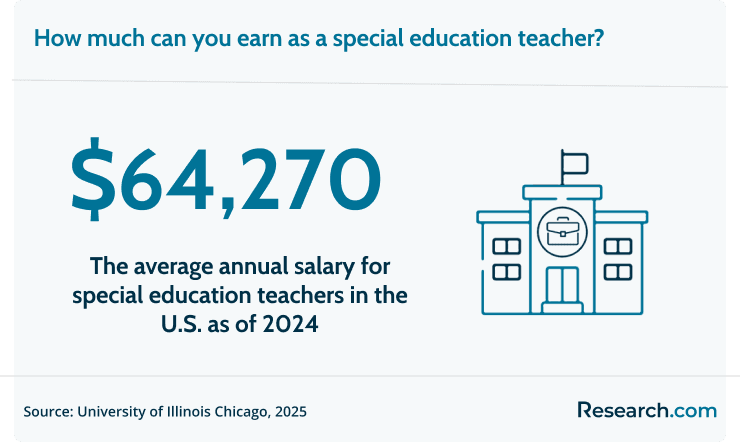
According to recent data, the average annual salary for special education teachers is $64,270, though this figure can vary depending on factors such as geographic location, years of experience, and the specific school district. Teachers working in metropolitan areas or high-demand regions often earn more, while those in rural districts may earn slightly less.
In addition to location and experience, education level and certifications also play a major role in salary potential. Teachers with advanced degrees, such as a master’s in special education, often qualify for higher pay scales, as do those who take on leadership or specialist roles within their schools.
For professionals interested in advancing their expertise in this field, opportunities like accelerated online gifted education master's programs can provide specialized training to better serve students with diverse needs.
By combining tailored teaching strategies, legal compliance, and evidence-based practices, special education programs help students thrive academically, socially, and emotionally.
What academic interventions are common in special education programs?
Special education programs use a variety of academic interventions to help students with disabilities achieve their learning goals. Common interventions are designed to target specific skill deficits and provide individualized support. This focus on specialization within education mirrors the advanced training available in other fields, such as the numerous public health specialties that professionals can pursue.
Here are some examples:
- Explicit Instruction: Teachers break down complex skills into smaller, manageable steps and provide clear, structured teaching. This method helps students understand concepts thoroughly and reduces confusion.
- One-on-One or Small Group Tutoring: Targeted instruction in a focused setting allows students to receive personalized guidance and practice. It is particularly effective for students struggling in reading, math, or writing.
- Multi-Sensory Learning Techniques: Lessons incorporate visual, auditory, and kinesthetic elements to reinforce understanding. This approach benefits students with learning differences by engaging multiple senses simultaneously.
- Assistive Technology: Tools such as text-to-speech software, audiobooks, and adaptive keyboards support students in accessing and completing academic tasks. These technologies help bridge gaps caused by learning disabilities.
- Progress Monitoring and Frequent Feedback: Teachers regularly assess student performance and adjust instruction based on data. This ensures that interventions are effective and that students continue to make measurable progress toward their goals.
- Differentiated Instruction: Lessons are adapted to match students’ individual learning levels, strengths, and interests. This strategy helps ensure all students can engage meaningfully with the curriculum.
How do special education programs address speech and language development?
Special education programs address speech and language development by providing targeted interventions that support communication skills, which are critical for academic and social success. These specialized educational pathways are designed to maximize student success, similar to how many students seek out the top schools with high transfer acceptance rates to maximize their chances of continuing their academic journey.
These programs often involve collaboration between special education teachers and speech-language pathologists (SLPs) to assess each student’s needs and create individualized goals.
- Speech Therapy Sessions: Students receive regular one-on-one or small-group therapy to improve articulation, pronunciation, and clarity of speech. These sessions focus on building functional communication skills for both academic and social contexts.
- Language Intervention Programs: Teachers use structured activities to enhance vocabulary, grammar, comprehension, and expressive language. This helps students better understand instructions, participate in classroom discussions, and express their thoughts effectively.
- Augmentative and Alternative Communication (AAC): For students with significant speech impairments, programs may incorporate communication devices, picture boards, or speech-generating software. AAC tools enable students to communicate independently and engage more fully in learning.
- Integration into Classroom Activities: Speech and language goals are reinforced during regular instruction and social interactions. This ensures that students apply newly learned skills in real-world contexts and across different subjects.
- Progress Monitoring and Collaboration: Teachers and SLPs track student progress regularly and adjust interventions as needed. Collaboration with families ensures consistency between school and home, supporting overall communication development.
How do online EdD programs support leadership development in special education?
Advanced leadership training plays a critical role in shaping effective special education management by fostering skills in strategic planning, policy interpretation, and evidence‐based decision making. Tailored training programs cultivate a collaborative environment that enhances responsiveness to diverse student needs and drives systemic improvements. In this context, leaders are better equipped to implement innovative, compliant, and sustainable practices that elevate overall program performance. Furthermore, pursuing advanced credentials through online EdD programs offers practitioners a fast-track route to acquiring comprehensive leadership competencies directly applicable to the challenges and complexities of modern special education.
What continuing professional development is essential in special education?
Continuing professional development is essential for special education teachers to stay current with evolving best practices, laws, and instructional strategies. Ongoing learning ensures that teachers can provide the highest quality support to students with diverse needs.
Key areas of professional development include:
- Training in Assistive Technology: Teachers benefit from learning how to integrate digital tools and devices that support students with disabilities. These skills help improve accessibility, communication, and classroom engagement.
- Workshops on Behavioral Interventions: Ongoing training in behavior management equips teachers with evidence-based strategies to support students with emotional or behavioral challenges. This ensures classrooms remain safe and conducive to learning.
- Updates on Special Education Law and Policy: Professional development often includes updates on laws such as the Individuals with Disabilities Education Act (IDEA) or Section 504. Staying informed helps teachers remain compliant while advocating effectively for student rights.
- Inclusive Teaching Practices: Training in inclusive methods helps teachers collaborate with general educators and adapt instruction for diverse classrooms. This supports the goal of integrating students with disabilities into mainstream education whenever appropriate.
- Cultural Competency and Equity Training: Teachers develop awareness of cultural, linguistic, and socioeconomic differences that impact student learning. This training ensures that instruction is equitable and responsive to all learners.
- Collaboration and Team-Building Skills: Professional development in teamwork enhances teachers’ ability to work with parents, specialists, and multidisciplinary teams. Strong collaboration ensures holistic support for students’ academic and social growth.
According to the most recent data, the majority of special education teachers pursued degrees in Education, with 212,041 individuals holding this major. This trend reflects the direct connection between education degrees and the specialized training needed to teach students with diverse learning needs.
For those looking to transition into the field more efficiently, some universities offer the shortest online special education graduate programs, giving professionals from various disciplines a pathway to quickly gain the credentials needed to work in special education.
The chart below provides a visual breakdown of the most common majors among special education teachers.
What is the career outlook and job demand for special education professionals?
The career outlook for special education professionals remains strong despite some fluctuations in overall employment. Special education teachers play a critical role in supporting students with diverse learning needs, and the demand for qualified educators continues across public and private schools.
For educators seeking to expand their skills and career opportunities, options like accelerated ESL programs online can complement special education training, allowing teachers to better serve multilingual students with diverse learning needs.
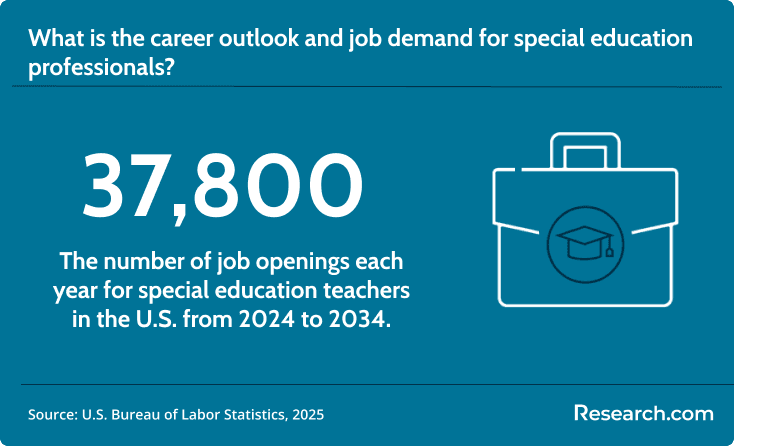
Despite declining employment in some regions, about 37,800 openings for special education teachers are projected each year, on average, over the decade, reflecting consistent turnover, retirements, and the need to replace teachers who leave the profession.
Job demand is particularly high in areas with teacher shortages or growing student populations, making it a stable and meaningful career choice.
Here’s what graduates have to say about their special education teaching degree:
- Jean: "Becoming a special education teacher has been the most rewarding decision of my life. Knowing that my work directly helps students overcome barriers and achieve their goals makes every challenge worthwhile. The impact I see in their progress reminds me daily why I chose this path. "
- Paul: "I entered special education after earning my master’s degree, and the career opportunities have been incredible. The profession provides both stability and purpose. Most importantly, I feel proud to advocate for students who deserve a voice in their education."
- Celeste: "Every day in the classroom is different, and that’s what I love about teaching special education. Collaborating with families, using assistive technology, and watching students gain confidence has been inspiring. It’s a career that not only challenges you but also changes you for the better."
Key Findings
- Special education programs remain in high demand, with 77% of school districts reporting a shortage of qualified special education teachers.
- Special education programs rely on individualized support, family collaboration, and assistive technology, making them essential for addressing diverse student needs.
- Education is the top major for special education teachers, with 212,041 individuals earning degrees in this field.
- The most common educational level among special education teachers is a graduate degree, held by 231,156 professionals nationwide.
- Despite declining employment, about 37,800 job openings for special education teachers are projected each year, primarily due to retirements and workforce turnover.
References:
- Data USA. (2024). Special education teachers. Data USA
- Gilmour, A. (n.d.). How the Special Education Teacher Shortage Affects Students with LD, and What to Do About It. Learning Disabilities Association of America
- Frontline Education. (2024). Special Education and the Teacher Shortage. Frontline Education
- U.S. Bureau of Labor Statistics. (2025). Occupational Outlook Handbook: Special Education Teachers. U.S. BLS
Other things you should know about special education programs
In 2027, special education programs emphasize individualized learning plans, inclusive practices, and social-emotional learning (SEL). There is also a strong focus on integrating technology to assist diverse learning needs, ensuring accessibility, and promoting the transition from education to independent living and employment after graduation.
To enroll in a special education program in 2027, candidates typically need a bachelor's degree in education or a related field, and clearance of a background check. Some programs may also require specific coursework in psychology or child development.


