
2027 Top Professional Finance Certifications to Consider

Co-Founder and Chief Data Scientist
Individuals seeking to advance their careers in finance often face the challenge of being clueless about which professional certifications hold the most value. It can be difficult to select the right credentials to stand out in a competitive job market. However, a certification can be a powerful tool, especially since employment of financial managers is projected to grow much faster than the average 15% until 2034.
The Research.com team, with over ten years of expertise in career planning, has compiled this comprehensive guide using only credible, data-driven sources to simplify your search. Reading this article will help you understand the top finance certifications and make an informed decision for your professional future.
Key Things You Should Know About the Top Professional Financial Certifications
- The CFA for investment management and the CPA for accounting are among the top professional financial certifications. The CFA potentially increases earnings by $100,600, and the profession of financial managers is projected to grow 15% from 2024 to 2034.
- While pursuing the CFA and CPA simultaneously is possible, it demands 20-30 hours of weekly study for several years; for corporate finance, the CMA is optimal, while the globally recognized CFA is the "gold standard" for investment management.
- The CFA elevates an investment manager's median base salary to approximately $100,600, while the other sections guide beginner certifications like the FMVA and MBA-holder benefits, with many companies offering tuition reimbursement.
- List of Top Professional Finance Certifications Top Certifications
- Can I earn a CFA and CPA simultaneously, or should I choose just one? CFA & CPA Certification
- Which certification is best for a finance career in corporate finance versus investment management? Which certification is best for a finance career in corporate finance versus investment management?
- Is the CFA charter the gold standard for investment analysis? Is the CFA charter the gold standard for investment analysis?
- What is the salary potential and job growth for an investment manager with a CFA? Salary & Job Growth
- What are the best finance certifications for recent graduates? What are the best finance certifications for recent graduates?
- Are there any online finance certifications that don't require work experience? Are there any online finance certifications that don't require work experience?
- What are the costs and time commitments for beginner finance certifications? Cost and Time
- How can an MBA graduate benefit from pursuing a finance certification? MBA Benefits
- Does the Return on Investment for Finance Certifications Justify the Costs? Does the Return on Investment for Finance Certifications Justify the Costs?
- Are there any free or low-cost finance certifications available online? Free Certification
- Do companies reimburse for the cost of finance certifications and exams? Do companies reimburse for the cost of finance certifications and exams?
List of Top Professional Finance Certifications
Here is a list of the top professional finance certifications in the U.S. for 2027, each recognized for its ability to boost careers and increase salaries in various finance roles.
Chartered Financial Analyst (CFA)
The CFA is often considered the gold standard for investment professionals, including portfolio managers and equity analysts. The program is rigorous, requiring candidates to pass three levels of exams, which typically takes three to four years to complete.
This globally recognized designation can lead to significant career advancement and a notable salary increase, with some reports showing a 15-25% jump in earnings.
Certified Public Accountant (CPA)
The CPA is the go-to certification for professionals in accounting, auditing, and taxation. While the time it takes to earn the license varies, it generally takes one to two years to complete all exam sections. This certification is highly valued in both public accounting firms and corporate finance, often serving as a prerequisite for leadership positions.
Financial Risk Manager (FRM)
Geared toward risk analysts and compliance officers, the FRM is seeing growing demand in the banking and FinTech sectors. This certification can typically be completed in one to two years and proves a professional's expertise in assessing and managing financial risk. It's a key credential for those looking to specialize in a vital and expanding area of finance.
Certified Financial Planner (CFP)
The CFP demonstrates a professional’s competence in personal financial planning, making it an ideal choice for those pursuing client-facing financial advisory roles. The certification has strict requirements, including a bachelor's degree and significant professional experience (6,000 hours or 4,000 hours of apprenticeship). It's a mark of trust and expertise for clients seeking guidance on their financial futures.
Certified Management Accountant (CMA)
The CMA is a strong choice for those focused on corporate accounting and financial management. This certification emphasizes the skills needed for strategic financial planning and decision-making within a company. To earn the designation, candidates need a bachelor’s degree and two years of professional experience, along with a commitment to ongoing continuing education.
Certified Investment Management Analyst (CIMA)
Aimed at experienced financial analysts and wealth management professionals, the CIMA requires a combination of three years of experience and specialized education. This certification focuses on advanced investment strategies and asset allocation. It is particularly beneficial for professionals who manage complex portfolios for high-net-worth clients.
Certified Fund Specialist (CFS)
The CFS is designed for professionals who specialize in advising clients on mutual funds and other investment funds. It is a more accessible certification, requiring either a bachelor’s degree or relevant work.
Can I earn a CFA and CPA simultaneously, or should I choose just one?
It is possible to pursue both the CFA and CPA certifications simultaneously, but it is generally not recommended due to the intense time commitment and study load required for each.
Many professionals choose to complete one designation first, usually the CPA, because it provides a strong accounting foundation that can help with certain CFA exam topics. After completing the CPA, they then progress to the CFA exams.
Pros of pursuing both include broadening skill sets and enhancing career opportunities, especially in roles that combine accounting and finance expertise. However, doing both together can mean dedicating 20-30 hours per week over several years, which can be overwhelming and may hinder achieving top results in either exam.
For those who enjoy balancing multiple learning paths, you might also wonder, can you get two bachelor degrees? Exploring that topic can help you decide whether pursuing multiple advanced credentials aligns with your long-term professional goals.
Multiple professionals recommend focusing on one at a time to maintain quality study and career focus. The CPA is widely regarded as the premier certification for accounting careers in the U.S., whereas the CFA is more geared toward investment analysis and portfolio management. The best sequence depends on your career goals and which field you want to prioritize initially.
Which certification is best for a finance career in corporate finance versus investment management?
For a career in corporate finance, the best certification tends to be the CMA. The CMA focuses on corporate accounting, financial management, budgeting, forecasting, and performance management—all critical skills in corporate finance roles. It requires a bachelor's degree and two years of relevant experience, with emphasis on decision analysis, planning, and financial statement analysis.
For careers in investment management, the CFA designation is the most prestigious and highly respected credential. It delves deeply into investment analysis, portfolio management, equity research, and capital markets.
The CFA curriculum covers asset valuation, portfolio construction, and investment strategies, making it ideal for portfolio managers, equity analysts, and financial advisors managing client investments.
Additional certifications related to investment management include the CIMA, which is focused on advanced portfolio construction and wealth management for affluent clients, and the Chartered Alternative Investment Analyst (CAIA), which specializes in alternative investments like private equity and hedge funds. For those considering a shift into public safety or criminal justice, exploring the easiest law enforcement degree programs can provide insight into accessible options for entering that field.
Is the CFA charter the gold standard for investment analysis?
Yes, the CFA charter is widely recognized as the gold standard for investment analysis and portfolio management worldwide. It is highly respected for its rigorous curriculum covering advanced investment knowledge, ethics, financial analysis, valuation, economics, and portfolio construction.
The CFA designation is known for its high difficulty level, requiring passing three exam levels and accumulating at least 4,000 hours of relevant professional experience.
Major financial institutions, investment firms, and professionals regard the CFA as a mark of excellence, competence, and ethical standards in the investment industry. CFA charterholders are highly sought after for roles such as portfolio managers, equity analysts, wealth managers, and investment strategists globally.
For those interested in applying analytical and behavioral insights to finance and public policy, earning a social and behavioral sciences degree can be a strong complementary educational path.
The CFA certification has been described as the financial industry's equivalent of a doctorate in terms of depth and rigor in investment expertise.
What is the salary potential and job growth for an investment manager with a CFA?
An investment manager with a CFA charter in the U.S. can expect strong salary potential and excellent job growth prospects. The median base salary for CFA charterholders in investment-related roles is approximately $100,600 annually, a testament to the credential's value in the market .
Beyond salary, the investment management field itself is experiencing significant expansion. This growth is driven by increasing global asset management needs, rising wealth accumulation, and a continuous demand for sophisticated portfolio strategies. For recent graduates considering advanced education paths, exploring whether can you get an MBA right after undergrad can help determine the best timing to pursue graduate business studies.
The CFA charter directly enhances employability and advancement opportunities within this competitive landscape, making professionals highly sought after by asset management firms, hedge funds, private equity, and financial advisory firms.
Employment growth for financial managers
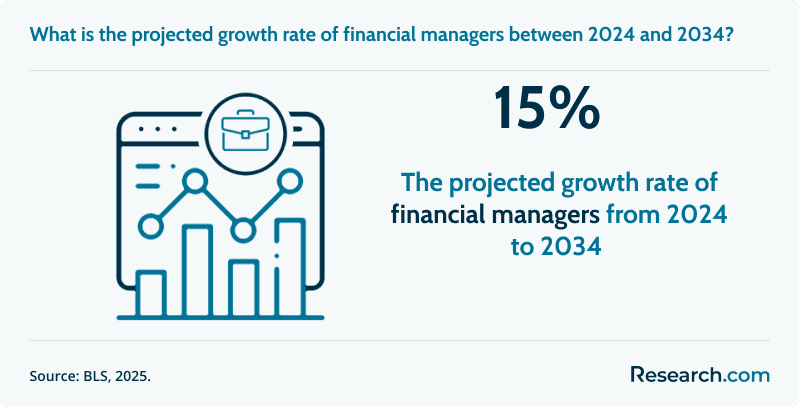
This individual career growth aligns with broader industry trends. The U.S. Bureau of Labor Statistics projects that the employment of financial managers will grow by 15% from 2024 to 2034, a rate much faster than the average for all occupations.
This employment growth translates to an average of about 74,600 job openings for financial managers each year over the next decade. Many of these openings will be created by the need to replace workers who are retiring or transitioning to other roles, creating a consistent demand for qualified professionals with credentials like the CFA.
A strong CFA credential not only fuels individual career growth but also places you in a high-demand position within the larger financial job market. To better understand where these opportunities are concentrated, it's helpful to examine which industries are the largest employers of financial managers.
In 2024, financial managers held about 868,600 jobs, with the top employers indicated in the chart below.
What are the best finance certifications for recent graduates?
The best finance certifications for recent graduates focus on foundational knowledge, practical skills, and industry recognition to boost early career opportunities:
- Financial Modeling & Valuation Analyst (FMVA) by Corporate Finance Institute: This certification teaches practical financial modeling, valuation, and analysis skills highly relevant for entry-level financial analysts, corporate finance, and investment roles. No experience required.
- Chartered Financial Analyst (CFA) Level 1: Starting the CFA program is great for recent grads aiming for investment management careers. Passing Level 1 demonstrates strong foundations in finance, ethics, and investment analysis.
- Professional Certificates in Corporate Finance: Short-term online certifications that cover corporate finance principles, valuation, and financial decision-making without requiring professional experience.
While certifications like these are vital for establishing a career in finance, it is interesting to note that technical trades also have their own valuable credentials, such as an appliance repair certification online, which provides a different, but equally in-demand, skill set.
Are there any online finance certifications that don't require work experience?
Yes, several online finance certifications do not require work experience, making them suitable for college students and those new to the finance field. These entry-level certifications focus on foundational finance knowledge and skills and often have no educational or professional prerequisites.
Examples include certifications in investment performance, financial education, financial modeling, and valuation (like FMVA), and some risk management certificates. These programs typically involve coursework and exams that can be completed fully online with flexibility.
Such certifications help demonstrate commitment to the finance profession and build skills that improve job prospects even without prior work experience. Many of these can be completed within 6 to 12 months, depending on study pace.
Pursuing these certifications can also complement an academic path, providing valuable real-world skills to those asking, "Can you double major in accounting and finance?" A strong foundational knowledge from these certifications enhances the already marketable combination of an accounting and finance degree.
What are the costs and time commitments for beginner finance certifications?
Beginner finance certifications typically have costs ranging from a few hundred dollars to several thousand dollars, with time commitments varying from a few months to a couple of years, depending on the program intensity and exam levels.
For example:
- The FMVA certification usually takes several months of part-time study and costs around $400 to $1,500, depending on the package chosen.
- The CFA program costs between $3,500 and $4,600 to complete all three exam levels and usually requires 3-4 years of preparation, with 300 hours of study recommended per level.
- The CMA program costs about $1,500 to $3,000 and often takes 18 months to 2+ years to complete, including two exam parts.
- The FRM certification costs roughly $600 to $1,200 plus exam fees and requires about 240 hours of study, typically done over 1-2 years.
- The CFP certification costs around $2,000 and takes about 18-24 months to complete.
Beyond the direct fees and study costs, another significant financial consideration for pursuing a certification or further education is the potential "opportunity cost," which can be visualized by examining the following data on the average cost of lost income.
How can an MBA graduate benefit from pursuing a finance certification?
Pursuing a finance certification after earning an MBA can provide a significant boost to a professional's career, offering more than just an increase in specialized knowledge.
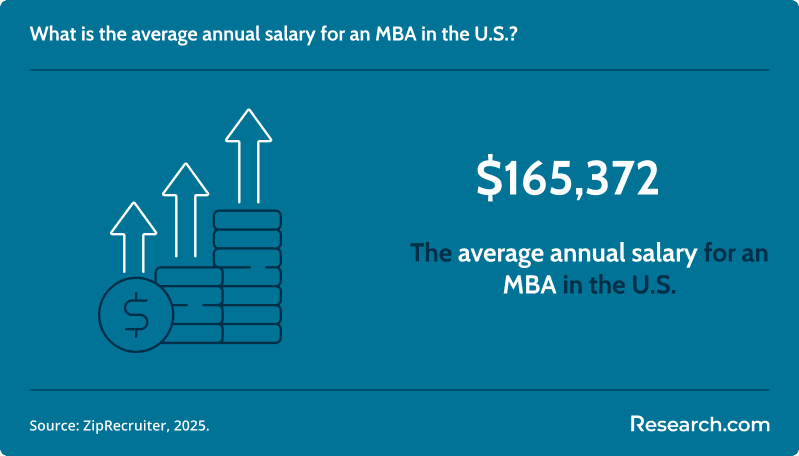
While the average annual pay for an MBA in the United States is already substantial at approximately $165,372, adding a specialized finance credential can further enhance earning potential and open doors to more lucrative roles. This powerful combination of credentials gives a professional a unique edge by merging the broad business acumen of an MBA with deep financial expertise.
Enhanced Specialized Knowledge and Skills
While an MBA provides a wide-ranging understanding of business operations, finance certifications offer concentrated expertise in specific areas such as investment management, corporate finance, and risk management. This specialized knowledge allows MBA graduates to excel in advanced financial decision-making and strategic planning, making them invaluable assets in any industry.
Improved Career Prospects and Versatility
For an MBA holder, a finance certification can unlock high-level positions in competitive fields. Candidates with both an MBA and a specialized credential are more competitive for roles like CFO, financial analyst, or portfolio manager. This dual expertise also broadens career options across various sectors, significantly increasing their versatility and employability.
Higher Salary Potential
By combining the general business knowledge of an MBA with a specialized finance certification, professionals can position themselves for higher salary growth in a competitive market. These certifications demonstrate a level of specialized skill that employers highly value, allowing graduates to command greater compensation and accelerate their career trajectory.
Professional Credibility and Networking
Adding a finance certification to an MBA enhances a professional’s credibility and shows a dedication to mastering complex financial topics. This combination also provides access to powerful professional finance networks, which offer crucial career support, continuing education, and industry-wide recognition that can be leveraged for future opportunities.
Lifelong Learning and Competitiveness
The dynamic nature of the financial industry requires continuous learning. Pursuing a finance certification alongside an MBA encourages professionals to stay current with evolving financial technologies and practices. This commitment to ongoing skill development ensures that MBA graduates remain relevant and competitive throughout their careers.
Furthermore, professionals interested in high-demand roles should routinely check listings for top MSN MBA jobs in the finance sector, as the market increasingly values this rare blend of general management and specialized financial expertise.
Does the Return on Investment for Finance Certifications Justify the Costs?
A comprehensive ROI evaluation examines direct expenses, study duration, and the career benefits accrued over time. It is crucial to compare immediate costs with long-term gains such as enhanced roles, increased salary trajectories, and improved job stability. A well-planned certification investment can lead to critical decision-making positions and greater leadership opportunities. Additionally, integrating certification efforts with advanced qualifications, such as the best value online MBA, further strengthens professional profiles and accelerates career advancement.
Are there any free or low-cost finance certifications available online?
There are several free or low-cost online finance certification courses available in 2025. Some notable options include:
- Financial Analysis Certification by upGrad: Covers company financial performance analysis, forecasting, and financial statement tools. The certificate is free and shareable on LinkedIn.
- Financial Markets course by Yale University on Coursera: Taught by a Nobel laureate, it explains market behavior, investment diversification, and risk management. The course audit is free, and financial aid is available for the certificate.
- Accounting Fundamentals course by upGrad: Focused on building foundational accounting skills with a free downloadable certificate.
- Digital Innovations in the Financial System by upGrad: Covers fintech, blockchain, AI in finance, and digital banking. The certificate is free.
- Free Auditing: Many courses on platforms like Coursera and edX offer free auditing with optional paid certificates, covering topics from corporate finance to behavioral finance and fintech.
These accessible finance options are great for building a fundamental skillset that can be applied across numerous industries, even those that are highly specialized. For example, individuals looking for the shortest esports business management programs online will often find that strong financial knowledge is a crucial, high-demand component of the curriculum.
Do companies reimburse for the cost of finance certifications and exams?
Many companies do reimburse part or all of the costs for finance certifications and exams, especially if the employee is working in a finance-related role. This is commonly seen with well-known certifications like the CFA, where employers recognize the value the certification adds to the employee’s skills and career growth.
Such programs often include coverage for exam fees, course materials, and sometimes travel expenses if needed. Reimbursement policies vary by company and may require prior approval or proof of successful completion.
The benefit of employer reimbursement is that professionals can pursue certifications while continuing to work, balancing study with their job responsibilities. This is a common practice across sectors, including highly specialized fields like entertainment business careers, where financial acumen in areas like production accounting or rights management is crucial.
This focus on professional development's financial return extends beyond certifications to advanced degrees like the MBA. The following chart illustrates the average MBA salary by state, highlighting the geographic variations in earning power for this credential.
Key Findings
- The employment of financial managers is projected to grow by 15% from 2024 to 2034, which is much faster than the average for all occupations.
- A CFA designation can lead to a notable salary increase, with some reports showing a 15-25% jump in earnings.
- Professionals pursuing both the CFA and CPA simultaneously may need to dedicate 20-30 hours per week to study over several years.
- The median base salary for CFA charterholders in U.S. investment-related roles is approximately $100,600 annually.
- The U.S. Bureau of Labor Statistics projects an average of about 74,600 job openings for financial managers each year over the next decade.
References:
- CFA Charterholder salary. (2025). ZipRecruiter. Retrieved September 25, 2025, from https://www.ziprecruiter.com/Salaries/Cfa-Charterholder-Salary
- Financial Managers. (2025, August 28). U.S. Bureau of Labor Statistics. Retrieved September 25, 2025, from https://www.bls.gov/ooh/management/financial-managers.htm#tab-3
- Hanson, M., & Hanson, M. (2025, September 2). Average Cost of College [2025]: Yearly tuition + expenses. Education Data Initiative. https://educationdata.org/average-cost-of-college
- Mba Salary. (2025). ZipRecruiter. Retrieved September 25, 2025, from https://www.ziprecruiter.com/Salaries/Mba-Salary
- What is the average MBA salary by state. (2025). ZipRecruiter. Retrieved September 25, 2025, from https://www.ziprecruiter.com/Salaries/What-Is-the-Average-MBA-Salary-by-State
Other Things You Should Know About Top Professional Financial Certifications
In 2027, the requirements for obtaining top finance certifications typically include a combination of relevant work experience, educational qualifications (such as a degree in finance or related fields), and the successful completion of a series of rigorous exams. Specific requirements vary by certification, so candidates should review each certification body's guidelines.
To maintain top finance certifications in 2027, professionals need to complete 30 to 40 continuing education credits annually, depending on the certification body. These credits can include attending workshops, online courses, or industry conferences approved by the certifying organization.
In 2027, obtaining a top finance certification can significantly enhance career prospects by providing specialized knowledge and skills, boosting earning potential, and opening doors to global opportunities. Certification often leads to industry recognition and a competitive edge in the job market.


