
2027 Social & Behavioral Science Degrees in Public Health: Programs, Careers and Job Outlook

Co-Founder and Chief Data Scientist
Public health is not only about preventing disease and improving healthcare systems – it is equally about understanding human behavior and the social factors that influence health outcomes. Social and behavioral science degrees in public health bridge the gap between medical knowledge and the realities of how individuals and communities live, work, and make decisions.
With this year shaping up to be one of significant change in healthcare, these programs are becoming increasingly vital for tackling challenges such as health disparities, mental health crises, and the impact of social determinants of health. Graduates of these programs play a critical role in designing interventions, shaping policy, and driving community health initiatives.
This article explores the programs available in social and behavioral sciences within public health, the diverse career opportunities they open, and the job outlook for professionals entering the field today.
What are the benefits of pursuing a social & behavioral science degree in public health?
- Interdisciplinary Approach: Combines psychology, sociology, anthropology, and public health to provide a well-rounded perspective on health behaviors and outcomes.
- Focus on Real-World Impact: Prepares graduates to design and implement programs that address pressing issues such as substance use, mental health, and health disparities.
- Strong Career Flexibility: Opens doors to careers in research, policy development, community health, nonprofit organizations, and government agencies.
- High Demand for Expertise: With growing awareness of social determinants of health, professionals who can address behavioral and cultural factors are increasingly sought after.
- Opportunities for Leadership: Equips students with skills to influence policy, lead community initiatives, and contribute to large-scale public health strategies.
What can you do with a social & behavioral science degree in public health?
With a social and behavioral science degree in public health, graduates are prepared for a variety of careers that combine health knowledge with an understanding of human behavior and social systems. Many professionals enter roles such as health educators or community health workers, where they design programs, promote wellness, and connect individuals with essential resources. Others choose to work as public health researchers, investigating how social determinants influence health outcomes and providing evidence for policies and interventions.
Graduates may also pursue careers as policy analysts, evaluating and shaping public health initiatives to address inequities, or as program coordinators and managers, overseeing projects for government agencies, nonprofit organizations, or healthcare systems. Those with a focus on behavioral health can work in areas such as mental health, addiction services, and prevention programs. Beyond direct practice, the degree also provides a strong foundation for graduate study, opening doors to advanced training in public health, social work, counseling, or health policy. Ultimately, this path allows graduates to apply their skills in diverse settings while making meaningful contributions to improving community and population health.
For students considering advanced study, it also serves as a stepping stone to graduate degrees in public health, social work, counseling, or health policy.
Where can you work with a social & behavioral science degree in public health?
Graduates with a social and behavioral science degree in public health have the flexibility to work in a wide variety of settings, from local community organizations to large international agencies. Since the degree combines health knowledge with an understanding of human behavior and social systems, career paths extend far beyond hospitals and clinics. Professionals in this field are needed anywhere public health initiatives, policies, and programs intersect with people’s daily lives. Common workplaces include:
- Government Agencies: Such as the Centers for Disease Control and Prevention (CDC), local health departments, and public health policy offices.
- Nonprofit Organizations: Advocacy groups, foundations, and community-based organizations focusing on issues like mental health, nutrition, or disease prevention.
- Healthcare Systems and Hospitals: Roles that focus on patient education, behavioral health, and community outreach programs.
- Research Institutions and Universities: Opportunities in behavioral health research, program evaluation, and teaching future public health professionals.
- International Health Organizations: Agencies like the World Health Organization (WHO) or global NGOs, where professionals address worldwide health disparities and cultural factors in healthcare.
- Corporate and Private Sector: Wellness program development, employee health promotion, and consulting roles related to behavior and health outcomes.
This broad range of work environments allows graduates to apply their skills to both local and global challenges, making the degree highly adaptable to evolving public health needs.
How much can you earn with a social & behavioral science degree in public health?
Earning potential with a social and behavioral science degree in public health varies depending on education level, role, and work setting. Entry-level positions, such as community health workers or health educators, typically pay between $40,000 and $55,000 annually. Mid-level careers, such as program managers, policy analysts, or behavioral health specialists, often earn in the range of $60,000 to $80,000 per year. Professionals who pursue advanced degrees, certifications, or leadership roles in government agencies, research institutions, or healthcare systems can make $90,000 or more annually.
Geography also plays a major role in salary differences—urban areas and states with strong public health funding generally offer higher compensation. In addition, demand for professionals who understand the link between behavior and health continues to rise, particularly in areas like mental health, substance use prevention, and community health equity. For 2025, this trend suggests steady salary growth as organizations seek experts who can design effective, culturally responsive health interventions.
- What is Social and Behavioral Sciences? Overview
- What You Need to Know About Bachelor’s in Social & Behavioral Science Degree Programs in Public Health Bachelor's Degree
- What You Need to Know About Master’s in Social & Behavioral Science Degree Programs in Public Health Master's Degree
- What You Need to Know About Doctoral Degree Programs in Social & Behavioral Science in Public Health Doctoral Degree
- List of Social & Behavioral Science Degree Programs in Public Health List of Programs
- What are the career options for social & behavior science in public health graduates? Career Options
- What skills will you develop from pursuing public health in social & behavioral science degree programs? What skills will you develop from pursuing public health in social & behavioral science degree programs?
- What is the job outlook for social & behavioral science degree in public health graduates? Job Outlook
- How do you choose the best social & behavioral science degree program in public health? How do you choose the best social & behavioral science degree program in public health?
- What common challenges do social & behavioral science in public health graduates face? What common challenges do social & behavioral science in public health graduates face?
What is Social and Behavioral Sciences?
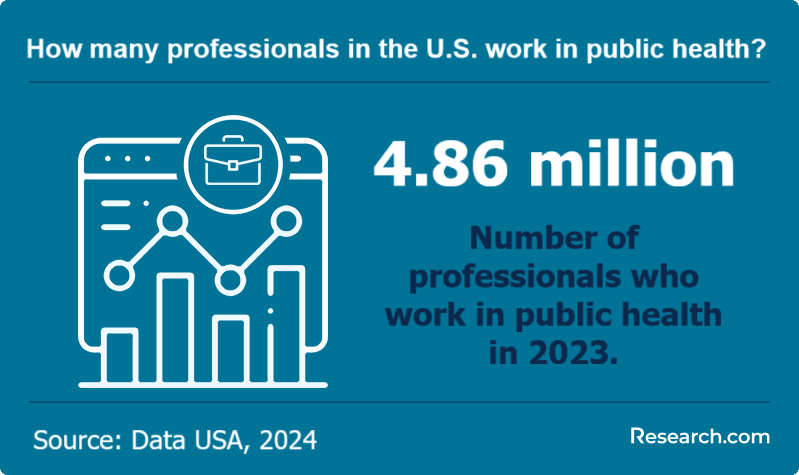
Social and behavioral sciences is an interdisciplinary field that studies how human behavior, social structures, and cultural influences shape the way people live and make decisions. In the context of public health, this discipline focuses on understanding why individuals and communities adopt certain health practices, how social environments affect health outcomes, and what strategies can encourage healthier behaviors. Data USA 2024 indicates that around 4.86 million professionals work in the U.S. public health sector in 2023.
It draws from areas such as psychology, sociology, anthropology, and public health to examine issues like health disparities, addiction, mental health, and the impact of social determinants of health. By analyzing both individual choices and broader societal patterns, social and behavioral sciences provide the foundation for designing effective health interventions, shaping policies, and building programs that promote wellness across diverse populations.
As such, you may have a sociology or behavioral psychology degree for your bachelor's, or in any area for that matter, and pursue a master's degree in public health with a concentration in social and behavioral sciences. There are also doctorate programs in public health with the same concentration.
What You Need to Know About Bachelor’s in Social & Behavioral Science Degree Programs in Public Health
A bachelor’s degree in social and behavioral sciences within public health provides the foundation for understanding how human behavior, culture, and social systems influence health outcomes. At this level, students typically study courses in psychology, sociology, anthropology, epidemiology, health communication, and community health. The curriculum emphasizes both theory and practical skills, preparing graduates to analyze health challenges and contribute to solutions that are people-centered and culturally aware.
This four-year degree is often seen as a starting point for careers in public health education, community outreach, health advocacy, and entry-level research positions. It also serves as a stepping stone for advanced studies, such as a Master of Public Health (MPH) with a concentration in social and behavioral sciences. A master of public health degree salary is significantly higher, but it comes with more leadership responsibilities and higher skills requirements. As such, students also benefit from gaining hands-on experience through internships, service-learning projects, or research opportunities, which strengthen both job readiness and graduate school applications.
Graduates with a bachelor’s degree can expect to work in roles that directly impact communities, with growing opportunities in 2025 as public health organizations place more emphasis on addressing behavioral and social determinants of health.
Social and behavioral science degree graduates can become community health workers across a range of sectors. Their largest employers are in ambulatory healthcare services and social assistance, employing 21% and 20%, respectively.
What You Should Know About Master’s in Social & Behavioral Science Degree Programs in Public Health
A master’s in social and behavioral sciences within public health is a two-year degree designed for students who want to deepen their expertise in how human behavior and social systems affect health outcomes. Most often offered as a Master of Public Health (MPH) with a concentration in social and behavioral sciences, these programs combine advanced public health training with specialized study in areas such as health promotion, behavioral theory, program evaluation, and health disparities.
Students at the master’s level learn how to design, implement, and assess public health interventions that address complex issues like chronic disease prevention, mental health, substance use, and community wellness. Coursework is typically complemented by hands-on experiences such as practicums, internships, or capstone projects that connect theory to real-world public health challenges.
What can you do with a masters in public health? Graduates are well-prepared for mid- to senior-level positions in government agencies, nonprofit organizations, healthcare systems, and international health organizations. Careers often include roles such as program director, policy analyst, behavioral health consultant, or research specialist. For those interested in academia or high-level research, a master’s degree can also serve as a stepping stone toward a doctoral program.
In 2025, the demand for professionals trained in behavioral and social determinants of health is projected to grow, making a master’s degree especially valuable for advancing into leadership and specialized roles within the public health sector.
What You Need to Know About Doctoral Degree Programs in Social & Behavioral Science in Public Health
A doctoral degree in social and behavioral sciences within public health is the highest level of academic training in this field. These programs, which can be completed in 3-5 years, are typically offered as a PhD in Public Health with a concentration in Social and Behavioral Sciences or as a DrPH (Doctor of Public Health) with a focus on applied leadership. While a traditional or online PhD in public health emphasizes advanced research and scholarship, a DrPH is more practice-oriented, preparing graduates to lead large-scale public health programs and policies.
Doctoral students dive into advanced coursework in behavioral theory, health equity, program evaluation, and research methods. A significant portion of the program is dedicated to conducting original research, resulting in a dissertation that contributes new knowledge to the field. Many programs also require teaching experience, leadership training, or community-based projects.
Graduates with a doctoral degree are prepared for leadership positions in academia, government, healthcare systems, and international organizations. Common career paths include university professor, principal investigator, senior policy advisor, or director of public health programs. These roles often involve shaping public health policy, leading interdisciplinary research teams, and developing large-scale interventions.
In 2025 and beyond, doctoral-level expertise will be increasingly valuable as public health organizations seek solutions to complex issues like health inequities, global health crises, and behavioral health challenges. This makes a doctoral degree an excellent choice for those aiming to drive systemic change and influence the future of public health at the highest levels.
List of Social & Behavioral Science Degree Programs in Public Health
Degree programs in social and behavioral sciences within public health come in different forms, giving students the flexibility to align their studies with career goals. Some programs focus on undergraduate foundations, where students explore psychology, sociology, and public health basics, though the perceived difficulty of these foundational courses can vary, leading many to search for the easiest STEM degrees when selecting a major. Graduate-level options, such as master’s and doctoral programs, allow for deeper specialization in areas like behavioral health, health promotion, or community health research. Many universities also offer concentrations within a Master of Public Health, enabling students to tailor their training toward specific issues such as global health, health policy, or mental health.
These variations mean that students can choose a path that fits their desired level of expertise—whether they want to enter the workforce quickly, advance into leadership roles, or pursue research and academic careers.
Here is a list of some of the programs available:
Emory University | Rollins School of Public Health
- Location: Atlanta, GA 30322
- Programs: MPH in Behavioral, Social and Health Education Sciences (15-Month, Online Part-Time); PhD in Behavioral, Social, and Health Education Sciences
George Washington University | Milken Institute School of Public Health
- Location: Washington, DC 20052
- Program: Doctor of Philosophy (PhD) in Social and Behavioral Sciences in Public Health
Harvard University | T.H. Chan School of Public Health
- Location: Boston, MA 02115
- Programs: Master of Science – Social and Behavioral Sciences; Master of Public Health – Health & Social Behavior
Howard University | School of Social Work
- Location: Washington, D.C. 20059
- Program: Dual Master of Social Work/Master of Public Health
- Location: Bloomington, IN 47408
- Program: MPH in Social and Behavioral Sciences
Johns Hopkins University | Bloomberg School of Public Health
- Location: Baltimore, MD 21205
- Programs: Doctor of Philosophy (PhD) in Social and Behavioral Sciences; Master of Science in Public Health (MSPH) in Social & Behavioral Interventions
Kent State University | College of Public Health
- Location: Kent, OH 44242
- Program: Master of Public Health in Social and Behavioral Sciences
New York University | School of Global Public Health
- Location: New York, NY 10003
- Programs: Master of Public Health in Social & Behavioral Sciences (SBS Concentration); PhD in Social and Behavioral Sciences
Rutgers University | School of Public Health
- Location: New Brunswick, NJ 08901
- Programs: MPH in Social & Behavioral Health Sciences; PhD in Public Health (Social and Behavioral Health Sciences)
Temple University | College of Public Health
- Location: Philadelphia, PA 19122
- Programs: MPH in Social and Behavioral Sciences; PhD in Social and Behavioral Sciences
- Location: Gainesville, FL 32611
- Programs: MPH – Social & Behavioral Sciences; Ph.D. in Public Health – Social and Behavioral Sciences
University of Massachusetts - Lowell
- Location: Lowell, MA 01854
- Program: MPH in Social & Behavioral Sciences
- Location: Memphis, TN 38152
- Programs: MPH Social and Behavioral Sciences; PhD in Social and Behavioral Sciences
Yale University | School of Public Health
- Location: New Haven, CT 06520
- Programs: MPH in Social & Behavioral Sciences; PhD in Social and Behavioral Sciences
What are the career options for social & behavior science in public health graduates?
Graduates of social and behavioral science programs in public health are equipped to work at the intersection of health, human behavior, and community engagement. Because their training emphasizes the influence of culture, social structures, and behavioral patterns on health outcomes, career opportunities are broad and adaptable to many sectors. This adaptability mirrors the versatility of skills gained in rapidly evolving tech fields, leading many to explore programs like the best AI bootcamps to quickly pivot their careers.
Whether entering the workforce after a bachelor’s degree or pursuing advanced roles with a master’s or doctorate, graduates can find meaningful careers such as:
- Health Educator or Health Promotion Specialist: Designs and leads programs that encourage healthier lifestyles and prevent disease.
- Epidemiologist: Studies the patterns and causes of diseases and health conditions in populations and collects and analyzes data to identify risk factors, track outbreaks, and evaluate public health interventions.
- Community Health Worker: Engages directly with populations to connect them with services, provide resources, and improve health outcomes.
- Public Health Researcher: Conducts studies on health behaviors, social determinants of health, and intervention effectiveness.
- Policy Analyst or Advisor: Evaluates and shapes health policies that address behavioral and social factors.
- Program Coordinator or Manager: Leads public health initiatives for nonprofits, healthcare organizations, or government agencies.
- Behavioral Health Specialist: Works in mental health, addiction prevention, and behavioral change programs.
- University Faculty or Academic Researcher: For doctoral graduates, teaches future professionals and conducts original research.
These public health careers span a wide range of settings, including government health agencies, hospitals, schools, nonprofit organizations, research institutions, and international NGOs. In 2025, the growing emphasis on mental health, health equity, and social determinants of health means demand for professionals in this field will continue to rise, creating opportunities for impactful and stable careers.
The chart below shows the median annual salary for the various careers and occupations you can pursue as a social & behavioral science degree graduate in public health.
What skills will you develop from pursuing public health in social & behavioral science degree programs?
Students in social and behavioral science degree programs within public health gain a mix of technical, analytical, and interpersonal skills that prepare them to address complex health challenges. Key skills developed include:
- Research and Data Analysis: Ability to study health behaviors, evaluate interventions, and apply evidence-based strategies.
- Health Communication: Skills to educate, advocate, and engage effectively with diverse populations and stakeholders.
- Community Engagement: Experience working directly with communities to understand needs and design culturally appropriate programs.
- Problem-Solving and Critical Thinking: Capacity to analyze public health issues and develop innovative, practical solutions.
- Leadership and Project Management: Training to lead teams, manage programs, and oversee public health initiatives.
- Policy and Program Evaluation: Knowledge to assess the effectiveness of health policies and community programs.
Together, these skills make graduates adaptable professionals who can thrive in roles across government agencies, nonprofits, healthcare systems, and research institutions. This focus on specialized skills and credentials is vital across health-related careers, including understanding the sonographer certification cost and requirements for entry into that field.
What is the job outlook for social & behavioral science degree in public health graduates?
Graduates in social and behavioral sciences within public health are entering a field with generally favorable job prospects. Demand is growing for professionals who understand human behavior, social determinants of health, and how to design effective, culturally appropriate interventions. Several trends and statistics illustrate this momentum:
As reported by the U.S. Bureau of Labor Statistics (BLS), occupations in the “life, physical, and social science” category are projected to grow from 2024 to 2034 at a rate faster than the average for all occupations. In particular, sociologists (who often have training overlapping public health social sciences) are expected to see 4% growth over that decade. Employment of community health workers is projected to grow 11 percent from 2024 to 2034, much faster than the average for all occupations.
Some specific public health-adjacent occupations and sectors important to social & behavioral science show even stronger growth and are expected to expand, especially as public health focuses more on prevention, wellness, and addressing social determinants of health. With aging populations, increased chronic disease burden, and greater attention to equity and mental health, roles that combine behavior change, community engagement, research, and policy are becoming more critical.
For example, the employment of social and community service managers is projected to grow 6% from 2024 to 2034, with 18,600 openings projected each year over the decade. The employment of community health workers is projected to grow 11%, which translates to 7,800 openings each year. Meanwhile, for epidemiologists, employment is projected to grow 16%, with about 800 openings each year over the same 10-year period.
The table below shows the job outlook for various careers and occupations you can pursue as a social & behavioral science degree graduate in public health.
| Occupation | Projected Employment Growth (2024-2034) | Projected Annual Job Openings (2024-2034) |
| Community Health Workers | 11% | 7,800 |
| Social and Community Service Managers | 6% | 18,600 |
| Sociologists | 4% | 300 |
| Social Worker | 6% | 74,000 |
| Epidemiologists | 16% | 800 |
| Health Education Specialist | 4% | 7,900 |
How do you choose the best social & behavioral science degree program in public health?
Selecting the right on-campus or online public health degree in social and behavioral science program depends on your career goals, learning style, and long-term aspirations. Start by considering the level of study you want to pursue—whether it’s a bachelor’s for entry-level positions, a master’s for advanced practice and leadership, or a doctoral program for research and academic careers. Accreditation is also critical; choosing a program recognized by the Council on Education for Public Health (CEPH) ensures that your degree meets industry standards and enhances career opportunities.
You should also evaluate the curriculum and concentrations offered. Some programs emphasize global health, mental health, health promotion, or policy analysis, so selecting one aligned with your interests will help tailor your training.
Practical experiences such as internships, fieldwork, and research opportunities are equally important, as they provide hands-on skills that employers value. Finally, consider factors such as program format (online, hybrid, or on-campus), faculty expertise, networking opportunities, and tuition costs.
By weighing these elements carefully, you can choose a program that not only fits your current needs but also positions you for success in a growing and impactful field.
What common challenges do social & behavioral science in public health graduates face?
Graduates of social and behavioral science degree programs in public health often encounter challenges as they transition into their careers. Some of the most common include:
- Competitive Job Market: Entry-level roles can be crowded, making internships, volunteer work, and applied experience crucial for standing out.
- Bridging Theory and Practice: Applying behavioral theories to real-world interventions can be complex and requires adaptability.
- Resource Limitations: Many public health organizations operate with limited funding and staffing, which can restrict program scope and impact.
- Emotional Demands: Addressing sensitive issues such as mental health, substance use, or health disparities can be emotionally challenging.
- Shifting Priorities: Public health needs often change with policy updates and funding trends, requiring graduates to remain flexible and committed to lifelong learning.
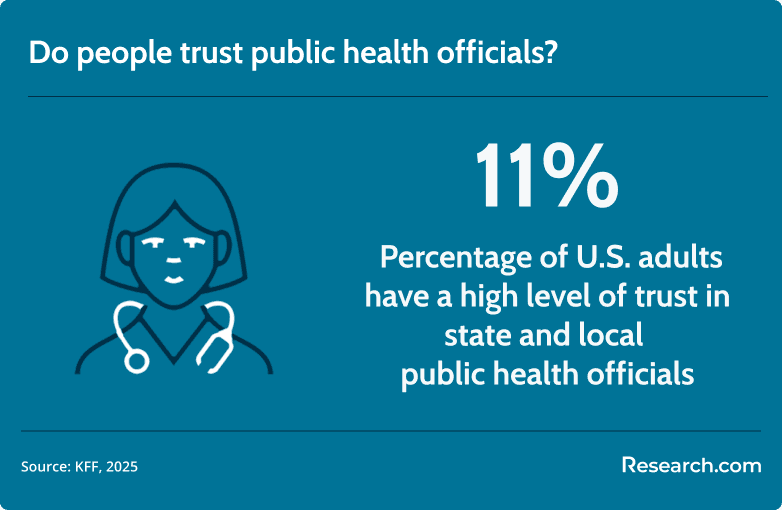
Another huge challenge for people working in the field of public health is declining trust ratings. From a 64% share of the public who trusted state and local public health officials in June 2023, only 54% said they trusted these officials in January 2025. The image below shows that only 11% of American adults have a great deal of trust in their state and local public health officials. About 43% trust them a fair amount, 34% have not much trust, and 12% do not trust them at all.
Despite these challenges, graduates can overcome them through strategic preparation and resilience. Gaining practical experience through internships, networking with public health professionals, and pursuing continuing education or certifications can help bridge skill gaps and enhance employability. Building strong support systems and practicing self-care are essential for managing the emotional demands of the work. While resource limitations and shifting priorities may seem discouraging, they also present opportunities for innovation, creativity, and meaningful impact. In the long run, these challenges are worth it, as they allow graduates to contribute to healthier communities and influence systemic change in public health. This requires a deep understanding of human behavior and public opinion, core skills also emphasized by a social psychologist degree.
Key Findings
- The employment of community health workers is projected to grow 11% from 2024 to 2034, which is much faster than average for all occupations in the U.S. There are projected to be about 7,800 new job openings per year (on average, over the decade spanning 2024–2034) for community health workers.
- Community health workers are employed across a range of sectors: about 21% in ambulatory healthcare services, 20% in social assistance, 18% in local government, 11% in hospitals, and 9% in civic, nonprofit or similar organizations.
- In May 2024, the median annual wage for community health workers was $51,030, with the top industries (like local government, hospitals) paying somewhat higher.
- The number of jobs for health education specialists is projected to increase by 4% from 2024 to 2034.
- Health education specialists had a median annual wage of $63,000 in May 2024. Some sectors — e.g. hospitals — offer significantly more.
- According to the WHO, health inequities (i.e., differences in health outcomes across social groups) continue to grow within countries, including in the U.S., and factors like education level are strongly correlated with life expectancy.
- In 2023, the U.S. had an estimated 65.2 million people living below 150% of the poverty level. Poverty is one of the key social determinants that increase risk for chronic conditions, reduced access to healthcare, and worse health outcomes.
Here’s What Social & Behavioral Science Degree in Public Health Graduates Have to Say About Their Career
- Josephine: "My degree in social and behavioral science within public health gave me the tools to truly understand how social factors impact community well-being. During my internship, I learned how to apply behavioral theories to design health education programs that resonated with diverse populations. This foundation has helped me secure a position as a health education specialist, where I now create campaigns that make real change. The program gave me both confidence and credibility in the field. "
- Ryan: "Studying social and behavioral sciences in public health opened my eyes to the importance of policy and advocacy in shaping health outcomes. My coursework in program evaluation and community engagement prepared me to work with local government on initiatives addressing health disparities. It’s rewarding to see policies we push for directly improve access to care in underserved communities. Without this degree, I wouldn’t have had the knowledge or voice to contribute at this level."
- Cynthia: "What I valued most about my program was the emphasis on research and data analysis. I gained hands-on experience in studying the effects of social determinants of health, which later prepared me for my role as an epidemiology analyst. The skills I developed in qualitative and quantitative research have allowed me to publish studies that guide real-world interventions. The degree set the stage for both professional growth and meaningful impact."
References:
- Emory University | Rollins School of Public Health. (n.d.). Explore Programs. Emory.
- George Washington University | Milken Institute School of Public Health. (n.d.). Social and Behavioral Sciences - PHD. GW Milken Institute of School of Public Health.
- Kearney, A. et al. (2025, January 28). KFF Tracking Poll on Health Information and Trust: January 2025. KFF.
- U.S. Centers for Disease Control and Prevention. (2024, October 29). Social Determinants of Health. CDC.
- United States Bureau of Labor Statistics. (2025, August 28). Occupational Outlook Handbook | Community Health Workers. BLS.
- United States Bureau of Labor Statistics. (2025, August 28). Occupational Outlook Handbook | Epidemiologists. BLS.
- United States Bureau of Labor Statistics. (2025, August 28). Occupational Outlook Handbook | Health Education Specialists. BLS.
- United States Bureau of Labor Statistics. (2025, August 28). Occupational Outlook Handbook | Sociologists. BLS.
- United States Bureau of Labor Statistics. (2025, August 28). Occupational Outlook Handbook | Social and Community Service Managers. BLS.
- World Health Organization. (2025, May 6). Social determinants of health. WHO.
Other Things You Should Know About a Social & Behavioral Science Degree in Public Health
Applicants for a 2027 Social & Behavioral Science Degree in Public Health typically need a bachelor's degree, a minimum GPA of 3.0, and GRE scores. Some programs may require previous coursework in social sciences. Always check specific school requirements for additional criteria.
Students pursuing a Social & Behavioral Science Degree in Public Health in 2027 can expect to engage in internships or fieldwork involving community health research, health policy implementation, and public health education. These experiences are crucial for practical understanding and skill development in real-world settings.


