
2027 Best Artificial Intelligence Bootcamps

Co-Founder and Chief Data Scientist
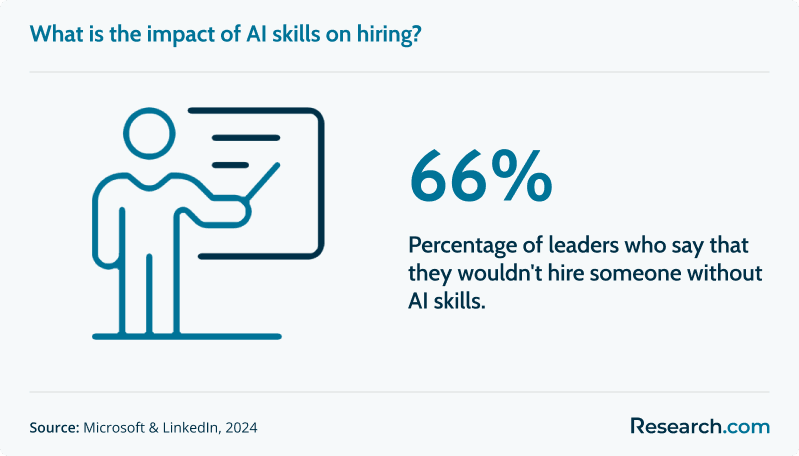
Choosing an AI bootcamp can feel like placing a high-stakes bet on your future. You know the demand for AI skills is exploding—with 66% of leaders saying they won't hire someone without them—but the sheer number of programs can be paralyzing.
This guide is different. It was created by career planning experts with 10 years of experience to give you a clear framework for making a confident choice. Our goal is to help you find one of the best artificial intelligence bootcamps for your specific career goals, so you can invest wisely.
What are the benefits of getting an artificial intelligence bootcamp?
- It offers a direct, fast-track path to acquiring the technical skills employers are looking for right now.
- You gain significant salary potential, with entry-level salaries in related fields like cloud computing starting around $81,969 per year.
- You get the flexibility of online learning, allowing you to balance your studies with your work and personal life.
What can I expect from an artificial intelligence bootcamp?
Even the best artificial intelligence bootcamps aren’t like traditional college courses. You can expect an intensive, fast-paced program that is laser-focused on getting you job-ready.
The entire experience is built around practical application. Instead of just listening to lectures, you’ll spend most of your time working on projects that mimic the real-world challenges you’ll face in a job. The goal isn’t just to learn theories; it’s to build a portfolio of work that proves you can deliver value from day one.
Think of it as a condensed apprenticeship. The pace can be demanding, but the trade-off is that you gain highly relevant skills in a fraction of the time it would take in a degree program.
Where can I work with an artificial intelligence bootcamp?
You can work in virtually any industry, from tech giants and startups to traditional sectors like finance, healthcare, and manufacturing. The demand for AI skills is no longer confined to Silicon Valley.
Some of the most significant opportunities are in applying AI to solve problems in these more traditional fields. They are desperate for people who understand their unique challenges and can build relevant AI solutions.
This is a massive advantage for anyone with prior professional experience. Combining your existing industry knowledge with AI skills makes you a uniquely valuable candidate, allowing you to pivot within your field rather than starting over.
How much can I make with an artificial intelligence bootcamp?
Entry-level salaries for specialized tech roles often start around $81,969 per year. While exact AI bootcamp graduate salaries vary, a high-demand field like cloud computing can serve as a strong benchmark for your earning potential.
With just a few years of experience, that figure can climb to over $98,000. As you build expertise, your value increases significantly, with top earners commanding salaries well over $128,000.
This clear financial progression is why so many people see a bootcamp as a robust and justifiable investment in their career.
- List of the Best Artificial Intelligence Bootcamps for 2027 List of Bootcamps
- How long does it take to complete an artificial intelligence bootcamp? Completion Time
- What is the average cost of an artificial intelligence bootcamp? Program Cost
- What are the financial aid options for students enrolling in an artificial intelligence bootcamp? Financial Aid
- What are the prerequisites for enrolling in an artificial intelligence bootcamp? What are the prerequisites for enrolling in an artificial intelligence bootcamp?
- What courses are typically in an artificial intelligence bootcamp? What courses are typically in an artificial intelligence bootcamp?
- What types of specializations are available in an artificial intelligence bootcamp? Specialization
- How to choose the best artificial intelligence bootcamp? How to choose the best artificial intelligence bootcamp?
- What career paths are available for graduates of an artificial intelligence bootcamp? Career Paths
- What is the job market for graduates of an artificial intelligence bootcamp? Job Market
List of the Best Artificial Intelligence Bootcamps for 2027
How do we rank schools?
We know that choosing a bootcamp is a major financial decision, and you deserve to have the most reliable information possible. We use a clear, data-driven approach to identify programs that offer strong value. Our process relies on trusted sources such as the IPEDS and Peterson's databases, as well as the College Scorecard and the National Center for Education Statistics, to ensure our recommendations are based on solid evidence.
For a complete breakdown of how we evaluate programs, review the Research.com methodology.
1. California Institute of Technology – Artificial Intelligence & Machine Learning Bootcamp
California Institute of Technology bridges academic rigor and industry application by pairing Caltech CTME expert masterclasses with Simplilearn’s hands-on curriculum. This program is structured for professionals with a technical background, focusing on developing practical skills in core AI disciplines such as NLP and deep learning.
- Program Length: 24 weeks
- Prerequisites: Knowledge of programming and mathematics
- Learning Format: Hybrid/Online
- Career Support: Personalized career services
- Total Cost: $8,000
2. Fullstack Academy – Live Online Artificial Intelligence & Machine Learning Bootcamp
Fullstack Academy emphasizes a “learn-by-doing” approach in a live, online setting, ensuring students gain practical experience with tools such as TensorFlow and Keras. Taught by industry professionals, this immersive bootcamp is designed to build a comprehensive, job-ready AI portfolio from the ground up.
- Program Length: 26 weeks
- Prerequisites: No prior experience required
- Learning Format: Live-Online
- Career Support: Dedicated career coaching and access to a large alumni network
- Total Cost: $10,995
3. Columbia University – Columbia Engineering Artificial Intelligence Certificate Program
Columbia University offers a prestigious executive certificate program tailored for experienced tech leaders seeking to drive organizational change with AI. The curriculum is developed by world-class faculty and features a unique, mandatory three-day on-campus networking immersion in New York City.
- Program Length: 18 months
- Prerequisites: A bachelor’s degree and programming experience
- Learning Format: Online with in-person immersion
- Career Support: Extensive networking opportunities
- Total Cost: $22,000
4. NYC Data Science Academy – AI Bootcamp for Real-World Applications
NYC Data Science Academy provides a deeply project-based bootcamp where students build four applications using real-world business data. The program stands out by offering a cutting-edge curriculum that includes LLMs and cloud computing, backed by lifelong career support to guide graduates through their job search.
- Program Length: 4-12 weeks
- Prerequisites: Solid understanding of Python, data analysis, and machine learning algorithms
- Learning Format: Multiple formats available (in-person, remote live, self-paced)
- Career Support: Lifelong career support, including resume reviews and interview prep
- Total Cost: $9,995
5. Arizona State University – ASU AI Bootcamp
Arizona State University provides an accessible entry point into data science, specifically welcoming applicants with no previous coding experience. The bootcamp offers flexible part-time and full-time scheduling, focusing on building foundational Python and machine learning skills through practical, hands-on projects.
- Program Length: 3-6 months
- Prerequisites: No prior experience required
- Learning Format: Online (full-time or part-time options)
- Career Support: Personalized job search assistance, resume reviews, and interview prep
- Total Cost: $13,000
6. University of North Carolina at Charlotte – Advanced AI & Machine Learning, Bootcamp
The University of North Carolina at Charlotte targets professionals with existing data analytics experience for its advanced AI bootcamp. This program, powered by Flatiron School, accelerates learning in complex topics like LLMs and culminates in a capstone that requires students to build three distinct portfolio projects.
- Program Length: 12-36 weeks
- Prerequisites: Solid foundation in data analytics and experience with large datasets
- Learning Format: Online
- Career Support: Personalized technical interview preparation and resume support
- Total Cost: $13,500
7. The University of Texas at Dallas – UT Dallas AI & Machine Learning Bootcamp
The University of Texas at Dallas structures its part-time, live-online bootcamp for working professionals who need to balance their studies with a career. The curriculum covers the full spectrum of AI skills—from Python basics to generative AI—using an active learning model to build job-ready competence.
- Program Length: 26 weeks
- Prerequisites: No prior experience required
- Learning Format: Live-Online
- Career Support: Portfolio-building support through industry-relevant projects
- Total Cost: $10,995
8. Community College of Philadelphia – AI Machine Learning Bootcamp
Community College of Philadelphia offers a uniquely affordable, self-paced online bootcamp with a clear goal: Microsoft Azure AI Engineer certification. The curriculum includes one-on-one coaching with an industry expert and a final capstone project to ensure students are prepared for the certification exam and a new career.
- Program Length: 6 months
- Prerequisites: Experience with algebra, calculus, and basic programming knowledge
- Learning Format: Self-paced online
- Career Support: Prepares for Microsoft AI-102 certification exam; includes one-on-one coaching
- Total Cost: $4,275
How long does it take to complete an artificial intelligence bootcamp?
Program lengths vary significantly, from intensive full-time sprints to more manageable part-time marathons. Most programs fall into one of two categories:
- Full-Time Immersive: These are fast-paced and typically last 4 to 16 weeks.
- Part-Time Flexible: Designed for working professionals, these programs range from 6 to 18 months.
The right path for you depends entirely on your personal situation and learning style. Just as bootcamps offer fast-track skills, in the finance world, professionals often seek certifications in finance to demonstrate advanced competency.
Choosing the Right Pace for You
It’s tempting to choose the fastest option, but that’s not always the best strategy. A full-time program gets you to the job market quicker. Still, it usually requires you to leave your current job and dedicate yourself entirely to your studies.
Part-time programs offer the flexibility to learn while you continue to work. Still, they demand consistent discipline over a more extended period. The key is to be realistic about the time you can commit. Rushing through the material can lead to a superficial understanding that won’t hold up during a technical interview, which is why finding the best artificial intelligence bootcamps means matching the pace to your life.
What is the average cost of an artificial intelligence bootcamp?
Based on our research, the cost of an AI bootcamp can range from around $4,000 to over $22,000. This wide variation depends on several factors, including the program's length, the depth of the curriculum, and the institution's reputation. The different options are similar to the various areas of specialization in public health, where the focus dictates the complexity and duration of study.
It's easy to assume that a higher price tag means a better program, but that's not always the case. You have to look deeper to understand what you're really paying for.
Analyzing the Long-Term Return on Investment (ROI)
When you see a high-cost program, it's often a reflection of the "brand" you're buying—the affiliation with a well-known university. The "engine," which is the company that actually designs and runs the curriculum, might be the same one powering a less expensive bootcamp.
The key is to ask yourself if that brand recognition will directly help you achieve your specific career goals. For some, the university network is worth the premium. For others, a strong curriculum and career support from a less expensive program deliver a better ROI. The long-term masters in artificial intelligence salary shows the high value of these skills, so the goal is to find the most efficient path to that outcome.
What are the financial aid options for students enrolling in an artificial intelligence bootcamp?
It's important to know that traditional federal financial aid, like FAFSA, typically doesn't apply to these non-accredited programs. However, there are several other strong options for funding your education.
Most bootcamps offer financing plans that allow you to pay for your tuition in manageable installments. The most common options include:
- Installment Plans: Pay your tuition in monthly installments throughout the program.
- Private Loans: Secure a loan through a bootcamp's lending partner, like Climb Credit or Ascent.
- Employer Sponsorship: Propose the bootcamp to your current employer as a professional development investment.
Tapping into Employer Upskilling Budgets
Don't overlook that last option. Companies are actively investing in their employees to close the AI skills gap. In fact, 69% of employers have recently increased or started investing in AI training. This is a massive opportunity. However, there are also advanced degree options for those with strong academic records but limited experience, such as MBA programs without work experience.
To make your case, frame the bootcamp as a direct solution to a company problem. Calculate the potential ROI for your employer, showing how your new skills in machine learning or data analysis will improve efficiency, drive new revenue, or reduce costs. Many companies have dedicated funds for this, and your initiative could be precisely what they're looking for. The data below shows just how common it is for companies to reskill their teams.
What are the prerequisites for enrolling in an artificial intelligence bootcamp?
Prerequisites can range from none at all for introductory programs to significant experience for more advanced ones. However, most of the best artificial intelligence bootcamps expect some foundational knowledge.
Here’s what that typically means:
- Python Proficiency: You should be comfortable with data structures, control flow, and shared libraries like NumPy and Pandas.
- Foundational Math: A solid understanding of concepts from algebra, statistics, and basic calculus is often required.
If you don't have this background, don't let it stop you. Think of acquiring these skills as the first step of your bootcamp experience.
Your Roadmap to Readiness
Many successful students start with self-study to get up to speed before they even apply. There are excellent, low-cost resources you can use to build a strong foundation. Platforms like Coursera, freeCodeCamp, and Khan Academy offer courses specifically designed to teach the core Python and math skills that bootcamps look for. This ease of entry is similar to finding colleges with the highest transfer acceptance rate, which offer more accessible routes for students with prior experience.
Taking the time to master these fundamentals is the single best thing you can do to ensure your success. It not only strengthens your application but also lets you hit the ground running and get the most out of your investment from day one. As the data shows, having these skills is becoming a non-negotiable for employers.
What courses are typically in an artificial intelligence bootcamp?
While every program has a unique curriculum, you’ll find a core set of technical topics in most quality AI bootcamps. These courses are designed to give you a comprehensive toolkit for building and deploying AI models.
Expect to cover:
- Python for Data Science: Mastering libraries like NumPy, Pandas, and Matplotlib.
- Machine Learning: Building and evaluating models for classification, regression, and clustering.
- Deep Learning: Understanding neural networks and using frameworks like TensorFlow or PyTorch.
- Natural Language Processing (NLP): Teaching computers to understand and process human language.
- Generative AI: Working with Large Language Models (LLMs) and related technologies.
Building a Future-Proof Skillset
Here’s the most critical piece of advice I can give you: the list of technologies is less important than how they are taught. The best programs focus on teaching you how to solve unstructured, real-world problems.
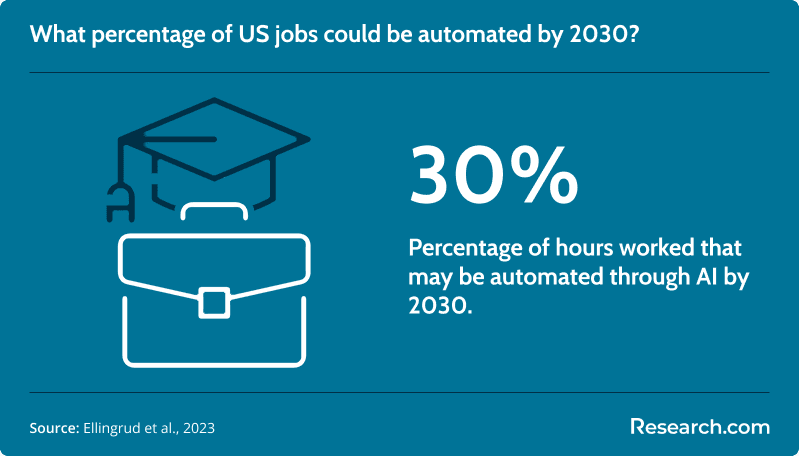
Look for a curriculum that emphasizes projects. Can you build a recommendation engine from scratch? Can you deploy a model to a cloud platform? An online Microsoft Azure dual certification boot camp is a great example of this. This is what makes a skillset durable. With automation expected to impact a significant percentage of jobs, your value isn’t in knowing a specific tool—it’s in your ability to think like a problem-solver.
What types of specializations are available in an artificial intelligence bootcamp?
While many AI bootcamps are designed to be generalist, providing a broad foundation across the field, some do offer the chance to go deeper into a specific area.
Common specializations you might find include:
- Natural Language Processing (NLP): Focusing on how computers process and analyze human language.
- Computer Vision: Centered on teaching machines to interpret and understand visual information.
- Reinforcement Learning: Dealing with algorithms that learn to make decisions by taking actions in an environment to maximize rewards.
Responsible AI: A Critical Professional Competency
One area that is rapidly moving from a niche topic to a core requirement is ethical and responsible AI. This isn't a formal "track" in most bootcamps, but it's a critical lens through which you should view all your work.
As companies grapple with the risks of AI—from data privacy to algorithmic bias—they are desperate for professionals who can build effective, responsible systems. Many organizations are ramping up efforts to mitigate these risks.
Having a strong understanding of AI ethics is a major differentiator in the job market, much as the best online CISSP training bootcamps prepare professionals for cybersecurity roles. It positions you not just as a technician but as a strategic thinker who can help a company innovate safely.
How to choose the best artificial intelligence bootcamp?
Choosing the right program comes down to a structured evaluation process. Instead of getting overwhelmed by options, use this four-step framework to find the bootcamp that best fits your personal and professional goals.
- Define Your Personal Equation. Start by clarifying your budget, your timeline, your career goals, and the learning style that works best for you.
- Evaluate the "Engine." Look at the company that provides the curriculum. Do they have a strong track record? Is the curriculum project-based and up-to-date?
- Evaluate the "Brand." Consider the university partner. Does their reputation and alumni network align with your career goals and justify any premium in cost?
- Open the "Career Services Black Box." This is the most critical and often overlooked step in finding the best artificial intelligence bootcamps.
Your Career Services Investigation Checklist
The quality of a bootcamp's career support can be the single most significant factor in your success. Don't just accept vague promises of "career services." You need to investigate.
Ask admissions advisors direct questions and don't stop until you get clear answers: What is your verified, independently audited job placement rate? What is the average time it takes for graduates to find a job? Can you connect me with alumni whom I can speak to about their experience?
What career paths are available for graduates of an artificial intelligence bootcamp?
Completing an AI bootcamp opens the door to a wide range of specialized and high-demand technical roles. These are some of the most common career paths graduates pursue:
- Machine Learning Engineer: Designs and builds the models that power AI applications.
- AI Specialist: Works within a company to develop and implement AI strategies.
- Data Scientist: Analyzes complex datasets to extract actionable insights for the business.
- AI Consultant: Advises different companies on how to leverage AI to solve their problems.
Finding AI Roles Across Every Industry
It's a common misconception that these jobs only exist at big tech companies. The reality is that as AI becomes more integrated into our economy, these roles are appearing everywhere. Thinking about what can you do with an artificial intelligence degree is a good way to see the breadth of these roles.
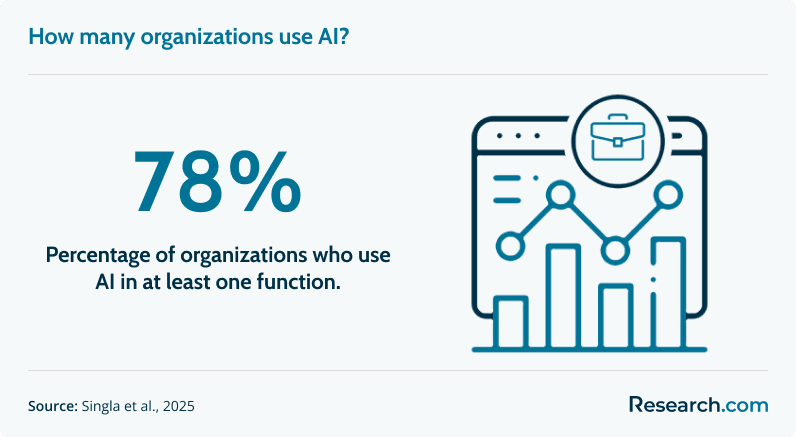
As the data shows, a vast majority of organizations are already using AI in at least one business function. This means that industries from healthcare to finance to manufacturing are all hiring for these positions. For anyone with existing industry experience, this is a decisive advantage, as you can become the go-to AI expert in a field you already understand.
What is the job market for graduates of an artificial intelligence bootcamp?
The job market for professionals with specialized AI skills is extremely strong. Companies across all sectors are facing a massive talent shortage, with 84% of decision-makers concerned about finding qualified people to fill these roles. This intense demand creates a significant opportunity for bootcamp graduates.
This is especially true in high-growth fields that rely heavily on data and automation. For example, a cyber security online bootcamp also leads to a field with high demand. This widespread need for talent means that your skills will be highly valuable and transferable across the entire economy.
A Look at the 10-Year Growth Outlook
You've likely heard the paradox that AI will both create and eliminate jobs. The data shows this is true, but the key is understanding which jobs are growing. While routine tasks may be automated, the demand for high-level problem-solvers who can build, manage, and strategically deploy AI systems is exploding.
The government projects that jobs for roles like software developers and database architects will grow much faster than the average for all occupations over the next decade. This confirms that investing in a deep, practical AI skillset is the best way to position yourself for the most durable and highest-paying jobs of the future.
Here’s What Graduates Have to Say About Their Artificial Intelligence Bootcamp
- Elena: "I didn't have a computer science degree, just a lot of self-taught Python and a ton of ambition. The bootcamp was all about the portfolio. By the end, I had three major projects that I could actually show to employers, proving I could do the work. That portfolio, not a diploma, is what landed me my first job as an AI specialist."
- Aisha: "Before this, AI felt like this abstract, impossible thing that only geniuses could do. But the program broke it down, piece by piece, through hands-on projects. The moment I built my first neural network and it actually worked, I felt this incredible surge of confidence. I went from being intimidated by the subject to feeling like I could actually build the future."
- Nkechi: "The internet is flooded with tutorials, but I was just spinning my wheels with no clear direction. The bootcamp provided a structured path from A to Z, ensuring I learned what the industry actually requires. It cut through all the noise and gave me a focused, efficient way to gain the skills I needed. The investment was in the curriculum's clarity and direction."
Key Findings
- The pressure to gain relevant skills is immense, as 66% of business leaders state they would not hire a candidate who lacks AI proficiency, making bootcamp credentials highly valuable.
- Career opportunities extend far beyond the tech sector, with 78% of all organizations now using AI in at least one business function, creating widespread demand for skilled professionals in every industry.
- Professionals are increasingly turning to focused training to advance their careers, with the number of candidates planning to earn an AI certification more than doubling from 17% to 35% in just two years.
- The long-term job outlook is exceptionally strong for bootcamp graduates, as the U.S. Bureau of Labor Statistics projects that employment for software developers will grow by 17.9% over the next decade.
- Investing in high-level AI problem-solving skills is a critical career move, as estimates suggest that up to 30% of all hours worked in the U.S. could be automated by 2030.
- Securing funding for a bootcamp is more accessible than many think, as 69% of employers have recently started or increased their investments in AI training for their staff.
References:
- Caltech CTME. (n.d.). Cloud computing salary guide: Trends and predictions. Retrieved October 16, 2025, from Caltech CTME.
- Ellingrud, K., Sanghvi, S., Dandona, G. S.,... & Hasebe, P. (2023, July 26). Generative AI and the future of work in America. McKinsey Global Institute. Retrieved October 16, 2025, from McKinsey Global Institute.
- GlobeNewswire. (2025, January 28). Survey reveals 77% of organizations have been impacted by the IT skills gap. Retrieved October 16, 2025, from GlobeNewswire.
- Imagine America Foundation. (2025). State of the IT job market 2025. Retrieved October 16, 2025, from Imagine America Foundation.
- Leopold, T. (2025, April). AI and the future of jobs: What is the outlook on International Workers' Day? World Economic Forum. Retrieved October 16, 2025, from World Economic Forum.
- Microsoft. (2024). AI at work is here. Now comes the hard part. WorkLab. Retrieved October 16, 2025, from Microsoft.
- PayScale. (2025). Information technology (IT) manager salary. Retrieved October 16, 2025, from PayScale.
- Pearson VUE. (2025). Certifications fuel the success in the age of AI. Retrieved October 16, 2025, from Pearson VUE.
- Singla, A., Sukharevsky, A., Yee, L., Chui, M. & Hall, B. (2025). The state of AI in 2025. McKinsey & Company. Retrieved October 16, 2025, from McKinsey & Company.
- U.S. Bureau of Labor Statistics. (2025, September 5). AI impacts in BLS employment projections. The Economics Daily. Retrieved October 16, 2025, from BLS.
- ZipRecruiter. (2025). Cloud manager salary. Retrieved October 16, 2025, from ZipRecruiter.
Other Things You Should Know About Artificial Intelligence Bootcamps
Consider the bootcamp's curriculum, ensuring it covers foundational AI concepts. Prioritize programs that offer strong mentorship, support for beginners, and career services. Research reviews from past participants with similar backgrounds, and check for flexible learning options like part-time or online courses to accommodate your learning pace.
Absolutely. Many of the most successful AI professionals come from diverse backgrounds, including marketing, finance, and the arts. Your prior industry experience is a major asset, as it helps you understand the real-world problems AI can solve. The bootcamp is designed to give you the technical skills to bridge that gap.
Most 2027 AI bootcamps require at least a basic understanding of programming languages such as Python, along with critical thinking skills. Some may request prior experience in machine learning or data analysis, though many offer preparatory courses for beginners.


