
2027 Social Psychology Degrees: Program Options and Career Paths

Co-Founder and Chief Data Scientist
Choosing a specialized field can feel like a huge gamble, especially when the path from degree to career is not perfectly clear. It can leave you wondering if you are making the right call for your future.
That is why our career planning experts, with over 10 years of experience, created this guide. It is designed to give you a straight answer on what a social psychology degree is actually worth in the real world. We have broken down everything you need to know, from program options and real costs to the specific jobs graduates are getting in today’s market. Think of this as your roadmap to making a confident decision.
What are the benefits of getting a degree in social psychology?
- It equips you with a versatile skillset for high-demand careers in growing sectors like technology, marketing, and human resources.
- The degree provides strong earning potential, with master's-level roles offering competitive starting salaries.
- Flexible online programs make it possible to earn your degree while managing work and other life commitments.
What can I expect from a social psychology degree?
You can expect a program that is a blend of fascinating theories about human behavior and rigorous scientific training. Your core courses will cover topics like social influence, group dynamics, persuasion, and prejudice.
But it is crucial to understand that this is a science degree at its core. Some people think it's all discussion-based, but the most valuable part of your training will be in research methods and statistics. You'll learn how to design experiments, analyze data, and interpret results in a scientifically valid way.
This is what employers are really looking for. That hands-on training in data analysis and evidence-based reasoning is what allows you to translate complex human behavior into actionable insights for a business or organization.
Where can I work with a social psychology degree?
You might be surprised by the sheer diversity of roles available with this background. Graduates with a social psychology degree work in vibrant sectors like technology, where they excel in user experience (UX) research. They also thrive in marketing, contributing to consumer insights and behavioral advertising, and in human resources, often in people analytics roles. Beyond that, government agencies and non-profits frequently seek these skills for policy advising and program evaluation.
Forget the old idea that the only path is becoming a professor. The key insight here is that you'll need to learn how to translate your academic skills into industry-specific language. Your job title won't typically be "Social Psychologist," but your unique ability to understand human behavior will be highly valued in these growing fields.
How much can I make with a social psychology degree?
For roles that typically require a master's degree, you can expect a starting salary in the $70,000 to $90,000 range. This is a solid starting point for a career in fields like market research or people analytics.
However, your earning potential can grow significantly based on your level of education and specialization. For instance, industrial-organizational psychologists report a median salary of over $109,000, while other specialized psychologists earn a median wage of over $117,000. This shows that the investment in a higher degree or a specialized skillset can have a very strong financial return.
- How long does it take to complete a social psychology program? Program Duration
- How does an online social psychology program compare to an on-campus program? How does an online social psychology program compare to an on-campus program?
- What is the average cost of a social psychology program? Program Cost
- What are the financial aid options for students enrolling in a social psychology program? Financial Aid
- What are the prerequisites for enrolling in a social psychology program? Program Requirements
- What courses are typically in a social psychology program? What courses are typically in a social psychology program?
- What types of specializations are available in social psychology programs? Specializations
- How do you choose the best social psychology program? How do you choose the best social psychology program?
- What career paths are available for graduates of social psychology programs? Career Paths
- What is the job market for graduates with a social psychology degree? Job Outlook
- Can additional certifications boost my social psychology career? Can additional certifications boost my social psychology career?
How long does it take to complete a social psychology program?
The time commitment for a social psychology degree depends entirely on the level of education you are pursuing. A bachelor's degree is the standard four-year program. If you are looking at a master's degree, you can expect it to take one to two years of full-time study. For those aiming for a PhD, the path is longer, typically requiring five to seven years to complete.
Your program options in social psychology depend on your educational and career goals. You can pursue this field at the undergraduate, master's, and doctoral levels.
Undergraduate Programs (BA/BS)
At the bachelor's level, it's rare to find a dedicated "social psychology" major. Instead, you will typically major in Psychology or Sociology with a concentration, minor, or emphasis in social psychology. Some universities do offer a Bachelor of Arts (BA) or Bachelor of Science (BS) in Social Psychology, but these are less common. This foundational degree provides a broad understanding of the field and prepares you for a variety of entry-level jobs or for graduate school.
Graduate Programs (MA/MS/PhD)
Graduate programs offer a much more specialized and in-depth focus on social psychology.
A master's in social psychology degree can be either a terminal degree (meant for immediate entry into the workforce) or a step toward a doctoral degree. Master's programs often focus on applied social psychology, preparing you for research roles in market research, human resources, or government. You will typically be required to complete a research thesis or an internship. The duration is usually one to two years.
The PhD is the terminal degree for those who want to become a social psychologist, professor, or independent researcher. This is a research-intensive program that trains you to conduct and publish original research. It typically involves a combination of core courses, seminars, and a dissertation. A PhD program usually takes four to seven years to complete and often includes earning a master's degree along the way.
It is important to remember that these timelines are not set in stone. Many programs offer part-time options for working professionals, and there are even accelerated psychology programs online designed to help you finish faster.
Understanding the Professional Landscape
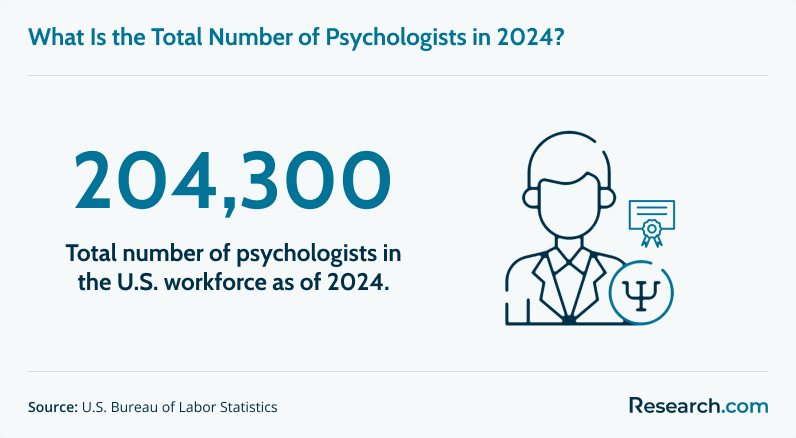
When you consider this time investment, it helps to see the scale of the field you are entering. The U.S. employs over 200,000 psychologists across various specializations. While a large portion of these are in clinical or school psychology, a significant number work in research, consulting, and other applied fields. This shows a robust and diverse profession with many different entry points, depending on your educational path and career goals.
How does an online social psychology program compare to an on-campus program?
Today, any accredited online degree is considered just as rigorous and academically valid as its on-campus counterpart. The curriculum, the faculty, and the credential you earn are equivalent.
The real difference is not about quality, it is about your learning style and life circumstances. On-campus programs offer face-to-face interaction and direct access to campus resources. Online programs provide incredible flexibility, which can be a game-changer for anyone balancing work, family, and education. The main trade-off is that you have to be more proactive about networking with professors and classmates. This consideration of program flexibility is key in many fields, including when researching top business law careers and the educational path required for them.
Comparing Advanced Degrees: Is an Online PhD Viable?
For a master's degree, especially a program focused on applied skills, an online format can be a perfect fit. The conversation gets a bit more nuanced when we talk about a PhD. Because a doctorate is so heavily focused on research, many programs require you to be on campus for lab work and close mentorship with faculty.
However, as technology and educational models evolve, a fully online doctorate in psychology is becoming a more viable path for certain students. These programs are often designed for professionals who have established careers and are looking to advance their credentials without relocating.
What is the average cost of a social psychology program?
The cost of a social psychology degree varies significantly based on the type of program and the institution. For a master's degree, you can expect the total cost to range anywhere from $20,000 to over $80,000. Public universities will be on the lower end of that spectrum, while private institutions will be on the higher end.
The financial picture for a PhD is completely different. Most reputable PhD programs are fully funded. This means the university waives your tuition and pays you a stipend for living expenses in exchange for your work as a teaching or research assistant.
Gauging Your Earning Potential
When you're looking at the cost of a master's degree, it's crucial to frame it as an investment. With a median salary for psychologists around $94,000 and a typical salary range from about $54,000 to over $157,000, the degree is designed to pay for itself over time.
Your goal should be to find a program that provides the best value, not just the lowest price. A great way to manage this is to research the most affordable online psychology degree options, which can significantly reduce costs while still delivering a high-quality education and a strong return on your investment.
The salary range for psychologists in the U.S. as shown in the net chart is influenced by several factors, including education level, specialization, and work setting.
What are the financial aid options for students enrolling in a social psychology program?
Understanding how to pay for your social psychology degree is just as important as choosing the right program. For graduate students, there are three main avenues for financial aid.
First are federal loans, which you can access by filling out the FAFSA. These are often the primary source of funding for master's students. Second are scholarships and grants, which are essentially gift money that you don't have to repay. These can come from the university itself or from outside organizations.
Finally, there are graduate assistantships. These are a form of employment where you work for the university—often as a teaching or research assistant—in exchange for a tuition waiver and a stipend.
Strategic Funding: Master's vs. PhD
It is really important to understand that the funding landscape for master's and PhD students is completely different. This also applies to clinical psychology degree online programs.
Master's students typically rely on a combination of loans and smaller scholarships to cover their costs. If you are a working professional, a key opportunity to explore is employer tuition reimbursement programs, which can significantly reduce your out-of-pocket expenses.
For PhD students, the expectation is full funding through graduate assistantships. This model is more like an apprenticeship than traditional schooling. You are being trained as a researcher, and your funding is the university's investment in your future contributions to the field.
What are the prerequisites for enrolling in a social psychology program?
Getting into a program is a straightforward process once you know what they're looking for. For a bachelor's degree, since a dedicated social psychology major is rare, the prerequisites are typically those for a general psychology or sociology program such as high school diploma or equivalent. This focus on specialized prerequisites is a common thread across many professional fields, including the demanding educational requirements for the top careers paths for AGACNP.
The standard application package for a master's or PhD program includes your bachelor's degree transcripts, a minimum GPA (often around a 3.0), several letters of recommendation, and a statement of purpose.
Your statement of purpose is your chance to tell your story and explain why you are a good fit for their specific program. While some programs still require GRE scores, a growing number are waiving this requirement in favor of a more holistic review of your application.
The Doctoral Path: Prerequisites Beyond the Basics
It is important to know that what makes a "strong" application looks different for a master's versus a PhD program. For master's programs, especially those focused on applied skills, your relevant work experience can be a huge asset. Your professional background can demonstrate the maturity and practical skills that admissions committees value.
For those planning to apply to colleges for doctorate in psychology programs, the single most important factor is research experience. Your application needs to show that you have hands-on experience working in a psychology lab, ideally presenting at a conference or contributing to a publication. This proves you have what it takes to succeed in a research-heavy doctoral program.
What courses are typically in a social psychology program?
Once you are in a program, your coursework will be a mix of core theory and hands-on skills. You will take classes in foundational topics like social cognition, group processes, and persuasion. These courses will give you the theoretical language to understand and describe complex social dynamics.
However, the central pillar of your education will be your courses in advanced research methods and statistics. This is where you will learn to design studies, collect and analyze data, and draw meaningful, evidence-based conclusions. Do not underestimate the importance of these classes; this quantitative training is the most marketable skill you will acquire, leading to various opportunities, including the top careers in research psychology.
Where the Jobs Are: Top Employment Sectors
The skills you learn in these courses are directly applicable to the sectors where psychologists are most in demand. While many graduates work in educational settings or healthcare, a large and growing number are self-employed as consultants or work in other managed care or government settings. These sectors all rely on the ability to analyze data and translate it into actionable strategies, which is exactly what the curriculum is designed to teach you. The chart below shows how employment is distributed across these key areas.
Psychologists are employed across a wide range of settings, including healthcare, education, and government. According to the Bureau of Labor Statistics, the largest employers of psychologists are elementary and secondary schools, followed closely by offices of heath practitioners.
What types of specializations are available in social psychology programs?
Beyond the core curriculum, most programs offer a chance to specialize. This is where you can really start to shape your degree to fit your career goals, a crucial step for accessing high-paying jobs that require a master's degree. Common specializations include:
- Social and Personality Psychology: Many programs combine these two areas, as personality psychology focuses on individual differences, complementing social psychology's focus on situational factors.
- Applied Social Psychology: This type of program emphasizes using social psychology principles to solve real-world problems in areas like health, business, or public policy.
- Social Psychology and Clinical Mental Health Counseling: Some programs, typically at the master's level, integrate social psychology with clinical training, preparing you for a career in counseling or therapy.
- Social/Organizational Psychology: This is a popular option that applies social psychology principles to workplace settings, focusing on topics like leadership, motivation, and teamwork.
The most important thing to know is that a program's available specializations are a direct reflection of its faculty's research interests. So, when you are looking at schools, you are not just choosing a program—you are choosing a group of experts to learn from.
How Specialization Impacts Salary by Industry
Choosing a specialization is also a financial decision, as it can steer you toward industries with different earning potentials. For example, a specialization in health psychology might lead to a career in the healthcare sector, where the median salary for psychologists is over $103,000. A focus on research and policy could lead to a government role, which has a median salary of over $124,000. Understanding these differences is key to making a strategic choice that aligns with your financial and professional goals, as you can see in the comparison below.
Median wages for psychologists vary significantly based on the industry and practice area. This chart illustrates the median annual salaries for psychologists in different top-earning sectors.
How do you choose the best social psychology program?
This is the most important question, and the answer is simpler than you might think. The "best" program isn't the one at the top of a generic ranking list; it's the one that is the best fit for your specific career goals.
To find that fit, you need to look at three things. First, the faculty. Are there professors whose research genuinely excites you? Second, the curriculum. Does it focus on applied skills for the industry you want to enter, or is it more theoretical and research-focused?
Finally, and most importantly, look at their alumni outcomes. Where do their graduates actually work? Many programs now publish this data, and it's the clearest signal of a program's true value in the job market.
Terminal vs. Non-Terminal Master's: A Key Distinction
As you evaluate programs, there’s a critical piece of terminology you need to know. A "terminal" master's degree is designed to be the final credential you earn before entering the workforce. These programs are focused on practical, applied skills and are perfect for professionals.
A "non-terminal" or "research" master's, on the other hand, is designed as a stepping stone to a PhD. These programs are heavily focused on research and theory. Knowing which path you're on will immediately help you filter your options and find a program designed to get you where you want to go.
What career paths are available for graduates of social psychology programs?
After graduation, you will not be looking for jobs with "Social Psychologist" in the title. Instead, you'll be applying for modern, in-demand roles where your skills are a perfect fit.
Graduates are highly sought after for positions like User Experience (UX) Researcher, where they help tech companies design more intuitive products. They work as Market Research Analysts, helping brands understand consumer behavior, and as People Analytics Managers, using data to improve workplace culture. Other common paths include roles as Policy Advisors for government agencies or as Diversity, Equity, and Inclusion (DEI) Consultants.
The Art of Translation: From Academia to the Job Market
This is probably the most important piece of career advice for any graduate: you must learn to translate your academic experience into the language of the industry you want to enter. Your resume shouldn't just list your research projects; it needs to showcase the valuable skills you used.
For example, you don't just have experience with "experimental design." You have experience in "A/B testing and product validation." You didn't just "conduct a literature review"; you "performed competitive analysis and synthesized market trends." Mastering this art of translation is the key to unlocking the full value of your degree.
What is the job market for graduates with a social psychology degree?
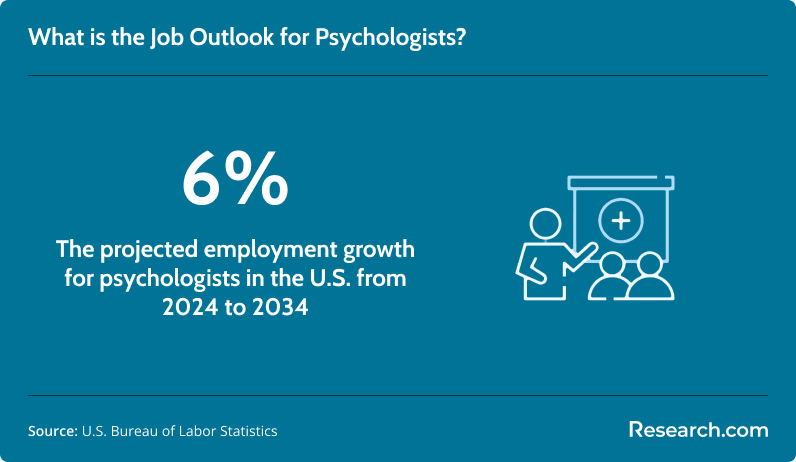
The outlook is very strong. The job market for psychologists and specialists with similar skills is projected to grow by 6% over the next decade, which is faster than the average for all occupations. This translates to roughly 12,900 job openings each year for qualified professionals.
This demand is driven by a simple fact: organizations in every sector, from tech and consulting to healthcare and government, are realizing they need experts who can provide data-driven insights into human behavior. A social psychology degree positions you perfectly to meet that growing need.
Translating Your Degree into High-Growth Careers
The key to capitalizing on this growth is to understand that the market isn't looking for a degree title; it's looking for a specific skillset. Your training in research, data analysis, and understanding human motivation makes you a valuable asset in many high-growth fields.
While the tech industry has been a major employer, we're seeing diversification into other exciting areas like healthcare, where experts help design better patient experiences, and finance, with the rise of behavioral finance. For those who successfully translate their skills, there are many opportunities to build one of the highest paying jobs with a psychology degree and make a significant impact.
Can additional certifications boost my social psychology career?
Integrating specialized certifications with a social psychology degree can refine your analytical expertise and open avenues in niche industry segments. Pursuing a focused credential in behavior analysis, for instance, deepens your understanding of intervention techniques and complements your core academic training. Evaluating each certification’s accreditation, curriculum strength, and affiliation with industry leaders is essential to ensure it aligns with your long-term professional objectives. Consider exploring options like the cheapest BCBA degree online for an affordable pathway to add a competitive edge to your profile.
Here's What Professionals Have To Say About Their Social Psychology Degree
- Chloe: "I was already working in marketing but felt like I’d hit a ceiling. The online master’s program was the only way I could make it work with my job and my kids. The best part was how quickly I could apply what I was learning about consumer behavior to my actual projects at work. It completely shifted my perspective and helped me land a senior strategist role before I even officially graduated."
- Marcus: "My goal was to pivot from a general business role into something more data-focused. This degree gave me the perfect toolkit for that. I learned how to design studies and analyze results, which I now use every day in my people analytics job. The salary increase was significant, but the real win was gaining the confidence to speak about human behavior with genuine authority."
- Priya: "For a while, I worried that I was choosing a field that was too specific. But the program actually opened my eyes to how many industries need these skills. I fell in love with a module on social cognition and technology, and that led me straight into the world of UX research. It’s a field I didn’t even know existed before, and it’s a perfect fit."
Key Findings
- The job market for psychologists is projected to grow by 6% over the next decade, a rate faster than the average for all occupations, resulting in approximately 12,900 job openings each year.
- This degree provides a strong return on investment, with the median salary for specialized psychologists exceeding $117,000 and those in government roles earning a median of over $124,000.
- While a master's degree can cost between $20,000 and $80,000, it provides a direct path into a profession where the overall median salary is approximately $94,310 per year.
- Career paths are diverse, with graduates finding roles in top employment sectors like education (28%), healthcare offices (20%), and as self-employed consultants (10%).
- The field is robust and substantial, with over 204,300 psychologists currently employed in the U.S., offering a stable professional landscape for new graduates.
- Graduates with a master's degree have a strong starting point, with typical entry-level salaries for relevant roles falling in the $70,000 to $90,000 range.
References:
- American Psychological Association. (n.d.). Degrees in psychology: A quick guide.
- U.S. Bureau of Labor Statistics. (2023). Clinical and counseling psychologists. Occupational Employment Statistics.
- U.S. Bureau of Labor Statistics. (2024). Marriage and family therapists. Occupational Outlook Handbook.
- U.S. Bureau of Labor Statistics. (2024). Psychologists. Occupational Outlook Handbook. Retrieved from
- U.S. Bureau of Labor Statistics. (2024). Substance Abuse, Behavioral Disorder, and Mental Health Counselors. Occupational Outlook Handbook.
Other Things You Should Know About Social Psychology Degrees
In 2027, social psychology programs offer specializations such as health psychology, organizational behavior, cultural psychology, and social influence. These areas allow students to tailor their education towards specific interests and career paths, whether in academia, public policy, or corporate settings.
Typical admission requirements for a 2027 social psychology degree include a completed application, a bachelor's degree in psychology or a related field, official transcripts, letters of recommendation, and a statement of purpose. Some programs may also require GRE scores or relevant work experience.


