2027 Top Business Law Careers to Pursue

Co-Founder and Chief Data Scientist
Business lawyers play a vital role in protecting a company's interests and ensuring its operations align with legal standards. This article will explore the top business law careers, from traditional roles like corporate counsel and litigator to specialized fields such as compliance officer and intellectual property attorney.
We will also provide insights into potential career trajectories and salary expectations. For instance, the median annual wage for lawyers was $151,160 in May 2024, showing the strong earning potential in the field. Whether you're a student considering a law degree or a professional looking for a new direction, this guide will help you navigate the diverse and rewarding career landscape of business law.
Key Things You Should Know About Top Business Law Careers to Pursue
- Business law careers cover various roles such as corporate counsel, compliance officer, intellectual property attorney, and legal administrator.
- Salaries in business law positions can vary significantly, with high-paying roles like counsel averaging around $171,000 annually.
- Top business law careers involve diverse responsibilities including legal document preparation, regulatory compliance, contract drafting and negotiation, managing disputes, and advising on mergers and acquisitions.
- What's the difference between business law and corporate law? Business vs. Corporate Law
- What are the core skills needed to become a successful business lawyer? Core Skills
- What's the typical salary for a business law attorney? Salary
- What's the long-term career outlook for jobs in business law? Career Outlook
- How many hours do business lawyers work each week? How many hours do business lawyers work each week?
- What are the pros and cons of being a business lawyer? Pros & Cons
- How do business lawyers handle stress and pressure in a demanding career? How do business lawyers handle stress and pressure in a demanding career?
- Is business law a good career path for students today? Is business law a good career path for students today?
- What are the best networking tips for aspiring business lawyers? Networking Tips
Top Business Law Careers
A business law degree can open doors to a variety of careers, not just as a traditional lawyer. The skills learned, such as critical thinking, research, problem-solving, and negotiation, are highly valued across multiple industries.
Here are top business law careers:
Corporate Lawyer
A corporate lawyer provides legal advice to companies on a wide range of business matters. This includes drafting and reviewing contracts, handling mergers and acquisitions, ensuring corporate governance, and advising on regulatory compliance. They work to protect a company's legal interests and minimize risk. This role is often a top choice for those with a legal background in business.
For those with a more advanced business degree, you might also consider what can you do with a dba in management, as this can lead to high-level strategic and leadership roles within a company.
Intellectual Property (IP) Lawyer
An intellectual property lawyer specializes in the laws that protect the creations of the mind. They help clients secure and defend patents, trademarks, copyrights, and trade secrets. This role is crucial in industries like technology, entertainment, and pharmaceuticals.
Compliance Officer
A compliance officer ensures a company adheres to internal policies and external laws and regulations. They conduct risk assessments, develop compliance programs, and train employees to prevent legal violations. This role is essential in highly regulated sectors like finance and healthcare.
Legal Consultant
A legal consultant provides expert legal advice to organizations on specific projects or issues without being a full-time employee. They may specialize in a niche area of law, like risk management or corporate strategy, offering a flexible career path for those with a law degree. This is a great alternative for those who may not want to work in a traditional firm.
If you're interested in a different path in the legal field, you can also explore how to become a criminal paralegal, a role that provides crucial support to lawyers in preparing cases for trial.
Chief Legal Officer (CLO) / General Counsel
A Chief Legal Officer (CLO) or General Counsel is the head of a company's legal department. They oversee all legal affairs, advise the board of directors, and develop the company's legal strategy. This is a senior-level executive position that requires extensive legal and business knowledge.
Arbitrator or Mediator
An arbitrator or mediator resolves legal disputes outside of a traditional courtroom setting. They act as a neutral third party to help conflicting parties reach a resolution. This career path is ideal for those with strong negotiation and conflict-resolution skills.
Human Resources Manager
A human resources manager oversees a company's workforce and is responsible for everything from hiring to employee relations. A business law background is incredibly useful here, as they must ensure the company complies with employment law, labor laws, and workplace regulations.
Contract Administrator
A contract administrator manages a company's contracts from negotiation to execution. They draft, review, and negotiate contracts to ensure they are legally sound and protect the company's interests. This job requires a keen eye for detail and strong legal knowledge.
Management Consultant
A management consultant advises businesses on improving their performance. Law graduates are sought after for this role because of their strong analytical skills, ability to solve complex problems, and knack for distilling large amounts of information into actionable advice.
Financial Analyst
A financial analyst guides businesses and individuals in making investment decisions. With a business law degree, you'd have an advantage in understanding the legal and regulatory frameworks of the financial market, which is crucial for advising on investments, mergers, and public offerings.
What's the difference between business law and corporate law?
Business law and corporate law are closely related but distinct legal fields with different focuses.
Corporate law is a specialized branch that deals specifically with corporations as separate legal entities. It covers matters related to the formation, governance, management, shareholder rights, compliance with regulations, and transactions such as mergers and acquisitions involving corporations.
Corporate lawyers often work within corporations or as general counsel, helping ensure compliance with laws and drafting contracts related to corporate operations.
In contrast, business law is broader and encompasses all legal aspects of running a business regardless of the type of business entity. It includes areas such as employment law, contract law, tax law, licensing, and customer relations.
Business law governs how businesses conduct their day-to-day operations and interact with employees, customers, vendors, and other third parties. It applies to a wide range of business entities including sole proprietorships, partnerships, LLCs, and corporations.
Individuals interested in a career in a creative field might also consider pursuing the best entertainment business degree online, as it can provide a strong foundation in both legal and operational aspects of the industry.
What are the core skills needed to become a successful business lawyer?
To become a successful business lawyer, you need a mix of legal and business-oriented skills. While a strong legal background is the foundation, a successful business lawyer needs to understand their client's world, which involves business strategy, finance, and commercial operations.
Some may find that pursuing an accelerated liberal arts degree online is a good starting point, as it provides a broad knowledge base and strong critical thinking skills before specializing in law.
- Legal Research and Analysis: Business lawyers must quickly analyze statutes, case law, and regulations to give relevant, accurate advice.
- Contract Drafting and Legal Writing: They draft, review, and negotiate contracts with precision to prevent disputes.
- Negotiation and Persuasion: Business lawyers advocate for clients while finding compromises that benefit all parties.
- Commercial Awareness: They understand industries and external factors to align legal advice with business goals.
- Problem-Solving: Lawyers craft creative strategies to address complex issues and prevent future challenges.
- Communication: They explain legal concepts clearly and listen actively to meet client needs.
What's the typical salary for a business law attorney?
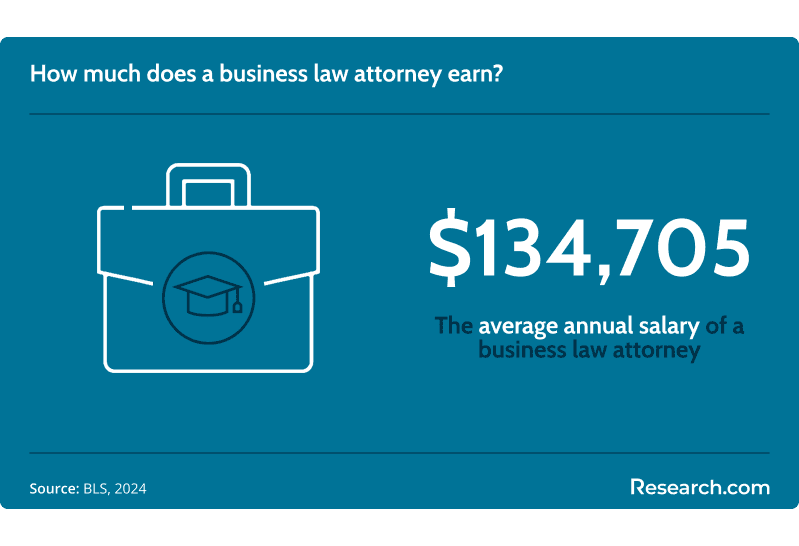
The typical annual salary for a business law attorney in the United States in 2025 is about $134,705 on average.
The hourly wage translates to roughly $64.76, with most salaries ranging between $106,000 and $159,000 depending on experience, location, and skill level. Top earners in this field can make up to $190,000 or more per year.
Salaries for business law careers vary based on geographic location and the size and type of employer, with metropolitan areas generally offering higher compensation.
Like many professions, legal concentrations in business law salaries increase with experience. A first-year lawyer may earn a starting salary in the range of $79,250 to $126,500, while an attorney with 10 or more years of experience can command salaries well into the six figures, often exceeding $195,500.
The size and type of the employer are significant differentiators. Business lawyers at large, prestigious law firms (often called "BigLaw") can earn substantially more than those at small firms or in-house counsel roles at smaller companies.
What's the long-term career outlook for jobs in business law?
The long-term career outlook for jobs in business law is generally positive and is expected to evolve with shifts in the business and technology landscapes. The U.S. Bureau of Labor
Statistics projects a 4% growth for lawyer employment over the next decade. This growth will generate approximately 31,500 openings annually, driven largely by the need to replace lawyers who retire or move to other occupations.
The demand for business lawyers is driven by several key factors:
- Evolving Regulatory Landscape: The need for lawyers who can navigate and ensure compliance with a growing body of regulations continues to rise. This includes areas like data privacy, cybersecurity, and environmental law.
- Globalization: Companies are increasingly operating across international borders, which creates a demand for legal expertise in international law, cross-border transactions, and compliance with different legal systems.
- Technological Advancements: The rise of new technologies is creating a new frontier of legal issues, such as intellectual property rights, data governance, and liability. This is driving a high demand for lawyers who specialize in these niche areas.
- Specialization and In-house Roles: Businesses are increasingly hiring in-house legal counsel to manage their legal needs directly, which can lead to more opportunities for business lawyers to work within a company's legal department.
While the future looks promising, it's also clear that the legal profession is changing. Lawyers will need to be adaptable and embrace new technologies to remain competitive. The integration of AI in legal research and document review is likely to change day-to-day tasks, allowing lawyers to focus on more complex, strategic work.
Therefore, successful business law careers in the long term will require not only strong legal skills but also a solid understanding of technology, business strategy, and the ability to specialize in high-growth areas, similar to those pursuing the best online PhD in counseling psychology.
How many hours do business lawyers work each week?
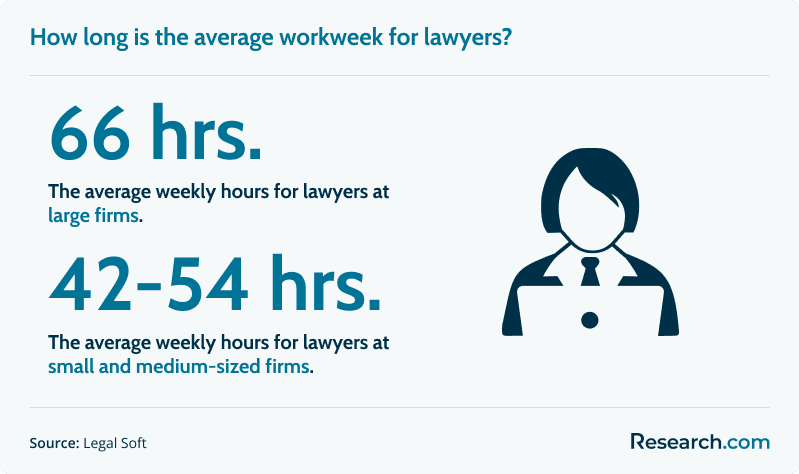
Business law careers, similar to jobs related to online bachelors degree in human services, typically work longer than a standard 40-hour workweek. Most lawyers in large firms work an average of around 66 hours per week, with some weeks during peak periods reaching 80 to 100 hours.
Lawyers at small to medium-sized firms generally work between 42 and 54 hours weekly. In-house corporate lawyers usually work about 45 to 55 hours per week. The demanding hours are largely due to billable hour requirements, client demands, and deadlines that often extend work beyond the traditional office hours.
Many lawyers also work evenings and weekends to meet these demands.
What are the pros and cons of being a business lawyer?
Like any demanding profession, a career in business law comes with its own set of advantages and disadvantages. It's a field that offers significant rewards but also requires a high level of commitment and resilience.
Pros
- High Earning Potential: Lawyers, especially those at large corporate firms or in high-demand specializations like mergers and acquisitions, can earn six-figure salaries early in their careers, with partners earning even more.
- Intellectual Stimulation: Business lawyers constantly solve complex legal and business puzzles, which requires strong analytical and problem-solving skills. Every case and transaction is unique, providing a continuous learning experience.
- Influence and Impact: Business lawyers work closely with top executives and have the opportunity to influence major business decisions, from shaping corporate strategy to facilitating multi-million-dollar deals. This work can have a tangible and significant impact on a company's success.
- Diverse Career Paths: The skills gained in business law are highly transferable. A business law degree can lead to a variety of roles outside of a traditional law firm, such as becoming an in-house counsel, a compliance officer, a legal consultant, or even an entrepreneur.
Cons
- Long and Unpredictable Hours: The work-life balance for many business lawyers, especially those at large firms, can be challenging. Major deals and litigation often require long hours, late nights, and weekend work, which can lead to burnout and strain on personal life.
- High-Pressure Environment: The stakes in business law are often very high. Mistakes can lead to significant financial or legal consequences for clients, which creates a high-pressure, stressful work environment. Lawyers are expected to be available and responsive at all times.
- Expensive Education: The path to becoming a business lawyer starts with a costly law school education. Many graduates face substantial student loan debt, which can be a significant financial burden in the early stages of their careers, similar to those researching what is engineering psychology.
- Competitive Field: The job market for business lawyers, particularly at top-tier firms, is highly competitive. Gaining a position requires not only a strong academic record but also networking, resilience, and a willingness to put in the time and effort to stand out.
How do business lawyers handle stress and pressure in a demanding career?
Given the high-pressure environment and demanding workload, business lawyers need to develop robust strategies to handle stress and maintain their well-being. This is a critical aspect of successful, long-lasting business law careers, just as specialization is key in fields like forensic accounting and fraud examination.
- Establish Boundaries and Disconnect: This might involve not checking emails after a certain hour, leaving the phone at home during personal time, or taking full, uninterrupted vacations to recharge.
- Prioritize and Delegate: Effective time management is key. By prioritizing tasks, breaking down large projects into manageable steps, and delegating non-essential work to paralegals or junior associates, lawyers can avoid feeling overwhelmed.
- Maintain a Healthy Lifestyle: Many successful lawyers prioritize regular exercise, a balanced diet, and sufficient sleep. Physical activity has been shown to reduce stress hormones and improve mood, while a good night's sleep is essential for clear thinking and resilience.
- Find a Release Outside of Work: Whether it's playing a sport, engaging in a creative pursuit, or simply spending quality time with family and friends, having activities outside of work provides a necessary mental and emotional detachment from the job's demands.
- Seek Support and Mentorship: Many law firms offer wellness programs, mental health resources, and employee assistance programs. Additionally, it helps to build a strong support system where lawyers can openly discuss challenges and seek advice.
Ultimately, handling stress in a demanding career is a personal journey, but the most successful business lawyers are those who prioritize their mental and physical well-being. They recognize that a sustainable career is not about enduring constant stress, but about developing effective coping mechanisms to thrive under pressure.
Is business law a good career path for students today?
Business law careers are considered a good career path for students today due to steady growth in the legal employment market and strong demand for legal professionals, especially in corporate law, mergers and acquisitions, regulatory compliance, and governance, which is also a consideration for those looking at online EdD programs with an all but dissertation option.
Job openings in business law are expected to increase as firms look to expand their service offerings and adapt to evolving business needs.
Although challenges such as workload, salary dissatisfaction, and work-life balance exist, the career offers substantial opportunities in diverse industries with competitive salaries and a relatively low unemployment rate compared to other professions.
The integration of technology like AI in legal practices is also reshaping the profession, enhancing efficiency and opening new avenues for legal careers. Students interested in business law can find rewarding careers by developing key skills and adapting to industry changes.
What are the best networking tips for aspiring business lawyers?
Networking is an essential skill for aspiring business lawyers, as it can open doors to internships, job opportunities, and invaluable mentorship. It's about building genuine, mutually beneficial relationships, not just collecting business cards.
- Start with Your Existing Network: Your family, friends, university professors, and alumni can be your first and most valuable networking connections. Reach out to them, let them know your career aspirations, and ask for their advice.
- Do Your Homework: Before attending any event or meeting with someone, research the person or the firm. Find out their practice area, recent cases they've worked on, or even their professional interests. This allows you to ask thoughtful, specific questions that show genuine interest and will leave a lasting impression.
- Craft a Concise "Elevator Pitch": Be prepared to introduce yourself in a clear and concise way. Your elevator pitch should be about 30 seconds long and provide a memorable snapshot of who you are and what you're passionate about, without sounding rehearsed.
- Ask Thoughtful, Open-Ended Questions: Focus on listening more than talking. Ask open-ended questions about their career path, what they enjoy most about their work, or the biggest challenges they've faced.
- Follow Up and Stay in Touch: After meeting someone, send a personalized follow-up email within 24 hours. Find authentic ways to stay in touch, such as sending a relevant news article or a note of congratulations on a promotion or award. This shows that you're interested in a long-term professional relationship.
- Leverage Online Platforms: In the digital age, LinkedIn is a powerful tool for aspiring lawyers. Create a professional profile, connect with people you meet at events, and follow law firms and attorneys you admire.
Here's what graduates have to say about their business law careers
- Jane: "After a comprehensive education in business law, I feel fully equipped to handle complex corporate challenges. The analytical skills I honed are directly applicable to my job as a compliance officer, and I find great satisfaction in helping businesses navigate legal complexities to achieve their goals. The intellectual rigor of the field, combined with the real-world application, makes every day a rewarding experience."
- Herbert: "Choosing a career in business law was one of the best decisions I've made. The fast-paced environment of mergers and acquisitions keeps me on my toes, and I love the feeling of helping companies grow and evolve. It's incredibly rewarding to see the tangible impact of my work, and the emotional high of closing a major deal is unmatched."
- Randall: "My business law education gave me the perfect foundation for a career as an in-house counsel. I'm able to use my legal knowledge to provide strategic guidance, and it's a great feeling to be an integral part of a company's success. The balance of legal problem-solving and business strategy has made my career both challenging and deeply fulfilling."
Key Findings
- Business lawyers typically work longer than a standard 40-hour workweek.
- The U.S. Bureau of Labor Statistics projects a 10% growth in lawyer employment from 2021 to 2031.
- Salaries in business law positions can vary significantly, with high-paying roles like counsel averaging around $171,000 annually.
- A first-year lawyer may earn a starting salary in the range of $79,250 to $126,500.
- Lawyers at small to medium-sized firms generally work between 42 and 54 hours weekly.
References:
- Bureau of Labor Statistics. (2025). Occupational Outlook Handbook: Business and Financial Occupations. U.S. BLS
- English Law Firm. (n.d.). How Long to Become a Business Lawyer? ELF
- Glassdoor. (2025). Salary: Intellectual Property Lawyer in the United States 2025. Glassdoor
- Ziprecruiter. (2025). Salary: Corporate Lawyer, United States. Ziprecruiter
Other Things You Should Know About the Top Business Law Careers
In 2027, top business law careers include corporate counsel, compliance officer, mergers and acquisitions attorney, and intellectual property lawyer. These roles are critical for navigating regulatory environments, negotiating deals, and safeguarding company assets and ideas in an ever-evolving business landscape.
To pursue a career in business law in 2027, you'll need a Juris Doctor (JD) degree from an accredited law school and a state bar license. Specializing in corporate law, commercial litigation, or intellectual property during your studies can give you an edge in obtaining top roles in the legal field.