
2027 Sonographer Certification Costs & Prerequisites

Co-Founder and Chief Data Scientist
As a career planning and education expert, I know that getting accurate information about sonographer certification costs and prerequisites in the U.S. is challenging because it involves multiple organizations and credentialing bodies.
The path isn't a single, uniform process. Instead, it depends on your educational background and the specific registry you aim for, such as the American Registry for Diagnostic Medical Sonography (ARDMS) or the American Registry of Radiologic Technologists (ARRT).
This introduction will provide clarity on the essential steps and financial aspects, helping you cut through the confusion and focus on a clear plan to achieve your professional goals.
What are the benefits of getting a sonographer certification?
- Career Advancement: Certification opens pathways to roles like Lead Sonographer, Clinical Instructor, and Sonography Manager that require professional credentials.
- Earning Potential: Certified sonographers earn more, with averages of $116,572 annually for registered diagnostic sonographers and $110,073 for entry-level professionals (ZipRecruiter, 2025).
- Increased Job Security: Certification validates expertise and is highly preferred by employers, making candidates more competitive in the job market.
What can I expect from a sonographer certification program?
- Focused Advanced Topics: Programs emphasize anatomy, physiology, medical terminology, and ultrasound physics.
- Structured Curriculum: Coursework combines lectures, lab practice, and clinical rotations for applied learning.
- Applied Strategic Knowledge: Training includes operating ultrasound equipment, interpreting diagnostic images, and forming preliminary findings.
- Condensed Timeline: Many certificates and associate-level programs can be completed in under two years for faster workforce entry.
- Networking Opportunities: Programs connect students with faculty and healthcare professionals, supporting future job placement.
Where can I work with a sonographer certification?
- Hospitals: The largest employers, including emergency rooms and specialized departments like cardiology.
- Outpatient Clinics: Provide more regular hours and continuity with a stable patient base.
- Physician Offices: Support doctors directly in private practice, often in specialties such as obstetrics or orthopedics.
- Medical and Diagnostic Laboratories: Focus on imaging procedures without extensive patient care duties.
- Mobile Imaging Services: Deliver ultrasound services across facilities or homes, offering a flexible schedule.
How much can I make with a sonographer certification?
- Entry-Level Sonographers: Starting salaries range from $81,000 to $137,000, with a national average of $110,073 (ZipRecruiter, 2025).
- Senior & Specialized Roles: Cardiac and vascular sonographers can exceed $130,000 annually in high-demand areas (ZipRecruiter, 2025).
- Travel Sonographers: Contract roles often provide above-average pay, with annual earnings surpassing national medians.
- What are the costs and prerequisites of sonographer certifications? Costs & prerequisites
- What financial aid options are available for sonographer certifications? Financial aid
- What career opportunities are available for professionals with sonographer certifications? Career opportunities
- What specializations are available for professionals with sonographer certifications? Specializations
- What is the job outlook for certified sonographers in the coming decade? Job outlook
- What are the typical salaries for certified sonographers by specialization? Salaries
- What are the biggest challenges faced by students pursuing sonographer certifications? What are the biggest challenges faced by students pursuing sonographer certifications?
- What are the biggest opportunities for students pursuing sonographer certifications? Opportunities
- What key skills are developed through sonographer certification programs? Key skills
- What are some current and future trends in sonographer certifications? Trends
What are the costs and prerequisites of sonographer certifications?
The costs and prerequisites for sonographer certifications are often tied directly to the educational pathway chosen, with a variety of entry points for different backgrounds. The primary credentialing bodies, ARDMS and ARRT, have distinct requirements that dictate eligibility to take their exams.
Prerequisites
- Educational Prerequisites: Applicants must have an associate or bachelor's degree from a program accredited by the Commission on Accreditation of Allied Health Education Programs (CAAHEP). Most online sonography programs are accredited - check their accreditation status on their websites.
- Clinical Experience: Programs typically include hands-on clinical training, and some pathways require a minimum number of clinical hours or work experience before an individual can sit for the exam.
- High School Diploma or GED: A high school diploma or GED is the initial requirement for entry into a sonography training program.
- Prerequisite Coursework: Many programs require prior completion of specific science courses like anatomy, physiology, and physics.
- Letters of Recommendation: Some competitive programs require several letters of recommendation to be submitted as part of the application.
- Interview Process: Many institutions conduct interviews to assess an applicant's communication skills and suitability for the field.
- Health and Background Checks: Students are often required to pass a drug screen, background check, and have up-to-date immunizations before beginning clinical rotations.
Costs
- ARDMS SPI Exam: Candidates for the Registered Diagnostic Medical Sonographer (RDMS) credential must pass the Sonography Principles and Instrumentation (SPI) exam, which costs around $250.
- ARDMS Specialty Exam: After passing the SPI, candidates must pass a specialty-specific exam, such as Abdomen or OB/GYN, which costs approximately $250 per exam.
- ARRT Sonography Exam: The American Registry of Radiologic Technologists (ARRT) offers its own sonography certification, which requires an associate degree or higher and passing a comprehensive exam.
- Exam Fees: Certification exam fees can range from $200 to $500, depending on the credentialing body and the number of exams taken.
- Application Fees: Both ARDMS and ARRT require non-refundable application fees to process a candidate's eligibility.
While the costs and requirements can seem complex, they are designed to ensure professionals meet a high standard of care. Understanding these elements is the first step toward a successful career.
What financial aid options are available for sonographer certifications?
While the direct cost of certification exams is an out-of-pocket expense, there are numerous financial aid options that can help offset the broader costs of sonography education, including online sonography certificate programs. These opportunities range from federal programs to scholarships and grants designed specifically for students in the allied health field.
- Federal Student Aid: Completing the Free Application for Federal Student Aid (FAFSA) is the gateway to federal grants and loans, including the Pell Grant, which does not need to be repaid.
- Scholarships and Grants: Numerous organizations, like the Society of Diagnostic Medical Sonography (SDMS), offer scholarships and grants specifically for sonography students.
- Professional Organizations: Groups such as the American Society of Echocardiography (ASE) and the American Society of Radiologic Technologists (ASRT) have foundations that provide funding for aspiring sonographers.
- School-Specific Aid: Many colleges and vocational schools offer their own institutional scholarships and grants to attract and support students in their sonography programs.
- Employer Tuition Reimbursement: Some healthcare employers will help pay for a portion of an employee's education, especially if it leads to a new skill or credential that benefits the organization.
- Work-Study Programs: Federal work-study allows students to earn money to help pay for educational expenses through part-time jobs, often in a field related to their major.
- State-Based Aid: Many states have their own financial aid programs for residents pursuing higher education in high-demand fields like healthcare.
- Private Student Loans: While federal loans are often the first choice, private loans from banks or credit unions are an option to cover remaining costs, though they may have higher interest rates.
- Nonprofit Organizations: Various private foundations and nonprofit groups offer financial assistance, sometimes for specific populations of students, such as those from a particular geographic area or with a certain background.
The availability of financial aid means that the cost of education does not have to be a barrier to entry into this promising field. Researching these options is an essential part of the career planning process, just as understanding sonographer certification requirements is crucial for entry.
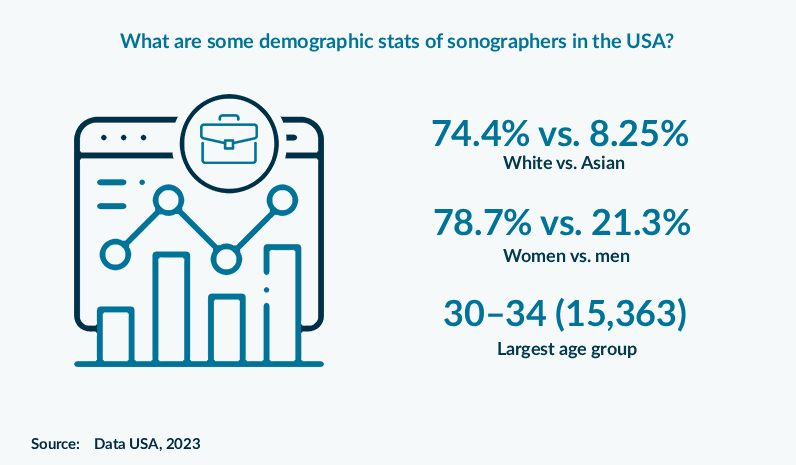
Based on 2023 data from DataUSA, the sonographer workforce in the United States is composed of 96,958 professionals, with a notable gender distribution of 78.7% women and 21.3% men. The field's workforce is concentrated in the younger-to-middle age brackets, with the largest groups being 30-34 (15,363 professionals), 35-39 (14,122), and 40-44 (13,188), which together account for 44.1% of the total workforce.
In terms of ethnicity and race, the profession is predominantly non-Hispanic at 88.2%, and the largest racial group is white, making up 74.4% of sonographers, followed by Asian at 8.25% and two or more races at 7.29%. This data, shown in the graphic below, indicates that while the field is growing, it is largely dominated by women and is less racially and ethnically diverse compared to the overall U.S. population (Data USA, 2023).
What career opportunities are available for professionals with sonographer certifications?
A professional with sonographer certifications has a wide range of career opportunities across various healthcare settings. Certification is the key to unlocking these roles, as it demonstrates a high level of competency and is often a requirement for employment, much like specialized credentials are vital for those working in special education programs.
- Diagnostic Medical Sonographer: This is the most common role, where professionals use ultrasound equipment to create images of a patient's internal organs and tissues.
- Specialty Sonographer: Certified sonographers can specialize in areas like cardiovascular, obstetrics/gynecology, or vascular imaging, leading to specialized jobs in clinics and hospitals.
- Lead Sonographer: With experience and a passion for leadership, a certified professional can advance to a supervisory role, managing a team of sonographers and overseeing daily operations.
- Department Manager: Certified sonographers with advanced degrees can move into administrative positions, overseeing an entire diagnostic imaging department or a large team.
- Clinical Instructor: Professionals with a passion for teaching can work as clinical instructors, guiding and mentoring students during their hands-on training.
- Sonography Educator: This role involves teaching and developing curriculum in academic settings, such as colleges and universities.
- Ultrasound Applications Specialist: Working for an ultrasound equipment manufacturer, these professionals train other healthcare providers on how to use new machines and technologies.
- Travel Sonographer: For those with a desire to see the country, travel sonography offers a chance to work on a contract basis in various locations, often with a higher salary.
- Researcher: Certified sonographers can work in research settings, contributing to the development of new ultrasound techniques and technologies.
- Freelance Sonographer: Some sonographers choose to work as independent contractors, providing imaging services to multiple clinics or physicians' offices.
Certification opens doors to a diverse array of roles, even from sonography programs online, allowing professionals to tailor their career to their skills and interests.
Diagnostic medical sonographers held approximately 90,000 jobs in 2024, with the majority of professionals working in specific healthcare settings. As shown in the graph below, hospitals, including state, local, and private facilities, were the largest employers, accounting for 57% of all jobs. The next largest employers were physicians' offices at 21% and medical and diagnostic laboratories at 10%. Outpatient care centers and self-employed sonographers made up 4% and 2% of the workforce, respectively.
Most of a sonographer's work is performed at diagnostic imaging machines in dimly lit rooms, and the role can be physically demanding, requiring them to stand for long periods and lift or move patients who are ill or disabled.
What specializations are available for professionals with sonographer certifications?
The field of sonography is vast, with many opportunities for professionals to specialize based on their interests and career goals. Specialization is crucial for career advancement and often leads to higher earning potential, similar to how specialization affects the sports management average salary.
- Abdominal (AB): Focuses on imaging major abdominal organs, including the liver, kidneys, gallbladder, and spleen.
- Adult Echocardiography (AE): Involves imaging the heart and its structures to diagnose and monitor cardiac conditions in adult patients.
- Breast Sonography (BR): Uses ultrasound to evaluate breast tissue for masses, cysts, or abnormalities, often as a follow-up to a mammogram.
- Fetal Echocardiography (FE): A highly specialized area that involves imaging a fetus’s heart to detect congenital heart defects and other abnormalities.
- Musculoskeletal Sonography (MSK): A growing specialty that images joints, tendons, and muscles, commonly used in sports medicine and orthopedics.
- Neurosonology (Neuro): Uses ultrasound to examine the brain and spinal cord, typically in infants, to detect abnormalities.
- Obstetrics and Gynecology (OB/GYN): Focuses on the female reproductive system and is often responsible for performing fetal ultrasounds.
- Pediatric Sonography (PS): Specializes in performing ultrasounds on children, requiring a gentle approach and skills tailored to young patients.
- Vascular Technology (VT): Uses ultrasound to examine blood flow in veins and arteries to diagnose conditions such as clots or blockages.
These specialized credentials allow sonographers to become experts in a particular area, providing a valuable service to physicians and patients.
What is the job outlook for certified sonographers in the coming decade?
The job outlook for certified sonographers is exceptionally strong and is projected to grow significantly faster than the average for all occupations. This favorable trend is driven by several key factors within the healthcare industry, just as licensing portability for mental health professionals is influenced by LPC reciprocity states.
- Aging Population: The large aging population in the United States requires more diagnostic imaging to screen for and monitor a variety of conditions, such as heart disease and cancer.
- Preference for Ultrasound: As a non-invasive, radiation-free, and relatively affordable diagnostic tool, ultrasound is increasingly being preferred over other imaging methods.
- Technological Advancements: The ongoing evolution of ultrasound technology, including portable and 3D imaging, is expanding its use to a wider range of medical applications.
- Shortage of Professionals: There is an existing demand for skilled sonographers, and as current professionals retire, this will create numerous new job opportunities.
- Expansion of Care: More healthcare is being delivered in outpatient care centers and physicians' offices, which increases the need for sonographers outside of traditional hospital settings.
- Chronic Disease: The rising rates of chronic conditions like heart disease and diabetes necessitate more regular diagnostic imaging.
- Preventive Care: The healthcare industry's focus on preventative care and early diagnosis is creating more opportunities for routine screenings and check-ups.
- Cost-Effectiveness: Sonography is a cost-effective imaging modality, making it an attractive option for healthcare providers and insurance companies.
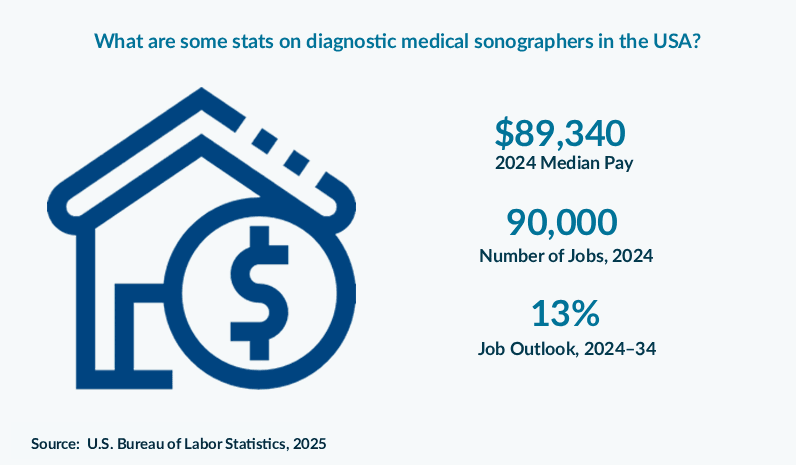
Based on data from the U.S. Bureau of Labor Statistics shown in the graphic below, the median annual pay for diagnostic medical sonographers was $89,340 in May 2024, which translates to $42.95 per hour. The typical entry-level education for the profession is an associate's degree, with no prior work experience or on-the-job training required to begin a career.
In 2024, the field employed 90,000 professionals, and this number is projected to grow by 13% over the next decade, a rate considered much faster than the average for all occupations. This growth is expected to result in an additional 11,700 jobs between 2024 and 2034. The data indicates a strong and growing field with a clear pathway for individuals to enter a high-demand, well-compensated career in healthcare (U.S. Bureau of Labor Statistics, 2025). This attractive salary and growth potential is a primary factor for choosing a career path, similar to the research done on master's degree in clinical mental health counseling jobs and their earning potential.
What are the typical salaries for certified sonographers by specialization?
Salaries for certified sonographers can vary significantly based on their specialization, location, and years of experience. While a general sonography certification provides a solid income, specializing in high-demand areas can lead to a substantial increase in earning potential. How much do ultrasound techs make after graduation? Here are some salary data from various sources, shown in the graph below.
- Abdominal Sonographer: Specialists in abdominal imaging earn competitive pay, with averages of about $110,000/year based on weekly rate data (ZipRecruiter, 2025).
- Breast Sonographer: This specialization commands strong salaries due to its role in cancer screening and breast health, with national averages of $98,841/year and $90,686/year in Knoxville, TN (Salary.com, 2025).
- Cardiac Sonographer (Echocardiographer): Due to the critical nature of heart imaging, cardiac sonographers are highly paid, with diagnostic cardiac sonographers earning a median of $86,300/year and registered cardiac sonographers averaging $98,851/year (Salary.com, 2025).
- General Sonographer: This is the most common and foundational role, with a national median annual wage of $89,340 as of May 2024 (U.S. Bureau of Labor Statistics, 2024).
- Musculoskeletal Sonographer: A growing area in sports medicine and orthopedics, MSK sonographers average about $91,000/year nationally, with higher pay in metro areas, such as $113,481/year in Chicago, IL (ZipRecruiter, 2025).
- Obstetrics and Gynecology Sonographer: Professionals in this specialty often earn higher-than-average salaries due to the frequent use of ultrasound in prenatal care, with national averages around $101,156/year and state averages like $95,939/year in Michigan (Salary.com, 2025; ZipRecruiter, 2025).
- Pediatric Cardiac Sonographer: An advanced subspecialty, these sonographers command premium salaries, with a U.S. median of $120,495/year (Glassdoor, 2025; Salary.com, 2025).
- Pediatric Sonographer: Professionals in pediatric care are valued highly, with average national salaries of $76,086/year and state-specific rates like $71,681 in Nebraska and $71,102 in Tennessee (Salary.com, 2025).
- Traveling Sonographer: Contract professionals often earn significantly more, with an average of $110,073/year nationally and top earners reaching over $150,000/year, depending on assignment location (ZipRecruiter, 2025).
- Vascular Technologist: Vascular specialists are among the best compensated, earning about $85,741/year nationally, with higher salaries such as $91,151 in New York (Salary.com, 2025).
Specialized credentials offer not just higher pay but also opportunities for career growth and deeper involvement in a specific medical discipline.
What are the biggest challenges faced by students pursuing sonographer certifications?
The path to sonographer certification is rigorous and demanding, presenting several significant challenges for students. Overcoming these obstacles requires a combination of academic discipline, technical skill, and personal resilience, which are traits common in those pursuing careers that help people.
- Rigorous Academic Curriculum: The coursework is intensive, covering complex topics like anatomy, physiology, and physics in a short period.
- High Competition for Programs: Admission to accredited sonography programs is often highly competitive due to the limited number of seats.
- Extensive Clinical Hours: Students are required to complete hundreds of hours of hands-on scanning in clinical settings, which can be physically and mentally draining.
- Physical Demands: The work itself requires physical stamina to stand for long periods, move heavy equipment, and position patients.
- Stressful Patient Interactions: Students must learn to work with patients who may be anxious, in pain, or receiving difficult news.
- Mastering Technical Skills: It takes time and practice to become proficient at operating the equipment and acquiring high-quality images.
- Time Commitment: The blend of classroom lectures, lab practice, and clinical rotations can be a challenge for students with other personal or work commitments. This is especially true for accelerated sonography programs.
- Balancing Work and Life: The intensity of the program can make it difficult for students to maintain a healthy work-life balance.
- Passing Board Exams: The certification exams are comprehensive and require a deep understanding of multiple subjects, creating a high-pressure testing environment.
These challenges are what make the credential so valuable, as it signifies a professional who has demonstrated a high level of expertise and dedication.
What are the biggest opportunities for students pursuing sonographer certifications?
While the journey to sonographer certification presents challenges, it also opens up a world of significant opportunities for students. These opportunities are what make the career so rewarding and stable for those who commit to the path, similar to how earning the top HIM certifications can significantly advance a career in health information management.
- Diverse Specialization Options: Students have the chance to specialize in a variety of fields, from obstetrics to cardiac imaging, which allows for a personalized career path.
- High Job Demand: The projected growth in the field means that certified graduates can expect excellent job prospects with a wide variety of employers.
- Strong Earning Potential: A career as a sonographer offers a competitive salary that increases with experience and specialization.
- Contribution to Patient Care: Sonographers play a critical role in diagnosing and treating medical conditions, offering a deeply rewarding experience in patient care.
- Advancement into Leadership Roles: With experience and additional education, sonographers can move into management, education, or research roles.
- Work-Life Balance: Sonographers often work regular hours, which can be a desirable alternative to other healthcare careers that require more unpredictable shifts.
- Continuous Learning: The field is constantly evolving, providing opportunities for ongoing professional development and skill expansion.
- Portable Credentials: The national certifications from organizations like the American Registry for Diagnostic Medical Sonography (ARDMS) are recognized across the U.S., making it easy to relocate for new opportunities for those with degrees from diagnostic medical sonography programs.
The chance to make a tangible impact on people's health and wellness makes this career a fulfilling and wise choice.
What key skills are developed through sonographer certification programs?
Sonographer certification programs are designed to build a wide range of skills that are essential for success in the field. These programs combine technical, interpersonal, and analytical training to prepare students for a multifaceted career, and the skills developed are highly transferable, even to roles like top non-clinical occupational therapy jobs to explore.
- Anatomy and Physiology: A foundational understanding of the human body is essential for accurate imaging and interpretation of results.
- Attention to Detail: The smallest detail in an ultrasound image can be critical for an accurate diagnosis, so meticulousness is paramount.
- Communication Skills: The ability to effectively communicate with patients to put them at ease and explain procedures is vital.
- Critical Thinking and Problem Solving: Sonographers must analyze images in real-time and make quick decisions to capture all necessary information for a diagnosis.
- Empathy and Compassion: Sonographers often work with patients who are in pain or distressed, requiring a compassionate and reassuring demeanor.
- Ethical and Professional Behavior: Programs instill a strong understanding of medical ethics and the importance of maintaining patient privacy and confidentiality.
- Hands-On Scanning: The ability to operate the transducer and manipulate the machine to acquire high-quality diagnostic images is a core skill.
- Instrumentation and Physics: Sonographers must have a deep knowledge of how ultrasound equipment works and the principles of sound waves to produce clear images.
- Technical Writing: The ability to write clear and concise reports for physicians to interpret is a key part of the job.
The skills developed in these programs go beyond the technical aspects of the job, preparing professionals to be effective and compassionate members of a healthcare team.
What are some current and future trends in sonographer certifications?
The sonography field is dynamic, with ongoing technological advancements shaping the future of the profession and its certifications. Staying up-to-date with these trends is essential for career longevity and growth.
- 3D and 4D Imaging: Advancements in technology are making 3D and 4D imaging more accessible, opening up new diagnostic possibilities and requiring new skills.
- Artificial Intelligence (AI) Integration: AI is being integrated into ultrasound machines to assist with image acquisition, analysis, and report generation, freeing sonographers to focus on complex cases and patient interaction.
- Continuing Education: The need for continuous learning to maintain certification is becoming even more critical as the field evolves at a rapid pace.
- Cross-Disciplinary Skills: The future of sonography will likely involve more collaboration with other medical professionals, requiring a broader understanding of various healthcare disciplines.
- Point-of-Care Ultrasound (POCUS): The use of portable, handheld ultrasound devices in emergency rooms and other point-of-care settings is growing, requiring sonographers to adapt to new environments and collaborate with a wider range of providers.
- Specialization in Growing Fields: Certifications in emerging fields like musculoskeletal and neurosonology are becoming more popular as their use expands.
- Telemedicine and Remote Diagnosis: The future may see sonographers performing remote scans or assisting physicians in other locations through real-time video feeds.
These trends highlight the growing importance of adaptability and a commitment to lifelong learning for sonographers.
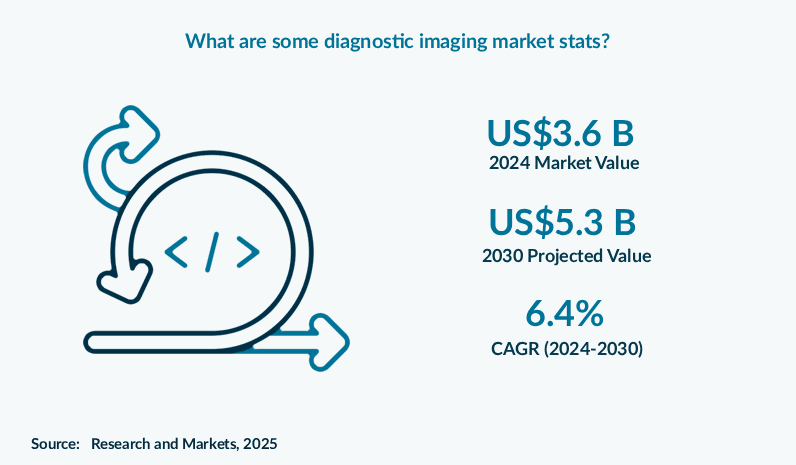
The global market for 3D ultrasound was valued at US$3.6 billion in 2024 and is expected to grow to US$5.3 billion by 2030, representing a compound annual growth rate (CAGR) of 6.4% over the period. According to a report by Research and Markets, this trend is driven by a rising preference for non-invasive and real-time imaging solutions, as shown in the graphic below.
Growth is fueled by several interconnected factors, including demographic shifts such as an aging population and rising birth rates, which are increasing demand for diagnostic and prenatal screenings. Additionally, the expanded use of 3D ultrasound in cardiology and oncology, along with the adoption of more affordable portable technologies in emerging markets, is contributing to the market’s expansion (Research and Markets, 2025).
Here's What Graduates Say About Their Sonographer Certifications
- Maribel: "I earned my sonographer certification after completing my associate degree, and it gave me the credibility I needed to land my first hospital job. The process was challenging, but passing the ARDMS exam boosted my confidence and opened doors to stable, well-paying work. "
- Jimmy: "Getting certified as a diagnostic medical sonographer allowed me to specialize in vascular imaging, which I had always wanted. The continuing education requirements keep me engaged with the latest technology, and I feel proud knowing I provide patients with accurate, life-changing results. "
- Elvira: "My certification made a huge difference in my career progression, helping me transition from an entry-level technician role to a lead sonographer within two years. The investment in exam prep and CME credits has paid off many times over, both financially and personally. "
Key Findings
- Gender and Age Distribution: The sonographer workforce in 2023 consisted of 96,958 professionals and was predominantly female, with women accounting for 78.7% of the total. The largest age groups were 30–34 (15,363), 35–39 (14,122), and 40–44 (13,188), which collectively made up 44.1% of the workforce (Data USA, 2023).
- Racial and Ethnic Makeup: The profession is predominantly non-Hispanic at 88.2%. In terms of race, the workforce is 74.4% White, 8.25% Asian, and 7.29% two or more races (Data USA, 2023).
- Job Growth and Employment: Diagnostic medical sonographers held approximately 90,000 jobs in 2024, with the number of positions projected to grow by 13% over the next decade. This growth is expected to add 11,700 new jobs between 2024 and 2034, making it a high-demand field (U.S. Bureau of Labor Statistics, 2025).
- Workplace Distribution: The majority of sonographers are employed in hospitals (57%), followed by physicians' offices (21%), and medical and diagnostic laboratories (10%). Outpatient care centers and self-employed sonographers account for a smaller percentage of the workforce (4% and 2% respectively).
- General and Entry-Level Pay: The median annual pay for a general diagnostic medical sonographer was $89,340 in May 2024 (U.S. Bureau of Labor Statistics, 2025). Entry-level salaries range from $81,000 to $137,000, with an average of $110,073 (ZipRecruiter, 2025).
- High-Earning Specialties: Sonographers can increase their earning potential through specialization. A pediatric cardiac sonographer, for example, has a high median salary of $120,495 per year (Glassdoor, 2025).
- Salaries by Specialization: Specialists in abdominal imaging earn about $110,000/year (ZipRecruiter, 2025), breast sonographers average around $98,841/year (Salary.com, 2025), and vascular technologists earn about $85,741/year (Salary.com, 2025).
- Traveling Professionals: Traveling sonographers earn a significantly higher average salary of $110,073 per year, with top earners making over $150,000 annually (ZipRecruiter, 2025).
- Growing Market for 3D Ultrasound: The global 3D ultrasound market was valued at US $3.6 billion in 2024 and is projected to reach US $5.3 billion by 2030, with a CAGR of 6.4%, driven by the rising preference for non-invasive, real-time imaging and a growing aging population in need of diagnostic screenings (Research and Markets, 2025).
References:
- Bureau of Labor Statistics, U.S. Department of Labor. (2025, April 18). Diagnostic medical sonographers. Bureau of Labor Statistics.
- Data USA. (2023). Diagnostic medical sonographers: Workforce demographics, employment, and wages. Data USA.
- Glassdoor. (2025). Pediatric cardiac sonographer salaries. Glassdoor.
- MarketsandMarkets. (2025). Diagnostic imaging market by product, application, end user—Global forecast to 2029. MarketsandMarkets.
- Salary.com. (2025, September). Breast sonographer salary in the United States. Salary.com.
- Salary.com. (2025, September). Diagnostic cardiac sonographer salary in the United States. Salary.com.
- Salary.com. (2025, September). Sonographer salary in the United States. Salary.com.
- Salary.com. (2025, September). Vascular sonographer salary in the United States. Salary.com.
- U.S. Bureau of Labor Statistics. (2024, April). Diagnostic medical sonographers. U.S. Department of Labor, Occupational Outlook Handbook. U.S. Bureau of Labor Statistics.
- Zippia. (2025). Sonographer demographics and statistics in the United States. Zippia.
- ZipRecruiter. (2025). Abdominal ultrasound sonographer jobs and salaries. ZipRecruiter.
- ZipRecruiter. (2025). Musculoskeletal sonographer salary in the United States. ZipRecruiter.
- ZipRecruiter. (2025). Travel sonographer salary in the United States. ZipRecruiter.
Other Things You Should Know About Sonographer Certifications
The cost for the ARDMS sonography certification exam in 2027 is $250 for the SPI exam and $250 for a specialty exam. Additional fees may apply for retakes or international testing centers. Check ARDMS’s official website for the most current fee structure.
Eligibility for sonographer certification in 2026 typically requires completing an accredited sonography program and acquiring clinical experience. Students must also meet specific educational prerequisites, such as a high school diploma or equivalent, and may need to pass prerequisite courses in science or math.


