
2027 Sports Management Salary Guide

Co-Founder and Chief Data Scientist
Sports leaders anticipate a 7.3% market growth in the next three to five years (PwC, 2024), which signals the expanding opportunities across leagues, events, and media. This projected growth directly impacts sports management careers, where professionals are increasingly needed to navigate investments, sponsorships, and shifting consumer engagement.
Emerging areas like women’s sports and digital platforms are also expanding career opportunities, often with competitive pay for managers who bring specialized expertise.
In this guide, I’ll break down salary trends, highlight the top-paying states and industries, and cover certifications that can boost earnings. I’ll also share strategies to help you maximize your career value in the highest-paying areas of sports management.
Key Things to Know About Sports Management Salaries
- The demand for sports managers continues to rise as organizations adapt to evolving fan behaviors, digital platforms, and new revenue models.
- Graduates can pursue careers in diverse settings, including professional teams, collegiate athletics, sports marketing firms, event management companies, or governing bodies.
- Sports managers typically earn salaries that are competitive with other management fields, with earning potential increasing significantly in areas, like major market franchises, global events, or corporate sponsorship management.
- How much do sports managers typically earn? Average Salary
- What factors affect the salary of sports managers? Salary Drivers
- What are the top-paying states for sports managers? Top-Paying States
- Which cities have the highest sports management salaries? Top-Paying Cities
- Which industries pay sports managers the most? Top-Paying Industries
- What certifications can boost a sports manager’s salary? What certifications can boost a sports manager’s salary?
- What is the salary outlook for sports managers? Salary Outlook
- How can a sports manager increase their salary? How can a sports manager increase their salary?
- How does a sports manager's salary compare to other management roles in sports? How does a sports manager's salary compare to other management roles in sports?
- What is the job outlook for sports managers? Job Outlook
- Should I pursue an affordable online MBA to advance my sports management career? Should I pursue an affordable online MBA to advance my sports management career?
How much do sports managers typically earn?
Sports management offers dynamic career opportunities that merge leadership, business strategy, and a passion for athletics into one profession. Pursuing an online sports management degree can provide the knowledge and credentials needed to enter this competitive field. In the US, the average salary for a sports manager is $61,655 per year, which translates to an hourly rate of roughly $30 (Salary.com, 2025).
However, salaries in this field are far from uniform. Entry-level professionals often start at $42,487, while most fall within the range of $51,621 to $68,774. At the highest level, top earners can make close to $75,256 annually, reflecting the industry’s potential for career advancement and financial growth (Salary.com, 2025).
What factors affect the salary of sports managers?
Several factors influence a sports manager’s salary, with experience remaining one of the most influential drivers. Entry-level professionals with less than one year of experience typically earn around $58,810 annually (Salary.com, 2025).
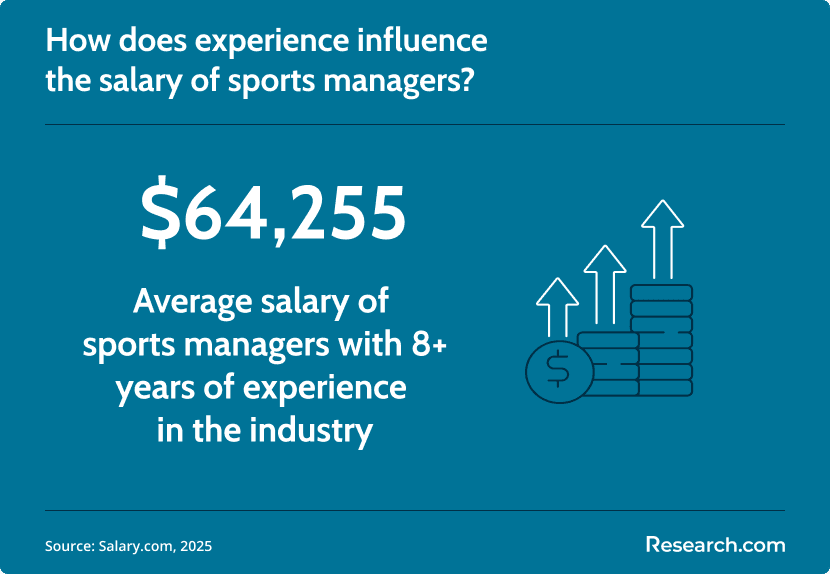
As managers gain expertise, assume broader responsibilities, and oversee more complex operations, their compensation rises. Those with more than eight years of experience often reach salaries of $64,255, underscoring how sustained career growth directly boosts earning potential.
In addition to experience, other elements significantly shape salary outcomes:
- Education Level: Advanced degrees, such as a fast-track online MBA in sports management, often open doors to higher-paying executive positions.
- Geographic Location: States with strong sports markets, like California and New York, usually offer more competitive salaries than smaller regions.
- Employer Type: Professional leagues and top universities typically provide higher pay compared to local clubs or smaller organizations.
- Industry Specialization: Focusing on areas such as sponsorship, marketing, or operations can lead to distinct earning opportunities.
- Networking Ability: Strong connections with athletes, sponsors, and executives often translate into better contracts and financial gains.
What are the top-paying states for sports managers?
Geographic location shapes sports management salaries, and earning a top sports management bachelor's degree can further enhance earning potential. States with thriving professional leagues, robust collegiate athletics, and expansive media markets often provide the most lucrative opportunities.
High-paying regions typically reflect both a strong demand for sports management expertise and the higher cost of living that accompanies major metropolitan centers.
For instance, Connecticut leads the nation with average salaries surpassing $190,400 annually, a figure influenced by its proximity to major sports franchises and dense media networks in the Northeast. New York follows closely, offering sports managers around $153,520 per year, supported by its global sports presence and concentration of professional teams.
These examples highlight how geographic context, particularly access to professional leagues and sports-driven economies, directly affects compensation in the field.
This chart from the US BLS shows the top-paying states for agents and business managers of artists, performers, and athletes.
Which cities have the highest sports management salaries?
Geography does more than shape opportunities and directly impacts earning potential. Cities with robust entertainment industries, large professional sports markets, and established collegiate programs often provide the most competitive salaries. This regional variation in opportunity and pay is a common factor across many specialized fields, including understanding what is business law and where the highest demand for legal professionals exists.
Coastal hubs like New York, San Francisco, and Los Angeles not only host premier teams but also benefit from sponsorship deals, media rights, and expansive fan bases, creating higher demand for skilled managers. At the same time, midwestern and emerging sports markets still offer competitive pay, reflecting the nationwide growth of sports as a business sector.
Here are the top-paying cities for sports management professionals according to the US BLS (2024):
- New York–Newark–Jersey City, NY-NJ-PA: The largest sports and media hub, offering salaries $154,180 annually.
- San Jose–Sunnyvale–Santa Clara, CA: A tech-driven region where innovation meets athletics, with salaries averaging $142,780.
- San Francisco–Oakland–Hayward, CA: Home to professional franchises and strong sponsorship markets, paying $140,140.
- Los Angeles–Long Beach–Anaheim, CA: A global sports and entertainment center, with average earnings of $138,050.
- Sacramento–Roseville–Arden-Arcade, CA: A growing West Coast market, offering salaries of $127,260.
- San Diego–Carlsbad, CA: A coastal market blending tourism and sports, where salaries average $114,350.
- Las Vegas–Henderson–Paradise, NV: A rising sports destination with major league expansions, paying $114,300.
- Chicago–Naperville–Elgin, IL-IN-WI: A traditional sports hub with salaries of $105,710.
- Detroit–Warren–Dearborn, MI: Known for historic franchises, sports managers here earn $99,180.
- Philadelphia–Camden–Wilmington, PA-NJ-DE-MD: A city with deep sports traditions, offering salaries of $98,400.
Which industries pay sports managers the most?
Compensation in sports management depends not only on location but also on the industry where professionals build their careers, and earning an accelerated sports management bachelor's degree online can further enhance earning potential. Sectors with strong financial structures, access to sponsorship revenue, and specialized expertise often pay significantly higher than general organizations.
Professionals working in industries tied to law, talent representation, or high-profile entertainment often benefit from greater exposure to lucrative deals, endorsements, and high-value clients. As a result, those who align their careers with these sectors often see a considerable boost in compensation compared to traditional management roles.
Among the top-paying industries for sports managers, legal services stand out as the most lucrative. Professionals in this sector, who specialize in navigating contracts, negotiations, and compliance, earn an average annual salary of about $166,120.
Close behind are agents and managers for artists, athletes, entertainers, and other public figures, a field that revolves around representation and deal-making. Those in this industry command an average salary of approximately $143,730, reflecting the high value placed on their ability to secure endorsements, manage careers, and broker major business opportunities.
This chart from the US BLS displays the top-paying industries for agents and business managers of artists, performers, and athletes.
What certifications can boost a sports manager’s salary?
Certifications amplify a sports manager’s professional credibility and often unlock higher-paying roles, especially in competitive or specialized sectors. For example, the Certified Sports Manager (CSM) from the Global Association for Quality Management provides knowledge across sports business administration, event planning, facility management, and governance—skills increasingly demanded by top-tier teams and organizations.
Earn one or more of these specialized credentials to demonstrate mastery in key areas and position yourself for roles that offer greater autonomy, higher responsibility, and enhanced salary potential. This pursuit of specialization and advanced credentials is a common path across many fields, including healthcare, where professionals might explore the different types of epidemiologists to find their niche.
Below are several other certifications worth pursuing, depending on your career path:
- Sports Facility Manager (CSFM): Validates ability in facility operations, maintenance, and safety oversight.
- Certified Athletic Administrator (CAA): Focuses on leadership, compliance, and the administration of school and youth sports programs.
- Professional Certificate in Football Management (ICMS): Tailored to football industry dynamics, including governance, sponsorship, and club strategy.
- Exercise and Fitness Management Certificate: Ideal for those managing fitness programs, wellness facilities, or integrating health science with sports operations.
What is the salary outlook for sports managers?
The salary outlook for sports managers reflects steady growth, driven by the expanding global sports industry and rising demand for skilled leadership. Currently valued at $600 billion and projected to rise by 8.7% by 2026 (PwC, 2025), the sports market is generating lucrative opportunities in sponsorship management, sports analytics, and international event coordination, positioning professionals for higher earning potential.
Below, salary data from Zippia (n.d.) further supports this positive trajectory:
- 2021: $36,075
- 2022: $36,295
- 2023: $36,938
- 2024: $37,422
- 2025: $39,012
This consistent upward trend, combined with expanding opportunities in sports management, points to a favorable long-term salary outlook.
How can a sports manager increase their salary?
A master’s degree, such as a fast track online MBA sports management, equips professionals with advanced skills in finance, marketing, and leadership. It strengthens strategic decision-making and opens pathways to senior roles in franchises, universities, and global organizations, like FIFA or the NBA.
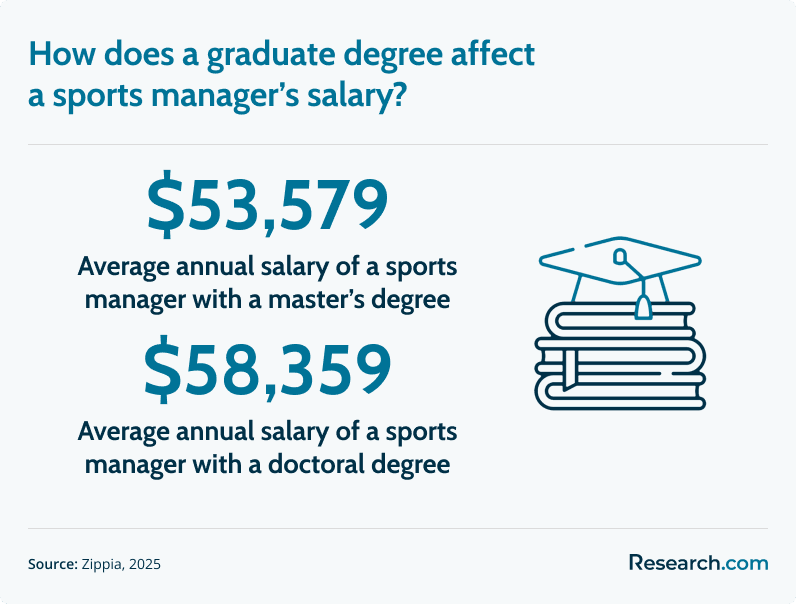
On average, master’s degree holders earn $53,579 annually, while those with a doctorate earn $58,359, underscoring the strong value of advanced credentials in sports management. Additional strategies for enhancing earning potential in this career include:
- Gain Hands-On Experience: Internships, entry-level positions, and assistant roles give aspiring managers firsthand exposure to team operations, athlete contracts, and event logistics. This practical experience builds credibility and demonstrates a proven track record, making professionals more competitive for mid-level and high-paying management positions over time.
- Build a Strong Client Base: In athlete representation and team management, salary growth often hinges on revenue generation. By representing top athletes, negotiating sponsorship deals, or managing lucrative brand partnerships, sports managers can substantially increase their earnings through both higher salaries and commission-based income.
- Develop Soft Skills: Success in sports management depends on balancing interpersonal and technical expertise. High-stakes negotiations, crisis management, and leadership in fast-paced environments demand strong communication, conflict resolution, and decision-making abilities.
- Develop Technological Skills: Aside from soft skills, technological proficiency is increasingly essential, with 78% of sports managers reporting Microsoft Excel as a critical tool for budgeting, data analysis, and performance tracking. These not only enhance day-to-day effectiveness but also position managers for higher-paying leadership roles in a data-driven industry.
- Earn Certifications: Specialized certifications, such as in sports law, facility management, or data analytics, demonstrate expertise beyond standard degree programs. These credentials set managers apart in competitive markets and can unlock access to roles in emerging areas like esports management or international sponsorships, where salaries are on the rise.
- Expand Networking: Sports management thrives on relationships. Attending industry conferences, joining professional associations like the North American Society for Sport Management (NASSM), and connecting with executives, scouts, and sponsors can lead to exclusive job offers, international opportunities, and higher-paying contracts that may not be publicly advertised.
How does a sports manager's salary compare to other management roles in sports?
The salary of sports managers can be better understood by comparing it to other management and specialized roles within the sports industry. While sports management offers a solid median income, compensation varies widely depending on responsibilities, industry focus, and level of influence within an organization. These differences highlight how specialized skills and the scope of oversight directly impact earning potential, a calculation of value that is similar to assessing the different types of masters degrees in healthcare and their potential career returns.
Here’s a quick comparison of sports management roles and salaries:
- Sports Agent / Professional Sports Consultant: Earns about $55,581 annually; negotiates athlete contracts, secures endorsements, and manages client careers.
- Sports Manager: Median salary of $61,655 annually; oversees daily operations, team logistics, and organizational strategy for sports programs.
- Public Relations Specialist: Earns approximately $78,100 annually; builds and maintains the public image of athletes, teams, and sporting events.
- Sports Marketing Manager: Commands around $118,255 annually; develops campaigns to increase fan engagement, sponsorship revenue, and brand visibility.
- Athletics Director: Earns roughly $118,620 annually; manages school or college sports programs, budgets, staff, and long-term athletic strategies.
What is the job outlook for sports managers?
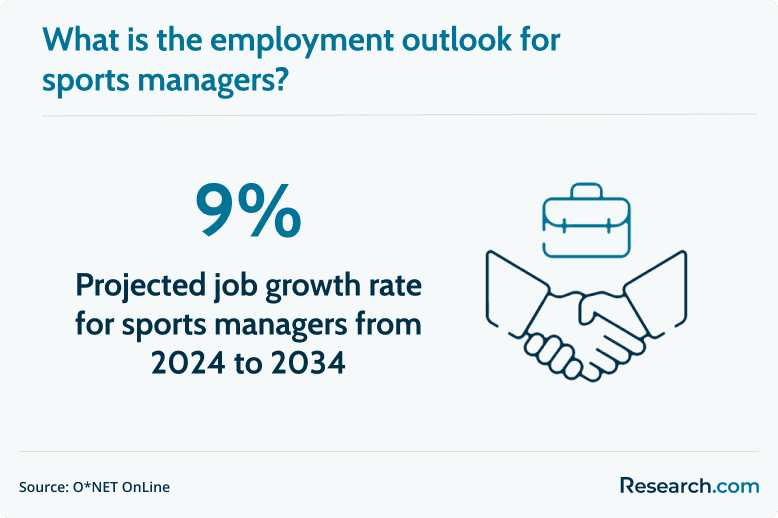
The job outlook for sports managers is strong, driven by growth in professional leagues, collegiate athletics, and esports. In 2024, about 21,400 sports managers were employed in the US, with projections rising to 23,200 by 2034, a 9% increase, much faster than the average for all occupations. This growth indicates a robust demand for specialized leadership, a factor crucial across many professional fields, including understanding the different types of mental health professionals and the unique roles they fill.
Expansion in data-driven decision-making, sports analytics, and technology integration is creating specialized roles that require both strategic leadership and operational expertise. This growth is expected to generate roughly 2,200 annual job openings, offering significant opportunities for professionals entering or advancing in sports management.
Should I pursue an affordable online MBA to advance my sports management career?
An affordable online MBA is increasingly recognized as a catalyst for strategic leadership in sports management. By integrating advanced financial, marketing, and operational coursework with real-world case studies, these programs sharpen decision-making skills critical for navigating competitive sports environments. This specialized education supports career progression into senior management roles and can distinguish candidates in sectors where analytical rigor and business acumen are paramount. For professionals seeking accessible and quality education, exploring the cheapest and easiest online MBA programs might offer a cost-effective pathway to enhance both qualifications and earning potential.
Key Findings
- The average salary for a sports manager is $61,655 per year, reflecting typical earnings for mid-level professionals.
- Sports managers with more than eight years of experience earn about $64,255 annually, showing growth with career longevity.
- Connecticut leads the nation with sports management salaries surpassing $190,400, driven by a strong professional sports market.
- Legal services is a top-paying industry for sports management professionals, providing lucrative opportunities with average annual earnings of $166,120
- Professionals with a master’s degree in sports management earn around $53,579, while those with a doctorate average $58,359 annually, highlighting the value of advanced education.
References:
- O*NET OnLine (n.d.). National Employment Trends 13-1011.00 - Agents and Business Managers of Artists, Performers, and Athletes. Retrieved from https://www.onetonline.org/link/localtrends/13-1011.00?st=
- PwC (2024). Sports Industry: On Track for Growth? Retrieved from https://www.pwc.co.uk/hospitality-leisure/documents/global-sports-survey-2024.pdf
- PwC (2025). Sports Industry Outlook 2025. Retrieved from https://www.pwc.com/m1/en/publications/sports-industry-outlook-2025.html
- Salary.com (2025). Athletics Director Salary in the United States. Retrieved from https://www.salary.com/research/salary/benchmark/athletics-director-salary
- Salary.com (2025). Public Relations Specialist Salary in the United States. Retrieved from https://www.salary.com/research/salary/listing/public-relations-specialist-salary
- Salary.com (2025). Sports Agent Professional Sports Consultant Salary in the United States. Retrieved from https://www.salary.com/research/salary/opening/sports-agent-professional-sports-consultant-salary
- Salary.com (2025). Sports Manager Salary in the United States. Retrieved from https://www.salary.com/research/salary/position/sports-manager-salary
- Salary.com (2025). Sports Marketing Manager Salary in the United States. Retrieved from https://www.salary.com/research/salary/hiring/sports-marketing-manager-salary
- US BLS (2024). Occupational Employment and Wages, May 2023 13-1011 Agents and Business Managers of Artists, Performers, and Athletes. Retrieved from https://www.bls.gov/oes/2023/may/oes131011.htm
- Zippia (2025). Sports Team Manager Education Requirements. Retrieved from https://www.zippia.com/sports-team-manager-jobs/education/
- Zippia (n.d.). Job Outlook for Sports Team Managers in the United States. Retrieved from https://www.zippia.com/sports-team-manager-jobs/trends/
Other Things You Should Know About Sports Management Salaries
The average salary for sports management professionals in 2027 varies significantly based on role, experience, and location. Entry-level positions typically start around $40,000 annually, while experienced managers can earn over $100,000. Factors such as team performance and sponsorship deals can further influence compensation.
Regions with thriving sports markets, professional leagues, or large collegiate programs generally offer higher salaries for sports managers. Increased demand for skilled professionals in these areas drives competition among employers, resulting in better compensation packages. Conversely, regions with fewer sports opportunities tend to pay less.
In 2027, salary growth for sports management roles is expected to rise by 4% due to increased demand for skilled professionals and expanded opportunities in emerging sports markets. Economic factors and industry trends also contribute to this growth rate.


