
2027 Types of Epidemiologists: Roles and Work Settings

Co-Founder and Chief Data Scientist
As a career planning specialist, I emphasize the vital role of epidemiologists in safeguarding U.S. public health. Often called “disease detectives,” they work across specializations like infectious disease, chronic illness, environmental health, and clinical research, each shaping population well-being in unique ways. Their careers span diverse settings, from the CDC and local health departments to hospitals, universities, and nonprofits.
However, newcomers face challenges in accessing up-to-date, accurate information, as details are scattered across reports and agencies. Differentiating between academic findings and policy-driven applications further complicates understanding. This guide streamlines insights, providing clarity for those mapping future careers in epidemiology.
What are the benefits of getting an online graduate certificate in epidemiology in the USA?
- Career Advancement: Opens pathways to roles such as public health epidemiologist, disease surveillance specialist, infection control analyst, and data science roles in health agencies.
- Earning Potential: The median U.S. epidemiologist salary is about $83,980/year (BLS, 2025); PayScale reports an average of $72,851/year (PayScale, 2025); Indeed shows about $73,741/year (Indeed, 2025).
- Flexible Learning: The online format allows you to advance your training without relocating, accommodating your current job, family, or personal commitments.
What can I expect from an online graduate certificate in epidemiology?
- Focused Advanced Topics: You’ll cover core areas such as disease surveillance, biostatistics, outbreak investigation, and epidemiologic study design.
- Structured Curriculum: Expect a mix of recorded lectures, synchronous online classes, case studies, and group projects.
- Applied Strategic Knowledge: Emphasis on real-world problems: data analysis, interpreting epidemiologic measures, and designing interventions.
- Condensed Timeline: Many programs finish in 9–12 months, enabling you to pivot or upskill quickly.
- Networking Opportunities: Interact with faculty, public health practitioners, and peers across states and sectors.
Where can I work with an online graduate certificate in epidemiology?
- State & Local Health Departments: Investigate disease outbreaks and monitor community health metrics.
- Federal Agencies: Roles at CDC, NIH, or other national public health bodies.
- Hospitals & Healthcare Systems: Lead infection control, quality improvement, and clinical epidemiology units.
- Academic & Research Institutions: Assist in epidemiologic research projects, data management, and public health studies.
- Private Sector & Consulting Firms: Work in pharmaceutical, biotech, health insurers, or public health consulting.
- International / NGO & Global Health: Engage in disease surveillance, program evaluation, and policy planning abroad.
How much can I make as an epidemiologist in the U.S.?
- Entry/Analyst-Level Roles: Beginners may earn about $50,000–$65,000/year (BLS, 2025).
- Mid/Management-Level Roles: Mid-career epidemiologists often earn $80,000–$110,000/year (BLS, 2025).
- Senior & Specialized Roles: At the upper end, especially in private industry or high-cost locations, salaries can exceed $130,000+ (Coursera, 2025).
- What are the different types of epidemiologists, their roles, and work settings? Types of Epidemiologists
- What are some financial aid options for students pursuing epidemiology programs? Financial Aid
- What is the return on investment (ROI) for a career in epidemiology? ROI
- What are the typical career opportunities for epidemiologists? Career Opportunities
- What is the job outlook for epidemiologists in the U.S.? Job Outlook
- What are some of the key skills gained through epidemiology training? Skills
- What are the typical salaries for epidemiologists? Salaries
- What are the biggest challenges faced by epidemiologists today? What are the biggest challenges faced by epidemiologists today?
- What are the biggest opportunities in the field of epidemiology? Opportunities
- What are some current and future trends shaping epidemiology? Trends
What are the different types of epidemiologists, their roles, and work settings?
Epidemiologists specialize in different fields depending on the populations, diseases, and health determinants they study. Below is a core set of 15 types of epidemiologists, alphabetized and paired with concise explanations of their focus areas.
- Cancer epidemiologists – Focus on cancer incidence, risk factors, and survival patterns. They design prevention campaigns, such as tobacco control, and evaluate screening programs. Work settings: Cancer research centers, hospitals, academic institutions, government agencies (e.g., National Cancer Institute), and nonprofit organizations.
- Cardiovascular epidemiologists – Study heart disease and stroke, identifying lifestyle and genetic risk factors. Their work shapes guidelines on diet, exercise, and treatment protocols. Work settings: Hospitals, heart and vascular research institutes, universities, public health departments, and international health organizations.
- Chronic disease epidemiologists – Investigate long-term conditions like diabetes, obesity, asthma, and arthritis. They develop prevention programs and evaluate disease management strategies. Work settings: Public health agencies, health insurance organizations, medical research institutions, and community health programs.
- Environmental epidemiologists – Examine how pollutants, toxins, and climate change affect health. Their findings guide environmental regulations and policy. Work settings: Environmental protection agencies, NGOs, universities, government health departments, and consulting firms.
- Field epidemiologists – Provide rapid, on-the-ground response to disease outbreaks or disasters. They investigate cases, trace contacts, and implement urgent public health measures. Work settings: Centers for Disease Control and Prevention (CDC), World Health Organization (WHO), ministries of health, and humanitarian organizations (e.g., Doctors Without Borders).
- Genetic epidemiologists – Study hereditary influences and gene–environment interactions. They use genomic data to uncover genetic risk markers. Work settings: Universities, biomedical research institutes, genetic testing companies, and pharmaceutical firms.
- Infectious disease epidemiologists – Track and prevent the spread of infections such as influenza, HIV, or COVID-19. They lead outbreak investigations and vaccination programs. Work settings: CDC, WHO, hospitals, state and local health departments, global health NGOs, and laboratories.
- Injury/trauma epidemiologists – Focus on accidents (falls, car crashes) and violence-related injuries. They create prevention strategies and safety recommendations. Work settings: Hospitals, trauma centers, transportation safety boards, government health agencies, and universities.
- Molecular epidemiologists – Apply biomarkers and laboratory methods to population studies, linking biology to disease risk. Work settings: Academic research labs, biotech firms, pharmaceutical companies, and medical schools. An online Masters in Biotechnology is also a good career choice.
- Nutritional epidemiologists – Analyze how diet and nutrient intake influence health outcomes. Their work shapes dietary guidelines and nutrition policy. Work settings: Universities, public health agencies, nutrition research institutes, food policy organizations, and international health organizations.
- Occupational epidemiologists – Investigate workplace exposures such as chemicals, stress, or radiation. They set safety standards and health protections for workers. Work settings: Occupational safety agencies (e.g., OSHA, NIOSH), corporate health departments, labor unions, and consulting firms.
- Pharmacoepidemiologists – Study how medications are used in populations, monitoring safety and effectiveness. They evaluate drug risks and support safe prescribing practices. Work settings: Pharmaceutical companies, regulatory agencies (e.g., FDA, EMA), universities, and healthcare systems.
- Psychiatric/mental health epidemiologists – Examine mental illness patterns, risk factors, and treatment outcomes for conditions like depression or substance abuse. Work settings: Universities, psychiatric hospitals, government health departments, nonprofit mental health organizations, and global health agencies.
- Social epidemiologists – Explore how social conditions (poverty, housing, inequality) shape health outcomes. They focus on reducing disparities and improving equity. Work settings: Universities, public health organizations, government agencies, think tanks, and NGOs focused on social justice.
- Veterinary epidemiologists – Study diseases in animals, especially those that spread to humans (zoonoses). They work within the “One Health” framework linking animal and human health. Work settings: Departments of agriculture, veterinary schools, CDC, WHO, animal health agencies, and international organizations (e.g., FAO, OIE).
Together, these 15 categories form the core areas of epidemiology, bridging human, environmental, social, and animal health. Their diverse roles and settings highlight how epidemiologists contribute to disease prevention, health equity, and global health security across multiple domains.
What are some financial aid options for students pursuing epidemiology programs?
Funding an advanced degree in public health requires strategic planning, but numerous options exist to offset tuition and living expenses for aspiring epidemiologists. These resources span institutional, governmental, and private sectors, offering support based on merit, need, and specialization focus—similar to the financial aid structures available in best HBCU online MBA programs.
- Diversity Scholarships: Awards offered by organizations aimed at increasing representation in scientific and public health fields based on identity or background.
- Federal Student Loans: Government-backed loans (Stafford, PLUS), the most common way to finance the Master of Public Health (MPH) or doctoral degree.
- Graduate Assistantships: Positions involving teaching or research duties in exchange for a stipend and, often, full or partial tuition remission.
- Institutional Scholarships: Competitive awards offered directly by the university or School of Public Health based on academic achievement or application strength.
- National Health Service Corps (NHSC) Scholars: Programs that provide financial aid in exchange for a commitment to work in federally designated underserved communities after graduation.
- NIOSH Fellowships: Specialized funding from the National Institute for Occupational Safety and Health for students focusing on injury prevention and workplace safety.
- Private Foundation Grants: Support from organizations focusing on specific health areas (e.g., cardiovascular health or mental health advocacy), often tied to dissertation topics. It is also helpful to know how to become a mental health counselor.
- Robert Wood Johnson Foundation (RWJF) Programs: Private foundation funding supporting health-related research and leadership development for promising public health students.
- Traineeships (T32 Grants): Federal funding mechanisms, often through the NIH, that support specialized training in areas like cancer or genetic epidemiology.
- Travel and Research Grants: Smaller awards covering costs for dissertation research or presenting findings at professional conferences.
- Veteran Education Benefits: Resources like the Post-9/11 GI Bill provide tuition coverage and housing allowances for those with military service.
- Work-Study Programs: Federally funded, campus-based jobs that allow students to earn money for educational expenses while gaining relevant public health experience.
Students should review each program’s requirements and deadlines well in advance, as specialized funding often includes service commitments or specific research expectations. Prioritizing institutional aid and federal traineeships is often the most effective strategy to minimize total educational debt, much like understanding the steps for obtaining a sonographer certification.
What is the return on investment (ROI) for a career in epidemiology?
The return on investment for an epidemiology career goes beyond salary potential—it’s also about the societal impact and career stability that come with advanced training. An MPH degree, which serves as the minimum entry requirement for most roles, builds a strong foundation for long-term success and opens the door to diverse fields, much like special education degree programs do for educators seeking specialized expertise.
- Accelerated Mid-Career Growth: Salary growth accelerates significantly after the early-career stage, reflecting greater responsibility in data analysis and team leadership.
- Career Advancement Opportunities: Advanced degrees open doors to senior management, principal investigator roles, and executive positions in agencies like the CDC or NIH.
- Counter-Cyclical Job Security: Demand for epidemiologists often rises during public health crises, ensuring career resilience.
- Enhanced Earning Potential: The median epidemiologist salary exceeds the national median wage, ensuring a strong income base post-graduation.
- Geographic Earning Variation: Public health-focused metropolitan areas offer higher salaries than rural settings.
- High Societal Cost-Savings: Prevention programs and interventions demonstrate significant cost-benefit ratios, providing societal ROI.
- Intellectual Fulfillment: Addressing complex causal questions and shaping public health policy delivers a strong non-monetary return.
- Pathway to Doctoral Research: Master’s degrees act as prerequisites for PhDs, which lead to top research and academic leadership roles.
- Public Sector Retirement/Benefits: Government positions typically include comprehensive benefits and robust retirement packages.
- Specialization Premium: Roles in areas like research epidemiology or infection control consulting pay significantly more than generalist positions.
- Transferable Data Skills: Skills in biostatistics and programming (R, SAS, Python) are valuable in tech, finance, and consulting.
According to 2023 CDC estimates (shown in the graphic below), obesity had the highest modeled prevalence, affecting 31.2% or fewer adults in the lowest-prevalence communities and at least 37.8% in the highest quartile. High cholesterol ranked second, with prevalence ranging from 31.3% or less in the bottom quartile to 36.6% or higher in the top quartile. Hypertension was the third most prevalent, found in 30.6% or fewer adults in the lowest-prevalence areas and at least 38.8% in the top quartile.
The remaining conditions, in order of prevalence, were depression (rank 4), asthma (rank 5), diabetes (rank 6), chronic obstructive pulmonary disease (rank 7), cancer excluding skin cancer (rank 8), coronary heart disease (rank 9), and chronic kidney disease (rank 10).
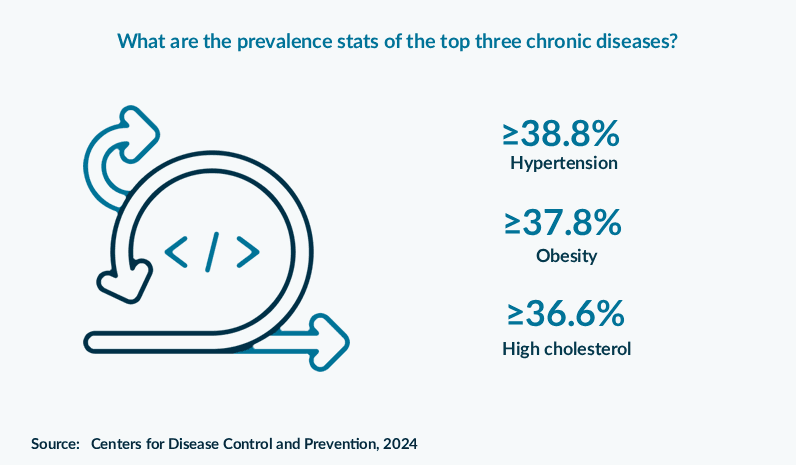
Together, obesity, high cholesterol, and hypertension account for the largest share of chronic disease burden in the U.S., underscoring the need for continued prevention and management strategies targeting metabolic and cardiovascular health.
What are the typical career opportunities for epidemiologists?
Epidemiologists work in diverse settings, from federal agencies and universities to hospitals and private firms. They apply scientific methods to investigate disease patterns, assess interventions, and guide health policy.
- Applied Field Investigator: Rapidly deployed to collect data, define cases, and recommend immediate control measures during outbreaks.
- Biostatistician/Methodologist: Develops statistical tools and models for public health research.
- Chronic Disease Epidemiologist: Focuses on long-term conditions such as cancer, diabetes, or cardiovascular disease.
- Data Scientist/Analyst: Works in consulting or tech firms, applying advanced analytics to health datasets. The cheapest online data science master's degree programs provide good credentials to have.
- Environmental Epidemiologist: Studies health impacts of pollutants, toxins, and climate change.
- Federal Agency Researcher (CDC/NIH): Designs nationwide studies on disease determinants and policy impacts.
- Health Policy Analyst: Translates epidemiologic evidence into recommendations for legislators and policymakers.
- Infection Control Epidemiologist: Prevents and monitors healthcare-associated infections within hospitals.
- Maternal and Child Health Specialist: Investigates outcomes related to pregnancy, infancy, and child health.
- Pharmaceutical/Biotech Specialist: Analyzes clinical trial data and ensures drug safety and effectiveness.
- Research Epidemiologist (Academia): Conducts grant-funded, peer-reviewed studies as faculty or research staff.
- State/Local Health Department Epidemiologist: Oversees surveillance, investigates outbreaks, and designs community interventions.
For the various types of epidemiologists, these opportunities provide a wide array of job options.
What is the job outlook for epidemiologists in the U.S.?
The employment outlook for epidemiologists is strong, with growth significantly faster than the average for all occupations, similar to other expanding fields with competitive pay such as sports management jobs salary. Investment in prevention and surveillance—especially post-pandemic—has expanded opportunities across health systems.
- Annual Openings: About 800 openings per year, including both new positions and replacements (U.S. Bureau of Labor Statistics, 2024).
- Employment Growth Rate: Employment of epidemiologists is projected to grow 16% between 2024 and 2034, much faster than the average (U.S. Bureau of Labor Statistics, 2024).
- Major Employers: Growth is concentrated in state and local health departments, hospitals, and scientific research institutions (U.S. Bureau of Labor Statistics, 2024).
- Infection Control Expansion: Hospitals are steadily increasing their demand for epidemiologists due to stricter patient safety standards and preparedness mandates.
- Strong Stability: Public health agencies continue to invest in prevention and surveillance infrastructure, ensuring sustained career demand.
The employment data for epidemiologists in the United States shows strong growth and a solid salary baseline, reflecting the advanced education required for the role. In 2024, the median annual pay was $83,980, or about $40.38 per hour. Entry into the field typically requires a master’s degree, but usually does not demand prior related work experience or formal on-the-job training, making graduate education the primary pathway into the profession.
The occupation is projected to expand significantly over the next decade. As of 2024, there were about 12,300 epidemiologist jobs nationwide, with employment expected to grow by 16% between 2024 and 2034. This translates to roughly 2,000 new positions, a growth rate much faster than the average for all occupations, as shown in the graphic below.
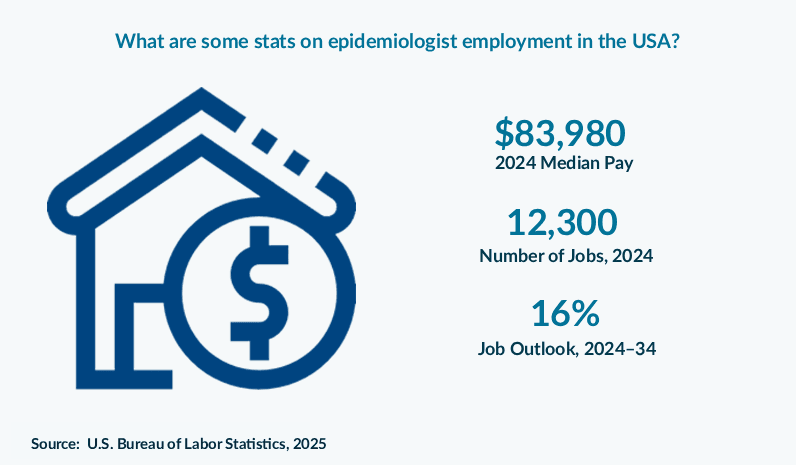
The trend reflects increasing investment in public health infrastructure and disease prevention, ensuring continued high demand for trained epidemiologists.
What are some of the key skills gained through epidemiology training?
Epidemiology programs cultivate a rigorous analytical mindset, blending scientific research skills with communication and leadership abilities, even among different specializations and types of epidemiologists. Graduates emerge ready to address complex public health problems in diverse settings.
- Biostatistical Modeling: Applying advanced statistical software (R, SAS, Stata, Python) to quantify disease risk, evaluate interventions, and interpret large datasets.
- Causal Inference: Distinguishing correlation from causation using study designs and statistical methods to identify true drivers of health outcomes.
- Critical Appraisal: Evaluating the validity, reliability, and generalizability of published research to inform evidence-based decision-making.
- Data Management: Cleaning, merging, and securing complex datasets, including electronic health records and surveillance data, for reliable analysis.
- Disease Surveillance Systems: Designing and managing real-time reporting systems to detect, track, and monitor diseases at the community and national levels.
- Ethical Research Practice: Ensuring compliance with Institutional Review Boards (IRBs), HIPAA, and global ethical standards for human subjects and health data.
- Geographic Information Systems (GIS): Mapping disease distribution, identifying clusters, and exploring geographic determinants of health.
- Grant and Report Writing: Preparing proposals to secure funding and producing technical reports for policymakers and health agencies.
- Interdisciplinary Collaboration: Partnering with clinicians, microbiologists, policymakers, and community leaders to address multi-layered health challenges.
- Leadership and Project Management: Coordinating research teams, managing field investigations, and balancing budgets and timelines in public health projects.
- Outbreak Investigation: Conducting fieldwork to define cases, trace exposures, and identify at-risk populations during urgent health events.
- Scientific Communication: Translating technical findings into clear, actionable insights for policymakers, healthcare providers, and the public.
- Study Design Methodology: Structuring cohort, case-control, cross-sectional, and randomized controlled trials to minimize bias and maximize accuracy.
- Technology and Informatics: Using machine learning tools, real-time dashboards, and health informatics systems to modernize epidemiologic analysis. If you decide to pursue other health informatics careers, this is a good skill to have.
These skills are very valuable in epidemiology work, as shown in the graphic below. In 2024, fewer than one in five U.S. adults expressed concern about fall and winter respiratory infections, with 20% concerned about COVID-19 (down from 23% in 2023 and 34% in 2022), 17% about flu, 16% about RSV, and 17% about pneumococcal disease. Adults with chronic conditions were about twice as likely to be concerned about these infections.
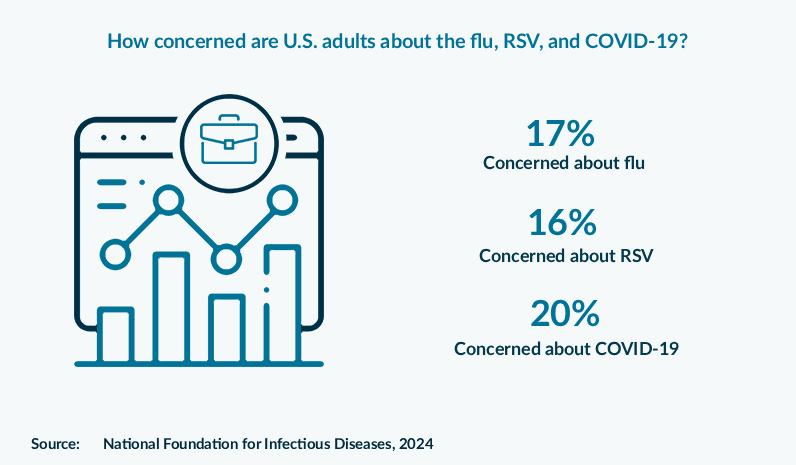
Vaccination intent and uptake remain low despite recommendations, and only 38% of adults said they would definitely get a flu vaccine, while only 26% an updated COVID-19 vaccine. For RSV, 18% of eligible adults had been vaccinated and 21% intended to be, while for pneumonia, 25% were vaccinated and 24% intended to be.
Common reasons for hesitancy included side effect concerns, distrust, fear of illness from the shot, and doubts about effectiveness (National Foundation for Infectious Diseases, 2024).
What are the typical salaries for epidemiologists?
Epidemiologist salaries vary by experience, specialization, and sector, but generally exceed the national average, even among the different types of epidemiologists.
- Entry-Level Pay: The lowest 10% earn below $56,950/year (U.S. Bureau of Labor Statistics, 2024), comparable to careers in biology.
- Highest Paying Sector: Epidemiologists in Scientific Research & Development Services earn a median of $130,390/year (U.S. Bureau of Labor Statistics, 2024).
- Median Annual Salary (National): The overall median is $83,980/year (U.S. Bureau of Labor Statistics, May 2024).
- Sector Comparison: Median salaries include $99,690 in hospitals, $80,640 in colleges/universities, and $79,640 in state government (U.S. Bureau of Labor Statistics, 2024).
- Top 10% Earnings: The highest-paid epidemiologists earn more than $134,860/year (U.S. Bureau of Labor Statistics, 2024).
- California: Mean annual wage is $102,390; ~1,200 epidemiologists employed (U.S. Bureau of Labor Statistics, 2024).
- Texas: Mean annual wage is $80,970; ~640 epidemiologists employed (U.S. Bureau of Labor Statistics, 2024).
- Washington State: Mean annual wage is $113,790; ~940 epidemiologists employed, with one of the nation’s highest location quotients (U.S. Bureau of Labor Statistics, 2024).
Epidemiologist salaries generally exceed the national average but vary significantly by experience, specialization, sector, and geography. The national median annual salary was $83,980 as of May 2024, with Scientific Research & Development Services offering the highest median wage at $130,390 compared to $99,690 in hospitals, $80,640 in colleges and universities, and $79,640 in state government.
Entry-level pay for the lowest 10% falls below $56,950, while the top 10% earn more than $134,860 annually. Geographic differences are also notable: Washington reported a mean wage of $113,790 for 940 epidemiologists, California averaged $102,390 for 1,200, and Texas averaged $80,970 for 640. This data, shown in the graph below, highlights strong earning potential across the profession, with premiums in private research, clinical roles, and high-cost states.
What are the biggest challenges faced by epidemiologists today?
Despite visibility, epidemiologists face significant professional and systemic challenges.
- Burnout and Fatigue: Sustained stress from continuous disease surveillance and crisis response.
- Climate Change Health Effects: Rising threats from shifting disease vectors and extreme weather.
- Complexity of Chronic Disease: Challenges in modeling multifactorial conditions like obesity.
- Data Fragmentation: Barriers to integrating health data across jurisdictions.
- Ethical Data Use: Protecting sensitive health data in an era of big data.
- Funding Instability: Dependence on government budgets creates unpredictability.
- Lagging Infrastructure: Many health departments rely on outdated data systems.
- Measurement of Social Determinants: Difficulty capturing complex social/economic drivers of health.
- Misinformation: Public distrust fueled by disinformation campaigns.
- Political Interference: Conflicts between science and political agendas.
- Recruitment & Retention: Government salaries lag behind private sector offers.
- Translational Gap: Difficulty translating research into policy action.
So, what were the leading causes of death in the USA? In 2023, the United States recorded 3,090,964 deaths. Heart disease was the leading cause with 680,981 deaths (22.0%), followed by cancer with 613,352 (19.8%). Unintentional injuries caused 222,698 deaths (7.2%), stroke 162,639 (5.3%), and chronic lower respiratory diseases 145,357 (4.7%).
Alzheimer’s disease accounted for 114,034 deaths (3.7%), diabetes mellitus 95,190 (3.1%), kidney disease 55,253 (1.8%), and chronic liver disease and cirrhosis 52,222 (1.7%). Covid-19 ranked tenth with 49,932 deaths (1.6%). These are shown in the graph below.
Together, heart disease and cancer made up over 40% of all deaths, while covid-19 declined to the lowest top-ten cause, highlighting the persistence of chronic diseases as the dominant mortality drivers.
What are the biggest opportunities in the field of epidemiology?
Emerging technologies, global health priorities, and data science are creating unprecedented opportunities.
- Academic Workforce Development: Training the next generation of public health professionals.
- Career Growth in Private Sector: Expansion into biotech, insurance, and health tech.
- Commercial Determinants of Health: Addressing corporate impacts on population well-being.
- Environmental & Climate Epidemiology: Quantifying health burdens from pollution and climate change.
- Expansion of Mental Health Epidemiology: Applying methods to address psychiatric and behavioral disorders.
- Focus on Health Equity: Targeting structural disparities in public health outcomes.
- Growth in Data Science: Combining computational skills with epidemiologic insight.
- Integration of AI: Using machine learning for prediction and outbreak detection.
- Precision Public Health: Tailoring interventions to genetic and environmental data.
- Real-Time Biosurveillance: Leveraging wastewater, syndromic, and genomic data.
- Strengthening Global Health Security: Building disease surveillance capacity worldwide.
- Translational Science Leadership: Bridging evidence generation with implementation.
What are some current and future trends shaping epidemiology?
The discipline of epidemiology continues to evolve, driven by technology, new health threats, and shifts in global health systems. These trends highlight where the field is heading and the skills future professionals will need.
- Causal Road Mapping: Advanced methods like machine learning and modern causal inference are increasingly applied to strengthen evidence from observational data, helping policymakers rely on more rigorous findings.
- Citizen Science: Public-generated data, such as self-reported symptoms or wearable device data, are being integrated into surveillance systems, requiring new standards for accuracy and validation.
- Decentralization of Public Health: State and local agencies are gaining more autonomy through federal funding, allowing tailored health responses specific to local community needs.
- Ethical AI: As AI models are adopted for outbreak prediction and risk analysis, guidelines are being developed to ensure algorithms are transparent, fair, and free of bias. Be in the know by enrolling in an online Masters in Artificial Intelligence degree program.
- Focus on Structural Determinants: Research is moving beyond individual behaviors to examine how laws, governance, and corporate practices shape health outcomes at the population level.
- Genomic Epidemiology: Pathogen sequencing is becoming routine, enabling scientists to track variants, mutations, and transmission pathways in near real time.
- Implementation Science: Emphasis is shifting to studying how evidence-based interventions can be successfully scaled in diverse, real-world health systems.
- One Health Approach: Growing integration of human, animal, and environmental data is helping address zoonotic spillovers and climate-driven disease risks.
- Public Health Law & Policy: Epidemiological evidence is increasingly embedded into legislation, such as smoke-free laws, vaccination mandates, and pandemic response planning.
- Real-Time Dashboards: Decision-makers now expect rapid data visualization and reporting, with interactive dashboards becoming standard for outbreak management.
- Syndromic Surveillance: Early detection methods using ER visits, pharmacy sales, and even social media data are being expanded to catch outbreaks before laboratory confirmation.
- Telehealth Data: Remote monitoring and virtual care records are being used to track health trends, especially in underserved and rural populations, expanding access to care and surveillance capacity.
Here's What Graduates Say About Their Epidemiology Roles and Work Settings
- Aman: "I completed my MPH in Epidemiology and immediately joined a state health department where I work on infectious disease surveillance. The program gave me hands-on experience with outbreak investigations, which made me feel prepared and confident stepping into a high-impact role."
- Darius: "Earning my PhD in Epidemiology allowed me to dive deeply into cancer research and secure NIH funding for my dissertation. The mentorship and advanced training in biostatistics helped me publish in peer-reviewed journals and build a career in academic research. "
- Leena: "After finishing my MS in Applied Epidemiology, I transitioned from a lab role to a data-driven position at a major hospital. Learning how to analyze real-time patient data for infection control was both challenging and rewarding, and it feels amazing knowing my work improves patient safety. "
Key Findings
- Epidemiologist Salary Baseline: The U.S. Bureau of Labor Statistics reported a median annual salary of $83,980 for epidemiologists in May 2024, or about $40.38 per hour, with entry typically requiring a master’s degree.
- Epidemiologist Salary Range: The lowest 10% earned below $56,950, while the top 10% exceeded $134,860 annually, showing strong earning potential with experience and specialization.
- Sector Pay Differences: Epidemiologists in scientific research and development services earned a median of $130,390, compared with $99,690 in hospitals, $80,640 in colleges and universities, and $79,640 in state government.
- Geographic Pay Variation: Washington reported a mean wage of $113,790 for 940 epidemiologists, California averaged $102,390 for 1,200, and Texas averaged $80,970 for 640, reflecting premiums in high-cost and research-intensive states.
- Employment Growth Outlook: Epidemiologist jobs numbered about 12,300 in 2024, with employment projected to grow 16% from 2024 to 2034, adding roughly 2,000 new positions.
- Public Health Concerns: In 2024, fewer than one in five U.S. adults expressed concern about fall and winter respiratory infections, including 20% for COVID-19, 17% for flu, 16% for RSV, and 17% for pneumococcal disease, with concern declining since 2022.
- Vaccination Intent: Only 38% of adults said they would definitely get a flu vaccine and 26% an updated COVID-19 vaccine, while among eligible groups, 18% had received RSV vaccines and 25% pneumonia vaccines, with hesitancy linked to side effect concerns and distrust.
- Chronic Disease Burden: CDC estimates in 2023 ranked obesity as the most prevalent chronic disease, affecting at least 37.8% in the highest quartile of communities, followed by high cholesterol at 36.6% and hypertension at 38.8%.
- Leading Causes of Death: In 2023, the United States recorded 3,090,964 deaths, with heart disease leading at 680,981 (22.0%), cancer at 613,352 (19.8%), and unintentional injuries at 222,698 (7.2%), followed by stroke, chronic respiratory diseases, Alzheimer’s disease, diabetes, kidney disease, liver disease, and COVID-19.
References:
- Ahmad, F. B., Spencer, M. R., Miniño, A. M., & Anderson, R. N. (2024, August 23). Provisional mortality data — United States, 2023. Morbidity and Mortality Weekly Report, 73(31), 693–700. U.S. Department of Health and Human Services. Centers for Disease Control and Prevention.
- Benavidez, G. A., Zahnd, W. E., Hung, P., & Eberth, J. M. (2024). Chronic disease prevalence in the US: Sociodemographic and geographic variations by Zip Code Tabulation Area. Preventing Chronic Disease, 21, Article 230267. Centers for Disease Control and Prevention.
- Bureau of Labor Statistics. (2024, May). Occupational employment and wages, May 2023: Epidemiologists (19-1041). U.S. Department of Labor. Bureau of Labor Statistics.
- Bureau of Labor Statistics. (2024, September 4). Epidemiologists. In Occupational Outlook Handbook. U.S. Department of Labor. Bureau of Labor Statistics.
- Bureau of Labor Statistics. (2025). Epidemiologists. U.S. Department of Labor, Occupational Outlook Handbook. U.S. Bureau of Labor Statistics.
- Coursera. (2025). Epidemiologist salary: What you need to know. Coursera.
- Indeed. (2025). Epidemiologist salary in the United States. Indeed.
- Institute for Health Metrics and Evaluation. (2024). GBD compare data visualization. University of Washington.
- National Foundation for Infectious Diseases. (2024). 2024 national survey: Attitudes and behaviors about influenza, COVID-19, respiratory syncytial virus, and pneumococcal disease. National Foundation for Infectious Diseases.
- PayScale. (2025). Epidemiologist salary. PayScale.
Other Things You Should Know About Epidemiologist Roles and Work Settings
In 2027, epidemiologists are moving beyond traditional roles to cover areas like genomic research, social epidemiology, and climate impact studies. Their work settings vary from tech companies analyzing health data to NGOs focusing on global health initiatives, reflecting a broadening scope in public health.
In 2027, epidemiologists work in diverse fields beyond disease surveillance, such as environmental epidemiology, where they assess health impacts of pollutants, or genetic epidemiology, exploring links between genetics and health. They also engage in policy advising, health education, and biostatistics within governmental agencies, academia, or private sectors.


