2027 Types of Business Law: What You'll Learn in a Legal Program

Co-Founder and Chief Data Scientist
Business law is not a single subject but a critical framework encompassing contracts, corporate governance, employment regulations, and intellectual property. It defines how businesses are formed, operated, and dissolved, ensuring transactions are fair, ethical, and legally compliant.
Delving into this field will illuminate the core legal principles and federal regulations that govern the corporate world, equipping you with the knowledge needed to mitigate risk, structure deals, and protect corporate assets. This guide will clarify the distinct legal disciplines you will master in a rigorous legal program, detailing the expertise required to become a crucial legal advisor or a highly competent business leader.
Key Benefits of Learning About Business Law
- A background in business law prepares you for roles beyond becoming a lawyer. Graduates are highly sought after as Compliance Officers, Risk Managers, Regulatory Affairs Managers, Human Resources Managers, and Business Analysts. The median annual salary for all lawyers is $151,160. But even non-lawyer roles often command competitive salaries.
- The curriculum provides foundational skills in contract drafting, legal analysis, and ethical decision-making. This expertise is invaluable for entrepreneurs and business leaders, enabling them to confidently navigate complex regulations, structure deals, avoid legal pitfalls, and protect their company's interests.
- Earning a business law degree online offers greater flexibility and convenience for working professionals, allowing them to continue their career while studying. Online programs also often provide lower tuition costs and eliminate commuting expenses, making specialized legal education more accessible and affordable.
- Completing an online legal degree demonstrates strong self-motivation and time-management skills, which are highly valued by employers. It also expands your network, connecting you with peers and legal experts across different geographies and industries.
What can I expect from a business law program?
Business law, often called commercial law, is a vast, vital body of rules that governs the relationships, conduct, and transactions of business entities. Its main ideas revolve around establishing a stable, predictable framework for commerce. Core concepts begin with contract law, which governs agreements and their enforceability, providing the very structure for buying, selling, and service arrangements.
Another major idea is business formation, outlining the legal types of companies and defining corporate governance, which manages the internal relationships between directors, officers, and shareholders. Additionally, business law encompasses rules to protect assets, ensure fair competition, and regulate the employer-employee relationship. These concepts collectively aim to encourage ethical practices, mitigate risk, and ensure that all business operations align with legal standards and public policy.
Where can I work with a business law program?
Graduates with a strong foundation in business law find employment across a wide and dynamic range of industries, reflecting the pervasive need for legal knowledge in commerce. The most traditional path is within law firms where they often specialize in areas like corporate law, intellectual property, mergers and acquisitions, or commercial litigation. However, a significant portion of graduates move into in-house counsel roles, working directly for a single client. These in-house roles exist in virtually every industry, including:
- Financial Services: Banks, investment firms, private equity, and FinTech companies.
- Technology & Telecommunications: Managing IP, data privacy, and regulatory compliance.
- Healthcare & Pharmaceuticals: Handling complex regulations like Medicare compliance and medical ethics.
- Real Estate and Manufacturing firms, where contract and liability management are critical.
How much can I make with a business law program?
Salary data for professionals with a business law background varies significantly based on whether they pursue a career as a practicing attorney or take on a non-legal role. For those who earn a Juris Doctor (JD) and become practicing lawyers, the median annual salary across all lawyers was approximately $151,160 in 2024. However, starting salaries can cluster in two ranges: a lower range of $60,000 to $85,000 for small firms and public service, and a much higher range, with top earners in large "BigLaw" firms often starting at $190,000 or more. The specific type of law practiced—like corporate law or securities regulation— also heavily influences total compensation.
- What is business law and why is it important for students to study? Business Law Definition
- How is business law different from corporate law? Business Law vs Corporate Law
- What is contract law? Contract Law
- What is a non-disclosure agreement (NDA)? What is a non-disclosure agreement (NDA)?
- What is corporate governance? What is corporate governance?
- What are the legal requirements for corporate compliance with federal regulations? Legal Requirements
- How can a business protect its intellectual property from infringement? How can a business protect its intellectual property from infringement?
- What is trade secret law? What is trade secret law?
- What is the difference between employment law and labor law? Employment Law vs Labor Law
- What constitutes workplace discrimination? What constitutes workplace discrimination?
What is business law and why is it important for students to study?
Business law is a comprehensive set of legal rules that governs how businesses are formed, operated, and dissolved. It encompasses a wide array of legal topics, including contracts, corporate governance, intellectual property, and employment law. This field provides the framework for all commercial transactions, ensuring that businesses operate within a legal and ethical structure that protects the rights of all stakeholders, from owners and employees to consumers and the public.
For students, studying business law is crucial for several reasons:
- Risk Mitigation: A fundamental understanding of the types of business law allows students to identify and mitigate potential legal risks. This knowledge helps them avoid costly disputes, fines, and reputational damage for themselves or their future employers.
- Informed Decision-Making: Whether starting their own venture or working in a corporate environment, students who understand business law are better equipped to make informed decisions. They can navigate complex situations related to business formation, contracts, and compliance with greater confidence.
- Career Advancement: For aspiring entrepreneurs, managers, or business professionals, legal knowledge is a significant asset. It enables them to communicate effectively with legal professionals and contribute to the ethical and responsible operation of a business. Graduates from best HBCU online master's programs often find business law coursework especially valuable for advancing their leadership and compliance expertise.
- Consumer Protection: Understanding the legal standards that govern business practices helps students appreciate the importance of consumer rights and ethical conduct, which are essential for building trust and long-term success.
How is business law different from corporate law?
While business law and corporate law are often used interchangeably, they are distinct fields with different scopes. Business law courses cover a broader, more general category that encompasses all legal issues a business might face, regardless of its size or structure. Corporate law is a specific subset of business law that focuses exclusively on corporations.
Business Law
Business law, also known as commercial law, covers the legal framework for all business activities and transactions. It applies to all types of business entities, including sole proprietorships, partnerships, and LLCs, not just corporations. Business law deals with the relationships between a business and outside parties such as customers, employees, suppliers, and competitors.
Key areas of business law include:
- Contract law: Drafting and enforcing agreements.
- Employment and labor law: Regulating the relationship between employers and employees, including hiring, firing, and workplace safety.
- Intellectual property law: Protecting patents, trademarks, and copyrights.
- Antitrust law: Preventing anti-competitive practices like monopolies.
Corporate Law
Corporate law is specifically concerned with the formation, governance, and dissolution of corporations. It focuses on the internal operations of the corporate entity itself and the legal relationship between its various stakeholders. Many professionals enter this field because it can lead to business jobs that pay well.
Key areas of corporate law include:
- Corporate governance: The rules and practices that direct and control a company.
- Shareholder rights: The legal rights of a corporation's owners.
- Mergers and acquisitions (M&A): The legal process of buying, selling, or combining companies.
- Securities law: Regulations related to a corporation's financial instruments, such as stocks and bonds.
Lawyers work across a wide range of industries, from government agencies to private corporations. The chart below highlights the largest employers of lawyers, showing where legal professionals are most in demand.
What is contract law?
Contract law is among the types of business law that governs the creation and enforcement of agreements between two or more parties. It ensures that promises made in a commercial or business context are legally binding, providing a framework for commerce and a means of recourse if one party fails to fulfill their obligations. Earning the fastest online business communication degree can help you understand how contract law applies to real-world business interactions.
Essential Elements of a Legally Binding Contract
For a contract to be legally valid and enforceable in a court of law, it must contain several key elements. While different jurisdictions may have slight variations, the following six elements are universally recognized as the foundation of a binding agreement:
- Offer: One party, the offeror, must make a clear and definite proposal to another party, the offeree. The offer must be a promise to do or refrain from doing something in exchange for a specified action or promise from the other party. It can't be a mere expression of interest or an invitation to negotiate.
- Acceptance: The offeree must clearly and unequivocally agree to the terms of the offer. This acceptance must be a "mirror image" of the offer; if the offeree changes any of the terms, it's considered a counteroffer, which terminates the original offer. Acceptance can be expressed verbally, in writing, or through a clear action.
- Mutual Assent (Meeting of the Minds): Both parties must understand and agree to the same essential terms of the contract. This "meeting of the minds" means that there's a shared understanding of what the agreement entails. If there's a significant misunderstanding about a core term, the contract may be voidable.
- Consideration: Both parties must exchange something of value. This is the "give-and-take" of the contract. Consideration can be money, goods, services, or a promise to perform or not perform a specific action. The value doesn't have to be equal, but both parties must provide something of legal value to the other. A promise to give a gift, for example, is generally not a contract because it lacks consideration.
- Capacity: The parties entering the contract must have the legal ability to do so. This means they must be of legal age (usually 18) and have the mental competence to understand the terms and obligations of the agreement. Contracts with minors or individuals who are mentally incapacitated are often considered voidable.
- Legality: The purpose and subject matter of the contract must be legal. A contract to perform an illegal act, such as selling illicit drugs or committing a crime, is void from the start and unenforceable in court.
What is a non-disclosure agreement (NDA)?
A non-disclosure agreement (NDA), also known as a confidentiality agreement, is a legally binding contract that establishes a confidential relationship between two or more parties. It requires the parties to agree not to disclose or use specific confidential information that is shared between them, for a specified period and purpose.
The purpose of an NDA is to protect sensitive business information, such as trade secrets, intellectual property, business strategies, and client data, from being revealed to unauthorized third parties. Studying at an online business school can help you learn how to draft and manage NDAs effectively.
When a Business Should Use an NDA
A business should use an NDA whenever it needs to share sensitive or proprietary information with an external party but wants to ensure that information remains confidential. Here are some common scenarios:
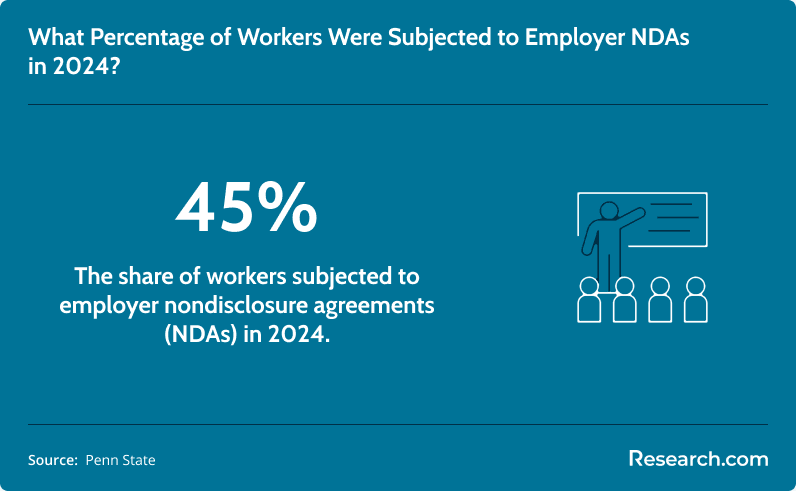
- Hiring New Employees or Contractors: When an employee or contractor will have access to a company's confidential information, an NDA protects trade secrets, customer lists, and financial data. This is particularly important for employees in R&D, sales, or management. About 45% of workers report being subject to employer nondisclosure agreements (NDAs).
- Negotiating with Potential Investors or Partners: Before a company shares its business plan, financial projections, or intellectual property with a potential investor, a joint venture partner, or a buyer during a merger or acquisition, an NDA ensures this information cannot be used against them by a competitor.
- Working with Vendors or Freelancers: A business may need to disclose sensitive information to an external agency, consultant, or freelancer to complete a project. An NDA ensures that these third parties do not misuse or share the information with others.
- Disclosing a New Invention or Product Idea: If a business is developing a new product, it may need to share details with manufacturers, designers, or potential licensees. An NDA protects the company's patent rights and trade secrets before a patent is filed or a product is launched. Professionals familiar with what jobs can you get with a behavioral science degree often understand the importance of NDAs in managing human behavior, organizational trust, and confidentiality within business settings.
- Licensing Agreements: When a company licenses its technology, software, or intellectual property to another business, an NDA is used to define the scope of use and ensure the licensee does not disclose the technology's inner workings.
What is corporate governance?
Corporate governance is the system of rules, practices, and processes by which a company is directed and controlled. It defines the relationships and responsibilities among a company's management, its board of directors, shareholders, and other stakeholders (like employees, customers, and the community). Earning an accelerated online Master of Business Law can provide deeper expertise in corporate governance and related legal frameworks. Essentially, it's the framework that ensures the company is managed ethically and responsibly to achieve its long-term goals.
The Importance of Legal Ethics
Legal ethics are the moral principles and professional conduct standards that guide legal professionals and businesses. They are crucial for several reasons:
- Foundation of Trust and Accountability: Legal ethics provide the moral compass for corporate governance. They go beyond simply following the letter of the law and ensure that decisions are made with integrity, fairness, and transparency. Without a strong ethical foundation, corporate governance mechanisms can become mere formalities, leading to a lack of accountability and erosion of public trust.
- Risk Mitigation: Ethical misconduct can lead to severe legal and financial repercussions, including fines, lawsuits, and a loss of business. By prioritizing ethics, a company proactively identifies and mitigates risks, preventing scandals that can destroy its reputation and long-term viability.
- Protection of Stakeholders: While law provides a minimum standard of behavior, ethics ensures that a company acts in the best interest of all stakeholders, not just shareholders. This includes treating employees fairly, protecting consumer privacy, and being a responsible corporate citizen. Professionals pursuing careers in social psychology often study these dynamics to understand how ethical frameworks influence decision-making and organizational behavior.
- Enhanced Reputation and Sustainability: Companies with a strong ethical culture are more likely to attract and retain talent, build customer loyalty, and gain investor confidence. This commitment to ethical behavior signals a dedication to sustainability and responsible growth, which are highly valued in the modern marketplace. In short, legal ethics provide the "why" behind the "what" of corporate governance, ensuring that a company not only operates legally but also acts in a just and moral manner.
What are the legal requirements for corporate compliance with federal regulations?
Corporate compliance with federal regulations is a complex and evolving field that requires companies to adhere to a vast and ever-changing set of rules. The specific requirements depend heavily on the company's industry, size, and whether it is publicly traded. Earning an online business management degree can help professionals understand and navigate these compliance challenges. However, there are several key areas that almost all corporations must address.
Key Areas of Federal Corporate Compliance
- Financial Reporting and Securities Laws: Publicly traded companies in the U.S. are subject to strict regulations from the Securities and Exchange Commission (SEC). This includes the Sarbanes-Oxley (SOX) Act, and regular filings such as the annual Form 10-K, quarterly Form 10-Q, and special event-driven Form 8-K.
- Labor and Employment Laws: Businesses must comply with a range of federal laws governing their relationship with employees, which are enforced by agencies like the Department of Labor and the Equal Employment Opportunity Commission (EEOC).
- Consumer Protection Laws: The Federal Trade Commission (FTC) and other agencies regulate business practices to prevent deception and fraud. this incudes laws prohibit misleading or false claims in marketing and advertising, and consumer data protection.
- Tax and Financial Regulations: Companies must comply with the regulations of the Internal Revenue Service (IRS), including timely and accurate tax filings and payments as well as record-keeping to support all ta claims. This also involves compliance with the Corporate Transparency Act.
- Environmental Regulations: The Environmental Protection Agency (EPA) enforces laws that protect the environment and public health. Companies must comply with regulations concerning waste disposal, air and water pollution, and the use of hazardous materials.
To manage these obligations, many companies create a formal compliance program that includes a code of conduct, regular employee training, internal audits, and a system for reporting and addressing potential violations. This demonstrates a good-faith effort to comply, which can be a mitigating factor in the event of an enforcement action.
The chart below shows the distribution of business lawyers across different types of legal transactions, with contract law having the biggest share at 17.9%.
How can a business protect its intellectual property from infringement?
Protecting a business's intellectual property (IP) is a critical part of its long-term strategy and a key function of business law. IP infringement can lead to significant financial losses, damage to brand reputation, and a loss of competitive advantage. A comprehensive protection strategy involves both proactive legal measures and internal security protocols.
Proactive Legal Measures
The core of proactive intellectual property (IP) protection lies in establishing legal ownership through Registration and Filing with appropriate government authorities. For brand identity, businesses must register Trademarks (logos, names, slogans) with the USPTO, securing the exclusive right to use the ® symbol and simplifying future infringement litigation.
For technical innovations, filing a patent application grants a powerful, time-limited monopoly, preventing competitors from making, using, or selling the invention for up to 20 years. Finally, although copyright protection for original creative works (like software, music, or articles) is automatic, formal registration with the U.S. Copyright Office is essential as it provides a public record of ownership, which is legally required before an infringement lawsuit can be filed.
The second critical set of measures involves utilizing contracts and agreements to legally bind employees and external partners, safeguarding confidential information. The essential tool here is the Non-Disclosure Agreement (NDA), which requires anyone with access to sensitive data (trade secrets, financial plans) to maintain strict confidentiality.
When engaging external creators, businesses must use Work-for-Hire Clauses or "assignment of rights" in contracts to ensure that any IP created by freelancers or contractors legally belongs to the company, not the creator. Additionally, for key personnel, Non-Compete Agreements can be utilized to prevent them from leaving and immediately leveraging proprietary company knowledge to benefit a rival firm for a specified duration.
Internal Security and Enforcement
Effective internal protection of intellectual property relies on establishing strict security protocols to control access and safeguard digital assets. A fundamental step is implementing the principle of Limit Access, ensuring that highly confidential information, particularly trade secrets, is available only to employees with a genuine "need-to-know" for their job functions.
This must be backed by rigorous digital security measures, including up-to-date firewalls, data encryption, and mandatory strong password policies, all designed to prevent hacking, data breaches, and unauthorized internal or external access. Crucially, these technical barriers must be complemented by consistent Employee Training, educating the workforce on IP value, correct handling procedures for confidential information, and the severe consequences associated with disclosure or misuse. Understanding sonographer certification prerequisites can be similarly vital for professionals entering regulated fields that emphasize compliance, precision, and information security.
Beyond internal controls, a business must actively engage in monitoring and enforcement to protect its IP rights externally. This involves constant market monitoring and internet surveillance to proactively detect any unauthorized use of registered brand names, patented technology, or copyrighted content by competitors or third parties.
Upon discovering infringement, the initial legal response is typically a formal Cease-and-Desist Letter, a legal demand requiring the infringing party to immediately halt the unauthorized activity. Should these demands prove ineffective, the final enforcement measure is Litigation, where the business files a lawsuit to seek a court-ordered injunction to stop the infringement and secure financial damages to recover losses.
What is trade secret law?
Among the types of business law, trade secret law protects confidential business information that provides a company with a competitive advantage. Unlike patents, trademarks, or copyrights, trade secrets are not registered with a government agency. Instead, their legal protection stems from their secrecy and the owner's efforts to maintain that secrecy.
What Constitutes a Trade Secret?
For information to be legally protected as a trade secret, it must meet three primary criteria:
- It must be secret. The information cannot be generally known or readily ascertainable by the public or your competitors.
- It must have economic value. The information must derive actual or potential independent economic value from not being generally known.
- The owner must take reasonable steps to maintain its secrecy. This is a critical requirement. A business must actively demonstrate that it has made an effort to keep the information confidential.
Trade secrets can include a wide range of information, such as formulas (e.g. the recipe for Coca-Cola), manufacturing processes, customer lists, business strategies, and even negative information (e.g. the results of failed experiments that save a company from repeating mistakes).
How Trade Secret Law Protects Confidential Information
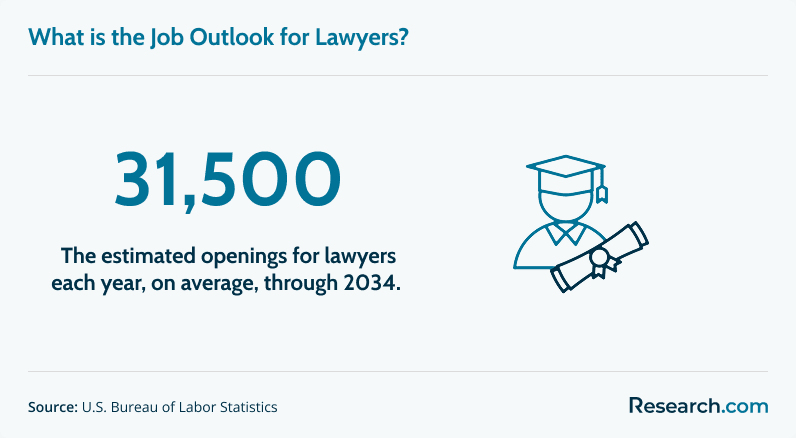
Trade secret law, primarily governed by state laws through the Uniform Trade Secrets Act (UTSA) and federal law through the Economic Espionage Act (EEA), protects businesses against the "misappropriation" of their confidential information. About 31,500 openings for lawyers are projected each year, on average, over the decade, underscoring the ongoing demand for legal professionals skilled in areas like trade secret law.
Misappropriation is the unauthorized acquisition, use, or disclosure of a trade secret by improper means, such as theft, bribery, espionage, or a breach of a confidentiality agreement.
Here's how the law provides protection:
- Legal Remedies: If a trade secret is misappropriated, a business can file a lawsuit to seek a court order (an injunction) to stop the infringing party from using or disclosing the information. The business can also seek monetary damages to compensate for the financial losses suffered as a result of the misappropriation.
- No Formal Registration: A significant benefit of trade secret protection is that it does not require a formal application or registration process, which can be costly and time-consuming. This allows businesses to protect information indefinitely, as long as it remains a secret.
- Contracts and Policies: The law provides a legal basis for businesses to enforce confidentiality through contracts. Requiring employees, contractors, and partners to sign Non-Disclosure Agreements (NDAs) and including confidentiality clauses in employment contracts are crucial steps to establish the "reasonable efforts" needed for legal protection.
- Criminal Penalties: The Economic Espionage Act of 1996 makes the theft of trade secrets a federal crime, punishable by significant fines and imprisonment. This provides an extra layer of protection, particularly in cases of industrial espionage or when the theft benefits a foreign government.
It is important to note that trade secret law does not protect against independent discovery or reverse engineering. If a competitor can legally and independently develop the same information or reverse engineer a product to discover the secret, they are not liable for misappropriation.
What is the difference between employment law vs. labor law?
The main difference is the scope of their focus. Employment law is a broad field that governs the relationship between an employer and an individual employee, regardless of whether they are unionized. Labor law, on the other hand, is a specific subset of employment law that deals with the relationship between an employer and a group of employees, particularly those who are represented by a labor union. As of May 2024, the median annual wage for lawyers was $151,160, reflecting the strong earning potential for professionals practicing in these fields.
Employment Law
Employment law covers a wide range of issues that affect all workers, whether or not they are part of a union. It is concerned with the rights and responsibilities of both the employer and the individual employee in the workplace.
Key areas of employment law include:
- Discrimination and Harassment: Laws prohibiting discrimination based on race, gender, age, religion, disability, etc.
- Wages and Hours: Regulations regarding minimum wage, overtime pay, and breaks (e.g., the Fair Labor Standards Act, or FLSA).
- Workplace Safety: Requirements for providing a safe working environment (e.g., OSHA).
- Wrongful Termination: Legal protections against being fired for illegal reasons.
Labor Law
Labor law focuses on the rights of workers to organize and engage in collective action. It is primarily governed by the National Labor Relations Act (NLRA) and is overseen by the National Labor Relations Board (NLRB).
Key areas of labor law include:
- Union Formation: The process by which employees can legally form or join a labor union.
- Collective Bargaining: The process through which a union negotiates with an employer on behalf of its members for wages, benefits, and working conditions.
- Strikes and Protests: The legal framework governing strikes, picketing, and other concerted activities by employees.
In short, if you have a dispute about a personal issue like unpaid overtime or discrimination, it's an employment law matter. If the issue involves a group of workers or a union's right to organize or bargain, it's a labor law matter.
The chart below shows the annual wage for lawyers in 2024, highlighting the median income and how it compares across different tiers.
What constitutes workplace discrimination?
Workplace discrimination is the unfavorable treatment of an employee or job applicant because of their protected characteristics. This can include being denied a job, a promotion, or fair compensation based on factors that are legally irrelevant to job performance. Anti-discrimination laws provide a legal framework to protect employees from such unfair treatment and ensure equal opportunity in the workplace.
What Constitutes Discrimination?
Among the types of business law, discrimination is classified under employment law. Discrimination can take many forms, but it generally falls into two categories:
- Disparate Treatment: This is intentional discrimination where an employer treats an individual differently because of a protected characteristic. For example, not hiring a qualified female applicant because of her gender, or refusing to promote an employee because of their age.
- Disparate Impact: This occurs when an employer's policy or practice seems neutral but has a disproportionately negative effect on a protected group. For instance, a height requirement for a job that isn't essential to the role may disproportionately exclude women or certain ethnicities, even if the policy wasn't created with discriminatory intent.
How Anti-Discrimination Laws Protect Employees
Federal anti-discrimination laws, primarily enforced by the U.S. Equal Employment Opportunity Commission (EEOC), provide a legal basis for employees to fight discrimination. These laws protect employees by:
- Prohibiting Discriminatory Actions: The laws make it illegal for employers to make decisions about hiring, firing, promotions, pay, and job assignments based on an employee's protected characteristics.
- Requiring Reasonable Accommodations: Laws like the Americans with Disabilities Act (ADA) require employers to provide reasonable accommodations for employees with disabilities unless doing so would cause an "undue hardship" to the business. Similarly, employers must accommodate employees' religious practices.
- Preventing Harassment: Anti-discrimination laws protect employees from harassment that creates a hostile work environment based on their protected characteristics.
- Protecting Against Retaliation: A crucial part of anti-discrimination law is the prohibition of retaliation. An employer cannot fire, demote, or otherwise punish an employee for filing a discrimination complaint, participating in an investigation, or opposing a discriminatory practice.
- Providing Legal Recourse: Employees who believe they have been discriminated against can file a charge with the EEOC. If the agency finds a violation, it can work with the employer to reach a settlement or, in some cases, file a lawsuit on behalf of the employee. In many instances, the employee can also file a private lawsuit to seek damages or to compel the employer to change their discriminatory practices.
Here's What Professionals Have To Say About Their Business Law Studies
- Maria: "The ability to work as in-house counsel for a major tech company has been incredibly rewarding, blending my legal expertise with direct corporate strategy. I love knowing that my advice on intellectual property has protected patents worth millions, giving me a tangible sense of impact and a secure, six-figure salary that validates my hard work. "
- David: "Choosing a career in compliance was the perfect fit; every day, I translate complex federal regulations into clear, actionable business policies, which provides a deep satisfaction. The demand for compliance officers across every industry means I have fantastic job stability and have been able to continually climb the career ladder quickly. "
- Alex: "As a mergers and acquisitions attorney, the high-stakes negotiations are exhilarating, but the best part is the intellectual challenge of structuring multi-million dollar deals where everyone wins. The problem-solving involved in creating complex contracts is addictive, and the constant travel and networking keep my career fresh and exciting. "
Key Findings
- In 2024, lawyers held approximately 864,800 jobs across various sectors of the economy. This large figure indicates a substantial and widespread demand for legal expertise across the country, making it a major professional field.
- The majority of lawyers, specifically 51%, are employed in the Legal Services industry, encompassing private law firms and individual practices. This employment distribution confirms that private practice remains the dominant career path for legal professionals.
- Lawyers working for the Federal government reported the highest median annual wage among the top employers, at $174,680 in May 2024. This makes federal service the most lucrative option compared to legal services ($143,470) or state and local government positions.
- Employment of lawyers is projected to grow by 4% from 2024 to 2034, which is about as fast as the average for all occupations. This modest growth rate suggests the profession will remain stable over the next decade.
- On average, there are about 31,500 openings projected for lawyers each year over the decade. These openings include positions arising from growth and replacements for workers who exit the labor force.
- The median annual wage for all lawyers across all industries was $151,160 in May 2024. Furthermore, the lowest 10 percent of lawyers still earned a solid salary of less than $72,780, showing a strong salary floor in the profession.
References:
- American Bar Association Member Study. (n.d.). What is business law?
- Association of Corporate Counsel. (2025). 2025 ACC CLO survey: Key findings.
- Bureau of Labor Statistics. (2025). Lawyers. In Occupational Outlook Handbook.
- Bureau of Labor Statistics. (n.d.). Legal occupations. In Occupational Outlook Handbook.
- Lift Our Voices. (n.d.). Contracts that bind: Untangling the use of NDAs, forced arbitration and other restrictive covenants. Retrieved from
- Rasmussen University. (n.d.). Is business law a good career?
Other Things You Should Know About the Types of Business Law
Globalization is fostering a broader understanding of international trade laws, cross-border transactions, and compliance issues. In 2027, legal programs are emphasizing these areas, preparing students to navigate the complex, interconnected global business environment.
In 2027, globalization significantly impacts business law education by necessitating a curriculum that includes international regulations, cross-border transactions, and compliance with global trade laws. Legal programs emphasize understanding diverse legal systems and cultural contexts to prepare students to handle multinational business challenges effectively.