
2027 Easiest Law Enforcement Degree Programs

Co-Founder and Chief Data Scientist
Law enforcement agencies project over 53,700 new job openings each year, so the opportunity is real. Still, thinking about college can be overwhelming, especially when you're worried about difficult classes or high tuition. That's where a smart start comes in.
Our career planning experts, with over 10 years of experience, created this guide to show you that an 'easy' law enforcement degree isn't a shortcut. It’s about finding an accessible program that builds your confidence for a long career. While other guides focus on the fastest path or the specific degrees needed for federal agencies, this one is all about giving you a manageable, confidence-boosting start.
What are the benefits of getting a law enforcement degree?
- A degree makes you a stronger candidate for jobs in local, state, and federal agencies, opening up more career opportunities.
- Police and sheriff's patrol officers earn a median annual salary of $76,290, with a degree unlocking paths to promotion and higher pay.
- Some programs offer the flexibility to balance your education with work and family commitments, making it easier to get started.
What can I expect from a law enforcement degree?
It’s important to understand that a law enforcement degree is an academic program, not the police academy. Think of it this way: the degree teaches you the “why” behind the law, while the academy will teach you the “how” of being an officer.
You can expect coursework focused on the American justice system, criminology, and ethics. These classes give you the foundational knowledge every officer needs. You’ll also take general education courses like English and sociology. This isn't busywork; strong writing is essential for reports, and understanding communities is key to good policing.
The “easy” part is that the material is designed to be accessible and the programs are structured to help you succeed, building your confidence one class at a time.
Where can I work with a law enforcement degree?
A law enforcement degree prepares you for a stable career, with 96% of all police and detective jobs found in government roles. An associate's degree is a great start for many of these positions, while a bachelor's is often required for advancement or federal jobs. Here's a look at the major employment areas:
- Police and Sheriff's Patrol Officers: This is the largest field, with approximately 698,800 officers working to keep local communities safe.
- Detectives and Criminal Investigators: A degree can help you move into this area, which includes about 117,900 professionals handling complex cases.
- Fish and Game Wardens: This specialized state-level career path employs around 7,000 wardens who protect wildlife and natural resources.
- Transit and Railroad Police: A smaller, focused field with about 3,100 officers responsible for securing public transportation systems.
How much can I make with a law enforcement degree?
While starting salaries are competitive, the real value of your education comes from the promotional opportunities it unlocks over your career. A degree is often the key to moving up in rank and pay.
As of May 2024, here are the median annual salaries for several common career paths:
- Detectives and criminal investigators: $93,580
- Transit and railroad police: $82,320
- Police and sheriff's patrol officers: $76,290
- Fish and game wardens: $68,180
- List of the Best Law Enforcement Degree Programs for 2027 L
- How long does it take to complete a law enforcement degree program? Completion Time
- What is the average cost of a law enforcement degree program? Program Cost
- What are the financial aid options for students enrolling in a law enforcement degree program? Financial Aid
- What are the prerequisites for enrolling in a law enforcement degree program? What are the prerequisites for enrolling in a law enforcement degree program?
- What courses are typically in a law enforcement degree program? What courses are typically in a law enforcement degree program?
- What types of specializations are available in a law enforcement degree program? Specializations
- How to Choose the Best Law Enforcement Degree Program How to Choose the Best Law Enforcement Degree Program
- What career paths are available for graduates of a law enforcement degree program? Career Paths
- What is the job market for graduates of a law enforcement degree program? Job Market
List of the Best Law Enforcement Degree Programs for 2027
How do we rank schools?
Recognizing that paying for a degree is a significant investment, our ranking methodology ensures that students can make informed decisions based on comprehensive and transparent information. The ranking draws upon reliable sources such as the IPEDS database, Peterson's database, the College Scorecard database, and The National Center for Education Statistics.
These sources provide a robust foundation of data to evaluate and rank law enforcement degree programs. For more details on our methodology, please visit Research.com’s methodology page.
1. Florida State University Panama City - Bachelor of Science in Law Enforcement Operations
Florida State University Panama City offers a program that merges theoretical principles with hands-on exercises in investigation and intelligence. Students are prepared for dynamic security settings through a curriculum focused on ethics, technology, and practical skills, with an optional certificate in underwater crime scene investigation.
- Program Length: 5 semesters
- Required Credits to Graduate: 120
- Cost per Credit: $180.49 (in-state); $736.60 (out-of-state)
- Accreditation: Southern Association of Colleges and Schools Commission on Colleges (SACSCOC)
2. Mercer University - B.S. in Criminal Justice Leadership
Working adults will find Mercer University’s program structured around critical thinking and ethical decision-making in the context of community safety. Through a mix of field experiences and classroom study, the curriculum ties theory directly to practice. Offered in both online and blended formats, it provides the flexibility needed to balance coursework with professional responsibilities.
- Program Length: 4 years
- Required Credits to Graduate: 120
- Cost per Credit: $561.00
- Accreditation: Southern Association of Colleges and Schools Commission on Colleges (SACSCOC)
3. University of Central Florida - Bachelor of Arts in Criminal Justice, BA
The University of Central Florida provides a broad understanding of crime and societal control, preparing students for diverse roles from law enforcement to victim advocacy. The program encourages practical application through internships and experiential learning, with a specialized Scholar's Track for high-achieving students.
- Program Length: 4 years
- Required Credits to Graduate: 120
- Cost per Credit: $212.28 (in-state); $802.54 (out-of-state)
- Accreditation: Southern Association of Colleges and Schools Commission on Colleges (SACSCOC)
4. National University - Bachelor of Science in Criminal Justice Administration
Professional development and career advancement sit at the core of National University’s curriculum, which spans forensic science, juvenile justice, and research methods. Designed for fast completion, the program also provides a 25% tuition discount to public safety professionals. It culminates in a faculty-supervised senior project that brings together the skills learned throughout the course of study.
- Program Length: 17 months
- Required Quarter Credits to Graduate: 180
- Cost per Credit: $370.00
- Accreditation: WASC Senior College and University Commission (WSCUC)
5. Northern State University - Criminal Justice Bachelor's Degree
Northern State University provides a strong foundation in criminal law, policing, and criminological theory for students aiming for careers in law enforcement or the legal system. The program emphasizes field-based learning and community engagement, leveraging its location as a hub for local, state, and federal agencies.
- Program Length: 4 years
- Required Credits to Graduate: 120
- Cost per Credit: $327.47 (in-state); $401.90 (out-of-state)
- Accreditation: Higher Learning Commission (HLC)
6. University of South Carolina - Criminology and Criminal Justice, B.A.
The University of South Carolina teaches students to analyze the causes of crime and enhance public safety through evidence-based practices. As the largest program of its kind in the state, it has a strong research emphasis and encourages experiential learning through internships and community partnerships.
- Program Length: 8 semesters
- Required Credits to Graduate: 120
- Cost per Credit: $422.93 (in-state); $1,245.87 (out-of-state)
- Accreditation: Southern Association of Colleges and Schools Commission on Colleges (SACSCOC)
7. University of Wyoming - Criminal Justice Bachelor of Arts (B.A.)
The University of Wyoming offers an interdisciplinary program that draws from sociology, psychology, and political science to examine the causes of crime. Recognized for its value, the curriculum provides experiential learning through internships and offers a pre-law concentration to prepare students for law school.
- Program Length: 4 years
- Required Credits to Graduate: 120
- Cost per Credit: $360.00 (in-state); $1,468.00 (out-of-state)
- Accreditation: Higher Learning Commission (HLC)
8. National Louis University - B.A. in Criminology and Criminal Justice
A strong emphasis on the social and cultural influences behind crime defines the interdisciplinary program at National Louis University. Blending theory with practice, the curriculum uses case studies and simulations to build both knowledge and applied skills. Graduates are prepared to enter the field as ethical professionals committed to improving their communities.
- Program Length: 4 years
- Required Credits to Graduate: 180
- Cost per Credit: $271.00
- Accreditation: Higher Learning Commission (HLC)
9. The University of Texas at Dallas - Bachelor of Arts in Criminology
Exploring the causes and consequences of crime, the program at The University of Texas at Dallas draws heavily on sociology and research. Students learn from widely published faculty and gain the tools to analyze society’s response to crime through policy and data. The curriculum is designed to prepare graduates for leadership roles across the field.
- Program Length: 4 years
- Required Credits to Graduate: 120
- Cost per Credit: $550.40 (in-state); $1,506.67 (out-of-state)
- Accreditation: Southern Association of Colleges and Schools Commission on Colleges (SACSCOC)
10. University of Nebraska Omaha - Criminology & Criminal Justice, Bachelor of Science
The University of Nebraska Omaha provides a high-quality education focused on the knowledge and skills needed for a successful career in the justice system. The program offers opportunities for students to engage in applied research with local and federal agencies and gain field experience through internships.
- Program Length: 4 years
- Required Credits to Graduate: 120
- Cost per Credit: $341.93 (in-state); $907.96 (out-of-state)
- Accreditation: Higher Learning Commission (HLC)
How long does it take to complete a law enforcement degree program?
A standard associate's law enforcement degree takes about two years of full-time study to complete. A bachelor's degree typically takes four years. Your specific timeline will depend on your career goals, as knowing what degree is needed to be a probation officer versus a local patrol officer can help you choose the right path from the start.
Some schools offer "accelerated" programs. It's important to know that these programs don't cut down on coursework. Instead, they condense the schedule by offering shorter, back-to-back terms, which can be very demanding. Be cautious of any program that promises a legitimate degree in an unrealistically short amount of time.
Balancing Your Timeline with Career Realities
The time you invest in your education is crucial preparation for a demanding career. Public service roles require a high level of readiness and professionalism to handle challenging situations safely.
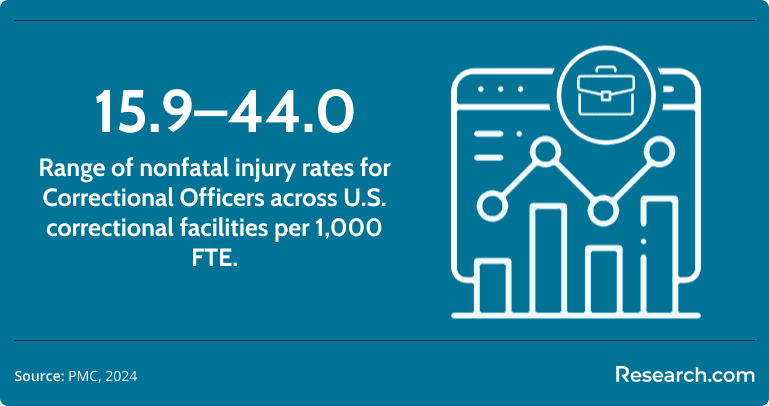
For example, the nonfatal injury rate for correctional officers can be as high as 44 per 1,000 full-time employees. A comprehensive education gives you the foundational knowledge in communication, ethics, and de-escalation that helps you prepare for the realities of the job. Taking the time to build that foundation is one of the smartest investments you can make in your long-term safety and success.
What is the average cost of a law enforcement degree program?
The cost of a law enforcement degree can vary widely, but the most affordable path is almost always a public, in-state school. Community colleges offer the lowest tuition for an associate's degree, which is a great starting point. Students seeking flexible and diverse options, particularly online, should also consider HBCU online degree programs.
Based on our research, the average cost for a bachelor's degree can give you a general idea of what to expect. For in-state students at public universities, the average total tuition is around $47,256. For out-of-state students, that average climbs to about $103,104. Remember, these are just averages, and many programs cost less.
Thinking About Cost as an Investment
You can calculate this by weighing the cost of the program against the stable salary and long-term career benefits it provides. A degree that costs $30,000 but unlocks a career with a median salary over $76,000 pays for itself many times over. The versatility of a professional degree means your skills remain valuable even if you change fields, much like exploring what careers do nurses switch to shows. The next section will show you how financial aid can lower that initial cost even more, making your investment even smarter.
What are the financial aid options for students enrolling in a law enforcement degree program?
Financial aid is widely available, and you don't need to be a straight-A student to qualify. Your first and most important step is to fill out the Free Application for Federal Student Aid, known as the FAFSA. This single form determines your eligibility for most types of aid.
Here’s a simple breakdown of what’s available.
Grants
Think of grants as free money you don't have to pay back. The federal government offers the Pell Grant, which is awarded based on financial need. Many states and colleges also have their own grant programs you may be eligible for.
Scholarships
Scholarships are also free money, but they are typically awarded based on merit, background, or career interest. A great strategy is to search for scholarships specifically for students pursuing public service or criminal justice careers.
Student Loans
Loans are borrowed money that you must repay with interest. Federal student loans are often the best option because they have fixed interest rates and flexible repayment plans. For this career path, the Public Service Loan Forgiveness (PSLF) program is a game-changer. After making 10 years of qualifying payments while working in a public service job, the remaining balance on your federal loans could be forgiven.
What are the prerequisites for enrolling in a law enforcement degree program?
Many schools have an "open enrollment" policy, which means if you meet the basic criteria, you're in.
Here’s what you typically need:
- A high school diploma or GED. This is the most important requirement.
- To be at least 17 or 18 years old. This is the standard minimum age to apply for college admission.
- What you likely don't need. For these types of programs, you often don't need high SAT/ACT scores or a top-tier GPA.
Why This Path Is Growing
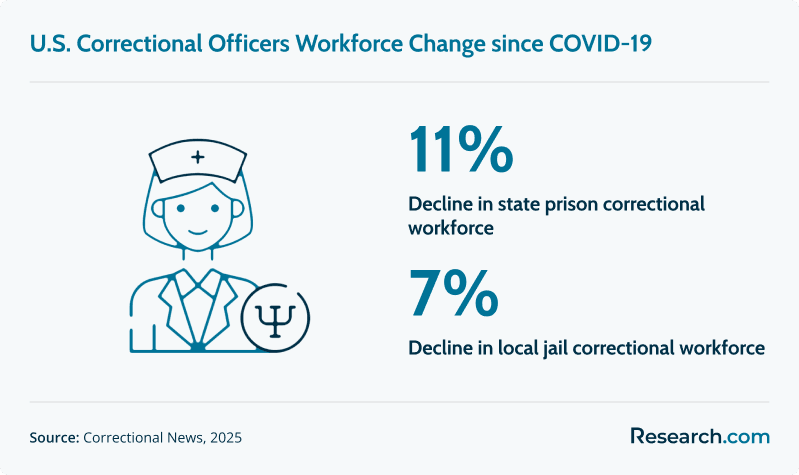
While some sectors of the justice system have seen workforce declines—for example, the state prison correctional workforce has shrunk by 11% since the pandemic—the demand for qualified police officers remains stable. While the path to an undergraduate degree is relatively quick, those considering advanced studies in related fields may want to know how long does a master's degree in mental health counseling take?
By making the educational entry point more accessible, communities are ensuring they have a steady stream of prepared candidates ready to fill essential roles. This makes your decision to pursue this degree a smart and secure one, putting you on a path where you will be in demand.
What courses are typically in a law enforcement degree program?
Your coursework will be a practical mix of classes focused on the justice system and general education courses that build essential professional skills. The goal is to give you a complete foundation for your career.
Here’s a sample of what you can expect:
- Core Courses: These classes, like Introduction to Criminal Justice and Criminology, teach you the history, structure, and theories behind modern policing.
- Skills-Based Courses: You'll take courses in criminal law and ethics, which are foundational for understanding the rules and responsibilities of the job.
- General Education: Classes like English and sociology are critical. Strong report writing is a non-negotiable skill, and understanding social dynamics is key to effective community policing. These courses build the foundation for meeting homicide detective job requirements and other advanced roles.
Proof a Degree Is Key to Advancement
While you can get an entry-level job without one in some agencies, a degree is what qualifies you for promotion. It is also important that you select an accredited program, which means knowing what accreditation is needed for psychology degrees, for instance, and other similar professions to ensure your credential is respected.
The data for detectives and criminal investigators makes this crystal clear. As you can see in the chart below, a bachelor's degree is the most common educational level for these advanced roles, held by over 66,000 investigators. A degree isn't just a piece of paper; it's the proven pathway to leadership positions and a higher salary.
What types of specializations are available in a law enforcement degree program?
Many associate's degree programs are generalist, giving you a broad and flexible foundation for your career. This is often the smartest choice when you're starting out. However, some programs do allow you to choose a concentration to focus your studies on a specific area of interest.
Here are a few common options.
Corrections
This specialization focuses on the penal system, including the management, supervision, and rehabilitation of individuals in custody. It's a direct path for careers in local jails or state prisons.
Homeland Security
A homeland security concentration explores topics like counter-terrorism, border security, and emergency management. This can prepare you for roles at the state or federal level.
Legal Studies
This track provides a deeper understanding of the law, evidence, and the court system. It's a great choice if you're interested in a niche career and want to learn, "How to become a fish and game warden?" or pursue paralegal work.
How Specializations Address Real-World Challenges
Choosing a specialization is a way to build expertise in areas that directly address the complexities of modern policing. For example, law enforcement agencies reported thousands of officer assaults last year, with the highest number occurring in the South.
In response, many programs now offer specializations in areas like community policing or de-escalation. These concentrations are designed to equip you with advanced communication and tactical skills, which can improve both community relations and your personal safety on the job.
How to Choose the Best Law enforcement degree Program
Choosing the right program can feel like a big decision, but you can break it down into a few simple, strategic steps. The "best" program is the one that is legitimate, affordable, and a good fit for your life and career goals.
Here is a simple four-step guide to making a confident choice.
- Verify Accreditation First. This is the single most important step. A degree is only valuable if it comes from a regionally accredited institution. You can easily check any school's status for free on the U.S. Department of Education's official database. If a school isn't on that list, walk away.
- Compare the Net Price. Don't just look at the sticker price. The net price is what you actually pay after grants and scholarships. Use each school's financial aid calculator to get a realistic estimate of your costs.
- Check for Flexibility. Make sure the program's format fits your life. Does it offer the part-time options you need? Does the schedule work with your job or family commitments?
- Align the Program with Your Goals. The right law enforcement degree for you depends on what you want to achieve. If your goal is to get into the FBI, you'll need a different program than if your priority is simply the fastest path to a degree. Make sure the school's offerings match your long-term ambition.
What career paths are available for graduates of a law enforcement degree program?
A law enforcement degree is a versatile credential that qualifies you for a wide range of roles in public service. Your degree level—associate's or bachelor's—will be the primary factor in determining which doors are open to you, especially as you advance in your career.
Here’s a deeper look at some of the most common paths.
Local and County Careers
This is where most law enforcement careers begin. An associate's degree is often the perfect qualification for roles like municipal police officer, who responds to calls and patrols communities. At the county level, you could explore what deputy sheriff job requirements are, as they handle everything from courthouse security to patrol duties.
State-Level Careers
State agencies offer specialized roles that often focus on specific jurisdictions. This includes jobs like state trooper, responsible for highway safety, or a fish and game warden, who enforces conservation laws in state parks and wildlife areas.
Federal Careers
To work at the federal level, a four-year bachelor's degree is almost always a firm requirement. This opens up opportunities with agencies like Customs and Border Protection, the Secret Service Uniformed Division, and the Federal Protective Service.
Geographic Opportunities: Where the Jobs Pay Most
As you plan your career, it's smart to remember that location has a huge impact on your earning potential. While the national median salary is strong, some states offer significantly higher pay to attract and retain officers. For example, the top-paying state for police officers is California, with an average annual salary of $111,770.
What is the job market for graduates of a law enforcement degree program?
The U.S. Bureau of Labor Statistics projects about 53,700 openings for police and detectives each year for the next decade.
Having a law enforcement degree gives you a significant competitive advantage in this market. As agencies continue to professionalize, they increasingly prefer to hire candidates with a college education. This is true for entry-level roles and is especially critical for long-term advancement, as seen in the typical prison warden qualifications, where a degree is essential.
Why Now Is a Great Time to Enter the Field
Many law enforcement agencies are currently facing a wave of retirements from experienced officers, creating a favorable hiring environment for new, qualified candidates. This means your skills and education are more valuable than ever.
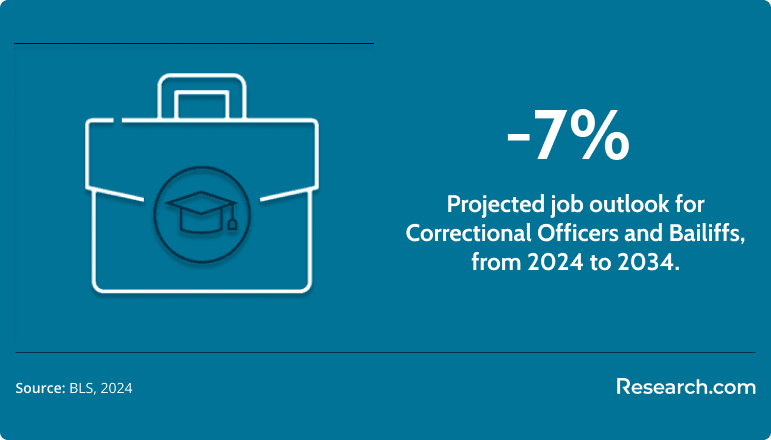
While some public safety jobs, like correctional officers and bailiffs, are projected to decline by 7% over the next decade, the outlook for police officers remains steady. Choosing this career path means you are stepping into a field with long-term stability and a clear need for the next generation of leaders.
Here’s What Graduates Have to Say about Their Law Enforcement Degree Program
- Soren: "Going into this, I was seriously worried I couldn't handle college-level work. But being able to go to my professor's office hours made a huge difference. We'd talk through the material, and he made it click in a way it just wouldn't have otherwise. Forming a study group in the library with a few classmates also helped a ton; we were all in it together, which made the assignments feel much less intimidating."
- Ansel: "I was stuck in a dead-end job and knew I needed a real career. Finding a community college with evening classes was the key, so I could work my day shift and then head straight to campus. Being in a classroom with other people my age, all trying to build a better future, was incredibly motivating. We all understood the grind and supported each other through it."
- Carlos: "My dad was an officer for 30 years, and he always said I'd need a degree to get promoted. What was great about being on campus was that one of my main professors was a retired police captain. Hearing his stories in the classroom and being able to ask him questions directly connected every lesson back to the real world. It made the whole career path feel tangible and achievable."
Key Findings
- The job market for police officers is strong and stable, with projections showing about 53,700 openings each year, ensuring a high demand for qualified graduates.
- A career in law enforcement provides a competitive salary, with the median annual pay for police and sheriff's patrol officers at $76,290.
- Your earning potential can be significantly higher depending on your location, as top-paying states like California offer an average salary of $111,770 for patrol officers.
- Higher education is the proven path to advancement, with a bachelor's degree being the most common credential held by over 66,643 detectives and criminal investigators.
- The career path is clear and focused, as government agencies are the primary employer for law enforcement, hiring 96% of all police and detectives.
- Choosing a police career is a secure decision, as the job outlook for police is projected to grow 3%, while other justice-sector roles like correctional officers are expected to decline by 7%.
References:
- Bureau of Labor Statistics. (2024, April 3). Correctional officers and bailiffs. U.S. Department of Labor. Retrieved October 7, 2025, from https://www.bls.gov/ooh/protective-service/correctional-officers.htm
- Bureau of Labor Statistics. (2024, April 3). Occupational employment and wages, May 2023: Police and sheriff’s patrol officers (33-3051). U.S. Department of Labor. Retrieved October 7, 2025, from https://www.bls.gov/oes/2023/may/oes333051.htm
- Bureau of Labor Statistics. (2024, April 3). Police and detectives. U.S. Department of Labor. Retrieved October 7, 2025, from https://www.bls.gov/ooh/protective-service/police-and-detectives.htm
- Correctional News. (2025, March 4). Correctional staff wellness: An overlooked crisis in corrections. Retrieved October 7, 2025, from https://correctionalnews.com/2025/03/04/correctional-staff-wellness-an-overlooked-crisis-in-corrections
- Data USA. (2025). Detectives and criminal investigators. Deloitte, Datawheel & D4AD. Retrieved October 7, 2025, from https://datausa.io/profile/soc/detectives-criminal-investigators?redirect
- Federal Bureau of Investigation. (2022, October 24). FBI releases 2021 statistics on law enforcement officers assaulted in the line of duty. U.S. Department of Justice. Retrieved October 7, 2025, from https://www.fbi.gov/news/press-releases/fbi-releases-2021-statistics-on-law-enforcement-officers-assaulted-in-the-line-of-duty
- National Center for O*NET Development. (2025). Police and sheriff’s patrol officers (33-3051.04). O*NET OnLine. Retrieved October 7, 2025, from https://www.onetonline.org/link/summary/33-3051.04
- National Center for O*NET Development. (2025). Police patrol officers (33-3021.01). O*NET OnLine. Retrieved October 7, 2025, from https://www.onetonline.org/link/summary/33-3021.02
- National Center for O*NET Development. (2025). Transit and railroad police (33-3051.06). O*NET OnLine. Retrieved October 7, 2025, from https://www.onetonline.org/link/summary/33-3021.06
- National Center for O*NET Development. (2025). Detectives and criminal investigators (33-3021.00). O*NET OnLine. Retrieved October 7, 2025, from https://www.onetonline.org/link/summary/33-3021.00
- PubMed Central. (2024). [Article on law enforcement/criminology – PMC11641701]. U.S. National Library of Medicine. Retrieved October 7, 2025, from https://pmc.ncbi.nlm.nih.gov/articles/PMC11641701/
- ZipRecruiter. (2025). Police detective salary. Retrieved October 7, 2025, from https://www.ziprecruiter.com/Salaries/Police-Detective-Salary#TableView
Other Things You Should Know About Law Enforcement Degree Programs
The cost of an easy law enforcement degree program in 2027 can vary widely depending on the institution. On average, you can expect to pay between $10,000 to $30,000 annually for tuition. However, some community colleges may offer programs at lower rates, especially for in-state students.
In 2027, admission requirements for law enforcement degree programs typically include a high school diploma or equivalent, SAT/ACT scores, and a personal statement. Some programs may also require background checks, physical fitness assessments, or prior coursework in criminal justice or related fields.
The easiest law enforcement degree programs in 2027 typically require about 18 to 24 months of full-time study to complete an associate degree. This timeframe may vary depending on the school and whether the program is offered online or on-campus.


