
2027 What Degree Do You Need To Be a Social Worker: Education Requirements in New Jersey

Co-Founder and Chief Data Scientist
If you want to become a social worker in New Jersey, the first decision is not which job title sounds best. It is which degree and license match the type of work you want to do. New Jersey has over 9,000 social workers employed statewide, and roles can differ sharply: a community case manager, school social worker, hospital social worker, and clinical therapist may all need different preparation.
This guide explains the education path for social work in New Jersey in practical terms. You will learn the minimum degree needed, how BSW and MSW programs differ, what licenses apply, how long school can take, what costs to expect, whether online degrees count, and how to choose a program that supports your career goals without creating avoidable licensing problems later.
Quick Answer: Social Work Degree Requirements in New Jersey
- A BSW is the starting point for many non-clinical social work jobs. In New Jersey, a Bachelor of Social Work from a CSWE-accredited program can support entry-level practice and eligibility for the Certified Social Worker credential.
- An MSW is required for higher-level and clinical social work paths. If your goal is therapy, diagnosis, clinical assessment, or independent clinical practice, you should plan for a Master of Social Work and supervised experience.
- Licensure matters as much as the degree. New Jersey uses credentials such as CSW, LSW, and LCSW. Depending on the level, you may need a CSWE-accredited degree, supervised hours, and the appropriate ASWB exam.
- What is the minimum degree required to become a licensed social worker in New Jersey?
- What courses are covered in a social work degree program in New Jersey?
- How long does it take to complete a social work degree program in New Jersey?
- How much does a social work degree cost in New Jersey?
- What degrees are required for different social work specializations in New Jersey?
- What financial aid options are available to social work students in New Jersey?
- What ongoing professional development opportunities are available for social workers in New Jersey?
- What are the alternative pathways to become a social worker in New Jersey?
- Are online social work degrees recognized in New Jersey?
- What organizations accredit social work degree programs in New Jersey?
- What are the top institutions offering social work degree programs in New Jersey?
- What are the career prospects and salary trends for social workers in New Jersey?
What is the minimum degree required to become a licensed social worker in New Jersey?
The minimum degree depends on the license level and the kind of services you want to provide. A BSW may be enough for some non-clinical roles, but clinical practice requires graduate education and supervised clinical experience.
| New Jersey credential | Minimum degree | What it can support | Key limitation |
| Certified Social Worker (CSW) | Bachelor’s degree in social work from a CSWE-accredited program | Generalist and non-clinical social work practice | Does not authorize clinical practice |
| Licensed Social Worker (LSW) | Master’s degree in social work or doctorate from a CSWE-accredited or candidacy program | Advanced non-clinical roles and supervised practice settings | Independent clinical practice requires the LCSW |
| Licensed Clinical Social Worker (LCSW) | Master’s or doctorate in social work, LSW credential, and supervised clinical experience | Clinical services, including therapy-oriented roles | Requires additional supervised experience and the clinical licensing process |
If you are still comparing career routes, start with the end role. Someone interested in case management may not need the same credential as someone planning to provide psychotherapy. For graduate-level options, review possible MSW career paths before choosing a concentration or field placement.
What courses are covered in a social work degree program in New Jersey?
Social work programs combine classroom learning with supervised field education. The classroom portion builds your understanding of policy, ethics, human behavior, research, and intervention methods. The field component shows whether you can apply those concepts with real clients, agencies, and communities.
| Course or requirement | What students typically learn | Why it matters in New Jersey practice |
| Introduction to Social Welfare | How social welfare systems developed and how services are organized | Helps students understand public benefits, community agencies, and service gaps |
| Social Work Practice or Theory and Practice | Engagement, assessment, planning, intervention, and evaluation | Builds the core skills used with individuals, families, groups, and communities |
| Social Policy and Politics | Policy analysis, advocacy, and the relationship between law and services | Prepares students to work within state systems and advocate for clients |
| Human Behavior in the Social Environment | Human development, family systems, identity, trauma, and social context | Supports better assessment across age groups and life circumstances |
| Diversity and Multicultural Perspectives | Cultural humility, equity, bias, and work with diverse populations | Essential for serving New Jersey’s varied communities responsibly |
| Research Methods in Social Work | Evidence-based practice, program evaluation, data interpretation, and ethics | Helps social workers judge what interventions and programs are effective |
| Field Practicum or Internship | Supervised agency-based practice, documentation, client interaction, and professional behavior | Often includes 400+ hours at the undergraduate level and up to 1,000 at the master’s level |
| Social Work Ethics | Professional boundaries, confidentiality, mandated reporting, and legal responsibilities | Reduces risk and prepares students for real-world ethical decisions |
Accredited programs usually require students to meet academic and practicum standards before advancing. When comparing schools, ask how field placements are assigned, whether placements are available near your location, and how the program supports students who work while completing practicum hours.
How long does it take to complete a social work degree program in New Jersey?
Your timeline depends on the degree level, enrollment pace, transfer credits, and field placement schedule. Social work education is not only a credit-hour requirement; practicum hours can shape your weekly availability as much as classroom courses do.
| Degree path | Typical full-time timeline | Part-time timeline | Best fit |
| BSW | About four years | Often five or six years | Students seeking entry-level non-clinical roles or a faster future route to an MSW |
| MSW | About two years | Usually three to four years | Students preparing for advanced roles, licensure, or clinical training |
| Advanced Standing MSW | About one year | About 1.5 years | Students who already completed an accredited BSW |
| DSW | Typically three to four years | May take five years or more | Experienced practitioners pursuing advanced practice, leadership, or applied expertise |
| PhD in Social Work | Often four to six years | May extend up to seven years | Students focused on research, academia, policy, or scholarship |
MSW students in New Jersey should pay close attention to the field education requirement because programs require at least 900 hours of field education. Online and hybrid formats may make coursework more flexible, but fieldwork still requires scheduled, supervised experience in an approved setting.
-
: "
One New Jersey social worker described the MSW as manageable but demanding: “I expected a two-year plan, but work and family obligations turned it into three years. The field placement took serious time, yet it was also where the profession became real for me.”
"
How much does a social work degree cost in New Jersey?
Social work degree costs vary by school type, residency status, degree level, and delivery format. The sticker price is only one part of the decision. Students should also compare fees, commuting or housing costs, books, technology charges, field placement travel, and lost work hours during practicum.
| Degree level | Typical cost information stated for New Jersey programs | Cost considerations |
| BSW | Public universities charge about $12,000 to $16,000 per year for in-state students and $18,000 to $25,000 for out-of-state students; private schools can cost $35,000 to $50,000 annually before living expenses | In-state public tuition is often the lower-cost route, but private scholarships can change the net price |
| MSW | In-state students at public universities pay $14,000 to $19,000 yearly, while out-of-state students often pay $22,000 to $30,000; private universities often exceed $40,000, and online options may charge $500 to $950 per credit | Advanced standing can reduce time and total credits for eligible BSW graduates |
| DSW | Doctor of Social Work programs are mostly offered at private schools and generally cost $30,000 to $50,000 per year | Students should ask about dissertation or project-related fees |
| PhD in Social Work | Public university PhD programs range from $16,000 to $22,000 for residents and $25,000 to $32,000 for others; private schools can charge $40,000 or more | Many PhD candidates receive tuition waivers through teaching or research roles |
Before borrowing, estimate the total cost to completion and compare it with realistic job goals. A lower tuition program is not always the better choice if field placements are weak, but a prestigious program is not automatically worth a much higher debt load. To think through earnings after graduation, review how much social workers make and compare salary expectations with your likely loan payments.
What degrees are required for different social work specializations in New Jersey?
Specialization affects the degree you should choose. A BSW can be a strong entry point for generalist practice, but school, healthcare, and clinical roles often require graduate education, licensure, or additional state approval.
| Specialization | Common degree expectation | Licensing or credential issue to check |
| Clinical Social Work | MSW or doctorate in social work | Requires supervised clinical hours and the ASWB clinical exam for the LCSW |
| School Social Work | MSW from a CSWE-accredited program | Requires state certification through the New Jersey Department of Education, often with additional exams and field experience |
| Healthcare Social Work | Usually an MSW with healthcare coursework or practicum experience | Many employers prefer an LSW or LCSW for counseling or patient-facing roles |
| Child and Family Services | BSW for some entry-level roles; MSW for many advanced positions | Higher-responsibility roles may require LSW or LCSW licensure |
| Generalist Social Work | BSW | The CSW supports non-clinical work in community, advocacy, and service settings |
| Management, Policy, and Administration | MSW with leadership, policy, or administration coursework | Look for training in supervision, budgeting, program evaluation, and organizational leadership |
The safest strategy is to work backward from the role you want. If job postings repeatedly ask for an MSW or LCSW, a BSW alone may not give you the mobility you expect.
What financial aid options are available to social work students in New Jersey?
Financial aid can make a major difference because social work programs often include unpaid or limited-pay field hours that reduce students’ ability to work full time. Apply early, compare net cost instead of sticker price, and ask each school whether aid changes after the first year.
| Aid option | How it may help | What to do next |
| Federal grants and aid | FAFSA-based aid can include grants such as the Pell Grant, which does not have to be repaid | Submit the FAFSA as early as possible |
| New Jersey Tuition Aid Grant for social work majors | Provides need-based undergraduate aid for eligible New Jersey students | File the FAFSA or NJ Alternative Financial Aid Application on time |
| NJ STARS and community college grants | Can reduce tuition for eligible high-achieving students or community college students | Check eligibility before transferring or changing institutions |
| BSW and MSW scholarships | Schools may offer merit scholarships, leadership awards, or assistantships | Ask the department about social-work-specific awards, not only general university aid |
| Work-study | Part-time work can help with expenses while adding relevant experience | Look for roles connected to human services, student support, or community programs |
| Student loans | Federal Direct Loans and New Jersey CLASS loans can fill funding gaps | Borrow only after estimating repayment and possible forgiveness options |
| Professional organization funding | Groups such as NASW may provide scholarships or emergency support | Review eligibility rules, deadlines, and membership requirements |
| Specialized grants | The CCAMPIS grant can help student parents with childcare and academic support | Ask your school’s financial aid office whether funds are available |
If graduate school is your next step, compare total program cost and field placement flexibility. You can also review affordable online MSW programs when looking for lower-cost options that may fit your schedule.
What ongoing professional development opportunities are available for social workers in New Jersey?
Education does not stop after the first license. Social workers in New Jersey use continuing education, advanced certificates, supervision, conferences, and professional associations to maintain competence and meet licensing expectations. Training topics often include ethics, trauma-informed care, cultural responsiveness, substance use, documentation, telehealth practice, and changes in public policy.
Professional development is especially important if you plan to move from generalist practice into clinical work, school-based practice, healthcare, supervision, or program leadership. For a broader overview of the full career process, see this guide on how to become a social worker in New Jersey.
What are the alternative pathways to become a social worker in New Jersey?
Career changers do not always need to restart with a second bachelor’s degree. Many students enter MSW programs after studying psychology, sociology, criminal justice, education, public health, or a related field. The right pathway depends on your prior degree and whether you already hold a CSWE-accredited BSW.
| Pathway | Who it fits | What to watch |
| Traditional MSW | Students without a BSW who want graduate-level social work preparation | Usually includes foundational coursework and supervised field education over a two-year plan |
| Advanced Standing MSW | Graduates of accredited BSW programs | Can shorten the MSW to about a year, but admission standards are often specific |
| Related-degree entry | Applicants with backgrounds in psychology, sociology, education, or similar fields | Prerequisites or bridge coursework may be required |
| Post-bachelor’s certificates | Students who need targeted preparation before or alongside graduate study | Certificates alone may not qualify you for social work licensure |
| State alternative licensure routes | Recent graduates or candidates entering supervised practice under specific rules | Options such as Temporary Emergency Graduate Licenses should be verified directly with state requirements |
One New Jersey practitioner who moved from education into social work said the transition felt challenging but realistic because his earlier psychology coursework was recognized. Bridge classes helped him fill gaps, while part-time study allowed him to keep working. His main lesson: confirm what your prior credits actually cover before assuming they will shorten the route.
Are online social work degrees recognized in New Jersey?
Online social work degrees can be recognized in New Jersey when the program meets the same accreditation and licensing standards as an on-campus program. The delivery format is less important than whether the program is properly accredited, includes approved field education, and aligns with New Jersey licensing requirements.
The New Jersey State Board of Social Work Examiners requires graduation from a CSWE-accredited program for licensure pathways. This applies whether courses are completed online, on campus, or in a hybrid format. Rutgers and Montclair State offer fully online social work degrees, and online study has become more common among working adults and career changers.
The original data cited for this topic notes that a 2022 survey found 71% of employers view online degrees from accredited schools as equivalent to campus degrees, and online social work enrollments increased by over 30% nationwide since 2020. Even so, students should not assume every online program will work for New Jersey licensure.
Questions to ask before enrolling in an online social work program
- Is the BSW or MSW program CSWE-accredited or in recognized candidacy status?
- Will the school help arrange field placements in New Jersey or near your residence?
- Does the program meet the education requirements for CSW, LSW, or LCSW goals?
- Are any campus visits, intensives, or synchronous class sessions required?
- How many students complete fieldwork on time?
Field education remains mandatory. BSW students should plan for 400 hours, while MSW students should plan for 900 hours. Even if every lecture is online, your practicum will involve real agencies, schedules, supervisors, and client-service responsibilities.
What organizations accredit social work degree programs in New Jersey?
Accreditation protects you from a costly mistake. If your program is not recognized, your degree may not support New Jersey licensure, even if the school appears legitimate or the curriculum sounds relevant.
| Organization | Role | Why students should care |
| Council on Social Work Education (CSWE) | Accredits BSW and MSW programs in the United States | Graduating from a CSWE-accredited social work program in New Jersey is central to licensure eligibility |
| Middle States Commission on Higher Education (MSCHE) | Accredits colleges and universities as institutions | Shows the school as a whole meets regional quality standards |
| New Jersey Office of the Secretary of Higher Education (OSHE) | Authorizes institutions to operate and award degrees in the state | Helps confirm that the institution is allowed to provide higher education in New Jersey |
If you are comparing graduate programs, make sure you understand the difference between the degree and the license. This explainer on the difference between an MSW and an LCSW can help clarify how education, supervision, and licensing fit together. The chart below shows the status of enrollment for students pursuing their PhD in social work.
What are the top institutions offering social work degree programs in New Jersey?
The best social work program for you is not always the highest-ranked one. It is the accredited program that matches your license goal, budget, schedule, concentration, and field placement needs. New Jersey students commonly compare public, private, hybrid, and online options.
| Institution | Notable features stated for the program | Who may find it a strong fit |
| Rutgers University | Ranked #12 nationally for social work, with clinical and policy tracks, multiple campus options, and more than 1,100 hours of field practice | Students seeking a large program with broad placement and specialization options |
| Monmouth University | Offers MSW focuses such as Clinical Practice with Families and Children, with attention to social justice and global practice | Students interested in family, child, justice-oriented, or globally informed practice |
| Seton Hall University | Includes New Jersey’s only forensic social work graduate concentration, plus full-time, part-time, and advanced standing formats | Students interested in forensic social work or flexible graduate study |
| Fairleigh Dickinson University | Offers a fully online CSWE-accredited social work program designed for flexibility | Working adults and nontraditional students who need online coursework |
| Georgian Court University | Provides hybrid MSW options with Direct Practice or Community Partnership tracks and a small community environment | Students who prefer a smaller setting and hybrid learning format |
If you are still at the bachelor’s stage and need schedule flexibility, compare online BSW programs and verify CSWE status before applying.
How to choose a New Jersey social work program
- Start with licensure. Confirm that the program supports CSW, LSW, or LCSW goals.
- Check CSWE status yourself. Do not rely only on marketing pages or third-party lists.
- Ask about field placements. Placement quality can shape your job readiness and professional network.
- Compare net price. Include scholarships, fees, commuting, childcare, and lost work time.
- Review format requirements. Online programs may still require scheduled live classes or in-person fieldwork.
- Match concentrations to roles. Clinical, school, healthcare, child welfare, policy, and administration tracks lead to different opportunities.
What are the career prospects and salary trends for social workers in New Jersey?
Social work opportunities in New Jersey are tied to healthcare, education, behavioral health, child and family services, aging services, substance use treatment, community organizations, and public agencies. Employers often value candidates who combine the right license with field experience, documentation skills, crisis-response ability, and knowledge of local service systems.
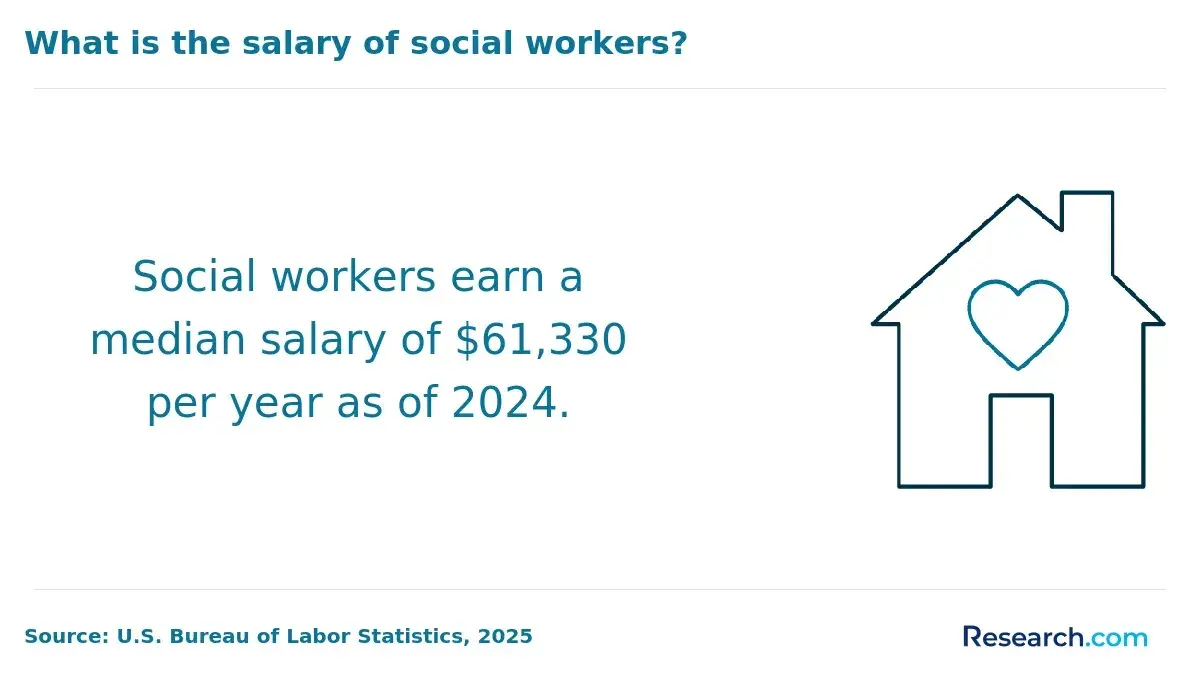
Salary potential depends on license level, specialization, employer type, region, experience, and whether the role is clinical, administrative, or generalist. An MSW and LCSW can expand opportunities, but they do not guarantee a specific salary. Students should compare job postings in their target counties before committing to a program or borrowing heavily.
Technology is also changing the work. Social workers increasingly use electronic records, telehealth platforms, data-informed care coordination, and digital referral systems. These tools do not replace the interpersonal nature of social work, but they do make documentation, privacy, and technology comfort more important. If you are comparing adjacent behavioral health paths, this guide to the fastest way to become a counselor in New Jersey can help you evaluate alternatives.
Here's What Social Workers in New Jersey Have to Say About Their Degree
- My Rutgers University social work education changed how I understood both communities and professional service. The local fieldwork helped me prepare for New Jersey’s diverse client needs, and my first school-based role gave me an immediate chance to use those skills with students and families. Andre
- Studying at The College of New Jersey helped me understand the state’s cultural diversity and the systems that affect families. In my school social work role, I see every day how strong support services can improve a student’s stability and confidence. Lianna
- Monmouth University pushed me to grow as both a practitioner and advocate. Working in a local school after graduation showed me how much preparation matters when young people face complex barriers, and it reinforced my commitment to continued professional learning. Darla
Common Mistakes to Avoid When Planning a Social Work Degree in New Jersey
| Mistake | Why it can hurt you | Better approach |
| Choosing a program without confirming CSWE accreditation | Your degree may not meet New Jersey licensure requirements | Verify accreditation before applying or enrolling |
| Focusing only on tuition | Fees, travel, practicum scheduling, and lost work hours can change total cost | Compare the full cost of attendance and expected time to completion |
| Assuming online automatically means flexible | Some programs require live classes, campus visits, or fixed practicum schedules | Ask for weekly time expectations before enrolling |
| Ignoring field placement quality | Weak placements can limit skills, references, and job connections | Ask where students are placed and how supervision works |
| Assuming a BSW leads to clinical practice | Clinical work requires graduate education and additional licensing steps | Plan for an MSW and LCSW pathway if therapy is your goal |
| Relying only on rankings | A highly ranked program may not fit your budget, schedule, or specialization | Use rankings as one factor, not the whole decision |
Key Insights
- The BSW is the usual entry point, but the MSW is the pivot degree for advancement. If you want clinical, school, healthcare, or higher-responsibility roles, plan beyond the bachelor’s level.
- Licensure should guide your school choice. In New Jersey, CSW, LSW, and LCSW credentials have different education and experience requirements.
- CSWE accreditation is non-negotiable for most serious social work plans. Online, hybrid, and campus programs can all work, but only if they meet recognized standards.
- Fieldwork is a major part of the degree. Expect 400 hours at the BSW level and 900 hours at the MSW level, and ask how placements are arranged before enrolling.
- Cost should be judged by net price and career fit. Compare tuition, aid, program length, field placement logistics, and likely licensing path before taking on debt.
- The best program is the one aligned with your target role. A future LCSW, school social worker, policy advocate, and child welfare caseworker may each need a different academic strategy.
Related Articles for Nearby States
- 2027 What Degree Do You Need To Be a Social Worker: Education Requirements in Delaware
- 2027 What Degree Do You Need To Be a Social Worker: Education Requirements in Pennsylvania
- 2027 What Degree Do You Need To Be a Social Worker: Education Requirements in New York
- 2027 What Degree Do You Need To Be a Social Worker: Education Requirements in Maryland
- 2027 What Degree Do You Need To Be a Social Worker: Education Requirements in Connecticut
- 2027 What Degree Do You Need To Be a Social Worker: Education Requirements in Rhode Island
- 2027 What Degree Do You Need To Be a Social Worker: Education Requirements in Virginia
- 2027 What Degree Do You Need To Be a Social Worker: Education Requirements in Massachusetts
- 2027 What Degree Do You Need To Be a Social Worker: Education Requirements in West Virginia
- 2027 What Degree Do You Need To Be a Social Worker: Education Requirements in Ohio
References:
- 10+ New Jersey Master's in Social Work MSW Programs https://www.mswguide.org/schools/new-jersey/
- 2025 Best Social Work Programs in New Jersey https://www.campusreel.org/best-colleges/major/social-work/top-colleges-for-social-work/new-jersey
- 2025 Best Social Work Schools in New Jersey https://www.collegefactual.com/majors/social-services-public-administration/social-work/rankings/top-ranked/middle-atlantic/new-jersey/
- 5 Institutions offering Social Work Courses In New Jersey https://www.hotcoursesabroad.com/study/training-degrees/new-jersey/social-work-courses/loc/47/cgory/l19-3/sin/ct/programs.html
- 7 Top-Rated MSW Programs in New Jersey with CSWE Accreditation https://www.socialworkdegree.net/msw-programs/new-jersey/
- Homepage | School of Social Work https://socialwork.rutgers.edu/
- Best Colleges with Social Work and Youth Services in New Jersey https://www.niche.com/colleges/search/best-colleges-with-social-work-and-youth-services/s/new-jersey/
- Master of Social Work https://www.shu.edu/academics/msw-social-work.html
- New Jersey Social Work License Requirements And Programs https://www.psychology.org/social-work/licensure/new-jersey/
- Social Work, B.S.W. | New Jersey City University https://www.njcu.edu/academics/schools-colleges/william-j-maxwell-college-arts-sciences/departments/sociology-anthropology-and-social-work/social-work-bsw
Other Things You Should Know About Becoming a Licensed Social Worker in New Jersey
To become a licensed social worker in New Jersey in 2027, you need to earn a Bachelor of Social Work (BSW) or Master of Social Work (MSW) from a CSWE-accredited program, pass the ASWB exam, and apply for licensure through the New Jersey State Board of Social Work Examiners.
In 2027, social workers in New Jersey must complete 20 hours of continuing education every two years to maintain licensure. This includes specific hours in ethics and social and cultural competence topics, as mandated by the State Board of Social Work Examiners.


