
2027 What Degree Do You Need To Be a Social Worker: Education Requirements in South Dakota

Co-Founder and Chief Data Scientist
Currently, South Dakota faces a critical social worker shortage, with job openings expected to grow by over 15% in the next decade. Obtaining the appropriate degree is essential for licensure and effective practice in the state’s unique social service environment. Pursuing a Bachelor or Master of Social Work ensures access to competitive salaries and diverse career opportunities.
This article outlines the degrees required, licensure prerequisites, and actionable strategies to help candidates successfully meet South Dakota’s educational standards for social work.
Key Things to Know About Social Work Education Requirements in South Dakota
- A Bachelor’s Degree in Social Work (BSW) from a Council on Social Work Education (CSWE) accredited program is the minimum requirement for entry-level social work positions in South Dakota.
- To obtain licensure as a Licensed Social Worker (LSW), candidates must hold a Bachelor’s or Master’s degree and pass the Association of Social Work Boards (ASWB) exam.
- Advanced clinical roles require a Master’s Degree in Social Work (MSW) with supervised fieldwork, reflecting South Dakota’s growing demand for qualified mental health professionals.
- What is the minimum degree required to become a licensed social worker in South Dakota?
- What courses are covered in a social work degree program in South Dakota?
- How long does it take to complete a social work degree program in South Dakota?
- How much does a social work degree cost in South Dakota?
- What degrees are required for different social work specializations in South Dakota?
- What financial aid options are available to social work students in South Dakota?
- What is the employment outlook for social workers in South Dakota?
- What are the alternative pathways to become a social worker in South Dakota?
- Are online social work degrees recognized in South Dakota?
- What organizations accredit social work degree programs in South Dakota?
- What are the top institutions offering social work degree programs in South Dakota?
- How can social work professionals transition into counseling roles in South Dakota?
What is the minimum degree required to become a licensed social worker in South Dakota?
To qualify for social work licensure in South Dakota, candidates must hold specific degrees recognized by the state’s licensing board. These degrees ensure applicants meet minimum education requirements for social workers in South Dakota and are eligible for appropriate credentialing.
- Bachelor’s Degree in Social Work (BSW): A BSW from a Council on Social Work Education (CSWE)-accredited program is required to pursue the Social Worker (SW) designation, enabling entry-level practice within the state.
- Master’s Degree in Social Work (MSW): Holding an MSW from a CSWE-accredited program is necessary for advanced licensure levels, including Certified Social Worker (CSW) and Certified Social Worker in Private or Independent Practice (CSW-PIP).
These degree requirements form the foundation of South Dakota’s licensure system and do not vary by specialization or practice setting. Applicants must ensure that official transcripts are sent directly from their accredited institution to the South Dakota Board of Social Work Examiners to satisfy processing conditions.
For professionals exploring career growth, understanding the South Dakota MSW degree requirements for social work licensure is essential to accessing higher credentialing opportunities. Those interested in learning more about potential career paths may find useful information about jobs with a social work major.
What courses are covered in a social work degree program in South Dakota?
Having a well-structured coursework in a social work degree is essential for equipping students with the skills needed to address diverse social challenges effectively. South Dakota’s programs focus on comprehensive training that combines theory, practice, and state-specific requirements. Below are key courses typically included in these programs:
- Introduction to Social Work: Covers the history, ethical foundations, and diverse roles within the profession, preparing students for various practice settings.
- Human Behavior and the Social Environment: Explores developmental theories and interactions within families, groups, and communities.
- Social Work Practice with Individuals, Families, and Communities: Develops skills in assessment, intervention, and case management tailored to different populations.
- Social Welfare Policy and Services: Analyzes policies affecting social welfare systems and their effectiveness in addressing social issues.
- Research Methods in Social Work: Teaches critical evaluation of research, data collection, and evidence-based practice application.
- Field Practicum/Field Experience: Offers supervised, hands-on experience in social work settings, typically required for BSW students over two semesters.
- Diversity and Social Justice: Focuses on cultural competence, advocacy, and social justice for marginalized groups.
- State-Specific Requirement: A field practicum or internship aligned with South Dakota’s standards is mandatory, ensuring practical experience before entering the workforce.
How long does it take to complete a social work degree program in South Dakota?
When planning a social work career in South Dakota, knowing how long degree programs typically take helps set clear educational and career goals. Completion time varies by degree level and enrollment status, with options available to accommodate different life circumstances. Several factors, such as fieldwork, part-time study, and advanced standing, influence how quickly students can finish.
- Bachelor of Social Work (BSW): Full-time study generally takes four years (120 credit hours), while part-time students should expect an extended timeline due to balancing other commitments.
- Master of Social Work (MSW): Students with a BSW may complete the MSW in one year via advanced standing; otherwise, full-time enrollment usually requires two years, with part-time options extending to three or four years.
- Doctor of Social Work (DSW) and PhD: These degrees demand three to five years beyond the MSW for full-time students, with part-time study and research obligations potentially lengthening this period.
- Program Flexibility and Impact: Fieldwork requirements integral to licensure can influence duration, especially in rural placements, and part-time study offers flexibility but usually adds one to two years to program length.
A social worker from South Dakota shared her experience completing a local BSW program over five years while working part-time and managing family responsibilities. She noted that “the balance between coursework, field placements, and personal life required careful planning.” Although she initially aimed to finish in four years, unforeseen practicum scheduling and travel to rural sites extended her timeline.
Despite the challenges, she valued the flexibility and said, “taking the extra time allowed me to gain meaningful field experience and avoid burnout.” Her journey highlights how practical obstacles often shape degree completion but can enhance professional readiness in South Dakota’s diverse social work environment.
How much does a social work degree cost in South Dakota?
Knowing the tuition and fees helps future social workers plan their education without financial surprises. Evaluating the cost of a social work degree in South Dakota allows students to choose programs that fit their budget and career goals.
- BSW (Bachelor of Social Work): In-state tuition at public universities ranges from $9,000 to $10,500 annually, while out-of-state costs are higher at $12,000 to $13,500; private institutions charge between $22,000 and $28,000, with online BSW options typically matching in-state rates but adding fees.
- MSW (Master of Social Work): Tuition for in-state public MSW students runs from $11,000 to $14,000 per year, exceeding $18,000 for out-of-state students; private MSW programs are rare and cost $28,000–$35,000, while online options may have similar or higher per-credit rates.
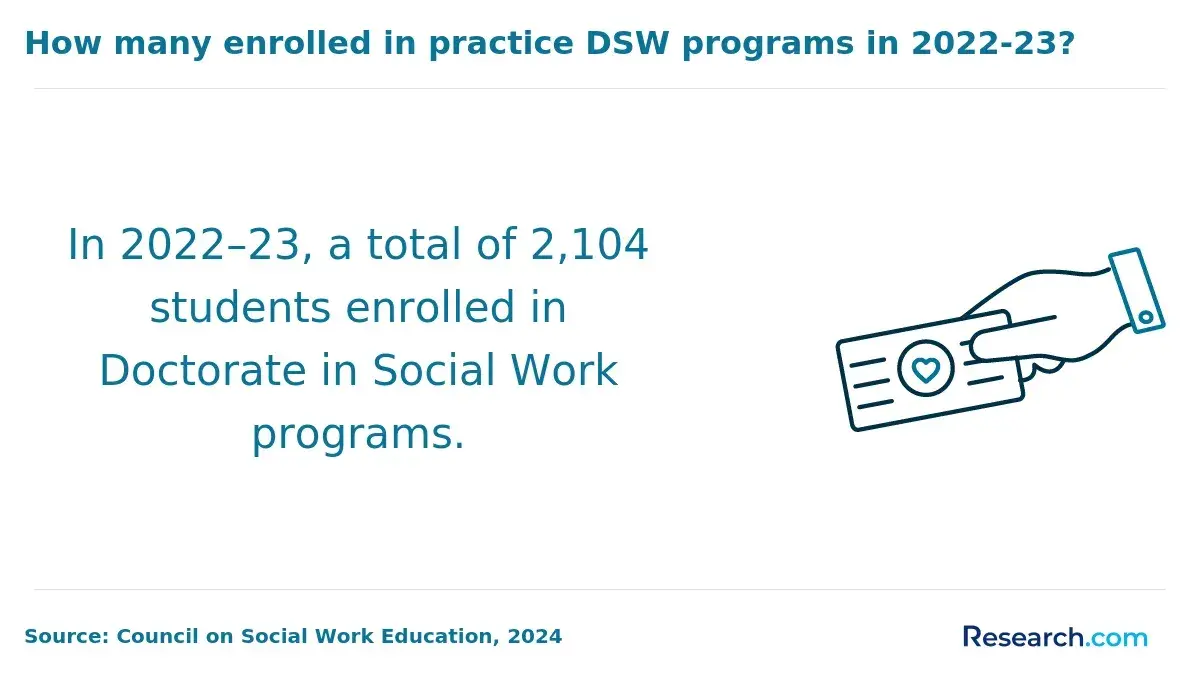
- DSW (Doctor of Social Work): Public university tuition for in-state students ranges from $12,000 to $17,000 annually, with out-of-state and private programs often above $20,000; online DSW costs vary significantly based on the institution and residency status.
- PhD in Social Work: Public institutions charge between $9,000 and $15,000 for in-state students and $14,000–$22,000 for out-of-state; private PhD programs may exceed $30,000 per year, and online options offer limited but sometimes more affordable choices.
To reduce expenses, leverage tuition for BSW/MSW programs at public universities when possible and explore scholarships and state grants. Budgeting for additional fees, living costs, and practicum expenses ensures a practical approach to financing your education while pursuing a social work career in South Dakota.
For a detailed comparison, consider factors such as residency and program delivery modes, and explore how a social work vs psychology degree may align with your goals. For more insights, the chart below shows the median salaries of social work faculty members so you can have an idea regarding ROI.
What degrees are required for different social work specializations in South Dakota?
Different social work roles in South Dakota demand varying education levels due to the distinct skills and licensure requirements tied to each specialization. Meeting the degree requirements for social work specializations in South Dakota ensures eligibility for appropriate certification and career advancement.
- Clinical Social Work: A Master of Social Work (MSW) from a CSWE-accredited program is mandatory, along with supervised experience, to obtain Certified Social Worker in Private or Independent Practice (CSW-PIP) licensure for independent clinical practice.
- School Social Work: At minimum, a Bachelor of Social Work (BSW) from a CSWE-accredited program is required, though many positions prefer or require an MSW; state certification and specific Department of Education criteria also apply.
- Healthcare Social Work: Entry-level roles typically require a BSW, but clinical or leadership roles demand an MSW for advanced practice and supervisory responsibilities in medical settings.
- Child and Family Services: A BSW qualifies for entry-level positions, while an MSW is needed for advanced or supervisory roles in child welfare and family support programs.
Additionally, the Social Work Associate (SWA) license requires at least an associate’s degree in human services or a bachelor’s degree in a non-social work field for support roles. Licensed social workers must also complete ongoing continuing education to maintain their credentials. Choosing a CSWE-accredited program is essential as it is a prerequisite for licensure across all specializations.
What financial aid options are available to social work students in South Dakota?
Financial aid is essential for students pursuing social work degrees as it helps alleviate the financial burden of tuition, books, and living expenses. By accessing available resources, students can focus more on their education and less on financial stress, boosting their chances of completing their degree. Key financial aid options for social work students in South Dakota include:
- Federal Grants: Pell Grants and other need-based federal grants provide funds that do not require repayment, making them foundational for many undergraduate and graduate social work students.
- State Scholarships and Grants: South Dakota offers scholarships specifically for BSW and MSW programs, including support for students with foster care backgrounds, such as the WIA Scholarship and Education and Training Voucher (ETV) program.
- Work-Study Programs: The Federal Work-Study Program allows students to work part-time in jobs related to social work, helping cover education costs while gaining valuable experience.
- Student Loans: Federal Direct Loans offer lower interest rates and flexible repayment options for students enrolled at least half-time, but these funds must be repaid after graduation.
- NASW South Dakota Scholarships: The National Association of Social Workers - South Dakota awards annual scholarships at their state conference to support social work students in the region.
- Department of Social Services Funding: In addition to WIA and ETV, the Department assists students, especially youth with a foster care history, in locating other financial aid resources and scholarships.
- Tribal and Vocational Aid: Native American students and those pursuing vocational training can benefit from additional funding through tribal aids, Bureau of Indian Affairs (BIA), and Workforce Investment Act programs.
- Scholarships from Colleges and Universities: Many South Dakota institutions offer scholarships for BSW and MSW programs based on merit, financial need, or specific program criteria.
- Professional and Community Organizations: Regional and national organizations provide grants and scholarships, especially for students committed to community service or leadership in social work.
Students interested in expanding their options may also explore online MSW programs affordable for flexible pathways that often include additional financial aid opportunities. To maximize benefits, completing the FAFSA early and connecting with financial aid offices is highly recommended for those seeking financial aid for social work students in South Dakota.
What is the employment outlook for social workers in South Dakota?
The employment landscape for social workers in South Dakota is marked by a rising demand driven by workforce shortages and an expanding range of community services. Recent projections indicate robust job growth over the next decade, which is contributing to competitive starting salaries and opportunities for career advancement. Market trends suggest that graduates who complete accredited programs are well-positioned to integrate into various settings—from healthcare to school-based services—where their skills are increasingly sought after.
In addition to broad job availability, employers emphasize the importance of state-specific licensure and ongoing professional development. For those interested in understanding the entire process and planning a successful career, learn more about how to become a social worker in South Dakota.
What are the alternative pathways to become a social worker in South Dakota?
Individuals holding degrees in psychology, sociology, or other related fields can become social workers in South Dakota without restarting their education from scratch. The state offers several routes that recognize prior learning and provide flexibility for career changers.
- Traditional MSW Programs for Non-BSW Holders: Enter a full Master of Social Work program designed for those without a Bachelor of Social Work, typically lasting two years.
- Advanced Standing MSW Pathway: If you have a CSWE-accredited BSW, pursue an accelerated MSW program that reduces graduate study time by about half.
- Using Related Degrees: Leverage backgrounds in psychology or sociology by completing the standard MSW curriculum with foundational social work training.
- Post-Bachelor’s Certificates or Bridge Programs: Enhance qualifications through related graduate certificates to strengthen your MSW application, even though South Dakota lacks formal bridge programs.
- Alternative Certification and Continuing Education: Maintain licensure by completing required continuing education credits, a flexible option for those shifting careers.
A social worker from South Dakota, who transitioned from a counseling background, shared that the process felt both challenging and rewarding. He valued the blend of applying his previous knowledge while embracing new social work practices, stating, "It wasn’t easy to adjust to the more clinical focus, but having a solid foundation in human behavior helped me grasp the material faster."
Graduating from a local program made access to fieldwork and support easier, yet balancing work, study, and licensing requirements required careful planning. His journey illustrates how alternative pathways can open doors, even for those starting outside traditional social work routes.
Are online social work degrees recognized in South Dakota?
Online Bachelor of Social Work (BSW) and Master of Social Work (MSW) programs have become increasingly popular, especially in South Dakota, where students value flexible options that fit their busy lives. For licensure and job prospects, recognition of these degrees is essential. Only degrees from accredited programs are accepted by the South Dakota Board of Social Work Examiners, ensuring graduates can obtain the credentials needed to work in public and private agencies.
Recognition depends largely on program accreditation and state licensing board standards. The South Dakota Board requires candidates to complete programs accredited by the Council on Social Work Education (CSWE). Online degrees from CSWE-accredited schools hold the same weight as on-campus degrees. Recent data shows that over 60% of employers regard accredited online degrees as equivalent to traditional ones, and nationwide enrollment in online social work programs continues to grow, particularly among working adults and rural students.
Students should also focus on supervised fieldwork, which remains mandatory and is arranged locally by accredited programs. Hybrid models combining online classes with some in-person sessions can enhance learning and networking. It’s critical to confirm that the chosen program is CSWE-accredited and authorized to enroll South Dakota residents, ensuring both licensure eligibility and strong employment prospects within the state.
What organizations accredit social work degree programs in South Dakota?
Accreditation guarantees that social work degree programs meet rigorous academic and professional standards, crucial for licensure eligibility and gaining the recognition of employers. Graduating from a properly accredited program is vital to enter South Dakota’s competitive social work field and ensures your education aligns with state requirements.
- Council on Social Work Education (CSWE): The CSWE is the national accrediting body for social work programs in the United States. Only graduates of CSWE accredited social work programs in South Dakota, including Bachelor of Social Work (BSW) and Master of Social Work (MSW), qualify for state licensure and meet most employers’ expectations.
- Higher Learning Commission (HLC): The HLC is the regional accreditor for South Dakota institutions offering social work degrees. Regional accreditation by the HLC ensures degrees are recognized by licensing boards and allow access to federal financial aid.
- South Dakota Board of Examiners for Social Workers: While this state agency does not accredit programs, it verifies that applicants have education from CSWE-accredited programs or equivalents accepted in South Dakota. This evaluation protects professional standards and public safety.
To pursue social work licensure and career advancement, consider programs accredited by these organizations. Those aiming to become a licensed clinical social worker should particularly focus on completing a CSWE-accredited MSW program recognized by the South Dakota Board. Accreditation not only supports licensure but enhances employment prospects across the state.
What are the top institutions offering social work degree programs in South Dakota?
Choosing the right school for a social work degree in South Dakota is essential for ensuring proper accreditation, career preparation, and a sound financial investment. Enrolling in accredited social work schools in South Dakota secures eligibility for state licensure and access to quality field experiences that enhance job opportunities.
- University of South Dakota (USD): Offers both BSW and the state’s oldest accredited MSW program with strong clinical training and comprehensive field placements focused on licensure and advanced roles.
- Augustana University: Features a new BSW and an MSW launching in Fall 2025, with innovative clinical specializations and partnerships like Sanford Health to meet workforce demands.
- Oglala Lakota College: Provides a CSWE-accredited BSW with unique emphasis on Native American and rural communities, ensuring culturally responsive education and community-based placements.
- University of Sioux Falls: Known for flexible BSW options tailored to working adults, integrating faith-based values with professional ethics and strong local field connections.
- Presentation College: Offers a focused BSW program with small cohorts that promote personalized instruction and career support for entry-level social work positions across various agencies.
To navigate the cost of education effectively, consider exploring fully funded DSW programs that can provide advanced career opportunities without a financial burden. These top social work degree programs in South Dakota are designed to prepare graduates to meet the growing demand for social workers in healthcare and family services, equipping students with the skills and credentials necessary to succeed.
How can social work professionals transition into counseling roles in South Dakota?
Social work graduates seeking to expand their career paths into counseling should review additional licensure options and specialized certification programs tailored to clinical counseling. Evaluating program prerequisites, state-specific licensure exams, and supplementary training in therapeutic techniques can streamline this transition, enabling professionals to access diverse roles in mental health and community support. For details on bridging the gap between social work and counseling credentials, consider the fastest way to become a counselor in South Dakota.
What Do Social Workers in South Dakota Say About Their Degree
Completing my social work degree at Black Hills State University provided an accessible and supportive environment that truly felt like home. The hands-on experiences with local communities helped me understand the unique challenges families face here in South Dakota. Starting my career working in a local school has been incredibly rewarding as I see firsthand the positive impact on children and their well-being. The program’s focus on practical skills gave me the confidence to advocate for resources that benefit both students and their families. I feel proud to contribute to a supportive future for youth in this state. Curtis
My journey through the University of South Dakota's social work program was both challenging and enriching. The curriculum, combined with opportunities for community engagement, pushed me to grow both personally and professionally. Starting my career as a social worker in a local school allowed me to connect deeply with students facing social and economic challenges specific to our rural environment. This role has strengthened my passion for creating systemic change and supporting families in meaningful ways. Witnessing the resilience and spirit of South Dakota’s communities constantly inspires me. LaneY
Pursuing my social work degree at Augustana University opened doors I hadn’t imagined, especially in terms of professional development and career advancement. The faculty emphasized cultural competence and adaptability, preparing me to serve diverse populations throughout South Dakota. Working now in a local school setting, I appreciate how the program prepared me for the unique challenges brought on by the rural and agricultural context here. It’s deeply fulfilling to work alongside educators to enhance students’ social and emotional well-being, knowing the impact reaches far beyond the classroom. Andres
Related Articles for Nearby States
- 2027 What Degree Do You Need To Be a Social Worker: Education Requirements in North Dakota
- 2027 What Degree Do You Need To Be a Social Worker: Education Requirements in Nebraska
- 2027 What Degree Do You Need To Be a Social Worker: Education Requirements in Minnesota
- 2027 What Degree Do You Need To Be a Social Worker: Education Requirements in Wyoming
- 2027 What Degree Do You Need To Be a Social Worker: Education Requirements in Iowa
- 2027 What Degree Do You Need To Be a Social Worker: Education Requirements in Montana
- 2027 What Degree Do You Need To Be a Social Worker: Education Requirements in Colorado
- 2027 What Degree Do You Need To Be a Social Worker: Education Requirements in Kansas
- 2027 What Degree Do You Need To Be a Social Worker: Education Requirements in Wisconsin
- 2027 What Degree Do You Need to Be a Social Worker: Education Requirements in Missouri
References:
- Augustana University. (n.d.). Social work. augie.edu.
- DSS. (n.d.). Licensing information. dss.sd.gov.
- Lake Area Technical College. (2025, July 15). Social Work | Lake Area Technical College. lakeareatech.edu.
- Social Work Degrees. (2025, August 28). BSW programs in South Dakota: 3 CSWE-Accredited options. socialworkdegrees.org.
- Social Work Education Center. (2025, July 13). How to become a social worker in South Dakota - Social Work Education Center. socialworkdegree.net.
- socialworklicensemap.com. (2024, May 20). How to become a social worker in South Dakota. socialworklicensemap.com.
- University of Sioux Falls. (2025, May 21). Social work. usiouxfalls.edu.
- University of South Dakota. (n.d.). Modern Campus CatalogTM. catalog.usd.edu.
- University of South Dakota. (n.d.). Social work. usd.edu.
- Western Iowa Tech Community College. (n.d.). Social Work with University of South Dakota. witcc.edu.
Other Things You Should Know About What Degree You Need to Be a Social Worker in South Dakota
In South Dakota, to become a clinical social worker in 2027, you need a Master's in Social Work (MSW) from an accredited institution. After obtaining your degree, further licensing and supervised experience are required to practice as a clinical social worker.
To become a school social worker in South Dakota in 2027, individuals typically need a Master of Social Work (MSW) degree from a program accredited by the Council on Social Work Education (CSWE). Additionally, a school social work certification and a license from the South Dakota Board of Social Work Examiners may be required.


