2027 Online MBA Programs With Rolling Admission

Co-Founder and Chief Data Scientist
An online MBA with rolling admission can be a practical path if you want to start graduate business study without waiting for one annual or seasonal deadline. Instead of forcing every applicant into the same admissions round, these programs usually review completed applications as they arrive and may offer several start dates across the year.
That flexibility matters most for working professionals, career changers, military-affiliated students, parents, and applicants who need time to assemble stronger materials. Rolling admission can help you apply when your résumé, recommendations, essays, and test-waiver case are ready—but it does not mean admission is automatic or less selective.
This guide explains how rolling admission works for online MBA programs, how it compares with cohort-based formats, what admissions committees typically require, what costs to expect, and how to evaluate program quality before you commit time and money.
Key Benefits of Knowing Online MBA Programs With Rolling Admission
- Understanding rolling-admission online MBA programs helps you target programs that prepare you for leadership roles in management, finance, marketing, consulting, and entrepreneurship.
- Professionals with an MBA can earn a median salary ranging from $90,000 to $130,000 depending on industry and experience, so knowing which programs accelerate career growth can impact your earning potential.
- Professionals with an MBA can earn a median salary ranging from $90,000 to $130,000 depending on industry and experience, so knowing which programs accelerate career growth can impact your earning potential.
- Awareness of rolling-admission programs helps you plan your application, improve your chances for scholarships, and enter the workforce sooner with minimal delay.
What does “rolling admission” mean for online MBA programs?
Rolling admission means an online MBA program reviews applications as they are completed instead of waiting for one final deadline or a small set of formal admissions rounds. In practice, this can lead to faster decisions, more control over when you apply, and more options for when you begin classes.
For online MBA applicants, rolling admission is often paired with multiple start dates. A school may let admitted students begin in fall, spring, summer, or quarterly terms, depending on the program calendar. This is especially useful if you are trying to coordinate graduate school with a promotion cycle, relocation, family obligations, military service, or employer tuition reimbursement deadlines.
Rolling admission does not mean you should apply casually. Seats, scholarships, and preferred start terms can become more limited as a cycle progresses. The best strategy is to apply early only when your application is complete, polished, and aligned with the program’s expectations.
The following examples show how rolling or flexible admissions can appear in well-known online MBA options:
Rice University – MBA@Rice
Rice’s online MBA accepts applications on a rolling basis for its four quarterly start terms (Jan, Apr, Jul, Oct). The program is 54 credit hours and can be completed in about 24 months. Students should note that the format includes periodic in-person residencies, called “intensive learning experiences,” as well as global field experiences. These components can strengthen networking and applied learning, but they also require planning for travel, scheduling, and related costs. Rice also offers a GMAT/GRE waiver for professionals with strong experience.
University of Texas at Dallas – Jindal Online MBA
The Professional/Online MBA at UTD’s Jindal School reviews applications on a rolling basis. Students can start in fall, spring, or summer, which gives applicants more room to time enrollment around work and personal obligations. Courses are fully online, while students still benefit from the Jindal School’s connection to Dallas’s strong business ecosystem. The total cost is relatively competitive: ~US$64,685 for in-state and ~US$109,257 for out-of-state.
Indiana University – Kelley Direct Online MBA
Kelley’s online MBA admits on a rolling basis each semester. The program is known for flexibility, a broad elective menu, and instruction from the same faculty who teach the on-campus MBA. IU also provides a developed digital learning environment and support designed for working professionals. Because the admissions process is rolling, applying sooner can also mean receiving a decision sooner, provided your materials are complete.
University of Washington – Foster Online MBA
The Foster School reliably ranks in the top 10–15 for online MBAs. While not all intakes are “strictly rolling,” the program has multiple start terms and flexible admissions features. Its curriculum emphasizes leadership, global business, and sustainability. Students should also consider the hybrid elements, which often include on-campus residencies and can create networking opportunities with the local Seattle business ecosystem.
Carnegie Mellon – Tepper Online / Hybrid MBA
Tepper’s online/hybrid MBA combines live online classes with optional in-person “immersion” weekends. This structure blends remote flexibility with face-to-face engagement. Though not purely rolling, CMU offers early and multiple application rounds; for working professionals, this can provide flexibility similar to rolling admission. The program is analytics-heavy and may be a strong fit for students who want rigor plus data-driven decision making.
How do rolling-admission MBAs compare to cohort-based programs?
Rolling-admission MBAs and cohort-based MBAs can both deliver a rigorous graduate business education, but they organize the student experience differently. Rolling-admission programs prioritize timing flexibility. Cohort-based programs prioritize shared progression, peer consistency, and a more structured calendar.
In a rolling-admission MBA, students may enter at different points during the year and take courses with classmates who are at various stages of the degree. This can make it easier to start sooner, adjust course loads, and move through the program around professional obligations. The trade-off is that peer relationships may require more initiative because your classmates may not all begin and finish with you.
In a cohort-based MBA, students typically start together and move through much of the curriculum as a group. This can create stronger continuity, accountability, and networking within a fixed class. The trade-off is less flexibility: if you miss a start date or need to slow down, you may have fewer options.
Which format is a better fit?
- Choose rolling admission if you need multiple start dates, want a faster admissions decision, or expect your work schedule to change during the program.
- Choose a cohort-based format if you value a consistent peer group, structured pacing, and a more traditional graduate school rhythm.
- Compare total cost and delivery format carefully. Students weighing both options can also review affordable MBA programs to identify schools that fit their budget and learning preferences.
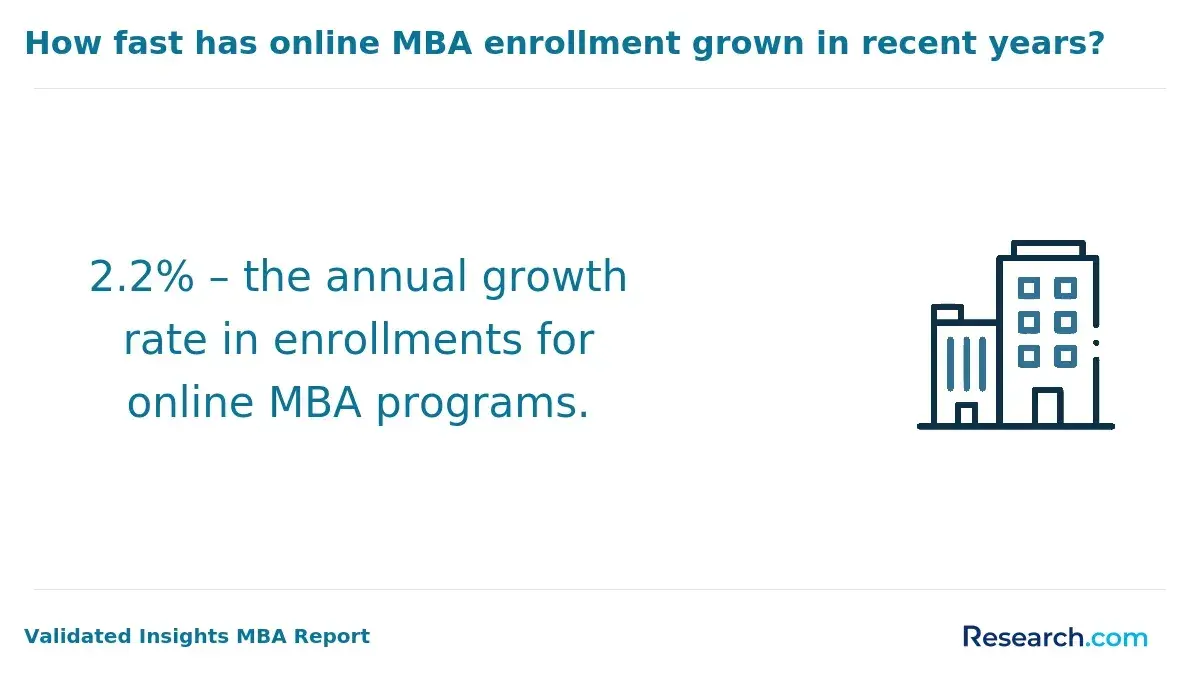
What are the typical admission requirements for online MBA programs with rolling admission?
Online MBA programs with rolling admission generally use the same admissions standards as deadline-based MBA programs. The flexible timeline changes when your application is reviewed, not what schools evaluate. Admissions committees still look for academic readiness, professional maturity, leadership potential, communication ability, and a clear reason for pursuing the MBA.
Applicants comparing schools should also confirm accreditation, tuition, and admissions policies before applying. For cost-conscious students, affordable online MBA programs can help narrow the search to options that better match financial goals.
Typical requirements include:
- Bachelor’s degree from an accredited institution. Most MBA programs accept applicants from many undergraduate majors, not only business.
- Official transcripts. Schools review GPA, course difficulty, quantitative preparation, and whether your academic record improved over time.
- Work experience. Many programs prefer 2–5 years, though some accept applicants with less. Quality of experience often matters more than job title alone.
- Résumé or CV. A strong résumé should show career progression, leadership, measurable results, promotions, team responsibilities, or project ownership.
- Statement of purpose or personal essay. This is where you explain why you want an MBA, why now, and why the specific program fits your goals.
- Letters of recommendation. Usually one to two are required. Current or former supervisors are often stronger choices than personal contacts because they can discuss your professional performance.
- GMAT/GRE scores, if required. Many rolling-admission programs make these scores optional or offer waivers based on experience, GPA, or other evidence of readiness.
- English proficiency scores for international students. These are typically required when English is not the applicant’s first language or when prior education was not completed in English.
Common application mistakes to avoid
- Submitting quickly just because the program has rolling admission, even though essays or recommendations are weak.
- Assuming a test waiver means the program is easier or less selective.
- Using a generic essay that does not mention the school’s curriculum, format, or career fit.
- Ignoring transcript issues instead of explaining context or showing later academic strength.
How does the rolling application process work from submission to acceptance?
The rolling application process is continuous. Once your application file is complete, the school can begin reviewing it rather than holding it until a single deadline. This can shorten the time between submission and decision, but incomplete files can still delay review.
- Prepare your materials. Gather transcripts, résumé, essays, test scores if needed, recommendations, and any waiver documentation before you submit.
- Submit the online application. Most schools require an application form, fee, uploaded documents, and official transcripts sent directly from prior institutions.
- Complete the file review. Admissions staff first confirm that your application is complete and that you meet basic eligibility requirements.
- Move to committee evaluation. The admissions committee reviews academic record, work experience, leadership potential, goals, and fit with the program. Some schools may request an interview.
- Receive the decision. Because applications are reviewed as they arrive, many applicants receive a decision within a few weeks after submitting a complete file, rather than waiting for a fixed deadline.
- Confirm enrollment and select a start date. If admitted, you may choose among available start terms. Some programs allow deferral to a later term, but policies vary by school.
The practical advantage is timing. Applying early in a rolling process can help you avoid last-minute seat constraints and may give you better access to scholarships or preferred course schedules. However, early only helps if the application is strong; a rushed submission can work against you.
What are the biggest benefits of applying to an online MBA with rolling admission?
The main benefit of rolling admission is control. You can align your application and start date with your career, finances, and readiness instead of building your plans around one rigid deadline.
- Flexible timing. You can apply when your materials are ready, which is valuable if you need more time for recommendations, essays, transcripts, or test-waiver documentation.
- Faster decisions. Since applications are reviewed as they arrive, you may receive an admissions decision sooner than you would in a traditional deadline-based cycle.
- Multiple start dates. Many rolling-admission programs offer several entry points per year, allowing you to begin when your work and personal schedule can realistically support graduate study.
- Potentially better scholarship access. Early applicants may have better access to merit-based aid or financial incentives if funds are awarded as applications are reviewed.
- More time to build a stronger application. Rolling admission allows you to choose the right submission moment rather than racing toward one cutoff.
The biggest limitation is that rolling admission can create a false sense of unlimited availability. Seats, aid, and course options may narrow over time, so applicants should still set an internal deadline and work backward from their preferred start term.
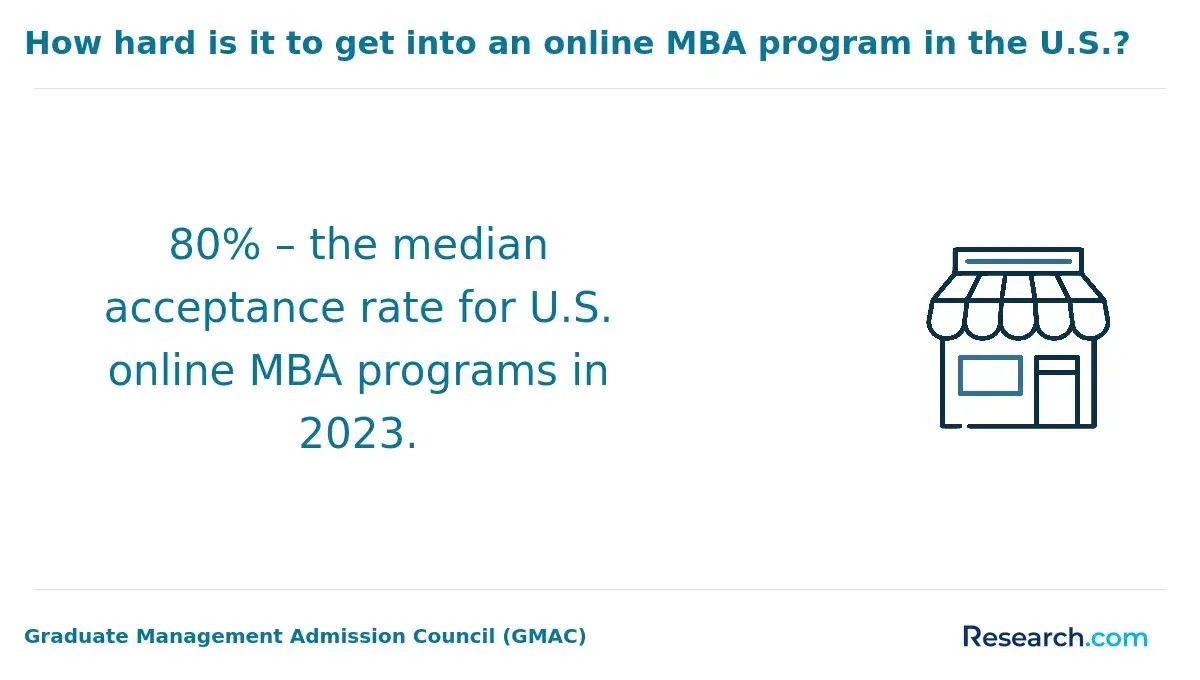
How much do online MBA programs with rolling admission typically cost?
The cost of an online MBA with rolling admission varies widely by institution type, reputation, accreditation, residency requirements, and program length. Public universities and regional programs may charge between $20,000 and $50,000 for the entire degree. Mid-tier programs often range from $50,000 to $80,000, while top-ranked or highly specialized programs can exceed $100,000.
Applicants should look beyond headline tuition. Online programs may reduce commuting and relocation costs, but some still charge technology fees, course fees, graduation fees, or residency-related costs. Hybrid or residency-based programs may also require travel, lodging, and time away from work. Students exploring executive options can compare pricing through affordable EMBA programs to identify cost-effective pathways to leadership advancement.
Financial aid can change the net cost substantially. Rolling-admission MBA students may use scholarships, employer tuition reimbursement, federal loans, private loans, payment plans, or personal savings. Applying early can matter because some merit-based aid is distributed as applications are reviewed and may become more limited later in the cycle.
Cost factors to verify before enrolling
- Total program tuition. Confirm whether the quoted cost is per credit, per course, per term, or for the full degree.
- Mandatory fees. Ask about technology, distance learning, library, graduation, and student service fees.
- Residency costs. If the program has in-person requirements, estimate travel, lodging, meals, and time away from work.
- Pacing and completion time. Taking longer to finish can affect fees, employer reimbursement timing, and opportunity cost.
- Scholarship renewal rules. Some awards require a minimum GPA, credit load, or continuous enrollment.
What financing options are available for rolling-admission MBA students?
Rolling-admission MBA students typically use a mix of aid sources rather than relying on one option. The right financing plan depends on your citizenship status, credit profile, employer benefits, savings, risk tolerance, and expected career return.
Scholarships and merit aid
- Many online MBA programs review applicants for merit-based scholarships at the time of admission, including those in rolling cycles.
- For example, SMU Cox reviews all MBA applicants for merit-based scholarships ranging from $1,000 to $15,000.
- External scholarships may also be available through professional associations, foundations, employers, and community organizations.
Federal student loans
- In the U.S., graduate students may use Direct Unsubsidized Loans or Grad PLUS Loans through FAFSA.
- These loans do not require repayment while you are enrolled, but interest accrues immediately.
- Federal loans may offer borrower protections that private loans may not, so compare terms carefully before choosing.
Private or alternative loans
- Private student loans can help cover costs that federal aid, scholarships, savings, or employer support do not cover.
- Approval and rates usually depend on credit history and lender policies.
- For international students, platforms like Prodigy Finance offer loans without requiring a U.S. co-signer or collateral.
Employer tuition assistance or reimbursement
- Many working professionals use employer-sponsored education benefits, especially when the MBA supports advancement within the company.
- Employer aid can reduce borrowing, but you should confirm annual limits, grade requirements, repayment obligations if you leave the company, and whether reimbursement is paid before or after course completion.
Personal savings and investment funds
- Some students use savings, 529 plans, or investment funds to reduce borrowing.
- Using retirement accounts can carry tax consequences, penalties, and long-term opportunity costs, so it should be evaluated carefully.
Crowdfunding and alternative structures
- Crowdfunding platforms such as GoFundMe allow students to share their story and seek contributions, though results are uncertain.
- With an Income Share Agreement (ISA), you repay a percentage of your income for a fixed period instead of using a traditional loan.
- Before using alternative financing, compare the total repayment obligation against federal and private loan options.
What does the curriculum look like in rolling-admission online MBAs?
The curriculum in a rolling-admission online MBA usually resembles a traditional MBA curriculum, but the course schedule is built to support flexible entry points and remote participation. Students typically complete core business courses first, then move into electives, concentrations, capstones, or applied projects.
Core coursework often includes accounting, finance, marketing, operations, leadership, strategy, economics, business analytics, and organizational behavior. These courses are designed to build managerial judgment, quantitative reasoning, communication skills, and cross-functional decision-making. Students looking for flexible admissions policies and fewer testing barriers can also compare best online MBA without GMAT options.
Many programs also offer electives or concentrations in areas such as entrepreneurship, healthcare management, data analytics, supply chain management, human resources, project management, cybersecurity management, or international business. The best concentration depends on your target role; choosing a specialization only because it sounds marketable can be less useful than choosing one connected to your actual career plan.
Common online delivery formats
- Asynchronous courses. Students complete lectures, readings, discussions, and assignments on their own schedule within weekly or module deadlines.
- Synchronous courses. Students attend live online sessions at set times, which can improve interaction but may be harder for those with unpredictable schedules.
- Hybrid formats. Some programs combine online coursework with residencies, immersions, orientations, or networking weekends.
- Modular scheduling. Courses may run in shorter terms so students can enter at several points during the year and focus on fewer subjects at a time.
Some rolling-admission MBAs allow students to finish in as little as 18–24 months, depending on course load and program structure. Others are designed for slower part-time pacing. Before enrolling, confirm how often required courses are offered; flexibility is limited if a course you need is available only once per year.
What should students look for in a reputable rolling-admission MBA program?
A reputable rolling-admission MBA should be evaluated on academic quality, employer recognition, student support, cost transparency, and career fit—not just speed or convenience. Rolling admission is a scheduling feature; it is not, by itself, proof of quality.
- Accreditation. Look for institutional accreditation and recognized business accreditation such as AACSB, EQUIS, or similar. Accreditation helps signal that the school meets established academic standards and may affect employer perception, transferability, and financial aid eligibility.
- Curriculum quality and relevance. Review whether the program covers core MBA disciplines and offers electives that match your goals. Strong programs include applied work such as case studies, simulations, consulting projects, or capstones.
- Flexibility and format. Confirm whether courses are asynchronous, synchronous, hybrid, or self-paced. Ask how many hours per week students typically spend on coursework and whether any in-person requirements are mandatory.
- Faculty credentials. Review whether instructors have research expertise, industry experience, consulting backgrounds, or executive leadership experience relevant to the courses they teach.
- Online student support. Advising, tutoring, library access, writing support, disability services, and technical support matter more in online programs because students are not on campus every week.
- Career services and alumni access. A strong MBA should provide career coaching, résumé support, interview preparation, employer connections, networking opportunities, and alumni engagement for online students—not only residential students.
- Return on investment. Compare total tuition and fees against your likely career benefit. Look for transparent information on alumni outcomes, salary growth, employment support, and industries where graduates work.
- Technology infrastructure. The learning management system, video tools, group-work platforms, and technical support can affect the day-to-day experience. Ask whether support is available outside standard business hours.
- Reputation and rankings. Rankings can be useful signals, but they should not outweigh accreditation, curriculum fit, affordability, faculty quality, and career services.
Questions to ask admissions before applying
- How many start dates are available each year?
- Are scholarships still available for my intended start term?
- Are online MBA students eligible for the same career services as campus students?
- How often are required courses offered?
- Are residencies required, optional, or built into the tuition?
- What happens if I need to pause enrollment for work or personal reasons?
Is the acceptance rate higher for rolling-admission MBA programs?
Not necessarily. Rolling-admission MBA programs do not automatically have higher acceptance rates than traditional MBA programs. Selectivity still depends on the school, applicant pool, program capacity, academic standards, work experience expectations, and the number of available seats.
The admissions criteria usually remain the same: GPA, transcripts, professional experience, leadership potential, recommendations, essays, test scores or test waivers, and program fit. A rolling process changes the review timeline, not the underlying admissions bar.
Applying earlier can sometimes help because seats and scholarship funds may be more available near the beginning of an admissions cycle. Later applicants may face more constraints if a cohort or start term is nearly full. Still, the main advantage of rolling admission is flexibility and faster review—not a guaranteed higher likelihood of acceptance.
Other Things You Should Know About Online MBA Programs With Rolling Admission
Participants in 2027 online MBA programs with rolling admissions typically need a reliable internet connection, a computer with updated OS, and specific software like Zoom for webinars. Technical proficiency may be assessed during the application process to ensure compatibility with the program’s delivery method.
An online MBA program with rolling admission in 2026 typically takes between 18 months to 3 years to complete. The duration varies based on factors such as course load, the pace set by the student, and specific program structures offering flexible scheduling options.
References
- AACSB International. (n.d.). Accreditation. https://www.aacsb.edu/educators/accreditation aacsb.edu
- AACSB International. (2025). Business accreditation standards. https://www.aacsb.edu/educators/accreditation/business-accreditation/aacsb-business-accreditation-standardsaacsb.edu
- Hinck, G., Rice, K., Lowenthal, P. R., & Perkins, R. (2018). Visions of quality assurance in online MBA programs. Online Learning, 22(4), 243–261. https://doi.org/10.24059/olj.v22i4.1514ERIC
- United States International University. (2022, October 17). The importance of AACSB accreditation. Online MBA. https://online.usi.edu/degrees/business/mba/general/aacsb-accreditation-for-mba-grads/
- Why AACSB Accreditation for Business School? – Eastern Washington University. (n.d.). Retrieved from https://online.ewu.edu/degrees/business/mba/accreditation-for-business-school/EWU