2027 What You Learn in Online MBA Marketing Courses

Co-Founder and Chief Data Scientist
Many professionals face the challenge of breaking into marketing without formal business training. They struggle to understand market analysis, digital strategies, and brand management, limiting career advancement. An online MBA marketing program offers a structured way to gain these essential skills while balancing work and life commitments.
Such courses teach how to analyze consumer behavior, develop data-driven campaigns, and leverage emerging tools in digital marketing. This article explores the core concepts taught in online MBA marketing courses and explains how this education equips students to overcome industry challenges and succeed in competitive marketing roles.
Key Things You Should Know
- Online MBA marketing courses emphasize digital strategy, data analytics, and consumer behavior, reflecting a 23% job growth in digital marketing fields projected through 2028 by the U.S. Bureau of Labor Statistics.
- Students develop skills in social media marketing, SEO, and content creation, essential for leveraging current technology trends and boosting brand engagement in competitive markets.
- Courses integrate real-world case studies and marketing technologies, preparing graduates for leadership roles where 72% of marketers say agility impacts campaign success.
What do you learn in online MBA marketing courses?
Online MBA marketing course curriculum covers essential skills in strategic marketing management and digital marketing tools. Students learn to analyze market trends, assess competitors, and develop targeted campaigns that effectively reach specific audiences. Key skills learned in online MBA marketing programs include consumer behavior analysis, brand management, pricing tactics, and marketing analytics for data-driven decision-making.
The content emphasizes digital marketing strategies such as search engine optimization (SEO), pay-per-click (PPC) advertising, and social media marketing. Students gain experience in crafting content optimized for platforms like Instagram, LinkedIn, and Facebook, while measuring campaign success using analytics tools.
Marketing strategy formulation in a global context is another key aspect, enabling graduates to customize messages for diverse markets and understand international consumer trends. This prepares them to lead cross-cultural initiatives and adopt emerging digital technologies.
Financial topics such as budgeting and return on investment (ROI) calculations are integrated to help justify marketing expenditures and optimize resource allocation. Programs often include experiential learning, such as case studies, simulations, and capstone projects, to build practical problem-solving skills.
Marketing managers earn a median annual salary of $159,660 according to the Bureau of Labor Statistics via BestColleges.com. Prospective students can explore more about online MBA programs that offer these valuable competencies.
What are the key subjects in an online MBA marketing program?
Key subjects in an online MBA marketing course curriculum emphasize strategic market analysis, consumer behavior, digital marketing, and brand management. Consumer behavior analysis is especially important, teaching how to interpret data on buyer preferences and decisions-skills that align with a projected 23% growth in market analyst jobs by 2026, surpassing the average for all occupations.
Courses typically cover search engine optimization (SEO), social media strategies, and online advertising metrics, equipping students with tools to manage evolving digital channels. Brand management classes focus on sustaining strong brand identities to succeed in competitive markets. Other core subjects in MBA marketing programs include market research techniques, marketing analytics using software to measure campaign performance, and strategic marketing that connects plans with corporate goals through case studies and simulations.
Electives often explore international marketing, highlighting global trends and cross-cultural communication for multinational careers. Project management and leadership training prepare graduates to guide marketing teams effectively. Prospective students should seek programs offering both theory and practical applications to respond promptly to market changes and identify new opportunities.
For those comparing options, exploring affordable AACSB online MBA programs can provide access to accredited curricula with these essential courses.
How does online MBA marketing curriculum differ from on-campus?
Online MBA marketing curriculum differences compared to on-campus programs mainly lie in delivery and flexibility. Online courses emphasize asynchronous learning, allowing students to progress at their own pace, which suits working professionals and individuals with family commitments. On-campus courses, in contrast, typically require synchronous attendance, offering direct, face-to-face interaction and real-time collaboration to enhance immediate networking opportunities.
When comparing online versus on-campus MBA marketing courses, content focus often varies. Online programs incorporate more digital marketing tactics such as social media analytics, SEO, email marketing, and data-driven decision-making through virtual labs and simulations. Conversely, on-campus versions may lean towards traditional marketing theories and frameworks.
To replicate peer interaction, online MBA marketing classes frequently include live case studies, webinars from industry experts, and virtual group projects. Though some students find building personal connections more challenging remotely, many institutions offer networking forums and regional meetups. Additionally, 94% of online MBA and master's students surveyed believe earning an online degree delivers a positive ROI, highlighting practical skills and flexible scheduling benefits.
For professionals seeking adaptable education options, online MBA marketing programs blend modern marketing technologies with applied learning effectively. Those interested in more affordable alternatives might explore a low cost executive MBA as a viable option.
What are typical admission requirements for online MBA marketing programs?
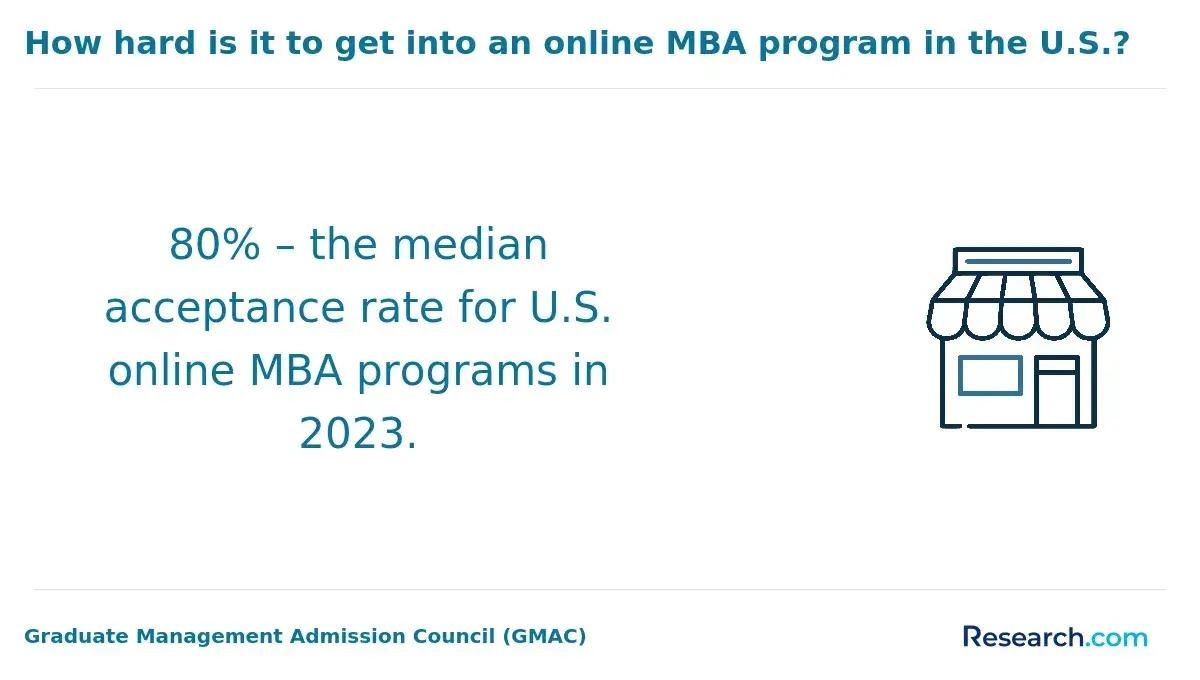
Typical admission requirements for online MBA marketing programs often include a bachelor's degree from an accredited institution and relevant work experience in marketing or business. Many programs ask for two to three years of professional experience to demonstrate readiness for graduate-level coursework and practical marketing applications. Applicants usually submit official transcripts, letters of recommendation, and an updated resume to support their academic and professional background.
Standardized test scores such as the GMAT or GRE are common, although an increasing number of programs waive these for candidates with significant professional experience or previous graduate education. Programs may also require a personal statement explaining career goals and the motivation for pursuing an online MBA marketing specialization.
International applicants typically need to provide proof of English proficiency through tests like TOEFL or IELTS. Interviews, either live or recorded, may also be part of the evaluation process to assess communication skills and commitment. Prospective students should pay close attention to each program's specific requirements, especially regarding quantitative skills or familiarity with marketing software tools, which are increasingly valued in many courses today.
For those exploring affordable options with flexible admission criteria, including schools offering online MBA marketing courses without a GMAT, consider exploring top online MBA programs no GMAT. It's wise to prepare all application materials early to improve chances of acceptance.
How long does an online MBA in marketing take to complete?
Online MBA marketing programs generally take between 18 and 36 months to complete, depending on whether students enroll full-time or part-time. Full-time students often finish within 18 to 24 months, while part-time learners balancing work or personal commitments might require 30 to 36 months. Accelerated formats are available but require a demanding schedule.
Program length depends largely on credit requirements, usually ranging from 36 to 54 credits. Many programs offer flexible pacing so students can adjust course loads each term according to their capacity. For instance, Texas State University's online MBA in Marketing focuses on brand management and strategy and is designed to be completed in about two years. Tuition for this program totals $25,368.
Working professionals should consider course intensity and time commitment carefully. Options include accelerated courses or credit for prior learning to shorten duration, while others might extend study time for better balance. Practical requirements like internships, capstone projects, or theses can also add time.
Consulting program guides or admissions counselors can provide personalized timeline details based on individual situations, helping students plan realistically and manage workloads effectively.
What are the costs of online MBA marketing degrees?
Online MBA marketing degrees vary greatly in total tuition, typically ranging from $15,000 to over $60,000. For instance, William Paterson University offers a 100% online MBA in Marketing priced at $17,910 total. This program emphasizes market research techniques, providing students with a competitive advantage while remaining more affordable than many broader MBA options.
Key costs to consider include:
- Tuition fees, usually charged per credit hour, ranging from $700 to $1,500 depending on the institution's prestige and location.
- Additional fees and materials, such as technology access and course resources, which can add $1,000 to $3,000.
- Financial aid options like scholarships, employer tuition assistance, and federal loans that can reduce out-of-pocket expenses.
Lower-cost programs often focus on core marketing skills such as digital advertising, brand management, and consumer behavior. In contrast, higher-priced degrees may offer live case studies, networking opportunities, and global immersion experiences.
Many working professionals weigh the value of paying premium prices for top-tier schools against specialized, cost-effective programs such as William Paterson's. Aligning the program's cost with career objectives and expected salary growth is essential for assessing return on investment.
Overall, online MBA marketing degrees present a wide price spectrum. Evaluating program components like specialization, faculty expertise, and experiential learning helps prospective students select options that meet both financial and professional goals.
Which accreditations matter for online MBA marketing programs?
Accreditation plays a critical role in assessing the quality of online MBA marketing programs. Regional accreditation from agencies like the New England Commission of Higher Education (NECHE) or the Higher Learning Commission (HLC) ensures institutions meet broad educational standards respected by employers and other universities. Students should prioritize programs with such regional approval to guarantee credit transferability and degree credibility.
Specialized accreditation is equally important. The Association to Advance Collegiate Schools of Business (AACSB) is highly regarded for its rigorous standards related to curriculum, faculty qualifications, and outcomes assessment in business education. AACSB accreditation indicates that a program aligns with industry best practices, which can boost employability in competitive marketing roles.
Other recognized accreditations include the Accreditation Council for Business Schools and Programs (ACBSP) and the International Accreditation Council for Business Education (IACBE). While reputable, AACSB generally holds greater prestige in the U.S. market. Students should evaluate each accreditation based on their career objectives and employer preferences.
For instance, Southern New Hampshire University's online MBA marketing program features a Strategic Marketing Management concentration within a 30-credit curriculum that includes a 3-course, 9-credit advanced management track. Its regional accreditation reinforces degree recognition, and the program focuses on practical skills aligned with industry demands.
Choosing a program lacking proper accreditation can hinder employer recognition, professional certification eligibility, and further academic pursuits. Always verify accreditation status via official databases before enrolling and consider long-term professional or licensing goals.
What careers can you pursue with an online MBA in marketing?
An online mba in marketing offers a variety of career opportunities across industries like digital marketing, brand management, market research, and sales strategy. Graduates may find roles as marketing managers, digital marketing strategists, product managers, or business development directors. These positions emphasize skills in data analysis, consumer behavior, and strategic promotion, core elements of most online MBA marketing programs.
Experienced professionals often progress to leadership roles such as chief marketing officer (CMO) or marketing director, where they oversee broad marketing operations and drive organizational growth. Specialized fields like global and international marketing become accessible, helping professionals manage multinational brands and cross-border expansion. For example, Indiana University--Bloomington charges $1,635 per credit for out-of-state students in its online MBA marketing program, with 100% of enrollees currently employed, highlighting strong career growth potential.
Possible career paths include market research analysis focused on customer data interpretation, digital marketing roles involving content, SEO, and social media management, product management coordinating development and sales teams, brand management ensuring brand identity and customer loyalty. Professionals targeting international markets gain expertise in cultural adaptation, compliance, and global distribution, with MBA programs offering practical case studies and tools for negotiation and worldwide analytics. This makes an online MBA in marketing ideal for mid-career individuals seeking to enhance their strategic influence or shift into specialized marketing domains.
What is the average salary after an online MBA in marketing?
The average salary for professionals completing an online MBA in marketing in 2026 typically ranges from $85,000 to $120,000 per year, influenced by experience, location, and job title. Entry-level roles like marketing managers or product managers start near $85,000, while senior positions such as marketing directors or brand managers often earn $120,000 or more. Specialized skills in digital marketing, analytics, or marketing strategy increase earning potential compared to general marketing roles.
Location and industry also play significant roles in salary differences. For example, marketing managers in tech hubs like San Francisco and New York often earn above the national average. Graduates from prestigious programs with strong curricula-emphasizing marketing ethics and sustainability, such as the MBA@UNC marketing concentration-can command premium salaries, as companies increasingly value leaders trained in ethical marketing practices. This program costs over $125,000 for 62 credits but prepares graduates for these in-demand roles.
Key considerations for students evaluating salary outcomes after an online MBA include:
- Return on investment relative to tuition and program length
- Opportunities to leverage expertise in marketing ethics and sustainability for niche leadership roles
- The value of hands-on projects and internships in boosting employability
Data from the U.S. Bureau of Labor Statistics and Payscale confirm that earning an online MBA in marketing enhances career advancement and salary ceilings, especially when combined with data-driven marketing skills and ethical frameworks.
What is the job outlook for MBA marketing graduates?
The job market for MBA marketing graduates is expected to grow strongly, fueled by expanding digital markets and shifting business needs. The U.S. Bureau of Labor Statistics forecasts a 10% increase in employment for advertising, promotions, and marketing managers from 2022 to 2032, outpacing the average growth rate across occupations. Key roles include brand management, digital marketing, market research, and product development.
Career flexibility is a significant benefit for MBA marketing professionals, especially those skilled in AI-powered marketing, customer experience management, and omnichannel strategies. Industries such as healthcare, finance, and consumer goods actively seek individuals who can leverage data-driven insights and multichannel engagement.
Online MBA marketing programs are increasingly popular, with many students opting for flexible, remote study options. Top schools like the University of South Florida (USF) and Florida Atlantic University (FAU) report 62-70% of their MBA marketing students enrolled online, reflecting the growing demand for accessible education that fits professional schedules.
Graduates should also explore careers in marketing analytics and content strategy, where demand is rapidly rising. Skills in consumer data interpretation and targeted content creation are crucial. Enhancing credentials through internships, networking, and certifications such as Google Analytics or HubSpot can improve both employability and salary potential.
Other Things You Should Know About MBA
Yes, many online MBA programs allow students to switch their specialization partway through the degree. However, this option depends on the school's policies and the timing within the program. Students should check with academic advisors before attempting to change to ensure they meet any new requirements and avoid delays in graduation.
In 2027, online MBA marketing courses emphasize digital marketing skills such as data analytics, social media strategy, and digital advertising. These programs focus on current trends in consumer behavior, SEO strategy, and the development of effective online campaigns to ensure graduates are well-prepared for the evolving digital marketplace.
Yes, reputable online MBA marketing programs provide various networking options such as virtual events, discussion forums, group projects, and alumni networks. While interaction differs from the traditional campus environment, many programs facilitate meaningful connections with peers, faculty, and industry professionals to help students build their professional networks.
Most online MBA marketing programs do not require prior marketing experience for admission, focusing instead on general business knowledge and leadership potential. Some programs may recommend or prefer candidates with some work experience but do not mandate it. This allows students from diverse professional backgrounds to strengthen their marketing expertise through the MBA curriculum.
References
- Why On-Campus MBA is Better than Online MBA? https://www.universalai.in/why-on-campus-mba-is-better-than-online-mba/
- All about work-life balance after an MBA in Marketing https://gbs.edu.mt/blog/all-about-work-life-balance-after-an-mba-in-marketing/
- Top Career Opportunities After Online MBA in Marketing https://www.tmuonline.ac.in/blog/online-mba-in-marketing-career-opportunities
- Why An Online MBA Degree Is The Key To Advancing Your Marketing Career https://onlinechitkarau.com/our-blogs/online-mba-degree-enhances-marketing-general-management-skills/
- Online MBA vs On-Campus MBA https://www.princetonreview.com/business-school-advice/online-mba-vs-on-campus-mba
- Online MBA Program in Marketing Management in India| DPUCOL https://www.dypatilonline.com/mba-marketing-management.aspx
- Online MBA Entry Requirements: Eligibility & Admission https://www.onlinecu.in/blog/cu/most-common-entry-requirements-for-online-mba-programs.php
- The Best Job Opportunities for Online MBA Marketing Graduates in 2025 https://kingsedu.ac/the-best-job-opportunities-for-online-mba-marketing-graduates-in-2025/
- Top and Best Career Opportunities After an Online MBA in Marketing https://hikeeducation.com/blog/career-opportunities-after-an-online-mba/