2027 What Your Online MBA Classmates May Be Like: Student Demographics Guide

Co-Founder and Chief Data Scientist
Choosing to pursue an online MBA can raise questions about who classmates might be, especially for professionals switching careers or fields. Understanding the typical demographics of online MBA cohorts can alleviate concerns about fit, networking potential, and learning dynamics. This insight helps applicants anticipate classroom diversity in age, experience, industry background, and geographic location. With clearer expectations, prospective students can make more confident decisions about program selection and engagement strategies. This article explores key demographic trends among online MBA students and provides a practical guide to how this information supports career planning and educational success.
Key Things You Should Know
- In 2026, approximately 44% of online MBA students in the U.S. are women, reflecting significant progress toward gender diversity in business education.
- The average age of online MBA students is 31, with many balancing studies alongside full-time employment and family responsibilities.
- Racial and ethnic diversity is increasing, with about 38% of online MBA cohorts identifying as non-White, highlighting growing inclusion efforts in programs nationwide.
Who typically enrolls in online MBA programs?
Online MBA programs attract a diverse array of students from numerous professional backgrounds. Enrollment in MBA programs worldwide now exceeds 250,000, with online students comprising 58% of this total, driven largely by the appeal of flexibility and ease of access. Many students fall within the 25 to 40 age bracket and maintain full-time employment while upgrading their qualifications.
Demographics of online MBA students in North America reveal a mix of working professionals often possessing three to seven years of industry experience. These individuals are typically pursuing career advancement or shifts into leadership roles. Common profiles include:
- Mid-level professionals in sectors such as finance, technology, healthcare, and marketing focused on strategic management development.
- Entrepreneurs seeking enhanced financial and operational skills to scale their ventures.
- Career changers looking to transition into business-centric roles from unrelated fields.
Online MBA enrollees often juggle family commitments or geographic restrictions, making asynchronous, part-time formats highly attractive. The student base is also increasingly international, drawn by U.S.-based accreditation and global business relevance. Women represent about 40% of online MBA cohorts, marking a notable shift in gender diversity.
Prospective students can benefit by identifying peers with similar goals and challenges, thereby selecting programs that encourage meaningful networking and support. For those exploring affordable options, reviewing the cheapest MBA online programs can provide valuable insight into accessible choices.
Profiles of typical online MBA enrollees are essential to understand these evolving trends and make informed decisions about program fit.
What are common demographics of online MBA students?
Online MBA students in the United States are a diverse group reflecting evolving trends in higher education. Women now account for 44% of MBA applicants, marking the highest percentage ever reported and showing a notable increase from 2011 to 2020, which highlights growing gender balance in a traditionally male-dominated field. Many students fall within the 25 to 40 age range, representing mid-career professionals with 3 to 7 years of experience who seek programs that accommodate work and family commitments. Such students often bring valuable real-world insights from industries like healthcare, technology, and finance, enriching peer discussions.
Common demographics of online MBA students in the United States also show gradual progress in ethnic and racial representation. Schools are actively implementing diversity initiatives to attract Hispanic, African American, Native American, and international students, enhancing cultural perspectives within programs. The typical age and professional background of online MBA learners contribute to a pragmatic and goal-oriented cohort focused on applying theory to business challenges.
Many students prefer online programs for their flexibility, allowing them to continue demanding jobs while studying. Peer collaboration is usually structured to maximize practical learning outcomes. For those evaluating costs, there are options that include the cheapest AACSB accredited online MBA no GMAT, which can make advanced education more accessible without sacrificing quality.
How old are most online MBA classmates?
The typical age of online MBA classmates centers around 28 years old, based on data from National University. This age range indicates that most students are young professionals in their late 20s, though about 12.5% are aged 30 or older. This significant minority often balances education alongside mid-career responsibilities and family commitments.
Students over 30 bring valuable real-world business experience and leadership perspectives, while younger classmates, often fresh from undergraduate programs, contribute recent academic knowledge and industry viewpoints. This age diversity enhances discussions, networking opportunities, and classroom dynamics but can require distinct time management skills to manage coursework and group projects effectively.
When evaluating the online MBA student age range, consider how the cohort's demographics match your career stage and goals. For instance:
- Younger students may thrive in programs focused on career exploration and entry-level networking.
- Older students might benefit from leadership development and specialized executive tracks.
Assessing these factors will prepare you for the collaboration styles and workload typical of your peer group. Many schools provide demographic data to help prospective students set realistic expectations. Those interested in affordable options should explore cheap executive MBA programs that often cater to diverse age groups and career levels.
What professional backgrounds do online MBA students have?
Online MBA students come from a wide array of professional backgrounds, reflecting the degree's broad appeal across industries and career stages. Common career paths of online MBA students include management, finance, marketing, consulting, and technology. Mid-level retail managers often pursue an online MBA to build leadership skills for corporate growth, while IT professionals combine their technical expertise with business knowledge to move into product management or strategic roles.
Healthcare professionals such as nurses, pharmacists, and administrators also form a significant segment of these programs. They often seek MBAs to transition into healthcare management or policy roles, demonstrating how the degree supports career pivots within specialized sectors.
Entrepreneurs and small business owners frequently enroll to gain foundational skills in finance, operations, and scaling businesses. Their practical experience paired with an MBA enhances strategic decision-making and broadens their professional networks.
The demographic makeup is shifting as well, with Hispanic enrollment doubling from 5% to 10% over a decade, the largest growth among underrepresented groups according to National University. This change reflects greater accessibility and outreach efforts aimed at diversifying business education.
Prospective students should evaluate their backgrounds carefully and choose programs offering relevant curricula addressing industry-specific challenges like healthcare policy or digital marketing. Finding peers with similar or complementary experiences can enrich collaboration and networking during the degree journey.
For those seeking affordability, exploring the most affordable online MBA programs no GMAT can be an important step in planning a financially viable education path.
What industries do online MBA students represent?
Online MBA students come from diverse industries, including finance, technology, healthcare, consulting, manufacturing, and retail. Many hold middle to upper management positions and seek leadership skills to advance their careers. For instance, healthcare professionals often aim to transition into hospital administration or healthcare consulting, while those in technology pursue roles in product management or IT leadership.
International students form a significant segment, bringing expertise from engineering, finance, and business operations. The University of Illinois' low-priced online MBA program recently enrolled nearly 1,000 international students, reflecting strong global demand and a rich multicultural learning environment.
Emerging sectors such as renewable energy, e-commerce, and data analytics also attract students, spanning from small startups to multinational corporations. This variety highlights the MBA's broad applicability across industries and company sizes.
Prospective students should consider how their background aligns with MBA curricula and career services by asking questions like:
- Is a chosen specialization relevant to my industry?
- What networking opportunities exist in my sector?
- How does the MBA improve return on investment (ROI)?
Addressing these points early helps tailor applications, networking, and career planning to individual goals and industry demands.
Where do online MBA students live geographically?
Students enrolled in online MBA programs come from diverse geographic backgrounds, highlighting the flexibility that remote learning offers. Many live in major U.S. urban centers like New York, Chicago, and Los Angeles, where a variety of industries can complement their career goals during their studies. At the same time, a large number reside in suburban and rural areas, utilizing online options to pursue quality education without relocating.
The student body often includes international participants, contributing valuable global viewpoints. Cohorts tend to be made up of working professionals who balance educational commitments with their careers across different time zones.
Millennials make up a majority of part-time MBA students, representing nearly 90% of candidates in 2018 (National University). This trend reflects many mid-career professionals seeking advancement opportunities without interrupting their current employment.
Decisions about program choice often depend on practical factors such as time zone compatibility with live sessions, availability of networking opportunities locally, and the relevance of regional industries to post-graduate goals. For example:
- Finance professionals often cluster around major financial centers even when studying online.
- Healthcare workers typically pursue programs aligned with their local healthcare markets.
- Technology sector students may select programs linked to innovation hubs or tech corridors.
Prospective online MBA students should carefully research program delivery methods and resources tailored to their location and professional aspirations to optimize their learning outcomes.
What diversity exists among online MBA classmates?
Diversity among online MBA classmates has expanded significantly, encompassing a wide range of ages, professional backgrounds, locations, and cultural identities. The appeal of online MBA programs has nearly doubled, rising from 22% in 2018 to 44% recently (Validated Insights), attracting students valuing flexibility along with quality education.
Typical online MBA cohorts include:
- Working professionals aged 25 to 45 balancing careers and families.
- Adult learners returning after careers in healthcare, finance, technology, and other sectors.
- International students bringing global perspectives and cross-cultural collaboration.
- Individuals from underrepresented racial and ethnic backgrounds, supported by inclusive admissions policies.
- Students with diverse academic histories, such as humanities, engineering, and STEM fields, enhancing group discussions and projects.
Challenges reported by students involve managing different time zones in global groups and communicating across cultures. Many programs address this through asynchronous classes and virtual diversity training. Prospective students should review class profiles and alumni data to ensure the program environment fosters diverse peer learning, boosting networking and problem-solving skills vital for leadership in global business.
Online MBA classmates represent a heterogeneous group united by ambition and need for flexibility, but diverse in culture, age, and expertise-preparing graduates to lead effectively in varied workplace settings.
How experienced are typical online MBA students?
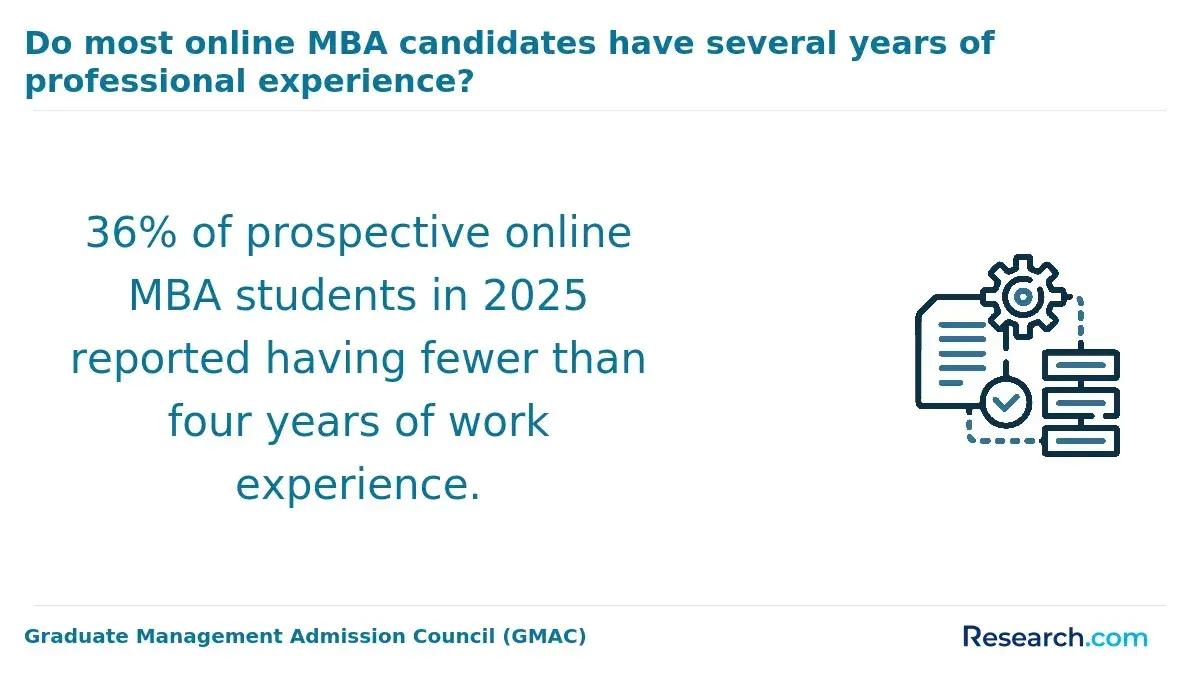
Online MBA students typically bring significant professional experience, often ranging from 5 to 10 years of full-time work before enrollment. This balance between career maturity and readiness for leadership education allows them to actively contribute to discussions and group projects. Selective programs, such as Indiana University's Kelley School of Business, which admitted just 23% of applicants in 2024-2025 (Poets & Quants), attract candidates with notable career achievements and leadership roles, including mid-level managers and industry specialists seeking career pivots or advanced strategic skills.
Experience levels vary by program focus. Executive-style online MBA programs often require over 10 years of experience, targeting senior managers and executives. Conversely, programs aimed at early-career professionals admit students with 2 to 4 years of work history, typically recent graduates eager to accelerate their career growth.
Candidates should consider these factors when evaluating programs:
- Average years of work experience among admitted students
- Professional roles common in online cohorts
- Program selectivity influencing class diversity
Applicants with less experience are advised to highlight leadership potential, extracurricular achievements, and quantitative skills, while those with extensive backgrounds should emphasize strategic impact and readiness for advanced challenges. This insight from research.com helps tailor preparations for MBA application success and professional development.
What motivates adult learners in online MBAs?
Adult learners pursuing an online MBA often do so to enhance their careers, aiming for promotions, salary increases, or leadership roles within their organizations. Many also seek to transition industries, using the degree to complement technical skills, especially professionals in STEM fields.
Flexibility plays a crucial role, as students frequently balance full-time work, family, and other commitments. Online MBA programs provide this adaptability, allowing learners to progress without compromising personal or professional responsibilities. For example, Auburn University's online MBA program boasts a 100% one-year retention rate, the highest among ranked programs (Poets & Quants), reflecting strong alignment with student needs.
Networking opportunities drive many to select programs with diverse peer groups, fostering collaboration and expanding professional connections that aid career growth.
Financial factors also influence decisions; scholarships, employer tuition assistance, and program cost are carefully evaluated to ensure a good return on investment relative to expected salary gains.
Practical, applicable knowledge is a priority. Adult learners favor curricula that focus on real-world problem-solving rather than theory. Common questions include:
- Will this MBA help me advance in my current role?
- Can I balance studies with work and family?
- Does the program offer strong networking connections?
- What financial aids are available?
- Will I gain skills directly usable in my job?
How do online MBA demographics compare to campus programs?
Online MBA programs attract a more diverse student population than traditional campus options. This flexibility appeals to working professionals balancing full-time jobs, family, or geographic limits. Campus MBA students tend to be younger, often enrolling shortly after undergraduate degrees, while online cohorts usually include mid-career professionals aiming to advance or change careers.
Key demographic distinctions include:
- Average age: 28-36 years online versus 24-28 years on campus
- Enrollment status: higher part-time percentage online versus predominantly full-time campus
- Gender balance: online formats often show more equal representation due to asynchronous schedules accommodating childcare and other responsibilities
Ethnic and regional diversity also tends to be greater in online MBA programs, enabling participation across states and countries without relocation. This increases cultural and professional variety within cohorts. Employers increasingly recognize online MBAs as credible, supporting a projected 3.2% compound annual growth rate in MBA enrollment through 2030, reaching nearly 282,000 students according to Validated Insights. This growth contrasts the previous downward trend from 2018-2024 driven by wider acceptance of online study.
Prospective students should weigh these demographic factors when selecting a program to align educational goals with the peer network best suited for their career development.
Other Things You Should Know About MBA
In 2027, online MBA programs typically employ a mix of synchronous and asynchronous learning formats. Synchronous formats include live virtual classes, enabling real-time interaction, while asynchronous formats offer prerecorded lectures and flexible discussions. This blend accommodates diverse student schedules and promotes interactive learning environments.
Yes, reputable online MBA programs accredited by recognized agencies offer degrees that hold the same academic value as traditional on-campus MBAs. Employers increasingly accept online MBAs, especially when earned from established institutions with strong program rankings and accreditation.
Many online MBA programs provide access to career counseling, job placement assistance, and professional networking events similar to campus programs. Virtual career fairs, alumni networks, and mentorship opportunities are commonly offered to support online students' professional growth.
References
- How and Why: Motivating Adult Learners https://elearningindustry.com/motivating-adult-learners
- Online MBA Class Profile | Tulane https://online-business.tulane.edu/online-mba/admissions/class-profile/
- What Are Career Prospects Post Online MBA | ChitkaraU Online https://onlinechitkarau.com/our-blogs/career-prospects-post-online-mba-what-to-expect/
- Online MBA vs Campus MBA Program - Which one to choose https://rcu.education/online-mba-vs-campus-mba-programs/
- Australia's 10 Biggest Online MBA Programs - MBA News Australia https://www.mbanews.com.au/australias-10-biggest-online-mba-programs/
- Online MBA Programs in Your State | OnlineMBA.com https://www.onlinemba.com/rankings/states/
- Have Online MBA Programs Jumped The Shark? https://poetsandquants.com/2025/01/18/online-mba/
- Top High Paying industries hiring online MBA graduates in 2025 https://amityonline.com/blog/top-industries-hiring-online-mba-graduates
- Andragogy: Why Adult Education and Online Learning Make a Perfect Fit https://www.lambdasolutions.net/en/blog/andragogy-online-why-adult-education-and-elearning-make-a-perfect-fit
- Are Online MBA Degree Programs Respected by Employers? https://blog.targettestprep.com/are-online-mba-degrees-respectable/