2027 Online MBA Test Waivers: GMAT, GRE and Other Admission Options

Co-Founder and Chief Data Scientist
Many prospective students face challenges when preparing for graduate business school admissions due to the time and expense of standardized tests like the GMAT and GRE. Working professionals with unrelated undergraduate degrees often struggle to balance exam preparation with full-time commitments. Additionally, concerns about test stress and fairness prompt applicants to explore alternatives.
This article examines current online MBA test waiver options and other admission pathways, helping candidates identify opportunities that reduce reliance on traditional exams. It aims to clarify eligibility criteria and guide readers toward flexible, accredited programs that facilitate career pivots without the barrier of mandatory standardized testing.
Key Things You Should Know
- In 2026, over 60% of U.S. online MBA programs offer GMAT or GRE waivers based on work experience, academic performance, or professional certifications.
- Test waivers increasingly favor candidates with strong quantitative or leadership experience, aligning with shifting admission priorities toward holistic evaluation.
- Some top-ranked programs waive standardized tests for applicants with advanced degrees or from STEM backgrounds, reflecting a growing trend toward flexible admissions standards.
What Are Online MBA Test Waivers?
Online MBA admission test waivers enable applicants to skip standardized exams such as the GMAT or GRE based on criteria set by individual programs. Schools granting these waivers often consider professional experience, academic records, prior graduate degrees, or exceptional circumstances.
For instance, candidates with strong quantitative undergraduate degrees or five years of extensive work experience may qualify for a waiver.
In recent years, many top U.S. full-time MBA programs have adopted flexible admissions policies, with 16 of the top 25 offering test waivers. Online MBA programs tend to extend these waivers to accommodate working professionals balancing career and study, recognizing that test scores may not fully reflect skills needed for success in virtual learning environments.
Eligibility criteria vary widely. Some schools require documented leadership, professional certifications, or a competitive undergraduate GPA, while others may ask for a personal statement or interviews as alternatives to test scores.
Applicants should carefully review each program's requirements to determine their MBA test waiver eligibility criteria.
When applying with a waiver, candidates must emphasize quantitative and analytical competencies through other credentials and highlight professional achievements. If the waiver criteria are not met, submitting official scores remains an option.
For those looking for affordable options, exploring the cheapest online MBA no GMAT programs can be a strategic move toward a flexible and accessible graduate education.
Which Tests Can Be Waived for Online MBA Programs?
Online MBA programs commonly offer waivers for standardized tests such as the GMAT and GRE, but eligibility criteria differ widely between schools and programs. Waivers are often granted to candidates demonstrating strong undergraduate GPAs, advanced degrees, or substantial professional experience.
For instance, many schools waive testing requirements for applicants with five to ten years of managerial experience, recognizing real-world skills over exam scores. This approach reflects alternative admission requirements for online MBA test waivers that emphasize career achievements, particularly for career-switchers, military veterans, or entrepreneurs with measurable business success.
However, these waivers are not standard across all programs. According to Accepted.com, only two of the US News Top 10 full-time MBA programs-MIT Sloan and Michigan Ross-offered standardized test waivers in 2025.
Students targeting highly competitive institutions should plan to take standardized tests unless they meet very specific exemption criteria. Applicants must review individual policies carefully and submit strong supporting materials like professional recommendations and detailed resumes.
Test waivers primarily apply to the GMAT and GRE and are based on academic background, professional credentials, or advanced degrees. Prospective students seeking affordable but quality options can consider online MBA programs accredited by AACSB, which often include clear guidelines for testing exemptions.
Do Top Online MBA Programs Require GMAT or GRE?
Top online MBA programs increasingly do not require the GMAT or GRE for admission, reflecting a trend toward graduate admissions test waivers for online business degrees. According to the 2025 Poets&Quants ranking, none of the 57 ranked programs reported GMAT or GRE scores from more than half of admitted students. Many schools offer waivers based on professional experience, undergraduate GPA, or advanced degrees.
Applicants with five or more years of managerial or professional experience often qualify to bypass standardized tests. Some programs waive the GMAT or GRE if candidates hold relevant graduate degrees such as law, engineering, or business. High undergraduate academic performance can also make applicants eligible for test waivers, though GPA requirements vary by institution.
Certain top-tier online MBA programs still recommend or require test scores for candidates with limited work experience or non-traditional academic backgrounds. Submitting GMAT or GRE scores in these cases can strengthen applications and improve chances for scholarships.
Prospective students should check each program's admissions page carefully for detailed waiver policies. If waivers are unavailable, strong test scores remain an important part of the application. The move toward admissions flexibility helps diversify cohorts by enabling experienced professionals and high-achieving students without standardized test results to gain admission.
For those considering cost-effective options, exploring executive online MBA programs may provide additional alternatives.
What Are Common Eligibility Criteria for Test Waivers?
Common eligibility criteria for MBA test waivers in the United States focus on professional achievements, academic background, and career experience. Applicants can often bypass the GMAT or GRE by demonstrating strong quantitative and analytical skills through other credentials.
Key factors include holding recognized certifications like CFA, CPA, or FRM, which top programs such as NYU Stern and UT Austin McCombs explicitly favor for GMAT waivers.
- Possessing a graduate degree from accredited institutions, particularly in STEM, business, or economics fields.
- Acquiring substantial work experience, typically between 5 to 7 years, in leadership or quantitative roles that show business acumen and analytical capabilities.
- Maintaining a high undergraduate GPA, often 3.5 or above on a 4.0 scale.
- Providing evidence of strong communication skills through essays, interviews, or recommendation letters.
Criteria for MBA admission without GMAT or GRE vary by program, and some schools consider military or entrepreneurial experience relevant for test waivers. Applicants should carefully review each program's policy and submit thorough documentation. Waivers are granted selectively and require early planning to meet deadlines.
For those seeking flexible study options, exploring an online MBA no GMAT required can be a practical alternative to traditional paths.
How Do Online MBA Admissions Differ Without Test Scores?
Online MBA admissions without test scores focus on a comprehensive review that values professional experience, academic records, leadership potential, and personal statements over standardized tests. Applicants with five or more years of relevant experience often stand out, showcasing problem-solving skills, team leadership, and increasing responsibilities. This approach helps schools evaluate readiness beyond GMAT or GRE results.
Letters of recommendation from supervisors or industry experts are crucial, emphasizing specific achievements and skills that can offset the absence of test scores. Essays and video interviews provide insight into candidates' motivations and communication abilities, offering a more holistic view than test metrics alone.
Program expectations vary widely. Some top-tier online MBA programs prioritize strong quantitative coursework, such as statistics or finance, while others accept diverse backgrounds but require alternative assessments, like case studies or problem-solving tasks.
Test waivers have notably increased diversity and application volumes, with more women and underrepresented minorities applying. This trend encourages admissions committees to balance multifaceted evaluation tools instead of relying solely on numerical scores.
Applicants should highlight quantitative expertise and leadership clearly in resumes and essays, secure strong recommendations, and prepare for any program-specific alternative assessments to bolster applications without test scores.
What Alternative Admission Options Exist for Online MBAs?
Many online MBA programs now offer multiple admission pathways beyond the GMAT and GRE, accommodating diverse professional and academic backgrounds. Candidates with five or more years of managerial or relevant professional experience often qualify for waivers, showcasing leadership and practical business skills.
Additionally, completion of graduate coursework or advanced degrees in business-related disciplines can also substitute for standardized test requirements.
Some programs use competency-based evaluations where applicants provide portfolios demonstrating their skills, business plans, or notable achievements. Interviews and letters of recommendation further support admissions decisions when test scores are waived or not submitted.
Waiver approval rates differ widely among institutions. For example, Carnegie Mellon Tepper grants GMAT waivers selectively on a case-by-case basis, underscoring the value of submitting strong supporting documentation early. Applicants should prepare evidence highlighting their qualifications and readiness to thrive in an MBA program.
- Demonstrated professional management experience (typically 5+ years)
- Completion of graduate coursework or degrees in business or related disciplines
- Portfolio reviews or competency assessments
- Strong academic records substituting test scores
- Positive interviews and robust letters of recommendation
These alternatives specifically address the needs of working professionals and career changers who may face challenges accessing standardized testing centers or prefer to emphasize real-world experience. Early review of program policies and thorough application preparation can increase chances of admission without submitting GMAT or GRE scores.
Which Accredited Schools Offer Test-Waiver Online MBAs?
Many accredited online MBA programs have adopted flexible admissions policies, allowing qualified applicants to waive standardized testing requirements. For instance, 14 of the top 25 MBA programs accept alternatives to the GMAT or GRE, such as the Executive Assessment (EA), LSAT, or MCAT, or offer outright test waivers, aiding working professionals and experienced candidates in navigating admissions more smoothly (Accepted.com).
Schools like Emory University's Goizueta Business School and the University of Virginia's Darden School of Business provide various options, including accepting alternative test scores or waiving tests based on strong work experience, academic achievements, or advanced degrees. Candidates with demonstrated professional success or prior graduate education often apply without submitting GMAT or GRE scores.
Other programs typically require one or more of the following to qualify for waivers:
• Five or more years of managerial experience
• Completion of graduate-level coursework
• High undergraduate GPA
• Professional certifications such as CPA or CFA
Applicants should carefully review each program's specific waiver criteria, which vary significantly among schools. Admissions committees often assess leadership roles, certifications, and a documented career progression when granting waivers.
.
How Long Are Online MBA Programs with Test Waivers?
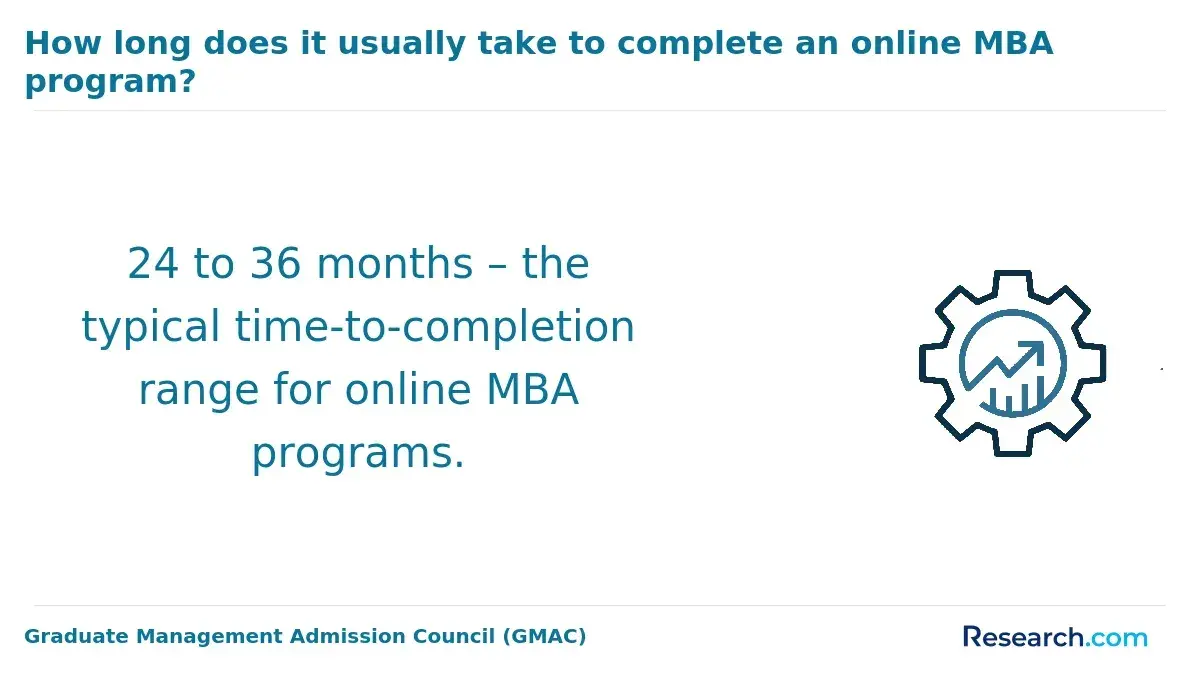
Online MBA programs offering test waivers generally last between 18 and 36 months, depending on the institution's design and whether students enroll full-time or part-time. These programs maintain the same credit and curriculum requirements as those requiring the GMAT or GRE, so waiver eligibility does not always shorten the program length.
Certain universities, however, create accelerated tracks for qualified candidates that enable completion in 12 to 15 months when pursued full-time.
Several factors influence the overall duration, including flexible scheduling options and cohort formats. Working professionals who receive test waivers often choose part-time study, pushing program lengths toward the longer end of the spectrum. Conversely, executive MBA programs or intensive cohorts with waivers condense coursework without lowering academic standards.
Admissions data from Washington Foster (Clear Admit) reveal that waivers are typically granted to candidates demonstrating strong quantitative undergraduate GPAs and analytics-focused work experience. This preparation assures schools that academic integrity remains intact despite bypassing standardized tests.
Prospective students should review individual program policies because prerequisites or prior professional certifications can affect completion time. Balancing flexible program lengths with career goals is essential for making a well-informed educational investment.
What Career Outcomes Follow Test-Waiver Online MBAs?
Test-waiver online MBA graduates often achieve career outcomes comparable to peers submitting GMAT or GRE scores, especially when combined with advanced degrees like a JD or PhD and strong quantitative work achievements. According to A Ringo, their post-MBA salaries align with those of traditional test-submitters, emphasizing the growing employer preference for demonstrated professional impact over standardized test scores. Employers increasingly prioritize proven business skills and leadership exhibited through work experience.
Career advancements for these graduates commonly include:
- Promotions within existing organizations due to improved management capabilities.
- Moves into roles focused on analytical and strategic decision-making.
- Leadership positions in sectors valuing expertise and certifications more than entry exam results.
Challenges mainly involve overcoming credibility concerns during job searches. Graduates can address this by highlighting measurable contributions, such as revenue growth or cost savings made during MBA studies or prior roles. Additionally, networking and professional endorsements enhance employability.
Working professionals in fields like consulting, finance, healthcare, and technology benefit from test-waiver MBA programs where performance metrics outweigh test scores. For instance, a PhD in engineering, completing a test-waived MBA, and leading product innovations may secure executive roles with compensation and responsibilities on par with GMAT-submitters.
Applicants considering test waivers should strategically present strong quantitative impact and leadership to maximize post-MBA career prospects. Transparent communication of achievements and career goals remains key to leveraging the MBA credential effectively.
What Salaries Can Graduates of Test-Waiver MBAs Expect?
Graduates of test-waiver MBA programs generally see starting salaries comparable to those from traditional MBA tracks, though outcomes depend on factors like school prestige, industry, and prior experience. Median starting salaries often fall between $90,000 and $130,000 annually in U.S. markets, with high-demand fields such as consulting and technology tending toward the higher range, especially when paired with strong professional backgrounds.
Many employers continue to value standardized test scores such as the GMAT or GRE during initial recruitment phases. Elite programs like Dartmouth Tuck are reinstating testing requirements for the Class of 2029, highlighting this preference, suggesting a perceived link between standardized exams and candidate quality (Clear Admit).
However, test waivers usually target experienced candidates or those with advanced degrees, allowing negotiation of salaries based on skills rather than exam results.
Key points for prospective students include:
- Graduates from test-waived MBA programs in top 25 schools report starting salaries within 5-10% of their tested peers.
- Test-waiver candidates must emphasize leadership, certifications, and project impact when seeking jobs.
- Mid-career professionals using test waivers often achieve 20-40% salary increases post-MBA, primarily from career advancement.
Transparency about the impact of test waivers varies, so requesting detailed employment reports from schools is important. Applicants should understand how test waivers influence employer perception and salary outcomes to set realistic expectations aligned with their career goals.
Other Things You Should Know About MBA
In 2027, many online MBA programs consider significant work experience as a viable alternative to standardized test scores. Admissions committees often assess candidates' professional achievements and skills to gauge their potential to succeed in the program and contribute to class learning experiences.
Yes, even when test waivers are granted, most MBA programs require additional components such as interviews or written essays. These elements provide schools with deeper insights into applicants' goals, communication skills, and fit with the program. They serve as alternative ways to evaluate candidates beyond standardized testing.
Test waivers typically do not disqualify applicants from scholarship consideration, but policies vary by institution. Some programs may still require minimum test scores to qualify for merit-based aid, while others award scholarships based on overall application strength, including work experience and recommendations. Prospective students should check individual school guidelines for precise scholarship rules.
Admission without test scores can be more competitive because schools rely heavily on other qualifications such as academic records, professional experience, and personal statements. Applicants must present a strong overall profile to compensate for the absence of standardized test results. However, test waivers are intended to broaden access, so qualified candidates with solid credentials have good chances in many programs.
References
- GRE, GMAT & EA Test Waivers for MBA Applications https://www.personalmbacoach.com/what-you-should-know-about-gmat-gre-waivers/
- MBA Online Admission 2026: Test Waivers & Quant Prep Tips https://amityonline.com/blog/mba-online-admission-test-waiver
- Online MBA Without GMAT Requirements | TTP GMAT Blog https://blog.targettestprep.com/online-mba-without-gmat/
- GMAT Waiver Online MBA Programs - Accredited Business Schools https://www.bschools.org/online/gmat-waiver-mba-programs
- Applying to MBAs with a GMAT (or GRE) Waiver https://menlocoaching.com/gmat/gmat-gre-test-waivers/
- Waiver-Eligibility https://cmsrjournal.com/index.php/Journal/waiver-eligibility
- MBA Programs that Don’t Require GMAT, GRE or EA Test Scores https://www.clearadmit.com/mba-programs-that-dont-require-gmat-gre-or-ea-test-scores/
- MBA Programs Offering GMAT/GRE Test Waivers https://www.mbamission.com/blog/mba-programs-offering-gmat-gre-test-waivers/