
2027 Most Popular Psychology Degree Programs Ranking in Oregon

Co-Founder and Chief Data Scientist
Choosing the right psychology degree program can feel overwhelming, especially with so many options available in Oregon. This article presents the 2027 Most Popular Psychology Degree Programs Ranking in Oregon, created by the Research.com team of data scientists to help you make an informed decision.
By exploring this ranking, you'll gain valuable insights into programs that align with your goals and interests. Earning a psychology degree opens doors to meaningful careers that make a difference in people's lives. Let this guide inspire and support you on your educational journey.
Key benefits of getting psychology degree in Oregon
- Salary benefits: Psychology degree holders in Oregon can pursue roles like Clinical Research Associate or Human Resources Specialist, earning mean annual wages of $62,370 and $76,060 respectively, reflecting promising earning potential. These careers offer financial stability while making meaningful impacts.
- Career paths: Graduates from Oregon State University often find diverse opportunities, including roles in marketing research or child care, showing how versatile a psychology degree can be in various industries. This flexibility encourages exciting and rewarding career journeys.
- Online degree advantages: Earning a psychology degree online from universities like the University of Oregon allows students to balance studies with personal commitments, saving time and costs. Many online graduates appreciate the convenience, helping them achieve their goals with confidence.
- Key benefits of getting psychology degree in Oregon
- What can I expect from psychology degree in Oregon?
- Where can I work with psychology degree in Oregon?
- How much can I make with psychology degree in Oregon?
- 2027 Most Popular Psychology Degree Programs Ranking in Oregon
- Key Findings
- How long does it take to complete psychology degree in Oregon?
- Alternative Routes to a Therapy Career
- What's the difference between online and on-campus psychology degree?
- Licensure and Certification Requirements in Oregon
- What is the average cost of psychology degree in Oregon?
- Affordability and Financial Considerations for Psychology Programs in Oregon
- What financial aid is available to psychology degree students in Oregon?
- Accreditation and Licensure Requirements for Psychology Programs in Oregon
- What are the prerequisites for enrolling in psychology degree program in Oregon?
- What courses are typically in psychology degree programs in Oregon?
- What types of specializations are available in psychology degree programs in Oregon?
- How do you choose the best psychology degree in Oregon?
- What career paths are available for psychology degree students in Oregon?
- What is the job market for psychology degree in Oregon?
- Related Psychology Rankings for Nearby States
- Top Trending Psychology Rankings
- See What Experts Have To Say About Studying Psychology
What can I expect from psychology degree in Oregon?
The average cost of pursuing a psychology degree in Oregon typically falls between $10,000 and $15,000 per year for in-state undergraduate students at public universities such as Oregon State University and the University of Oregon. Graduates often recall balancing this tuition with scholarships or assistantships offered by their schools, which helped make their education more affordable.
Many students sharing their experience highlight the value they found in these programs' blend of classroom learning and hands-on training, especially through internships or supervised practicum. This practical focus not only enriched their understanding but also made the investment feel worthwhile.
Masters and doctoral programs, required for clinical or counseling licensure, generally incur higher costs but often come with increased access to financial aid. Graduates emphasize that factoring tuition alongside living expenses and resource availability can aid in realistic financial planning.
Overall, carefully exploring each university's financial support options and considering long-term career benefits can empower you to manage costs effectively while earning a respected psychology degree in Oregon.
Where can I work with psychology degree in Oregon?
Graduates with a psychology degree in Oregon find job opportunities in healthcare settings like hospitals and clinics, where roles such as mental health counselors or behavioral specialists are common. For example, those graduating from Portland State University often secure positions in local rehab centers, gaining hands-on experience that shapes their careers. Clinical psychologist roles require advanced degrees and state licensure, so planning for doctorate programs and supervised hours early can open those doors.
Many also work in education, becoming school counselors or support specialists. At the University of Oregon, graduates frequently enter school districts addressing student mental health, reflecting the state's growing demand for professionals in these roles. This path offers rewarding daily interactions, helping young people overcome emotional challenges.
Beyond this, social service agencies like Oregon Department of Human Services employ psychology grads in case management and outreach programs. Graduates from Oregon State University share stories of impactful work supporting vulnerable populations, which brings a sense of purpose and community connection.
Corporate settings also welcome psychology knowledge in human resources and market research, especially in Portland's business hubs. Entry-level roles are accessible without advanced degrees, though certifications can boost advancement. Overall, Oregon's diverse employment landscape offers practical, fulfilling career paths for psychology graduates.
How much can I make with psychology degree in Oregon?
Graduates holding a psychology degree from popular Oregon institutions like Portland State University often find entry-level positions such as Clinical Research Associates or Survey Researchers, with mean annual wages around $62,370. This provides a practical starting salary while gaining valuable experience. Those who focus on human behavior in organizational settings may pursue roles as Human Resources Specialists, earning approximately $76,060 annually, often found in Eugene or Salem's business sectors.
Marketing Research Analyst roles, suitable for psychology graduates interested in consumer behavior, offer a higher mean salary near $83,190 in Oregon's growing markets. These realistic salary figures highlight how a psychology degree opens various career paths with competitive wages.
Graduates who leveraged internships through Oregon State University report positive outcomes entering these mid-level roles, emphasizing the advantage of combining education with hands-on experience. Starting with these practical figures helps students plan financial goals clearly, knowing which Oregon cities have better pay scales tied to demand and cost of living.
2027 Most Popular Psychology Degree Programs Ranking in Oregon
How do we rank schools?
Investing in your education is a significant decision that can shape your future, and the Research.com team understands the importance of making informed choices. To assist prospective students, we have meticulously crafted the "2027 Most Popular Psychology Degree Programs Ranking in Oregon." Our commitment to quality, credibility, and accuracy is reflected in the extensive research and analysis conducted to compile this ranking.
We utilized the following reputable data sources to ensure a comprehensive evaluation of psychology programs:
By exploring this ranking, readers will gain valuable insights into the most popular psychology degree programs in Oregon, helping them make informed decisions about their educational paths. For more details on our methodology, please visit our Research.com methodology page.


Key Findings
- A bachelor's degree in psychology at a public university in Oregon costs between $10,000 and $15,000 per year for in-state students, while private schools range from $30,000 to $45,000 annually.
- Master's programs in psychology typically cost between $12,000 and $25,000 per year, with doctoral program costs often falling in a similar or higher range.
- Entry-level psychology graduates with a bachelor's degree earn median salaries around $45,000 annually in Oregon.
- Master's level psychologists have median salaries ranging from $60,000 to $75,000, and doctoral degree holders often earn $80,000 or more each year.
- Licensing for clinical psychologists in Oregon requires completing an accredited doctoral program, supervised experience, and passing national exams; counselors need master's level training and state-specific licenses.
How long does it take to complete psychology degree in Oregon?
If you're planning to earn a psychology degree in Oregon, expect your timeline to vary based on the level of study. For a bachelor's degree, most students at universities like Portland State University or the University of Oregon complete their studies in about four years, balancing full-time classes and campus life. Graduates often share how managing around 120 credit hours felt challenging yet rewarding, leaving them well-prepared for entry-level roles or further study.
Master's degree seekers at places such as Oregon State University usually take two to three years, depending on whether they study full- or part-time. Many find the flexibility helpful for working adults, with thesis work or capstone projects sharpening research skills that make graduates feel confident stepping into clinical or research roles.
Doctoral candidates at Oregon Health & Science University face a longer journey, typically five to seven years, as they juggle advanced coursework, internships, and dissertation demands. Graduates describe this period as intense but deeply fulfilling, opening doors to expert-level careers in psychology.
Alternative Routes to a Therapy Career
For many aspiring therapists, the traditional psychology degree isn’t the only pathway to a rewarding career in mental health. Today, diverse routes allow passionate individuals to gain relevant skills and certifications, even if they haven’t followed the classic academic track. Whether you’re exploring certificate programs, specialized workshops, or hands-on apprenticeships, alternative learning opportunities are expanding access to therapy professions. Many professionals have found that practical experience, combined with targeted training, can offer a robust foundation for building a therapeutic practice. For innovative guidance on non-traditional pathways, check out how to become a therapist with no degree. This approach not only broadens career options but also aligns with modern trends in the mental health field, where continuous learning and diverse experiences are highly valued by employers and clients alike. Embracing these flexible pathways can ultimately lead to fulfilling roles in counseling, behavioral support, and mental wellness coaching.
What's the difference between online and on-campus psychology degree?
On-campus psychology programs in Oregon, such as those at Portland State University or the University of Oregon, offer direct, in-person interaction with professors and peers. Graduates often recall hands-on experiences like community-based internships and lab work that sharpened their skills and boosted confidence. These local opportunities make networking and meeting licensure requirements more straightforward.
Conversely, online programs appeal to students balancing work or living in rural Oregon, where commuting to campus can be tough. These programs use video lectures and virtual discussions, requiring strong self-discipline but offering flexibility. Graduates appreciate managing their own study schedules while still accessing accredited content that meets professional standards.
Costs can vary, but Oregon's public institutions typically have lower in-state tuition. Students in online programs often save on commuting and housing, though tuition is similar. Deciding between formats depends on your learning style and practical needs-whether you thrive on face-to-face learning or need the freedom to study remotely while juggling other responsibilities.
Licensure and Certification Requirements in Oregon
After completing your psychology degree in Oregon, obtaining state licensure is essential before practicing professionally. The Oregon Board of Psychology oversees this process, which typically involves the following steps: 1. Educational Verification • Hold a minimum of a master’s degree in psychology from an accredited institution. • Submit official transcripts and program accreditation documentation. 2. Supervised Experience • Complete at least 3,000 hours of supervised professional practice under a Board-approved supervisor. • Ensure at least 1,500 hours involve direct client contact, with the remainder in assessment, consultation, or research. 3. Examinations • Pass the Examination for Professional Practice in Psychology (EPPP), administered by the Association of State and Provincial Psychology Boards. • Pass the Oregon Psychology Law and Ethics Examination, testing state-specific regulations and ethical standards. 4. Application and Fees • Submit a licensure application, background check, and fingerprint clearance. • Pay the required application and licensure fees, which may vary based on degree level. 5. Continuing Education • Complete 30 hours of approved continuing education every two years to maintain active status. • Include ethics, diversity, and evidence-based practice topics to meet renewal requirements. Planning ahead for licensure can streamline your path from graduation to practice. If you’re comparing program costs and want to explore more affordable options, check out our Most Affordable Psychology Degree Programs Ranking in Indianapolis, IN. Understanding these licensure requirements early ensures you select a program that not only delivers academic excellence but also aligns with Oregon’s certification standards, setting you up for a successful psychology career.
What is the average cost of psychology degree in Oregon?
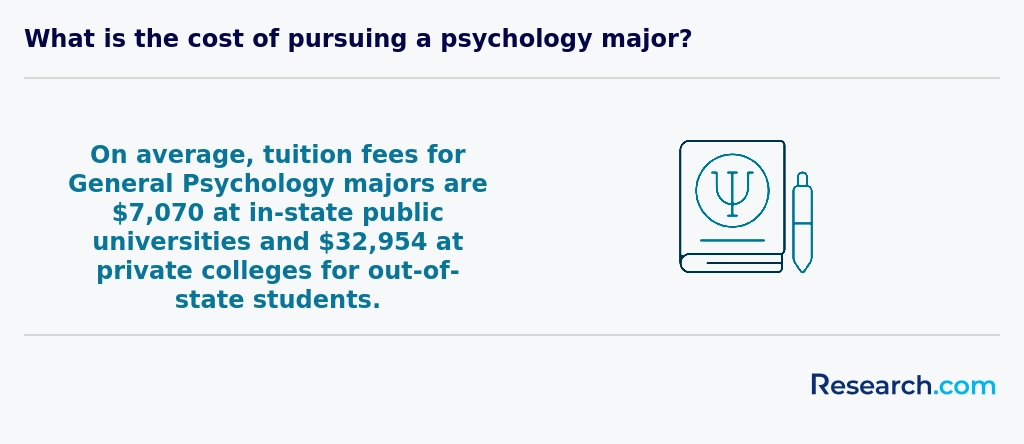
When planning for a psychology degree in Oregon, understanding the average cost is crucial. The median total cost for completing a psychology degree here is about $56,593, with in-state students typically paying around $16,137. Graduates from Oregon State University and the University of Oregon often share that managing tuition alongside fees and living expenses requires clear budgeting. While in-state tuition reduces the financial burden significantly, out-of-state students face costs nearing the median total, so planning ahead to cover this is essential.
Many psychology students highlight the importance of considering factors beyond just tuition, such as housing and textbooks, all of which add to the overall expense. For those attending private institutions like Pacific University, the cost can be higher, but it's common to find scholarships or financial aid that help offset these fees.
Exploring options for financial assistance early can profoundly affect the net cost and reduce stress. It helps to connect with financial aid offices and review program-specific scholarships. If affordability is a top concern, researching the cheapest psychology programs in Oregon offers a practical starting point.
A pragmatic approach to the Oregon psychology degree tuition and fees ensures students feel more confident about investing in their education and future psychology careers, knowing steps to manage costs effectively.

Affordability and Financial Considerations for Psychology Programs in Oregon
When considering a psychology degree in Oregon, one of the crucial factors to think about is the cost and how to make your educational investment as affordable as possible. Understanding that the pursuit of higher education, especially in fields like psychology, can be costly, it's essential to explore options that offer quality education at a lower expense. If you're looking for cheapest psychology programs in Oregon, you should also consider the long-term benefits and potential return on investment. Many students find that the initial cost of their degree is outweighed by the career opportunities and personal fulfillment that follow. Additionally, financial aid, scholarships, and assistantships can significantly reduce the financial burden, making what seems like an expensive undertaking more manageable. By carefully evaluating the costs, benefits, and financial assistance available, aspiring psychology professionals in Oregon can make informed decisions about their educational pathway.
What financial aid is available to psychology degree students in Oregon?
Psychology students in Oregon often rely on a mix of financial aid to ease tuition burdens. For example, undergraduates at Portland State University typically benefit from federal Pell Grants, which can cover up to $7,395 annually for qualifying students, making a big difference in managing the roughly $11,000 in-state tuition. Many also secure the Oregon Opportunity Grant, which awarded about $2,000 on average last year, directly reducing out-of-pocket costs.
Graduate students pursuing psychology at the University of Oregon often take advantage of federal subsidized and unsubsidized loans with flexible repayment plans to cover the $15,000 to $30,000 yearly fees. Several have shared how coupling work-study roles in campus research labs with these loans not only helped financially but also enriched their professional experience.
Merit-based scholarships are another key aid source, often awarded at institutions like Oregon State University for academic and service achievements. Additionally, regional organizations such as the Oregon Psychological Association occasionally provide targeted scholarships, boosting motivation and financial stability for many psychology students across Oregon.
Accreditation and Licensure Requirements for Psychology Programs in Oregon
Choosing a psychology program that meets state and national accreditation standards is essential for licensure and future practice. In Oregon, aspiring psychologists must graduate from a program accredited by the American Psychological Association (APA) or hold regional accreditation recognized by the Northwest Commission on Colleges and Universities (NWCCU). Accreditation ensures your coursework, practicum experiences, and research training satisfy the educational prerequisites set by the Oregon Board of Psychologist Examiners. Once you complete an accredited doctoral program, you’ll need to: 1. Submit official transcripts and verification of degree to the Oregon Board of Psychologist Examiners. 2. Accrue at least 3,000 hours of supervised professional experience (SPE), including a minimum of 1,500 post-doctoral hours under a licensed psychologist. 3. Pass the Examination for Professional Practice in Psychology (EPPP) and any Oregon-specific jurisprudence exams. 4. Complete a background check and apply for licensure renewal annually, including continuing education credits. For master’s-level roles-such as school psychologist or licensed professional counselor-graduates should verify their program holds Council for Accreditation of Counseling and Related Educational Programs (CACREP) approval or equivalent state recognition. This step not only streamlines your licensure pathway but also enhances employability. If you’re balancing cost and quality, explore our affordable online master’s in psychology programs to find accredited options that align with Oregon’s regulatory requirements.
What are the prerequisites for enrolling in psychology degree program in Oregon?
To enroll in a psychology degree program in Oregon, start by securing a high school diploma with a GPA around 2.5 to 3.0. Graduates from universities like Portland State University often recall how maintaining a steady GPA opened doors for them. Many schools in Oregon require SAT or ACT scores, although some have adopted test-optional policies to ease entry challenges. Before diving into major-specific classes, you'll need to complete foundational courses in English, math, and natural sciences-essential for grasping psychology concepts later.
For graduate programs, especially at the University of Oregon, a bachelor's degree in psychology or a related field is mandatory. Practical courses in statistics and research methods become crucial here. Most graduate applicants also prepare to submit GRE scores, personal statements, and letters of recommendation, reflecting real-life commitment and readiness. Some successful applicants highlight how relevant volunteer experiences in counseling settings strengthened their applications, connecting academic theory with real-world impact.
What courses are typically in psychology degree programs in Oregon?
When pursuing a psychology degree in Oregon, expect a curriculum that balances theory with real-world application, vital for your future career. Graduates from universities like Oregon State and the University of Oregon often highlight core courses such as Introduction to Psychology, Developmental Psychology, and Abnormal Psychology as foundational, providing deep insights into human behavior from childhood through complex mental health conditions.
Practical training is equally emphasized. For instance, courses in Research Methods and Statistics teach you how to design studies and analyze data-skills that students frequently use during internships or lab research projects. Electives like Psychological Testing and Assessment prepare you for roles involving clinical evaluations, which many find rewarding when working directly with clients or community programs.
Studying Biological Bases of Behavior and Social Psychology also equips you to understand how brain function and social environments influence interactions, an approach appreciated by those interested in combining neuroscience and therapy. This diverse selection ensures your education in Oregon is both thorough and adaptable to different psychology careers.
What types of specializations are available in psychology degree programs in Oregon?
Psychology degree specializations in Oregon typically include clinical psychology, counseling psychology, developmental psychology, industrial-organizational psychology, and social psychology. For example, students at Portland State University often focus on clinical psychology, gaining hands-on experience diagnosing and treating mental health disorders through internships. Meanwhile, Oregon State University regularly offers concentrations like industrial-organizational psychology, preparing graduates to improve workplace environments and boost employee satisfaction.
Graduate students in Oregon can pursue advanced options such as neuropsychology or forensic psychology, enabling them to specialize further within their fields. Graduates report that these Oregon psychology program concentration options helped them align their education with career goals, whether aiming for clinical roles or research careers. For those unsure about formal qualifications, it's helpful to explore how to become a therapist with no degree, which provides alternative pathways to enter related professions.
How do you choose the best psychology degree in Oregon?
Start by verifying that the psychology degree programs in Oregon are accredited, particularly if you aim to become a licensed psychologist. Graduates from Oregon State University and University of Oregon often praise the strong faculty mentorship and diverse research opportunities in areas like cognitive psychology, which enrich their academic experience and prepare them well for future careers.
Next, consider the program's specialty to align with your interests-whether clinical, counseling, or industrial-organizational psychology. Many students find programs near Portland beneficial due to access to internships and professional networks that enhance real-world learning and job prospects.
Financially, public universities in Oregon offer in-state tuition ranging around $11,000 to $13,000 annually, making them practical choices. Graduates highlight the value of assistantships and scholarships that help lower costs. For those balancing work and study, researching affordable online master's in psychology programs can be a smart option.
Finally, review graduate outcomes to ensure your chosen school leads to strong employment or graduate school acceptance rates, a key factor for many successful Oregon psychology graduates.

What career paths are available for psychology degree students in Oregon?
Graduates with a psychology degree in Oregon can pursue several practical career paths tailored to their interests and education level. Many choose licensed professional counseling or therapy, a fulfilling route that requires a master's degree and supervised clinical hours as defined by Oregon's licensing board. Those studying at institutions like Portland State University often share how their hands-on practicum experiences prepared them for rewarding roles in community agencies or private practice. Clinical psychology is another option, typically requiring a doctoral degree and offering opportunities to work in hospitals or clinics, aligning with the positive job outlook for psychology graduates Oregon.
Other graduates find meaningful work in human resources or organizational development, applying psychological principles to improve workplace wellbeing and efficiency. Some use their skills in market research to analyze consumer behavior, a path accessible even at the bachelor's level. At universities such as the University of Oregon, students appreciate the blend of theory and research that equips them for these roles. For those drawn to academia or research, doctoral programs open doors to investigating mental health and social behavior in Oregon's research institutions.
Cost-conscious students looking to start their psychology degree might explore options like the Most Affordable Psychology Degree Programs Ranking in Indianapolis, IN to understand various tuition strategies while planning their education investment wisely.
What is the job market for psychology degree in Oregon?
The job market for psychology degree holders in Oregon is marked by steady demand, especially for those aiming to become licensed practitioners. Graduates from popular institutions like the University of Oregon or Oregon State University find that obtaining a master's or doctoral degree greatly improves their chances of securing roles in clinical psychology, counseling, or school psychology. The Oregon Employment Department indicates a 10% growth rate for psychologists here, aligning with national trends.
Many graduates experience rewarding careers in hospitals, private practices, and social service agencies. For instance, mental health counselors with a master's degree report median wages around $49,000, reflecting growing community needs. Practical experience gained through internships in Portland or Eugene often leads to full-time positions, especially in rural areas that face shortages. Those exploring career opportunities for psychology graduates Oregon may also consider entry-level positions in human resources or case management while pursuing higher qualifications.
Students balancing costs note that Oregon's public universities offer relatively affordable tuition. To accelerate career advancement, exploring 1 year masters programs usa can be a smart option, helping graduates enter the job market faster with advanced credentials.
Frequently Asked Questions About psychology
Psychology degree students in Oregon can maximize their learning by engaging deeply in both coursework and practical experiences. Oregon hosts several accredited institutions such as the University of Oregon and Portland State University, where students benefit from strong faculty expertise and research opportunities. According to the Oregon Employment Department, hands-on internships and practicum placements significantly enhance understanding and prepare students for licensure.
Students should also participate in psychology-related clubs and attend regional conferences like the Oregon Psychological Association's annual meeting. Utilizing campus resources, including counseling centers and research labs, allows for applied learning. Finally, staying informed about state licensure requirements early helps align academic goals with career pathways.
The field of psychology in Oregon is experiencing growth in several emerging niches that reflect broader societal changes. One prominent area is health psychology, which focuses on how psychological factors affect physical health. With Oregon's increasing focus on holistic healthcare, demand for professionals in this niche is rising.
Another expanding specialty is neuropsychology. This area explores brain-behavior relationships and is relevant in assessing and treating conditions such as traumatic brain injury and dementia, important issues as Oregon's population ages. According to the Oregon Employment Department, job opportunities for neuropsychologists are projected to grow faster than average.
Environmental psychology is gaining interest as well, particularly due to Oregon's leadership in sustainability and environmental issues. Researchers and practitioners examine how natural and built environments impact mental well-being, making this an innovative niche for students to consider.
Graduates with a psychology degree in Oregon should develop practical skills to enhance employability. Gaining internship experience through local healthcare providers, nonprofit organizations, or educational institutions is essential. The Oregon Employment Department reports that clinical, counseling, and school psychologists have a median annual wage of around $90,000, reflecting strong demand in the region.
Networking with professionals via Oregon Psychological Association events and career fairs can open opportunities. Obtaining state licensure is necessary for many psychology careers, requiring supervised hours and passing the Examination for Professional Practice in Psychology.
Continuing education and certifications in specialized areas like addiction counseling or neuropsychology further improve job prospects.
Employers in Oregon increasingly seek psychology degree graduates with strong analytical and communication skills. According to the Oregon Employment Department, critical thinking and data interpretation abilities are essential for roles in mental health and social services.
Additionally, practical experience in research or clinical settings enhances a candidate's appeal. Familiarity with psychological assessment tools and ethical standards is highly valued.
Interpersonal skills also play a crucial role, as many psychology positions require effective teamwork and client interaction. Graduates who demonstrate cultural competence and adaptability tend to perform better in Oregon's diverse workplaces.
Technological proficiency, especially in statistical software, is another asset employers note in job postings statewide.
Finding internships in Oregon relevant to a psychology degree involves exploring multiple local resources. Many universities in Oregon, such as Portland State University and the University of Oregon, have partnerships with regional clinics, mental health centers, and research institutions to help students secure internships. The Oregon Psychological Association also provides a directory of approved internship sites.
Students are advised to start their search early, often using campus career services and networking events. According to the Oregon Employment Department, jobs in psychological services are projected to grow by 15% through 2030, increasing internship opportunities.
Additionally, internships in community health settings and government agencies like the Oregon Health Authority can offer experience aligned with psychology studies.
Obtaining a psychology degree in Oregon significantly enhances career mobility and advancement opportunities. The state's diverse job market, ranging from healthcare to education, values credentials in psychology for roles such as counselors, social workers, and mental health specialists. According to the U.S. Bureau of Labor Statistics, Oregon's employment for psychologists is projected to grow by 12% from 2022 to 2032, outperforming the national average.
Graduates with advanced degrees, such as a master's or doctorate, typically see greater access to higher-paying positions and leadership roles. Licensing requirements in Oregon also make formal education essential for clinical practice, reinforcing career growth.
Additionally, Oregon universities often have strong networks and partnerships with local healthcare facilities, improving job placement rates. These factors combined illustrate that a psychology degree is a practical investment for long-term career development in Oregon.
Studying for a psychology degree in Oregon offers strong preparation for interdisciplinary roles through curricula that integrate knowledge from fields like biology, sociology, and education. Universities such as Oregon State University and the University of Oregon emphasize research methods, critical thinking, and applied practice, encouraging collaboration across diverse academic disciplines.
The state's psychology programs often include internships and practicum experiences in healthcare, social work, and business settings. According to the Oregon Employment Department, occupations requiring interdisciplinary skills are growing, highlighting psychology graduates' value in team-based environments.
This broad educational approach helps students develop versatile skills, preparing them for roles in mental health, human resources, and community services.
Choosing between a thesis and a non-thesis psychology degree program in Oregon depends largely on your career goals. Thesis programs typically require original research and are ideal for students aiming for doctoral studies or research careers. Non-thesis options focus more on coursework and practical experience, suiting those pursuing professional practice or immediate employment.
Oregon universities often provide both options, allowing flexibility. For example, the University of Oregon emphasizes research in its thesis track, while Oregon State offers robust applied psychology experiences in non-thesis programs. According to the National Center for Education Statistics, about 40% of Oregon psychology graduates opt for thesis programs.
Consider your interest in research, time commitment, and whether you plan to continue education after your master's degree when making your decision.
Students based in Oregon who want to study psychology abroad have several options through exchange programs and partner universities. Many Oregon institutions, such as Oregon State University and the University of Oregon, participate in study abroad initiatives that include psychology courses in countries like the UK, Ireland, Australia, and Canada. These programs allow students to transfer credits toward their psychology degree while gaining international experience.
According to the Institute of International Education, about 1,000 Oregon students studied abroad in 2022, with social science fields like psychology among the popular choices. Students can also explore approved online psychology programs from accredited international universities, which some Oregon schools may accept for credit. Advising offices and the U.S. Department of Education provide guidance on ensuring transferability and licensure considerations for graduate study.
Students pursuing psychology degrees in Oregon have several part-time job options that complement their education. Positions such as behavioral technician, research assistant, or mental health aide offer practical experience relevant to psychology. Behavioral technicians often assist with therapy sessions, supporting clients with developmental or mental health challenges. Research assistant roles at universities or institutes provide hands-on experience in data collection and analysis, crucial skills for psychology careers.
Oregon's mental health sector has been growing steadily, with the Oregon Employment Department projecting a 15% increase in mental health counselor jobs through 2030. Working in local clinics or non-profits can deepen understanding of community psychology.
These part-time roles can strengthen resumes and provide networking opportunities, essential for students planning graduate studies or professional licensure in psychology.
Psychology students in Oregon have multiple networking opportunities through professional organizations and local events. The Oregon Psychological Association (OPA) offers student memberships, providing access to conferences, workshops, and mentorship programs.
The state's universities, such as the University of Oregon and Portland State University, host regular psychology seminars and research symposia where students can connect with faculty and professionals.
Internships and practicum placements, often facilitated by the schools, also help students build contacts within the mental health community. Additionally, Oregon's proximity to major cities like Portland expands access to psychology-focused meetups and job fairs.
According to OPA, about 65% of psychology graduates find employment through networking connections made during their studies.
Alumni networks provide valuable support for psychology degree students in Oregon by offering professional connections, mentorship, and career opportunities. Graduates from Oregon universities often engage in these networks to share job openings, internships, and advanced study advice. According to the Oregon Psychological Association, psychology alumni groups contribute to job placements in local clinics, schools, and research institutions.
These networks also facilitate knowledge exchange through events and workshops, helping students stay informed about evolving practices in psychology. Access to experienced professionals within Oregon's mental health community can enrich students' understanding and practical skills.
Overall, strong alumni networks help psychology students build their careers more effectively within Oregon's specific regional context.
Customizing a psychology degree program in Oregon allows students to align their education with specific career ambitions. Many state universities and colleges offer electives and specialization tracks such as clinical psychology, counseling, or industrial-organizational psychology. These options let students develop expertise relevant to fields like mental health, human resources, or education.
Additionally, internships and research projects provide practical experience within Oregon's diverse communities and industries. For example, Oregon State University and the University of Oregon provide resources to help students tailor their coursework and gain hands-on skills.
Licensing requirements for careers such as clinical psychology also inform program choices. Aligning coursework with Oregon Board of Psychology guidelines ensures graduates meet professional standards.
Psychology students in Oregon often face several challenges during their academic journey. One key difficulty is balancing rigorous coursework with practicum hours, which are necessary for gaining hands-on experience. Many programs require at least 1,000 supervised hours before graduation, a demanding commitment alongside classes.
Additionally, competition for limited internship spots in Oregon can be intense, especially in urban centers like Portland, where demand is high. According to the Oregon Psychological Association, fewer training sites than applicants sometimes delay students' progress toward licensure.
Financial strain is another common issue. While tuition varies, average annual costs for public universities in Oregon reach around $11,000 for in-state students, excluding living expenses. This forces many students to seek loans or part-time work, increasing stress.
Finally, navigating licensure requirements regulated by the Oregon Board of Psychology, including post-degree supervision periods, can be complex and confusing for students starting their careers.
With a psychology degree in Oregon, you can pursue several professional certifications that enhance your career opportunities. One common path is becoming a Licensed Psychologist, which requires a doctoral degree plus supervised hours and passing the Examination for Professional Practice in Psychology (EPPP). For those with a master's degree, certifications like Licensed Professional Counselor (LPC) or Licensed Marriage and Family Therapist (LMFT) are viable options. Oregon's Board of Psychology and the Oregon Board of Licensed Professional Counselors provide guidelines and licensing criteria.
Additionally, certifications in specialized fields like behavior analysis (BCBA) are popular among psychology graduates. The Behavior Analyst Certification Board offers this nationally recognized credential.
To write a winning application for a psychology program in Oregon, start by carefully researching each school's specific requirements. Oregon universities typically emphasize strong academic records, relevant experience, and clear career goals. Aim for a GPA of 3.0 or higher, as competitive psychology programs often prefer this standard.
Highlight any volunteer or work experience in mental health settings. The Oregon Employment Department notes steady growth in psychology-related jobs, so practical experience can strengthen your application. Personal statements should reflect your understanding of psychology and why you want to study it in Oregon.
Letters of recommendation from professors or supervisors familiar with your skills are important. Finally, prepare thoroughly for any required standardized tests like the GRE, as some programs still consider those scores in admissions decisions.
Psychology careers in Oregon reflect broader global trends emphasizing mental health awareness and interdisciplinary research. The U.S. Bureau of Labor Statistics projects a 9% national growth in psychologist jobs from 2022 to 2032, aligning with international demand. Oregon, in particular, has invested in expanding mental health services, increasing opportunities for psychology graduates.
Worldwide, psychology is evolving to address cultural diversity, technology's impact, and evidence-based treatments. U.S. certifications and licensure requirements remain rigorous, ensuring professionals meet high standards. According to the Oregon Employment Department, clinical psychology roles exhibit steady growth, highlighting local demand alongside global professional trends.
Gaining practical experience is essential when pursuing a psychology degree in Oregon. Many universities encourage students to participate in internships, which often take place in hospitals, schools, community centers, or private practices. These internships provide hands-on exposure to clinical and research settings, supplementing academic knowledge with real-world skills.
The Oregon State Board of Psychology requires supervised experience hours for licensure, so students should seek opportunities that allow them to accumulate these hours. Additionally, some programs include practicum courses as part of the curriculum.
Students can also join research labs at their institutions to assist with ongoing studies, gaining valuable experience in experimental design and data analysis. According to the Oregon Higher Education Coordinating Commission, nearly 60% of psychology undergraduates engage in internships before graduation, enhancing employability in the region.
When choosing a concentration within a psychology degree program in Oregon, begin by evaluating your career goals and interests. Psychology offers varied paths such as clinical, counseling, developmental, or industrial-organizational psychology. According to the Oregon Employment Department, clinical and counseling psychologists are among the fastest growing professions in the state, with a projected 20% job growth through 2030.
Consider the curriculum focus and faculty expertise at Oregon universities. Institutions like Portland State University and the University of Oregon provide programs emphasizing research, applied practice, or both. Reviewing program accreditation and available internships can also guide your choice.
Oregon's diverse population and mental health initiatives may offer unique practicum opportunities in specific concentrations, enhancing practical experience while aligning with local workforce demands.
Related Psychology Rankings for Nearby States
- 2027 Most Popular Psychology Degree Programs Ranking in Washington
- 2027 Most Popular Psychology Degree Programs Ranking in California
- 2027 Most Popular Psychology Degree Programs Ranking in Idaho
- 2027 Most Popular Psychology Degree Programs Ranking in Nevada
- 2027 Most Popular Psychology Degree Programs Ranking in Arizona
- 2027 Most Popular Psychology Degree Programs Ranking in Colorado
- 2027 Most Popular Psychology Degree Programs Ranking in New Mexico
- 2027 Most Popular Psychology Degree Programs Ranking in North Dakota
- 2027 Most Popular Psychology Degree Programs Ranking in Oklahoma
- 2027 Most Popular Psychology Degree Programs Ranking in Minnesota
Top Trending Psychology Rankings
See What Experts Have To Say About Studying Psychology
Read our interview with Psychology experts

Joann Farrell Quinn, Ph.D., MBA
Psychology Expert
Director at the College of Medicine Department of Medical Education
Morsani College of Medicine

Catherine Caldwell-Harris, Ph.D.
Psychology Expert
Associate Professor of Psychology
Boston University

Robin M. Kowalski. Ph.D.
Psychology Expert
Professor of Psychology
Clemson University

References
- Oregon School Psychologist Requirements | Certification in OR | School-Psychologists.com https://www.school-psychologists.com/state/oregon-school-psychologist-certification/
- Oregon Online Psychology Degree Programs https://www.onlinepsychologydegrees.com/states/oregon/
- A Guide to Psychology Internships | Psychology Degree Guide https://psychologydegreeguide.org/resources/internships/
- Best Online and Campus Psychology Schools in Oregon https://www.psychologydegree411.com/schools/oregon/
- Know more about thesis vs non- thesis: what is the difference? https://studyfans.com/en/blogs/816
- Psychology Programs - SOU Academic Programs https://sou.edu/academics/psychology/programs/
- How to become a Psychologist in Oregon | Getting started in OR | Psychologist-License.com https://www.psychologist-license.com/psychologist-requirements/oregon-psychologist/
- What Certifications Can I Get With A Bachelor's In Psychology? https://www.psychology.org/resources/certification-skills-for-psychology-major-resumes/
- Financial Assistance | EO Behavioral Health Careers https://bhcareers.org/financial-assistance/
- Have You Found a Niche? https://www.apaservices.org/practice/business/marketing/building/niche


