2027 Best Online MSW Programs for Working Parents

Co-Founder and Chief Data Scientist
Choosing an online MSW program as a working parent is not just a question of ranking. The real decision is whether a program can fit around employment, caregiving, fieldwork, tuition, and licensure requirements without forcing you to sacrifice academic quality or long-term career options.
A strong online Master of Social Work program should offer more than remote classes. For parents, the best fit usually combines CSWE accreditation, predictable scheduling, part-time pathways, local field placement support, responsive advising, and transparent costs. The right program should help you move toward clinical, school, healthcare, child welfare, community, or policy roles while keeping your weekly workload realistic.
This guide explains how to compare online MSW programs for working parents, what accreditation matters, how long programs take, what admissions committees expect, how much programs can cost, and how the degree may affect career and salary opportunities. Use it as a practical checklist before applying, especially if you need flexibility but cannot afford to compromise on licensure eligibility.
Key Things You Should Know
- Flexible online MSW programs in 2026 often offer part-time options tailored for working parents, balancing coursework with professional and family commitments.
- Accredited programs emphasize practical field placements with virtual supervision, maintaining compliance with the Council on Social Work Education's standards.
- Graduates from top programs report a 15% median salary increase within two years, reflecting growing demand for skilled social workers trained through online formats.
What are the best online MSW programs for working parents?
The best online MSW programs for working parents are accredited, flexible, fieldwork-ready, and realistic about the time demands placed on adult learners. A program may look convenient because it is online, but parents should look closely at how classes are delivered, when live sessions occur, how field placements are arranged, and whether the school supports students who study part time.
For most working parents, the strongest programs share several features: asynchronous coursework, part-time enrollment, local practicum coordination, accessible faculty, and clear licensure preparation. Hybrid formats can also work well when campus visits are limited and scheduled far in advance. However, frequent residencies, weekday daytime requirements, or rigid fieldwork schedules can make an otherwise reputable program difficult for parents with full-time jobs or childcare responsibilities.
Features that matter most for working parents
| Program feature | Why it matters | What to ask before applying |
| CSWE accreditation | Supports program quality and is commonly tied to licensure eligibility. | Is the online MSW format itself CSWE-accredited? |
| Asynchronous classes | Lets students complete lectures and assignments outside fixed class times. | Are any live sessions required, and when are they held? |
| Part-time options | Reduces weekly workload for parents balancing employment and caregiving. | Can students switch between full-time and part-time study? |
| Local field placement support | Helps students complete required practice hours near home. | Does the school find placements, approve student-sourced placements, or both? |
| Student support services | Improves persistence through advising, tutoring, counseling, and technical help. | Are advisors available outside standard business hours? |
Program concentration is another key decision. Clinical practice, community organization, school social work, healthcare social work, and child and family welfare can lead to different practicum sites and post-graduation licensing paths. Parents should choose a concentration that fits both career goals and feasible field placement options in their area.
Cost also matters, but the cheapest option is not always the best value if it lacks licensure alignment, strong field placement support, or academic flexibility. Students who plan to continue beyond the MSW may also compare advanced options such as DSW programs online after clarifying their clinical, leadership, or academic goals.
What accreditation should online MSW programs have?
Online MSW programs should have accreditation from the Council on Social Work Education (CSWE). For prospective social workers, this is the most important program-level accreditation to verify because it signals that the curriculum and field education meet nationally recognized standards for graduate social work education.
CSWE accreditation is especially important for students who plan to pursue licensure, including licensed clinical social worker (LCSW) credentials or other state-regulated social work licenses. State licensing boards commonly require graduation from a CSWE-accredited MSW program. A degree from a program without this accreditation may limit licensure, clinical employment, and mobility across states.
Do not assume that an online MSW is covered because the university is reputable or because the campus program is accredited. Some institutions may have different approval statuses for different formats, locations, or program tracks. Before enrolling, confirm that the exact online MSW option you are considering is recognized by CSWE and that its curriculum and fieldwork structure align with your state’s licensing requirements.
CSWE accreditation vs. regional accreditation
| Accreditation type | What it applies to | Why it matters |
| CSWE accreditation | The social work program | Usually essential for social work licensure eligibility and professional credibility. |
| Regional accreditation | The college or university | Supports institutional quality, transferability, and access to many forms of financial aid. |
Both matter, but they are not interchangeable. Regional accreditation strengthens the credibility of the institution, while CSWE accreditation is the key standard for the MSW program itself.
Accreditation also affects career planning. Social work employment is expected to grow by 7%, with subfields such as child, family, and school social workers growing even faster. Because licensure and employability are closely tied to accredited preparation, students comparing tuition should review the cost of masters in social work alongside accreditation status rather than treating price as the only deciding factor.
Can working parents complete an MSW program online?
Yes. Working parents can complete an MSW program online, but success depends on choosing a program with enough scheduling flexibility and building a realistic weekly plan before classes begin. Online delivery reduces commuting time, but it does not eliminate graduate-level reading, writing, group work, exams, or field education requirements.
The most manageable online MSW programs for parents often include part-time enrollment, asynchronous courses, evening or weekend live sessions, and limited in-person requirements. Some programs use hybrid formats with brief residencies, which can be workable if dates are announced early and travel demands are minimal.
Field education is usually the biggest scheduling challenge. Even when coursework is fully online, students still complete supervised practice at approved agencies. Flexible online MSW programs for working parents often help arrange local field placements so students do not have to relocate or commute long distances. Before enrolling, ask whether placements can be completed near your home, whether evening or weekend hours are possible, and whether your current workplace can be considered if it meets program and ethical requirements.
Practical strategies for parents completing an online MSW
- Create a weekly calendar that blocks time for coursework, field hours, work, family responsibilities, and recovery time.
- Ask your employer early about schedule adjustments, tuition reimbursement, or predictable fieldwork days.
- Discuss childcare coverage before practicum begins, not after placement hours are assigned.
- Choose part-time enrollment if a full-time course load would put your job, health, or family stability at risk.
- Use advising, writing support, technical help, and faculty office hours before small problems become major barriers.
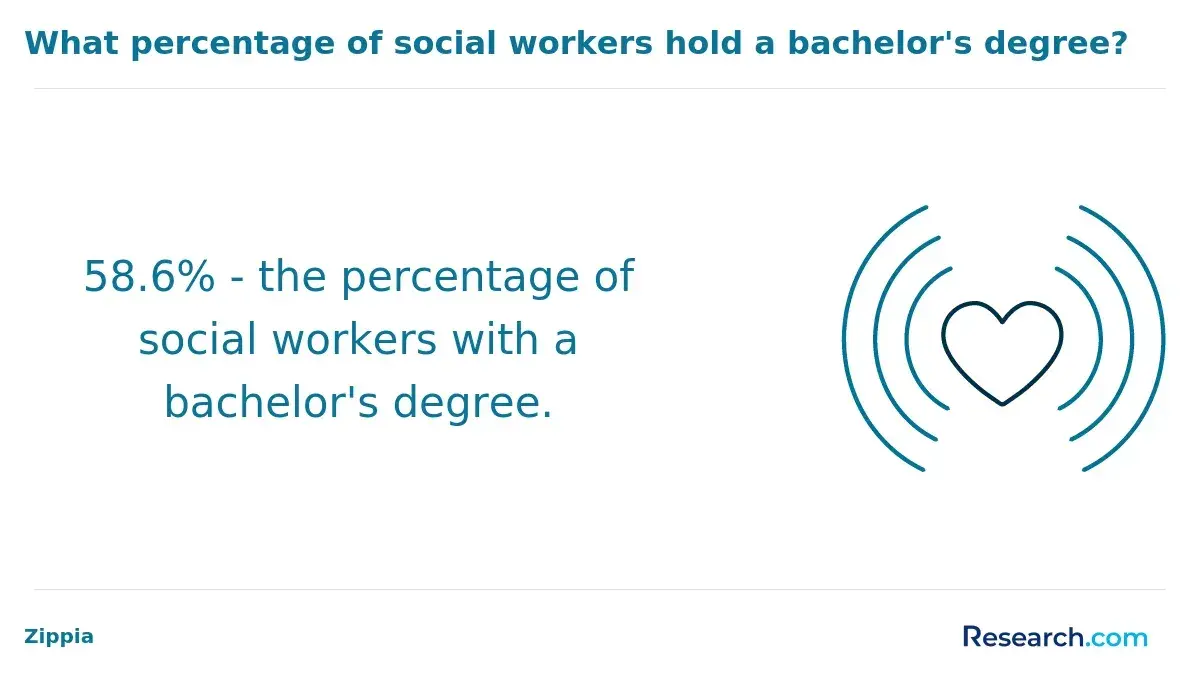
Financial planning is also part of feasibility. An MSW increases earning potential, with holders earning a median annual salary of $62,660, about 32% higher than bachelor's degree holders in social work, according to the Bureau of Labor Statistics Occupational Employment and Wage Statistics. Many online programs accept financial aid and employer tuition reimbursement, which can reduce the immediate cost of attendance.
Parents who want a shorter path should compare accelerated online MSW programs, but speed should be weighed against weekly workload. A faster program is only helpful if you can complete coursework and field hours without undermining work, caregiving, or academic performance.
What are MSW admission requirements for online programs?
Online MSW admission requirements usually include a bachelor’s degree from an accredited institution, official transcripts, a minimum GPA of 3.0, a resume, letters of recommendation, and a personal statement. Some programs also require prerequisite coursework in psychology, sociology, human services, statistics, or related fields.
Admissions committees look for evidence that applicants understand social work values, can manage graduate-level writing and research, and are prepared for supervised practice with vulnerable populations. Relevant experience can include paid work, internships, military service, AmeriCorps service, caregiving, advocacy, case management, human services volunteering, or community organizing.
Common online MSW application materials
| Requirement | What schools evaluate | Tip for working parents |
| Official transcripts | Academic readiness and prerequisite completion. | Explain upward grade trends or older academic records when allowed. |
| Resume | Work history, service experience, leadership, and human services exposure. | Include transferable skills such as crisis response, communication, supervision, and advocacy. |
| Letters of recommendation | Professionalism, ethics, academic ability, and readiness for social work practice. | Choose recommenders who can speak specifically about reliability and people-centered work. |
| Personal statement | Motivation, career goals, fit with the profession, and writing ability. | Be clear about why social work, why now, and how you will manage online study. |
| Interview | Communication skills, maturity, and professional judgment. | Prepare examples from work, family, or service that show resilience and ethical thinking. |
Applicants without a bachelor’s degree in social work may enter a traditional MSW track and complete foundation coursework. Applicants with qualifying prior social work education may be considered for advanced standing, depending on the school’s rules. Advanced standing can shorten degree completion, but programs usually require documentation of prior coursework, field education, and academic performance.
International students may need English proficiency scores such as the TOEFL and credential evaluations. Requirements vary, so applicants should review each program’s admissions page and speak with an enrollment advisor before paying application fees.
Statistically, investing in an online MSW offers strong financial returns. According to the Georgetown University Center on Education and the Workforce's 2025 Online Education ROI Report, graduates achieve a 10-year ROI of 215%, outperforming many humanities master's degrees. For applicants still weighing the degree’s career value, it can help to explore what can you do with a degree in social work before choosing a concentration or licensure pathway.
How long do online MSW programs take for busy parents?
Online MSW programs for busy parents usually take between 2 to 4 years, depending on enrollment status, transfer or advanced standing eligibility, course sequencing, and field placement schedules. Full-time students may finish in 2 years, while many parents choose part-time study and complete the degree in 3 or 4 years.
Program length is not only about credits. Parents should also consider the intensity of each term, whether courses are offered year-round, whether the program allows breaks, and how practicum hours are scheduled. A slightly longer program can be a better choice if it protects income, caregiving responsibilities, and academic performance.
Recent data show that 42% of MSW students aged 30 and older are parents balancing family with education. These students have a 25% higher retention rate in online programs compared to traditional ones, thanks to flexible scheduling and program structure (Council on Social Work Education Annual Statistics 2025).
Typical completion timelines
| Enrollment path | Typical timeline | Best fit |
| Full-time online MSW | About 2 years | Students with more weekly availability and reliable childcare or work flexibility. |
| Part-time online MSW | 3 or 4 years | Working parents who need a lower course load and more predictable pacing. |
| Reduced course load example | About 3.5 years when taking 6 credit hours per semester | Parents who want steady progress without overloading each term. |
Field education can extend or complicate the timeline if placements are limited in your area or if your availability is restricted to evenings and weekends. Before enrolling, ask how early the program begins field planning, whether it has agency partners near you, and what happens if a placement falls through.
Parents should also look for recorded lectures, predictable assignment calendars, leave or pause-enrollment policies, and clear reentry procedures. These policies matter because family illness, job changes, pregnancy, caregiving emergencies, or relocation can affect progress. A good program makes the path flexible without leaving students to navigate interruptions alone.
What is the cost of top online MSW programs?
Online Master of Social Work programs vary widely in cost, typically ranging from $15,000 to over $50,000 depending on institution type, residency status, credit requirements, and program length. Public universities often offer lower rates for in-state students, usually between $15,000 and $30,000, while private schools and out-of-state students frequently face costs above $40,000.
Tuition is only one part of the total price. Students should also check technology fees, online learning fees, administrative fees, books, course materials, background checks, travel for any residencies, licensure exam costs, and lost income or childcare costs connected to field placement. Part-time enrollment can lower the amount due each term, but it may extend the total time you remain enrolled.
Cost factors to compare before enrolling
| Cost factor | Why it matters | Question to ask |
| Tuition per credit | Determines the largest part of program cost. | How many credits are required for my track? |
| Fees | Can add meaningful costs beyond advertised tuition. | Are technology, placement, graduation, or residency fees required? |
| Residency requirements | May require travel, lodging, and time away from work or family. | How often are in-person visits required? |
| Field placement schedule | Can affect income and childcare expenses. | Are evening or weekend placement hours available? |
| Financial aid | Can reduce out-of-pocket cost or spread payments over time. | What scholarships, federal aid, payment plans, or employer benefits can be used? |
Field placement costs deserve special attention for working parents. About 75% of CSWE-accredited online MSW programs offer field placements with evening or weekend hours, benefiting employed students by minimizing income loss and childcare challenges. Even so, availability can vary by location and agency type, so students should confirm options with the field education office.
- University A charges $600 per credit for 30 credits, totaling $18,000.
- University B, a private institution, bills $1,200 per credit hour, totaling $36,000 for 30 credits.
- Some programs include flat fees covering all coursework and placements, simplifying budgeting for working adults.
The best financial choice is not always the lowest sticker price. A program that costs less but offers weak field placement support, limited advising, or poor licensure alignment may create delays that cost more over time. Request a written cost breakdown from each school and compare total program cost, not just tuition per credit.
What curriculum covers online MSW programs?
Online MSW programs typically cover the theory, research, policy, ethics, practice methods, and field education needed for professional social work. Most programs require completion of around 60 credits, combining foundation courses with advanced coursework in a concentration or specialization.
Core courses often address human behavior in the social environment, social welfare policy, research methods, social work ethics, diversity and social justice, assessment, intervention, and practice with individuals, families, groups, organizations, and communities. These courses are designed to build both clinical judgment and systems-level understanding.
Common online MSW curriculum areas
| Curriculum area | What students learn | Why it matters |
| Human behavior and social environment | How individuals, families, groups, and communities develop within social systems. | Supports assessment and culturally responsive practice. |
| Social welfare policy | How laws, programs, and institutions affect clients and communities. | Prepares students for advocacy and policy-informed practice. |
| Research methods | How to evaluate evidence, programs, and practice outcomes. | Strengthens evidence-based decision-making. |
| Direct practice | Engagement, assessment, intervention, documentation, and ethical service delivery. | Builds practical skills for client-facing roles. |
| Field education | Supervised experience in approved social service settings. | Connects classroom learning to licensure-oriented professional practice. |
Many online MSW programs offer concentrations in areas such as child and family welfare, mental health, aging, substance abuse, healthcare, clinical practice, or community organizing. Students should choose a concentration based on intended career setting, state licensure expectations, and the types of field placements available near them.
Field education remains central even in online programs. Students usually complete practica at approved local agencies under supervision. For working parents, the quality of field placement coordination can be as important as the course list because placement schedules affect employment, childcare, and degree completion.
Cost can also shape curriculum decisions. For instance, Western New Mexico University charges $371 per credit for a 60-credit program, totaling under $22,300. This positions it among the most affordable accredited online MSW options, according to SocialWorkDegree.net 2026 Best Online MSW Rankings.
When comparing curricula, ask whether the program teaches evidence-based methods, ethical decision-making, documentation, crisis response, interprofessional collaboration, and licensure preparation. A strong curriculum should connect classroom learning to the realities of agency work, client needs, and state licensing requirements.
What careers follow an MSW degree?
An MSW degree can lead to careers in mental health, healthcare, schools, child welfare, family services, substance abuse treatment, aging services, community programs, policy, nonprofit leadership, and public agencies. The right path depends on your concentration, field placements, state licensure, and preferred work setting.
Many graduates pursue clinical social work, which can include assessment, therapy, care coordination, crisis intervention, and treatment planning in hospitals, clinics, community mental health centers, integrated care settings, or private practice. Those seeking independent clinical practice usually need to meet state requirements for licensed clinical social worker credentials.
Common MSW career paths
| Career path | Typical work setting | Primary focus |
| Clinical social worker | Hospitals, clinics, mental health centers, private practice | Therapy, assessment, treatment planning, and behavioral health support. |
| School social worker | K-12 schools and education agencies | Student mental health, family support, attendance, behavior, and crisis response. |
| Medical social worker | Hospitals, hospice, rehabilitation, and outpatient care | Care coordination, discharge planning, patient advocacy, and family support. |
| Child welfare specialist | Government agencies and family service organizations | Child safety, permanency planning, foster care, and family stabilization. |
| Policy or program advocate | Nonprofits, agencies, research organizations, and government offices | Program design, advocacy, policy analysis, and community systems change. |
Licensure can strongly affect job options. Some roles are open to MSW graduates soon after graduation, while clinical roles may require supervised post-degree experience and a licensing exam. Requirements differ by state, so students should review licensing rules before choosing field placements or a concentration.
The University of Connecticut's online MSW program illustrates strong outcomes, with graduates achieving LCSW pass rates 15% above the national average and 92% employment within six months, reflecting the program's career value.
Working professionals often benefit from online MSW formats because they can keep earning income and building experience while completing the degree. The best strategy is to choose coursework and field placements that match the job you want after graduation, not just the schedule that seems easiest during enrollment.
What is the average MSW salary and job outlook?
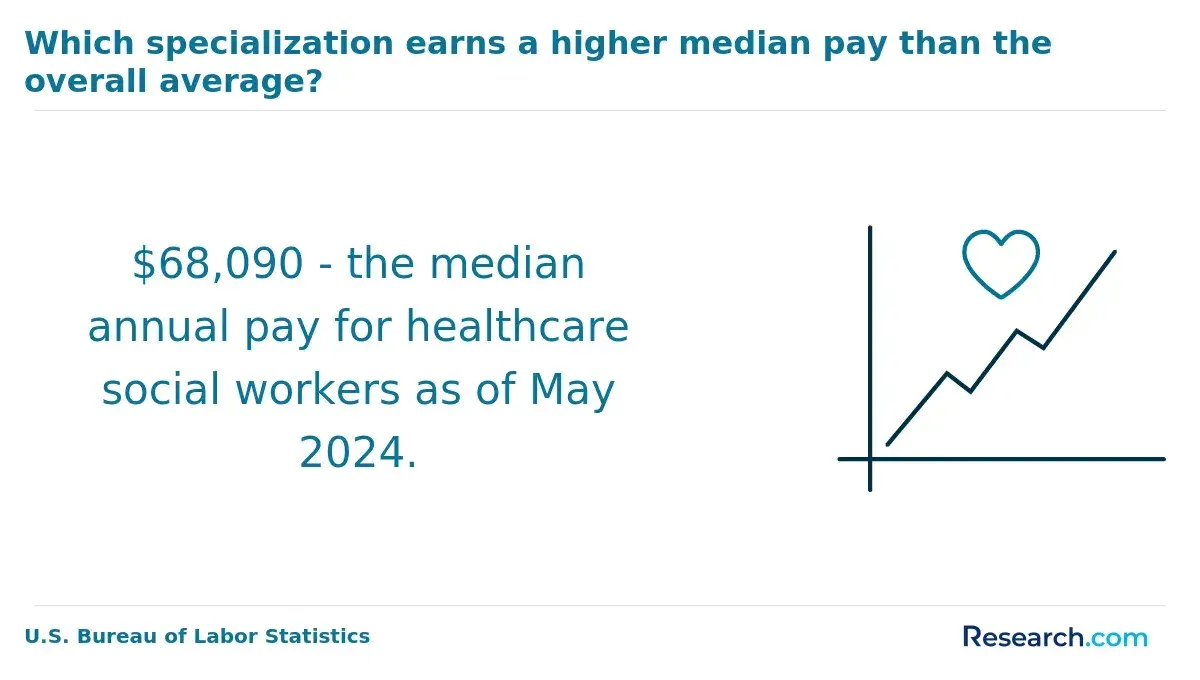
The average salary for professionals with a Master of Social Work in the United States generally falls between $60,000 and $75,000 per year. Entry-level social workers tend to earn closer to the lower end, while those with advanced clinical or administrative roles often exceed $80,000. Salary levels vary based on location, employer type, specialization, experience, and licensure status.
MSW graduates who pursue clinical licensure, healthcare roles, behavioral health practice, supervision, or administrative leadership may have stronger earning potential than graduates in lower-funded community or nonprofit roles. However, social work compensation can vary widely, so applicants should compare salary expectations in their state and intended specialty before borrowing for graduate school.
The U.S. Bureau of Labor Statistics projects a 12% growth in social worker employment from 2024 to 2034, reflecting strong demand in fields like clinical mental health, healthcare, and child welfare. Demand is influenced by mental health needs, aging populations, healthcare coordination, school support services, and community-based care.
Factors that can influence MSW salary
- Licensure: Clinical licensure can expand access to therapy, diagnostic, supervisory, and private practice roles.
- Setting: Hospitals, government agencies, schools, nonprofits, and private practices may offer different pay structures and benefits.
- Specialization: Clinical mental health, healthcare, child welfare, substance abuse, and leadership roles can differ in demand and compensation.
- Location: Salaries and cost of living vary by state, region, and urban or rural setting.
- Experience: Post-graduate supervised practice, certifications, and leadership responsibilities can affect earnings over time.
Working parents enrolled in part-time, online MSW programs average about 16 field hours weekly, which correlates with an 18% reduction in burnout versus full-time, on-campus students, according to the NASW 2025 Workforce Study on Social Work Education. For parents, this matters because completing the degree sustainably can be just as important as finishing quickly.
Licensure requirements vary by state and influence salary potential and job opportunities. Students should contact their state licensing board early, confirm required coursework and supervised hours, and choose field placements that support the credential they plan to pursue.
How to choose a reputable online MSW program?
To choose a reputable online MSW program, start with CSWE accreditation, then evaluate flexibility, field placement support, licensure alignment, student outcomes, faculty expertise, total cost, and support services. A program should be judged by whether it can help you graduate, qualify for the license you need, and enter the type of social work role you want.
Accreditation by the Council on Social Work Education (CSWE) is essential because it confirms that the program aligns with national social work education standards. Without this accreditation, graduates may face barriers to licensure or clinical employment in many states.
Online MSW selection checklist
- Verify CSWE accreditation: Confirm that the exact online MSW track is accredited, not only the university or campus-based version.
- Check state licensure fit: Ask whether the curriculum and field education meet requirements in the state where you plan to practice.
- Review field placement support: Find out whether the school secures placements, how far students typically travel, and whether flexible hours are available.
- Compare delivery format: Look for asynchronous coursework, part-time pathways, recorded lectures, and clear residency expectations.
- Study outcomes: Review publicly available graduation rates, employment outcomes, and licensure exam pass rates when available.
- Calculate total cost: Include tuition, fees, travel, books, technology, background checks, and potential childcare or lost income during fieldwork.
- Assess advising and career support: Strong programs offer responsive academic advising, field education guidance, writing support, and career services.
Faculty expertise also matters. Programs with faculty experienced in behavioral health, clinical practice, policy, community work, telehealth, and culturally responsive care may better prepare students for current practice needs. By 2032, demand for social workers specializing in behavioral health is expected to grow by 12%, driven by expanded telehealth services under mental health parity laws. Programs incorporating telehealth training and updated mental health policy education better prepare students for these changes.
Current students and alumni can provide insight that program websites often do not show. Ask about workload, instructor responsiveness, field placement quality, group projects, technology reliability, and whether the program is manageable for parents who work. Their experiences can help you identify red flags before committing.
The right online MSW program should make your path clearer, not more complicated. Choose the school that best balances accreditation, flexibility, field education, licensure preparation, affordability, and support for the realities of working parent life.
Other Things You Should Know About Social Work
Most online MSW programs in 2027 require completing between 48 to 60 credit hours. Working parents should expect a manageable course load of 2-3 courses per semester, allowing flexibility to balance work, family, and study commitments effectively.
Online MSW programs often partner with local agencies to arrange field placements near students' homes or workplaces, minimizing travel and scheduling challenges. They provide flexible hours and supportive supervision tailored to accommodate working parents' time constraints. This ensures students can balance their studies, fieldwork, and family responsibilities effectively.
References
- Best Advanced-Standing Online MSW Programs https://www.onlinemastersdegrees.org/best-programs/social-work-msw/advanced-standing/
- 10 Careers for Social Work Majors https://www.umassglobal.edu/blog-news/careers-for-social-work-majors
- Social Work Careers https://socialworklicensemap.com/social-work-careers/
- Social Work Salaries https://www.socialworkers.org/careers/career-center/kickstart-your-job-hunt/social-work-salaries
- Best Online Master's Programs For Social Work 2025 https://www.psychology.org/social-work/best-masters-programs/
- 5 High-Paying Jobs You Can Get with an MSW https://onlinedegrees.keuka.edu/blog/highest-paying-msw-jobs
- MSW Program Length: 1-4 Year Timeline Guide for 2025 https://www.socialworkdegrees.org/faq/how-long-does-it-take-to-complete-a-msw-program
- Usnews - Social Work Rankings https://www.usnews.com/best-graduate-schools/top-health-schools/social-work-rankings
- Online MSW Programs No GRE Required - MasterofSocialWork.com https://www.masterofsocialwork.com/faqs/gre-requirements-online-msw-programs
- Pros and Cons of Online Master of Social Work Programs https://www.mswhelper.com/blog/applying-to-online-master-of-social-work-programs