2027 MSW Salary by Setting: Hospitals, Schools, Nonprofits, and Government

Co-Founder and Chief Data Scientist
An MSW can lead to very different pay outcomes depending on where you work. A hospital role, a school district position, a nonprofit program job, and a government agency post may all require graduate-level social work skills, but they are funded differently, structured differently, and rewarded differently. For students comparing MSW programs or professionals planning a career move, understanding these setting-based salary patterns is essential.
This guide breaks down average MSW salaries by work setting and explains why compensation varies across hospitals, schools, nonprofits, government agencies, and private-sector employers. It also covers the education, licensure, certifications, and program-selection factors that can improve earning potential while helping you choose a path that fits your values, work style, and long-term goals.
Key Things You Should Know
- In 2026, MSW graduates earn highest average salaries in hospital settings, with median wages around $75,000 annually, reflecting demand for clinical expertise and healthcare integration.
- School-based MSWs typically earn slightly less, averaging $60,000 to $65,000, influenced by public funding constraints and geographic location variability.
- Nonprofits and government positions offer varied salaries from $50,000 to $70,000, often balanced by benefits and job stability, with rising opportunities in mental health and community services.
What is the average MSW salary by work setting?
The average MSW salary by work setting depends heavily on employer funding, required specialization, licensure expectations, geographic location, and whether the role is clinical, administrative, school-based, or community-focused. In general, healthcare and some government roles tend to offer stronger compensation, while nonprofit and school positions may offer stability, mission alignment, or public-sector benefits that partly offset lower salary ceilings.
| Work setting | Typical salary information stated | What often drives pay |
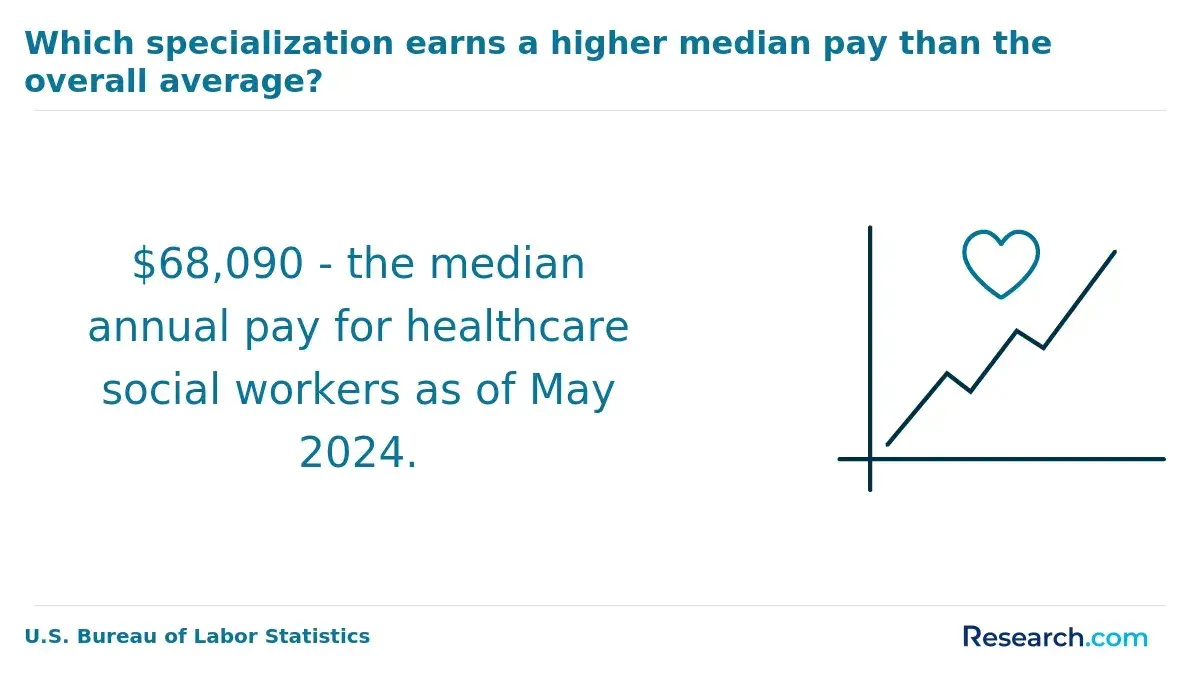
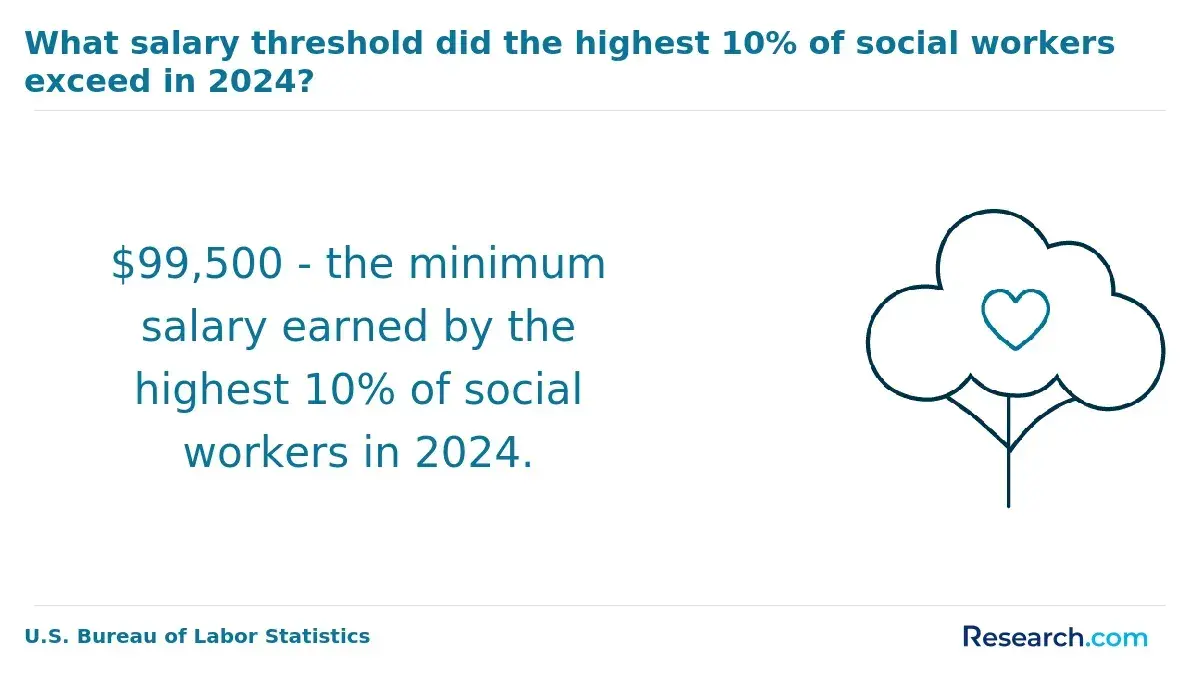
| Healthcare settings | Healthcare social workers earn a median annual salary of $68,090, with the top 10% making up to $100,870. | Clinical complexity, hospital size, specialization, licensure, and demand for discharge planning, care coordination, and behavioral health support. |
| Schools | Salaries generally range from $45,000 to $60,000. | District budgets, state and local funding, union contracts, caseload size, and school social work credential requirements. |
| Nonprofits | Roles vary from $40,000 to $65,000. | Grant funding, donations, government contracts, program size, leadership duties, and specialization in areas such as mental health or veteran services. |
| Government agencies | Positions often offer $50,000 to $70,000. | Structured pay scales, public benefits, tenure, agency level, union representation, and advancement into supervision or administration. |
These figures show why “average MSW salary” can be misleading without context. A social worker providing crisis intervention in a school, a licensed clinician in a hospital, and a case manager in a county agency may all hold an MSW but face different pay structures and career ladders.
When comparing settings, look beyond base pay. Benefits, pensions, loan forgiveness eligibility, supervision toward licensure, schedule predictability, and advancement opportunities can significantly affect total career value. Professionals aiming for advanced practice, leadership, or academic roles may also consider doctoral training; one starting point is reviewing affordable DSW programs to understand how further education may support long-term career growth.
How much do MSW social workers earn in hospitals?
MSW social workers in hospitals typically earn salaries ranging from $60,000 to $75,000 annually, although actual pay depends on location, experience, hospital size, licensure, shift expectations, and clinical specialization. Hospital roles often pay more than many community-based positions because the work requires fast clinical judgment, interdisciplinary collaboration, and comfort with high-acuity patient needs.
Hospital MSW duties may include discharge planning, crisis intervention, psychosocial assessment, family counseling, care coordination, resource navigation, and support for patients facing chronic illness, trauma, psychiatric crises, or end-of-life decisions. The average earnings for social workers in hospitals generally surpass those in child, family, and school social work, where the national mean annual salary is about $58,570.
What affects hospital MSW pay?
- Experience level: Entry-level hospital social workers may start around $55,000 to $60,000, with raises tied to tenure, performance, specialization, or supervisory responsibility.
- Specialty unit: Oncology, psychiatry, emergency departments, transplant services, intensive care, and palliative care may require deeper clinical expertise and can support higher pay.
- Employer type: Large academic medical centers, specialized hospitals, and grant-funded programs may offer competitive benefits and bonuses.
- Location: Metropolitan areas or specialized units such as oncology or psychiatry often offer salaries at or above the $75,000 range.
- Licensure and credentials: Clinical licensure and relevant certifications can make candidates more competitive for higher-paying roles.
Hospital social work can be financially attractive, but it is not the easiest setting. Caseloads can be intense, decisions are time-sensitive, and social workers frequently support patients and families during medical crises. Candidates should weigh salary against schedule demands, emotional intensity, on-call expectations, and opportunities for advancement.
Students preparing for hospital-based roles should prioritize accredited MSW training with strong clinical coursework and field placements in healthcare settings. Flexible options such as masters of social work online programs can help working adults build the qualifications needed for clinical and medical social work careers.
What are MSW salaries in schools versus nonprofits?
MSW salaries in schools and nonprofits differ because the two settings operate under different funding models and job expectations. School-based social workers are typically paid through public education budgets and district salary schedules, while nonprofit social workers may depend on grants, donations, government contracts, program revenue, or a mix of funding sources.
| Setting | Salary information stated | Best fit for | Common trade-offs |
| Schools | School-based MSW professionals typically earn between $50,000 and $65,000 annually. | Professionals interested in student mental health, family engagement, crisis response, attendance issues, behavioral support, and collaboration with educators. | More predictable calendars and public-sector benefits may come with district budget limits and slower salary growth. |
| Nonprofits | Data from May indicates that 14% of nonprofit social workers earn between $72,000 and $79,499, with the top earners reaching $87,000 to $94,499 annually. | Professionals interested in community advocacy, program development, outreach, housing, behavioral health, veteran services, domestic violence prevention, or social justice work. | Some roles offer strong mission alignment and leadership opportunities, but job stability can depend on funding cycles. |
Schools generally offer a clearer employment structure. Pay may be tied to education level, years of service, union agreements, and local district resources. The work often centers on student counseling, crisis intervention, family coordination, behavioral planning, and support for students facing barriers to learning.
Nonprofit salaries can be harder to predict. Some nonprofit roles pay less than school positions, especially in small community agencies with limited funding. Others pay more when they involve clinical specialization, program management, grant-funded initiatives, government contracts, or services in high-demand areas such as mental health or veteran services.
The better choice depends on what you value most. Schools may appeal to MSW graduates who want a structured calendar, stable public-sector employment, and direct work with children and families. Nonprofits may be a stronger fit for those who want broader community impact, advocacy work, or a faster path into program leadership. Students who want to complete the degree more quickly can compare the fastest social work degree options while still checking accreditation, field placement quality, and licensure preparation.
How do government MSW jobs pay compared to private sector?
Government MSW jobs often compare favorably with many private-sector social work positions because public agencies tend to use structured pay grades, formal benefits, and predictable advancement systems. Local government social workers earn a median annual wage of $70,420, according to the Bureau of Labor Statistics via humanservicesedu.org.
Government roles can include child welfare, public health, behavioral health, veterans services, corrections, aging services, housing, disability services, and policy-related positions. These jobs may not always offer the highest starting salary, but the total compensation package can be strong when health insurance, retirement benefits, paid leave, union protections, and salary progression are included.
Why government MSW jobs can pay well
- Stable funding: Public agencies may be less dependent on donations or short-term grants than many nonprofits.
- Structured pay grades: Salary increases are often tied to tenure, education, job classification, and promotion.
- Comprehensive benefits: Pensions, health insurance, paid leave, and other benefits can increase total compensation.
- Clear advancement tracks: MSW professionals may move into supervisory, administrative, policy, or program-management roles.
Private-sector social work is more varied. Private hospitals and large healthcare systems can offer salaries competitive with government roles, especially for licensed clinical social workers. Smaller nonprofits, private agencies, and community programs may pay less but can provide flexibility, specialized experience, or mission-driven work that some professionals value more than salary alone.
For candidates who prioritize predictable pay growth and benefits, government work is often a strong option. For those who want clinical specialization, a less bureaucratic environment, or flexible scheduling, private-sector roles may be worth considering. Students still choosing an MSW pathway can review the easiest MSW programs to get into, but admission accessibility should be balanced against accreditation, field placement support, licensure preparation, and employer reputation.
What factors influence MSW salary differences across settings?
MSW salary differences are rarely caused by one factor. They usually reflect a combination of employer type, funding source, licensure requirements, job complexity, geographic market, and the level of responsibility attached to the role. A school social worker, hospital discharge planner, county child welfare supervisor, and nonprofit clinical program manager may all need an MSW, but their pay is shaped by different labor markets and budget realities.
Key factors that shape MSW pay
- Employer setting: Hospitals often pay more because the work is clinically complex, time-sensitive, and connected to patient outcomes. School-based social workers may receive stable but lower pay because public education budgets are constrained.
- Government level: Salaries in state and local government vary widely. State government social workers earn a median annual salary of $63,350, according to the Bureau of Labor Statistics via humanservicesedu.org. Federal government and specialized programs may offer higher wages, though these positions are less common.
- Funding model: Nonprofits tend to offer the lowest salaries when funding is limited, but some provide benefits like loan forgiveness or performance bonuses.
- Licensure and specialization: Specialized clinical licensure can increase earnings, especially in therapy, healthcare, behavioral health, and supervisory roles.
- Experience and tenure: More years in the field can lead to higher pay, particularly in unionized, government, school, or large healthcare settings with formal salary ladders.
- Location: Urban versus rural settings affect pay, with metropolitan areas typically paying more.
- Union representation: Union representation can improve wages and benefits, especially in public-sector roles.
- Leadership responsibility: Supervisory, administrative, program-director, and policy roles often pay more than entry-level direct-service positions.
Salary should be evaluated alongside workload, caseload size, supervision quality, licensure support, benefits, safety risks, flexibility, and burnout potential. A slightly lower-paying role with strong supervision and a clear path to licensure may be more valuable early in a career than a higher-paying job with limited mentoring or unsustainable caseloads.
What education is required for high-paying MSW roles?
Most high-paying social work roles require more than a bachelor’s degree. The common foundation is a Master of Social Work from a program accredited by the Council on Social Work Education (CSWE). A CSWE-accredited MSW is especially important for clinical practice, licensure eligibility, healthcare roles, school social work credentials, government positions, and many supervisory tracks.
For clinical roles, the MSW is only the beginning. Many higher-paying positions require post-graduate supervised clinical hours and a licensing exam. The Licensed Clinical Social Worker (LCSW) credential is especially valuable for social workers who provide therapy, diagnose and treat mental health conditions where allowed by state law, work in healthcare settings, or pursue private practice.
The federal government offers some of the highest median salaries for specialized social workers, with annual pay around $102,560, according to the Bureau of Labor Statistics via humanservicesedu.org. These roles may value expertise in administration, policy, program evaluation, behavioral health, veterans services, public health, or advanced clinical practice.
Education and credential steps that support higher pay
- Complete a CSWE-accredited MSW program. Accreditation matters for licensure eligibility and employer trust.
- Choose field placements strategically. Placements in hospitals, government agencies, schools, or specialized behavioral health programs can lead to stronger job prospects.
- Work toward licensure. Credentials like the LCSW often require supervised clinical hours after the MSW and passing a licensing exam.
- Add targeted certifications. Substance abuse counseling, school social work, medical social work, hospice, case management, or forensic social work credentials can strengthen salary prospects in specific settings.
- Build leadership skills. Budgeting, supervision, program management, documentation, compliance, and data skills can help MSW professionals move into higher-paying administrative roles.
The best education plan depends on the role you want. A student aiming for hospital clinical practice should prioritize medical social work placements and licensure preparation. A student interested in policy or government administration should look for macro practice, public-sector internships, and coursework in program evaluation or policy analysis.
How do online MSW programs impact career salaries?
Online MSW programs can improve career salary potential when they are accredited, field-placement focused, and aligned with licensure requirements. The online format itself does not automatically increase pay; the value comes from earning the MSW credential, qualifying for advanced roles, completing relevant practicum hours, and preparing for state licensure or specialized practice.
Graduates from accredited online MSW programs can qualify for roles in hospitals, schools, nonprofits, and government agencies where a master’s degree is required or preferred. For working adults, the online format can also reduce opportunity cost by allowing them to keep earning income while completing the degree.
Mental health and substance abuse social workers earn a median salary of $60,060, with the top 10% making over $104,000 according to the Bureau of Labor Statistics via humanservicesedu.org. Online MSW programs that offer strong clinical training, relevant electives, and supervised fieldwork in behavioral health or substance abuse settings may help graduates compete for these roles.
What to check before choosing an online MSW
- CSWE accreditation: This is essential for many licensure pathways and employer acceptance.
- Field placement support: The program should help students secure placements that match career goals, not leave them to navigate the process alone.
- Licensure alignment: Students should confirm that the curriculum supports the requirements in the state where they plan to practice.
- Specialization options: Healthcare, clinical practice, school social work, substance abuse, and policy tracks can influence career direction.
- Employer reputation: Some employer bias against online degrees persists, but it is decreasing as reputable institutions expand quality online offerings.
- Alumni and career support: Strong advising, networking, and job-placement resources can affect how quickly graduates move into better-paying roles.
The strongest online MSW choice is not necessarily the cheapest or fastest. It is the program that meets accreditation standards, prepares students for licensure, provides credible field training, and connects coursework to the settings where they want to work.
What is the job outlook for MSW social workers by setting?
The job outlook for MSW social workers varies by setting, but demand remains closely tied to healthcare access, behavioral health needs, aging populations, school mental health concerns, child welfare, substance abuse treatment, and public-sector service delivery. The strongest opportunities often go to candidates with licensure, specialized field experience, and the ability to work across clinical, administrative, and community systems.
Hospital and healthcare settings
Hospitals commonly hire MSW graduates for patient advocacy, discharge planning, care coordination, crisis intervention, and mental health support. Demand is especially steady in large medical centers and specialized units where patients need help navigating complex health, family, financial, and community-resource issues.
School settings
School social workers are increasingly important as student mental health, behavioral support, family engagement, and crisis response receive more attention. These roles may be shaped by education policy, district budgets, and local mental wellness initiatives.
Nonprofit settings
Nonprofits offer roles in community outreach, housing, behavioral health, substance abuse programs, advocacy, and social services. These positions can be highly mission-driven, but job stability may depend on grants, donations, and government contracts.
Government settings
Government agencies rely on MSW professionals in child welfare, public health, corrections, aging services, disability services, veterans services, and social policy. These roles can offer stable employment, comprehensive benefits, and opportunities to influence systems-level change.
- Median salary for social workers in diverse roles is $69,480;
- The top 10% earn over $112,740, highlighting strong earning potential;
- Specialized or administrative roles often yield higher pay.
For job security and long-term earning potential, MSW candidates should look for settings with growing service demand, clear advancement pathways, strong supervision, and licensure support. Hospitals, schools, behavioral health agencies, and government programs are often practical targets for graduates who want both employability and room to grow.
Which MSW certifications boost salary potential?
MSW certifications can improve salary potential by proving specialized expertise, supporting licensure-based roles, and helping candidates qualify for advanced clinical, school, healthcare, case management, forensic, hospice, or administrative positions. Certifications do not guarantee higher pay on their own, but they can strengthen a candidate’s case for promotion, specialization, or movement into better-compensated settings.
The Licensed Clinical Social Worker (LCSW) credential is one of the most valuable credentials for salary growth. It enables work in private practice, hospitals, mental health agencies, and other clinical settings. Professionals with an LCSW typically earn toward the higher end of the national average salary range of $66,836 to $81,360 reported by Salary.com as of January 2025.
| Credential | Where it can help | Why it may support higher pay |
| Licensed Clinical Social Worker (LCSW) | Private practice, hospitals, mental health agencies, clinical programs | Qualifies social workers for advanced clinical responsibilities and independent practice where permitted. |
| Certified Advanced Social Work Case Manager (C-ASWCM) | Advanced case management roles | Signals expertise in coordinating complex care and services. |
| Certified School Social Work Specialist (C-SSWS) | Educational settings | Supports roles focused on student well-being, behavioral programs, and school-based interventions. |
| Certified Forensic Social Worker (CFSW) | Government, courts, corrections, legal-adjacent services | Demonstrates specialized knowledge for roles involving legal systems and forensic populations. |
| Certified Hospice and Palliative Social Worker (CHP-SW) | Hospice, palliative care, hospitals, end-of-life care programs | Shows expertise in serious illness, family support, grief, and interdisciplinary care. |
| Certified Social Work Case Manager (C-SWCM) | Hospitals, social service agencies, care coordination programs | Supports roles involving care plans, resource navigation, and service coordination. |
| Board certification from the American Board of Social Work Specialties (ABSW) | Advanced clinical or macro practice | Validates advanced practice skills and professional credibility. |
Before pursuing a certification, confirm that it is recognized in your target setting and worth the cost. The most useful credential is the one that aligns with your job market, licensure status, employer requirements, and career direction.
How to choose an MSW program for maximum earning potential?
To choose an MSW program for maximum earning potential, focus on accreditation, licensure preparation, field placement quality, specialization options, employer connections, and total cost. A strong MSW program should do more than award a degree; it should position you for the settings and credentials that lead to better pay.
Healthcare roles typically offer some of the strongest salary prospects. For instance, social workers in California healthcare systems earn an average of $97,090, according to socialworklicensemap.com (2026 updates). Students interested in higher-paying roles should consider programs with clinical or healthcare social work concentrations and field placements in hospitals, integrated care settings, behavioral health clinics, or specialized medical programs.
Program features that can support higher earnings
- CSWE accreditation: Prioritize CSWE-accredited programs because accreditation is central to licensure eligibility and employer confidence.
- Clinical or healthcare tracks: Programs with clinical, medical, behavioral health, or substance abuse concentrations can prepare students for higher-paying settings.
- Strong field placements: Internships in hospitals, healthcare systems, government agencies, or specialized nonprofits can lead to better job opportunities.
- Licensure support: Look for advising, exam preparation, supervised-practice guidance, and clear information about LCSW requirements.
- Geographic alignment: Location matters because states like California, New York, and Massachusetts generally offer higher salaries due to demand and cost of living.
- Employer and alumni networks: Programs connected to hospitals, agencies, school districts, and government employers may improve placement outcomes.
- Cost discipline: Compare tuition costs against expected salaries to ensure a worthwhile investment.
- Flexible scheduling: Online, hybrid, evening, or part-time formats may help students keep working while earning the degree.
A common mistake is choosing an MSW program based only on convenience or admission speed. Those factors matter, but earning potential depends more on whether the program is accredited, respected by employers, aligned with licensure, and able to place you in the settings where salaries are stronger. The best choice is the program that balances affordability, practical training, credential readiness, and access to the career path you actually want.
Other Things You Should Know About Social Work
In 2027, hospitals tend to offer the highest salaries for MSW social workers compared to schools, nonprofits, and government settings. This is often attributed to the demand for specialized skills and the intensity of work in medical environments, which can command higher compensation.
Yes, many MSW social workers progress into leadership positions such as clinical supervisors, program directors, and policy advocates. Advancement typically requires experience, continuing education, and sometimes specialized certifications. Leadership roles often involve overseeing teams, managing programs, and influencing organizational policies.
Geographic location significantly affects MSW salaries, with urban areas and states with higher costs of living generally offering higher wages. Regions facing shortages of qualified social workers may also provide increased pay or bonuses to attract talent. It's important to consider local demand, economic conditions, and funding availability.
Aside from salary, MSW social workers often receive benefits such as health insurance, retirement plans, paid time off, and professional development support. Many employers also offer flexible schedules and student loan repayment assistance. These benefits can enhance overall job satisfaction and financial stability.
References
- How to Become a Social Worker | 2026 Update https://teach.com/careers/counseling/social-worker/
- Comparing Private Sector and Government Worker Salaries - Reason Foundation https://reason.org/policy-brief/public-sector-private-sector-salary/
- Types of Social Workers: Exploring the Many Fields in Which They Serve https://www.umassglobal.edu/blog-news/types-of-social-workers
- 5 High-Paying Jobs You Can Get with an MSW https://onlinedegrees.keuka.edu/blog/highest-paying-msw-jobs
- Humanservicesedu https://humanservicesedu.org
- High-demand social work roles in 2026: trends and opportunities https://socialwork.pacific.edu/blog/high-demand-social-work-roles-2026-trends-and-opportunities
- Social Work Salaries - How Much Do Social Workers Make? https://www.onlinemswprograms.com/careers/social-worker-salaries/
- Social Work Salary Overview | Psychology.org https://www.psychology.org/social-work/salary/
- What Is The Average Salary With a MSW? | University of Nevada, Reno https://onlinedegrees.unr.edu/blog/how-much-do-social-workers-make-masters-degree
- How to Become a Social Worker for a Nonprofit in Texas https://www.texassocialworkedu.org/social-work-industries-in-texas/nonprofits/