529 Plan Withdrawal Rules: How to Take a Tax-Free Distribution in 4 Steps for 2027

Student Finance & Loan Expert
Navigating the complexities of 529 plan withdrawals can be daunting, but understanding the rules is crucial to maximizing your savings and avoiding unnecessary penalties. In this guide, I will help you break down the process of taking tax-free distributions from your 529 plan into four simple steps. By following these steps, you can ensure your funds are used effectively for qualified education expenses, providing financial peace of mind while supporting your educational goals.
Key Things You Should Know About 529 Plan Withdrawal Rules for 2027
- To ensure that your withdrawals are tax-free, funds must be used for qualified education expenses.
- To avoid tax issues, it is crucial to time your withdrawals so that they match the qualified expenses incurred within the same tax year.
- Proper documentation and reporting are essential to substantiate that your withdrawals are used for qualified expenses.
- How do I take tax-free distribution in 4 steps for 2027?
- How do I request a withdrawal from my 529 plan?
- Are there specific conditions for 529 plan withdrawals?
- What happens if I make a non-qualified withdrawal from a 529 plan?
- Are there any exceptions to the 529 plan withdrawal penalty?
- How do 529 plans compare to other education funding options?
- Are there state-specific penalties for 529 plan withdrawals?
- Should I withdraw from my 529 plan or explore alternative financing options?
- Can 529 Plans Support Educational Pathways Beyond Traditional Colleges?
- Can I use my 529 plan to fund graduate education?
- How Can I Align My 529 Plan Use With Future Career Success?
- Can I Use My 529 Plan for Vocational Training and Career Development?
- What are common mistakes to avoid during a 529 plan withdrawal process?
- Can I Supplement My 529 Plan Withdrawals with Other Funds for Living Expenses?
- What happens if the beneficiary does not use all 529 plan funds?
- Is a master's program online 1 year eligible for 529 plan withdrawals?
- What records should I keep for tax purposes?
- How do I report a 529 plan withdrawal on my taxes?
- How do 529 plans impact broader education financing decisions?
How do I take tax-free distribution in 4 steps for 2027?
Based on a survey, 37% of 529 plan investors cited that one major factor that increased their inclination to use a 529 plan is the tax benefits. However, taking a tax-free distribution from a 529 plan involves careful planning and execution to ensure that you meet all the requirements for qualified education expenses and avoid penalties. Typically, it involves the following steps:
1. Calculate Your Qualified Education Expenses
Qualified Education Expenses (QEE) include:
- Tuition and Fees
- Room and Board
- Books, Supplies, and Equipment
- Computers and Technology
- Special Needs Services
- K-12 Tuition
- Apprenticeship Program Expenses
- Student Loan Repayments
Ensure that the expenses and the withdrawals occur in the same calendar year to simplify record-keeping and tax reporting. Keep detailed records of all qualified expenses, including receipts, invoices, and proof of payment. This is crucial for substantiating your claims in case of an audit. Subtract any scholarships, grants, or other tax-free educational assistance from your qualified education expenses to avoid overestimating your QEE.
2. Determine When to Withdraw
Your 529 plan withdrawal should occur in the same year that the expenses are incurred to avoid tax complications and ensure that withdrawals match expenses. You have to plan withdrawals to minimize the impact on financial aid.
For example, if the student is likely to receive significant financial aid in a particular year, consider adjusting the timing of withdrawals. To avoid penalties, ensure that withdrawals are made only for qualified expenses to avoid the 10% federal penalty on non-qualified withdrawals and any state-specific penalties.
3. Decide Which 529 Plan Account to Withdraw From
If you have multiple 529 plan accounts (e.g., accounts with different beneficiaries or accounts in different states), decide which account to withdraw from. Some states offer tax benefits for contributions and may recapture these benefits if you withdraw funds for non-qualified expenses. Consider the state tax implications of withdrawals from different accounts.
Evaluate the performance of each account. You might prefer to make a 529 plan withdrawal from an account that has not performed as well to leave better-performing investments to grow. You also have to consider the ownership of the accounts. For example, withdrawals from grandparent-owned 529 plans can affect the student’s financial aid eligibility differently than withdrawals from parent-owned plans.
4. Complete the Withdrawal Request
Reach out to the 529 plan administrator to initiate the withdrawal process. This can typically be done online, over the phone, or by submitting a paper form. Indicate whether the withdrawal should be paid to the educational institution, the beneficiary (student), or the account owner (parent or guardian).
Payments made directly to the institution or beneficiary can simplify record-keeping and ensure that funds are used for qualified expenses. Submit any required documentation, such as invoices or proof of enrollment, to support the withdrawal request.
How do I request a withdrawal from my 529 plan?
The percentage of those saving for college who are using 529 plans increased from 36.9% in 2022 to 39.3% in 2023. Requesting a 529 plan withdrawal involves several steps to ensure the funds are used appropriately. As discussed, the first step is to gather and prepare beneficiary information, complete information on the educational institution, as well as the related expense documentation.
Most 529 plans offer multiple methods for disbursing funds such as direct payment to the educational institution. However, if you have already paid for qualified expenses out of pocket, you can request a reimbursement.
Submit the request online or send the completed form to your plan provider. Double-check all information to avoid delays. Track the status of your withdrawal to ensure the funds are disbursed correctly. This can typically be done through your plan provider's website or by contacting customer service.
Are there specific conditions for 529 plan withdrawals?
There are specific conditions for 529 plan withdrawals to ensure that the funds are used appropriately and to avoid taxes and penalties. For instance, funds must be used at eligible educational institutions, which include accredited post-secondary institutions and some institutions outside the U.S. that participate in the U.S. Department of Education’s Federal Student Aid programs.
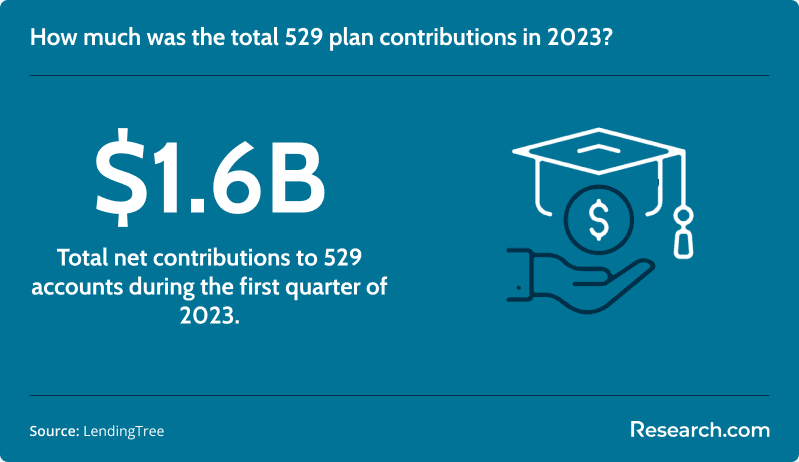
529 plan withdrawals can affect financial aid eligibility. It is important to coordinate the timing and amount of withdrawals to minimize the impact on the beneficiary’s financial aid package. Data from ISS Market Intelligence report that net contributions to 529 accounts during the first quarter of 2023 were $1.6 billion.
Some states have specific rules and benefits for their own 529 plans, such as state tax deductions for contributions or specific conditions for withdrawals. Make sure to understand the rules of the state where the 529 plan is administered.
What happens if I make a non-qualified withdrawal from a 529 plan?
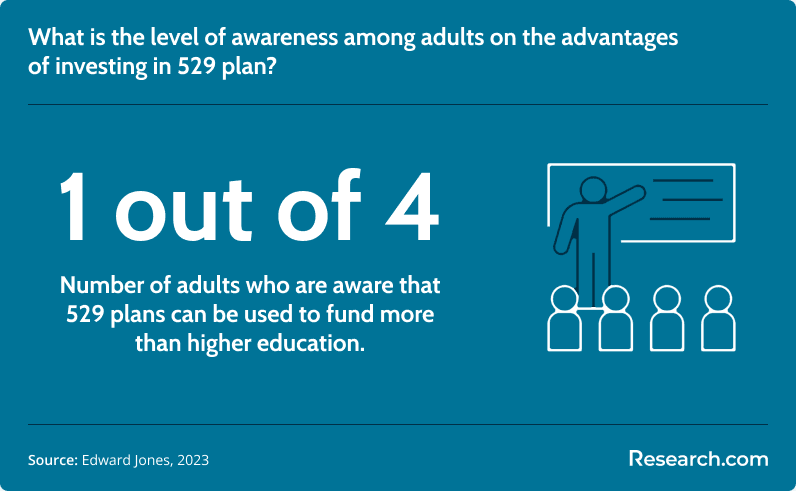
While American families are increasingly taking advantage of 529 savings plans to save for education, awareness of 529 plan and its tax consequences needs to increase. Only one out of every four adults (25%) knows that 529 plans can be used to fund more than higher education. Making a non-qualified withdrawal from a 529 plan has several financial implications, including taxes and penalties.
Tax Consequences
The earnings portion of a non-qualified withdrawal is subject to federal income tax. The original contributions (the principal) are not taxed because they were made with after-tax dollars.
Depending on your state, the earnings portion may also be subject to state income tax. Some states may require you to repay any state tax deductions or credits you received for contributions.
Penalties
The earnings portion of a non-qualified withdrawal is generally subject to a 10% federal penalty tax. This penalty is intended to discourage the use of 529 plan funds for non-educational purposes. However, there are specific circumstances where the 10% penalty may be waived.
Reporting Requirements
When you make a withdrawal from a 529 plan, you will receive Form 1099-Q from the plan administrator. This form reports the total amount of the distribution and the earnings portion. You must report the non-qualified withdrawal on your federal income tax return. The earnings portion of the withdrawal will be included in your taxable income, and the 10% penalty will be calculated and reported.
Are there any exceptions to the 529 plan withdrawal penalty?
Yes, there are several exceptions to the 10% penalty on non-qualified withdrawals from a 529 plan. These exceptions are designed to provide relief in certain situations where the funds cannot be used for qualified education expenses. With 529 account plans averaging $27,741 in 2023, aside from determining how much to contribute to a 529, you should also know how to maximize the value of your savings.
Here are the primary exceptions:
Scholarships
If the beneficiary receives a scholarship, you can withdraw an amount up to the scholarship amount without incurring the 10% penalty. The earnings portion of the withdrawal will still be subject to federal and possibly state income tax, but the 10% penalty will be waived.
Attendance at a U.S. Military Academy
If the beneficiary attends a U.S. military academy, you can withdraw an amount up to the cost of attending the academy without incurring the 10% penalty. The earnings portion of the withdrawal will still be subject to federal and possibly state income tax, but the 10% penalty will be waived.
Death or Disability of the Beneficiary
If the beneficiary dies or becomes disabled, the 10% penalty on non-qualified withdrawals is waived. The earnings portion of the withdrawal will still be subject to federal and possibly state income tax, but the 10% penalty will be waived.
Apprenticeship Programs
If the funds are used to pay for expenses related to an apprenticeship program that is registered and certified with the Secretary of Labor under the National Apprenticeship Act, the 10% penalty is waived. The earnings portion of the withdrawal will still be subject to federal and possibly state income tax, but the 10% penalty will be waived.
Student Loan Repayments
You can use up to $10,000 in total (lifetime limit) for student loan repayments for the beneficiary or their siblings without incurring the 10% penalty. The earnings portion of the withdrawal will still be subject to federal and possibly state income tax, but the 10% penalty will be waived.
How do 529 plans compare to other education funding options?
When planning for education expenses, it's essential to assess all available funding options to make informed financial decisions. While 529 plans are widely known for their tax-advantaged growth and flexibility, they are not the only tool available. Comparing these plans to other methods, such as student loans, personal savings, or education tax credits, provides a clearer picture of the most effective strategy for your unique situation.
Student Loans vs. 529 Plans
Student loans can be a valuable option for covering immediate educational costs when savings fall short. Unlike 529 plans, which rely on pre-saved funds, student loans allow students and parents to spread the cost of education over time. However, loans accrue interest, making them more expensive in the long run. In contrast, 529 plans provide tax-free growth when the funds are used for qualified education expenses, reducing the overall cost of funding education. If you're considering this option, you may want to explore how long does it take to process a student loan? to ensure timely access to necessary funds.
Personal Savings Accounts
Although personal savings accounts offer flexibility in how funds are used, they lack the tax benefits of 529 plans. Contributions to personal savings accounts are not tax-deductible, and the interest earned is typically subject to federal and state income taxes. A 529 plan's tax-advantaged growth and state-specific tax benefits often make it a more strategic choice for education funding.
Education Tax Credits
Two popular federal tax credits—the American Opportunity Tax Credit (AOTC) and the Lifetime Learning Credit (LLC)—can also reduce the financial burden of education costs. While these credits offer immediate tax relief, their availability is limited by income thresholds and maximum amounts. Combining tax credits with a 529 plan can be an effective strategy, but careful planning is necessary to avoid "double-dipping," where the same educational expense is used to qualify for both a tax-free 529 distribution and a tax credit.
By understanding the nuances of these funding options, families can create a comprehensive plan that minimizes financial stress while maximizing the benefits of their education savings strategies.
Are there state-specific penalties for 529 plan withdrawals?
State plan managers and their partners in the nonprofit sector invested nearly $50 million in 529 accounts in 2022 to help families save for college. In addition to federal penalties, there can be state-specific penalties and tax implications for non-qualified 529 plan withdrawals.
The specifics vary from state to state, but here are some common aspects to consider:
Recapture of State Tax Benefits
Many states offer tax deductions or credits for contributions to their own 529 plans. If you make a non-qualified withdrawal, you may have to repay (recapture) some or all of the state tax benefits you received. The amount to be recaptured is typically reported as income on your state tax return in the year of the non-qualified withdrawal.
Additional State Penalties
Some states may impose additional penalties on non-qualified withdrawals, similar to the federal 10% penalty on earnings. These penalties are generally assessed in addition to federal penalties and taxes.
Should I withdraw from my 529 plan or explore alternative financing options?
When education expenses exceed available savings, evaluate the timing and scale of 529 plan withdrawals alongside other funding strategies. Consider if supplementing with alternative financing—such as a part time student loans application—can provide necessary liquidity without compromising long-term tax benefits. Assess factors including interest rates, repayment terms, and the cumulative impact on your overall education financing strategy to make an informed decision.
Can 529 Plans Support Educational Pathways Beyond Traditional Colleges?
Accredited online programs and non-traditional education models are increasingly recognized as qualified institutions under 529 plan guidelines when they meet specific criteria. Prospective beneficiaries should verify eligibility through the institution’s accreditation status and by confirming that the program aligns with U.S. Department of Education standards. In addition, emerging flexible learning options can offer cost-effective solutions and tailored curricula that may reduce overall education costs. Researching and comparing these alternatives, including attending affordable online colleges, can enhance decision-making for families aiming to optimize their savings while ensuring compliance with 529 plan requirements.
Can I use my 529 plan to fund graduate education?
While 529 plans are commonly associated with undergraduate costs, they also extend to qualified expenses for graduate studies, including tuition, mandatory fees, and required materials at accredited institutions. Prospective graduate students should evaluate the benefits of tapping into these funds against alternative financing options, particularly when advanced degrees entail significantly higher expenses. For instance, reviewing the average cost of PhD in USA can offer valuable insight into the long-term financial commitment. Confirm eligibility with your institution’s financial aid office, as definitions of qualified expenses may vary, and assess the potential opportunity costs of using your 529 funds for graduate education.
How Can I Align My 529 Plan Use With Future Career Success?
When planning your education financing, evaluate how your 529 plan strategy integrates with long-term career objectives. Assess program outcomes by comparing job placement rates, starting salaries, and sector growth to ensure your educational investment translates to measurable career success. Consider factors such as market demand, the cost-to-benefit ratio of tuition versus potential earnings, and the overall return on investment when selecting a field of study. Researching data on various disciplines can help guide decisions so that withdrawals from your 529 plan not only cover qualified expenses but also support enrollment in programs that offer robust career prospects. For instance, exploring the best college degrees can provide valuable insights into programs with strong future earning potential. Integrate these findings into your overall strategy by regularly reviewing updated career and education data to adjust funding levels and withdrawal timing accordingly, ensuring your financial plan remains aligned with evolving industry trends and personal career ambitions.
Can I Use My 529 Plan for Vocational Training and Career Development?
Accredited vocational and technical training programs may qualify as eligible institutions for 529 plan funds if they meet federal standards. Confirm that the vocational school or program is recognized by the U.S. Department of Education and that it holds the necessary accreditation prior to utilizing 529 funds. Evaluate how the program’s curriculum aligns with your long-term career objectives and ensure that all expenses comply with the guidelines for qualified education expenses. For additional options geared toward skill development, explore online career schools to identify programs that support practical, career-focused training.
What are common mistakes to avoid during a 529 plan withdrawal process?
Ensure withdrawals align with qualified expenses by avoiding mismatches in timing or amounts that could trigger unwanted tax liabilities and penalties. Be cautious not to use funds for inadvertent non-qualified expenses, as this can lead to both federal and state tax complications. Misreporting or neglecting to submit adequate documentation can complicate audits and delay processing. Additionally, failing to review alternative financing options when 529 funds are insufficient may lead to overly relying on high-cost solutions, such as school loans companies, which can impact long-term financial planning.
Can I Supplement My 529 Plan Withdrawals with Other Funds for Living Expenses?
When 529 plan distributions do not fully cover all education-related costs—especially for housing and other living expenses—it may be necessary to explore alternative financing options. Assess your school’s cost-of-attendance guidelines carefully, as they determine the maximum room and board expenses that qualify under a 529 plan. In instances where supplemental cash flow is required, comparing the benefits and drawbacks of additional financing sources can be pivotal to avoiding disruption to your education funding strategy. For instance, review our article Can I use student loans for rent? and see if it aligns with your broader financial goals. Evaluate repayment terms, interest rates, and eligibility requirements to ensure any additional borrowing integrates efficiently with your overall budget and long-term financial planning.
What happens if the beneficiary does not use all 529 plan funds?
If the beneficiary does not fully utilize the 529 plan funds, reassessing your financial strategy is essential. You may have the option to change the beneficiary to another qualified family member, thereby preserving the tax-advantaged status of the remaining funds. Alternatively, consider whether alternative educational institutions might further utilize the balance. For example, evaluate opportunities at schools that take FAFSA to ensure cost-effective education. Additionally, review state-specific rollover rules and possible penalties for non-qualified withdrawals. Conduct thorough research and consult with a tax advisor to align any reallocation or withdrawal decision with your long-term financial objectives.
Is a master's program online 1 year eligible for 529 plan withdrawals?
When considering a one-year master’s program offered online, eligibility hinges on the institution’s accreditation and confirmation that the program meets the criteria for a qualified education expense. Ensure the institution is recognized by the U.S. Department of Education and adheres to the standards required under the 529 plan guidelines. Verify with the program’s financial aid office or a trusted financial advisor that the program’s expenses—including tuition, fees, and any required materials—are defined as qualified. For additional insights on such accelerated degree options, refer to the master's program online 1 year.
What records should I keep for tax purposes?
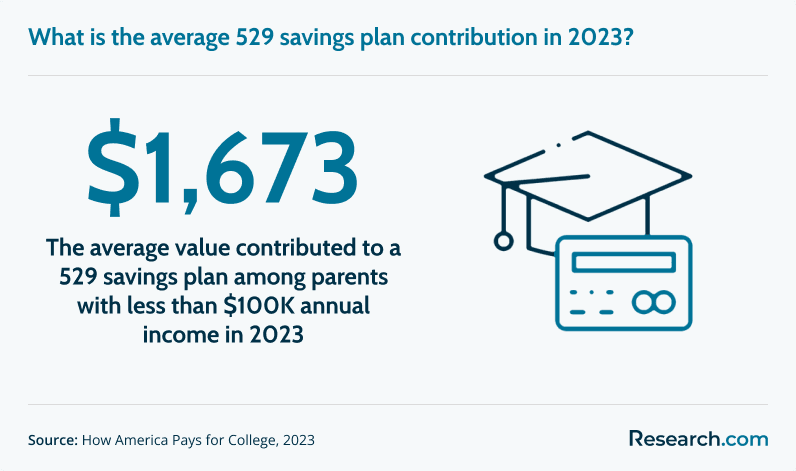
Among parents earning less than $100K annual income, the average value contributed to a 529 savings plan in 2023 was $1,673. To ensure that your 529 plan withdrawals are used for qualified education expenses and to substantiate your claims in case of an audit, it is important to keep thorough and accurate documentation.
Remember to keep the following documents:
Receipts
- Tuition and Fees: Keep copies of all bills and receipts from the educational institution showing the amount paid for tuition and mandatory fees.
- Room and Board: Obtain receipts or billing statements or a copy of the lease and proof of payment for the college room and board. For meal plans, keep receipts or billing statements from the school.
- Books and Supplies: Save receipts for textbooks, notebooks, lab supplies, and other required materials purchased from the campus bookstore or other retailers.
- Equipment: Keep receipts for required equipment, such as computer equipment, calculators, or lab tools.
Invoices and Billing Statements
- Educational Institution: Collect official invoices or billing statements from the educational institution detailing the costs for tuition, fees, room, and board.
- Online Purchases: Print and retain invoices for online purchases of books, supplies, and equipment.
- Loan Statements: Keep statements from the lender showing the payments made towards student loans for the beneficiary or their siblings.
Proof of Payment
- Credit Card Statements: Retain credit card statements showing the payments made for qualified expenses.
- Bank Statements: Keep bank statements that show payments made by check or electronic transfer for qualified expenses.
- Canceled Checks: Save copies of canceled checks used to pay for tuition, fees, housing, and other qualified expenses.
Course Schedules and Enrollment Verification
- Course Schedules: Keep a copy of the course schedule to verify the courses for which textbooks and supplies were purchased.
- Enrollment Verification: Obtain a verification of enrollment from the educational institution to confirm the student's enrollment status and eligibility.
How do I report a 529 plan withdrawal on my taxes?
Reporting a 529 plan withdrawal on your taxes involves several steps to ensure proper documentation and compliance with tax regulations. Here’s a detailed guide:
Step 1: Receive Form 1099-Q
When you make a withdrawal from a 529 plan, the plan administrator will send you Form 1099-Q, which reports the distribution. This form would require information on the total amount withdrawn, the amount of earnings included in the distribution, and the amount of contributions included in the distribution.
Step 2: Determine Qualified Education Expenses
Identify the amount of the withdrawal used for qualified education expenses, which can include tuition and fees, room and board, books, supplies, and equipment, and other special needs services.
Step 3: Match Withdrawals to Expenses
Ensure that the withdrawals and qualified expenses occur in the same calendar year. This helps simplify the tax reporting process and avoid complications.
Step 4: Calculate Taxable Earnings
If the withdrawal amount exceeds the qualified education expenses, the excess portion (earnings) may be subject to taxes and penalties. To determine the total qualified education expenses, add it up and subtract the total from the total withdrawal.
To calculate the earnings portion of the non-qualified withdrawal, use the ratio of earnings to the total distribution to find the taxable earnings portion.
Step 5: Report on Your Tax Return
If all the withdrawn funds were used for qualified expenses, no further action is needed on your tax return.
If there is a non-qualified portion, follow these steps:
- Form 1040: Report the earnings portion of the non-qualified withdrawal as other income on line 8 of Schedule 1 (Form 1040).
- Form 5329: If the withdrawal is subject to the 10% penalty, complete Part II of Form 5329 to calculate the additional tax on the earnings portion.
Step 6: Apply for Exceptions to the Penalty
If any of the exceptions to the 10% penalty apply (e.g., scholarship, military academy attendance, disability, death, apprenticeship programs, or student loan repayments), you can avoid the penalty. Attach a statement or documentation to your tax return to explain the exception.
How do 529 plans impact broader education financing decisions?
When considering 529 plans as part of a comprehensive education financing strategy, it’s essential to evaluate their role alongside other tools and options. While 529 plans offer valuable tax advantages and are effective for planned savings, they may not cover all educational costs, making it necessary to explore additional avenues.
For instance, families often turn to student loans when their 529 savings are insufficient. These loans, contrasted with 529 funds, can provide immediate financial relief but carry long-term repayment obligations. Deciding between a variable vs fixed rate student loan term is a critical consideration here, as it can significantly impact the cost of borrowing. Variable-rate loans might initially appear more affordable but come with the risk of increasing interest rates. In contrast, fixed rates offer predictability, potentially providing peace of mind in volatile markets.
Moreover, planning around supplemental financing options—such as scholarships, grants, and tax credits—can alleviate pressure on both savings and loan burdens. By layering these strategies effectively, families increase their flexibility to address unforeseen educational expenses and maximize financial benefits across funding sources.
Understanding how 529 plans integrate with broader financial tools allows families to make informed, strategic decisions that balance saving, investing, and borrowing wisely.
Here’s What Parents and Students Have to Say About the 529 Plan Withdrawal Process
Navigating the 529 plan withdrawal process was incredibly straightforward. I followed the four steps to ensure my son's tuition and expenses were covered tax-free, and the peace of mind it provided was priceless. Knowing his education is fully supported without additional financial stress has been a huge relief. Emily
Using the 529 plan for my daughter's college costs was seamless. By calculating our qualified expenses and timing the withdrawals perfectly, we avoided any tax complications and could focus on her studies. The efficiency and clarity of the process made a significant difference. James
I was amazed at how easy it was to take a tax-free distribution from our 529 plan in just four steps. The clear guidance and hassle-free withdrawal process allowed us to cover my son's college expenses effortlessly, bringing us both financial relief and joy. Sarah
Key Findings
- The percentage of those saving for college who are using 529 plans increased from 36.9% in 2022 to 39.3% in 2023.
- State plan managers and their partners in the nonprofit sector invest nearly $50 million in 529 accounts in 2022 to help families save for college.
- Over one-third of investors said the ability to roll unused 529 assets to Roth IRA made them feel more inclined to enroll in a 529 plan.
- 37% cited tax benefits as one primary advantage of 529 plans, aside from having the flexibility to control the 529 account (35%) and using it for qualified education expenses at eligible universities (33%).
References:
- College Savings Plans Network. (2023). 529 plan data.
- College Savings Plans Network. (2023). Mid-year infographic.
- Edward Jones. (2023). 529 survey.
- Investment News. (2023). Saving for college hurts retirement for nearly 60%, survey says.
- ISS Market Intelligence. (2023). ISS market intelligence releases annual 529 industry analysis report.
Other Things You Should Know About Taking a Tax-Free Distribution in 529 Plan
If you don't use 529 plan funds for qualified education expenses in 2027, withdrawals are subject to income tax and a 10% penalty on the earnings portion. Exceptions to penalties may apply, such as the beneficiary receiving scholarships or attending a U.S. military academy.
To take a tax-free distribution from a 529 plan in 2027, first verify that the expenses are qualified, such as tuition or textbooks. Next, ensure the school is eligible. Then, request a distribution directly to the institution or the beneficiary. Finally, maintain proper records and receipts for verification. --- **Question** What happens if I use 529 plan funds for non-educational purposes in 2027? **Answer** Using 529 plan funds for non-educational purposes in 2027 results in taxes and a 10% penalty on the earnings portion of the withdrawal. It's crucial to use the funds exclusively for qualified educational expenses to avoid these penalties. --- **Question** What are the tax implications if I don't use my 529 plan funds for educational expenses in 2027? **Answer** If 529 plan funds are not used for qualified educational expenses in 2027, earnings become subject to income tax and a 10% penalty, with some exceptions for scholarships or disabilities. It's essential to plan withdrawals carefully to maintain tax benefits. --- **Question** What are qualified educational expenses for 529 plan withdrawals in 2027? **Answer** Qualified educational expenses for 529 plan withdrawals in 2027 typically include tuition, fees, books, supplies, and equipment required for enrollment. Additionally, room and board are qualified if the student is attending at least half-time. Make sure expenses align with IRS guidelines to ensure tax-free status.
If you make a non-qualified withdrawal from a 529 plan in 2027, you must pay federal income tax on the earnings and an additional 10% penalty. Always track educational expenses and use funds accordingly to avoid these penalties.