Compare 529 Plans By State for 2027

Student Finance & Loan Expert
College costs continue to soar, reaching an average of $35,338 per year for a four-year public institution in 2024. This leaves many families facing a daunting financial challenge: how to save for their child's future education. While scholarships and grants can help, 529 plans offer a powerful tool for building a college savings nest egg.
But with different plans offered by each state, navigating the options and finding the best fit can feel overwhelming. This comprehensive guide will help you navigate 529 plans by state. We'll break down the key factors to consider when comparing state plans, including fees, investment options, and state tax benefits.
Key Things You Should Know About 529 Plans By State
- Save for Wyoming, all states have 529 plans by state with tax advantages, asset-based fees, and contribution limits.
- According to a 2024 report, there were more than 16 million active 529 accounts in the US at the end of December 2023.
- Combined assets of all 529 plans were at $471.2 billion by the end of 2023.
- States that allow a maximum 529 plan balance of more than $500,000 include Arizona, California, Maine, Missouri, and New York.
- Among U.S. states, Virginia's 529 plans had the highest assets value at over $90.3 billion.
- 529 Plans by State for 2027
- What is a 529 plan and how does it work for 2027?
- What are the key benefits of investing in a 529 plan?
- What are the most important factors to consider when comparing 529 plans by state?
- Comparing 529 plans by state, which states offer the highest tax benefits for 529 plans?
- What are the advantages and disadvantages of state-sponsored 529 plans?
- How does a 529 plan compare to other education funding options?
- How do you enroll in a 529 plan?
- What are the eligibility requirements for state tax benefits on 529 plans?
- How Should I Periodically Review and Adjust My 529 Plan Investments?
- What are the contribution limits for 529 plans for 2027?
- Can a 529 plan be used for vocational and technical education?
- What expenses can you cover with a 529 plan for 2027?
- How do fees and expenses impact 529 plan returns?
- Can a 529 Plan fully cover college costs?
- Will moving to another state affect my 529 plan benefits?
- Could tax law changes affect my 529 plan benefits?
- Can a 529 plan be effectively used for graduate education expenses?
- How can I integrate my 529 plan with other education financing options?
- Can I rollover or transfer my 529 plan to another state's plan?
- Can 529 plans be leveraged for estate planning benefits?
529 Plans by State for 2027
1. Alabama
Residents of Alabama looking to save for future education expenses can consider the state-sponsored CollegeCounts 529 plan. This plan offers a variety of benefits to make saving and accessing funds for college easier. One of the key advantages is the state tax benefit. Alabama residents who contribute to a CollegeCounts plan can deduct their contributions from their state income taxes, up to $5,000 for single filers or $10,000 when filing jointly. Sta
- State tax benefits: Single filers may deduct up to $5,000 from their income taxes while $10,000 may be deducted when filing jointly.
- Other benefits: The CollegeCounts 529 Visa Rewards card provides cash-back rewards that automatically go into your 529 account.
- Asset-based fees: 0.17% to 0.8%
- Investment options: Choose from three age-based options, six target portfolios or 25 individual fund portfolios
- Requires state residency: No
- Contribution limits: $475,000 maximum balance
2. Alaska
The Alaska 529 Education Savings Plan lets families choose from a range of investment options, including age-based portfolios that automatically adjust students approach college-age, static asset allocations for a more hands-on approach, or even individual fund selections for complete control. This level of customization allows users to personalize your savings strategy and maximize potential returns.
- State tax benefits: None (Alaska does not have state income tax)
- Other benefits: In-state tuition at the University of Alaska may be available to nonresidents
- Asset-based fees: 0.15% to 0.89%
- Investment options: Eight actively managed aged-based portfolios, six static portfolios or a University of Alaska (UA) portfolio, which can be used anywhere but offers special perks at UA
- Requires state residency: No
- Contribution limits: $25 minimum, $475,000 maximum balance
3. Arizona
The Arizona 529 plan (AZ529) provides a tax-advantaged method of saving for higher education. AZ529 offers a wide range of investment options, such as age-based and custom portfolios, to accommodate a variety of risk tolerances. These options are managed by reputable firms such as Fidelity Investments. AZ529 is a cost-effective alternative due to its low fees and expenses.
To encourage participation, Arizona residents are eligible for state tax deductions of up to $2,000 (single) or $4,000 (married filing jointly) on their annual contributions. Furthermore, AZ529 provides the flexibility to allocate funds for qualified educational expenses across the country, such as tuition, fees, and specific room and board costs. It is important to note that the plan encompasses K-12 tuition, apprenticeships, and student loan repayments.
- State tax benefits: Single filers may deduct up to $2,000 per beneficiary or $4,000 per beneficiary when filing jointly
- Other benefits: None
- Asset-based fees: 0.05% to 0.95%
- Investment options: Opt for actively managed or index portfolios, where you can choose from age-based allocation, static allocation, or individual portfolios
- Requires state residency: No
- Contribution limits: $519,000 maximum balance
4. Arkansas
Arkansas' Brighter Future 529 plan empowers families to save for future education expenses through a combination of tax advantages and flexible investment options. Managed by industry leaders Vanguard and Ascensus, the plan offers a range of investment choices. This includes age-based portfolios that automatically adjust asset allocation as the beneficiary nears college, alongside individual portfolios for those seeking a more customized approach.
- State tax benefits:
- Contributions of up to $5,000 per year for individual filers and $10,000 for married couples filing jointly are deductible from state taxable income.
- Up to $3,000 per Arkansas taxpayer or $6,000 for married couples can also be deducted to another state's 529 plan.
- A one-time deduction of $7,500 can also be claimed an out-of-state 529 plan is rolled into an Arkansas 529 plan.
- Other benefits: None
- Asset-based fees: 0.39% to 0.53%
- Investment options: Age-based and savings portfolios are available, or create your own custom portfolio
- Requires state residency: No
- Contribution limits: $500,000 maximum balance
5. California
California's ScholarShare 529 plan offers a robust and flexible savings option for families and provides a diverse array of investment options, including age-based portfolios that automatically adjust as the beneficiary ages and static portfolios for those who prefer a more hands-on approach. Additionally, there are no minimum contribution requirements, allowing families of all income levels to start saving easily.
- State tax benefits: There's no need to pay state tax on a 529 plan's earnings.
- Other benefits: The Matching Grant Program matches contributions up to $200 to new ScholarShare 529 accounts. A $25 incentive is also available for those who set up automatic contributions.
- Asset-based fees: 0% to 0.46%
- Investment options: Age-based, multi-and single fund portfolios are available, along with a guaranteed portfolio, which may be a good choice for investors with a short savings timeline
- Requires state residency: No
- Contribution limits: $529,000 maximum balance
6. Colorado
Designed for comprehensive and flexible college savings, Colorado's CollegeInvest 529 plan leverages the expertise of reputable financial institutions like Vanguard and TIAA-CREF. The plan offers a variety of investment options, including age-based portfolios that automatically adjust for the beneficiary's age and individual portfolios for a more customized approach. Low fees and straightforward management make CollegeInvest an attractive option for families of all income levels.
- State tax benefits: Up to $20,000 can be deducted per taxpayer ($30,000 for joint filers) from your Colorado state income tax return.
- Other benefits: The state matches residents' contributions up to $5,000, depending on the resident's income.
- Asset-based fees: Varies by plan selection.
- Direct Portfolio: 0.31% (plus $20 annual fee for nonresidents)
- Stable Value Plus: 0.71% to 0.99%
- Smart Choice: No fees
- Investment options: Colorado offers three direct-sold 529 accounts—the Direct Portfolio, Stable Value Plus and Smart Choice plans.
- Requires state residency: No
- Contribution limits: $500,000 maximum balance
7. Connecticut
Connecticut families looking to save for future education expenses should strongly consider the Connecticut Higher Education Trust (CHET) 529. It offers a double tax advantage: residents can deduct contributions from their state taxes (up to $10,000 for married couples filing jointly and $5,000 for single filers), and withdrawals used for qualified education expenses are tax-free. But the benefits go beyond just taxes.
- State tax benefits: Up to $5,000 can be deducted from state income tax annually for single filers, while up to $10,000 can be deducted for joint filers.
- Other benefits: None
- Asset-based fees: 0.05% to 0.95%
- Investment options: Three age-based portfolios, 12 static portfolios, and one option that invests in an interest-bearing deposit account
- Requires state residency: No
- Contribution limits: $300,000 maximum balance
8. Delaware
Delaware offers the tax-advantaged DE529 savings plan created to help families save for college costs. Contributions grow tax-deferred and qualify for federal tax-free withdrawals when used for qualified education expenses. There are no income limitations, so anyone can start saving, and the funds can be used flexibly for qualified expenses nationwide, including tuition, fees, books, and even some room and board costs.
- State tax benefits: No deductions are available, but you don’t have to pay state tax on your account’s earnings.
- Other benefits: None
- Asset-based fees: 0.05% to 0.95%
- Investment options: Three age-based portfolios, 11 static portfolios, and one option that invests in an interest-bearing deposit account
- Requires state residency: No
- Contribution limits: $350,000 maximum balance
9. District of Columbia
The District of Columbia's DC College Savings Plan offers a great way for residents to save for future education costs. Contributions grow tax-deferred and withdrawals used for qualified expenses are completely tax-free federally. But the real standout feature is the generous state tax incentive. D.C. residents can deduct up to $4,000 per year (or $8,000 for married couples filing jointly) from their state taxes, significantly boosting their savings potential.
- State tax benefits: Deduct up to $8,000 in contributions for married couples filing jointly (who have separate accounts) or $4,000 for individuals
- Other benefits: None
- Asset-based fees: 0.15% to 0.74%
- Investment options: Age-based portfolios, eight static portfolios and one option that invests in an interest-bearing deposit account
- Requires state residency: No
- Contribution limits: $25 minimum, $500,000 maximum balance
10. Florida
The Florida 529 Savings Plan helps save for college despite Florida's lack of state income tax deductions for contributions. This is because contributions still grow tax-deferred and qualify for federal tax-free withdrawals when used for qualified education expenses. These federal tax benefits make the plan an attractive option for Florida residents.
- State tax benefits: None (Florida does not have a state income tax)
- Other benefits: None
- Asset-based fees: 0.02% to 0.77%
- Investment options: Age-based portfolio, six predesigned static portfolios or customize your own investment strategy
- Requires state residency: Yes
- Contribution limits: $418,000 maximum balance
11. Georgia
Comparing 529 plans by state, Path2College 529 Plan is Georgia's initiative to help its residents prepare for higher education. Contributions grow tax-deferred and withdrawals used for qualified expenses are completely tax-free at both the federal and state level. The real kicker for Georgia residents is the generous state tax deduction. Single filers can deduct up to $4,000 per beneficiary per year, and married couples filing jointly can deduct up to $8,000.
- State tax benefits: Deduct up to $8,000 of contributions per year per beneficiary for joint filers, and $4,000 per year per beneficiary for all others
- Other benefits: None
- Asset-based fees: 0% to 0.12%
- Investment options: Age-based portfolios, five static portfolios and one option that invests in an interest-bearing deposit account
- Requires state residency: No
- Contribution limits: $25 minimum, $235,000 maximum balance
12. Hawaii
While Hawaii's HI529 College Savings Program doesn't offer a state tax deduction for contributions, it remains a compelling option for families saving for college thanks to its federal tax advantages. Contributions grow tax-deferred and withdrawals used for qualified expenses are completely tax-free at both federal and state levels.
- State tax benefits: No deductions are available, but you don’t have to pay state tax on your account’s earnings
- Other benefits: None
- Asset-based fees: 0.59% to 0.66%
- Investment options: Choose from eight investment options, including age-based and individual portfolios
- Requires state residency: No
- Contribution limits: $15 minimum, $305,000 maximum balance
13. Idaho
IDeal 529 College Savings Program packs a punch for residents looking to save for college with tax advantages. Contributions grow tax-deferred and withdrawals used for qualified expenses are tax-free federally and by the state. The real perk for Idaho residents is the generous state tax deduction. Single filers can deduct up to $6,000 per year, and married couples filing jointly can deduct up to $12,000, significantly boosting your savings.
- State tax benefits: Idaho taxpayers qualify for a state tax deduction of up to $6,000 for single filers ($12,000 if married, filing jointly)
- Other benefits: None
- Asset-based fees: 0.36% (0.34% for the Savings Portfolio)
- Investment options: Age-based portfolios, six static portfolios, and one savings portfolio
- Requires state residency: No
- Contribution limits: $25 minimum (or $15 if contributing via your paycheck), $500,000 maximum balance
14. Illinois
Illinois' Bright Start 529 College Savings Plan makes saving for college a breeze for residents. Contributions grow tax-deferred and withdrawals used for qualified expenses are tax-free at federal and state. But the real standout feature is the generous state tax deduction. Single filers can deduct up to $10,000 per year, and married couples filing jointly can deduct up to $20,000.
- State tax benefits: Illinois taxpayers can deduct contributions up to $10,000 per individual taxpayer or $20,000 for a married couple filing jointly
- Other benefits: Earn cash-back rewards with the Bright Start 529 Visa Rewards card, which can be automatically contributed into your 529 account
- Asset-based fees: 0.07% to 0.82%
- Investment options: Six age-based portfolios, six static portfolios and 17 individual fund portfolios
- Requires state residency: No
- Contribution limits: $500,000 maximum balance
15. Indiana
Indiana's CollegeInvest 529 Direct Savings Plan allows Indiana taxpayers to receive a 20% tax credit on contributions up to $7,500 annually, resulting in a maximum annual credit of $1,500. In addition to federal tax-free growth, Indiana residents can enjoy a state tax credit of up to $1,500 per year for contributions. The plan also offers flexibility in how funds can be used and a variety of investment options.
- State tax benefits: A state tax credit of up to 20% of their contributions, capped at $1,000 per year ($500 for married filing separately).
- Other benefits: Tax-deferred growth on contributions (earnings grow tax-free); tax-free withdrawals for qualified education expenses (tuition, fees, room & board, etc.); the flexibility to use funds at any accredited educational institution nationwide; potential gift and estate planning benefits; low minimum contributions to get started ($10)
- Asset-based fees: 0.18% to 0.82%
- Investment options: Different investment portfolios with different risk levels; option to choose age-based portfolios that automatically adjust as the beneficiary nears college
- Requires state residency: Open to anyone, but state tax benefits are only available to Indiana residents
- Contribution limits: $450,000 per beneficiary
16. Iowa
One of the primary benefits of the College Savings Iowa 529 plan is the state tax deduction, letting Iowa taxpayers deduct up to $5,500 per beneficiary account from their state-taxable income for 2024. It also offers tax-free growth, meaning investment earnings are not subject to federal or state income taxes if used for qualified education expenses. Looking at 529 plans by state, the College Savings Iowa 529 Plan features a variety of investment options, low fees, and flexibility to use the funds at any accredited post-secondary institution in the U.S. and many abroad.
- State tax benefits: Up to $5,500 per beneficiary from their state income taxes (for 2024)
- Other benefits: Earnings grow tax-free; tax-free withdrawals for qualified education expenses; usable nationwide at qualified educational institutions; multiple investment options
- Asset-based fees: 0.17%
- Investment options: 14 investment options from Vanguard
- Requires state residency: Open to everyone, but state tax benefits are for Iowans
- Contribution limits: No annual contribution limit, but total contributions per beneficiary cannot exceed $420,000
17. Kansas
In the Kansas Learning Quest 529 Education Savings Program, taxpayers benefit from a state income tax deduction of up to $3,000 per beneficiary for single filers and $6,000 for joint filers each year. The plan features tax-free growth, with investment earnings exempt from federal and state income taxes if used for qualified education expenses. It also provides several investment options and low fees, and its funds can be used at any institution within and outside the U.S.
- State tax benefits: Up to $3,000 per beneficiary, and up to $6,000 per beneficiary for married couples filing jointly
- Other benefits: Earnings grow tax-free; tax-free withdrawals for qualified education expenses; usable nationwide at qualified educational institutions; multiple investment options
- Asset-based fees: 0.1% to 0.71%
- Investment options: Offers age-adjusted and static investment options for various risk tolerances
- Requires state residency: Open to everyone, but state tax benefits are for Kansas residents
- Contribution limits: Maximum contribution of $450,000 per beneficiary
18. Kentucky
Kentucky's tax-advantaged college savings option is the KY Saves 529 Plan. While contributions are not deductible from Kentucky state income taxes, earnings on those contributions grow tax-deferred. Beyond state tax benefits, KY Saves 529 offers a variety of investment options to suit different risk tolerances, lets residents use funds at qualified educational institutions nationwide, and boasts low minimum contributions to jumpstart their savings journey.
- State tax benefits: Kentucky does not offer a state income tax deduction for the KY Saves 529 Plan contributions, but earnings on contributions grow tax-deferred.
- Other benefits: Qualifying withdrawals for education expenses are exempt from federal income tax
- Asset-based fees: 0.20% to 0.85%
- Investment options: Offers age-based portfolios, static investment portfolios, and a cash equivalents option
- Requires state residency: The plan is open to anyone, but state tax benefits are only available to Kentucky residents.
- Contribution limits: There is no annual contribution limit, but the total lifetime contribution limit per beneficiary is $450,000.
19. Louisiana
Louisiana residents can save for future college expenses through the Student Tuition Assistance and Revenue Trust (START) Saving Program. They benefit from a state income tax deduction for contributions, with a maximum annual deduction of $2,400 per beneficiary for single filers and $4,800 for joint filers. Comparing 529 plans by state, START boasts low minimum investment amounts, various investment options, and the flexibility to use funds at accredited institutions.
- State tax benefits: Up to $2,400 per beneficiary, per year, from their state income taxes (single filers); married couples filing jointly can deduct up to $4,800 per beneficiary, per year; any unused deduction amount can be carried forward to future tax years
- Other benefits: Qualifying withdrawals for education expenses are exempt from federal and state income taxes.
- Asset-based fees: 0.04% to 0.14%
- Investment options: All investment options utilize low-cost Vanguard funds and the State Treasurer's fixed-income fund, minimizing fees.
- Requires state residency: Participation in the START Saving Program requires Louisiana residency.
- Contribution limits: The total maximum balance is $500,000.
20. Maine
Maine's 529 plan is named NextGen 529, offering a state tax benefit of up to $1,000 per beneficiary, per year for Maine residents with a federal adjusted gross income of $100,000 or less if filing single or married filing separately, or $200,000 or less if filing as head of household or married filing jointly. The plan also promises tax-free growth on contributions, tax-free withdrawals for qualified education expenses, and the ability to use funds at any eligible postsecondary institution nationwide.
- State tax benefits: Maine residents with a federal adjusted gross income (FAGI) of $100,000 or less (single or married filing separately) or $200,000 or less (head of household or married filing jointly) can deduct contributions of up to $1,000 per beneficiary, per year from their Maine state income taxes.
- Other benefits: Funds can be used at qualified educational institutions nationwide, including apprenticeship programs and private K-12 tuition.
- Asset-based fees: 0% to 0.51% for Direct Series; 0% to 0.97% for Select Series
- Investment options: Age-based portfolios, static asset allocation portfolios, and single asset class portfolios
- Requires state residency: The plan is open to anyone, but state tax benefits are only available to Maine residents.
- Contribution limits: $545,000 maximum contribution across all 529 accounts for the same beneficiary
21. Maryland
The Maryland College Investment Plan is the state's current 529 savings plan. Residents can enjoy state income deductions of up to $2,500 per beneficiary annually, with a five-year carry-forward for contributions exceeding this amount. The plan also comes with tax-free growth, with investment earnings exempt from federal and state taxes when used for qualified education expenses.
- State tax benefits: Maryland residents can deduct contributions of up to $2,500 per beneficiary, per year from their state income taxes. However, there are income limitations for this deduction.
- Other benefits: Start saving with a small initial investment (as low as $25). Plan holders can also qualify for a $250 or $500 annual contribution fro the state through the Save4College program.
- Asset-based fees: 0.15% to 0.69%
- Investment options: Enrollment-based portfolios and fixed portfolios offering a static asset allocation with varying mixes of stocks and bonds
- Requires state residency: The plan is open to anyone, but state tax benefits are only available to Maryland residents.
- Contribution limits: $500,000 maximum balance
22. Massachusetts
Massachusetts offers a tax-advantaged college savings plan named the UFund College Investing Plan. Residents can enjoy a state tax deduction of up to $1,000 per beneficiary, per year for contributions to the plan. The plan's investment earnings are exempt from federal and state taxes when used for eligible education expenses.
- State tax benefits: Up to $1,000 per beneficiary, per year from their state income taxes (single filers) or $2,000 per beneficiary, per year (married filing jointly)
- Other benefits: Funds can be used at qualified educational institutions nationwide, including K-12 tuition (up to $10,000 per year) and certain apprenticeship programs. Also, start saving with a small initial investment (no minimum contribution amount).
- Asset-based fees: 0.05% to 0.95%
- Investment options: An age-based strategy or a custom strategy for investment
- Requires state residency: The plan is open to anyone, but state tax benefits are only available to Massachusetts residents.
- Contribution limits: $500,000 maximum balance
23. Michigan
Michigan offers several 529 college savings plans, but the most popular option is the Michigan Education Savings Program (MESP). This plan allows residents to deduct contributions of up to $5,000 per beneficiary, per year from their state income taxes. Its other benefits include federal tax-free growth on contributions and tax-free withdrawals for qualified education expenses, to name a few.
- State tax benefits: Up to $5,000 per beneficiary, per year from their Michigan taxable income (single filers) or $10,000 per beneficiary, per year (married filing jointly)
- Other benefits: Start saving with a small initial investment ($25 minimum).
- Asset-based fees: 0% to 0.19%
- Investment options: Age-based portfolios, target year portfolios, static asset allocation, single asset class portfolios, and a principal plus interest option
- Requires state residency: The plan is open to anyone, but state tax benefits are only available to Michigan residents.
- Contribution limits: $500,000 maximum balance
24. Minnesota
Minnesota's 529 plan is called the MNSaves, providing residents with a state tax deduction of up to $3,000 per beneficiary, per year for contributions. The plan's earnings are also federal and state tax-exempted when spent on qualified academic costs. Looking at other 529 plans by state, this 529 plan has low fees, features investment options, and is flexible to use at accredited schools here and abroad.
- State tax benefits: Residents can deduct contributions of up to $1,500 per beneficiary, per year from their Minnesota state income taxes (single filers) or $3,000 per beneficiary, per year (married filing jointly). Alternatively, they can claim a tax credit equal to 50% of contributions, up to a maximum of $500 per beneficiary, per year. This credit is subject to phase-out based on Adjusted Gross Income (AGI).
- Other benefits: Contribution earnings grow tax-deferred federally, qualifying withdrawals for academic costs are exempt from state and federal income taxes, flexibility in investment, nationwide fund use, and low minimums
- Asset-based fees: 0% to 0.28%
- Investment options: Age-based portfolios, static asset allocation portfolios, single asset class portfolios, and the MnCHOICES investment option that is designed specifically for students pursuing disability-related services at qualified schools
- Requires state residency: No, but state tax benefits are only available to Minnesota residents
- Contribution limits: $425,000 maximum balance
25. Mississippi
Mississippi offers tax-advantaged college savings through the Mississippi Affordable College Savings (MACS) Plan. While contributions aren't deductible on state income taxes, the earnings on those contributions grow tax-deferred. MACS also boasts federal tax-free withdrawals for qualified academic expenses, and the ability to shell out funds on eligible educational institutions in the US.
- State tax benefits: Single taxpayers can get deductions of up to $10,000, while those filing a joint return can deduct contributions up to $20,000.
- Other benefits: Funds can be used at qualified educational institutions nationwide, including K-12 tuition (up to $10,000 per year).
- Asset-based fees: 0.63% to 0.73%
- Investment options: Age-based portfolios, static asset allocation portfolios, and index funds that passively track specific market indexes for a low-cost approach
- Requires state residency: No, but there are no state tax benefits for nonresidents
- Contribution limits: $235,000 maximum balance
26. Missouri
In the Missouri Missouri Education Savings Trust (MOST), residents take advantage of a state tax deduction of up to $8,000 per beneficiary, per year for contributions. Plus, its growth in contributions are federally tax-exempt, withdrawals for qualified education expenses have zero tax, and funds can be used at qualified institutions.
- State tax benefits: Up to $8,000 per beneficiary, per year from their Missouri taxable income (single filers) or $16,000 per beneficiary, per year (married filing jointly)
- Other benefits: Start saving with a small initial investment (no minimum contribution amount required).
- Asset-based fees: 0.18% to 0.51%
- Investment options: Age-based portfolios, static asset allocation portfolios, and index funds
- Requires state residency: No, but state tax benefits are only available to Missouri residents
- Contribution limits: $550,000 maximum balance
27. Montana
Montana taxpayers can benefit from a state income tax deduction of up to $3,000 per year for single filers and $6,000 for married couples in the state's Achieve Montana 529 Plan. There are no state tax deductions for contributions, but it enables residents to grow their savings tax-deferred. Beyond this, the plan presents federal tax-free withdrawals for qualified education costs and its funds can be used at qualified academic institutions countrywide.
- State tax benefits: Contributions may be eligible of up to $3,000 per taxpayer (up to $6,000 for married individuals filing jointly).
- Other benefits: Save with a small initial investment ($25 minimum contribution)
- Asset-based fees: The exact percentage depends on the investment option you choose, but the fees typically range from 0.395% to 0.587% annually. There is no annual account maintenance fee if you are a Montana resident, use an automatic investment plan, take advantage of payroll deduction (if available), or maintain an account balance equal to or greater than $25,000. Otherwise, a $25 annual account maintenance fee applies.
- Investment options: Age-based portfolios, static asset allocation portfolios, and a cash equivalent option for those seeking capital preservation
- Requires state residency: No
- Contribution limits: The total lifetime contribution limit per beneficiary for all Montana 529 plans combined is $396,000.
28. Nebraska
The Nebraska Educational Savings Trust (NEST) is the most popular college savings option in the state. Nebraskans benefit from a state tax deduction of up to $10,000 per beneficiary, per year. The plan offers contribution growth without federal tax as well, no tax for withdrawals at education expenses, and is applicable to be spent on accredited schools all over the country.
- State tax benefits: Up to $10,000 per beneficiary, per year from their Nebraska state income taxes ($5,000 for married couples filing separately)
- Other benefits: Save with a small initial investment (no minimum contribution amount required).
- Asset-based fees: 0.1% to .66%
- Investment options: Age-based options, static options, individual investment options, and an FDIC-insured bank savings option
- Requires state residency: No, but state tax benefits are only available to Nebraskans
- Contribution limits: $500,000 maximum balance
29. Nevada
Nevada is unique in that it doesn't offer a state-sponsored 529 plan. There are several plans offered through Nevada's College Savings Plans Program, all administered by partner institutions. One such plan is the Vanguard 529 College Savings Plan. This plan offers the standard federal tax benefits of tax-deferred growth on contributions and tax-free withdrawals for qualified education expenses. Residents can choose from various investment options and enjoy the flexibility of using funds at qualified educational institutions nationwide.
- State tax benefits: None (Nevada does not have income state tax)
- Other benefits: Earnings on contributions grow tax-deferred federally. Qualifying withdrawals for education expenses are also exempt from federal income taxes.
- Asset-based fees: 0.12% to 0.42%
- Investment options: Age-based options or individual portfolios
- Requires state residency: No
- Contribution limits:
- $3,000 minimum initial investment ($1,000 for Nevada residents)
- $50 minimum for additional investments
- $500,000 maximum balance
30. New Hampshire
Although New Hampshire does not have a state income tax, the New Hampshire UNIQUE College Investing Plan offers significant federal tax benefits, including tax-free growth on investment earnings when used for qualified education expenses. It offers federal tax-exempt contributions and zero-tax withdrawals for academic expenses. Its funds can be applied to qualified schools too.
- State tax benefits: None (New Hampshire has no state income tax)
- Other benefits: No minimum contribution amount required for a small initial investment
- Asset-based fees: 0.05% to 0.95%
- Investment options: An age-based strategy and a custom strategy
- Requires state residency: No, but state tax benefits are only available to New Hampshire residents
- Contribution limits: $596,925 maximum balance
31. New Jersey
The NJBEST 529 Savings Plan is only available to New Jersey residents. It is a direct-sold plan offering a state tax deduction of up to $3,000 per beneficiary, per year for contributions. As an added benefit, NJBEST account holders may also qualify for a scholarship worth up to $3,000 if they attend a New Jersey college or university.
- State tax benefits: Beginning with donations made in tax year 2022, New Jersey residents with a gross income of $200,000 or less could be eligible for a state income tax deduction for up to $10,000 each individual, annually; one-time matching of the initial deposit into a new NJBEST account (maximum $750); students of NJ colleges can receive a college scholarship of up to $3,000
- Other benefits: Federal tax-free growth, tax-free withdrawals, investment options, nationwide use, and low minimum
- Asset-based fees: 0.1%-0.9%
- Investment options: Six age-based portfolios, six static portfolios and 17 individual fund portfolios
- Requires state residency: Yes
- Contribution limits: $305,000 per beneficiary
32. New Mexico
The New Mexico Scholar's Edge 529 Plan is the most popular choice when it comes to college plans in the state. New Mexico taxpayers benefit from a state income tax deduction for the full amount of their contributions each year. This plan goes beyond the basic benefits by offering federal tax-free growth on contributions, tax-free withdrawals for qualified education expenses, and nationwide use at qualified educational institutions.
- State tax benefits: Unlimited
- Other benefits: Start saving with a small initial investment (no minimum contribution amount required)
- Asset-based fees: 0.28%-2.08%
- Investment options: Enrollment year portfolios, target-risk portfolios, static investment options, individual investment options, and a capital preservation portfolio
- Requires state residency: No, but state tax benefits are only available to New Mexico residents
- Contribution limits: $500,000 maximum balance
33. New York
The New York 529 College Savings Program Direct Plan is a great option for residents seeking tax-advantaged college savings with low fees. Taxpayers can deduct contributions of up to $10,000 per beneficiary, per year from their state income taxes. It also features a variety of investment options from Vanguard mutual funds and a low minimum investment amount.
- State tax benefits: Up to $5,000 per year from their New York state income taxes ($10,000 if married and filing jointly
- Other benefits: Federal tax-free growth, tax-free withdrawals, investment options, nationwide use, and low minimum
- Asset-based fees: 0.12%
- Investment options: Target enrollment portfolios and individual portfolios
- Requires state residency: No
- Contribution limits: $520,000 maximum balance
34. North Carolina
North Carolina's College Savings Program is known as the NC 529 Plan. The plan offers a state tax benefit of up to $2,500 per beneficiary, per year for individual filers and $5,000 per beneficiary, per year for married couples filing jointly. It also offers federal tax advantages including tax-free growth on contributions and tax-free withdrawals for qualified education expenses. Users can utilize funds at qualified educational institutions nationwide and choose from a variety of investment options.
- State tax benefits: None
- Other benefits: Tax-free withdrawals, investment options, nationwide use, and low minimum
- Asset-based fees: 0.15%-0.60%
- Investment options: Age-based tracks, individual investment options, and a federally-insured deposit account
- Requires state residency: No, but state tax benefits are only available to North Carolina residents
- Contribution limits: $550,000 maximum balance
35. North Dakota
North Dakota's College SAVE 529 plan provides a state tax deduction for contributions, with North Dakota residents eligible to deduct up to $5,000 per year from their state taxable income ($10,000 for married couples filing jointly). The plan also offers a range of investment options, allowing for tailored investment strategies. It boasts low fees and high contribution limits as well, ensuring flexibility and cost-effectiveness for families planning for future educational expenses.
- State tax benefits: Up to $5,000 per beneficiary, per year for individual filers and $10,000 per beneficiary, per year for married couples
- Other benefits: Easily allows family and friends to contribute to the 529 plan for the beneficiary
- Asset-based fees: up to 0.48%
- Investment options: Age-based portfolios, static portfolios, and index funds
- Requires state residency: No, but state tax benefits are only available to North Dakota residents
- Contribution limits: $269,000 maximum balance per beneficiary
36. Ohio
Ohio offers the CollegeAdvantage 529 plan to allow its residents to deduct up to $4,000 per year, per beneficiary, from their state taxable income, with unlimited carryforward for contributions over this amount. Withdrawals used for qualified education expenses are tax-free, further enhancing the plan's attractiveness as a college savings tool. Users can also spend funds for K-12 tuition expenses up to $10,000 per student, per year.
- State tax benefits: Ohio residents can deduct contributions of up to $4,000 per beneficiary, per year from their Ohio state income taxes. This benefit applies to both individual filers and married couples filing jointly. Any unused amount can be carried forward for future tax years.
- Other benefits: Allows family and friends to easily contribute to the 529 plan for the beneficiary
- Asset-based fees: 0.15% to 0.44%
- Investment options: Age-based portfolios, static asset allocation portfolios, and an advisor plan
- Requires state residency: No, but state tax benefits are only available to Ohio residents
- Contribution limits: $529,000 maximum balance
37. Oklahoma
The Oklahoma College Savings Plan enables Oklahoma taxpayers to deduct up to $10,000 per year for single filers and $20,000 for joint filers from their state taxable income. The plan also presents a selection of investment options, which includes age-based portfolios and individual fund choices, to cater to different risk tolerances and financial goals. It also features low fees and high contribution limits.
- State tax benefits: Oklahoma residents enjoy a significant tax advantage with a state tax deduction of up to $10,000 per beneficiary, per year for contributions made to the plan. This applies to both individual filers and married couples filing jointly. There's also a five-year carry-forward option for unused deductions.
- Other benefits: Tax-free withdrawals, investment options, nationwide use, and low minimum
- Asset-based fees: 0.15% to 0.42%
- Investment options: Age-based, static portfolios, and a guaranteed investment option
- Requires state residency: No, but state tax benefits are only available to Oklahoma residents
- Contribution limits: $450,000 maximum balance
38. Oregon
The Oregon College Savings Plan (OCSP) provides a state tax credit, allowing Oregon taxpayers to claim a tax credit of up to $360 per beneficiary, per year for contributions made to the plan (joint filers) or up to $180 (single filers). Beyond this state benefit, this plan offers federal tax-free growth on contributions, tax-free withdrawals for qualified education expenses, and the ability to use funds at qualified educational institutions nationwide. It also boasts a variety of investment options, and a low minimum investment amount to jumpstart a user's college savings journey.
- State tax benefits: Up to $360 per beneficiary, per year for contributions made to the plan (joint filers) or up to $180 (single filers). Note that this is a tax credit, not a deduction. Credits directly reduce your tax owed dollar-for-dollar, while deductions reduce your taxable income. There's also a tiered system where low- to moderate-income families receive a higher percentage match on their contributions.
- Other benefits: Choose from a variety of investment options with varying risk levels, all managed by MFS Investment Management. Users can also set up automatic contributions to consistently add to their savings plan. Moreover, the plan has a calculator to estimate future college costs and determine how much to save.
- Asset-based fees: 0.26%
- Investment options: Target-risk portfolios and static asset portfolios
- Requires state residency: No, but state tax benefits are only available to Oregon residents
- Contribution limits: $400,000 maximum balance
39. Pennsylvania
The Pennsylvania 529 College and Career Savings Program locks in the cost of in-state tuition at today's prices, offering peace of mind but limited growth potential. Nevertheless, Pennsylvania residents can enjoy a state tax deduction of up to $16,000 per beneficiary, per year for contributions ($32,000 for married couples filing jointly). The plan also offers federal tax-free growth on contributions and tax-free withdrawals for qualified education expenses. It can be used at qualified educational institutions nationwide and boasts low minimum investment amounts.
- State tax benefits: Pennsylvania taxpayers can deduct up to $18,000 per beneficiary per year ($36,000 if married filing jointly)
- Other benefits: Locks in the cost of future tuition at Pennsylvania's public universities at the time of purchase; funds can be used at qualified educational institutions nationwide, but the guaranteed benefit only applies to Pennsylvania institutions
- Asset-based fees: .30%
- Investment options: This plan doesn't offer traditional investment options as the benefit is tied to guaranteed tuition at in-state institutions.
- Requires state residency: No but state tax benefits are only available to Pennsylvania residents
- Contribution limits: $511,578 per beneficiary
40. Rhode Island
In Rhode Island's CollegeBound Saver 529 plan, residents can enjoy a state tax deduction of up to $1,000 per beneficiary, per year for contributions. Another interesting feature of this plan is its ability to link a user's account to the Upromise rewards program for additional earning potential. With low fees and high contribution limits, the plan ensures flexibility and affordability for families.
- State tax benefits: Rhode Island residents can deduct contributions of up to $1,000 per beneficiary, per year from their Rhode Island state income taxes.
- Other benefits: Link the CollegeBound Saver account to Upromise to earn cashback on everyday purchases that can be added to your savings plan.
- Asset-based fees: 0.02% to 0.41%
- Investment options: Age-based portfolios, static portfolios, and separate accounts
- Requires state residency: No, but state tax benefits are only available to Rhode Island residents
- Contribution limits: $520,000 maximum balance
41. South Carolina
The Future Scholar 529 College Savings Plan of South Carolina provides a state tax deduction of up to $6,000 per beneficiary, per year for contributions. This significant tax advantage is just one of the benefits offered by Future Scholar. The plan also boasts federal tax-free growth on contributions, tax-free withdrawals for qualified education expenses, and the ability to use funds at qualified educational institutions nationwide.
- State tax benefits: South Carolina residents may deduct up to 100% of their contributions to a Future Scholars 529 plan from their state income tax.
- Other benefits: Choose from a variety of investment options with varying risk levels managed by Columbia Threadneedle Investments and Vanguard.
- Asset-based fees: 0% to .25% annually
- Investment options: Age-based portfolios, target-risk portfolios, static investment options, individual investment options, and a capital investment portfolio
- Requires state residency: No, but state tax benefits are only available to South Carolina residents
- Contribution limits: $540,000 maximum balance
42. South Dakota
South Dakota's CollegeAccess 529 offers a savings option for residents but with some limitations compared to other state plans. Residents are not eligible for any state tax deductions for contributions. However, the plan does offer federal tax advantages including tax-free growth on contributions and tax-free withdrawals for qualified education expenses. Funds can be used at qualified educational institutions nationwide. It features a limited range of investment choices, including age-based and static portfolios, but boasts a low minimum investment amount to get users started.
- State tax benefits: No state tax deduction is available for contributions made to the plan by South Dakota residents.
- Other benefits: Federal tax-free growth, tax-free withdrawals, nationwide use, and a low minimum investment
- Asset-based fees: 0.71% to 2.5%
- Investment options: Age-based portfolios and static portfolios
- Requires state residency: No, but there are no state tax benefits for contributions regardless of residency
- Contribution limits: $350,000 maximum balance
43. Tennessee
Tennessee's TNStars College Savings 529 Program plan is a user-friendly option for residents as they can enjoy a state tax deduction of up to $4,000 per beneficiary, per year for contributions made to the plan. TNStars also offers federal tax-free growth on contributions and tax-free withdrawals for qualified education expenses. Users can even get started with a low minimum investment and easily manage their accounts online.
- State tax benefits: Contributions qualify for gift tax exclusion. This tax treatment applies to contributions up to $18,000 annually for single filers and $36,000 for joint filers.
- Other benefits: The Tennessee Investments Preparing Scholars matching grant program contributes $100 for every $25 contributed by the qualifying account holder, with as lifetime maximum match of $1,500.
- Asset-based fees: 0.230% to 0.850%
- Investment options: Age-based portfolios and individual investment options
- Requires state residency: No, but state tax benefits are only available to Tennessee residents
- Contribution limits: $350,000 maximum balance
44. Texas
Texas residents can look forward to a state tax deduction of up to $10,000 per beneficiary, per year for contributions on the Texas College Savings Plan. Funds can be used at qualified educational institutions nationwide. Users can also start saving with a low minimum investment and enjoy the convenience of online account management.
- State tax benefits: None; Texas does not have state income tax
- Other benefits: Earnings in 529 plans are not subject to federal tax and state tax when used for qualified education expenses
- Asset-based fees: 0.31% to 0.52%
- Investment options: Age-based portfolios, risk-based portfolios, and individual asset class portfolios
- Requires state residency: No, but state tax benefits are only available to Texas residents
- Contribution limits: $500,000 maximum balance
45. Utah
The Utah Educational Savings Plan (UESP) provides a 5% state tax credit on contributions, with a maximum credit amount based on filing status (individual or joint), providing immediate tax savings. The UESP is lauded for its low fees, compelling investment performance, and several investment options.
- State tax benefits: Up to a $109.66 credit (for contributions of $2,410) for individual filers and up to an $219.31 credit (for contributions of $4,820) for married couples filing jointly
- Other benefits: Choose from a variety of investment options with varying risk levels managed by Vanguard and Dimensional Fund Advisors.
- Asset-based fees: 0.09% to 0.20%
- Investment options: Target enrollment date portfolios, static asset allocation portfolios, and customizable portfolios
- Requires state residency: No, but state tax benefits are only available to Utah residents
- Contribution limits: $560,000 maximum balance
46. Vermont
Vermont's 529 plan, officially called the Vermont Higher Education Investment Plan (VHEIP), provides a state tax deduction of up to $10,000 per beneficiary, per year for contributions. VHEIP also offers federal tax-free growth on contributions and tax-free withdrawals for qualified education expenses. The plan promises flexibility, too, as its funds can be used at qualified schools nationwide, some international institutions, and even for apprenticeship programs or retraining.
- State tax benefits: Vermont residents enjoy a significant state tax deduction of up to $2,500 per beneficiary, per year for contributions made by an individual. Married couples filing jointly can receive a deduction of up to $5,000 per beneficiary, per year. This applies to contributions to their own VHEIP account or as gifts to another's VHEIP account.
- Other benefits: Funds can be used at qualified educational institutions nationwide, including apprenticeship programs and student loan repayments (up to $10,000). There's also a variety of investment options with varying risk levels managed by Vanguard.
- Asset-based fees: up to 0.39%
- Investment options: Six investment portfolios (managed allocation portfolio, diversified equity portfolio, equity index portfolio, balanced portfolio, fixed income portfolio, principal plus interest option)
- Requires state residency: No, but state tax benefits are only available to Vermont residents
- Contribution limits: $550,000 maximum balance
47. Virginia
Virginia529 is the state's plan where residents can benefit from a state income tax deduction of up to $4,000 per account per year, with unlimited carryforward, providing substantial tax savings. Virginia529 is known for its diverse investment options, which suit different risk tolerances and financial goals. Users can even start saving with a low minimum investment and enjoy the convenience of online account management.
- State tax benefits: Virginia residents enjoy a state tax deduction of up to $4,000 per beneficiary, per year for contributions made to the plan. This applies to both individual filers and married couples filing jointly.
- Other benefits: Easily manage your account and make contributions online.
- Asset-based fees: up to .51%
- Investment options: Target enrollment portfolios, index portfolios, principal protected portfolios, target risk portfolios, specialty portfolios
- Requires state residency: No
- Contribution limits: $550,000 maximum balance
48. Washington
Unlike some state-sponsored plans, Washington's DreamAhead plan allows you to use funds for qualified education expenses at any accredited public or private college, university, or technical school across the United States, and even some foreign institutions. Compared to some other 529 plans, DreamAhead also has a lower minimum investment requirement, making it accessible to those starting with smaller contributions.
- State tax benefits: None; Texas does not have state income tax
- Other benefits: Easy account management, recurring transfers, yearly goals, flexible investment options
- Asset-based fees: 0.254% to 0.330%
- Investment options: Year of enrollment portfolios, static portfolios, or a mix of both
- Requires state residency: No
- Contribution limits: $500,000 maximum balance
49. West Virginia
West Virginia residents can leverage the SMART529 College Savings Plan to save for future education expenses. While it doesn't offer a state tax deduction for contributions, the plan allows residents to benefit from federal tax advantages. Plus, users can start saving with a low minimum investment and enjoy the flexibility of linking their accounts to the Upromise rewards program for additional earnings potential.
- State tax benefits: Reduce your federal gross adjusted income by the amount contributed to a SMART529 account when calculating your West Virginia Personal Income Tax.
- Other benefits: Funds can be used at qualified educational institutions nationwide, including K-12 tuition (up to $5,000 per year).
- Asset-based fees: 0.12% to 0.18%
- Investment options: Age-based portfolios and static portfolios
- Requires state residency: The account owner or designated beneficiary must have a West Virginia mailing address or be a West Virginia resident on active duty in the U.S. armed forces.
- Contribution limits: $550,000 maximum balance
50. Wisconsin
Wisconsin residents can look to the Edvest 529 plan, where they can deduct contributions of up to $5,000 per beneficiary, per year from their Wisconsin state income taxes. Edvest boasts federal tax-free growth on contributions and tax-free withdrawals for qualified education expenses. Additionally, the plan's flexibility allows funds to be used at accredited institutions nationwide and some international schools.
- State tax benefits: Up to $5,000 per beneficiary, per year for contributions made to the plan (for both individual filers and married couples filing jointly)
- Other benefits: Tax-deferred growth and tax-free withdrawals for qualified educational expenses
- Asset-based fees: 0.10% to 0.25%
- Investment options: Enrollment Year Investment Portfolios, Multi-Fund Investment Portfolios, Single Fund Investment Portfolios, Principal Plus Interest Investment Portfolio
- Requires state residency: No, but state tax benefits are only available to Wisconsin residents.
- Contribution limits: $567,500 maximum balance
51. Wyoming
Wyoming doesn't sponsor a 529 plan. Residents wanting to save for future education expenses through a 529 plan will have to look at plans offered by other states or national 529 plans.
Here's What Graduates Have to Say About Comparing 529 Plans by State
"Juggling work and school while saving for my future felt overwhelming. Comparing state 529 plans with their tax breaks made a huge difference. Thanks to the tax benefits of my state's plan, I was able to contribute more and feel more secure about affording college. Now, with a debt-free degree, I can focus on my career in environmental science!" - Celina
"My parents started a 529 plan for me when I was young, thanks to researching state options. It allowed them to save consistently and gave me peace of mind throughout college. The flexibility of the plan, even allowing withdrawals for approved online courses, was a lifesaver during the pandemic. I'm so grateful for their foresight and the benefits of our state's 529 plan!" - Julie
"As a single mom, saving for my daughter's education felt like a distant dream. Then, I learned about 529 plans and compared state options. Finding a plan with low fees and investment choices I felt comfortable with was a challenge. Now, watching my daughter explore different colleges with confidence, knowing we have a solid financial foundation thanks to the 529 plan, fills me with joy." - Will
What is a 529 plan and how does it work for 2027?
Based on my research comparing 529 plans by state, a 529 plan is a special savings account created by states to help you grow money for future education expenses. The savings account is named after a tax code section.
The two main types of 529 plans are:
- College Savings Plans: Similar to a Roth IRA, you contribute after-tax dollars that grow tax-deferred. Withdrawals used for qualified education expenses are tax-free. Think of it like investing with a tax break!
- Prepaid Tuition Plans: These plans lock in tuition costs at today's rates for future use at participating schools. This can be a good hedge against inflation, protecting your savings from rising education costs.
What's New for 2027?
- Save More: Contribution limits have gone up slightly to keep pace with inflation, allowing you to save a bit more each year.
- Use it for More: The definition of qualified expenses has been expanded to include certain apprenticeship programs and specific educational technology, giving you more flexibility in how you use the funds.
What are the key benefits of investing in a 529 plan?
529 plans go beyond just saving for future education costs. They offer a powerful combination of benefits that make them a smart choice for families. Here's what makes them so great:
- Grow Your Money Tax-Free: Earnings on your contributions add up faster because they aren't taxed by the federal government. Many states offer additional tax breaks too.
- Tax-Free Withdrawals for Education: When you use the money for qualified expenses like tuition, fees, and even K-12 books, you won't owe federal taxes on the withdrawals.
- Save a Lot, Get Tax Breaks Now: Contribution limits are high, allowing you to save a significant amount. Plus, many states give you a tax deduction or credit right away for contributions.
- Flexibility for Different Education Paths: The funds can be used for a variety of educational expenses, including college, K-12, apprenticeships, and even some student loan repayment. Plus, if your child doesn't need the money, you can change the beneficiary to another family member.
- You're in Control: As the account owner, you decide how and when the funds are used.
- Financial Aid Friendly: 529 plans have a minimal impact on financial aid eligibility.
- Investment Options for Every Style: Choose from a variety of investment options, including those that automatically adjust as your child gets closer to college.
- Estate Planning Advantage: Contributions can reduce your taxable estate, potentially saving you money on taxes later.
- Open to Everyone: No matter your income level, you can contribute to a 529 plan, making it a great option for all families.
These savings plans can help students and their families prepare for the costs of college education, which can go as high as $58,628 at private institutions. The chart below details the average costs of a college degree at different institutions.
What are the most important factors to consider when comparing 529 plans?
When comparing 529 plans by state, I recommend considering state tax benefits, fees and expenses, investment options, plan flexibility, qualified expenses, plan reputation and management, customer service, special features, and the 529 plan’s effect on financial aid. Doing so helps you choose the plan that best aligns with your financial goals and provides the greatest benefits for your education savings.
Tax Benefits and Savings:
- State Perks: Check if your state offers tax breaks for contributions to its own plan. Consider reciprocity rules if you explore plans from other states.
- Fees Matter: Compare management fees and expense ratios. Lower fees mean more money grows for your education goals.
Investment Options and Flexibility:
- Choices for Every Stage: Look for a variety of investment options, including age-based ones that adjust as your child gets closer to needing the funds.
- Performance Matters: Review past performance to get a sense of the plan's management, but remember, past results don't guarantee future success.
- Contribution Limits and Freedom: Ensure the plan's contribution limits meet your goals and allows easy beneficiary changes and rollovers to other plans if needed.
What the Money Can Be Used For:
- Eligible Expenses: Make sure the plan covers expenses at your desired schools (colleges, K-12, etc.) and includes qualified costs like tuition, fees, and student loan repayments.
Plan Strength and Support:
- Reputation Check: Research independent ratings of the plan's fees, investment options, and performance.
- Experienced Management: A well-managed plan with a strong track record is more likely to deliver consistent growth.
- Easy Access and Help: Consider the user-friendliness of the plan's website and the quality of customer service.
Bonus Features:
- Save on Autopilot: Look for features that allow automatic contributions to make saving a breeze.
- Gift-Giving Made Easy: Some plans offer features that simplify gift contributions from friends and family.
Financial Aid Impact:
- Financial Aid Friendly: Generally, 529 plans have a minimal impact on financial aid eligibility compared to other savings accounts. For instance, if a family has $10,000 in a parent-owned 529 plan, it might only reduce their need-based aid eligibility by up to $564. For third-party owned 529 plans, if $10,000 is withdrawn and used for the student’s expenses, it could potentially reduce next year's financial aid eligibility by up to $5,000.
Due to their benefits, 529 plans are a popular savings option for families and individuals across the country. According to a recent report, there were 16.4 million active 529 accounts at the end of December 2023.
Which states offer the highest tax benefits for 529 plans?
Many states offer noteworthy tax benefits for contributions to their 529 plans, with some offering high tax deductions or credits.
My research of 529 plans by state has uncovered that the states below offer the highest tax benefits for 529 plans:
- New Mexico, South Carolina, and West Virginia don't have deduction limits. If the same household taking home $100,000 saves $5,000 per year for each of their children, they can remove $15,000 from their income, leading to $735 to $960 tax savings.
- Colorado, Illinois, Mississippi, Oklahoma, and Pennsylvania have $20,000 to $34,000 deduction limits.
- Arizona, Georgia, Iowa, Kansas, Louisiana, Maryland, Ohio, Virginia, and Wisconsin have $4,000 to $8,000 deduction limits but this amount is for each beneficiary, so the maximum is applicable to each child, not each taxpayer. This means that a household with three beneficiaries can have maxmimum deductions of $12,000 to $24,000 s, depending on the state.
- Pennsylvania and Colorado offers deduction limits of $36,000 and $34,000 respectively, per beneficiary.
My team's research also uncovered data on the combined assets of 529 savings plans by state. The chart below indicates the states with the highest assets value of 529 savings plans in 2023, with Virginia leading the pack at $90.3 billion.
What are the advantages and disadvantages of state-sponsored 529 plans?
State-sponsored 529 plans are one of the popular ways to save for college for a reason: they offer a compelling combination of tax benefits, flexibility, and control over your education savings. However, it's important to understand the potential drawbacks as you compare 529 plans by state.
Advantages:
- Tax-Advantaged Growth: Contributions grow tax-deferred federally, and withdrawals used for qualified education expenses are completely tax-free at both the federal and state level (depending on your state's plan). This allows your money to compound faster and go further.
- High Contribution Limits: Most 529 plans have generous contribution limits, often exceeding $300,000 per beneficiary. This allows you to save a significant amount for future educational needs.
- Flexibility in Usage: Funds can be used for a variety of qualified expenses beyond just college tuition. This includes fees, books, supplies, and room and board. Some plans even cover K-12 education and apprenticeships. If your child doesn't need the funds, you can change the beneficiary to another family member.
- Control Over Your Money: As the account owner, you decide when and how the funds are used. This gives you peace of mind, knowing you can manage the savings according to your goals.
- Favorable Financial Aid Treatment: 529 plan assets generally have a lower impact on financial aid eligibility than student-owned assets. This can help your child qualify for more financial aid.
- Investment Options for Every Stage: Many plans offer a range of investment options, including age-based portfolios that automatically adjust as the beneficiary gets closer to needing the funds. This allows you to choose a risk tolerance that aligns with your goals.
Disadvantages:
- State-Specific Restrictions: Some state tax benefits are only available if you invest in your own state's plan. This can limit your investment choices, and the quality and performance of plans can vary significantly between states.
- Fees and Expenses: Management fees, expense ratios, and additional fees can eat into your returns. Be sure to compare plans and choose one with low overall costs.
- Market Risk: Like any investment, 529 plans are subject to market fluctuations. The value of the account can go down, impacting your available funds.
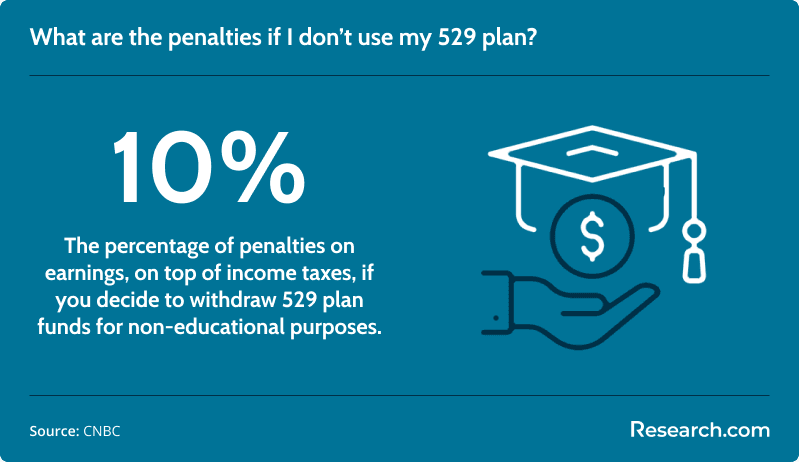
- Restrictions on Usage: To receive tax benefits, withdrawals must be used for qualified education expenses. Non-qualified withdrawals are taxed and penalized.
How does a 529 plan compare to other education funding options?
When planning for education expenses, it’s essential to evaluate how a 529 plan compares to other funding options such as savings accounts, small private student loans, or Coverdell ESAs. Each option has unique features that cater to different financial circumstances and goals.
Tax Advantages: One significant edge 529 plans offer is their tax-free growth and withdrawals, provided the funds are used for qualified education expenses. In contrast, traditional savings accounts are subject to regular federal and state income taxes on interest earned, which can diminish your savings over time. Coverdell ESAs also offer tax-free growth, but their contribution limits are much lower compared to 529 plans.
Contribution Limits: 529 plans generally feature high contribution limits, allowing parents or guardians to save more aggressively. For instance, many states permit contributions exceeding $300,000 per beneficiary. In comparison, Coverdell ESAs cap annual contributions at $2,000 per beneficiary, while small private student loans are not restricted by contribution limits but create a future repayment obligation.
Federal and State Incentives: Many 529 plans incorporate state tax benefits for contributions, including deductions or credits. Savings accounts lack these incentives altogether, and while Coverdell ESAs offer federal tax advantages, they don't typically provide state-specific perks. Those exploring small private student loans will find no tax incentives at all but may see interest rate benefits depending on their creditworthiness.
Flexibility: In terms of expense coverage, 529 plans cover a broad range of qualified education-related costs, including tuition, room and board, apprenticeship programs, and even limited student loan repayments. Coverdell ESAs extend their use to some K-12 expenses but lack flexibility for additional expenses like loan repayments. Small private student loans often allow unrestricted use of borrowed funds, but the liability of repayment could become burdensome.
Financial Aid Impact: 529 plans are considered parental assets in FAFSA calculations and can slightly impact financial aid eligibility. Coverdell ESAs are treated similarly. In contrast, taking out small private student loans can increase a family's debt burden and potentially affect financial aid considerations for subsequent years.
Planning Ahead: Considering the rising cost of education, combining a 529 plan with other strategies, like applying for scholarships or carefully managing private loans, can maximize your funding. For some families, turning to options like small private student loans may provide supplementary financial support when savings fall short.
By assessing your financial needs and educational goals, you can choose a combination of strategies tailored to your circumstances, ensuring you’re prepared to support a successful academic future.
How do you enroll in a state’s 529 plan?
Enrolling in a 529 plan is easier than you might think. Here’s my step-by-step guide to help you through the process:
1. Research and Choose Your Plan
- Compare Options: Research different state 529 plans to find the best fit. See comparisons and ratings based on tax benefits, fees, investment options, and performance.
- Consider Your State's Plan: Start by looking at your own state's plan, especially if they offer tax breaks for residents. But don't limit yourself! Explore plans from other states that might have lower fees or better investment options.
2. Gather What You Need
- Personal Information: Have your Social Security number, date of birth, and contact information ready.
- Beneficiary Information: Collect the same information for the beneficiary (usually the future student).
- Banking Information: If you plan to fund electronically, find your bank account and routing numbers.
3. Visit the Official Website
Head to the official website of your chosen plan. Be sure it's the official site to avoid scams! Look for ".gov" in the website address for a government-sponsored plan.
4. Open an Account
- Online is Easy: Most plans offer a convenient online application process. Look for an "Open an Account" section.
- Paper Option Available: Some plans also allow enrollment by mail with a downloadable paper application.
5. Complete the Application
- Account Owner Info: Enter your details as the account owner.
- Beneficiary Details: Provide the beneficiary's information.
- Pick Your Investments: Choose how you want your contributions invested. Many plans offer age-based portfolios that automatically adjust over time, or static options for more control.
6. Set Up Funding
- Make Your First Deposit: Decide on your initial contribution amount. Some plans have minimum requirements.
- Save Regularly: Set up automatic contributions if you like. You can use direct deposit from your bank or payroll deductions (if offered by your employer).
- One-Time Contributions: You can also make one-time contributions by check or electronic transfer.
7. Review and Submit
- Double-check: Carefully review all the information you've entered to ensure accuracy.
- Submit Your Application: Submit your application online or mail it in paper form.
8. Confirmation and Access
- Confirmation Email: You'll receive a confirmation email or letter with account details.
- Manage Your Account Online: Set up online access to manage contributions, monitor investments, and make changes as needed.
Bonus Tips for Success
- Read the Fine Print: Carefully review the plan's disclosure document, which details fees, investments, risks, and tax benefits.
- Talk to a Pro: If you're unsure about choosing a plan or investment options, consider consulting a financial advisor.
- Automate Your Savings: Setting up automatic contributions makes saving consistent and helps you benefit from dollar-cost averaging.
What are the eligibility requirements for state tax benefits on 529 plans?
To be eligible for state tax benefits on 529 plans, you typically have to be a state resident, contribute to the state’s particular plan, abide by annual contribution limits, file state income taxes, and spend the funds for qualified academic costs. By understanding these factors and any specific requirements in your state, you can maximize the tax benefits from your 529 plan.
Here's a breakdown of common factors to consider as you compare 529 plans by state and their eligibilty requirements:
Who Qualifies?
- State Residency: Most states require you to be a resident to claim tax breaks. This means having a primary residence in the state and filing state income taxes there. Be prepared to show proof of residency if needed.
- In-State Plan is Key: Contributions typically need to go to your state's specific 529 plan. Out-of-state plans usually don't qualify. Each state's plan might have additional rules, so double-check the details.
- Contribution Limits Vary: States often set limits on how much you can contribute and still get a tax deduction or credit. These limits can differ greatly by state.
Tax Benefits by Filing Status:
- Joint Filers vs. Individual: Married couples filing jointly may be eligible for higher deductions or credit limits than single filers.
- Dependent Contributions: Some states allow contributions made for a dependent (even if they aren't the account owner) to qualify for tax benefits.
Timing is Important:
Contributions must be made within a specific tax year to qualify for deductions or credits for that year. Some states have deadlines for contributions to qualify, so be sure to check.
Maintaining the Benefits:
To keep the tax breaks, withdrawals from the 529 plan must be used for qualified education expenses like tuition, fees, books, and approved room and board costs.
Follow the Rules:
Each state has its own rules for 529 plans. Carefully review the program disclosure document to ensure the plan complies with your state's regulations.

How Should I Periodically Review and Adjust My 529 Plan Investments?
Regular reviews and adjustments are essential to maintain an optimal balance between growth and risk in your 529 plan. As market conditions change, assessing your fund performance and rebalancing your investment portfolio reinforces a tailored strategy aligned with evolving financial goals. Monitoring asset allocation and performance metrics can help you mitigate risks associated with market volatility while capturing potential growth opportunities. Consulting with a financial advisor and comparing your investment outcomes against relevant benchmarks ensures your approach remains robust. For further exploration of educational funding alternatives, consider checking out online colleges that take FAFSA.
What are the contribution limits for 529 plans for 2027?
529 plans offer generous contribution limits to help you save significantly for future education expenses. Here are my key points concerning contribution limits:
- Lifetime Limits: Most plans have high lifetime contribution limits, often exceeding $300,000 per beneficiary, designed to cover the full cost of education. Some states, like New York ($520,000) and California ($529,000), offer even higher limits.
- Annual Gift Tax Exclusion: For 2024, you can contribute up to $18,000 per beneficiary per year (up from $17,000 in 2023) without triggering federal gift tax. Married couples can contribute up to $36,000 annually.
- Five-Year Election: The IRS allows a "five-year election" for 529 plans. You can contribute up to $90,000 per beneficiary in a single year ($180,000 for couples) and spread it out for gift tax purposes over five years. This helps maximize contributions without exceeding gift tax limits.
- State-Specific Limits: While the federal gift tax exclusion applies nationwide, state-specific tax benefits might have their own contribution limits for tax deductions or credits.
To learn how much to contribute to a 529 plan, it's best to always check your state's specific 529 plan for the latest contribution limits and tax benefits.
Can a 529 plan be used for vocational and technical education?
While many 529 plans are traditionally associated with funding four-year colleges, accredited vocational and technical schools can also qualify as eligible institutions. Tax-advantaged funds may cover tuition, mandatory fees, course-related books, and essential equipment required for these programs. Prospective students pursuing trade school careers or other technical training should confirm that their chosen institution meets the eligibility criteria defined by the IRS and their state’s guidelines. This due diligence ensures that savings are applied effectively while maintaining compliance with tax regulations.
What expenses can you cover with a 529 plan for 2027?
529 plans can cover higher education expenses, plus specific K-12 costs and other educational-related activities. The following is only a basic overview; hence, I'd still suggest checking your state's 529 plan for the latest information on qualified expenses.
Higher Education
- Tuition and Fees: This covers payments for college or university tuition, including undergraduate and graduate programs, along with mandatory enrollment and attendance fees.
- Room and Board:
- On-campus housing and meal plans are qualified expenses if the student is at least a half-time student.
- Off-campus housing costs (rent and food) are also eligible, up to the amount the school includes in its cost of attendance for room and board.
- Course Materials:
- Required textbooks and other course-related books can be covered.
- Necessary supplies like notebooks, lab, and art supplies are also included.
- Educational Technology:
- The cost of a computer, laptop, or tablet used for school is a qualified expense.
- Educational software and internet access fees specifically used by the beneficiary during their enrollment at accredited online colleges qualify as well.
- Special Needs Services: Expenses for disability-related services required by the beneficiary are covered if they are incurred for enrollment or attendance at an eligible educational institution.
K-12 Education (Up to $10,000 per beneficiary per year):
K-12 education costs refer to tuition for public, private, or religious elementary or secondary schools.
Apprenticeship Programs:
Fees, textbooks, supplies, and equipment required for participation in a registered apprenticeship program.
Student Loan Repayment (Lifetime Limit):
- Up to $10,000 in total from a 529 plan can be used to repay the beneficiary's qualified student loans.
- An additional $10,000 can be used to repay each of the beneficiary's siblings' qualified student loans.
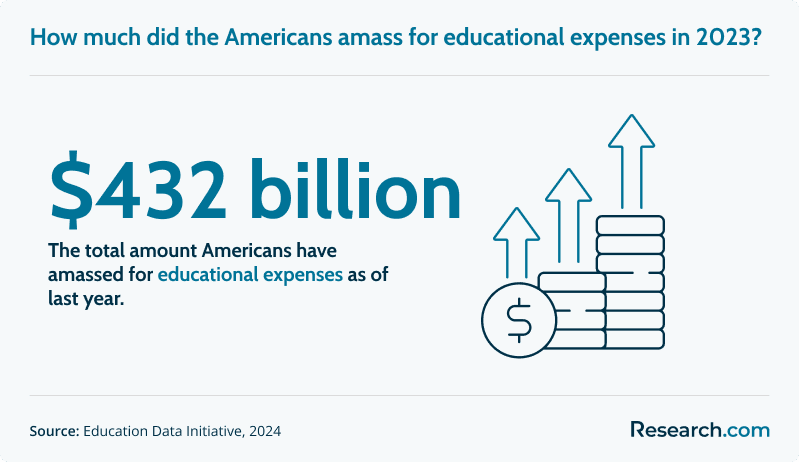
How do fees and expenses impact 529 plan returns?
Fees and expenses are critical factors that can dilute the long-term growth of your 529 plan. A detailed examination of administrative costs, fund management fees, and any transaction-related charges is necessary to estimate their effect on investment performance. Comparing expense ratios across different plans helps in selecting an option that maximizes net returns while keeping costs transparent. For a balanced view on financing alternatives, consider exploring our review comparing a Discover student loan vs Sallie Mae loan.
Can a 529 Plan fully cover college costs?
As robust as 529 plans can be, they may not always fully cover the entirety of college costs, particularly with the rising expenses of higher education. While these plans often grow through tax-free compounding, contribution limits and investment returns can place a ceiling on how much savings accumulate over time. Parents and students may need alternative funding solutions to close this gap.
One viable option for families is to explore student loans when parents have bad credit. These loans can be tailored to meet financial needs while providing flexible repayment options. Additionally, some 529 plans allow a portion of the funds to be allocated for student loan repayments, up to a lifetime limit of $10,000 per beneficiary, further diversifying their utility.
Strategizing early and combining savings from a 529 plan with scholarships, grants, and student loans can help create a well-rounded financial framework. By understanding the limitations of a 529 plan and integrating supplementary funding options, families can better prepare for the financial demands of a college education.
Will moving to another state affect my 529 plan benefits?
If you relocate, your existing 529 plan generally retains its tax-advantaged status; however, new contributions may no longer qualify for the original state’s tax incentives once you change residency. Some states allow limited adjustments or refunds on previously claimed deductions, while others do not extend benefits to new residents. It is important to review both your former and new state guidelines and consult with a financial advisor to optimize your funding strategy. For additional funding options when 529 savings fall short, consider exploring college loan providers.
Could tax law changes affect my 529 plan benefits?
Legislative shifts and updates in tax policy can significantly alter the advantages of a 529 plan. Proposed changes may affect state-specific tax deductions or credits, potentially reducing the financial incentives currently enjoyed by account holders. It is essential to monitor regulatory developments and consult with tax professionals to ensure your savings strategy remains optimized against legislative risks. Proactive planning can help you adjust contributions and manage investments to safeguard against any future changes in tax laws, ensuring your education savings continue to align with your financial goals. Additionally, exploring alternative funding opportunities, such as medical careers with little schooling, may offer complementary strategies in an evolving financial landscape.
Can a 529 plan be effectively used for graduate education expenses?
While 529 plans are primarily designed for undergraduate funding, they also extend to certain graduate education expenses at eligible institutions. Prospective graduate students should note that while qualified tuition and fee costs generally apply, not all advanced degree-related expenses are covered. It is essential to review the plan’s guidelines to verify eligible expenses and potential tax implications. Evaluating alternative funding sources—such as comparing opportunities found via the cheapest easiest masters degree—can help balance the advantages of a 529 plan against other postgraduate financing options. Consulting with a financial advisor ensures that your funding strategy remains aligned with long-term educational and financial objectives.
How can I integrate my 529 plan with other education financing options?
Diversifying your education funding strategy can enhance overall financial flexibility. By combining your 529 plan with other resources, you can better manage both predictable and unforeseen academic expenses. Utilizing options like student loans with low interest rates may help bridge gaps between available savings and total costs, while scholarships and grants can further reduce out-of-pocket expenses. Each financing tool comes with its own eligibility requirements and tax implications, so aligning them with your long-term financial objectives is essential. Regularly reviewing these options and consulting with a financial advisor ensures that your approach remains optimized for evolving market conditions and institutional policies.
Can I rollover or transfer my 529 plan to another state's plan?
Many account holders explore rollovers or transfers to align with evolving investment strategies or to capitalize on enhanced state-specific tax benefits. While a one-time rollover per beneficiary within a 12-month period is generally permitted without incurring penalties, the process demands careful adherence to both your current plan’s terms and the receiving state’s guidelines. It is crucial to compare differences in fee structures, investment options, and tax advantages before initiating any transfer. Additionally, seek professional advice to ensure the rollover maintains all tax-deferral benefits and complies with IRS requirements. For alternative strategies that may supplement traditional 529 plan benefits, consider "What’s the best online college for working professionals?".
Can 529 plans be leveraged for estate planning benefits?
529 plans offer unique opportunities for estate planning by potentially reducing taxable estates while supporting long-term educational funding. Contributions are treated as completed gifts under federal law, allowing account holders to benefit from annual gift tax exclusions without incurring additional tax liabilities. This feature provides a strategic method for transferring wealth and easing future estate tax burdens. Additionally, the flexibility to change beneficiaries supports multigenerational planning, ensuring that funds remain available for future educational pursuits. Incorporating a well-structured 529 plan into your estate strategy can help secure financial legacies and facilitate advanced academic opportunities, including the most affordable online doctorate programs.
Key Findings
- With the exception of Wyoming, all states have their own 529 plans, with different tax benefits, fees and expenses, and contribution limits.
- By the end of 2023, all active 529 plans in the U.S. held a combined asset value of $471.2 billion.
- 529 plan account holders in Virginia have saved the highest amount compared to other states, with asset value at over $90 billion.
- 2024 statistics indicate that there were over 16 million active 529 saving plans in the US.
- Arizona, California, Maine, Missouri, and New York are some states where families can save over $500,000 in a 529 plan.
References:
- College Savings Plan Network. (n.d,). Total Assets in 529 Plans Nationally. Retrieved from College Savings.
- Edward Jones. (n.d.). The State of Education Savings: 529 Account Survey. Retrieved from Edward Jones.
- Independent Directors Council. (n.d.). Release: 529 plan program statistics, December 2023. IDC.
- International Shareholder Services. (2023, June 12). ISS Market Intelligence Releases Annual 529 Industry Analysis Report. Retrieved from ISS.
- Kim, Hyunmin. (2024, May 31). 529 State Tax Benefits in 2024. Retrieved from Morningstar.
- Vanguard. (n.d.). Higher Education Perspectives & The State of Saving. Retrieved from Vanguard.
Other Things You Should Know About 529 Plans By State
Yes, 529 plans are specific to each state, meaning that each state sponsors its own 529 plan, often with unique features, benefits, and investment options. While the federal tax advantages of 529 plans are consistent across all states, individual state plans can vary significantly. These variations can include state tax deductions or credits for contributions, differences in management fees and expense ratios, the range and quality of investment choices, and specific rules and regulations governing the plan.
Some states offer particularly advantageous tax benefits to residents who invest in their state's plan, making it beneficial for residents to consider their home state's offerings first. However, you are not limited to your state's plan; you can choose to invest in any state's 529 plan if it better suits your needs. This flexibility allows you to compare and select the plan that offers the best combination of benefits, cost, and investment options for your educational savings goals.
In 2027, 529 plans offer tax advantages that vary by state. Generally, qualified withdrawals for educational expenses are federally tax-free. Some states also provide tax deductions or credits for contributions to in-state 529 plans. It’s important to check specific state rules for details on potential tax benefits. **Question** Are 529 plans specific to each state? **Answer** Yes, 529 plans are specific to each state. Each state offers its distinct plan(s) with unique features like investment options, tax incentives, and contribution limits. You can typically invest in any state's 529 plan, but exploring your own state’s plan is advisable due to potential state tax benefits. **Question** What are the main differences in 529 plans across states in 2027? **Answer** In 2027, the main differences in 529 plans across states include contribution limits, available investment options, and state-specific tax benefits. Additionally, some states may offer matching grants or fee reductions for residents. Comparing these elements can help select the most suitable plan. **Question** What are the enrollment fees and costs associated with 529 plans in 2027? **Answer** In 2027, enrollment fees and costs for 529 plans vary by state and plan provider. Common fees include initial setup fees, ongoing maintenance fees, and asset management fees. It's crucial to review and compare the fee structures of different state plans to optimize investment growth and minimize costs.
In 2027, 529 plans differ among states primarily in investment options, fees, and state tax benefits. Some states offer tax deductions, while others do not. Additionally, the range of investment portfolios and administrative fees can vary significantly, impacting the overall value and suitability for individual needs.