
2027 Best Online Schools with Financial Aid for Dental Assistants

Co-Founder and Chief Data Scientist
With over 52,900 job openings for dental assistants projected each year, the demand for qualified professionals is undeniable. Yet, for many aspiring career-starters, the cost of training can feel like an insurmountable roadblock, creating a frustrating gap between ambition and reality. This is precisely why this guide was created.
Our career planning experts, with more than 10 years of experience, have built a clear, step-by-step roadmap. We are here to show you exactly how to secure financial aid for dental assistant programs, making your goal of a stable, rewarding career not just possible, but achievable.
What are the other benefits of getting into an online school with financial aid for dental assistants?
- The high demand for dental assistants means you can secure a stable job in a professional healthcare setting right after graduation.
- You can earn a stable salary, with a median pay of around $47,300, by completing a short-term training program.
- Online programs provide the flexibility to study and prepare for your new career without having to leave your current job.
What can I expect from an online school with financial aid for dental assistants?
Dental assistant programs are hybrid, which combines the flexibility you need with the hands-on experience employers demand.
Here’s how it works. You’ll complete your academic classes online, covering the core knowledge in dental science, infection control, and office administration. Then, you'll move on to a required clinical externship at a local dental office to practice and perfect your skills.
That externship is your direct pipeline to a job. Many graduates get hired right from their placement site, so a school's clinical support is one of the most important things to look for.
Where can I work as a dental assistant?
You'll find that your skills are overwhelmingly in demand in one specific setting. The vast majority of dental assistants, about 90%, work in private dental offices. While there are some opportunities in specialty practices or public health, the core of the profession is in that stable, clinical environment.
It’s good to know that the feel of these offices can differ. You have the traditional small practice, which might be run by a single dentist. But you'll also see a growing number of large, corporate-run Dental Service Organizations, or DSOs.
For someone looking for clear benefits and a structured career path, DSOs can be a fantastic option. They often provide a more corporate-style environment with predictable schedules and room for advancement.
How much can I make as a dental assistant?
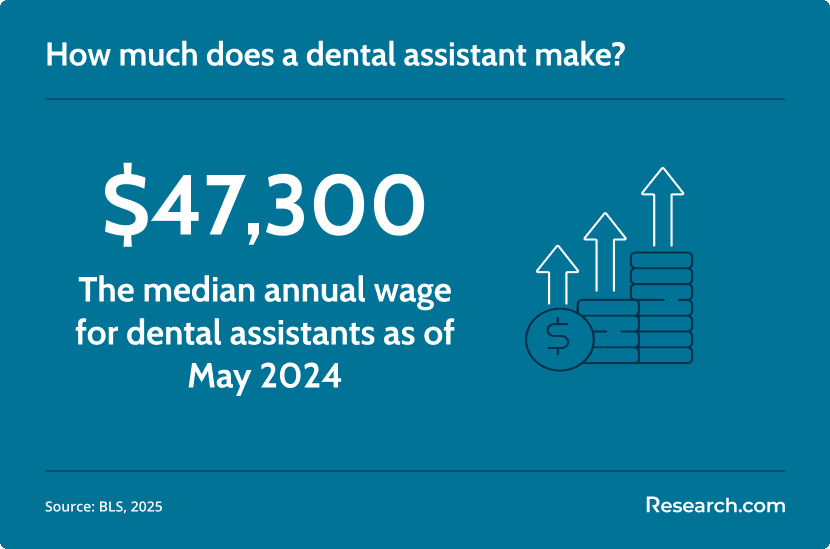
The median pay for a dental assistant is around $47,300 a year. But you should see that number as your starting point, not your limit.
The single most important step you can take to increase your earnings is to get your Certified Dental Assistant, or CDA, credential. Certified assistants consistently earn more than their non-certified peers.
Think of the cost of a quality program as a direct investment in that higher salary. Earning your certification is the key to unlocking your full earning potential right from the start.
- List of the Best Online Schools with Financial Aid for Dental Assistants for 2027 List of Schools
- How long does it take to complete an online dental assistant program? Completion Time
- How does an online dental assistant program compare to an on-campus program? How does an online dental assistant program compare to an on-campus program?
- What is the average cost of an online dental assistant program? Program Cost
- What are other financial aid options for students enrolling in an online dental assistant program? Financial Aid
- What are the prerequisites for enrolling in an online dental assistant program? What are the prerequisites for enrolling in an online dental assistant program?
- What courses are typically in an online dental assistant program? What courses are typically in an online dental assistant program?
- What types of specializations are available to dental assistants? Specializations
- How to Choose the Best Online Schools with Financial Aid for Dental Assistants How to Choose the Best Online Schools with Financial Aid for Dental Assistants
- What career paths are available for graduates of an online dental assistant program? Career Paths
- What is the job market for graduates of an online dental assistant program? Job Market
Best Online Schools with Financial Aid for Dental Assistants for 2027
Choosing an online dental assistant program is not just about finding the lowest tuition or the shortest timeline. You need a program that prepares you for real clinical work, helps you meet certification or state requirements, and gives you a realistic way to pay for training without taking on unnecessary debt.
This guide is for students who want to enter dental assisting through an online, hybrid, certificate, diploma, or short-term training program and need to understand financial aid, clinical requirements, accreditation, cost, and career outcomes before enrolling. You will learn how long these programs take, what they cost, how online training compares with campus-based study, what to ask schools, and which programs may fit different student goals.
Quick Answer: Are Online Dental Assistant Programs with Financial Aid Worth Considering?
Yes, an online dental assistant program can be a practical route into healthcare if it is properly accredited or recognized, includes required hands-on clinical training, prepares you for the right certification exam, and offers financial aid or payment options you qualify for. The strongest programs combine flexible online coursework with local clinical experience, clear tuition information, and preparation for credentials such as the CDA, RDA, or NELDA where applicable.
Financial aid eligibility varies by school and program type. Before enrolling, confirm whether the program qualifies for federal aid through the FAFSA, institutional aid, scholarships, state workforce grants, employer sponsorship, payment plans, or private financing.
How We Rank Schools
Because dental assistant training is a financial and career decision, our ranking process considers affordability, program structure, credibility, student outcomes, and the availability of aid-related information. Research.com uses established education data sources, including the IPEDS database, Peterson's database, the College Scorecard database, and The National Center for Education Statistics.
These sources help provide a consistent foundation for comparing dental assisting programs, although students should always confirm the latest tuition, aid eligibility, clinical placement rules, and certification preparation directly with each school. You can review additional details on Research.com’s ranking approach at Research.com’s methodology page.
Online Dental Assistant Programs at a Glance
| School or Provider | Program Type | Length | Tuition Listed | Clinical or Externship Requirement |
| Hudson Valley Community College | Certificate | 1 year | $2,528 (in-state); $5,056 (out-of-state) | 225 hours of required hands-on clinical experience |
| MedCerts | Certification training | 14 Weeks | $4,000 | Confirm clinical expectations with provider |
| Central Piedmont Community College | Diploma | 1 year | $3,572 (in-state); $12,596 (out-of-state) | Confirm current clinical requirements with school |
| San Diego State University - Global Campus | Certified Dental Assistant online course | 12 Months | $3,483 | Confirm hands-on requirements and exam preparation details |
| College of Western Idaho | Online dental assistant program | 12 Months | $3,799 | 100 clinical hours |
| Eastern Kentucky University | Clinical dental assistant course | 12 Months | $3,195 | Optional clinical experience access |
| Franklin University | Online certificate | 14 weeks | $4,000 | Confirm clinical expectations with school |
| American Career College | Blended program | 10 months | $18,850 | 160-hour clinical externship |
| PCI Health Training Center | Hybrid program | 9 months | $10,950 | Required off-site externship |
| University of Memphis | Clinical dental assistant course | 12 Months | $3,295 | Optional clinical experience access |
1. Hudson Valley Community College - Dental Assisting Certificate
Hudson Valley Community College offers a one-year certificate intended for students who want a direct path into dental assisting and who need to meet New York State requirements for becoming a Licensed Registered Dental Assistant (RDA). The program includes 27 credit hours of online coursework and 225 hours of required hands-on clinical experience, making it a stronger option for students who want a structured academic program with defined clinical training.
- Program Length: 1 year
- Required Credits to Graduate: 27
- Total Tuition: $2,528 (in-state); $5,056 (out-of-state)
- Accreditation: Middle States Commission on Higher Education (MSCHE)
2. MedCerts - Dental Assistant Certification
MedCerts provides a 14-week online dental assistant training program focused on preparing students for the Registered Dental Assistant (RDA) certification exam. It may appeal to students who want a shorter training schedule and career-focused instruction in chairside support, dental office tasks, patient interaction, and clinical basics.
- Program Length: 14 Weeks
- Total Tuition: $4,000
- Accreditation: American Medical Technologists (AMT)
3. Central Piedmont Community College - Dental Assisting Diploma
Central Piedmont Community College offers a one-year dental assisting diploma that emphasizes chairside techniques, dental office procedures, and preparation for the Dental Assisting National Board Examination. Students who want a community college pathway with CODA accreditation may find this program especially relevant.
- Program Length: 1 year
- Total Tuition: $3,572 (in-state); $12,596 (out-of-state)
- Accreditation: American Dental Association's Commission on Dental Accreditation (CODA)
4. San Diego State University - Global Campus - Certified Dental Assistant Online
San Diego State University - Global Campus offers a 100% online course designed to build clinical dental assisting knowledge and prepare students for certification. The program includes exam vouchers for key parts of the Dental Assisting National Board examinations, which may reduce out-of-pocket certification costs for students who plan to sit for those exams.
- Program Length: 12 Months
- Total Tuition: $3,483
5. College of Western Idaho - Dental Assistant Online
The College of Western Idaho offers a self-paced online dental assistant program that combines 300 online hours with 100 clinical hours. The program is designed to prepare students for patient care responsibilities, dental office operations, and the National Entry Level Dental Assistant (NELDA) exam.
- Program Length: 12 Months
- Required Clinical Hours: 100
- Total Tuition: $3,799
- Accreditation: Northwest Commission on Colleges and Universities (NWCCU)
6. Eastern Kentucky University - Clinical Dental Assistant with Vouchers Included
Eastern Kentucky University offers an online clinical dental assistant course for students without prior healthcare experience. The program includes vouchers for selected DANB certification exams and provides access to an optional clinical experience, which can help students connect online learning with real-world dental office practice.
- Program Length: 12 Months
- Total Tuition: $3,195
- Accreditation: Southern Association of Colleges and Schools Commission on Colleges (SACSCOC)
7. Franklin University - Dental Assistant Certificate Online
Franklin University provides a 14-week online certificate that prepares students for the Registered Dental Assistant (RDA) certification exam. The curriculum covers patient communication, chairside duties, infection control, and other core skills used in dental practices.
- Program Length: 14 weeks
- Total Tuition: $4,000
- Accreditation: Higher Learning Commission (HLC)
8. American Career College - Dental Assisting Program
American Career College offers a 10-month blended dental assisting program that combines online coursework with two days of in-person instruction. The 160-hour clinical externship gives students supervised exposure to dental care settings before graduation.
- Program Length: 10 months
- Required Externship Hours: 160
- Total Tuition: $18,850
- Accreditation: Accrediting Bureau of Health Education Schools (ABHES)
9. PCI Health Training Center - Dental Assistant Hybrid
PCI Health Training Center offers a nine-month hybrid dental assistant program with online coursework, hands-on lab training, and a required off-site externship. This format may work for students who want online flexibility but still need structured in-person skill development.
- Program Length: 9 months
- Total Tuition: $10,950
- Accreditation: Accrediting Commission of Career Schools and Colleges (ACCSC)
10. University of Memphis - Clinical Dental Assistant with Vouchers Included
The University of Memphis offers an online clinical dental assistant program covering core dental assisting concepts for students preparing to enter the field. The course includes vouchers for DANB certification exams and provides access to an optional clinical experience for students who want additional hands-on exposure.
- Program Length: 12 Months
- Total Tuition: $3,295
- Accreditation: Southern Association of Colleges and Schools Commission on Colleges (SACSCOC)
How Long Does It Take to Complete an Online Dental Assistant Program?
Most online dental assistant certificate and diploma programs can be completed in about 9 to 12 months, although some accelerated options take 14 weeks and some programs allow up to 12 Months. The exact timeline depends on the credential type, clinical or externship requirements, whether the program is self-paced, and whether you study full time or part time.
The fastest choice is not always the strongest choice. A short program may be useful if you already understand the local job market and only need exam preparation, but students new to healthcare should look carefully at clinical placement support, faculty access, certification preparation, and whether employers in their area recognize the credential. Students comparing speed-focused options can also review Research.com’s guide to the fastest online certificate programs for dental assistants.
Why Many Dental Assistant Programs Are Designed to Be Short
Dental assisting programs are usually shorter than degree programs because they focus on job-ready skills: infection control, chairside support, dental terminology, radiography basics, patient care, and office procedures. The goal is to prepare students for entry-level work without requiring years of general education coursework.
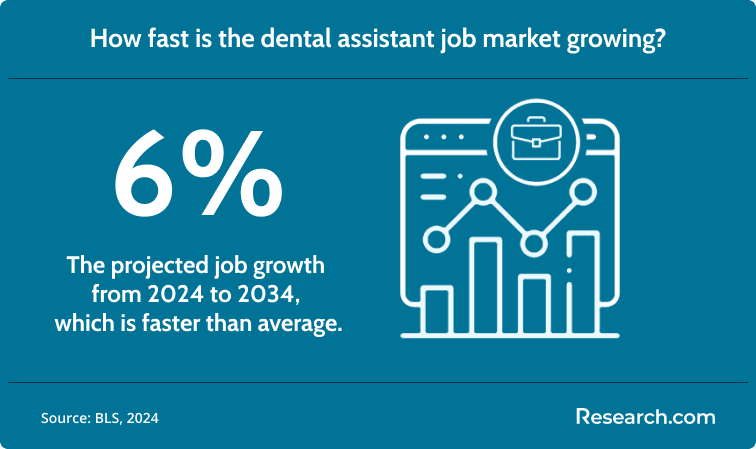
The labor market also supports this shorter training model. The U.S. Bureau of Labor Statistics projects a 6% job growth rate for dental assistants over the next decade, which is faster than the average for all occupations.
How Does an Online Dental Assistant Program Compare to an On-Campus Program?
An online dental assistant program usually delivers the classroom portion of training through virtual lessons, videos, assignments, simulations, and exams. However, dental assisting is a hands-on healthcare role, so strong online programs still require or encourage clinical practice, externships, labs, or local supervised experience.
An on-campus program may provide more immediate access to dental labs, instructors, and classmates. An online or hybrid program may be better for students who work, care for family, live far from campus, or need a more flexible schedule. The best choice depends on your learning style, schedule, location, and how the program handles hands-on training.
| Factor | Online or Hybrid Program | On-Campus Program |
| Schedule flexibility | Usually better for working adults and students with family responsibilities | Often requires fixed class, lab, and commute times |
| Hands-on practice | May use local externships, clinical placements, simulations, or limited campus labs | Usually provides direct lab access through campus facilities |
| Employer perception | Depends heavily on accreditation, clinical experience, and certification readiness | Also depends on accreditation, clinical experience, and certification readiness |
| Best for | Self-directed students who need flexibility and can complete clinical requirements locally | Students who prefer face-to-face instruction and structured lab time |
| Main risk | Choosing a program without enough clinical support | Higher time and commuting demands |
Employers generally care less about whether your coursework was online and more about whether you can perform safely, communicate professionally, follow infection control standards, and meet certification or state practice requirements. If you are comparing online programs across fields, you may notice similar flexibility issues in guides such as MBA programs that accept transfer credits online, although dental assisting differs because it requires clinical skill development.
Certificate, Diploma, or Associate Degree: Which Credential Makes Sense?
For many entry-level dental assistant roles, a certificate or diploma is the most direct option because it focuses on the skills needed for employment and certification exams. An associate degree may be useful for students who want broader education, plan to transfer credits later, or want a longer academic pathway.
If your immediate goal is employment, compare certificate and diploma programs first. If your long-term plan includes advancement into dental hygiene or healthcare administration, an associate degree may be worth considering. Students interested in a longer credential can explore Research.com’s guide to the fastest online dental assistant associate degree programs.
| Credential | Typical Best Fit | Main Advantage | Main Trade-Off |
| Certificate | Students who want the fastest practical route into dental assisting | Focused training and shorter completion time | May offer fewer general education credits |
| Diploma | Students who want structured workforce training through a college or career school | Often balances clinical and classroom preparation | May take longer or cost more than some certificate options |
| Associate degree | Students planning for broader academic or career mobility | More transferable academic foundation | Longer timeline and usually higher total cost |
What Is the Average Cost of an Online Dental Assistant Program?
Accredited or recognized online dental assistant programs commonly fall between $3,000 and $10,000, based on the costs listed in this guide. Research.com’s 2024 research found average in-state tuition around $5,800, with a broader range from about $2,500 to over $18,000 depending on school type, residency status, program length, clinical requirements, and included exam vouchers.
Do not compare programs by tuition alone. A program that looks inexpensive may become costly if it does not include books, uniforms, lab supplies, background checks, immunizations, certification exam fees, or clinical placement support. Conversely, a higher-priced program may include externship coordination, exam vouchers, career services, and more structured in-person training.
| Cost Item | Why It Matters | Question to Ask |
| Tuition | Base program price is only one part of total cost | Is the listed tuition the full program cost? |
| Books and supplies | Dental assisting programs may require materials, uniforms, and equipment | Are supplies included or billed separately? |
| Certification exams | Exam fees can affect your total investment | Does tuition include DANB, RDA, CDA, or NELDA exam vouchers? |
| Clinical placement | Hands-on experience can be essential for employment readiness | Will the school help secure a site near me? |
| Financial aid eligibility | Not every short-term or noncredit program qualifies for federal aid | Can I use FAFSA-based aid, scholarships, grants, or payment plans? |
Cost structures differ widely across online credentials. That is why Research.com evaluates tuition and program requirements separately in other online education guides, including MSN programs without clinicals, where clinical requirements and institutional type can also affect total cost.
How to Think About Return on Investment
The value of a dental assistant program depends on more than the first tuition bill. A stronger return on investment usually comes from completing a credible program, gaining clinical confidence, passing relevant certification exams, and entering a workplace where your skills are recognized.
Certification can also affect earning potential, depending on employer, state, experience, and setting. The median pay for dental assistants can provide a useful baseline, but students should not treat any salary figure as guaranteed.
What Financial Aid Options Are Available for Online Dental Assistant Students?
Students may be able to use several funding sources for dental assistant training, but eligibility depends on the school, program format, credit status, enrollment level, and student circumstances. Common options include federal grants and loans, state workforce funding, school-based scholarships, private scholarships, employer tuition support, payment plans, and military or veteran education benefits where applicable.
The most important step is to ask each school for a written breakdown of aid eligibility before enrolling. Do not assume that every online dental assistant program qualifies for the same type of aid.
How to Look for Funding Step by Step
- Submit the FAFSA first. The FAFSA is used to determine eligibility for major federal student aid programs, including grants and loans. Even if you are unsure whether your program qualifies, completing the FAFSA gives you a clearer starting point.
- Ask the school whether the specific program is aid-eligible. Some colleges offer credit-bearing programs that may qualify for federal aid, while some short-term or continuing education courses may not.
- Check scholarships from dental and allied health organizations. Professional groups may offer awards for students entering dental assisting or related healthcare fields.
- Contact your state workforce agency. Some states fund training for high-demand occupations through workforce development programs.
- Ask local dental employers about sponsorship. Some practices may support training costs for candidates who agree to work after completing requirements.
- Compare payment plans carefully. Payment plans can spread out costs, but you should understand fees, due dates, refund rules, and consequences for missed payments.
Students comparing healthcare pathways can also review how funding works in other programs, such as MPH epidemiology programs online, but dental assisting students should focus on the aid rules for their exact certificate, diploma, or course.
What Are the Prerequisites for Enrolling in an Online Dental Assistant Program?
The basic academic requirement for most online dental assistant programs is a high school diploma or GED. Many programs are built for beginners, so previous healthcare experience or college-level science coursework is often not required.
That said, admissions requirements can still include a background check, immunization records, CPR certification, drug screening, technology requirements, proof of age, or documentation needed for clinical placement. These requirements are especially important if the program includes an externship or patient-facing clinical experience.
| Possible Requirement | Why Schools May Require It |
| High school diploma or GED | Shows basic academic readiness for postsecondary training |
| Background check | May be required by clinical sites and healthcare employers |
| Immunization records | Helps protect patients, staff, and students in clinical settings |
| CPR certification | May be needed before externship or clinical participation |
| Computer and internet access | Required for online coursework, assignments, and exams |
Accessibility is also a factor in other online programs, including masters in psychology online no GRE options, but dental assisting applicants should pay special attention to clinical eligibility because dental offices must follow patient safety and workplace requirements.
Who Is a Good Fit for Online Dental Assistant Training?
- Students who want to enter healthcare without committing to a multi-year degree first
- Working adults who need flexible online coursework
- Career changers who want a defined occupational skill set
- Students comfortable learning terminology, safety procedures, and technical tasks online
- Applicants who can complete clinical or externship requirements locally if required
Who Should Consider a Different Path?
- Students who need a fully hands-on classroom environment from the beginning
- Applicants who cannot travel to labs, externships, or clinical sites if the program requires them
- Students whose state requires a credential the program does not prepare them for
- Anyone expecting an online course alone to replace supervised clinical practice
What Courses Are Typically Included in an Online Dental Assistant Program?
Online dental assistant programs usually combine dental science, clinical procedures, patient safety, office administration, and exam preparation. The curriculum is designed to help students understand both the patient care side and the business side of a dental practice.
Common course topics include:
- Dental terminology
- Anatomy
- Pharmacology
- Infection control
- Radiography
- Dental materials
- Chairside assisting
- Patient communication
- Dental office administration
- Billing, scheduling, and records basics
Skills You Should Be Able to Build
A good program should help you develop practical skills such as preparing treatment rooms, assisting during procedures, sterilizing instruments, taking patient histories, managing dental records, explaining basic instructions to patients, and supporting dentists or hygienists during appointments.
Dental assisting and medical assisting are both allied health careers, but they are not interchangeable. Dental assistants need dental-specific knowledge of oral anatomy, dental procedures, radiography, instruments, and infection control in dental settings. Students comparing the two occupations can review Research.com’s explanation of medical assistant vs. dental assistant.
The training is highly targeted because most dental assistants work in dentists' offices, where these responsibilities are part of daily practice.
What Types of Specializations Are Available to Dental Assistants?
After gaining experience and certification, dental assistants may move into specialty areas such as orthodontics, pediatric dentistry, oral surgery, endodontics, periodontics, prosthodontics, or expanded administrative leadership. The right specialization depends on your interests, state rules, employer needs, and whether additional training or credentials are required.
| Specialty Area | What It Often Involves | Best Fit For |
| Orthodontics | Supporting treatment involving braces, aligners, and tooth movement | Students interested in long-term patient progress and technical procedures |
| Pediatric dentistry | Working with children and helping families feel comfortable during visits | Assistants with patience, communication skills, and a calm chairside manner |
| Oral surgery | Assisting with surgical procedures, preparation, and post-operative support | Assistants comfortable in more intensive clinical environments |
| Dental office management | Overseeing scheduling, billing, staff coordination, and patient flow | Assistants who enjoy operations, organization, and leadership |
How Specialization Can Affect Earnings
Specialized experience can make a dental assistant more valuable to certain employers, especially in practices that offer advanced procedures or serve specific patient groups. Pay still varies by employer, state, certification, and years of experience, so specialization should be viewed as a career development strategy rather than a guaranteed salary increase.
Some work settings may pay more than general dental offices. For example, the median salary for dental assistants working in government roles is over $53,000 a year.
How to Choose the Best Online School with Financial Aid for Dental Assisting
The best online dental assistant program for you is the one that matches your state requirements, budget, schedule, learning style, and career goals. A program can be affordable and still be the wrong choice if it does not prepare you for the certification or clinical experience employers expect.
Start by checking accreditation and recognition. The Commission on Dental Accreditation is especially important for programs where CODA accreditation is required or strongly preferred. Also check institutional accreditation, state authorization, exam preparation, externship support, and whether financial aid applies to the exact program you plan to enter.
Questions to Ask Before You Enroll
- Is this dental assisting program CODA-accredited, institutionally accredited, or otherwise recognized for my career goal?
- Does this program meet the requirements for dental assisting practice or registration in my state?
- Which certification exams does the program prepare students for?
- Are exam vouchers included in tuition?
- Does the school help place students in externships or clinical sites near their home?
- What costs are not included in the listed tuition?
- Can this program be paid for with FAFSA-based aid, scholarships, grants, workforce funding, or payment plans?
- What is the refund policy if I withdraw?
- What support is available for online students who struggle with coursework?
- What career services are available after completion?
Common Mistakes to Avoid
| Mistake | Why It Can Hurt You | Better Approach |
| Choosing only by lowest tuition | Low tuition may exclude clinical support, supplies, or exam fees | Compare total cost and what is included |
| Ignoring accreditation | Some employers or state boards may not recognize the credential | Verify accreditation and state requirements before applying |
| Assuming online means no hands-on training | Dental assisting requires practical skill development | Ask how labs, externships, or clinical practice are handled |
| Not checking certification alignment | You may finish the program but still be unprepared for the exam you need | Confirm whether the program prepares for CDA, RDA, NELDA, or another exam |
| Overlooking refund and financing terms | Payment plans or loans can create unexpected obligations | Get all cost and refund details in writing |
| Relying only on rankings | A highly ranked program may not match your state, schedule, or goals | Use rankings as a shortlist, then verify fit directly with each school |
What Career Paths Are Available After an Online Dental Assistant Program?
Graduates typically begin in entry-level dental assistant roles and then build experience, certifications, and specialty skills over time. Advancement can come through clinical leadership, office administration, specialty practice, or additional education.
Entry-Level Dental Assistant
New graduates often start by preparing treatment rooms, sterilizing instruments, supporting dentists during procedures, updating records, seating patients, and helping the office run efficiently. This role builds the foundation for future advancement.
Certified Dental Assistant
Earning a certification such as the CDA can strengthen your professional profile and may improve access to better roles, depending on employer expectations and state requirements. Certification can also show that you have met an external standard of knowledge and readiness.
Lead Dental Assistant
Experienced assistants may move into lead roles where they train new staff, coordinate clinical workflows, manage supplies, and help maintain infection control standards. This path is a strong fit for assistants who enjoy mentoring and organization.
Dental Office Manager
Dental assistants who prefer business operations may transition into office management. Responsibilities can include scheduling, billing, insurance coordination, patient communication, staff supervision, and overall practice workflow.
Bridge to Dental Hygienist
Some dental assistants later pursue dental hygiene education. This route requires additional schooling, but dental assisting experience can help students understand dental office procedures, patient care, and professional expectations before entering a hygiene program. Students interested in this path can compare options in Research.com’s guide to the fastest dental assistant to dental hygienist bridge program online.
What Is the Job Market for Graduates of an Online Dental Assistant Program?
The job market for dental assistants is favorable for students who complete credible training and meet employer or state requirements. The field is projected to have around 52,900 openings every year, which reflects ongoing replacement needs and demand across dental care settings.
The U.S. Bureau of Labor Statistics projects 6% growth for dental assistants over the next decade, compared with 3% average growth for all occupations. That does not guarantee employment for every graduate, but it does suggest steady demand for qualified candidates.
Where Dental Assistants Work
- General dental practices
- Orthodontic offices
- Pediatric dental practices
- Oral surgery practices
- Community clinics
- Government or public health settings
- Specialty dental offices
Dental assisting is one of several allied health roles with relatively direct training pathways. Students comparing nearby healthcare occupations may also want to review accelerated online medical assistant associate degree programs, especially if they are deciding between dental and medical office environments.
What Graduates Say About Online Dental Assistant Programs with Financial Aid
- Paolo: "I was working late shifts in food service and needed a career that offered more stability for my family. Studying online made the change possible because I could complete lessons after my children were asleep. I was offered a position at a local family dental office before graduation, and having regular hours has changed our daily life."
- Geraldine: "A four-year college route did not feel right for me, especially because I wanted to avoid large loans. Dental assisting gave me a practical skill in less than a year, and financial aid lowered the cost enough for me to enroll. I am 19 years old and already working in healthcare, which feels like a strong start."
- Robbie: "I worried that online classes would not prepare me for the hands-on parts of dental assisting. The videos, simulations, and externship preparation helped more than I expected. My externship site later hired me, and the dentist told me I arrived better prepared than many new trainees."
Key Insights
- Online dental assistant programs can be worthwhile when they include credible instruction, clinical preparation, certification alignment, and financial aid options that fit your situation.
- Most programs take about 9 to 12 months, but accelerated options such as 14-week programs may be available for students who want a faster route.
- Tuition varies widely, from about $2,500 to over $18,000 in the programs and research discussed here, so compare total cost rather than tuition alone.
- Financial aid is not automatic. Confirm whether the exact program qualifies for FAFSA-based aid, scholarships, grants, workforce funding, or payment plans.
- Accreditation, state requirements, certification exam preparation, and externship support should carry more weight than convenience or speed.
- Dental assisting can lead to roles such as Certified Dental Assistant, Lead Dental Assistant, Dental Office Manager, or future dental hygienist pathways.
- The job outlook is steady, with 52,900 projected openings each year and 6% projected growth over the next decade, but employment and salary depend on location, certification, experience, and employer demand.
References:
- Data USA. (2023). Dental assistants. Retrieved September 16, 2025, from https://datausa.io/profile/soc/dental-assistants
- Dental Assisting National Board. (2024). Dental assisting trends and insights we saw in 2024. Retrieved September 16, 2025, from https://www.danb.org/news-blog/detail/blog/dental-assisting-trends-and-insights-we-saw-in-2024
- U.S. Bureau of Labor Statistics. (2024, September 6). Occupational outlook handbook: Dental assistants. U.S. Department of Labor. Retrieved September 16, 2025, from https://www.bls.gov/ooh/healthcare/dental-assistants.htm
Other Things You Should Know About Online Schools with Financial Aid for Dental Assistants
As of 2027, top online schools for dental assistants offering financial aid include Penn Foster, Ashworth College, and Dental Career Now. These schools provide flexible programs and various financial aid options to support students.
Yes, some online dental assistant programs provide unique financial aid opportunities, such as grants or scholarships specific to their institution. For example, institutions like Penn Foster or Ashworth College often offer specialized scholarships to students enrolled in their dental assistant programs.
When selecting an online dental assistant school in 2027, ensure the program is accredited by a recognized dental accreditation body. Accreditation guarantees the program meets industry standards. Additionally, verify the program meets your state's certification requirements, as this impacts your eligibility to work and receive financial aid.
Most online dental assistant programs in 2027 require a high school diploma or GED. Some schools may also ask for prerequisite courses in biology or chemistry. Applicants might need to submit transcripts and recommendation letters as part of the admission process.


