
2027 Accounting vs. Auditing: Explaining the Difference

Co-Founder and Chief Data Scientist
Choosing between accounting and auditing is not just a question of job title. It is a decision about the kind of financial work you want to do every day: building and maintaining financial records, or testing those records for accuracy, risk, and compliance. Both careers rely on accounting knowledge, but they differ in pace, work environment, client interaction, and long-term specialization.
Accountants typically prepare, organize, analyze, and report financial information for businesses, government agencies, nonprofits, or individual clients. Auditors review financial records and controls to determine whether the information can be trusted. In simple terms, accountants help create the financial picture; auditors evaluate whether that picture is accurate and compliant.
The distinction matters for students and career changers because each path rewards different strengths. Accounting may suit people who like structured processes, ongoing financial management, tax work, budgeting, and internal reporting. Auditing may appeal to those who enjoy investigation, professional skepticism, travel or client-facing work, and assessing whether systems are working as intended. The U.S. Bureau of Labor Statistics projects a 5% growth for accountants and auditors, which points to continued demand for professionals who can support financial transparency and sound decision-making.
This guide explains what accountants and auditors do, how their skills and salaries compare, what the job outlook looks like, and how to decide which career path fits your goals.
Key Points About Pursuing a Career as an Accountant vs an Auditor
- Accountants enjoy a steady job growth (4.6% by 2034), focusing on financial reporting, tax preparation, and advisory services.
- Auditors typically earn higher salaries (median ~$54,853) and have strong demand due to regulatory requirements, offering a critical role in compliance and risk management.
- Accountants impact business operations directly, while auditors provide independent assurance, both essential for maintaining organizational financial integrity and transparency.
What does an accountant do?
An accountant records, organizes, analyzes, and reports financial information so an organization can understand its financial position and meet legal, tax, and reporting obligations. Accountants are often responsible for the financial records that managers, investors, regulators, and lenders use to make decisions.
Common duties include preparing financial statements, reconciling accounts, maintaining general ledgers, managing budgets, processing payroll, tracking payables and receivables, filing taxes, and reviewing transactions for accuracy. Many accountants also use accounting software to monitor cash flow, generate reports, identify unusual activity, and support forecasting.
The role can vary widely by employer. A corporate accountant may focus on month-end close, internal reporting, and budgets. A public accountant may serve multiple clients and handle tax, audit support, or advisory work. A government or nonprofit accountant may work with fund accounting, grants, or compliance requirements. Accountants also specialize in areas such as forensic accounting, tax strategy, financial planning, cost accounting, and internal audit.
Most accountants work in office-based or hybrid settings, either within an organization’s finance department or for an accounting firm. The profession has a large credentialed workforce; in 2025, there were 653,408 actively licensed CPAs.
What does an auditor do?
An auditor examines financial statements, accounting records, business processes, and internal controls to determine whether financial information is accurate, complete, and compliant with applicable rules. Unlike accountants, who often prepare records, auditors evaluate those records with professional skepticism.
Auditors may review balance sheets, income statements, journal entries, invoices, account reconciliations, and supporting documentation. They also test internal controls, interview employees, identify operational or compliance risks, and document whether procedures are being followed. When they find errors, weaknesses, or potential fraud indicators, they report their findings and may recommend corrective action.
There are several types of auditors. External auditors usually work for public accounting firms and provide independent assurance on financial statements. Internal auditors work inside organizations and evaluate risk management, compliance, and operational effectiveness. Government auditors review public funds, agencies, contractors, or regulated entities.
Auditors work across finance, manufacturing, healthcare, government, and other sectors. Their work may be performed onsite, remotely, or from an office, but it often requires regular communication with finance teams, department leaders, and senior management. The U.S. Bureau of Labor Statistics projects more than 1.5 million combined auditor and accountant roles by 2027, highlighting steady demand in this career field.
What skills do you need to become an accountant vs. an auditor?
Accountants and auditors share a foundation in financial reporting, accounting standards, ethics, and data analysis. The difference is how those skills are used. Accountants need to produce accurate financial information on a recurring basis. Auditors need to test information, question assumptions, and evaluate risk.
Skills an Accountant Needs
- Numerical proficiency: Accountants must work accurately with financial data, calculations, reconciliations, and reports.
- Attention to detail: Small errors in journal entries, tax forms, payroll, or account balances can create larger reporting or compliance problems.
- Technical accounting knowledge: Accountants need familiarity with accounting principles, tax codes, financial regulations, and reporting standards relevant to their employer or clients.
- Time management: Month-end close, tax deadlines, payroll cycles, audits, and reporting schedules require disciplined workflow management.
- Communication skills: Accountants must explain financial information clearly to managers, clients, colleagues, and sometimes nonfinancial stakeholders.
Skills an Auditor Needs
- Critical thinking: Auditors must analyze financial statements, identify inconsistencies, and understand whether evidence supports reported numbers.
- Investigative ability: Audit work often involves tracing transactions, testing controls, reviewing documentation, and looking for fraud or non-compliance indicators.
- Regulatory knowledge: Auditors need to understand the laws, professional standards, and industry rules that govern audit procedures and reporting.
- Objectivity: Auditors must remain independent and impartial, even when findings are sensitive or inconvenient for the organization being reviewed.
- Report writing: Audit findings must be documented clearly, supported by evidence, and communicated in a way stakeholders can act on.
If you prefer building accurate records and helping organizations manage finances day to day, accounting may fit better. If you enjoy testing information, asking difficult questions, and assessing whether systems are reliable, auditing may be the stronger match.
How much can you earn as an accountant vs. an auditor?
Accountants and auditors both offer solid earning potential, but pay depends heavily on credentialing, employer type, location, specialization, and years of experience. Salary data can also vary because the two occupations are often grouped together in labor statistics, while individual employers may pay differently for tax, audit, corporate accounting, advisory, or specialized risk roles.
Accountants typically earn between $52,780 and $141,420 annually, with entry-level CPA positions starting at $60,834 per year. Experienced accountants, especially those with CPA certification, can command salaries upward of $100,000.
Location can make a major difference. Accountants in high-paying states such as New York or New Jersey often exceed $100,000. Specializations such as forensic accounting and tax may also raise earning potential because they require deeper technical knowledge and, in many cases, client-facing advisory skills. Education, experience, and credentials all affect earnings, which is why students comparing business and finance pathways often review the best college degrees for the future before committing to a long-term plan.
Auditors, including audit accountants, report a similar median annual salary of $81,680, according to the BLS. Most auditors earn between $64,660 (25th percentile) and $106,450 (75th percentile), with top earners making $95,000 or more in major cities or highly regulated industries.
Audit pay is shaped by many of the same factors as accounting pay: industry, geography, experience, certifications, firm size, and specialization. Public accounting audit roles may involve demanding busy seasons but can provide structured promotion pathways. Internal audit roles may offer broader exposure to operations, risk, compliance, cybersecurity, or enterprise governance.
For an accountant and auditor salary comparison United States readers should focus less on a single median figure and more on the combination of credential, industry, and work setting. CPA licensure, specialized tax or forensic expertise, internal audit leadership, IT audit, and regulated-industry experience can all affect long-term earning power.
What is the job outlook for an accountant vs. an auditor?
The job outlook for accountants and auditors remains steady because organizations continue to need accurate reporting, tax compliance, financial controls, and risk oversight. Even as software automates routine tasks, employers still need professionals who can interpret financial data, apply standards, evaluate controls, and advise decision-makers.
Both accountants and auditors will see a 4.6% increase in job growth from 2024 to 2034, translating into roughly 124,200 annual job openings. Much of this demand comes from retirements and turnover, along with ongoing needs in financial reporting, regulatory compliance, tax planning, public accounting, corporate finance, nonprofit finance, and government oversight.
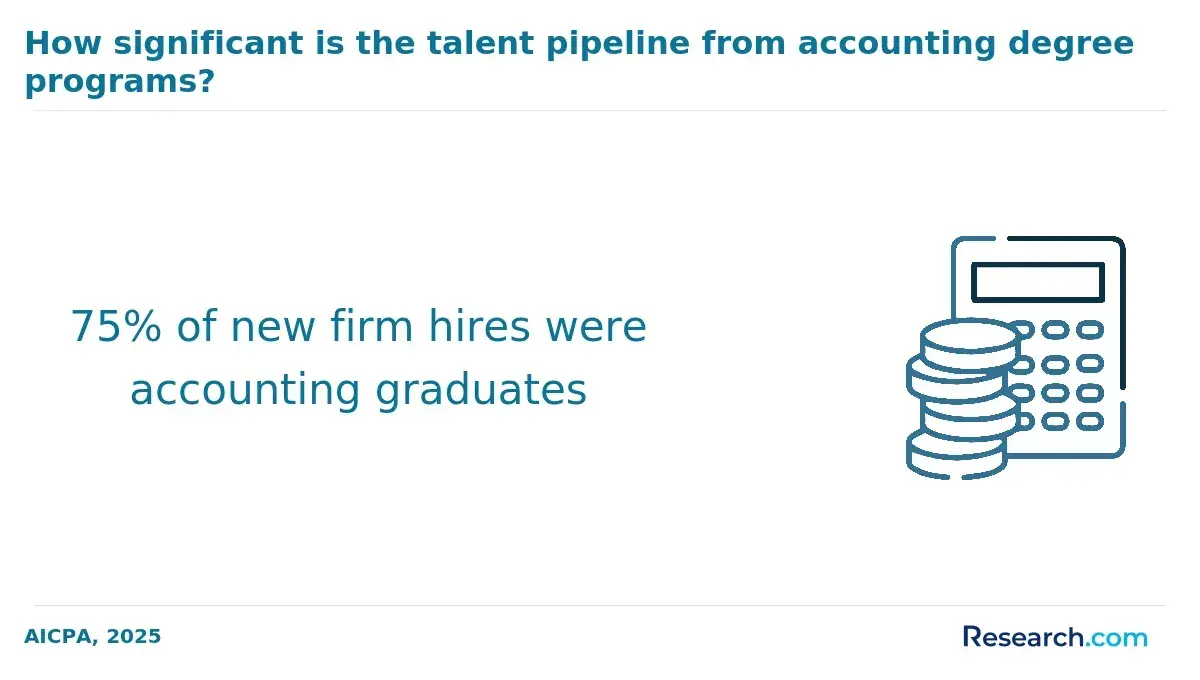
The market is also affected by fewer students entering accounting programs and obtaining CPA credentials, which contributes to a tighter labor supply. Candidates who combine accounting knowledge with data analytics, accounting systems, automation tools, regulatory expertise, or industry-specific experience may have stronger opportunities.
Auditors remain important because companies, investors, boards, regulators, and the public rely on trustworthy financial information. Public company audits, internal control reviews, operational audits, and compliance audits help sustain confidence in disclosures and business processes. This continuing need is often described through the “audit effect,” where independent review improves reliability and accountability.
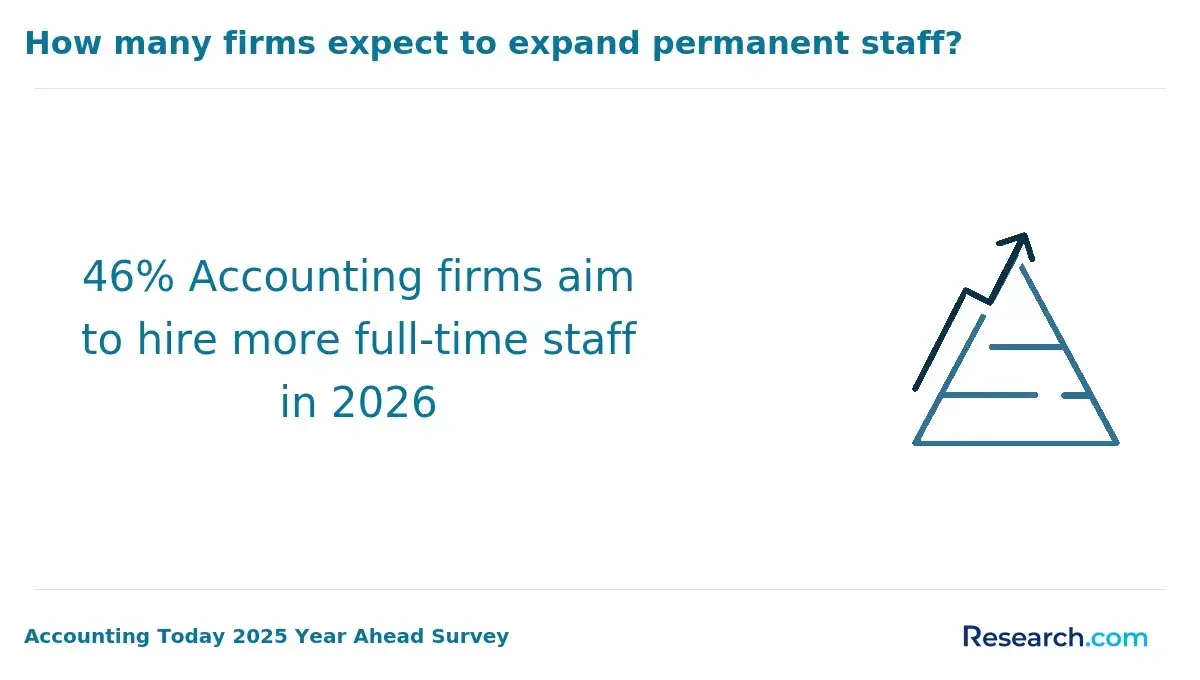
Technology is changing both careers rather than eliminating them. Firms are investing in audit technologies, automation, analytics platforms, and workforce development. Growth areas include software-enabled audit procedures, ESG reporting, cybersecurity, IT audit, and more advanced risk assessment. Students entering either field should expect ongoing learning to be part of the career.
What is the career progression like for an accountant vs. an auditor?
Accounting and auditing both offer structured advancement, but the ladders are slightly different. Accounting progression often moves from transaction-level work to financial reporting, management, and strategic finance leadership. Auditing progression usually moves from testing and documentation to engagement management, risk leadership, client management, or internal audit leadership.
Typical Career Progression for an Accountant
- Staff Accountant: Entry-level role focused on journal entries, reconciliations, financial statement preparation, payroll support, and maintaining organizational records.
- Senior Accountant: Handles more complex accounting tasks, reviews work, supports close processes, and may train or supervise junior staff.
- Accounting Manager: Oversees day-to-day accounting operations, reporting deadlines, internal controls, and team performance.
- Controller or Chief Financial Officer (CFO): Senior leadership roles responsible for financial strategy, reporting integrity, budgeting, forecasting, and executive decision support.
Many professionals following the accountant career path in the United States pursue the Certified Public Accountant (CPA) credential because it can improve promotion opportunities, credibility, and eligibility for certain roles. Accountants may also specialize in tax, forensic accounting, financial planning, cost accounting, or advisory work. Some eventually become tax managers, finance leaders, consultants, or owners of their own firms. Promotion intervals typically occur every 24-36 months depending on firm size and performance.
Typical Career Progression for an Auditor
- Audit Associate/Junior Auditor: Entry-level role focused on reviewing financial statements, testing transactions, documenting evidence, and verifying compliance.
- Senior Associate: Takes on more responsibility for audit sections, communicates with clients or departments, and helps train junior staff.
- Audit Manager: Plans engagements, manages audit teams, reviews workpapers, communicates findings, and ensures regulatory or professional standards are met.
- Partner or Director of Internal Audit: Senior roles involving audit strategy, stakeholder management, quality control, risk oversight, and firm or department leadership.
Auditors often pursue the CPA or Certified Internal Auditor (CIA) credential to strengthen advancement options. Those interested in fraud may consider related credentials, while auditors moving into technology-focused roles may build expertise in IT audit, cybersecurity, data analytics, and ESG reporting. These areas are likely to influence auditor promotion opportunities 2025 and beyond.
Prospective students and working adults who need flexible education options may also review degrees for seniors online when planning a return to school or a career transition into accounting or auditing.
Can you transition from being an accountant and an auditor (and vice versa)?
Yes. Moving between accounting and auditing is common because both roles rely on accounting principles, financial reporting, internal controls, documentation, ethics, and analytical judgment. The transition is usually easier when the professional has a relevant degree, strong technical accounting knowledge, and a credential such as the CPA.
An accountant who wants to become an auditor already understands how transactions are recorded and how financial statements are prepared. To make the shift, the accountant should build experience in audit planning, risk assessment, internal controls, sampling, compliance testing, and audit documentation. Certifications such as the CPA or CIA can strengthen the transition from accountant to auditor career path, especially for public accounting or internal audit roles.
Education matters because a bachelor’s degree in accounting, finance, or a related field is commonly expected for both careers. Students who need a faster starting point may consider an associates degree online fast before moving into a bachelor’s program and later pursuing specialized credentials.
Auditors who want to move into accounting can use their experience with financial records, compliance, fraud detection, and internal controls. However, they may need to strengthen hands-on skills in bookkeeping, tax preparation, financial reporting software, month-end close, payroll, budgeting, and management accounting. Auditors who already hold a CPA may be well positioned, while a management accounting credential such as the CMA can support a move into corporate accounting or finance leadership.
Industry data indicates a steady growth of 4.6% in job opportunities for both accountants and auditors from 2023 to 2033. Salaries for these positions are comparable, averaging between $80,000 and $89,000 annually, with higher compensation for those with specialized credentials and experience.
What are the common challenges that you can face as an accountant vs. an auditor?
Accounting and auditing can both provide stable, respected careers, but neither path is pressure-free. The main challenges in 2027 involve heavier workloads during peak periods, changing technology, complex regulations, and the need to keep professional judgment sharp even when software handles more routine tasks.
Challenges for an Accountant
- Technological adaptation: AI, automation, cloud accounting, and analytics tools are changing how routine work is performed, requiring ongoing upskilling.
- Sustainability reporting: Accountants may need to understand frameworks such as GRI or SASB as organizations expand environmental, social, and governance reporting.
- Regulatory complexity and cybersecurity: Tax changes, reporting rules, data privacy expectations, and cyber risks make financial data management more demanding.
Challenges for an Auditor
- Maintaining independence: Auditors must avoid conflicts of interest and remain objective, even when they have long-term client or internal relationships.
- Complex compliance environment: Mergers, acquisitions, new regulations, and industry-specific rules can increase audit scope and complexity.
- Fraud detection responsibility: Auditors face pressure to identify irregularities, assess risk, and maintain audit quality while working within tight timelines.
Both professions can involve intense deadline cycles. Accountants may feel the most pressure during tax season, month-end close, quarter-end reporting, and year-end reporting. Auditors may face long hours during audit season, especially when clients have complex records, weak controls, or urgent reporting deadlines.
Students comparing accounting challenges in 2027 for professionals with audit industry challenges and risks 2025 should look beyond salary and job growth. Consider your tolerance for deadlines, your comfort with regulation, your interest in technology, and whether you prefer producing financial information or reviewing it. Those researching degree options can compare programs at the top schools to go to for college with strong accounting and auditing coursework.
Is it more stressful to be an accountant vs. an auditor?
Auditing is often more stressful, especially in large public accounting firms, because auditors may face travel, client demands, strict regulatory expectations, and compressed engagement deadlines. That said, stress depends on the employer, role, season, staffing, seniority, and whether the work is public accounting, corporate, nonprofit, government, or consulting-based.
Auditors often experience the highest pressure during busy audit seasons. They may work extended hours, manage multiple client requests, document evidence under tight timelines, and resolve issues that affect financial statement reporting. Long trips and demanding workplace cultures can add to the strain. A recent global survey found that 71% of auditors at Big Four companies reported that work-related stress negatively affects their mental health.
Accountants also face stress, particularly during tax season, month-end close, quarter-end reporting, budget cycles, and year-end reporting. Accuracy matters because accounting errors can affect financial statements, tax filings, payroll, cash flow decisions, and compliance. However, many accountants in private industry, government, or nonprofit roles may have more predictable schedules outside peak periods.
The better question is not which career is universally easier, but which type of pressure you handle better. Accounting stress often comes from recurring deadlines, precision, and volume. Audit stress often comes from uncertainty, client interaction, evidence gathering, travel, and high-stakes review. Students should ask employers about busy-season hours, staffing levels, travel expectations, overtime norms, and support for professional development before accepting a role.
How to Choose Between Becoming an Accountant vs. an Auditor
Choose accounting if you want to build, maintain, and explain financial information. Choose auditing if you want to examine financial information, test controls, and evaluate whether records are reliable. Both paths commonly require a bachelor’s degree in accounting, finance, or a related field, and both can benefit from CPA licensure.
- Work focus: Accountants handle financial record-keeping, budgeting, reporting, tax, payroll, and compliance. Auditors verify financial accuracy, test processes, evaluate controls, and investigate irregularities or procedural weaknesses.
- Work environment: Accountants often have more stable internal teams and recurring reporting cycles. Auditors may work with different clients, departments, or locations and may travel more often.
- Career certifications: Both professions benefit from a CPA license. Auditors may also pursue CIA or CFE credentials to specialize in internal auditing or fraud examination.
- Salary considerations: Median wages for accountants and auditors are similar, around $81,680 annually, although auditors tend to earn slightly more on average according to the U.S. Bureau of Labor Statistics.
- Lifestyle preferences: Accounting may fit those who prefer routine, ownership of financial processes, and long-term organizational knowledge. Auditing may suit those who want variety, investigation, professional skepticism, and exposure to different business areas.
When evaluating the accountant vs auditor career path comparison, think about how you prefer to solve problems. If you like organizing financial activity, closing the books, preparing reports, and becoming the go-to person for an organization’s finances, accounting may be the better fit. If you like reviewing evidence, asking why a process works the way it does, and identifying risk, auditing may feel more engaging.
Students who want broader career flexibility may explore graduate dual degree programs, especially if they are interested in pairing accounting with analytics, business administration, law, information systems, or finance.
A practical way to decide is to complete internships in both areas if possible. Public accounting internships, corporate accounting internships, internal audit roles, and tax internships can reveal the actual pace and expectations of each career more clearly than a course description.
What Professionals Say About Being an Accountant vs. an Auditor
- Major: "Choosing a career as an accountant has given me job stability and strong salary potential across different sectors. Demand remains steady because organizations need accurate reporting and must respond to regulatory requirements. I value the balance between consistent work and the ability to specialize in areas such as tax or auditing, which keeps the profession practical and rewarding."
- Douglas: "Working as an auditor has challenged me to think critically every day. Each assignment is different, whether I am reviewing processes in a corporate setting or evaluating records in the public sector. The role requires adaptability and continuous learning because standards, risks, and business systems keep changing."
- Ezra: "My experience as an accountant has involved constant learning, formal training, and advancement through certifications. The career offers clear pathways into senior and management roles, which makes long-term progression easier to plan. Those opportunities motivate me to keep improving and contribute more meaningfully to the organizations I support."
Other Things You Should Know About an Accountant & an Auditor
In 2027, typical accountants often work regular business hours, especially in corporate settings. However, auditors, particularly during peak periods like year-end and tax season, may work longer and irregular hours, including evenings and weekends, to meet audit deadlines and client needs.
In 2027, technology plays a crucial role in both accounting and auditing, with automation, artificial intelligence, and blockchain being commonly used. Accountants benefit from automated data entry and real-time financial analysis, while auditors leverage these technologies for enhanced accuracy in audits and fraud detection.
Business environments in 2027 affect accountants by influencing financial reporting standards and the adaptation to digital tools for real-time data analysis. For auditors, evolving environments necessitate stronger compliance and risk assessment skills to ensure effective value assurance amidst rapid technological and regulatory changes.
References
- 7 Challenges Accountants and Auditors Face Moving into FP&A (And How You Can Overcome Them) - FP&A Professional Institute https://fpnaprofessionals.com/7-challenges-accountants-and-auditors-face-moving-into-fpa-and-how-you-can-overcome-them/
- Accountant: job description https://targetjobs.co.uk/careers-advice/job-descriptions/accountant-job-description
- Can an Accountant Be an Auditor? Qualification and Steps to Transition https://roystonparkin.co.uk/can-an-accountant-be-an-auditor-qualification-and-steps-to-transition/
- Accounting vs. Auditing: What's the Difference? https://www.investopedia.com/articles/professionals/120415/career-advice-accounting-vs-auditing.asp
- Auditor vs Accountant: Choosing Your Career Path https://www.regenesys.net/reginsights/auditor-vs-accountant-choosing-your-career-path
- Auditor's financial stress: An inconspicuous determinant of audit outcomes - ScienceDirect https://www.sciencedirect.com/science/article/abs/pii/S0882611023000603
- What Does an Accountant Do? | Accounting.com https://www.accounting.com/careers/overview/
- Duties of an Auditor in a Company | TaxTMI https://www.taxtmi.com/article/detailed
- View of Examining the Relationship between Work Stressors and Auditors’ Job Performance https://archive.conscientiabeam.com/index.php/11/article/view/3119/7018
- Accountants and Auditors | My Future https://myfuture.com/occupations-industries/occupations/accountants-and-auditors/
- AICPA. (2025). AICPA 2025 Trends Report. https://www.aicpa-cima.com/professional-insights/download/2025-trends-report
- National Student Clearinghouse Research Center. (2025). Clearinghouse Enrollment Insights Series: Final Fall Enrollment Trends. https://nscresearchcenter.org/final-fall-enrollment-trends/
- Hood, D. (2026, January 2). Accounting in 2026: The year ahead in numbers. Accounting Today. https://www.accountingtoday.com/list/accounting-in-2026-the-year-ahead-in-numbers


