
2027 Are Online Medical Billing & Coding Degrees Respected by Employers?

Co-Founder and Chief Data Scientist
Choosing an online medical billing & coding degree is not just a question of convenience. The practical question is whether employers will trust the credential when you apply for coding, billing, revenue cycle, insurance claims, or remote healthcare administration roles.
Employer acceptance has improved as online healthcare training has become more common. Recent data indicates that approximately 60% of healthcare employers acknowledge online credentials as credible, but acceptance is not automatic. Hiring managers usually look beyond the delivery format and evaluate accreditation, certification readiness, hands-on coding practice, school reputation, and evidence that graduates can work accurately with real healthcare documentation.
This guide explains how employers view online medical billing & coding degrees, which quality signals matter most, and how students can choose a program that supports credible job applications, certification preparation, salary growth, and long-term career mobility.
Key Benefits of Online Medical Billing & Coding Degrees Respected by Employers
- Employers increasingly recognize online medical billing & coding degrees from accredited institutions as equivalent to traditional programs, with 78% of hiring managers reporting positive perceptions according to recent surveys.
- Graduates develop essential technical skills like accuracy in coding and familiarity with healthcare regulations, which align closely with industry standards and boost workplace readiness.
- Completing an online medical billing & coding degree often leads to improved career outcomes including a median salary increase of 15% and higher job placement rates compared to those without formal training.
Which Accrediting Bodies Make an Online Medical Billing & Coding Degree Legitimate?
Accreditation is one of the clearest signals that an online medical billing & coding program is legitimate. Employers may not inspect every course on a transcript, but they do notice whether the school and program meet recognized academic or industry standards. A non-accredited program can still teach useful material, but it may create problems with certification eligibility, credit transfer, financial aid, and employer confidence.
Students should understand the difference between institutional accreditation, program-level approval, and professional recognition. Each plays a different role in making an online credential credible.
- Programmatic Accreditation Through AHIMA: The American Health Information Management Association's Approval Committee is widely recognized in health information education. AHIMA approval indicates that a program addresses core subjects such as anatomy and physiology, medical terminology, ICD concepts, and CPT coding. It can also support preparation for respected credentials such as the Certified Coding Associate (CCA) and Certified Coding Specialist (CCS), both of which can strengthen a graduate's employment profile.
- Regional Accreditation: Regional accreditation evaluates the institution as a whole rather than only the billing and coding curriculum. This matters if you want your credits to transfer, if you may continue into another degree, or if an employer requires a credential from an accredited school. It also helps verify that the institution follows academic and administrative standards.
- Professional Organization Recognition: Organizations such as the American Academy of Professional Coders (AAPC) and AHIMA help define current coding, billing, compliance, and continuing education expectations. Recognition, alignment, or preparation tied to these organizations can make a program more useful because employers often recognize their certifications and training standards.
Before enrolling, check accreditation directly on the school or accreditor website instead of relying only on marketing language. Also compare tuition, exam preparation, textbooks, software access, and fees. Students focused on cost can review cheapest medical billing and coding online courses alongside accredited options and short training paths such as 6-month certificate programs for careers that pay well.
Does University Reputation Affect Employer Views of Online Medical Billing & Coding Degrees?
Yes, university reputation can influence employer perceptions, but it is rarely the only deciding factor. In medical billing and coding, employers tend to care most about whether the candidate can code accurately, understand documentation rules, use billing systems, follow compliance standards, and prepare for or hold recognized certifications.
A known institution can reduce uncertainty for a hiring manager. Schools such as the University of Phoenix and Keiser University are recognized for established medical billing & coding programs and career support services. Institutions with large numbers of online graduates, such as Ultimate Medical Academy, may also benefit from employer familiarity, especially when alumni outcomes and student satisfaction are visible.
Reputation becomes more meaningful when it is supported by concrete quality markers. Accreditation, certification preparation, employer partnerships, and practical tools matter more than name recognition alone. For example, a school that uses resources such as Miami Dade College's use of AHIMA's Virtual Lab may give students more direct exposure to applied health information workflows than a program that relies only on readings and quizzes.
Students should not assume that a famous name automatically produces better hiring outcomes. A lesser-known accredited program with strong coding practice, AAPC or AHIMA alignment, externship support, and certification preparation may be more useful than a more expensive program with limited hands-on training. Graduates can also improve their marketability by pursuing targeted credentials through online certification programs that pay well.
Do Employers Treat Online and On-campus Medical Billing & Coding Degrees Equally?
Many employers treat online and on-campus medical billing & coding degrees similarly when the online program is accredited, certification-focused, and skill-based. The delivery format matters less than whether graduates can apply ICD-10-CM, CPT, and HCPCS codes accurately, understand payer rules, work with electronic systems, and communicate professionally with providers, insurers, and patients.
Online education is also a natural fit for this field because many billing and coding tasks are already computer-based, documentation-driven, and increasingly remote or hybrid. An online graduate who has completed realistic coding assignments, used industry tools, and earned a recognized certification can be as competitive as a campus graduate.
However, online graduates may need to be more intentional about proving readiness. A transcript alone may not show hands-on ability. Stronger applications usually include certification status, coding practice examples, externship or internship experience, familiarity with electronic health records, and measurable accuracy in coursework or assessments.
- What helps online graduates compete: recognized accreditation, CPC preparation, CCA or CCS preparation, practical coding labs, instructor feedback, and career services.
- What can weaken employer trust: vague program claims, no certification alignment, no hands-on coding practice, unclear accreditation, or a school that cannot explain graduate outcomes.
- What employers compare most often: accuracy, compliance knowledge, software comfort, work experience, professionalism, and certification readiness.
For best results, graduates should present the online degree as one part of a broader evidence package: education, certification, practice, and relevant work experience.
Do Employers Trust Online Medical Billing & Coding Degrees from AI-powered Virtual Classrooms?
Employers are becoming more open to AI-powered virtual classrooms, but trust depends on how the technology is used. AI tools can strengthen online medical billing & coding education when they provide adaptive practice, immediate feedback, realistic documentation scenarios, and structured support from qualified instructors. They do not replace accreditation, certification preparation, or human evaluation.
In a strong program, AI can help students practice coding decisions repeatedly, identify weak areas, and receive targeted review before moving to more complex cases. Virtual simulations can expose students to clinical documentation, payer requirements, coding edits, and billing workflows that resemble real healthcare environments. This can be especially useful for students preparing for remote roles, where independent problem-solving and software comfort are essential.
Employers are likely to be skeptical of programs that use AI as a shortcut. A credible AI-enhanced program should still have clear learning outcomes, instructor oversight, current coding references, academic integrity controls, and preparation for recognized credentials such as CPC or CPB. The strongest signal is not that a classroom is AI-powered; it is that graduates can demonstrate accurate, compliant, job-ready work.
For candidates, the best strategy is to describe AI classroom experience in practical terms. Instead of saying only that a program used AI, explain that you completed simulated claims, received feedback on coding accuracy, practiced documentation review, or used tools similar to those found in healthcare billing operations.
What Skills Do employers Value from Online Medical Billing & Coding Graduates?
Employers value online medical billing & coding graduates who can work accurately, independently, and ethically. Because coding and billing mistakes can affect reimbursement, compliance, patient accounts, and organizational revenue, technical knowledge must be paired with careful judgment and professional communication.
The most competitive graduates show evidence of the following skills:
- Medical Coding Proficiency: Employers expect familiarity with ICD-10-CM, CPT, and HCPCS. Graduates should be able to select codes based on documentation, understand code guidelines, and recognize when additional clarification is needed.
- Attention to Detail: Small errors can delay claims, trigger denials, or create compliance concerns. Online students who complete detailed case assignments and coding exercises can use that experience to show they are prepared for precision-based work.
- Technical Literacy: Comfort with electronic health records, billing platforms, spreadsheets, secure communication tools, and online reference systems is valuable for both office-based and remote positions.
- Communication Skills: Billers and coders often need to clarify documentation, explain claim issues, follow up with insurers, or discuss account questions. Employers look for concise, professional communication rather than only technical coding knowledge.
- Problem-Solving: Claims do not always process cleanly. Graduates who can investigate denials, identify documentation gaps, interpret payer rules, and escalate issues appropriately are more useful to revenue cycle teams.
- Adaptability and Self-Motivation: Coding rules, payer policies, telehealth documentation, and software systems change. Online learners often build self-management habits because they must meet deadlines and complete work without constant in-person supervision.
Online graduates should make these skills visible on resumes and interviews. Instead of listing only coursework, describe specific coding systems studied, software used, certification preparation completed, and any practical billing or documentation scenarios handled during training.
Do Professional Certifications Help Validate Online Medical Billing & Coding Degrees?
Yes. Professional certifications are one of the strongest ways to validate an online medical billing & coding degree. They give employers a standardized signal that a candidate understands industry expectations, not just a school-specific curriculum.
This is especially important for online graduates because certification can reduce concerns about program format. A hiring manager may not know every online school, but credentials from recognized organizations are easier to compare across candidates.
- CPC Certification: The Certified Professional Coder (CPC) credential, awarded by organizations such as the American Academy of Professional Coders (AAPC), confirms knowledge of coding and billing procedures. It is widely recognized by employers and can support entry-level hiring, advancement, and specialty growth.
- CCA Certification: The Certified Coding Associate (CCA) credential demonstrates foundational coding knowledge. It can help newer graduates show that they understand essential coding concepts and are ready to continue developing professionally.
- CBCS Certification: The Certified Billing and Coding Specialist (CBCS), offered by the National Healthcareer Association (NHA), reflects combined billing and coding skills. This can be useful for roles that require claims processing, coding support, insurance follow-up, and administrative versatility.
- Career Advancement: Earning more than one credential can expand career options. Professionals holding three or more certifications have been reported to earn significantly higher wages, showing how certifications can support both credibility and advancement.
Students should choose programs that clearly identify which certification exams they prepare graduates for, whether exam fees are included, and whether the curriculum matches current exam content. Certification preparation should be built into the program, not treated as an afterthought.
Do Online Medical Billing & Coding Graduates Earn the Same Salaries as On-campus Graduates?
There is no definitive evidence that online medical billing & coding graduates earn less than on-campus graduates simply because of the delivery format. Salary data in this field is usually tied more closely to education level, certifications, experience, employer type, job duties, and location than to whether classes were completed online or in person.
For most graduates, the better salary question is not “online versus campus,” but “what credentials, skills, and experience can I show?” The following factors have a stronger effect on earning potential:
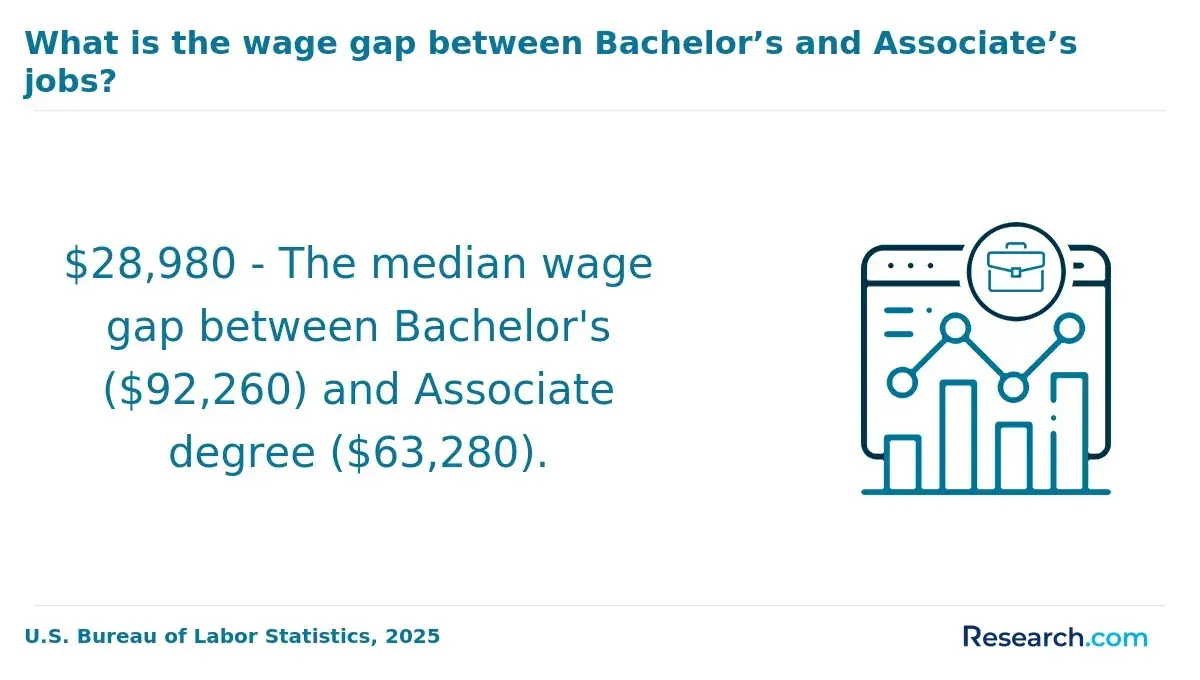
- Education Level: A higher degree such as a bachelor's or master's can improve salary prospects in some roles, especially when paired with health information, compliance, revenue cycle, or management responsibilities. Employers are more likely to respect an online degree when it comes from a properly accredited institution.
- Certification: Certification is one of the strongest salary drivers in medical billing and coding. Credentials from organizations such as AAPC are treated as evidence of applied knowledge, and certifications earned through online preparation are generally evaluated by the credential itself rather than the class format.
- Experience and Skills: Salaries tend to rise as professionals gain practical experience with CPT, ICD-10, payer rules, documentation review, claim denials, and specialty coding. Online courses that include hands-on practice can help graduates start building that foundation.
- Location and Employer: Pay can vary by geography and employer. Urban centers pay more in many cases, and remote work opportunities are increasing. Online graduates may be well positioned for remote roles if they can show discipline, technical readiness, and secure handling of health information.
- Job Role and Responsibilities: Coders typically earn more than billers, but professionals who understand both billing and coding may qualify for broader revenue cycle roles. Specialized coding, auditing, compliance, and supervisory duties can also affect compensation.
Advanced academic pathways are not usually the direct route to higher billing and coding salaries. Searches for options such as shortest doctoral programs online may be useful for other long-term academic goals, but most medical billing and coding professionals should prioritize accreditation, certification, experience, and role specialization first.
How Do Online Medical Billing & Coding Degrees Impact Career Growth and Promotions?
An online medical billing & coding degree can support career growth when it helps graduates move beyond basic claims tasks into coding, auditing, revenue cycle, compliance, training, or supervisory roles. The degree itself is most useful when paired with certification, strong work performance, and continued learning.
- High Demand Across Industries: Medical billing & coding professionals work in hospitals, physician offices, clinics, insurance organizations, administrative service companies, and healthcare management firms. This range of employers can create opportunities for lateral moves and advancement.
- Remote and Flexible Work Opportunities: Many employers accept online credentials, particularly for roles that are already digital and documentation-based. Remote or hybrid work can help professionals access employers outside their local area without relocating.
- Accelerated Entry and Advancement: Online programs frequently allow students to complete their education in 9 to 12 months. Faster entry can help graduates begin gaining experience sooner, which matters because promotions often depend on demonstrated accuracy and reliability over time.
- Certification Preparation and Higher Earning Potential: Programs that prepare students for credentials such as Certified Professional Coder (CPC) and Certified Coding Specialist (CCS) can improve promotion prospects. Certification often signals readiness for more complex coding, auditing, or leadership responsibilities.
- Job Stability and Promotion Prospects: Healthcare documentation and reimbursement remain essential functions. Skilled coders and billers help organizations maintain accurate records, reduce claim problems, and support compliant revenue operations, which can make experienced professionals valuable during organizational change.
To turn an online degree into advancement, graduates should track measurable achievements: coding accuracy, denial reduction, claims volume handled, process improvements, audits completed, software learned, and certifications earned. These details are stronger promotion evidence than the degree title alone.
What Companies Actively Hire Graduates from Online Medical Billing & Coding Programs?
Graduates from credible online medical billing & coding programs can pursue roles across healthcare, insurance, government, outsourcing, and health technology. Employers in these sectors usually care less about whether the program was online and more about whether the candidate understands coding systems, billing workflows, confidentiality, compliance, and claims processes.
- Healthcare Providers: Hospitals, clinics, specialty practices, physician offices, and outpatient centers hire coding specialists, billing coordinators, patient account representatives, and revenue cycle support staff. These employers value accuracy, documentation knowledge, and the ability to work with clinical and administrative teams.
- Insurance Companies: Health insurers and managed care organizations employ professionals to review claims, audit documentation, verify coding accuracy, and support reimbursement decisions. Online graduates with strong technical skills may also be considered for remote medical billing and coding jobs.
- Medical Billing & Coding Service Firms: Third-party billing companies and revenue cycle management firms hire graduates for coding, billing management, denial follow-up, and claims resolution. These employers often look for candidates who can handle high claim volumes while maintaining quality.
- Government Agencies: State health departments, Medicare and Medicaid contractors, and VA hospitals may employ coders and billers for documentation, claims, auditing, and administrative support. Government-related roles can place a strong emphasis on compliance and accuracy.
- Technology & Health Informatics Companies: Companies that develop electronic medical record systems, coding tools, billing software, or health IT platforms may need professionals who understand both healthcare documentation and digital workflows. Online graduates who are comfortable learning software can be competitive in these environments.
Students who want a broader academic path into healthcare administration or related roles may also compare affordable online bachelor degree programs, especially if they plan to move beyond entry-level billing and coding work.
What Future Trends Will Shape Online Medical Billing & Coding Degrees' Credibility?
The credibility of online medical billing & coding degrees will continue to depend on how well programs match the realities of healthcare work. Employers are likely to become more accepting of online credentials when programs provide verifiable skill development, current coding instruction, strong certification preparation, and exposure to emerging healthcare technologies.
- AI-driven learning validation: Artificial intelligence can help assess coding accuracy, flag weak areas, and create practice scenarios. If programs use AI responsibly, it may give employers clearer evidence of student competence. If used carelessly, it may raise concerns about academic integrity and overreliance on automation.
- Global accreditation collaboration: Accreditation organizations are increasingly aligning quality expectations across programs. Greater consistency can make it easier for employers to understand what an online credential represents and can support career mobility for graduates.
- Increased employer partnerships: Online programs that work with healthcare providers, insurers, and technology companies can build curricula around real workforce needs. Internship options, employer input, and practical projects can make graduates more job-ready.
- Skill-based hiring practices: Employers are placing more weight on demonstrable skills, certifications, and applied experience than on degree prestige alone. This trend benefits online graduates who can prove coding competence through credentials, portfolios, assessments, or work history.
- Integration of telemedicine competencies: As telehealth grows, billing and coding programs must address virtual care documentation, telemedicine billing, and payer-specific rules. Graduates who understand these areas may be more attractive to employers adapting to new care delivery models.
The strongest future programs will not simply advertise flexibility. They will show clear outcomes: certification preparation, current coding practice, employer relevance, ethical AI use, and documented graduate readiness.
Here's What Graduates of Respected Online Medical Billing & Coding Programs Have to Say About Their Degree
- Julieta: "Completing my online medical billing & coding degree opened doors I never thought possible. The flexibility of the program allowed me to balance work and study, which was crucial as a single parent. Since graduating, I've secured a position with a leading hospital network, and the demand for skilled coders has given me confidence in long-term job stability. This career has not only provided financial security but also a profound sense of purpose, knowing I contribute to accurate patient care records."
- Amy: "My experience with the online medical billing & coding degree was transformative, especially in terms of career advancement. After just a year post-graduation, I earned a promotion to lead coder at my clinic, which I attribute to the comprehensive training and certification preparation the program offered. It challenged me intellectually and helped me develop professional confidence, allowing me to mentor new colleagues and improve administrative workflows that directly impact patient outcomes."
- Ricardo: "Pursuing an online medical billing & coding degree was a deliberate choice to reframe my career and give back to my community. The program's focus on current healthcare regulations and coding accuracy gave me a competitive edge. Now working in a community health center, I feel passionate about ensuring underserved populations receive quality care through proper documentation and billing. This degree has enhanced my professional growth and strengthened my commitment to healthcare equity."
Other Things You Should Know About Respectable Online Medical Billing & Coding Degree Programs
In 2027, many employers respect online medical billing & coding degrees as long as they are from accredited programs. Employers are more concerned about the skills and qualifications of candidates rather than the mode of education, recognizing that online programs can offer comparable training to traditional ones.
In 2027, online medical billing & coding graduates generally receive competitive salary offers comparable to those of traditional graduates, provided their degrees are from accredited institutions. Employers value the skills and knowledge gained, focusing more on performance and certification than the degree's mode of delivery.
Some employers may question the quality of certain online programs, but accredited programs that follow national curriculum guidelines and offer certification preparation are widely accepted. The key is program reputation and verifying credentials.
References
- Medical Billing and Coding https://www.utc.edu/academic-affairs/center-for-professional-education/professional-development/medical-career-academies/medical-billing-coding
- AAPC Medical Biller https://www.coursera.org/professional-certificates/aapc-medical-biller
- Top 10 Medical Billing And Coding Programs Of 2024 https://www.accreditedschoolsonline.org/healthcare/medical-billing-coding/
- Online Healthcare Certifications in Medical coding & billing - AAPC https://www.aapc.com/certifications
- Key Trends for 2025: Navigating the Future of Medical Coding and Billing https://imedx.com/2025-key-trends-for-medical-coding-and-billing/
- What’s Next for Medical Billing & Coding: Emerging Trends and Tech Transformation https://curecloudmd.com/resources/whats-next-for-medical-billing-and-coding-through-emerging-trends/
- Online Medical Billing and Coding Training | Professional and Industry | Professional and Continuing Education (PACE) https://www.lindenwood.edu/pace/career-training/programs/online-medical-billing-and-coding-training/
- The Future of Medical Billing & Coding: Key Trends Shaping 2025 https://practolytics.com/blog/the-future-of-medical-billing-coding-key-trends-shaping/
- The Impact of AI and Machine Learning on Elearning Platforms for HR Training https://blogs.psico-smart.com/blog-the-impact-of-ai-and-machine-learning-on-elearning-platforms-for-hr-training-168501


