
2027 Different Types of Data Science Degrees and Their Salaries

Co-Founder and Chief Data Scientist
The demand for skilled data science professionals continues to surge as organizations across industries rely more heavily on data-driven decision making. According to the U.S. Bureau of Labor Statistics, employment in data-related fields is projected to grow significantly faster than the average for all occupations, reflecting the expanding role of data science in the modern workforce.
Choosing the right educational path in this competitive field is crucial for maximizing career opportunities and earning potential. This article offers an expert overview of the various types of data science degrees available and explores the salary expectations graduates can anticipate within each specialization.
Key Points About Different Types of Data Science Degrees and Their Salaries
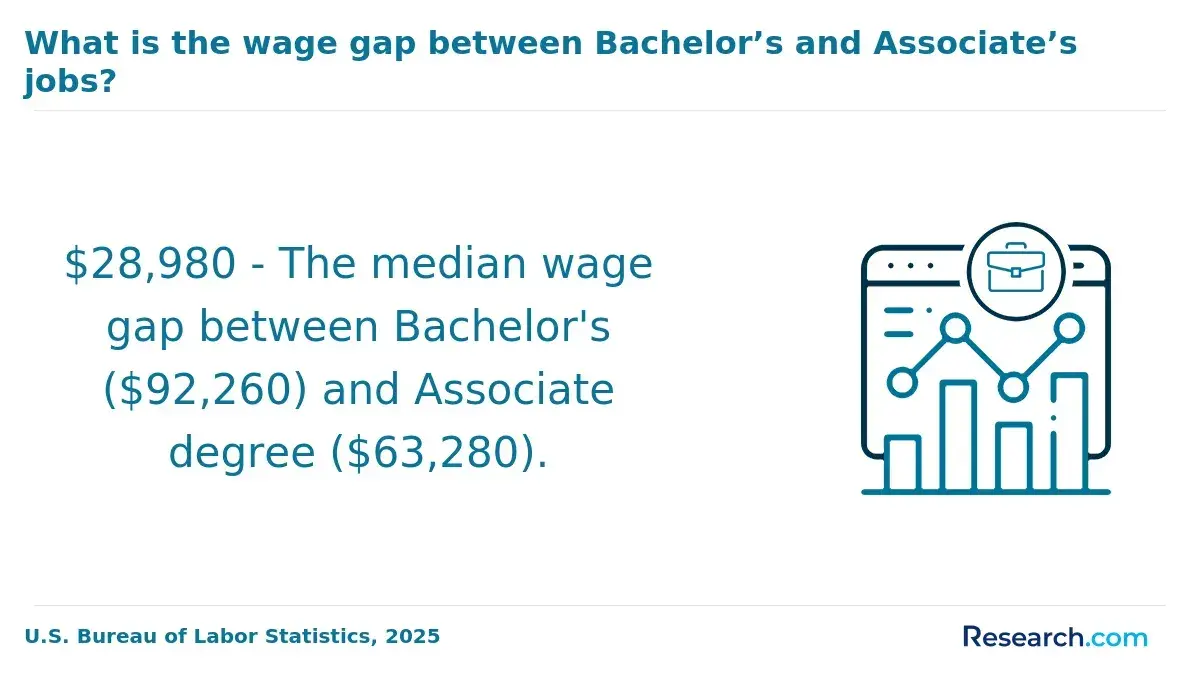
- Individuals with a bachelor's degree in data science typically earn a median salary of around $85,000 per year, with many entry-level roles offering opportunities for rapid advancement compared to those holding only an associate degree.
- Master's degrees in data science unlock access to higher-paying positions such as data scientist or machine learning engineer, where average salaries often exceed $110,000 annually and demand is growing faster than the overall job market.
- While associate degrees provide a foundation and quicker entry into data-related technician roles with salaries ranging from $45,000 to $60,000, they generally offer less long-term upward mobility than bachelor's or master's programs in the field.
What Are the Different Types of Data Science Degrees Available?
Understanding the different types and levels of data science degrees is essential for students before choosing a program because each option caters to distinct career goals and educational backgrounds.
To clarify these options, here is a summary of the main types of data science degrees and what makes each unique:
- Bachelor's degree in Data Science: This foundational degree emphasizes core skills in mathematics, statistics, programming, and introductory data analysis. Typical coursework includes probability, linear algebra, basic machine learning, and programming languages such as Python or R.
- Master's in Data Science: A master's program develops advanced expertise in machine learning, data visualization, algorithms, and ethical data use. Students often participate in practical projects involving complex, large-scale datasets.
- Ph.D. in Data Science: The doctoral track focuses on original research and advanced theory. Coursework covers specialized topics like deep learning, natural language processing, and sophisticated statistical modeling, culminating in a dissertation that advances the field.
- Data Science Certificate Programs: These non-degree options target practical skills such as data wrangling, visualization, and basic machine learning through intensive training without the commitment of a full degree.
- Data Analytics Degrees: Programs centered on data collection, cleaning, and interpretation to support business decisions. Coursework prioritizes statistical analysis, data management, and visualization with less focus on algorithm development or machine learning compared to full data science degrees.
For those exploring academic paths, reviewing college majors provides valuable insights into how these degree types fit into broader educational trends and career opportunities.
What Specializations Are Available in Data Science Degrees?
Specialization plays a crucial role when choosing a data science degree, as it helps students align their education with targeted career goals and industry demands. By focusing on a particular area, students acquire specific skills that enhance their employability and salary potential in competitive job markets.
To illustrate the variety of options, below are some of the most common Data Science specializations that students can pursue:
- Business Analytics and Intelligence: Focuses on using data to inform business decisions, optimize operations, and solve organizational challenges. Students develop key skills in statistical analysis, regression modeling, and data presentation, leading to careers as business analysts, analytics consultants, or strategy analysts.
- Data Science With a Computational Track: Emphasizes algorithms, big data infrastructure, and advanced analytics techniques. This specialization builds a strong foundation in programming, statistics, and data systems. Graduates often work as data scientists or computational analysts in industries such as retail, healthcare, finance, and defense.
- Data Engineering and Warehousing: Concentrates on the design, construction, and management of large-scale data storage systems. Students learn data modeling, programming, and pipeline architecture, preparing them for roles like data engineer, systems analyst, or data manager.
- Database Management and Architecture: Involves designing and maintaining complex databases and information systems. Skills developed include database systems administration and warehousing, leading to positions as database architects or administrators.
- Data Mining and Statistical Analysis: Combines applied statistics with computational methods to discover patterns and forecast outcomes from big data. Key skills include statistical computing and pattern recognition, supporting careers as statisticians, machine learning specialists, or application developers.
- Machine Learning Engineering: Specializes in constructing scalable software solutions based on predictive models. This path requires expertise in both software engineering and machine learning algorithms and is associated with some of the highest salaries and fastest-growing roles in data science.
- Managerial Data Science: Focuses on the leadership and oversight of data-driven projects. Students master a blend of technical, project management, and communication skills, qualifying them for project management or program leadership roles in data science initiatives.
For those interested in exploring more educational paths, examining the best certificate programs that pay well can provide valuable insight into certifications that complement these specializations and enhance career prospects.
How Long Does It Take to Complete Each Type of Data Science Degree?
Understanding the typical duration of data science degree programs is crucial for students planning their educational paths and future careers. Knowing how long it takes to complete different degrees helps in setting realistic timelines and managing expectations.
Different data science programs vary in length depending on factors like enrollment status, transfer credits, and delivery format. Here are the main options:
- Associate Degree in Data Science: Generally takes about two years of full-time study. Part-time students may take longer, while those with transfer credits can sometimes finish faster. Some schools also offer online accelerated programs that can shorten this timeframe.
- Bachelor's Degree in Data Science: Typically requires four years of full-time study to complete. Students attending part-time or working simultaneously may extend their timeline. Many universities provide online or hybrid formats, which can offer more flexibility and occasionally accelerated options.
- Master's in Data Science: Usually completed within one to two years of full-time study. Part-time enrollment or professional commitments may prolong this duration. Online master's programs can offer accelerated tracks allowing completion in as little as 12 months.
- Doctorate (PhD) in Data Science: Often takes four to six years to complete, depending on research scope and dissertation progress. Part-time options are rare, and flexibility is limited due to the research-intensive nature of the degree.
Are There Accelerated Data Science Degree Programs?
Accelerated data science degree programs do exist and are designed to help students earn both bachelor's and master's degrees in a shorter timeframe than traditional routes. These programs typically shorten completion time by allowing students to double-count credits, engage in condensed courses, or enroll in year-round terms.
For instance, some universities offer "4+1" or five-year tracks that let students take graduate credits while still completing their undergraduate degree, effectively reducing the total years needed.
Others provide accelerated master's programs that can be completed in as little as one year by taking multiple courses each term, often delivered in a hybrid format combining online and on-campus learning.
Such formats are especially advantageous for motivated students aiming to enter the workforce or advance their careers sooner, benefiting from both time and tuition savings.
Despite these benefits, there are important considerations to keep in mind. The workload in accelerated programs is notably intense since students manage graduate-level coursework alongside their undergraduate responsibilities.
Many programs expect applicants to have a solid academic record, often requiring a minimum GPA of 3.0 or higher. Furthermore, prerequisite knowledge in mathematics, statistics, and programming is usually necessary, and some institutions require interviews or advisor approval before admission.
Students must typically apply by their junior year and maintain close collaboration with academic advisors to ensure all requirements and deadlines are met. While the faster pace demands strong time management and dedication, graduates of these programs tend to be well-prepared for highly paid data science roles, with median salaries reflecting the value of advanced degrees.
When I spoke to a graduate of an accelerated data science degree program about his experience, he reflected on the unique intensity and rewarding nature of the journey.
He described the challenge of balancing a heavy course load each term, sometimes juggling three graduate-level classes while completing undergraduate requirements.
"It was definitely exhausting at times," he shared, "but having a structured plan from the start and constant support from my advisors made it manageable."
He emphasized how the condensed schedule pushed him to sharpen his time-management skills and deepen his understanding quickly. Although there were moments of stress, the accelerated format allowed him to enter the job market earlier and with confidence, noting that the fast pace ultimately kept him motivated and focused on his goals.
His experience underscores how accelerated programs demand discipline but can provide a meaningful edge for those prepared to meet their challenges.
Are Online Data Science Degrees as Credible as Traditional Ones?
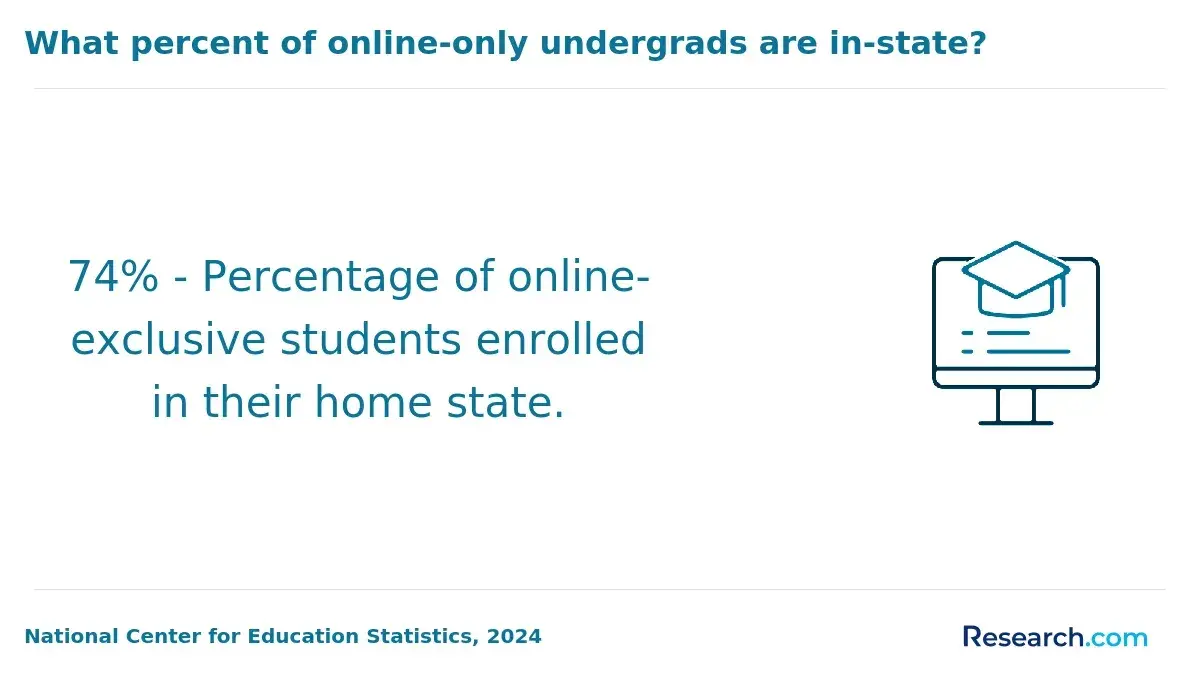
Online data science degree programs now maintain academic standards comparable to traditional programs, especially when offered by accredited, reputable universities. Both online and in-person programs typically feature the same curriculum, are taught by the same faculty, and provide access to career resources and real-world capstone experiences.
Rigorous accreditation processes ensure that academic quality is upheld regardless of the delivery format. For example, some universities, such as Rice, issue identical diplomas whether the program was completed online or on campus. A significant benefit of online programs is the increased flexibility, allowing students to study part-time while continuing their careers, though they must demonstrate strong self-management and discipline.
Traditional programs still offer advantages like physical lab access and face-to-face mentorship, but hybrid and digital practicums are increasingly bridging this gap in fields like data science.
Recent trends indicate a growing employer acceptance of online data science degrees, particularly following the pandemic. A 2023 survey by Champlain College found that 84% of U.S. adults believe employers are more accepting of online degrees now, with 80% open to earning one themselves.
Studies by Morning Consult and LinkedIn report that nearly 75% of employers recognize online learning as equivalent to traditional formats in data science and related fields. Importantly, employers emphasize the reputation and accreditation of the institution over the mode of delivery; over 80% find accredited online degrees acceptable, especially from well-established universities.
Students evaluating data science degrees and potential salaries should prioritize the quality and reputation of the institution, as these factors weigh more heavily in employer perception than whether the program was completed online or in person.
How Much Does Each Type of Data Science Degree Typically Cost?
Understanding the tuition differences across data science degree levels is essential for effective budgeting and long-term financial planning. Knowing these cost variations helps students make informed decisions about which program best fits their financial situation and career goals.
Below is an outline of the typical tuition ranges for each type of Data Science degree to provide clear guidance on what to expect financially.
- Associate Degree in Data Science: Tuition for associate programs generally ranges from $3,000 to $10,000 per year, primarily offered through community colleges. Public community colleges tend to be more affordable compared to private institutions, and online program options may further reduce overall costs. Students can often access federal financial aid and state grants to help manage expenses.
- Bachelor's Degree in Data Science: At public universities, in-state students typically pay between $10,000 and $15,000 annually, while out-of-state tuition can range from $25,000 to $35,000. Private colleges charge higher tuition, commonly between $30,000 and $50,000 per year. Online bachelor's programs may provide more affordable alternatives, with many students relying on scholarships, federal aid, or merit-based awards to offset costs.
- Master's in Data Science: Master's program tuition varies widely depending on institution type and delivery format. Public universities usually charge around $32,000, whereas private institutions can exceed $70,000, with some elite programs surpassing the $100,000 mark. Financial aid opportunities such as graduate assistantships, scholarships, and employer tuition reimbursement are frequently available to help ease the financial burden.
- PhD in Data Science or Computational and Data Sciences: Doctoral tuition costs are highly variable; public universities typically charge between $20,000 and $40,000 annually for out-of-state students, while private schools often exceed $40,000 a year. Many PhD candidates benefit from tuition waivers, stipends, or research assistantships, which can significantly lower the effective cost of the degree.
One graduate of a data science degree program shared her experience navigating the financial challenges of her education. She reflected on how carefully researching and applying for multiple scholarships made a noticeable difference in managing tuition costs.
"I remember feeling overwhelmed at first, but once I explored assistantship opportunities and grant options, the burden started to feel more manageable," she explained. She also mentioned that choosing a hybrid program with both online and on-campus courses allowed her to reduce living expenses, making the total cost more affordable.
Looking back, she viewed the investment as worthwhile, noting that the combination of financial planning and support resources helped her focus on gaining skills that later translated into career growth and higher earning potential.
"It wasn't just about the price tag but about understanding the full value and possibilities that came with the degree," she concluded.
What Jobs Can You Get with Each Type of Data Science Degree?
The level of a data science degree plays a crucial role in shaping the types of career opportunities available and the complexity of the roles graduates can pursue. Advanced degrees typically lead to more specialized or leadership positions, while entry-level degrees prepare students for foundational technical roles.
Below is an outline of common jobs associated with each type of data science degree, detailing typical responsibilities and work environments.
- Associate degree in data science: Graduates with an associate degree are usually prepared for entry-level roles such as data technician, junior data analyst, or research assistant. These jobs often involve basic data entry, cleaning, and reporting tasks while supporting larger teams, frequently in sectors like healthcare, marketing, or government. Many students interested in affordable online associate degrees programs can find accessible options to start in these roles.
- Bachelor's degree in data science: This degree level qualifies graduates for roles including data analyst, business analyst, or junior data engineer. Responsibilities generally include analyzing datasets, building dashboards, and providing actionable insights to decision-makers. Work settings usually encompass corporate business, finance, technology, and consulting, with starting salaries in the U.S. ranging from $65,000 to $75,000 per year.
- Master's degree in data science: A master's degree is often required for advanced roles such as data scientist, machine learning engineer, or data engineer. Professionals in these positions design predictive models, develop algorithms, and drive data-driven strategies in industries including healthcare, finance, and technology. Median salaries for data scientists are around $103,500, with machine learning engineers and data engineers frequently earning between $120,000 and $130,000 annually.
- Doctoral degree (PhD) in data science or related field: Doctoral graduates typically secure positions as research scientists, lead data scientists, or faculty members. Their work focuses on leading innovation projects, conducting original research, or teaching at the university level. These advanced roles are common in academia, research labs, and high-tech industries, with senior positions often surpassing $150,000 per year.
How Do Salaries Differ by Data Science Degree Type?
Degree level often plays a crucial role in determining earning potential in data science careers. Understanding how salaries vary by degree type can help students make informed educational and career decisions.
Below is an outline of typical salary ranges for each data science degree type and relevant factors influencing these differences.
- Associate Degree in Data Science: Entry-level positions for associate degree holders are often limited to data support, junior analyst, or technician roles. Starting salaries generally range from $60,000 to $80,000 annually. Advancement typically requires either further education or substantial work experience.
- Bachelor's Degree in Data Science: Those with a bachelor's degree can expect starting salaries between $95,000 and $101,000 as of 2025. Salaries may increase in technology hubs or specialized industries like finance and healthcare. While sufficient for many entry-level roles, long-term growth may plateau without additional credentials or skills.
- Master's Degree in Data Science: Holding a master's degree often leads to starting salaries around $130,000. Graduates frequently qualify for specialized or senior roles, with employers sometimes preferring this level for advanced positions. The wage gap compared to bachelor's degree holders widens at mid and senior career stages.
- Doctoral Degree (PhD) in Data Science: PhD holders command the highest salaries, typically starting between $150,000 and $175,000, reaching over $200,000 with experience. Doctorates are commonly required for academic, research, or executive positions, offering the greatest long-term earning potential.
Industry, location, and company size can also have a significant impact on these salary ranges, with tech companies in large urban centers often providing higher pay.
Students seeking affordable education options might consider exploring low tuition schools online that accept financial aid to help minimize costs while pursuing their data science degrees.
Is There High Demand for Data Science Degree Holders in the Job Market?
There is a notably high demand for data science degree holders in the current U.S. job market, driven largely by advancements in emerging technologies such as artificial intelligence, machine learning, and big data analytics.
These fields have become essential components of business strategies in industries like finance, healthcare, marketing, and technology, pushing employers to seek candidates with specialized data science skills.
The workforce is increasingly favoring versatile professionals who combine expertise in analytics, data engineering, and machine learning, reflecting a shift toward multidisciplinary capabilities.
Regional differences further influence demand: while California has long been the leader in data science job opportunities, New York has recently surpassed it, indicating a wider geographical distribution of roles.
Salaries remain highly competitive, with many positions offering annual pay between $120,000 and $200,000, and entry-level roles averaging $152,000 in 2025-a substantial increase from previous years.
Prospective students should also consider low cost online bachelor degree programs as a strategic option for entering this fast-growing field.
The demand for skilled data scientists continues to outpace supply, with forecasts projecting a 50% shortfall in qualified professionals by 2026. Job postings requiring a data science degree rose sharply by 23% from 2024 to 2025, reaching 70% of listings in relevant fields.
This growth rate is more than four times the average for all occupations, underscoring a persistent skills gap fueled by rapid technological change and increased reliance on data-driven decision-making.
For students entering the workforce, maintaining up-to-date skills aligned with these evolving technologies is critical to tapping into high-paying roles and diverse job opportunities across various sectors and regions.
Overall, the outlook remains exceptionally promising for those pursuing a data science degree, particularly when paired with continuous learning and adaptability in this dynamic labor market.
What Factors Should You Consider When Picking a Type of Data Science Degree?
Choosing the right degree level in data science is a critical decision that shapes your career opportunities and fits with your personal life situation. Picking the most suitable program ensures your education aligns with both your professional goals and available resources.
To help guide this choice, consider the following key factors:
- Career Goals: Your intended role in data science largely dictates the necessary degree level. Entry-level positions often require a bachelor's degree, whereas advanced roles in research or leadership typically demand a master's or PhD. Evaluate your target job market and required credentials carefully.
- Salary Potential: Higher degrees generally correspond with higher salaries. Those holding a master's or PhD tend to earn significantly more than bachelor's graduates. Consider the salary differences in your desired location and specialization to justify the investment.
- Time Commitment: Degree durations vary, from four years for a bachelor's to several years for a PhD. Master's programs may be flexible, but a PhD requires a long-term commitment to research. Reflect on how much time you can realistically dedicate.
- Cost of Education: Tuition and fees differ substantially by degree type and institution. Master's programs can be costly, but shorter duration may offset expenses compared to longer bachelor's degrees. Balance affordability against potential salary gains when planning finances.
- Specialization and Curriculum: Some programs offer focused tracks like business analytics or applied statistics that better prepare you for niche roles. Review each curriculum to ensure it matches your interests and career aims.
- Flexibility and Format: Consider delivery options such as online, hybrid, or in-person formats, especially if balancing work or family. Part-time and asynchronous courses may provide needed flexibility to manage your schedule effectively.
What Data Science Graduates Say About Their Degree and Salary
- Janet: "Completing my bachelor's degree in data science was a transformative experience that equipped me with both technical expertise and practical problem-solving skills. The hands-on projects allowed me to build a strong portfolio, which was key to landing my first role as a data analyst in a competitive market. I particularly value the community support and networking events that connected me with industry professionals and mentors. Knowing that this degree offers both stability and continuous growth in such a dynamic field motivates me every day."
- Ashmit: "After earning my master's degree in data science, I quickly transitioned into leadership positions where I could apply advanced techniques to drive business strategies. The program challenged me intellectually and helped me develop a holistic understanding of algorithm design, critical for tackling complex real-world problems. Beyond the classroom, engaging with peers from diverse backgrounds expanded my perspective and fueled my passion for innovation. This degree has been instrumental not just professionally but in shaping my confidence as a decision-maker."
- Paz: "Pursuing a PhD in data science was an intense journey that deepened my analytical thinking and research skills, enabling me to contribute original insights to the academic community. I thrived on the challenge of pushing boundaries and developing new methodologies that have real societal impact, especially in healthcare data applications. The mentorship and collaboration opportunities enriched my personal growth and inspired me to mentor younger students in underrepresented communities. This path has been incredibly rewarding as it combines my love for teaching and advancing knowledge."
Other Things You Should Know About Data Science Degree Programs & Salaries
In 2027, bachelor's, master's, and Ph.D. degrees in data science offer varied career paths. A bachelor's can lead to entry-level positions, while a master's often qualifies candidates for advanced roles. Ph.D. holders may pursue research or academic careers, with salaries generally increasing at higher education levels.
In 2027, higher degrees in data science often lead to increased salary potential, but they do not guarantee higher salaries. Factors such as relevant industry experience, skills, geographic location, and company type also play significant roles in determining salary levels for data science professionals.
In 2027, aspiring data scientists can pursue degrees like Bachelor's, Master's, or Ph.D. in Data Science. Specializations in fields such as Machine Learning, Artificial Intelligence, and Business Analytics are common, with each path opening doors to specific roles across various industries.
Salary differences between master's degrees in data science, analytics, or machine learning are generally moderate. The specific curriculum and skills acquired influence job roles and pay. Employers often prioritize practical experience and technical expertise over the precise degree title.
References
- How Long Does It Take to Become a Data Scientist? | Flatiron School https://flatironschool.com/blog/how-long-does-it-take-to-become-a-data-scientist/
- The Future of Data Science: Job Market Trends 2025 – 365 Data Science https://365datascience.com/career-advice/the-future-of-data-science/
- What is the cost of Data Science Programs - IABAC https://iabac.org/blog/what-is-the-cost-of-data-science-programs
- How to Choose a Data Science Bootcamp https://www.coursera.org/articles/data-science-bootcamp
- Accelerated Master's Program https://data.science.vt.edu/programs/ms-ds/accelerated-program.html
- Pros And Cons Of Online Data Science Degree https://pwskills.com/blog/online-data-science-degree/
- 5 Things to Consider in a Data Science Master’s Degree https://medium.com/data-science/5-things-to-consider-in-a-data-science-masters-degree-48a84028959d
- Highest Paying Data Science Jobs: Top Roles & Salaries 2025 https://northwest.education/insights/career-growth/highest-paying-jobs-in-data-science/
- Specializations https://www.mastersindatascience.org/data-science/masters/specializations/
- Top Data Science Specializations for 2025 https://www.analyticsvidhya.com/blog/2024/02/top-data-science-specializations/


