2027 Different Types of Education Degrees and Their Salaries

Co-Founder and Chief Data Scientist
The demand for skilled professionals in the education sector continues to rise, driven by evolving workforce needs and expanding opportunities in diverse learning environments. Recent data indicates that jobs in education-related fields are expected to grow at a steady pace over the next decade, reflecting both the increasing emphasis on quality instruction and the diversification of educational roles. Selecting the appropriate educational path plays a crucial role in aligning career goals with market realities and earning potential. This article provides a comprehensive overview of the various types of education degrees available and offers insight into the salary expectations associated with each, equipping prospective students and graduates with the knowledge needed to make informed decisions about their academic and professional futures.
Key Points About Different Types of Education Degrees and Their Salaries
- Individuals with an associate degree in education typically qualify for entry-level roles such as teacher assistants or preschool educators, earning an average salary around $30,000 to $40,000 annually, reflecting more limited career advancement compared to higher degrees.
- Those holding a bachelor's degree in education often secure full teacher certification and open doors to K-12 teaching positions nationwide, with median salaries near $55,000 per year, and greater opportunities for stable employment and benefits.
- Master's degree holders in education can access specialized roles like school administrators or curriculum specialists, with average salaries exceeding $70,000 per year, alongside improved long-term growth potential and leadership opportunities in the education sector.
What Are the Different Types of Education Degrees Available?
Understanding the different education degree types and levels is essential for students before selecting a program because each serves distinct academic goals and career paths. Recognizing how each option caters to different educational backgrounds helps you make well-informed decisions for your future.
The main types of education degrees and what makes each unique are outlined below to help clarify their specific focuses and coursework.
- Associate Degree in Education: Provides a broad introduction to educational theory and practice, with an emphasis on foundational skills in teaching, classroom management, and child development. Coursework covers basic instructional strategies and the social contexts of education.
- Bachelor's Degree in Education: Offers comprehensive study of teaching methods, curriculum design, and educational psychology. Students engage in lesson planning, assessment techniques, and gain practical experience through field placements, making it suitable for those pursuing an accelerated online bachelor degree.
- Master's Degree in Education (M.Ed. or similar): Centers on advanced topics like instructional leadership, curriculum development, and educational research. The curriculum includes pedagogy, educational policy, and specialized instructional strategies for a deeper understanding of teaching and learning processes.
- Doctoral Degree in Education (Ed.D. or Ph.D.): Emphasizes scholarly research, theory development, and education leadership. Coursework focuses on advanced research methods, philosophy of education, and systems analysis to prepare students for contributing original knowledge in the field.
What Specializations Are Available in Education Degrees?
Specialization plays a crucial role when choosing an education degree, as it shapes the skills and knowledge students acquire, directly influencing their career trajectory. By aligning your education with specific career goals, you enhance your job prospects and increase your potential earning power in the education sector.
Below are some common Education specializations that cater to various interests and professional pathways:
- Early Childhood Education: Focuses on teaching and supporting children from birth to age 8. This specialization develops skills in child development, classroom management, and curriculum design for young learners, preparing graduates for roles in preschools, daycare centers, or early intervention programs.
- Elementary Education: Equips educators to teach multiple subjects to students in kindergarten through sixth grade. Key competencies include effective teaching methods, classroom assessment, and foundational literacy and math instruction, leading to careers as elementary school teachers or instructional aides.
- Secondary Education: Prepares teachers for subject-specific instruction in grades 6-12, such as English, math, science, or social studies. Students gain expertise in adolescent learning theory and subject mastery, often leading to positions as middle or high school teachers with opportunities for advanced certification.
- Special Education: Trains professionals to support K-12 students with disabilities or special needs. The curriculum covers individualized education plans (IEPs), inclusive teaching strategies, and child psychology, which qualify graduates for roles such as special education teachers, intervention specialists, or advocates.
- Curriculum and Instruction/Instructional Design: Focuses on the creation, implementation, and evaluation of educational programs and instructional materials. Graduates develop skills in curriculum mapping, educational technology, and assessment strategies, often working as curriculum specialists, instructional coordinators, or e-learning designers.
- Educational Leadership: Prepares individuals for administrative and leadership positions, including principals and superintendents. This specialization emphasizes school law, budgeting, and organizational management, paving the way for careers in school administration and policy development.
Choosing a specialization aligned with your strengths and interests is essential, as it maximizes career opportunities and salary potential, especially for those considering the easiest doctorate degree paths for advancement in the field.
How Long Does It Take to Complete Each Type of Education Degree?
Understanding how long it takes to complete each type of education degree is crucial for students when planning their academic and career paths. Knowing the typical duration helps manage expectations and organize life commitments effectively. Below is an overview of common education degree types and their usual completion times.
The following list breaks down the average length of study for each degree, along with factors that can affect timelines and the availability of flexible learning options.
- Associate Degree in Education: Typically takes about two years of full-time study at a community college or technical school. Some students may finish sooner by transferring credits or attending summer sessions, while part-time students may take longer. Online and accelerated programs are often available to provide more flexibility.
- Bachelor's Degree in Education: Usually requires four years of full-time study at a university, including general education and specialized teaching courses. Factors such as credit transfers and course load impact completion time. Many schools offer online or hybrid options, and some accelerated tracks can shorten the duration to three years.
- Master's Degree in Education: Often completed in one to two years beyond the bachelor's degree, depending on whether the student attends full or part time. Specializations and thesis requirements may extend the timeline. Many universities provide online master's programs and accelerated formats for working professionals.
- Doctorate in Education (Ed.D. or Ph.D.): Typically demands three to six years of study, including coursework, research, and dissertation writing. Part-time enrollment, research complexities, and program structure can greatly influence time to completion. Online and hybrid models are increasingly common but usually still require some campus presence.
Are There Accelerated Education Degree Programs?
Yes, accelerated education degree programs are available in the U.S. and are designed to shorten the time required to earn teaching credentials compared to traditional routes. These programs achieve faster completion by condensing coursework into shorter sessions-typically 8 weeks instead of the standard 16-week semesters-and offering year-round enrollment, including summer terms.
Many also offer credit for prior learning or transfer credits, sometimes requiring applicants to have completed an associate degree or have a minimum number of college credits before entry. Dual-degree pathways are another common feature, allowing students to combine bachelor's and master's degrees within about five years. Examples include asynchronous online formats and intensive field placements, which help maintain the quality of training despite the compressed timeline.
Key considerations for students interested in accelerated education programs include the increased workload intensity, as these programs are demanding and often require full-time study combined with concurrent field experience. Eligibility criteria generally emphasize prior academic achievement, such as a minimum GPA of around 3.0, prerequisite coursework, and sometimes relevant professional experience in education settings.
Tuition rates may vary, with some programs offering discounted pricing in partnership arrangements. Students should carefully weigh the accelerated schedule's rigor against their personal and professional commitments. Salaries for educators with these degrees vary, but having a master's degree often correlates with higher pay and better job prospects in the education field.
Reflecting on this, I spoke with a graduate of an accelerated education degree program who shared insightful perspectives. He described the experience as intense but rewarding, noting that the condensed coursework demanded exceptional discipline and focus. "The fast pace meant I had to manage every minute efficiently," he explained, balancing schoolwork with teaching placements that provided real-world experience. He recalled occasional stress from the workload but emphasized how the program's structure helped him stay motivated, with the flexible online components fitting around his existing responsibilities. Ultimately, he valued the accelerated path because it allowed him to complete his teaching license and enter the workforce sooner than through traditional routes, confirming that such programs can be both challenging and effective for dedicated students.
Are Online Education Degrees as Credible as Traditional Ones?
Online education degree programs and traditional formats both maintain rigorous academic standards and curricula to ensure quality outcomes. Accredited institutions usually employ the same faculty and require comprehensive assessments regardless of delivery method. Traditional programs focus on face-to-face interactions, structured classroom environments, and real-time feedback, which help build critical thinking and interpersonal skills. Conversely, online programs utilize multimedia tools, frequent evaluations, and flexible scheduling, allowing students to learn at their own pace.
Research indicates that students in online education often perform equally well or better than their peers in traditional settings. For instance, a survey by the Babson Survey Research Group found that 77% of academic leaders agree that online learning outcomes are as good as or better than face-to-face instruction. Importantly, for degrees in education, accredited online teacher preparation programs can lead to the same state licensure and professional credentials as traditional programs.
Recent trends reveal growing employer acceptance of online education degrees, especially those from well-accredited schools. According to a CNN survey, 83% of executives view online degrees as credible as traditional ones, with more American adults recognizing online education as a valid or even superior option. However, some employers still prefer traditional degrees when the online program lacks recognized accreditation.
Ultimately, whether earned online or in person, the value of an education degree largely depends on the institution's reputation and accreditation status rather than the mode of study. For future educators, both online and traditional degrees can lead to competitive entry-level salaries-typically between $40,000 and $55,000-and provide pathways to professional growth when the program meets rigorous academic standards.
How Much Does Each Type of Education Degree Typically Cost?
Understanding the differences in tuition costs across various education degree levels is crucial for effective budgeting and long-term financial planning. Knowing these variations helps prospective students assess the total investment required and explore appropriate funding options. Below is an overview of typical tuition ranges for each major type of education degree, providing clarity on what to expect financially.
- Associate Degree in Education: Tuition for associate degrees is generally the most affordable, with annual costs at community colleges typically ranging between $3,000 and $4,000 for in-state students. Public institutions usually offer lower tuition than private ones, and many online programs can reduce expenses further. Students often benefit from federal Pell Grants and state aid to help offset these costs.
- Bachelor's Degree in Education: The average yearly tuition at public colleges is around $9,875 for in-state students, while private colleges may charge between $30,000 and $50,000 annually. Online bachelor's programs can be more affordable, with some accredited options starting near $2,850 per year. Federal and state grants, scholarships, and work-study programs are common financial assistance routes.
- Master's in Education: Master's programs generally range from $10,000 to $30,000 total at public universities; private institutions tend to be more expensive. Online master's degrees may fall at the lower end of this spectrum, and some schools offer tuition-free models requiring just assessment fees. Financial aid often includes graduate assistantships, scholarships, and tuition reimbursement from employers.
- Doctorate in Education (Ed.D. or Ph.D.): Tuition for doctoral programs varies widely, often between $20,000 and $60,000 for the entire program at public universities, with private schools charging more. Online Ed.D. options sometimes cost less than $40,000 total. Funding sources for doctoral students frequently include fellowships, research grants, and assistantships to alleviate tuition burdens.
A graduate of an education degree program shared her experience managing these costs, noting that careful planning made a significant difference. She reflected, "I initially underestimated how tuition fluctuates based on the type of program and delivery method," but by leveraging a mix of scholarships and part-time work, she was able to support herself without incurring overwhelming debt. She also mentioned that choosing an online master's program gave her flexibility to work full-time while studying, which ultimately enhanced her career prospects. Her story highlights the importance of exploring all financial aid opportunities and making informed choices tailored to individual circumstances.
What Jobs Can You Get with Each Type of Education Degree?
The level of an education degree significantly shapes the career opportunities and roles for which graduates qualify. Higher education degrees often lead to positions with greater responsibility, specialized focus, and higher earning potential. Below is a list outlining common jobs associated with each major type of education degree to help prospective students understand how their education path can influence their career options.
- Associate degree in education: Graduates typically qualify for roles such as teacher's aide, preschool assistant, or childcare worker in early childhood education settings. Responsibilities include supporting lead teachers, assisting with classroom activities, and ensuring a safe, nurturing environment for young children. These positions are commonly found in preschools, daycare centers, and after-school programs.
- Bachelor's degree in education: This credential is required for becoming a licensed K-12 teacher in public and private schools. Graduates may also work as adult education instructors, preschool directors, or corporate trainers. They plan lessons, manage classrooms, and assess student progress. Median annual salaries for kindergarten and elementary teachers were $61,620 as of May 2022.
- Master's degree in education (MEd, MAEd): A master's degree opens doors to advanced teaching, specialist, and leadership roles such as instructional coordinator, school administrator, K-12 principal, or technology coordinator. These professionals oversee curriculum development, mentor teachers, or manage schools. For instance, K-12 principals earned a median salary of $101,320 in 2022.
- Doctorate in education (EdD, PhD): Doctoral graduates are prepared for top-tier leadership and policy roles, including superintendent, college administrator, education policy analyst, or organizational consultant. They lead school systems, shape education policy, and direct large educational programs at district, state, or national levels. Many EdD holders are recognized thought leaders and strategic decision-makers across education, nonprofit, and corporate sectors. Students considering advanced research and leadership roles might explore the most affordable online PhD programs to further their education.
How Do Salaries Differ by Education Degree Type?
Degree level often influences earning potential for those pursuing careers in education. Understanding these differences can help students make informed educational and career decisions. Below is a summary of typical salary ranges for each major education degree type, highlighting how degree levels impact long-term earnings and career opportunities.
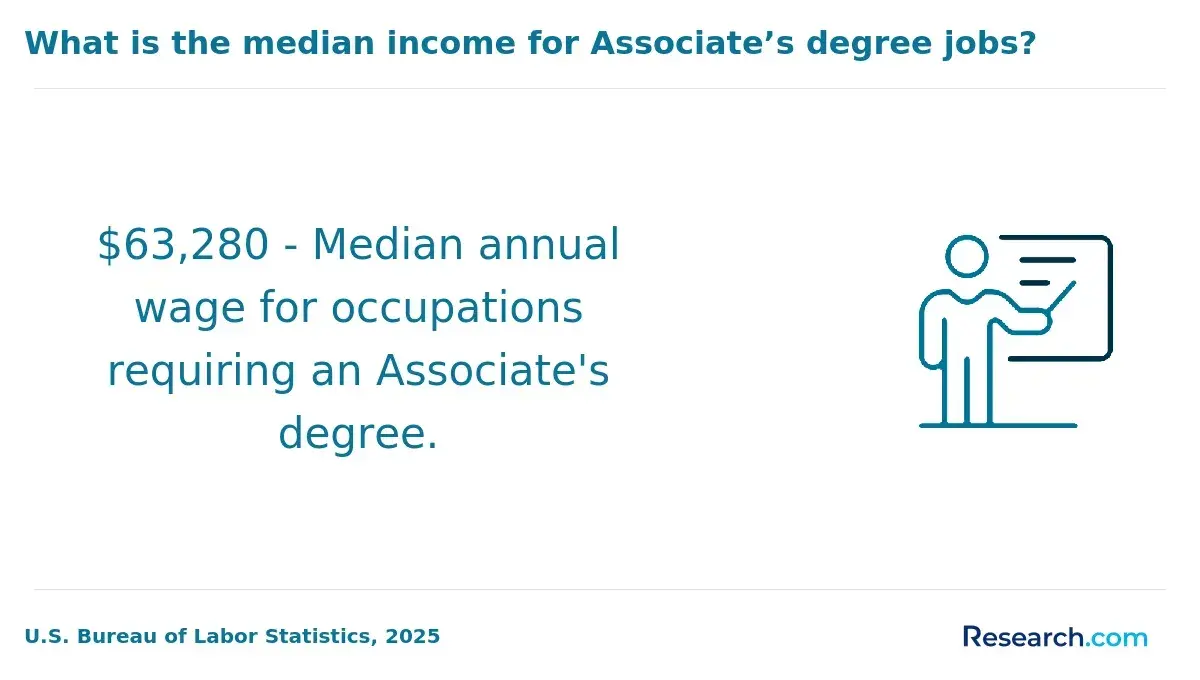
- Associate degree in education: Average starting salaries for associate degree holders in education-related support roles, such as teaching assistants or early childhood aides, typically range from $41,000 to $50,000 annually. Salaries vary based on job type and geographic location, with limited advancement opportunities without further education.
- Bachelor's degree in education: Graduates with a bachelor's degree, which is required for most K-12 teaching positions, usually begin with salaries between $45,000 and $55,000 per year. The national average salary across broader fields is about $69,000, though pay differs by state, district, and subject taught. Higher degrees further increase earning potential.
- Master's degree in education: Those holding a master's degree often qualify for higher-paying roles such as instructional coordinators, curriculum specialists, or school administrators. On average, master's degree holders earn around $80,000 or more annually, approximately $13,000 higher than bachelor's degree holders, and gain access to leadership and specialized positions.
- Doctoral degree in education (Ed.D. or Ph.D.): Individuals with doctoral degrees may become college professors, superintendents, or researchers. Median salaries approach or exceed $99,000 per year, with top faculty earnings surpassing $100,000 in certain states. Doctoral degrees generally represent the highest earnings in education, though salary varies with role and institution.
For students considering where to pursue their studies, exploring the best schools to go to for college can provide valuable guidance in selecting programs aligned with their career and salary goals.
Is There High Demand for Education Degree Holders in the Job Market?
There is steady but regionally varied demand for education degree holders in the current U.S. job market. Growth is driven by workforce shortages, state and federal investments, and demographic trends such as teacher retirements and rising student enrollments. Certain specialties, including special education and STEM teaching, face particularly acute needs.
According to the U.S. Bureau of Labor Statistics, about 114,000 new teaching job openings are projected annually, which reflects both growth and replacement demands. However, opportunities are not evenly distributed geographically: urban and rural districts with teacher shortages, especially in high-need subjects like special education, math, and science, tend to offer more job openings. This pattern highlights the importance of regional differences in demand for education professionals.
Emerging technologies and changing workforce needs also significantly influence demand for education graduates. Rapid integration of AI and digital learning tools has increased the need for professionals skilled in pedagogy combined with technology.
Meanwhile, employers increasingly seek candidates with technical job-specific skills, but many education programs still emphasize general soft skills, creating a skills gap. This is reflected in employment outcomes, as only 30% of 2025 graduates across disciplines have secured full-time jobs in their fields, down from 41% in 2024
Advanced degrees such as master's or doctorates often open doors to administrative roles and higher education teaching, which usually offer higher salaries and job stability. For students considering pathways after completing education degrees, exploring the best trade careers may provide insight into alternative or complementary career options alongside education.
What Factors Should You Consider When Picking a Type of Education Degree?
Choosing the right education degree level is a critical decision because it shapes your career opportunities, earning potential, and professional satisfaction. It is essential to align your degree choice with both your long-term career goals and your personal circumstances. To help make an informed decision, consider the following key factors:
- Career Goals: Different education degree levels prepare you for varied roles. For example, an associate or bachelor's degree may qualify you for teaching positions in early childhood or elementary education, while master's and doctoral degrees can lead to specialized roles such as curriculum coordinator or educational administrator. Clarifying your desired career path ensures you select the degree that best supports your ambitions.
- Time Commitment: Each degree requires varying amounts of time to complete. Associate degrees often take two years, bachelor's degrees four years, master's degrees an additional one to two years, and doctoral programs may take three or more years beyond a master's. Consider how much time you can realistically dedicate to your studies, especially if you have work or family responsibilities.
- Salary and Employment Prospects: Higher degree levels generally lead to increased earning potential and better job security. For instance, bachelor's degree holders earn more than twice the income of those with only a high school diploma, and advanced degrees can further boost these prospects. Research salary trends for your intended career to evaluate the return on your educational investment.
- Flexibility and Program Format: Many institutions offer online or hybrid education programs, providing flexibility for those who need to balance studying with work or family life. Assess whether remote learning or flexible scheduling options are necessary for your situation.
- Accreditation and Reputation: Selecting an accredited program guarantees a quality education that meets industry standards and is recognized by employers and licensing boards. Additionally, attending a reputable institution can improve networking opportunities and strengthen your job market position.
What Education Graduates Say About Their Degree and Salary
- Romie: "Completing my bachelor's degree in elementary education really opened doors I hadn't imagined. Not only did it give me a solid foundation in child development and curriculum design, but it also prepared me to handle real-world classroom challenges with confidence. Starting my career as a first-grade teacher, I feel empowered to make a meaningful difference every day, fostering a love of learning in my students. The stability and support offered by this degree gave me peace of mind while I took on such an important role in my community."
- Sol: "Reflecting on my master's degree in special education, I'm truly grateful for the specialized knowledge and skills I gained to support students with diverse needs. This degree pushed me to grow both professionally and personally, challenging me to be patient, creative, and adaptive. It's incredibly fulfilling to see the positive impact my work has on children's lives and their families. The path hasn't always been easy, but the career advancement opportunities and partnerships with multidisciplinary teams have been rewarding beyond measure."
- Nicy: "As someone who earned a doctorate in educational leadership, I approached my career with a strategic mindset focused on systemic improvement. This degree equipped me not just with theoretical knowledge but with practical tools to influence policy and lead teams effectively. My role now allows me to shape educational environments that enhance both teacher satisfaction and student success. It's a challenging position that requires balancing diverse priorities, but knowing that my work contributes to the well-being of entire school communities is deeply motivating."
Other Things You Should Know About Education Degree Programs & Salaries
In 2027, a Doctorate in Education (EdD or PhD) typically leads to the highest salary in the education sector. Graduates often qualify for top administrative roles, such as superintendent or university president, with salaries ranging from $120,000 to $200,000 or more annually, depending on position and location.
In 2027, when selecting an education degree, consider factors like job market demand, specialization, and potential salary. Fields such as STEM education may offer higher salaries, while geographic location and the level of degree (e.g., bachelor's, master's, doctorate) also influence earning potential.
References
- Accelerated Elementary Education Degree Online or On-Campus https://und.edu/programs/elementary-education-bsed-med/index.html
- Bachelor's degree - Wikipedia https://en.wikipedia.org/wiki/Bachelor%27s_degree
- What Else Can I Do With a Teaching Degree? 8 Career Alternatives https://www.coursera.org/articles/what-else-can-i-do-with-a-teaching-degree
- Highest paying jobs with a teaching degree - FutureLearn https://www.futurelearn.com/info/blog/top-jobs-with-teaching-degree
- 7 Types of Education Degrees You Can Pursue to Advance Your Career https://www.augusta.edu/online/blog/types-of-education-degrees
- Education pays https://www.bls.gov/emp/chart-unemployment-earnings-education.htm
- Seven factors for students to consider when choosing a degree course | Times Higher Education https://www.timeshighereducation.com/counsellor/admissions-processes-and-funding/seven-factors-students-consider-when-choosing-degree
- What Can I Do with an Education Degree? Explore 13 Careers Outside of the Classroom https://www.alliant.edu/blog/what-can-you-do-with-an-education-degree
- Online vs Traditional Degrees: Similarities and Differences https://www.aiu.edu/blog/online-vs-traditional-degrees/