
2027 Different Types of Software Engineering Degrees and Their Salaries

Co-Founder and Chief Data Scientist
The demand for skilled software engineering professionals continues to surge as technology advances and businesses increasingly rely on digital solutions. According to recent data, the software engineering field is projected to grow significantly faster than the average for all occupations, reflecting strong job stability and opportunity. Choosing the right educational path plays a crucial role in preparing for a successful career in this competitive landscape. This article provides a thorough guide to the various types of software engineering degrees available and outlines the salary expectations for graduates of each, helping prospective students make informed decisions about their future.
Key Points About Different Types of Software Engineering Degrees and Their Salaries
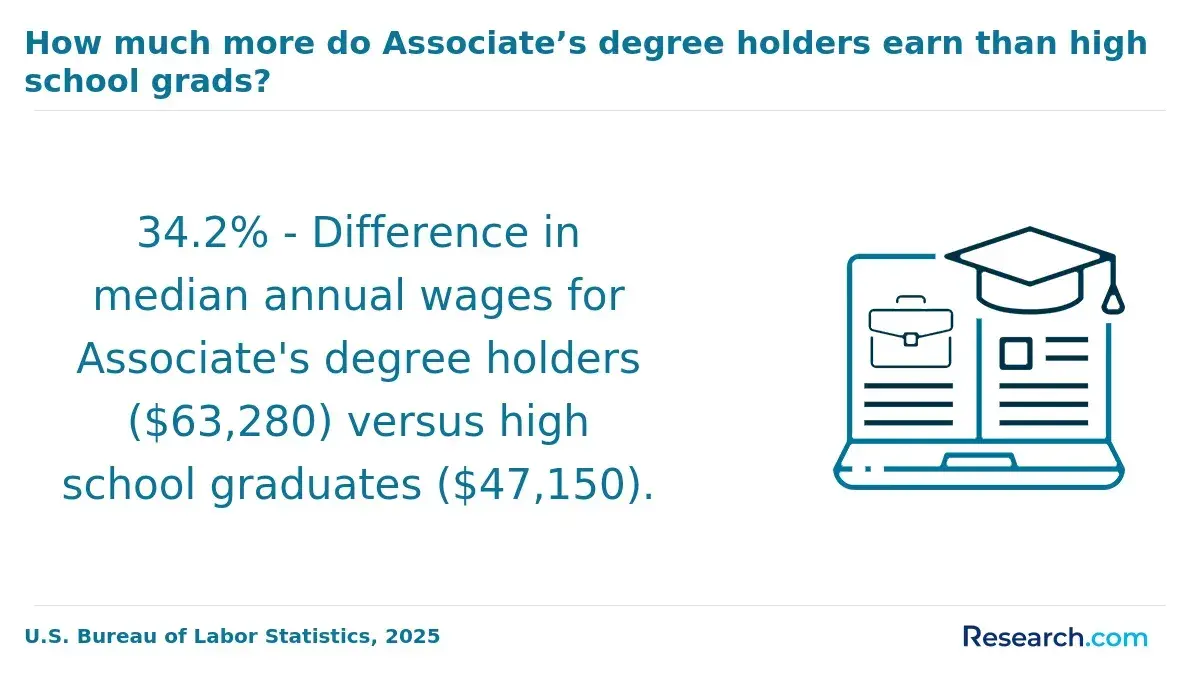
- Individuals with a bachelor's degree in software engineering typically earn a median salary of around $110,000 per year in the U.S., which is significantly higher than the approximately $65,000 median for those with only an associate degree, reflecting greater job responsibilities and opportunities for advancement.
- Graduate degrees such as a master's in software engineering can boost earning potential further, with salaries often exceeding $130,000 annually, especially when combined with specialized skills in areas like machine learning or cybersecurity that are in high demand.
- The long-term career growth for software engineers with higher degrees is more favorable, as master's and doctoral degree holders are more likely to move into leadership roles or specialized technical positions, contributing to overall higher lifetime income and job stability.
What Are the Different Types of Software Engineering Degrees Available?
Understanding the different types and levels of software engineering degrees is important for students to make informed choices that align with their educational backgrounds and career goals. Each degree option caters to varying interests and skill sets, offering distinct blends of theory and practical experience. To clarify these choices, here is an outline of the main types of software engineering degrees and what makes each unique.
- Certificate in Software Engineering: This program offers focused training on programming languages, software development practices, and essential tools, emphasizing hands-on projects and foundational coding skills. It is ideal for individuals seeking rapid entry into software development or a career switch.
- Associate degree in software engineering: Covering basics like software applications, programming, and network management, this degree introduces students to languages such as Python and subjects including discrete mathematics and data analytics. It serves as a stepping stone toward more advanced studies or entry-level roles; many students explore the best accelerated associate degrees when pursuing this path.
- Bachelor's degree in software engineering: This widely recognized degree focuses on engineering principles, advanced mathematics, data structures, algorithms, and practical teamwork projects that reflect real-world development scenarios. It prepares graduates for a broad range of software engineering roles with a strong technical foundation.
- Master's degree in software engineering: At the graduate level, studies deepen into areas like software engineering economics, open-source development, and information assurance. The program emphasizes research, complex projects, and mastery of software design, testing, and management techniques.
- Doctoral degree in software engineering: This top-tier degree centers on original research and teaching, with advanced coursework in areas such as concurrent programming, distributed systems, and machine learning. Completion leads to specialized expertise demonstrated through a dissertation.
- Bachelor's degree in computer science: While broader than software engineering, this degree builds a robust theoretical base covering algorithms, artificial intelligence, compilers, and operating systems, enabling graduates to pursue diverse technology and research careers.
- Bachelor's degree in computer engineering: Combining electrical engineering and computer science, this interdisciplinary degree addresses both hardware and software, including embedded systems and hardware-software co-design, fostering a comprehensive understanding of computing systems.
What Specializations Are Available in Software Engineering Degrees?
Choosing a specialization within a software engineering degree is a vital decision that helps students tailor their education to specific career trajectories and industry demands. This alignment not only enhances employability but also ensures that graduates develop skills relevant to their desired roles, maximizing long-term job satisfaction and earning potential.
Below are some of the most common software engineering specializations that students may consider to guide their academic and professional paths:
- Front-End Software Engineering: Focuses on building the user-facing components of applications, emphasizing design, user experience, and interactivity. Key skills include HTML, CSS, JavaScript, and frameworks like React or Angular. Graduates typically pursue roles such as front-end developer, UI/UX engineer, and web designer.
- Back-End Software Engineering: Concentrates on server-side logic, databases, and API development. Essential skills include programming languages like Python, Java, or Node.js, along with managing SQL or NoSQL databases. Career options include back-end developer, API engineer, and database administrator.
- Full-Stack Software Engineering: Combines front-end and back-end development competencies, enabling professionals to create complete application solutions. This specialization suits those aiming to work as full-stack developers or solution architects.
- DevOps Engineering: Bridges software development and IT operations, focusing on automation, scalability, and system reliability. Skills in continuous integration, cloud infrastructure, and scripting are core. Typical roles include DevOps engineer and site reliability engineer.
- Mobile Application Software Engineering: Specializes in designing and developing applications for mobile platforms such as iOS and Android. It requires proficiency in languages like Swift, Kotlin, or Flutter. Graduates often become mobile app developers or mobile systems architects.
- Security Software Engineering: Dedicated to protecting software systems through encryption, penetration testing, and threat analysis. Professionals typically work as security engineers, penetration testers, or chief information security officers (CISOs).
- Data Science and Machine Learning Software Engineering: Focuses on building software that analyzes data, creates predictive models, and automates decision-making processes. Important skills include statistics, Python programming, and machine learning frameworks. Career paths span data scientists, ML engineers, and AI developers.
- Game Software Engineering: Revolves around developing interactive entertainment applications, involving graphics programming, physics engines, and gameplay mechanics. Graduates may pursue roles such as game developer, graphics programmer, or technical artist.
For students interested in exploring an accessible pathway into technology, considering easy degrees online can be a practical first step before diving into specialized software engineering fields.
How Long Does It Take to Complete Each Type of Software Engineering Degree?
Understanding how long it takes to complete various software engineering degrees is crucial for students who want to plan their education and career trajectories effectively. The duration of a program can impact both the financial commitment and the timeline for entering the workforce. Here is an outline of the main software engineering degree types and their typical completion times.
- Associate Degree in Software Engineering: This degree typically takes about two years of full-time study to complete. Students opting for part-time programs may extend this to three or four years. Many community colleges offer online or accelerated options, and transfer credits from prior education can shorten the timeline.
- Bachelor's Degree in Software Engineering: A standard bachelor's program usually spans four years of full-time study. Part-time enrollment or work commitments may lengthen this to five or six years. Accelerated pathways and online programs are increasingly available, allowing some students to finish in three years with advanced standing or heavy course loads.
- Master's Degree in Software Engineering: Typically requiring one to two years beyond a bachelor's degree, master's programs vary depending on whether students attend full-time or part-time. Online and hybrid formats are common, enabling working professionals to complete degrees in two years or less. Some accelerated master's programs condense this into a single year.
- Doctorate (PhD) in Software Engineering: A PhD usually takes between four and six years, depending on research scope and individual progress. Full-time study is standard, though some programs allow part-time enrollment. The timeline can be extended by dissertation research complexity or shortened by prior master's preparation and focused research goals.
Are There Accelerated Software Engineering Degree Programs?
Accelerated software engineering degree programs offer students the opportunity to complete their studies in significantly less time than traditional pathways. Many of these programs enable the completion of both a bachelor's and a master's degree in software engineering in as little as five years, rather than the usual six or more when pursued separately.
Some universities also provide compressed bachelor's-only tracks that can be finished within 12 to 16 months, particularly for students who bring in substantial prior credits or already hold a bachelor's degree. The reduction in duration is achieved through several common formats: condensed courses lasting seven to eight weeks, continuous year-round enrollment including summer terms, and dual-credit courses that count toward both undergraduate and graduate requirements.
For instance, select programs permit students to double-count senior-year courses to satisfy requirements for both degrees, saving up to a year of effort. Online accelerated options add flexibility by allowing students to progress based on competency rather than a fixed schedule, which can further speed up graduation.
Prospective students should carefully consider the workload intensity and eligibility criteria before pursuing an accelerated track. These programs typically demand a high level of motivation and time management skills, as the pace is fast and the coursework rigorous, often involving overlapping undergraduate and graduate classes or intensive summer sessions.
Admissions often require a minimum GPA-commonly 3.2 or higher-as well as completion of key prerequisite courses and a sufficient number of credits. Some programs may also ask for a statement of purpose and academic advising to ensure students are prepared for the challenges ahead.
While accelerated pathways can lead to substantial time and tuition savings, individuals should realistically assess their ability to handle the pressure and maintain academic performance. Graduates with a master's degree in software engineering, especially from accelerated tracks, may qualify for higher-level positions and increased earning potential, with median salaries for software developers reported at $127,260 as of 2023.
Asked about his experience as a graduate of an accelerated software engineering degree program, he reflected on the demanding nature of the course structure: "Balancing overlapping coursework and the compressed timeline was intense, especially during summer terms when the pace didn't let up." He described having to develop strong daily discipline, often sacrificing typical college social activities to stay on track. "But the ability to finish both degrees faster meant I entered the job market earlier and with credentials that opened doors," he noted. Despite moments of exhaustion and self-doubt, the support from academic advisors and a tight-knit cohort helped him persevere. His journey highlighted that while accelerated programs require dedication and resilience, the rewards-both personal and professional-make the commitment worthwhile.
Are Online Software Engineering Degrees as Credible as Traditional Ones?
Online software engineering degrees from regionally accredited institutions maintain the same academic standards as traditional programs. For example, universities such as the University of Texas at San Antonio offer identical degrees online and in person, with the same coursework, faculty, and graduation requirements.
Accreditation agencies like the Southern Association of Colleges and Schools Commission on Colleges (SACSCOC) ensure all programs meet rigorous standards for curriculum quality, faculty credentials, and student services, regardless of delivery format. Additionally, online programs often provide benefits such as reduced tuition and flexible schedules, making them more cost-effective options for many students. According to Learning House and Aslanian Market Research, 44% of online students reported lower costs compared to traditional institutions.
Recent trends indicate growing employer acceptance of online degrees, especially when earned from recognized universities. The Babson Survey Research Group found that 77% of academic leaders believe online learning outcomes are equal to or better than those of traditional classroom experiences.
Employers increasingly value the self-discipline, technical skills, and time management required by online programs alongside formal credentials. However, some employers still favor degrees from established brick-and-mortar universities due to perceptions of rigor and networking opportunities. Ultimately, the credibility of a software engineering degree depends far more on the reputation and accreditation of the institution than on whether the program is delivered online or in person. Students should prioritize accredited, reputable universities to ensure their degree is respected in the job market.
How Much Does Each Type of Software Engineering Degree Typically Cost?
Understanding the differences in tuition across various software engineering degree levels is essential for effective budgeting and long-term financial planning. These costs can vary widely depending on factors such as degree type, institution, and program delivery format. Below is an overview of typical tuition ranges for each main type of Software Engineering degree to help guide prospective students.
- Associate Degree in Software Engineering: Tuition for associate degrees typically ranges from $3,000 to $10,000 per year at public community colleges, with private institutions often charging more. Many students benefit from federal Pell Grants and state financial aid, which help reduce out-of-pocket expenses.
- Bachelor's Degree in Software Engineering: The average annual tuition for online bachelor's programs is between $4,770 and $17,220 at public universities, with some of the most affordable options near the lower end. Traditional on-campus bachelor's degrees, especially at private universities, tend to cost significantly more, commonly between $25,000 and $35,000 per year. Financial aid often includes scholarships, federal loans, grants, and work-study opportunities.
- Master's in Software Engineering: Master's tuition is usually charged per credit and can range from $1,000 to $1,500 per credit hour at private universities. For instance, a 3-credit course might cost around $4,000 to $4,500. Graduate students often pursue fellowships, teaching assistantships, and employer tuition reimbursement to manage these expenses.
- Accelerated or Dual Bachelor's/Master's Programs: Some institutions offer combined programs with flat-rate tuition per term, such as approximately $4,125 for a bachelor's six-month term or $4,385 for a master's term. These programs provide cost savings and faster completion times, often including industry certifications at no extra cost.
- Bootcamps and Certificate Programs: While not traditional degrees, bootcamps cost around $15,000 total and focus on rapid training for job readiness. Some offer scholarships or income-share agreements to mitigate upfront financial burdens.
When I spoke with a graduate of a software engineering degree program about her journey managing tuition costs, she emphasized the importance of early financial planning and exploring all available aid. She shared how she combined scholarships with a part-time job and federal aid, which significantly eased the financial pressure. "I was surprised by how proactive I had to be to find those opportunities," she reflected. Her experience also highlighted the value of flexible online programs that allowed her to work while studying, making the cost more manageable. Ultimately, she said the investment was worthwhile, opening doors to roles that offered strong salaries and career growth, underscoring that understanding tuition differences upfront can lead to smarter financial decisions and greater long-term rewards.
What Jobs Can You Get with Each Type of Software Engineering Degree?
The level of a software engineering degree greatly influences the variety of career opportunities and types of roles graduates can qualify for. Higher degrees typically lead to more advanced and specialized positions, while entry-level degrees offer foundational technical roles. Below is an overview of common jobs associated with each software engineering degree type to help students align their education with career goals.
- Associate Degree in Software Engineering: Graduates with this degree often find positions such as junior software developer, web developer, or computer support specialist. These roles emphasize coding, software testing, and basic application maintenance, usually under supervision in small tech firms or IT departments, with starting salaries commonly between $50,000 and $60,000.
- Bachelor's Degree in Software Engineering: This degree is the standard for most entry- to mid-level software engineering roles. Graduates work as software engineers, software developers, QA engineers, web developers, or network engineers, handling design, coding, testing, and deployment of software across industries like finance and healthcare. Median salaries for these roles can reach around $133,080, with job growth projected at 17% through 2032.
- Master's Degree in Software Engineering: Professionals holding a master's degree often progress to specialized or leadership roles such as senior software engineer, solutions architect, DevOps engineer, or AI/machine learning engineer. These positions involve advanced design, project leadership, and system architecture, frequently in research, development, or technical management, with salaries often exceeding $140,000 in high-demand sectors.
- Doctorate (PhD) in Software Engineering: A PhD prepares individuals for academic, research, or high-level industry roles such as university professor, research scientist, or chief technology officer (CTO). These jobs focus on original research, innovation, and leadership within universities, R&D labs, or large tech firms, often offering some of the highest salaries in the field.
Understanding these career pathways is essential for students who wish to evaluate their investment in education relative to their professional ambitions, especially when exploring some of the top paying college majors in technology.
How Do Salaries Differ by Software Engineering Degree Type?
Degree level often influences earning potential in software engineering, making it an important consideration for students planning their education and career paths. Understanding how salaries differ by degree type can help students make informed decisions, especially when exploring options like accredited online colleges no application fee. Below is an outline of typical salary ranges and factors affecting compensation for various software engineering degrees.
- Associate Degree in Software Engineering: Graduates typically start in entry-level roles such as junior developer or support technician. Average starting salaries range from $50,000 to $70,000 per year, influenced by factors like geographic location and employer size. While advancement is possible, higher-paying positions usually require a bachelor's degree or extensive experience.
- Bachelor's Degree in Software Engineering: This degree is the most common for professional software engineering jobs, with starting salaries projected between $78,731 and $84,960 in 2025. Pay varies based on company, location, and industry sector. A bachelor's degree opens the door to mid- and senior-level positions and offers the widest range of job opportunities.
- Master's Degree in Software Engineering: Holding a master's degree can increase starting salaries by $10,000 to $20,000 compared to a bachelor's, often ranging from $90,000 to $110,000. Salaries tend to be higher in tech hubs or large organizations. Advanced degrees also provide access to specialized roles and leadership positions, enhancing long-term earning potential.
- Doctoral Degree (Ph.D.) in Software Engineering: Ph.D. holders often pursue careers in research, academia, or advanced R&D roles, with starting salaries frequently beginning at $110,000 or more. Top roles may exceed $150,000 annually. While not required for most jobs, a doctoral degree benefits those interested in innovation, teaching, or high-level technical leadership.
Is There High Demand for Software Engineering Degree Holders in the Job Market?
There is a strong and growing demand for software engineering degree holders in the US job market, driven largely by rapid technological advances and shifting workforce requirements. Emerging technologies such as artificial intelligence (AI), machine learning, and cloud computing are particularly influential, pushing employers to seek candidates skilled in building scalable systems and integrating AI tools in development processes.
Additionally, workforce needs are evolving with companies placing more emphasis on specialized expertise and practical experience, especially for roles in AI, DevOps, and full-stack development. This evolution reflects a trend where entry-level opportunities exist but face intense competition, rewarding those who stay current with the latest technical skills.
Regionally, while the Bay Area remains a hotspot for high-paying and AI-focused roles, the demand for software engineering professionals spans multiple sectors nationwide, including finance, industrial automation, and enterprise IT.
The outlook for software engineering graduates remains highly favorable, with broad employment growth expected as industries continue digital transformation and new technologies emerge. The U.S. Bureau of Labor Statistics projects employment growth rates of 15% for related roles from 2024 to 2034 and even higher for broader software engineering occupations.
Graduates who adapt to industry trends and specialize in in-demand areas will be well positioned to succeed in this expanding market. For those weighing career options, the software engineering field promises more opportunities compared to many areas, offering competitive job openings well beyond what industries with trade school highest paying jobs can provide. This makes software engineering an attractive degree choice for students entering the workforce today.
What Factors Should You Consider When Picking a Type of Software Engineering Degree?
Choosing the right software engineering degree level is a critical decision that aligns your education with your career goals and fits your personal circumstances. The degree you pursue impacts future job opportunities, salary potential, and the time and resources you will invest. To make an informed choice, consider these key factors:
- Career Goals: Your long-term professional ambitions should guide your degree choice. A bachelor's degree is commonly required for entry-level software engineering roles, while advanced positions often require a master's or PhD.
- Salary Potential: Higher degree levels typically lead to greater earning power. Specialized skills and graduate degrees can significantly increase salary prospects, especially in high-demand areas like AI or cybersecurity.
- Time Commitment: Degree programs vary in length from two years for associate degrees to up to five years for PhDs. Assess how much time you can dedicate to education without disrupting other life priorities.
- Cost and ROI: Evaluate tuition expenses and available financial aid against expected future earnings. Software engineering degrees generally offer strong returns due to high job market growth.
- Specialization Options: If you have specific interests such as data science or mobile development, look for programs offering relevant specializations to improve your competitiveness.
- Learning Style and Flexibility: Consider whether you prefer hands-on training or theoretical study, and choose programs-traditional or online-that accommodate your preferred learning format.
- Accreditation and Reputation: Ensure the program is accredited and recognized by employers, as this affects the value of your degree in the job market.
What Software Engineering Graduates Say About Their Degree and Salary
- Jazz: "Completing my bachelor's in software engineering was a game changer for my career. The rigorous curriculum and hands-on projects gave me the confidence to hit the ground running in my first job at a startup. What I loved most was how the program emphasized teamwork and real-world problem-solving, preparing me for the fast-paced tech industry. Beyond the technical skills, this degree pushed me to grow personally by learning how to communicate complex ideas clearly and work collaboratively."
- Kei: "Reflecting back on my experience earning a master's degree in software engineering, I realize it profoundly shaped my professional path. It opened doors to leadership roles I hadn't imagined before. The advanced coursework deepened my understanding of software architecture and best practices, which made me a valuable asset to my company. I also appreciated the opportunity to connect with a network of motivated peers and mentors, making the journey intellectually enriching and personally fulfilling."
- Meilin: "Starting my career after finishing an associate degree in software engineering was both challenging and rewarding. While some underestimated the value of my degree, I found that it provided me with practical skills directly applicable to entry-level positions in tech. This accessibility allowed me to quickly join a team and contribute meaningfully. Besides advancing my technical knowledge, earning this degree gave me the drive to pursue continuous learning and inspired me to support others from underrepresented communities in tech."
Other Things You Should Know About Software Engineering Degree Programs & Salaries
In 2027, software engineering degrees include Bachelor's, Master's, and Doctoral programs. A Bachelor's can lead to entry-level roles with salaries averaging $85,000 annually. A Master's offers specialized positions, potentially increasing salaries to around $110,000. Doctoral graduates often engage in research or academia, with potential earnings exceeding $130,000 annually.
Completing internships in software engineering can notably improve starting salaries by providing practical experience. Employers value hands-on skills, often offering higher entry-level salaries to candidates with relevant internship backgrounds.
References
- How Much Does It Cost to Become a Software Engineer? https://www.springboard.com/blog/software-engineering/how-much-does-it-cost/
- Software Engineer Salary: Your 2025 Guide https://www.coursera.org/articles/software-engineer-salary
- Software Engineering Programs: Traditional vs. Online Education https://moldstud.com/articles/p-software-engineering-programs-traditional-vs-online-education
- Choosing the right Software Developer Specialization https://dev.to/marcbeaujean/should-new-developers-specialize-j46
- Computing and Engineering Accelerated Dual-Degree Programs https://www.qu.edu/schools/engineering/programs/accelerated-dual-degree/computing-and-engineering-bachelors-masters/
- The 11 Highest Paying Software Engineering Jobs in 2025 https://lemon.io/blog/highest-paying-software-engineering-jobs/
- 11 of the Most Popular Specialities in Software Engineering | Institute of Data https://www.institutedata.com/blog/11-of-the-most-popular-specialities-in-software-engineering/
- Software Engineer Career Outlook and Paths https://ep.jhu.edu/news/software-engineer-career-outlook-and-paths/
- 10 Highest Paying Software Engineering Jobs & Salaries (2025) | Nexford University https://www.nexford.edu/insights/highest-paying-software-engineering-jobs
- How Many Years Does It Take To Study Software Engineering? - Proxify https://proxify.io/knowledge-base/developer-types/how-many-years-does-it-take-to-study-software-engineering


