
2027 How to Become a Basketball Coach: Education, Salary, and Job Outlook

Co-Founder and Chief Data Scientist
If you want to become a basketball coach, the real question is not only whether you understand the game. It is whether you can teach it, organize people, evaluate talent, communicate under pressure, and build trust with athletes, parents, administrators, and staff. Basketball coaching can be rewarding, but it is also competitive, time-intensive, and often dependent on credentials, relationships, and visible results.
This guide explains what it takes to enter and grow in the profession. You will learn which credentials matter, what skills coaches use every day, how careers typically progress, where jobs are available, what salaries can look like at different levels, and how to decide whether coaching fits your strengths and lifestyle.
What are the benefits of becoming a basketball coach?
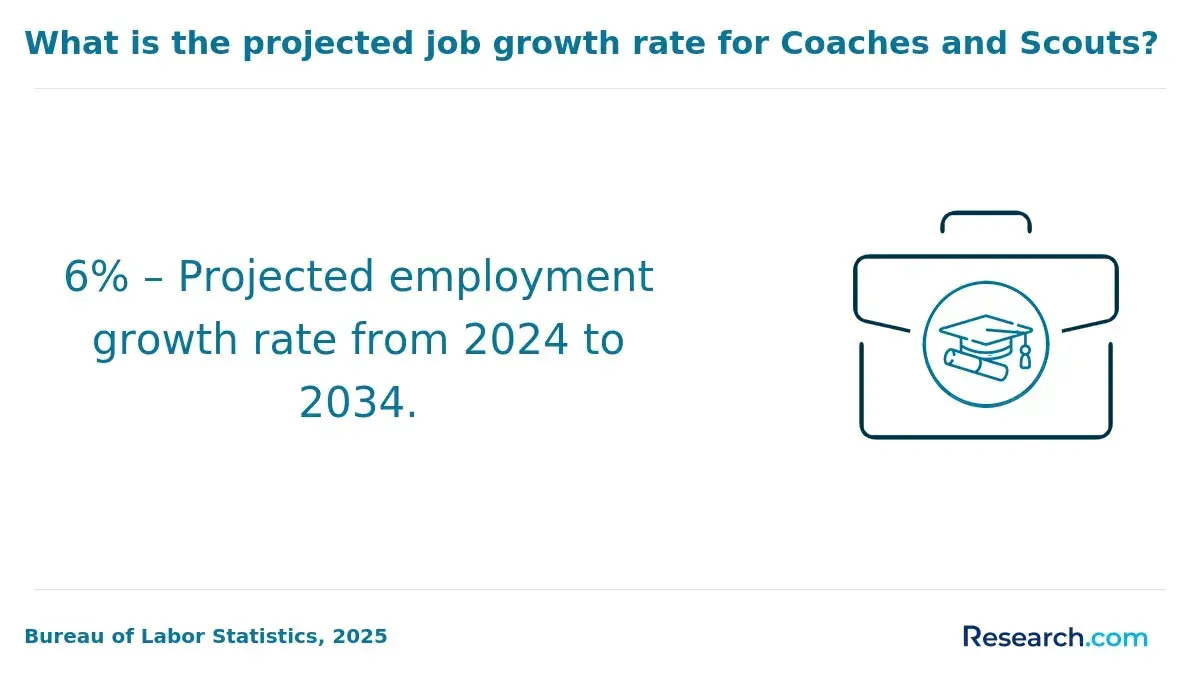
- The basketball coaching field is expected to grow about 7% through 2025, reflecting steady demand in schools and sports organizations.
- Average annual salary ranges from $40,000 to $70,000, varying by level and location, with potential for higher earnings in collegiate or professional roles.
- Coaching offers direct involvement in player development, leadership opportunities, and job satisfaction from fostering athletes' skills and teamwork.
What credentials do you need to become a basketball coach?
Basketball coaching requirements vary by employer, age group, and competition level. A youth league may prioritize enthusiasm, reliability, and safety training, while a public school, college, or professional organization may expect formal education, certifications, background clearance, and prior coaching or playing experience. The strongest candidates usually combine basketball knowledge with proof that they can safely lead athletes and manage a program.
- Bachelor's Degree: Many school and college coaching roles prefer or require a bachelor's degree. Common fields include physical education, sports science, exercise science, kinesiology, education, or sports management. These programs can help coaches understand training principles, injury prevention, motor learning, leadership, and program administration.
- Playing Experience: Playing experience is not always mandatory, but it helps. Former players often understand spacing, pace, practice intensity, locker room culture, and in-game adjustments. However, playing background alone is not enough; employers still look for teaching ability, preparation, and professionalism.
- Coaching Certifications: Credentials from organizations such as the National Association of Basketball Coaches (NABC) and USA Basketball can strengthen your profile. Certifications commonly cover player development, coaching ethics, safety, practice design, and game strategy. They are especially useful for new coaches who need a structured way to show competence.
- Background Checks: Coaches who work with minors should expect background checks. USA Basketball certifications often include this step, and schools, camps, youth leagues, and community programs commonly require it before allowing a coach to work with athletes.
- Teaching Certifications: Some school-based coaching jobs are attached to teaching positions. In those cases, a state teaching credential may be necessary, even if the coaching role is the applicant's main interest. Requirements differ by state and district.
- Continuing Education: Coaching methods, athlete wellness standards, recruiting rules, and training approaches change over time. Courses in sports psychology, strength and conditioning, film analysis, leadership, or coaching pedagogy can help coaches stay current and become more competitive for higher-level roles.
If you are comparing credentials beyond basketball-specific options, Research.com’s guide to certifications for career advancement can help you evaluate which qualifications may add value to your long-term plans. For basketball coaching, the best credential mix is usually practical experience, safety clearance, sport-specific certification, and education aligned with the level where you want to coach.
What skills do you need to have as a basketball coach?
A good basketball coach does more than call plays. Coaches teach fundamentals, design practices, evaluate performance, manage personalities, prepare scouting reports, and make quick decisions during games. Technical knowledge matters, but the ability to communicate that knowledge clearly is what turns instruction into player development.
Important basketball coaching skills include:
- Ball handling instruction: Teaching dribbling technique, change of pace, weak-hand development, pressure handling, and decision-making while maintaining possession.
- Shooting instruction: Breaking down footwork, balance, release mechanics, shot preparation, accuracy, range, and shot selection based on time, score, spacing, and defensive pressure.
- Passing systems: Teaching outlet passes, skip passes, entry passes, give-and-go actions, extra-pass habits, and reads that keep the offense moving without forcing turnovers.
- Defensive fundamentals: Coaching stance, closeouts, on-ball pressure, off-ball positioning, help-side rotations, communication, shot contests, box-outs, and defensive rebounding.
- Offensive strategies: Installing cuts, screens, post actions, backdoor movements, transition principles, spacing rules, and set plays that fit the players on the roster.
- Rebounding techniques: Training athletes to anticipate shot angles, establish position, make contact legally, pursue the ball, and transition quickly after securing possession.
- Tactical decision-making: Helping players recognize matchups, tempo changes, foul situations, defensive coverages, and when to attack, pass, reset, or slow the game down.
- Practice planning: Designing efficient practices with clear objectives, progressive drills, competitive segments, teaching points, and measurable outcomes.
Strong coaches also need leadership skills that do not appear on a stat sheet. They must hold players accountable without losing trust, communicate with parents or administrators, manage conflict, adjust to injuries, and keep the team focused through wins and losses. At higher levels, film breakdown, recruiting awareness, data interpretation, and staff management become increasingly important.

What is the typical career progression for a basketball coach?
Basketball coaching careers usually advance through experience, reputation, relationships, and documented results. Some coaches begin as former players, while others enter through education, youth programs, internships, or volunteer roles. Advancement is rarely automatic; coaches move up by proving they can develop players, organize teams, communicate professionally, and contribute to winning or program improvement.
- Entry-level support roles: Many coaches start as a graduate assistant, junior varsity coach, volunteer assistant, youth coach, or high school assistant coach. These roles often involve running drills, preparing equipment, tracking attendance, helping with scouting, and supporting player development. A bachelor's degree and 1-3 years of experience are often useful at this stage.
- High school leadership roles: Coaches may advance to lead assistant coach or head coach at the high school level. Responsibilities expand to practice planning, player conditioning oversight, team culture, game strategy, parent communication, and coordination with athletic directors. This step often comes after 2-5 years of experience and may require state coaching certifications or clinic completion.
- College assistant or small-college head coach: At the college level, coaches may handle recruiting, scouting, academic monitoring, film review, travel, and a specific area such as offense, defense, guards, forwards, or player development. Smaller colleges may offer head coaching opportunities to candidates who have built a strong record and network. A master's degree may be advantageous.
- Senior college, university, or professional roles: Head coaches at colleges, universities, or professional teams manage entire programs. Their duties can include hiring staff, setting systems, recruiting or roster construction, media relations, fundraising, alumni engagement, compliance, and long-term program strategy. These roles often require 5-15 years of proven leadership and winning records.
- Specialized or adjacent career paths: Some coaches become recruiting coordinators, player development specialists, video coordinators, scouting directors, camp directors, athletic administrators, or sports analytics professionals. These paths can be a good fit for coaches who prefer evaluation, operations, or development work over head coaching.
The most effective career strategy is to treat every role as evidence. Keep records of player improvement, responsibilities handled, clinics completed, systems learned, and references earned. When hiring decisions are close, a coach who can show impact clearly often has an advantage.
How much can you earn as a basketball coach?
Basketball coaching pay varies widely because “basketball coach” can mean a part-time youth coach, a high school teacher-coach, a college assistant, a private trainer, or an elite professional head coach. Level of competition, location, employer budget, contract structure, experience, education, and performance all affect compensation.
The average college basketball coach salary in the United States hovers around $50,000 annually, with most earnings ranging from $26,700 to $84,800. Hourly wages typically average $16 but may vary from $8 to $44. Location can make a major difference; for example, coaches in Los Angeles earn between $86,901 and $146,611. Entry-level and assistant coaches generally earn between $30,000 and $45,000.
At the top of the field, compensation can be much higher. Elite NCAA Division I head coaches can receive multimillion-dollar contracts; Bill Self at Kansas University makes over $8.8 million a year. The highest paid basketball coaches 2025, such as NBA's Gregg Popovich and Steve Kerr, earn upwards of $17 million annually. These figures are not typical for most coaches, but they show how far compensation can rise at the highest levels of the sport.
Several factors influence earning potential:
- Competition level: College and professional programs generally pay more than youth or community programs, but they are also much harder to enter and keep.
- Role type: Head coaches usually earn more than assistants, though top assistants at major programs may out-earn head coaches at smaller programs.
- Geography: Pay can vary by region, cost of living, school budget, and local demand for coaches.
- Education and credentials: A bachelor's degree is common, while advanced degrees, certifications, and specialized training may improve competitiveness for some roles.
- Supplemental income: Camps, clinics, private training, speaking engagements, and endorsements can add income, especially for coaches with a strong reputation.
Advanced education can be useful for coaches who want to move into college athletics, administration, teaching, or leadership roles. If you are weighing graduate study, Research.com’s resource on doctoral degree options can help you compare possible academic paths, though a doctorate is not required for most basketball coaching jobs.
What internships can you apply for to gain experience as a basketball coach?
Internships and assistant roles help aspiring coaches learn how teams operate beyond game day. They can expose you to practice planning, scouting, film work, player communication, strength and conditioning coordination, event operations, and the administrative side of basketball. For students and early-career coaches, these roles can also produce references and contacts that matter later.
- NBA Summer Internship Program: This competitive paid internship can provide exposure to basketball strategy, analytics, operations, professional development, and networking events. It is best suited for candidates who are organized, highly prepared, and interested in professional sports environments.
- Schools and Colleges: Internships or support roles as assistant coaches, player development coordinators, team managers, or video analysts can help students learn practice structure, film breakdown, game preparation, and athlete support. These opportunities are often available through athletic departments, graduate assistantships, or local school systems.
- Youth Sports Nonprofits and Camps: Programs such as Camp Taconic hire interns to coach children, organize drills, supervise activities, and track performance. These roles are valuable for learning communication, safety, group management, and age-appropriate instruction.
- Industry-specific Organizations: Impact Basketball Academy and MADE Hoops offer internships connected to training, event management, recruiting exposure, and grassroots basketball. These experiences can help candidates understand player development pipelines and event operations.
- Local Government Agencies and Community Centers: Parks and recreation departments, community centers, and local leagues often need interns or seasonal staff to coach youth teams, organize leagues, manage schedules, and support community programming.
When evaluating an internship, look beyond the title. Ask what you will actually do each week, who will supervise you, whether you will receive feedback, and whether the role includes coaching, film, operations, recruiting support, or administrative work. A smaller program that gives meaningful responsibility can be more useful than a prestigious organization where interns mostly observe.
If you are also considering sports administration, education, or business-related paths, Research.com’s guide to the best paying majors can help you think about academic choices that may support broader career flexibility.
How can you advance your career as a basketball coach?
Advancing as a basketball coach requires more than waiting for a better job to open. You need a record of growth, a network of people who trust your work, and clear evidence that you can improve players and support a program. Career movement often depends on reputation, so every season should strengthen your coaching resume.
- Continue your education and certification: Stay current with coaching methods, athlete safety standards, leadership approaches, and tactical trends. Programs offered by organizations such as the National Association of Basketball Coaches (NABC) can provide training, credibility, and networking opportunities. Certifications are most valuable when they are paired with practical results.
- Build a professional network: Relationships often influence who hears about openings and who receives recommendations. Attend clinics, showcases, conventions, and events such as the WBCA Convention. Stay in contact with former coaches, athletic directors, trainers, and administrators. Networking should be professional and consistent, not only something you do when you need a job.
- Find mentors and observe strong programs: A mentor can help you handle difficult parents, roster decisions, staff issues, recruiting questions, or job transitions. Observing successful collegiate coaches can also help you learn how they structure practices, communicate standards, and make adjustments.
- Build experience at the right level: Grassroots, community, middle school, high school, and club basketball can all provide valuable reps. Early roles teach you how to lead, correct mistakes, and adapt instruction for different players. As you move up, your responsibilities should show increasing complexity.
- Document your impact: Track player development, team improvement, responsibilities, systems installed, clinics attended, and leadership duties. A clear coaching portfolio can help when applying for assistant or head coaching roles.
The coaches who advance are often the ones who combine humility with preparation. They keep learning, accept feedback, build trust, and can explain why their approach works.
Where can you work as a basketball coach?
Basketball coaches work in schools, colleges, youth programs, private training businesses, professional organizations, and community settings. The right workplace depends on your experience, credentials, preferred age group, income needs, and willingness to handle travel, recruiting, administration, or parent communication.
- Educational institutions: Public and private high schools employ many coaches, and some roles are tied to teaching responsibilities. At the college level, opportunities exist in NCAA Division I schools such as Duke or Kentucky, as well as Division II, Division III, NAIA, and junior colleges. Expectations and compensation vary widely by level.
- Youth development programs: Organizations such as the YMCA, Boys & Girls Clubs of America, and AAU teams offer roles focused on clinics, camps, leagues, and foundational player development. These jobs can be ideal for new coaches who want to build teaching and leadership experience.
- Professional organizations: NBA teams, G League affiliates, and international leagues across Europe, Asia, and Australia employ coaches, player development staff, scouts, video personnel, and operations professionals. These positions usually require significant experience and strong professional networks.
- Private training facilities and basketball academies: These settings focus on individual or small-group skill development. Coaches may work with athletes who want shooting, ball handling, strength, position-specific, or college-preparation training.
Currently, more than 58,000 head basketball coaches work in the United States, with about 22,000 active job openings indicating steady demand. The profession is projected to grow by 20% through 2028, creating approximately 48,800 new positions.
Job searches are often local and relationship-driven, especially in school and community settings. If you are targeting Basketball Coaching Jobs in USA regions such as South Dakota, check school district postings, college athletic department websites, state coaching associations, club basketball programs, and parks and recreation departments. Advanced education may help some candidates compete for leadership or academic-adjacent roles; Research.com’s guide to short doctoral programs online can be useful if graduate study fits your broader career goals.
What challenges will you encounter as a basketball coach?
Basketball coaching can be meaningful, but it comes with pressure. Coaches are judged on player development, team performance, communication, culture, and sometimes public expectations. Understanding the challenges early helps you prepare instead of reacting once problems appear.
- Limited funding and resources: Many programs operate with tight budgets. Coaches may lack equipment, shooting machines, training aids, travel funds, or adequate facility time. Fundraising, sponsorships, booster support, and partnerships can become part of the job.
- Time management pressures: Coaching often includes practice planning, film review, scouting, travel, meetings, communication, and administrative work. Efficient weekly scheduling is essential, especially for coaches who also teach, study, or hold another job.
- Balancing player development and team dynamics: Coaches must improve individual skills while building a cohesive team. That can mean managing playing time, confidence, roles, parent expectations, and athlete frustration. Assistants and skill stations can help make practices more targeted.
- Adapting to new rules: From the 2025-26 season, NCAA introduces coach's challenges for out-of-bounds calls, basket interference, and restricted-area violations. Coaches will need to understand the protocols and decide when a challenge is worth using.
- Job stability concerns: Coaching can be unstable, especially at competitive college and professional levels. Staff changes, losing seasons, budget shifts, and leadership turnover can affect employment. Flexibility and continuous professional development are important safeguards.
Other common challenges include athlete injuries, roster turnover, academic or eligibility issues, social media pressure, and conflict with parents or stakeholders. Coaches who communicate expectations early, document decisions, and maintain professional boundaries are better prepared to handle these situations.
What tips do you need to know to excel as a basketball coach?
To excel as a basketball coach, you need a repeatable system for teaching, evaluating, communicating, and improving. Talent helps, but consistent habits matter more across a long season. The best coaches are organized enough to prepare thoroughly and flexible enough to adjust when the game or the team demands it.
- Define your coaching philosophy: Decide what you value most, such as discipline, effort, teamwork, player development, pace, defense, or skill mastery. Your philosophy should guide practice plans, playing time standards, and communication.
- Plan practices with a purpose: Every practice should have clear goals. Avoid filling time with random drills. Build sessions around fundamentals, game situations, conditioning, competition, and review.
- Arrive prepared and early: Players notice habits. Being organized, punctual, and ready to teach sets a professional tone and builds credibility.
- Teach fundamentals before complexity: Younger and developing players need strong foundations in shooting, passing, dribbling, defense, footwork, and spacing before advanced sets or special situations become effective.
- Communicate clearly and constructively: Correct mistakes directly, but explain what the player should do next. Maintain open communication with players, parents, assistants, and administrators.
- Know your players as people: Understanding personality, confidence, learning style, academic load, and motivation can improve trust and help you coach each athlete more effectively.
- Adjust in real time: Be willing to change matchups, tempo, defensive coverage, rotation patterns, or offensive actions based on performance and opponent behavior.
- Use video review: Film can reveal spacing errors, defensive breakdowns, effort habits, shot selection, and opponent tendencies that are easy to miss live.
- Keep learning: Attend clinics, seek mentorship, read, listen to coaching resources, and study programs at different levels. Coaching knowledge should keep developing.
- Model energy and composure: Enthusiasm matters, but so does emotional control. Players often mirror the coach's response to adversity.
- Measure progress against your own standards: Comparing yourself with other coaches can distract you. Focus on whether your team is improving, whether your process is sound, and whether your players are growing.
A practical way to improve is to review each season honestly. Identify what worked, what failed, which players improved, where communication broke down, and what you will change before the next season begins.
How do you know if becoming a basketball coach is the right career choice for you?
Basketball coaching may be a good fit if you enjoy teaching, leading groups, solving problems under pressure, and helping athletes improve over time. It may be a poor fit if you mainly want recognition, predictable hours, or a role focused only on strategy. Much of coaching is communication, preparation, relationship management, and repetition.
- Leadership and communication: Coaches must set expectations, motivate players, correct mistakes, manage responsibility, and communicate with different audiences. If you avoid conflict or struggle to give clear feedback, coaching may feel difficult.
- Passion for teaching and development: Coaching is not just about winning games. You need patience to teach fundamentals, repeat concepts, and help athletes grow on and off the court.
- Work-life flexibility: Coaching often requires evenings, weekends, travel, offseason work, camps, clinics, and unexpected schedule changes. People who need a predictable routine should consider this carefully.
- Personal values and resilience: The role can involve criticism, losses, difficult conversations, injuries, and job uncertainty. Coaches need resilience, fairness, adaptability, and comfort working with diverse personalities.
- Relevant experience: If you have enjoyed mentoring younger players, serving as a team captain, volunteering with youth sports, or organizing practices, those are positive signs. If you prefer independent work with limited interaction, coaching may not align with your strengths.
Before committing fully, try coaching in a low-risk setting such as a youth clinic, summer camp, community league, or volunteer assistant role. You will quickly learn whether you enjoy the day-to-day work, not just the idea of coaching. If you decide you want a different hands-on career path, Research.com’s overview of careers in trade school can help you compare alternatives.
What Professionals Who Work as a Basketball Coach Say About Their Careers
- Major: "Pursuing a career as a basketball coach has provided me with remarkable job stability, especially as the sport continues to grow globally. The potential for competitive salaries combined with the chance to work closely with talented athletes keeps me motivated every day."
- Douglas: "Being a basketball coach offers unique challenges, like constantly adapting strategies and fostering team chemistry under pressure. These experiences have sharpened my leadership skills, making every season a valuable learning opportunity beyond the court."
- Ezra: "The professional development available to basketball coaches is impressive, from certification programs to networking within sports organizations. It's rewarding to see clear pathways for career growth and to mentor younger coaches stepping into the profession."
Other Things You Should Know About Becoming a Basketball Coach
In 2027, formal education remains highly valuable for aspiring basketball coaches. Typically, a bachelor's degree in sports science, physical education, or a related field is preferred. This education provides foundational knowledge of sports management, psychology, and training principles, which are crucial for coaching roles.
While having personal playing experience can certainly be beneficial, it is not an absolute requirement for becoming a basketball coach in 2027. Many successful coaches focus on building their knowledge through coaching clinics, workshops, or obtaining relevant certifications to enhance their understanding of the game.
In 2027, certifications and licenses for basketball coaches vary by level and region. Many positions require CPR and first aid certification. Advanced roles may require coaching certifications from bodies like USA Basketball or completion of state-specific coaching education programs.
In 2027, the educational requirements for becoming a basketball coach typically include a bachelor's degree in sports science, physical education, or a related field. While not mandatory, obtaining advanced certifications in sports management or coaching can enhance career prospects. Many positions also require a mix of formal education and hands-on coaching experience.
References
- Men's Basketball Coaching Internship - Defiance College - HoopDirt https://hoopdirt.com/job/mens-basketball-coaching-internship-defiance-college/
- Effective Basketball Coaching: 5 Proven Lessons From Top College Programs https://outperformsports.com/effective-basketball-coaching/
- 8 Challenges Youth Basketball Coaches Face & Solutions https://rossettibasketball.com/blog/8-biggest-challenges-faced-by-youth-basketball-coaches/
- 5 Keys to Becoming a Basketball Coach and the Interview Process - Teach Hoops https://teachhoops.com/5-keys-to-becoming-a-basketball-coach-and-the-interview-process/
- Coaching Basketball -- Tactics & Philosophies https://www.breakthroughbasketball.com/coaching/coaching.html
- 5 Player Development Principles Every Basketball Coach Needs https://pgcbasketball.com/blog/basketball-player-development-principles-coaches/
- What does a Men's Basketball Coach do? Career Overview, Roles, Jobs | AFTA https://jobbank.artsusa.org/career/mens-basketball-coach
- Professional Development - WBCA https://wbca.org/career-development/
- Should I be a basketball coach quiz https://www.gyfted.me/career-quiz/basketball-coach


