
2027 Human Resources Degree vs. Certificate: Which Should You Choose?

Co-Founder and Chief Data Scientist
Choosing between a human resources degree and a human resources certificate is really a question of career direction, time, and return on investment. A degree is the broader academic route: it usually builds business, management, employment law, analytics, and organizational strategy skills over several years. A certificate is narrower and faster: it helps you gain practical HR knowledge for entry-level work, a role change, or targeted upskilling.
The right choice depends on where you are now. If you want long-term access to HR management, business partner, compensation, training, or employee relations roles, a degree may carry more weight. Studies show that 70% of HR managers hold at least a bachelor's degree. If you already have work experience, need a quicker credential, or want to test the HR field before committing to a full program, a certificate can be the more efficient first step.
This guide compares human resources degrees and certificates across time to completion, online availability, admissions, credits, tuition, transfer options, accreditation, jobs, and starting salary so you can choose the pathway that fits your budget, schedule, and career goals.
Key Points About Human Resources Degree vs. Certificate Programs
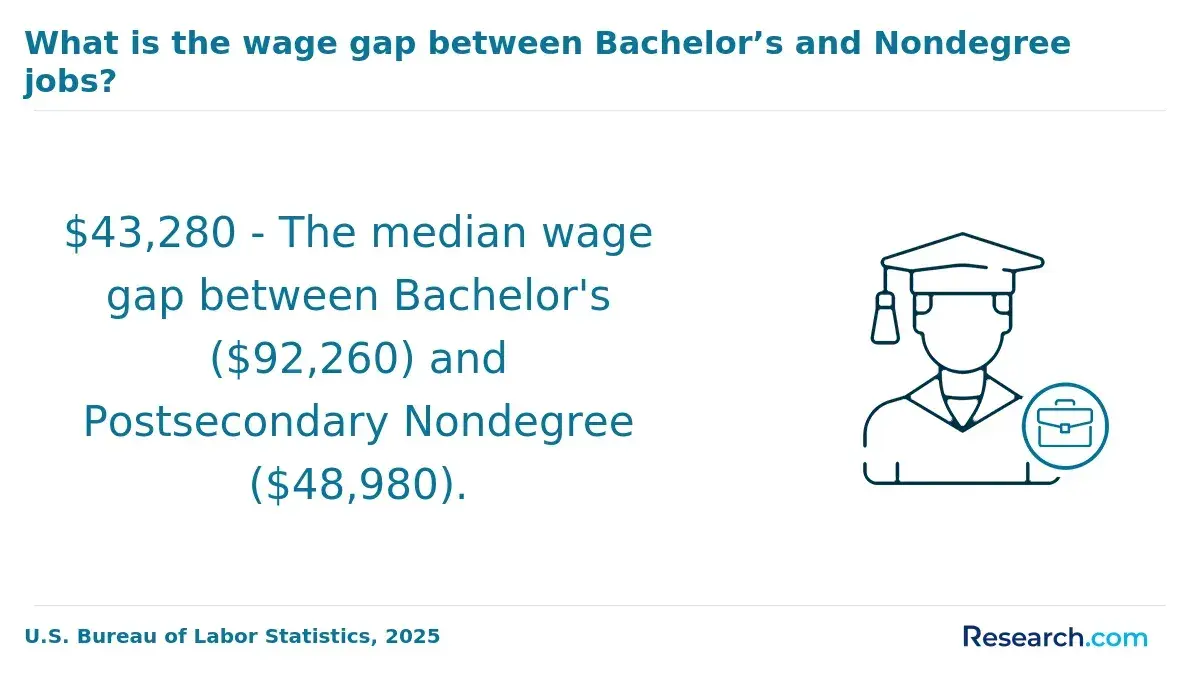
- Human resources degrees offer comprehensive knowledge and broader career opportunities, often leading to higher salaries, with median wages approximately 20% above those holding certificates.
- Certificates provide focused skill development, ideal for quick entry or specialization, appealing to professionals seeking targeted expertise without extensive time commitment.
- Degrees generally require 2-4 years, enhancing leadership potential, while certificates typically take months, enabling faster workforce reentry or career shifts in human resources.
What Are the Differences Between Human Resources Degree and Certificate Programs?
The main difference is scope. A human resources degree is a comprehensive academic credential designed to prepare students for broader HR, business, and leadership responsibilities. A human resources certificate is a shorter, skill-focused program that usually concentrates on practical HR functions such as recruiting, payroll, benefits, compliance, or employee onboarding.
| Factor | Human Resources Degree | Human Resources Certificate |
| Best for | Students seeking broad preparation, long-term advancement, or management-track HR roles | Career changers, working professionals, or HR staff who need focused skills quickly |
| Depth of study | Covers HR strategy, employment law, organizational behavior, business foundations, management, and compliance in greater depth | Focuses on specific workplace skills and applied HR processes |
| Time commitment | Usually requires multiple years, depending on degree level and enrollment status | Can often be completed in months rather than years |
| Career use | Can support entry-level, specialist, generalist, and leadership pathways | Can support entry-level HR work, role-specific advancement, or professional development |
| Typical learner | Someone building a long-term HR career from the ground up or aiming for advancement | Someone who wants a faster, lower-commitment credential or targeted HR training |
A degree is usually the stronger choice if your goal is long-term mobility in HR departments, especially in organizations that prefer or require a bachelor's degree for professional or managerial roles. It also gives you more exposure to business operations, leadership, data-informed decision-making, and workplace policy.
A certificate makes sense when speed and specificity matter more than academic breadth. It can help you qualify for assistant or coordinator roles, strengthen your current resume, or build confidence before enrolling in a full degree. The trade-off is that a certificate may not satisfy degree requirements for roles where employers screen applicants by education level.
How Long Does It Take to Complete a Human Resources Degree vs. a Certificate Program?
A human resources certificate is usually much faster than a degree. A bachelor's degree in human resources generally requires around four years of full-time study at an accredited university. A master's degree typically adds another one to two years, depending on whether you enroll full time or part time. By contrast, a human resources certificate program often includes five or six specialized courses and can be completed in as little as one and a half months to four months.
- Bachelor's degree timeline: Around four years of full-time study is typical. Part-time enrollment can extend the timeline significantly, sometimes doubling the duration.
- Master's degree timeline: Usually one to two additional years, depending on program structure, course load, and enrollment status.
- Certificate timeline: Many programs are built for working adults and can be completed in as little as one and a half months to four months when courses are accelerated or self-paced.
- Accelerated options: Transfer credits, prior college coursework, summer terms, and accelerated formats may shorten degree completion time. Students exploring faster academic routes can also compare the quickest associate degree online.
- Important distinction: HR certificates and HR certifications are not the same. Certificate programs are educational programs. Professional certifications, such as credentials tied to industry bodies, may require work experience or exams, which can affect eligibility but not the length of certificate coursework.
If you need to qualify for HR-related work quickly, a certificate is usually the faster route. If you are planning for roles that require broader business knowledge, leadership preparation, or a bachelor's degree minimum, the longer timeline of a degree may be worth the investment.
Can You Complete a Human Resources Degree or Certificate Entirely Online?
Yes. Many human resources degrees and certificate programs can be completed entirely online, including options with no required campus visits. Online HR programs are common because much of the coursework—employment law, recruitment, compensation, training, labor relations, HR analytics, and organizational behavior—can be taught through digital lectures, case studies, projects, and discussion-based assignments.
Many U.S. universities, including Western Governors University, Arizona State University, and Southern New Hampshire University, offer accredited online human resources degree programs with no on-campus requirements. Fully online certificate programs are also widely available and are often designed for working professionals, career changers, and students who need flexible scheduling. Some certificates may allow credits to transfer into a degree later, which can be useful if you want to start small and continue your education over time. Students comparing accessible online options may also want to review online community colleges with open enrollment.
What to check before choosing an online HR program
- Accreditation: Confirm that the institution or program has recognized accreditation before enrolling, especially if you plan to transfer credits, apply for financial aid, or pursue advanced study.
- Format: Some online programs are asynchronous and self-paced; others require live class meetings. Choose the format that matches your work schedule and learning style.
- Practical experience: Look for projects, simulations, case studies, internship options, or employer-based assignments that help you apply HR concepts to real workplace situations.
- Technology and support: Check whether online students receive advising, tutoring, career services, library access, and technical support.
- Credential fit: A full degree is generally better for broad HR roles and advancement. A certificate is better for focused skill development or a faster entry point.
Most HR roles do not require state licensure in the way fields such as nursing or teaching often do. However, students should still check whether a program aligns with employer expectations, professional certification preparation, or any specialized requirements that apply to their career goals.
Breakdown of All Fully Online Title IV Institutions

What Are the Admission Requirements for a Human Resources Degree vs. a Certificate Program?
Human resources degree programs usually have more formal admission requirements than certificate programs. Degree admissions often involve transcripts, minimum GPA expectations, and, for graduate study, additional materials such as resumes or essays. Certificate admissions are generally more streamlined and may be designed for adult learners, working professionals, or students exploring HR for the first time.
Admission Requirements for Human Resources Degree Programs
- Educational background: Undergraduate programs generally require a high school diploma or equivalent. Graduate programs require a completed bachelor's degree in any field or a related area.
- Transcripts: Applicants typically submit official high school transcripts for undergraduate admission or transcripts from all colleges attended for graduate admission.
- Minimum GPA: Many schools set a minimum GPA, often ranging from 2.0 to 3.0 on a 4.0 scale, depending on the program and institution.
- Standardized tests: Some undergraduate programs may request SAT or ACT scores, although many schools have adopted test-optional policies recently.
- English proficiency: Non-native English speakers usually need to provide TOEFL or IELTS scores.
- Graduate application materials: Master's applicants commonly submit resumes, essays, letters of recommendation, and may be asked to complete interviews or specialized assessments.
Admission Requirements for Human Resources Certificate Programs
- Educational background: Most certificate programs require at least a high school diploma or GED. A bachelor's degree is typically not required for many entry-level certificate options.
- Transcripts: Some programs request transcripts to verify prerequisites, but documentation requirements are usually lighter than those for degree programs.
- Professional experience: Some certificates prefer or require business-related experience, while entry-level certificates may accept beginners.
- English proficiency: Students are generally expected to read and write in English, though formal TOEFL or IELTS testing may be less common than in degree admissions.
- Additional requirements: Standardized tests, essays, and interviews are rarely required for certificate admission.
The practical takeaway is simple: the human resources degree admission requirements in the US tend to be more comprehensive because degrees are longer academic programs. Human resources certificate program eligibility criteria are usually more flexible, which makes certificates easier to access for learners who want a faster start. Students comparing graduate-level options may also find it useful to review the best paying masters degrees when weighing advanced education against career goals.
How Many Credits Do You Need to Complete a Human Resources Degree vs. a Certificate?
Human resources degrees require far more credits than certificate programs because degrees include general education, business foundations, electives, and a broader HR curriculum. Certificates focus on a smaller set of HR courses and are designed to be completed faster.
| Credential | Typical Credit Requirement | What the Credits Usually Cover |
| Bachelor's degree in human resources | 120 to 121 semester credits | General education, core business courses, management foundations, and specialized HR coursework |
| Human resources certificate | 12 to 18 credits | Focused HR topics such as recruiting, payroll, benefits, compliance, or employee relations |
A bachelor's degree typically takes about four years of full-time study because students must complete a complete undergraduate curriculum, not just HR courses. A certificate can often be completed in less than a year part time because it requires fewer courses and has a narrower purpose.
When comparing credit requirements, do not look only at the total number. Ask whether the courses build toward your next goal. If you may pursue a degree later, choose a certificate from an accredited institution and confirm whether those 12 to 18 credits can apply to a future program. If you want the broadest preparation for HR roles, the 120 to 121 semester credits required for a bachelor's degree may offer more long-term value.
What Is the Average Tuition for a Human Resources Degree vs. a Certificate?
Human resources certificates usually cost less overall because they require fewer credits, even when the per-credit price is similar to degree coursework. Degrees cost more because they take longer and include many more courses. However, tuition varies widely by school type, residency status, delivery format, and whether the program is undergraduate or graduate level.
Average Tuition for Human Resources Degree Programs
- Tuition range: A bachelor's degree in human resources typically costs between $10,550 for state residents and $26,969 for out-of-state students annually, with total costs varying from approximately $20,880 to $187,920 depending on the institution and format.
- Online program costs: Online human resources degree programs average around $62,826 in projected tuition, with median costs near $56,460, and may provide savings compared with some on-campus options.
- Cost per credit: Most online programs charge between $174 and $464 per credit, requiring 120 to 186 total credits to graduate; 120 credits is the most common requirement.
- Graduate degree costs: Master's programs in human resources generally cost about $12,628 for in-state and $18,569 for out-of-state students, with individual courses ranging from $1,548 to $3,495 each.
- Factors that affect cost: Public or private status, residency, program length, delivery format, and fees can all change the final price. Private and out-of-state options are usually more expensive than public, in-state programs.
Average Tuition for Human Resources Certificate Programs
- Tuition range: Undergraduate certificate programs average around $17,257 for the complete program, which typically lasts from several months up to a year.
- Graduate certificate costs: Graduate certificates cost approximately $35,535 for the full program, generally shorter and requiring fewer credits than full degrees.
- Cost per credit: Certificate courses may have per-credit rates similar to graduate programs, such as $944.60 per credit at some universities.
- Program length: Certificates often require 12-18 credits, which can keep the total cost lower than a degree even when the per-credit rate is not low.
- Factors that affect cost: Institution type, undergraduate versus graduate level, online versus campus delivery, residency status, and required fees all influence the total price.
How to compare real costs
- Look beyond tuition: Add fees, textbooks, technology costs, graduation fees, and any required assessments.
- Check financial aid eligibility: Accredited degree programs are more likely to qualify for federal financial aid. Certificate eligibility depends on the institution and program structure.
- Compare total cost, not only per-credit price: A certificate can have a high per-credit rate but still cost less overall because it requires fewer credits.
- Consider your goal: A lower-cost certificate is useful if it gets you into HR quickly. A more expensive degree may be more justifiable if it supports long-term advancement.
Students seeking lower-cost options can also compare fully accredited online colleges with no application cost. A careful human resources certificate program cost comparison and a realistic review of average tuition for a human resources degree program can help you avoid overpaying for a credential that does not match your career plan.
Can You Transfer Certificate Credits Toward a Human Resources Degree Later On?
Yes, certificate credits can often transfer toward a human resources degree, but transfer is never automatic. Each college or university sets its own policy. Schools usually review whether the certificate came from an accredited institution, whether the courses match the degree curriculum, whether the credits are recent enough, and whether you earned acceptable grades.
Credits from accredited schools with HR, business, or management coursework are more likely to transfer than credits from unaccredited providers. Some universities also limit how many certificate credits can apply toward a degree so that students still complete a required portion of the degree at that institution. A minimum grade, often at least a C, may be required for transfer credit consideration.
Before enrolling in a certificate, ask these questions
- Is the certificate offered by an accredited institution? Accreditation can affect transferability and employer recognition.
- Are the courses credit-bearing? Noncredit professional development courses may be useful but may not transfer into a degree.
- Does the school have an articulation pathway? Some institutions clearly state which certificate courses apply to a related degree.
- What is the transfer credit limit? Even transferable credits may be capped.
- How long are credits valid? Older credits may require additional review, especially in areas affected by changing workplace laws and HR technology.
If you think you might pursue a degree later, contact the degree-granting school before starting the certificate. Getting transfer guidance in writing can prevent you from spending time and money on courses that will not count toward your next credential.
Are Certificate Programs Accredited the Same Way as Human Resources Degrees?
No. Human resources certificates and human resources degrees are not accredited in exactly the same way. Degree programs are typically reviewed through institutional academic accreditation by regional or national accrediting agencies recognized by the U.S. Department of Education or the Council for Higher Education Accreditation. Certificate programs may be offered by accredited colleges, universities, continuing education divisions, or professional organizations, and their quality assurance can vary by provider.
HR certificate programs associated with organizations such as the Society for Human Resource Management (SHRM) and the HR Certification Institute (HRCI) are tied to professional standards and industry-recognized credentialing ecosystems. Degree programs, by comparison, are evaluated as part of broader academic quality standards that may include curriculum, faculty qualifications, student services, assessment practices, and institutional stability.
Why accreditation matters
- Employer confidence: Employers are more likely to recognize credentials from reputable, accredited institutions or respected professional bodies.
- Credit transfer: Credits from accredited colleges and universities are generally more transferable than credits from unaccredited providers.
- Financial aid: Eligibility for federal financial aid is tied to recognized institutional accreditation and program rules.
- Future education: Some advanced programs or professional pathways may require a degree from an accredited institution.
- Credential value: Accreditation and reputation help separate substantive programs from short courses with limited career value.
Before enrolling, verify the institution's accreditation status and the certificate provider's reputation. Also confirm whether the program is a certificate of completion, an academic certificate, or preparation for a professional certification exam. These credentials can all be useful, but they are not interchangeable.
What Jobs Can You Get with a Human Resources Degree vs. a Certificate?
A human resources degree generally supports a wider range of HR roles, including positions that require broader business knowledge or advancement potential. A certificate can help with entry-level HR work, administrative roles, and specialized functions, especially when paired with relevant experience.
Jobs You Can Get with a Human Resources Degree
- Human resources manager: Oversees HR teams, develops policies, and helps align people strategy with organizational goals.
- HR generalist: Handles multiple HR functions, including recruitment, employee relations, benefits support, compliance, and workplace policy.
- HR business partner: Works with leadership to connect HR strategy with business needs, often in larger organizations.
- Compensation and benefits analyst: Supports pay structures, benefits programs, benchmarking, and employee rewards strategies.
- Training and development coordinator: Plans learning programs that improve employee skills, performance, and career development.
- Employee relations specialist: Helps address workplace concerns, supports conflict resolution, and promotes consistent employee practices.
Jobs You Can Get with a Human Resources Certificate
- HR assistant: Provides administrative support for hiring, payroll, records, onboarding, and employee documentation.
- Payroll clerk: Tracks time, supports payroll processing, and helps ensure employees are paid accurately.
- Recruitment coordinator: Schedules interviews, communicates with candidates, maintains applicant records, and supports hiring teams.
- Benefits administrator: Helps employees understand and enroll in benefits such as health insurance and retirement plans.
- HR specialist in compliance or onboarding: Focuses on a defined HR process, such as new-hire integration or policy compliance.
The credential alone does not guarantee a specific job title. Employers also weigh experience, communication skills, HR software knowledge, employment law awareness, industry background, and professional certifications. A certificate can help you enter the field; a degree can give you more room to move into strategic or supervisory roles over time.
What Is the Average Starting Salary for a Certificate vs. Human Resources Degree Graduates?
Starting salary is often slightly higher for human resources degree graduates than for certificate holders, but the difference depends heavily on location, industry, prior experience, internships, and the type of role. A certificate can still be a cost-effective path if it helps you enter the HR field quickly, while a degree may support stronger long-term advancement.
- Typical salary range for certificate holders: The average starting salary for HR certificate holders in the US tends to range from $48,000 to $56,000 per year, with entry-level roles like HR assistant typically on the lower end of this spectrum.
- Typical salary range for degree graduates: Graduates with a bachelor's degree in human resources usually start between $50,000 and $60,000 annually, sometimes higher depending on region and sector.
- Location: Salaries are often higher in large metropolitan areas, though cost of living can also be higher.
- Industry: Finance, technology, and healthcare often offer better pay than some lower-margin sectors.
- Experience: Internships, prior administrative work, recruiting experience, payroll experience, or business operations experience can improve starting pay.
- Certification impact: Certificates and advanced credentials such as SHRM-CP or HRCI PHR can improve competitiveness and may support long-term earning potential, including for degree holders.
When comparing salary outcomes, consider net value rather than salary alone. A certificate may require less time and lower total tuition, which can make the short-term return appealing. A degree can cost more and take longer, but it may lead to broader advancement options. Students comparing nondegree routes may also find the best accredited trade schools online useful as they review certificate-based pathways.
Here's What Graduates of Human Resources Programs Say About Their Degree or Certificate
- Khai: "Pursuing the human resources certificate program was a great fit for my busy schedule. The pace was faster compared to degree programs and focused on the essential skills needed to start working quickly. It was also more affordable, allowing me to upskill without a huge financial commitment. I recommend considering how much time and money you can invest before deciding."
- Julio: "The human resources degree program offered a comprehensive learning experience that went deep into theory and practice, which I found invaluable for advancing my career long term. Although it required a larger financial investment and a longer commitment, the degree opened doors to management roles I hadn't anticipated. It's important to weigh the depth of knowledge versus the time and cost involved."
- Jayden: "Having completed both the human resources certificate and degree programs, I can confidently say each has its strengths. The certificate provided quick, practical skills at a lower cost, perfect for immediate application, while the degree expanded my strategic understanding of HR and offered broader career prospects. When choosing, think about your current career goals and how soon you need to achieve them."
Other Things You Should Know About Human Resources Degrees
In 2027, many employers see a Human Resources degree as a marker of comprehensive education and commitment to the field, while certificates often indicate specialized skills. Degrees may open doors to broader opportunities, whereas certificates can enhance particular expertise or qualifications in niche areas.
In 2027, a Human Resources degree typically covers comprehensive academic knowledge and skills, including theory and practice over several years, whereas a certificate focuses on specific competencies, often acquired in a shorter time. Degrees generally open more diverse career opportunities, while certificates are useful for skill enhancements.
In 2027, a Human Resources degree often provides a more comprehensive education, which can be beneficial for long-term career growth, especially for roles in management or specialized fields. However, certificates can offer quick, focused skill enhancements that are valued for immediate employability and updates in specific HR practices.
References
- The Benefits of HR Certification and Program Options https://www.coursera.org/articles/hr-certification
- How Long Does It Take To Get An HR Certification? Your In-Depth Answer https://www.aihr.com/blog/how-long-does-it-take-to-get-hr-certification/
- HR Certification vs. Degree: Which Is Right for You? https://hrcertification.com/blog/hr-certification-vs-degree-biid1000056
- Should I Get an HR Certificate Before a Degree in Human Resources? https://www.snhu.edu/about-us/newsroom/business/what-is-a-human-resource-degree-and-certificate
- Human Resource Management Certificate vs Degree: Which is Best? - Human Resources Degrees https://www.humanresourcesmba.net/faq/should-you-get-an-hr-certification-or-a-graduate-degree/
- The 26 Best HR Certification Courses 2025 https://peoplemanagingpeople.com/career/hr-certification-and-courses/
- Are Online Human Resources Certificates Worth It? https://careercitycollege.ca/blog/are-online-certification-human-resources-programs-worth-the-investment/
- Certification vs. Certificate: Different Tools for Career Growth https://www.hrci.org/community/blogs-and-announcements/hr-leads-business-blog/hr-leads-business/2022/02/14/certification-vs.-certificate-different-tools-for-career-growth


