
2027 Is Educational Technology a Hard Major? What Students Should Know

Co-Founder and Chief Data Scientist
Educational technology is often perceived as a challenging major due to its blend of technical skills and pedagogical theory. In the U.S., enrollment in educational technology programs has grown by nearly 25% over the past decade, reflecting increased interest in this multifaceted field. Students must navigate diverse coursework spanning instructional design, software development, and educational psychology.
This article will explore the academic rigor of educational technology, including typical workload expectations and essential skills like problem-solving and digital literacy. We will also examine how personal interests and prior experience influence whether students find this major demanding or manageable in their studies.
Key Benefits of Educational Technology as a Major
- Educational technology offers adaptable learning pathways, benefiting diverse students including career changers, full-time workers, and undergraduates by accommodating varied schedules and backgrounds.
- It develops critical skills in digital tools and instructional design, enhancing both academic achievement and professional prospects in an evolving tech-driven job market.
- Students gain confidence managing rigorous coursework through practical projects and collaborative learning, preparing them effectively for real-world educational challenges.
Where Does Educational Technology Rank Among the Hardest College Majors?
Educational technology is rarely ranked among the most difficult college majors in national assessments, which often highlight fields like engineering, physics, mathematics, and computer science as the toughest. These majors demand extensive quantitative skills, heavy lab work, and complex technical projects. In contrast, educational technology focuses more on instructional design, technology integration, and educational theory, typically involving practicums or field experiences rather than intensive math or lab hours. This difference results in a generally lighter workload and fewer analytical challenges, placing educational technology lower in difficulty rankings compared to traditionally rigorous STEM disciplines.
The perceived difficulty of educational technology varies widely depending on the institution and a student's background. For example, students comfortable with digital tools and communication often find the program more approachable, whereas those less familiar with pedagogy or technology may face more challenges. Compared to majors like electrical engineering or biochemistry, educational technology involves less advanced mathematics and fewer technical demands. Some students might find it equally or more challenging than less technical majors, depending on their personal skills and academic preparation. Overall, difficulty in this major is subjective, influenced by individual strengths and the specific curriculum offered by each college.
What Factors Make Educational Technology a Hard Major?
Educational technology is a challenging major due to the combination of rigorous academics and complex skill requirements. Students must navigate demanding curricula alongside practical and technical competencies that stretch their abilities in multiple domains.
- Academic rigor in educational technology programs: Coursework demands mastery of core pedagogical theories and advanced technology integration strategies. Classes often include research seminars, instructional design, leadership, and critical problem-solving tasks that require higher-level analytical thinking.
- Time commitment: The workload demands for educational technology students include around 30-33 credit hours of graduate-level coursework plus significant project requirements. Many programs require a professional portfolio, capstone projects, and supervised field experiences with minimum practicum hours that are closely monitored.
- Technical and analytical complexity: Students must design, evaluate, and implement learning systems by mastering a variety of software, multimedia tools, and instructional design models. Proficiency in both qualitative and quantitative research methods is essential to analyze technology applications in educational settings effectively.
- Field-specific demands: Compiling and defending a professional portfolio before faculty is a high-stakes requirement. Failure to meet standards means revising and repeating the process, which can delay graduation and add pressure on students.
These factors together highlight why educational technology involves sustained effort and adaptability. Students must manage academic rigor in educational technology programs alongside the workload demands for educational technology students to succeed. For those seeking alternative accelerated learning options, viewing best paying 6 month certifications may offer different pathways worth considering.

Who Is a Good Fit for a Educational Technology Major?
Understanding who should major in educational technology helps students match their strengths with the field's demands, increasing the chances of success. Identifying the best skills for educational technology students clarifies which qualities foster academic and professional growth.
- Analytical Thinkers: Students who enjoy solving complex problems excel in this major because they can critically evaluate educational tools and their impact on learning. Their ability to dissect data and technology benefits curriculum design and implementation.
- Tech Enthusiasts: A deep interest in technology provides motivation to master new software and devices, essential for staying current in this rapidly evolving field. These students eagerly explore innovations that enhance educational outcomes.
- Effective Communicators: Success requires strong collaboration with educators and IT professionals. Those skilled in communication can translate technical concepts into clear instructional strategies, bridging gaps between technical and pedagogical teams.
- Creative Problem-Solvers: Flexibility in adapting technology to diverse learning environments is crucial. Creative students find novel ways to integrate tools while maintaining educational goals.
- Instructional Knowledge Seekers: Students who understand learning theories and instructional methodologies grasp not just how to use technology, but why it improves education. This foundation supports more thoughtful, meaningful technology adoption.
Many students without prior teaching or technical experience still thrive if they possess intellectual flexibility. Those unsure about their fit might explore easiest master degrees to compare alternatives.
Breakdown of Public Fully Online Title IV Institutions

How Can You Make a Educational Technology Major Easier?
Students often find educational technology challenging due to its technical demands and evolving tools. However, applying targeted strategies can significantly ease the workload and improve learning efficiency.
- Define clear goals: Establish what skills you want to master early on to maintain focus and relate assignments to practical outcomes.
- Use blended learning methods: Combine traditional studying with adaptive digital platforms that tailor content based on your knowledge gaps.
- Manage time effectively: Techniques like the Pomodoro method encourage focused sessions with planned breaks to sustain attention and avoid burnout.
- Engage collaboratively: Leverage tools such as Google Docs to share feedback and deepen understanding through peer interaction.
- Monitor resources closely: Regularly review feedback and progress in your course platform to adjust study habits proactively rather than reactively.
When I spoke with a graduate who majored in educational technology, she reflected on how overwhelming the blend of theory and tech initially felt. She recalled, "I struggled to connect abstract concepts to hands-on tasks until I started using adaptive software that pinpointed what I didn't understand." Her routine evolved as she incorporated group projects that made tough ideas more approachable through discussion. "It wasn't just about hitting the books; staying organized and reviewing feedback after every assignment helped me feel in control." She emphasized that acknowledging moments of frustration and then actively seeking tools and study methods tailored to those pain points was crucial in turning the major from daunting to doable.
Are Admissions to Educational Technology Programs Competitive?
Admissions to educational technology programs are generally not highly competitive. This is largely due to smaller applicant pools and schools' consistent efforts to fill available seats. Acceptance rates at public universities often range widely, with some institutions admitting over 60% of applicants. Unlike highly selective fields such as computer science, these programs have more accessible entry points, making them an attractive option for many prospective students.
Selectivity varies by school and depends on factors such as minimum undergraduate GPA requirements, which typically fall between 2.75 and 3.0. Many programs require a bachelor's degree from an accredited institution, sometimes with age limits on when the degree was earned. Unlike more rigorous STEM fields, educational technology programs rarely mandate extensive research backgrounds, welcoming applicants from diverse careers. This approach supports broad accessibility and reflects the interdisciplinary nature of the discipline.
When I spoke with a professional who recently completed a master's in educational technology, he shared that the application process felt surprisingly straightforward. He mentioned, "There wasn't intense pressure to have perfect grades or research experience. The school emphasized passion and relevant skills, which helped ease my anxiety." Reflecting on his journey, he appreciated how the program's open admissions policy allowed him to transition smoothly from a different career path, validating the accessible nature of these programs.
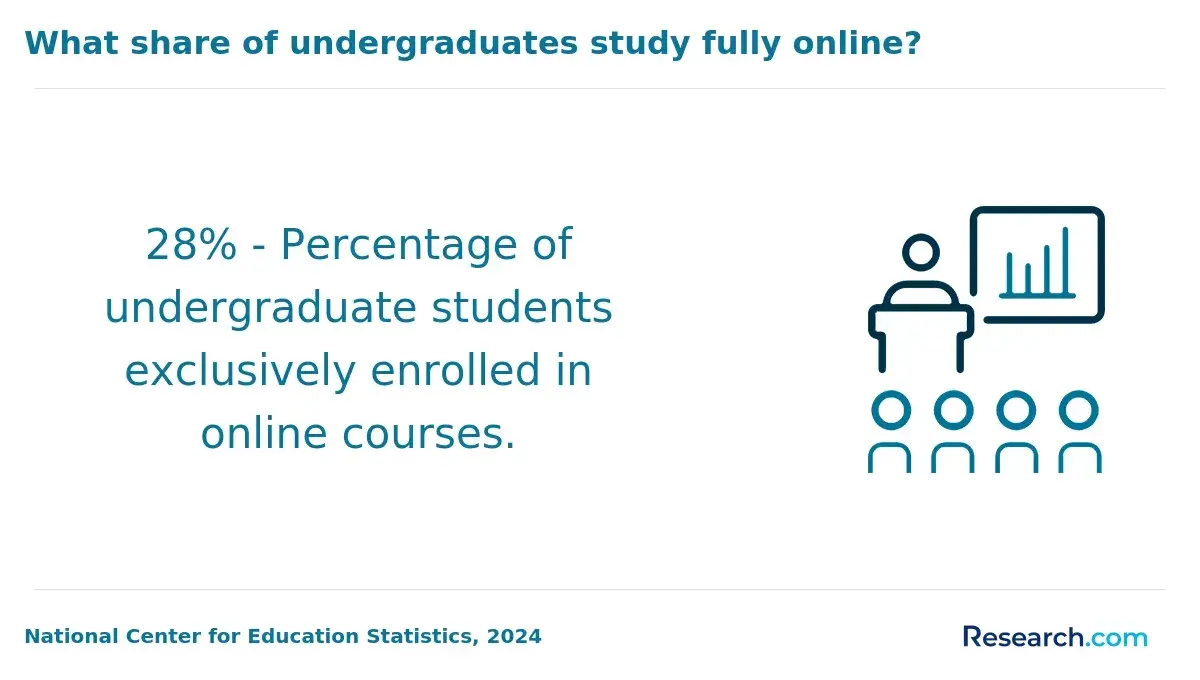
Is an Online Educational Technology Major Harder Than an On-Campus Program?
An online Educational Technology degree difficulty is not inherently greater than that of an on-campus program, but both present different experiences and challenges. The demands on students vary according to format, influencing how skills like time management and critical thinking are applied.
To better compare online vs on-campus Educational Technology programs, consider these key factors:
- Academic expectations: Both online and on-campus students face similar rigorous coursework and project requirements designed to match traditional standards.
- Workload and pacing: Assignments and deadlines are comparable, but online learners must be more self-disciplined to manage their schedules independently.
- Interaction and support: On-campus students benefit from immediate, face-to-face access to professors and peers, while online students rely heavily on digital communication, which can sometimes feel less personal.
- Learning environment: Online students require reliable technology and internet, and may experience technical interruptions. On-campus students encounter fewer tech issues but can face distractions in shared learning spaces.
- Unique challenges: Online learners may struggle more with concentration and connection, especially if less academically prepared, whereas on-campus students might depend more on physical presence to stay engaged.
Students interested in quickly advancing their education can explore quick masters programs, which may offer accelerated options for Educational Technology studies.
Are Accelerated Educational Technology Programs Harder Than Traditional Formats?
Accelerated educational technology programs are generally harder than traditional formats due to compressed timelines and a significantly more intense workload. These factors create a fast-paced learning environment where students must quickly adapt to a demanding schedule and heavier course density. To better understand these challenges, consider the following key comparisons between accelerated and traditional educational technology programs:
- Course Pacing and Content Density: Accelerated programs condense the same curriculum into 12 to 24 months, requiring students to absorb much more information in much shorter timeframes compared to traditional programs.
- Workload Management for Different Students: First-time college students often find accelerated Educational Technology programs harder because they demand a maturity level and self-discipline that can be difficult to sustain, while experienced students may handle the pace better.
- Academic Expectations and Skill Demands: Accelerated formats require extreme organization and sustained focus, challenging students to engage simultaneously with theory, applications, and hands-on projects without the breaks traditional formats provide.
- Learning Retention and Stress Levels: Traditional programs support deeper exploration of concepts and better long-term retention, whereas accelerated students risk surface-level learning and higher stress due to constant deadlines and limited processing time.
- Scheduling Flexibility and Structure: Many accelerated programs offer online or hybrid options for schedule compression, contrasting with the rigid in-person schedules and more distributed workload typical of traditional programs.
For those weighing whether an accelerated Educational Technology degree is harder, it is important to consider individual learning styles and previous experience. Students may find it beneficial to explore the best affordable accredited online colleges offering flexible accelerated paths to fit their lifestyle and goals.
Can You Manage a Part-Time Job While Majoring in Educational Technology?
Students majoring in educational technology can often handle part-time jobs, but success depends on factors like course intensity, weekly workload, schedule flexibility, and individual study habits. The program typically involves technical assignments, group projects, and reading, which create fluctuating demands throughout the term. While not as intense as some STEM tracks, deadlines and heavier project phases require careful attention. Flexible work schedules and limiting hours to around 15 per week are key to maintaining balance without compromising academic performance.
Many students manage both commitments by prioritizing time management and choosing credit loads that are reasonable for their lifestyle. Jobs on campus, such as in libraries or student services, are popular because they offer adaptable hours around exams and project deadlines. Educational technology's varied workload, including lab sessions and collaborative tasks, means students must strategically allocate study time. Access to campus or online academic support resources further aids in handling coursework alongside part-time employment, ensuring work complements rather than competes with learning goals.
What Jobs Do Educational Technology Majors Get, and Are They as Hard as the Degree Itself?
Career paths for educational technology majors vary widely in difficulty, responsibility, and required skills. While some roles match the rigor of the degree itself, others may feel less demanding or challenge graduates in new ways.
Educational technology jobs and salaries in the United States reflect this diversity, with some positions requiring deep technical fluency and others focusing more on communication or leadership.
- Instructional Designer: Designs digital learning experiences, develops online courses, and manages curriculum projects for schools or corporate clients. This role involves creative problem-solving and tech expertise, making it generally as demanding as the major itself, especially when handling complex projects.
- Technology Integration Specialist: Trains teachers and staff to use new technologies, troubleshoots implementation issues, and advocates for digital learning strategies. While less demanding academically, it requires strong communication skills and adaptability, demanding continual learning.
- Educational Technologist: Advises institutions on adopting and integrating technology, supports research, and evaluates digital tools. This position is demanding in a different way, focusing on broad organizational strategy rather than daily technical tasks.
- Corporate Trainer: Designs and delivers employee training programs using digital platforms, analyzes learning needs, and measures outcomes. Often less intensive than the degree, it relies more on presentation and facilitation than deep technical expertise.
- Director of Educational Technology: Leads departments, oversees technology policy, manages budgets, and coordinates large-scale digital initiatives. This senior role is typically more demanding than the degree, requiring leadership, advanced technical knowledge, and high responsibility.
One common question is whether instructional design is as challenging as an educational technology degree. The answer depends on the complexity of projects, but generally, the degree's workload and content rigor surpass many day-to-day job demands. For anyone exploring career options, researching the best trade school jobs can provide insight into related fields and opportunities.
Do Educational Technology Graduates Earn Higher Salaries Because the Major Is Harder?
There is no clear link between higher salaries and the difficulty of an educational technology major. Salary gains are driven more by the specific skills students develop-such as digital integration, pedagogy, and instructional design-than by academic rigor or the challenge of coursework. While some disciplines show a connection between workload and pay, educational technology emphasizes practical expertise and adaptability over GPA or major difficulty. Market demand for professionals able to blend technology with education plays a much larger role in salary outcomes.
Several factors influence the earnings of educational technology graduates. Industry demand is strong, with job growth in instructional design and related roles projected at 11% by the U.S. Bureau of Labor Statistics. Salaries also vary by job title; for instance, Directors of Educational Technology average around $98,368, whereas entry-level Technology Coaches earn approximately $50,908. Geographic differences are significant, with coordinators in states like Connecticut earning over $90,000 compared to salaries near $50,000 in Louisiana. Additionally, hands-on experience and a strong portfolio significantly boost earning potential.
What Graduates Say About Educational Technology as Their Major
- Callahan: "Pursuing educational technology was challenging but incredibly rewarding. The hands-on learning approach helped me grasp complex concepts, and while the average cost of attendance was a concern, the career opportunities have made it worthwhile. This major truly opened doors for me in instructional design and e-learning development. "
- Saul: "Educational technology definitely tested my problem-solving and technical skills, but the personal growth was invaluable. Considering tuition and expenses, the investment felt steep at times, yet seeing the direct impact of my work in schools reaffirmed my choice. It's a major that balances difficulty with meaningful outcomes. "
- Adam: "The coursework in educational technology was rigorous, especially integrating technology with pedagogy, but manageable with dedication. Financially, the cost was average compared to other majors, and the return on investment has been excellent in my career as an educational consultant. I appreciate how this major prepared me for a dynamic field. "
Other Things You Should Know About Educational Technology Degrees
In 2027, an Educational Technology major is considered challenging due to its integration of technology, pedagogy, and curriculum design. Students must remain agile, adapting to new software and teaching methodologies. While it demands technical and educational expertise, the major offers rewarding opportunities to innovate in educational settings.
A background in education is not mandatory to pursue an educational technology degree in 2027. However, familiarity with educational settings and pedagogical principles can be beneficial for students looking to apply technological solutions effectively within educational contexts. Many programs offer foundational courses for those new to the field.
References
- 13 Innovative Technologies Transforming Education | OctoProctor https://octoproctor.com/blog/educational-technology-examples
- Educational technology - Wikipedia https://en.wikipedia.org/wiki/Educational_technology
- Ultimate Guide to Ed Tech & Instructional Technology Programs https://education.ufl.edu/educational-technology/2024/02/20/ultimate-guide-to-educational-technology-and-instructional-technology-programs/
- Education Technology Trends to Watch in 2025: 10 Innovations Shaping the Future of Learning https://www.digitallearninginstitute.com/blog/education-technology-trends-to-watch-in-2025
- What is Edtech? Key Benefits of Educational Technology in 2025 https://www.panoramaed.com/blog/what-is-edtech-key-benefits-of-educational-technology-in-2025
- What Is Educational Technology and Why Is It Important? https://www.molloy.edu/news/what-is-educational-technology
- Preparing Students for Competitive Exams: The Role of EdTech in Revolutionizing Exam Preparation https://www.oaks.guru/blog/preparing-students-for-competitive-exams-the-role-of-edtech-in-revolutionizing-exam-preparation/
- Pros and Cons of Traditional vs. Accelerated Elementary Education Programs https://www.early-childhood-education-degrees.com/accelerated/pros-and-cons-vs-traditional/
- Your college major can influence your pay. Here are the best and worst majors. https://www.cbsnews.com/news/college-major-highest-lowest-incomes/
- How Your College and Major Impact Your Salary After Graduation https://etcjournal.com/2025/08/05/how-your-college-and-major-impact-your-salary-after-graduation/


