
2027 Is Sports Analytics a Hard Major? What Students Should Know

Co-Founder and Chief Data Scientist
Sports analytics is often perceived as a challenging major due to its blend of quantitative skills and sports knowledge. Programs across the U.S. show a 35% enrollment growth over the past decade, reflecting increasing interest and demand. This growth highlights the evolving complexity and relevance of sports data analysis in professional fields.
This article explores what makes sports analytics academically demanding, including course rigor, workload, and essential skills like statistics and programming. It also examines how students with different backgrounds may experience the major's difficulty, helping prospective students understand what to expect before committing to the field.
Key Benefits of Sports Analytics as a Major
- Sports analytics develops critical skills in data interpretation and statistical software, benefiting career changers adapting to tech-driven roles.
- It offers flexible learning paths, supporting full-time workers balancing education with professional commitments.
- For undergraduates, it provides specialized knowledge and confidence through practical applications, enhancing readiness for sports industry challenges.
Where Does Sports Analytics Rank Among the Hardest College Majors?
Sports analytics generally does not rank among the most difficult college majors in national difficulty lists, which often prioritize fields like engineering, physics, mathematics, and computer science. These disciplines typically demand intense workloads, advanced technical skills, and significant lab or practicum time. In contrast, sports analytics is seen as moderately challenging because it combines quantitative coursework-such as statistics, calculus, and programming-with specialized study in sports management and business analytics.
For example, programs like Arizona State University's business data analytics track require competitive admissions criteria, including a high school GPA above 3.4, reflecting a notable academic rigor. Students in sports analytics programs also engage in practical projects and partnerships that develop skills in data mining and predictive modeling, contributing to workload intensity and time commitment.
The difficulty of sports analytics varies considerably across institutions and depends on individual student strengths. Compared to the highly theoretical and technical demands of pure mathematics or engineering, sports analytics is generally less abstract but still more quantitative than fields like general business or communications. This means students with strong math and coding foundations may find the major manageable, while those without this background might struggle. Ultimately, sports analytics sits in a middle ground regarding academic challenge-neither the hardest nor the easiest-making personal aptitude a key factor in perceived difficulty.
What Factors Make Sports Analytics a Hard Major?
Sports analytics is a demanding major due to its combination of intense academic requirements and technical skill expectations. Many students find the curriculum challenging because it integrates complex statistical theory with practical data analysis applied to sports contexts.
- Academic rigor and workload: The sports analytics degree technical rigor and workload are substantial, often requiring at least 120 credit hours of coursework. More than 45 of these credits typically focus on advanced classes in statistics, data science, and sports analytics, with universities like Rice mandating multiple upper-level courses and a capstone seminar to ensure in-depth learning.
- Technical and analytical complexity: This major emphasizes mastery of programming languages such as R and Python alongside sophisticated statistical software. Students must develop the mathematical fluency and coding proficiency integral to the sports analytics stem curriculum coding and statistics requirements, enabling them to analyze large, complex datasets and interpret nuanced quantitative results effectively.
- Field-specific demands: Beyond technical skills, students need a solid understanding of the sports industry's business, management, and communication aspects. Additional expectations at some institutions include foreign language proficiency or practical industry experience, both of which expand the academic burden and skill breadth.
The combination of heavy credit requirements, advanced STEM coursework, and practical sports industry knowledge makes this major notably challenging. Those interested in exploring related educational opportunities might find insights on what certificate makes the most money helpful for future career planning.
Who Is a Good Fit for a Sports Analytics Major?
Identifying the best students for sports analytics major helps prospective learners assess if they possess the essential skills needed to succeed in sports analytics. The program demands a blend of quantitative aptitude and effective communication to thrive in its analytical and technical coursework.
Key traits of students who excel in sports analytics include:
- Analytical Thinkers: These students demonstrate strong problem-solving abilities and comfort with mathematics, statistics, and computer programming, which align directly with the major's core requirements.
- Detail-Oriented Learners: Persistence and attention to detail help in handling complex datasets and developing accurate predictive models.
- Sports Enthusiasts with Analytical Interest: A passion for sports coupled with curiosity about performance analysis motivates deeper engagement with strategic and analytical processes.
- Effective Communicators: The ability to translate technical findings to non-technical audiences is vital, enhancing collaboration and practical application of insights.
- Students with Quantitative Backgrounds: Prior experience in calculus, statistics, or related fields provides a strong foundation to manage rigorous demands and technical aspects like database management and finance.
For those exploring degree options, understanding these qualities can also guide interest in the easiest doctorate programs as a long-term goal in analytics and data science fields.
How Can You Make a Sports Analytics Major Easier?
Many students find sports analytics challenging due to its heavy reliance on statistics, programming, and data interpretation, which can feel overwhelming initially. However, adopting effective strategies can significantly reduce stress and improve academic success.
- Strengthen foundational skills: Focus early on mastering core math and statistical concepts to build confidence and avoid difficulties in advanced courses.
- Engage with practical datasets: Actively working with real sports data instead of just reading theory helps deepen understanding and retention of complex ideas.
- Prioritize time management: Break down large assignments into manageable steps and use planners or digital tools to monitor deadlines, preventing last-minute pressure.
- Utilize academic support: Reach out to professors, tutors, and attend workshops designed to assist students in data science and analytics subjects.
- Collaborate with peers: Joining study groups or online forums encourages exposure to diverse problem-solving techniques and fosters motivation.
When I spoke to a graduate who majored in sports analytics, she shared how initially the statistical coursework felt intimidating, and she often doubted her grasp of programming languages. She found that regularly practicing coding challenges and collaborating with classmates made complex concepts more approachable. There were moments of frustration, especially when balancing multiple projects, but breaking tasks into smaller goals and celebrating small wins kept her motivated. She emphasized the value of seeking help early, saying, "Waiting too long to ask questions only made things harder." Looking back, she views her gradual, consistent efforts and the support networks as key to transforming a tough major into a rewarding experience.
Are Admissions to Sports Analytics Programs Competitive?
Admissions to sports analytics programs in the US are moderately competitive due to growing interest and limited program availability. Many of these programs keep class sizes small to offer personalized instruction and real-world experience. Prerequisites like a bachelor's degree or foundational courses in statistics and math further limit the eligible applicant pool. This combination of higher demand and selective capacity makes entry challenging but achievable with the right preparation.
Selectivity varies by institution and program level, with some expecting a minimum undergraduate GPA around 3.0. Applicants often must show coursework in quantitative subjects such as calculus, algebra, or programming, and although coding isn't always mandatory, statistical knowledge is typically essential. Graduate admissions frequently ask for résumés, statements of purpose, and recommendation letters, while demonstrated hands-on experience through internships or projects can significantly strengthen applications amid rising student competition.
A professional who majored in sports analytics shared that applying felt intense but rewarding. He recalled balancing the need to highlight relevant coursework and work experience while carefully crafting his statement of purpose. He said, "It wasn't easy, especially ensuring my background stood out in a small program with many skilled applicants." Nonetheless, the process deepened his commitment and helped him gain valuable insights even before enrolling.
Is an Online Sports Analytics Major Harder Than an On-Campus Program?
Whether an online sports analytics major is harder, easier, or equally challenging compared to an on-campus program largely depends on individual learning preferences and access to resources rather than the format itself. Both program types demand mastery of advanced concepts like math, statistics, and computer modeling, making the difficulty more about the subject than delivery method.
Key differences between online and on-campus sports analytics degrees highlight how various factors shape the student experience:
- Academic workload and pacing: Online programs often provide flexible start dates and self-paced modules, which can benefit those balancing other commitments but require greater self-discipline.
- Interaction and support: On-campus students enjoy direct faculty access and collaborative environments, whereas online learners must proactively seek help via digital platforms, which may feel isolating for some.
- Learning environment: Online students must navigate digital tools and potential distractions without hands-on labs, while on-campus programs offer more direct experiential learning to reinforce theory.
- Unique challenges: Online learners risk information overload if not well-organized, but on-campus students face time constraints from fixed schedules and commuting.
One common concern is whether online sports analytics is more challenging for working students, who can benefit from the flexible pacing but may struggle with self-management demands. Those evaluating programs should consider how these differences align with their learning style and support needs. Regardless of format, excelling in sports analytics requires dedication to complex data analysis and critical thinking. More students aiming for a bachelor's degree that makes the most money find that strong quantitative skills and adaptability matter most for success in this field.
Are Accelerated Sports Analytics Programs Harder Than Traditional Formats?
Accelerated sports analytics programs are generally harder than traditional formats due to their condensed timelines, faster pacing, and increased workload intensity. This arrangement demands that students process a greater volume of complex material in a shorter period, impacting both how they manage their studies and their overall experience. To better understand the differences, consider the following points comparing accelerated vs traditional sports analytics program workload:
- Course Pacing and Content Density: Accelerated programs compress several years of coursework into months, increasing the pace and density of material, while traditional programs offer a gradual progression over multiple years.
- Workload Management: Students with strong time management skills may handle the higher daily and weekly workloads of accelerated formats well, but those needing more time may find these programs overwhelming.
- Academic Expectations and Skill Demands: Both formats require mastery of statistics, programming, and predictive modeling, but accelerated programs intensify these expectations within a shorter timeframe.
- Learning Retention and Stress Levels: Accelerated degrees often lead to higher stress and reduced retention due to the rapid pace, whereas traditional programs allow more time to revisit and consolidate difficult topics.
- Scheduling Flexibility: Accelerated formats provide less day-to-day flexibility and fewer breaks, posing challenges for students balancing work or family, unlike the more flexible traditional schedules.
Those considering the accelerated sports analytics degree difficulty should weigh these factors carefully. This difference in structure significantly impacts student experience compared to the traditional vs accelerated sports analytics program workload. For individuals seeking the quickest schooling highest pay, accelerated programs may offer appeal despite the demands, but readiness for such intensity is crucial.
Can You Manage a Part-Time Job While Majoring in Sports Analytics?
Students majoring in sports analytics can realistically maintain a part-time job, but success depends heavily on course rigor, weekly workload, schedule flexibility, and individual study habits. The major demands around 120 credit hours, with intense coursework involving statistics, programming, and data science, often accompanied by labs and projects.
Balancing work is easier for those who manage lighter credit loads and find employment that adapts to their academic schedules. Those with strong organization and proactive planning tend to handle both responsibilities more effectively.
Typically, students balance part-time jobs by carefully selecting credit loads that avoid overwhelming spikes in work and pursuing flexible or campus-based jobs that accommodate varying academic demands. The cyclical nature of sports analytics-featuring intensive lab sessions, collaborative group projects, and heavy reading-means workload can fluctuate, especially during exams or deadlines.
Utilizing campus resources and online academic support also helps students stay on top of complex technical assignments. However, those taking too many technical classes simultaneously or lacking strong time management skills may find it challenging to maintain consistent academic and job performance.
What Jobs Do Sports Analytics Majors Get, and Are They as Hard as the Degree Itself?
Career paths for sports analytics graduates vary widely in difficulty, responsibility, and required skills. While some positions demand the same technical rigor as the degree itself, others emphasize communication or strategic judgment, making them less technically challenging but demanding in other ways.
- Sports Data Analyst: These professionals analyze player and team statistics, employing advanced statistical modeling and strong quantitative skills. Their work is generally as demanding as the sports analytics major, especially within professional teams or sports technology companies.
- Performance Analyst: Focused on player development and health, this role merges sports science with analytics. It requires both technical expertise and interpersonal collaboration with coaches and athletes, matching the academic rigor in high-level sports organizations.
- Sports Media Analyst: Media analysts interpret game data for broadcasts and journalism. The job is often less technically demanding than the degree but requires rapid decision-making, clear communication, and the ability to explain complex data to the public, reflecting a different type of challenge.
- Scouting Coordinator: Coordinators evaluate prospects and assist in recruitment using data-driven methods. Their focus on strategic judgment and real-time decisions means this role is typically less focused on technical difficulty than core analytics roles.
- Sports Technology Specialist: Specialists work with wearable tech, motion tracking, and predictive modeling, requiring advanced analytical and engineering skills. This role can match or exceed the degree's technical demands, particularly when developing innovative products for elite athletes.
According to recent data, about 85% of professionals in sports analytics career paths and salaries hold at least a bachelor's degree, many with advanced degrees. Starting salaries average around $79,000, reflecting the field's competitive and technical nature. For students exploring pathways, reviewing options such as international dual degree programs can offer expanded opportunities.
Prospective candidates often ask, is sports analyst job difficult? The answer depends on the specific position, but technical roles tend to match the rigor of the major, while positions emphasizing communication or strategy demand different, yet significant, skill sets.
Do Sports Analytics Graduates Earn Higher Salaries Because the Major Is Harder?
There is no clear evidence that sports analytics graduates command higher salaries simply because their major is more challenging. While sports analytics is intellectually demanding, involving statistics, programming, and data analysis, salary differences are mainly driven by the practical skills learned and strong market demand.
Academic rigor can improve job prospects, but employers tend to reward abilities like data modeling and interpreting complex statistics over just completing a tough curriculum. Ultimately, higher earnings are more closely linked to how well graduates apply their knowledge in real-world settings.
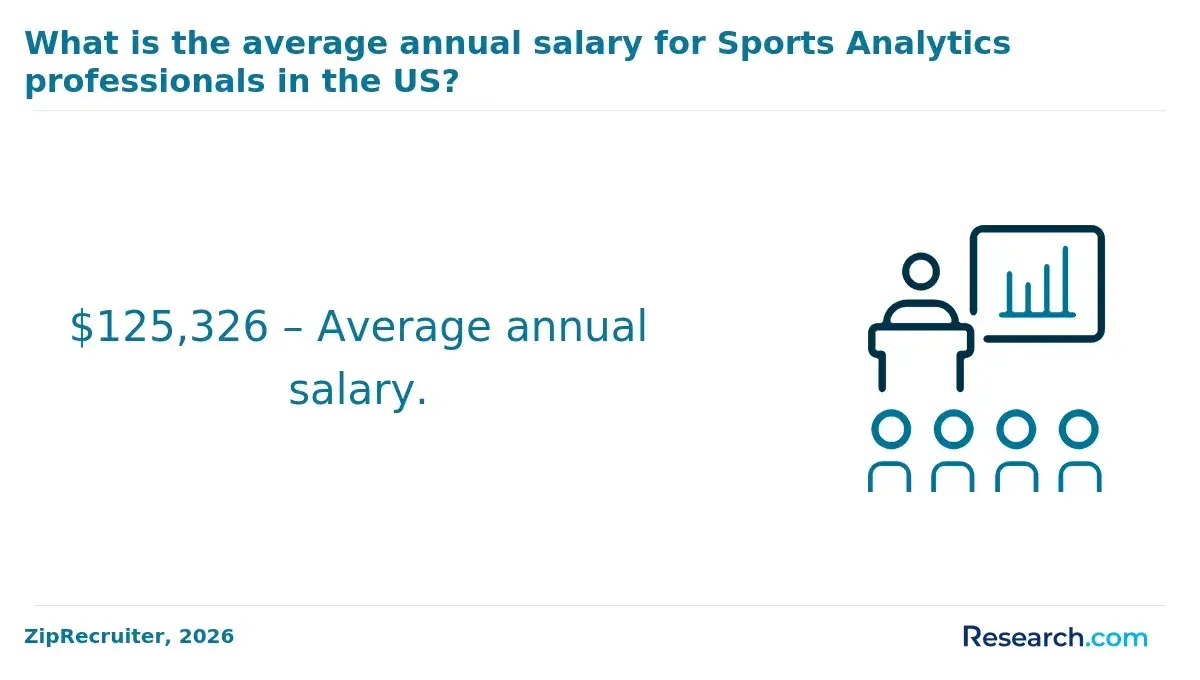
Multiple factors influence salaries for sports analytics professionals beyond academic difficulty. The growing reliance on data-driven decisions in sports has increased demand for skilled analysts. Job titles with greater responsibility, such as senior analyst or sports statistician, often offer salaries ranging from $60,000 to over $100,000, depending on the region.
Geographic location plays a significant role, as analysts in cities like New York or San Francisco typically earn more than those in smaller markets. Additionally, relevant experience, like internships or certifications, can enhance earning potential by demonstrating advanced expertise.
What Graduates Say About Sports Analytics as Their Major
- Kaysen: "Sports analytics challenged me in ways I hadn't expected, demanding a strong grasp of both statistics and sports theory. Despite the intensity, the learning process was incredibly rewarding and opened doors to exciting career opportunities in sports management. Though the average cost of attendance was high, I believe the investment paid off given the unique skills I developed."
- Jalen: "Majoring in sports analytics was definitely a demanding journey, requiring dedication to data analysis and real-world application. Reflecting on it now, the knowledge gained has profoundly shaped my approach to decision-making in my professional life. While the cost of education wasn't insignificant, it felt justified by the practical expertise I gained throughout the program."
- Beau: "From a professional standpoint, sports analytics was a rigorous major that combined complex quantitative tools with sports insights, which pushed me to grow academically and personally. The cost of pursuing this field was a concern initially, but it's important to weigh that against the long-term career benefits. In the end, the hard work and expenses were worthwhile as the major has been instrumental in advancing my career."
Other Things You Should Know About Sports Analytics Degrees
In 2027, sports analytics students may grapple with rapidly evolving technology and data analysis tools. Keeping pace with new algorithms and mastering diverse programming languages is essential. Data interpretation skills and the ability to apply them to real-world sports scenarios remain crucial challenges, alongside balancing theoretical coursework with practical application.
Yes, programming is a key component of sports analytics. Students often learn languages such as Python, R, or SQL to gather, clean, and analyze large sports datasets. Programming skills enable the automation of analyses and development of algorithms.
References
- Sports Performance Analytics | Major Finder | University of Delaware https://www.udel.edu/apply/undergraduate-admissions/major-finder/sports-performance-analytics/
- 10 Tips for getting started as data analysts in football https://english-programs.sportsdatacampus.com/tips-getting-started-data-analysts-football-sports/
- Sports Analytics - How Data Improves Performance Metrics & KPIs? https://data.folio3.com/blog/sports-data-analytics/
- What is Sports Analytics? A Comprehensive Guide for Beginners https://www.mckayjohns.com/blog/what-is-sports-analytics
- Sport after Moneyball: Exploring sports analytics and the digital economy https://sirc.ca/articles/sports-analytics/
- Getting into Sports Analytics 2.0 https://medium.com/@GregorydSam/getting-into-sports-analytics-2-0-129dfb87f5be
- Playing-Side Analytics in Team Sports: Multiple Directions, Opportunities, and Challenges https://pmc.ncbi.nlm.nih.gov/articles/PMC8287128/
- Sport Analytics Major | Merrimack College https://www.merrimack.edu/academics/combined-majors/sport-analytics-bs-major/
- Top Schools for Sports Analytics: Your Ultimate Guide - Grouse Mountain Experience https://www1.grousemountain.com/best-schools-for-sports-analytics


