2027 Library Science Degree Completion Programs for Working Adults

Co-Founder and Chief Data Scientist
Choosing a library science degree completion program is a practical decision about time, money, credit transfer, and career value. Working adults often already have college credits, military training, professional experience, or employer support, but not every program will recognize those advantages in the same way. The right program can shorten the path to a credential; the wrong one can leave students paying for repeated coursework, limited transfer options, or a degree that does not meet employer expectations.
This guide explains how library science degree completion programs work, who they serve, how online and hybrid formats compare with campus-based study, what prior learning may count, and how to evaluate cost, accreditation, financial aid, and career outcomes. It is designed for adults who want a realistic route to finishing a degree while continuing to work, manage family responsibilities, and plan for advancement in libraries, archives, information services, and related roles. Notably, graduates of accredited library science completion programs earn a median salary nearly 20% higher than those without such credentials, which makes careful program selection especially important.
Key Things to Know About Library Science Degree Completion Programs for Working Adults
- Maximizing credit for prior learning-especially ACE evaluations for veterans-can reduce coursework by up to 50%, accelerating degree completion while lowering costs.
- Choosing programs accredited by ALA or recognized by key employers ensures credentials meet licensure and industry standards, improving job prospects in 2023's competitive market.
- Working adults can access specialized financial aid such as employer tuition reimbursement and flexible federal aid plans designed to support part-time, online library science students.
What Are Library Science Degree Completion Programs, and Who Are They Designed For?
Library science degree completion programs are undergraduate pathways built for students who have started college but have not yet earned a bachelor's degree. Instead of asking adults to begin again in a traditional four-year sequence, these programs evaluate prior college credits and, in some cases, documented professional or military learning, then map the remaining requirements toward a library science credential.
The core purpose is efficiency without lowering academic standards. A strong completion program should make it easier to finish the degree, but it should still be housed at a properly accredited institution, offer a coherent curriculum, and prepare students for real roles in libraries, archives, records management, digital collections, public services, and information organization.
Common features of degree completion programs
- Flexible scheduling: Many programs use evening, weekend, online, hybrid, or asynchronous courses so adults can study around work shifts and family obligations.
- Accelerated course formats: Some schools offer shorter terms or compressed courses, allowing students to complete requirements faster if they can manage the workload.
- Transfer-friendly policies: Programs may accept prior credits from accredited colleges, military training, professional certifications, or prior learning assessments when they match degree requirements.
- Adult-focused advising: Good programs provide transcript review, degree planning, and guidance on balancing enrollment intensity with employment.
- Career-aligned coursework: Courses typically focus on information organization, library services, research tools, digital resources, user support, and technology used in information settings.
Who these programs fit best
- Working adults with prior college credit: Students who have completed some undergraduate coursework can often reduce both time and cost if credits transfer cleanly.
- Library assistants and paraprofessionals: Employees already working in libraries may need a bachelor's degree for promotion, supervisory responsibilities, or long-term career mobility.
- Military veterans: Veterans with ACE-credited training may be able to apply documented learning toward general education or elective requirements, depending on the school.
- Career changers: Adults moving from education, administration, customer service, technology, or community services may use the degree to enter information-related roles.
- Students planning graduate study: A bachelor's degree from an accredited institution can help prepare students who later intend to pursue advanced library and information science education.
According to the National Student Clearinghouse and American Association of State Colleges and Universities, well-designed completion programs meet regional accreditation standards and include employer and licensure recognition, establishing their job market value. Research by the Lumina Foundation also highlights financial aid options tailored for adult learners, which can improve affordability when students compare net cost rather than sticker price.
Students comparing flexible education models in other fields may also review fast-track online EdD programs, which similarly emphasize accelerated and adult-centered formats.
How Do Library Science Degree Completion Programs Differ From Traditional On-Campus Degree Programs?
Library science degree completion programs differ from traditional on-campus programs mainly in structure, not necessarily in the final credential. A student may still earn a Bachelor of Science or Bachelor of Arts in Library Science, but the path is designed around adults who cannot attend daytime classes on a fixed campus schedule.
| Feature | Degree Completion Program | Traditional On-Campus Program |
| Primary audience | Adults with prior credits, work experience, military training, or interrupted college enrollment | First-time, full-time undergraduate students entering after high school or transfer |
| Scheduling | Often evening, weekend, online, asynchronous, hybrid, or cohort-based | Often weekday, daytime, semester-based, and campus-centered |
| Pacing | May allow part-time, accelerated, or year-round enrollment | Usually follows a standard full-time academic calendar |
| Credit transfer | Typically central to the program design | Available, but not always optimized for adults with varied credit histories |
| Campus attendance | Often limited or optional, depending on delivery format | Usually required on a regular basis |
| Advising focus | Transcript evaluation, completion planning, adult learner support | General undergraduate advising and campus engagement |
One major distinction is the amount of coursework that can be completed online. Over 75% of coursework in completion programs can be completed asynchronously online, which gives students more control over when they study. Traditional programs usually rely more heavily on scheduled, face-to-face instruction.
Completion programs also tend to offer rolling or multiple start dates, while traditional programs usually follow fall and spring admission cycles. That difference matters for working adults who want to begin when their work schedule, finances, or family responsibilities allow.
Credit transfer is another important dividing line. A traditional program may accept prior credits, but a degree completion program should make transcript review a central part of enrollment. Students should expect help identifying which credits meet general education, major, elective, or residency requirements. They should also ask how military training, professional certifications, CLEP, DSST, or prior learning assessment may apply.
Data from the National Center for Education Statistics (NCES) and IPEDS reveal a growing enrollment trend in degree completion programs, reflecting adults' increasing pursuit of credentials that enhance career mobility without disrupting employment or family life. Students also comparing broader earning potential across fields may find highest-paying college majors useful for context, though library science decisions should be tied to specific career goals rather than salary rankings alone.
What Prior Credits and Experiences Count Toward a Library Science Degree Completion Program?
Prior credits and experiences may count toward a library science degree completion program when they are documented, academically relevant, and accepted under the school's transfer policies. Acceptance is never automatic. Each institution decides how credits apply to general education, major requirements, electives, residency rules, and graduation totals.
Types of prior learning that may be accepted
- Transfer credits: Credits from regionally accredited institutions are commonly reviewed first. Schools look at course level, grades earned, credit hours, age of the coursework, and whether the content matches degree requirements.
- Military training credits: Many programs consider American Council on Education (ACE) credit recommendations for military training, leadership preparation, and technical coursework. Acceptance depends on institutional policy and fit with the degree plan.
- Professional certifications: Some programs grant credit for certifications or licenses related to libraries, archives, records, technology, administration, or information services. Students usually must provide official documentation.
- Prior Learning Assessment (PLA): PLA may use portfolios, skill evaluations, faculty review, or competency demonstrations to award credit for college-level learning gained through work or life experience. According to CAEL research, students utilizing PLA graduate sooner and reduce tuition costs significantly.
- Credit-by-examination: Exams such as CLEP and DSST can provide credit for demonstrated mastery in approved subject areas. Programs differ in which exams they accept and how many credits may be applied.
How to avoid transfer-credit surprises
The safest approach is to request a pre-enrollment credit review before committing to a program. Students should collect official transcripts from every college attended, military documentation if applicable, certification records, course descriptions, syllabi for older or disputed classes, and any evidence needed for PLA review.
Prospective students should also ask the school to explain, in writing, how each accepted credit applies. A credit that transfers only as a general elective may not shorten the degree as much as a credit that satisfies a required course. This distinction can affect both graduation timeline and total cost.
- Ask for a degree audit before enrolling: A degree audit should show remaining courses, total credits needed, residency requirements, and estimated completion time.
- Check maximum transfer limits: Some schools cap the number of outside credits that can apply toward graduation.
- Review grade requirements: A prior course may be denied if the grade is below the school's minimum transfer standard.
- Confirm accreditation rules: Credits from unaccredited or differently accredited institutions may be difficult to transfer.
- Question unclear denials: AACRAO guidelines promote transparency and fairness in credit acceptance, so students should ask for an academic explanation when credits are rejected.
A graduate who completed a library science degree after military service described the process as worthwhile but demanding: "I had military training and previous college classes I thought would count, but getting official recognition took multiple transcript requests and persistence. The PLA portfolio was tough to assemble but saved me months of coursework. Ultimately, that acknowledgment motivated me to finish faster and with less debt." The lesson is straightforward: credit recognition can be valuable, but students must document everything and follow up early.
What Is the Minimum GPA Requirement for Library Science Degree Completion Programs?
Most library science degree completion programs require a cumulative GPA ranging from 2.0 to 2.5 on a 4.0 scale from previous college credits. The exact cutoff varies by institution, program selectivity, transfer status, and whether the applicant is seeking regular or conditional admission.
GPA is important, but it is not always the only factor. Adult learners may have older transcripts that do not reflect their current ability, especially if they have since built a strong work record, completed certifications, served in the military, or succeeded in recent coursework.
Admission pathways to compare
- Standard admission: Applicants meet the stated GPA threshold and submit required transcripts and application materials.
- Conditional admission: Some programs accept students below the usual GPA requirement on a probationary basis. Conditions may include earning minimum grades in the first term, using tutoring, meeting with advisors, or limiting course load at the start.
- Open admission: Some institutions use broader access policies, especially for adults with substantial professional experience in library or information science. These policies may weigh career achievements and training more heavily than GPA alone.
- Holistic review: Programs accredited by bodies like the Higher Learning Commission (HLC) may consider recommendations, personal statements, recent academic performance, work history, and evidence of readiness alongside GPA.
- Academic forgiveness or fresh-start options: Returning students who left college with low GPAs may be able to use institutional policies that limit the impact of older coursework after a break in enrollment.
What applicants with a low GPA should do
Students below the stated GPA range should not assume they are automatically ineligible. They should contact admissions and ask whether the program offers conditional admission, academic renewal, nondegree coursework, or a pathway through a partner college. Completing a few recent courses with strong grades may also help demonstrate readiness.
Before paying application fees, prospective students should request a pre-admission evaluation. This can clarify whether the school is likely to accept prior credits, whether the GPA meets the program's standard, and what steps could improve admission chances. Adults comparing flexible pathways in other disciplines may also look at online video game design degree programs for examples of how programs structure prior learning, admissions flexibility, and career-oriented study.
How Are Library Science Degree Completion Programs Structured Around Full-Time Work Schedules?
Library science degree completion programs are usually structured to help students make steady progress without leaving full-time employment. The best programs do this through predictable course schedules, realistic credit loads, online access, responsive advising, and policies that recognize that adult students may face work travel, shift changes, caregiving needs, or seasonal job demands.
Common scheduling models
- Asynchronous online courses: Students complete lectures, readings, discussions, and assignments on their own weekly schedule, usually with fixed deadlines.
- Evening cohorts: Courses meet after standard work hours, often with the same group of students moving through the program together.
- Weekend intensive sessions: Classes meet on selected weekends, sometimes paired with online assignments before and after each session.
- Hybrid formats: Students complete most work online but attend limited in-person sessions for presentations, projects, advising, or applied learning.
- Accelerated terms: Shorter course blocks can help students finish faster, but they require concentrated weekly effort.
Students typically enroll in 6 to 9 credits each term. This range is often more manageable for full-time workers than a traditional full-time course load, but it still requires consistent weekly study time. Adults should ask programs how many hours per week students usually spend on reading, projects, discussion boards, and group work.
Why cohort models can help working adults
Many completion programs use a cohort model, where a fixed group of students follows the same course sequence. Cohorts can create accountability, peer support, and schedule predictability. Research from the National Student Clearinghouse Research Center reveals that adult learners in cohort-based degree completion programs show greater persistence and higher graduation rates than peers following traditional enrollment paths.
Still, cohorts are not ideal for everyone. They can be less flexible if students need to pause enrollment, change pace, or retake a course. Before enrolling, students should ask what happens if a work conflict, illness, family emergency, or course failure interrupts the sequence.
Questions to ask before enrolling
- Are courses offered every term, or only once per year?
- What happens if a required course is canceled?
- Can students pause for one term without losing cohort placement?
- Are deadlines flexible for documented work emergencies?
- Is advising available outside standard business hours?
- Does the program provide a full course map before enrollment?
One graduate described the stable cohort and clear schedule as the difference between stopping out again and finishing. She noted that unexpected work emergencies were manageable because the program had clear policies, predictable deadlines, and advisors who understood adult learners. That kind of structure should be considered a core program feature, not a bonus.
Is Online or Hybrid Delivery Available for Library Science Degree Completion Programs?
Yes. Online and hybrid delivery are common in library science degree completion programs because these formats match the needs of working adults. In 2023, approximately 68% of adult learners in degree completion programs registered fully online, while 22% opted for hybrid formats combining virtual and occasional in-person elements, according to NCES data. The COVID-19 pandemic significantly boosted institutional capabilities to offer robust online programs across disciplines, including library science.
Main delivery formats
- Fully online asynchronous: Students access course materials, lectures, readings, and assignments on their own schedule. This is often the most flexible option, but it requires strong time management.
- Online synchronous: Students attend live video sessions at scheduled times. This allows real-time discussion but may be difficult for shift workers, caregivers, or students in different time zones.
- Hybrid: Students complete most coursework online and attend occasional in-person sessions. Hybrid programs can support networking and applied learning, but travel requirements should be clear before enrollment.
- Low-residency: Students study primarily online with short required campus visits or intensive sessions. This may work for adults who can plan travel in advance.
How to judge online program quality
Online delivery should not mean less support. Prospective students should evaluate whether the program is intentionally designed for remote learners or simply moved online without adequate services.
- Faculty credentials: Instructors should have relevant academic preparation, field experience, and the ability to teach effectively online.
- Student-to-faculty ratios: Smaller ratios can improve feedback, advising access, and discussion quality, especially in virtual classrooms.
- Technology support: Students should have access to help with the learning management system, library databases, video platforms, and accessibility tools.
- Academic support services: Online tutoring, writing support, research help, and career counseling should be available to remote students.
- Peer interaction: Discussion boards, group projects, virtual meetings, and cohort structures can reduce isolation.
- Accreditation: Online programs should hold the same institutional accreditation as campus programs. Delivery format should not weaken degree legitimacy.
Questions to ask about online or hybrid requirements
- How much coursework is asynchronous, synchronous, or in person?
- Are live sessions recorded for students who cannot attend?
- Are exams proctored, and are there extra fees?
- What technology, software, or internet standards are required?
- Are internships, field experiences, or capstones available near the student's location?
- Can online students access the same advising and career services as campus students?
The best format depends on the student's schedule and learning style. Fully asynchronous programs offer the most control, while hybrid programs may provide more structure and relationship-building. Students who need flexibility should read attendance, participation, and residency requirements carefully before enrolling.
How Long Does It Take to Complete a Library Science Degree Completion Program?
The time required to complete a library science degree completion program depends mainly on transfer credits, remaining requirements, enrollment intensity, and whether the program uses accelerated terms. Students entering with about 60 prior credits, around two years of college, commonly need two to three more years to finish. Those with 90 prior credits often complete the program in one to 18 months, particularly when pursuing full-time and accelerated course options.
Veterans and students with substantial documented prior learning may shorten the timeline further if the school accepts ACE credit, prior learning assessment, or relevant professional credentials. However, some requirements cannot be accelerated, especially capstones, internships, field experiences, sequential courses, or minimum residency credits.
Factors that affect completion time
- Number of accepted transfer credits: Credits must not only transfer but also apply to degree requirements. Elective credit may help, but major and general education credit usually shorten the path more.
- Prior Learning Assessment: PLA can reduce repeated coursework when workplace learning is equivalent to college-level outcomes.
- Enrollment intensity: Part-time students may need longer, while students who can handle heavier or accelerated loads may finish sooner.
- Course availability: If required courses are offered infrequently, students may wait a term or more even if they are otherwise ready to graduate.
- Residency requirements: Many schools require students to complete a minimum number of credits through the awarding institution.
- Capstone or field requirements: Applied projects, internships, and supervised experiences may follow fixed schedules that cannot be compressed.
How to get a realistic timeline
Students should ask each program for a written completion estimate based on their actual transcripts, not a generic marketing timeline. The estimate should identify remaining courses, term-by-term sequencing, transfer credits accepted, credits still needed, and any courses offered only in certain terms.
Timeline also affects cost. Accelerated graduation can reduce tuition exposure, fees, and opportunity costs, but moving too quickly can raise the risk of burnout or poor grades. The best pace is one the student can sustain while meeting work and family responsibilities.
What Accreditation Should a Library Science Degree Completion Program Hold?
A library science degree completion program should be offered by an institution with recognized accreditation. Accreditation affects federal financial aid eligibility, credit transfer, graduate school admission, employer confidence, and, in some cases, licensure or credential review. Students should verify accreditation independently before enrolling.
Institutional accreditation
Institutional accreditation is the first requirement to check. Regional accreditation, granted by agencies such as the Higher Learning Commission (HLC), the Middle States Commission on Higher Education, and SACSCOC, is widely recognized across the United States. It generally supports smoother credit transfer, eligibility for federal financial aid, and broader acceptance by graduate schools and employers.
National accreditation is offered by organizations like the Distance Education Accrediting Commission (DEAC). These institutions may provide legitimate education, but credits from nationally accredited schools can face transfer limitations, and some employers, graduate programs, or professional pathways may not treat them the same as regionally accredited credits.
Programmatic accreditation and professional recognition
Programmatic accreditation is less common at the undergraduate library science completion level, but students should still ask whether the program has specialized recognition, articulation agreements, employer partnerships, or alignment with graduate admissions expectations. Bodies such as ABET for engineering and technology programs or CSWE for social work validate specialized program quality in other fields, illustrating why discipline-specific recognition can matter when it exists.
Students who plan to pursue graduate study in library and information science should confirm that the bachelor's degree will be accepted by the graduate programs they may later target. Those comparing longer-term education options can also review an affordable library sciences degree pathway to understand how undergraduate preparation may connect to future graduate study.
How to verify accreditation
- Use official databases: Confirm the institution through the U.S. Department of Education's Database of Accredited Postsecondary Institutions and Programs (DAPIP), rather than relying only on school marketing materials.
- Check the exact institution name: Some schools have similar names, branch campuses, or affiliated entities with different statuses.
- Ask about transfer acceptance: If future graduate study or transfer is possible, contact likely receiving schools before enrolling.
- Be cautious with unrecognized accreditors: Programs that advertise accreditation from agencies not recognized by the U.S. Department of Education may create serious credential problems.
- Confirm financial aid eligibility: Accreditation and federal aid eligibility are connected, but students should still verify Title IV participation with the school.
Working adults should also compare accreditation alongside credit transfer policies, scheduling flexibility, and cost. Students building complementary administrative skills may find online associate programs in office administration useful for comparison, but the library science credential itself should come from a recognized institution that supports the student's career plan.
How Much Do Library Science Degree Completion Programs Cost, and What Financial Aid Is Available?
Library science degree completion program costs vary widely by institution type, residency status, delivery format, transfer credit acceptance, and fees. Public regional universities usually charge $300-$600 per credit hour for in-state students, while private nonprofit schools range from $600 to $900. For-profit institutions often exceed $1,000 per credit hour. Mandatory fees add another $200 to $600 per semester.
Students should also budget for technology fees, course materials, software, background checks if required for field placements, commuting, and occasional residential intensives. These additional costs can total several hundred dollars each term. NCES and College Scorecard data can help students compare published costs, but the most important figure is net cost after transfer credits, grants, employer support, military benefits, and scholarships.
Common financial aid options
- Federal Pell Grants: Eligible students, including some part-time learners, may qualify based on financial need and FAFSA information.
- Federal student loans: Loans can help cover remaining costs, but students should borrow conservatively and compare expected career outcomes.
- Employer tuition reimbursement: Working adults should ask HR whether education benefits apply to part-time study, online programs, books, or fees.
- Military education benefits: Military-affiliated students may be able to use GI Bill and MyCAA allowances, depending on eligibility and program approval.
- Scholarships for adult learners: Some institutions offer awards specifically for nontraditional students, transfer students, veterans, or employees in public service settings.
Tax benefits to review
The Lifetime Learning Credit allows eligible taxpayers a credit up to $2,000 annually for qualified education costs. IRS Section 127 lets employees exclude up to $5,250 annually from taxable income for employer-provided educational assistance. Students should consult a tax professional or official IRS guidance because eligibility depends on individual circumstances.
How to compare true program cost
| Cost factor | Why it matters | Question to ask |
| Per-credit tuition | Determines the base cost of remaining credits | What is the current tuition rate, and does it differ for online students? |
| Transfer credits | Can reduce the number of credits students must pay for | How many of my credits apply directly to the degree? |
| Fees | Can significantly increase total cost beyond tuition | What mandatory fees are charged each semester? |
| Employer benefits | May lower out-of-pocket costs for working adults | Does my employer pay upfront or reimburse after grades are posted? |
| Residency or in-person requirements | May add travel, lodging, and missed-work costs | Are any campus visits required? |
| Program length | Longer enrollment can mean more fees and delayed career benefits | What is my expected graduation timeline after credit review? |
Sticker price alone is a poor way to choose. A higher-priced school that accepts more transfer credits may cost less overall than a cheaper school that requires students to repeat coursework. Students comparing program structures in other fields can review online architecture degree programs for examples of how fees, delivery format, and program requirements can affect total cost.
What Career Outcomes Can Working Adults Expect After Completing a Library Science Degree?
Working adults who complete a bachelor's degree in library science may qualify for roles, promotions, or graduate pathways that were not available with some college credit but no degree. Career outcomes depend on location, employer type, prior experience, specialization, graduate education plans, and whether the degree comes from an accredited institution.
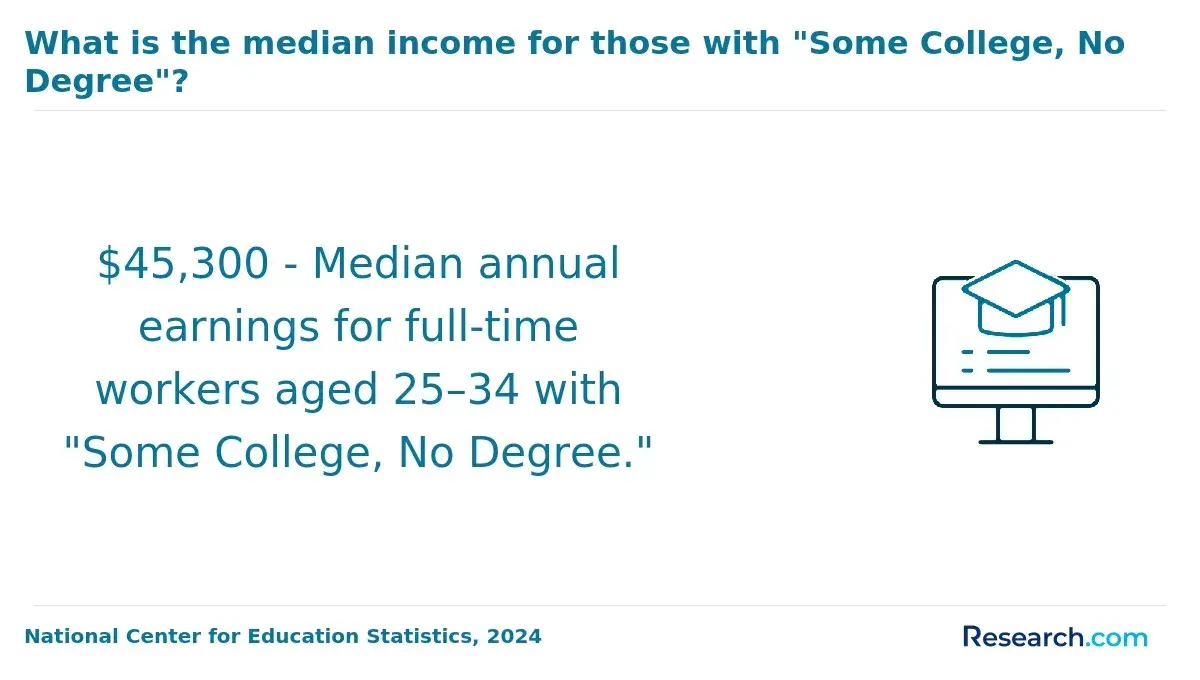
Median wage data from College Scorecard and employment statistics from the Bureau of Labor Statistics support the connection between degree completion and improved employment opportunities. Data show median earnings rise by roughly 15% to 25% compared to those with some college but no degree, reflecting employer recognition of degree completion and associated competencies.
Possible career benefits
- Promotion eligibility: Graduates frequently qualify for supervisory and management positions that require a bachelor's degree as a baseline credential, often advancing within 2 to 5 years.
- Access to credential-gated roles: Some library managers, archivists, digital resources specialists, and information services positions require formal education beyond work experience alone.
- Stronger combination of experience and credential: Working adults often bring job history that traditional graduates may not have, allowing them to compete for roles above entry level.
- Graduate education pathways: A bachelor's degree from an accredited program may be necessary for admission to advanced degrees or certifications.
- Expanded responsibilities: Graduates may move into collection management, technology integration, community outreach, research support, records coordination, or user services leadership.
What students should verify before enrolling
Career outcomes are strongest when the program matches the student's intended role. Before choosing a school, students should review job postings in their region, ask current employers what credentials they recognize, and confirm whether graduate study is expected for their target positions. They should also ask programs for career services data, internship or practicum options, employer connections, and examples of graduate job titles.
Prospective students should prioritize programs that maximize legitimate credit transfer, recognize prior learning where appropriate, provide flexible scheduling, and align with employer and licensure expectations. A degree can improve mobility, but it is most valuable when paired with relevant experience, strong references, and clear career planning.
How Do Employers View a Library Science Degree Completed Through a Completion Program?
Employers usually focus on whether the institution is accredited, whether the degree is relevant, and whether the candidate can demonstrate the skills required for the role. In most cases, a degree earned through a completion program does not appear differently on the diploma or transcript title than a degree earned through a traditional pathway.
Studies from the Society for Human Resource Management (SHRM) and the National Association of Colleges and Employers (NACE) reveal that hiring managers focus on the legitimacy of the program, not on whether candidates completed degrees through traditional coursework or adult-focused completion programs incorporating prior learning assessments (PLA).
How to present the degree
- Use the official degree name: List the institution, degree, major, and graduation date as provided by the school.
- Do not overexplain the format: There is usually no need to label the degree as online, hybrid, accelerated, or completion-based unless it is relevant to the conversation.
- Highlight adult-learner strengths: If asked, students can frame the program as evidence of discipline, time management, persistence, and professional focus.
- Connect coursework to job duties: Employers value practical skills in research support, information organization, digital tools, service delivery, and project management.
When employers may look more closely
Some sectors may examine credentials in greater detail. Federal employment governed by Office of Personnel Management (OPM) standards, roles tied to state boards, or employers with strict education policies may verify accreditation, credit hours, field of study, or degree level. Students targeting these sectors should ask HR departments, licensing bodies, or graduate schools about credential acceptance before enrolling.
For most private-sector and public library-related roles, an accredited completion degree is best viewed as a valid credential enhancer. The strongest candidates combine the degree with experience, references, technical competence, communication skills, and evidence of service to users or communities.
What Graduates Say About Library Science Degree Completion Programs for Working Adults
- : "Completing my library science degree as a working adult was a game changer, especially because the program's flexible scheduling formats allowed me to balance work, family, and study without feeling overwhelmed. I appreciated how the program emphasized accreditation standards rigorously, which gave my credential real weight in the job market. For anyone considering this path, understanding these structural features is key to ensuring your investment pays off both professionally and personally. —Emmanuel"
- : "Reflecting on my experience, what stood out most about the library science completion program was its sensible credit transfer policies that respected my previous coursework, saving me time and money. The cost considerations were transparent and affordable compared to other alternatives, which made finishing the degree feasible without incurring heavy debt. If you're juggling life's demands, look for these practical aspects to find a program that truly supports your goals and finances. —Gage"
- : "I chose a library science degree completion program that prioritized career outcomes, and that focus made all the difference. Knowing the curriculum aligned with professional standards and employer expectations meant I could confidently step into roles that matched my ambitions. The structural features, like cohort models promoting peer support, helped me stay motivated despite a busy schedule. For professionals aiming for meaningful advancement, these are crucial factors to evaluate before committing. —Isaac"
Other Things You Should Know About Library Science Degrees
Many library science degree completion programs provide dedicated support services tailored for working adults. These often include academic advising to help plan course schedules, career counseling focused on library sector opportunities, and technical support for online learning platforms. Additionally, tutoring resources and access to digital libraries are typically available to assist students balancing work and study.
Yes, credits earned in an accredited library science degree completion program can often transfer toward graduate studies such as a master's in library and information science. However, transfer policies vary by institution, so it is important to verify credit articulation agreements before enrolling. Earning a bachelor's degree through completion programs can be a strategic step for advancing into graduate-level credentials.
Networking is a critical component of library science degree completion programs for working adults. These programs frequently facilitate connections through virtual cohort groups, professional organization memberships, and practicum placements. Building relationships with peers and experienced professionals helps students access mentorship, job leads, and industry insights relevant to library careers.
References
- About Library Science Degrees | Library Science Degrees https://www.librarysciencedegrees.org/about
- Types of Library & Information Science Degree Programs https://www.librariancertification.com/types-of-library-information-science-degree-programs/
- Education for librarianship - Wikipedia https://en.wikipedia.org/wiki/Education_for_librarianship
- Accreditation Matters when Choosing Your MLIS Degree https://online.usm.edu/blog/accreditation-matters-choosing-mlis-degree/
- The Next Chapter: Career Advice for Freshly Minted Library and Information Professionals - blog post https://librarianship.ca/blog/next-chapter/
- Working and Full Time Grad Program https://talk.collegeconfidential.com/t/working-and-full-time-grad-program/1136390
- What Can You Do With a Library Science Degree? https://librarysciencedegreesonline.org/what-can-you-do-with-a-library-science-degree/
- Getting an MLIS While Working Full Time | Book Riot https://bookriot.com/getting-an-mlis-while-working-full-time/
- Further Questions: In addition to the MLIS, what post-secondary certificates, degrees, or coursework is most useful for new hires trying to get into the field? https://hiringlibrarians.com/2022/10/07/further-questions-in-addition-to-the-mlis-what-post-secondary-certificates-degrees-or-coursework-is-most-useful-for-new-hires-trying-to-get-into-the-field/
- Balancing Full Time Work and a Professional Master’s Degree: Renee on Librarianship, Learning Design, and Student Support https://www.anotherdegree.com/post/working-full-time-in-graduate-school