
2027 Nursing Education Degree vs. Certificate: Which Should You Choose?

Co-Founder and Chief Data Scientist
Today's students and professionals face a pivotal decision between earning a nursing education degree or a certificate, each offering distinct career advantages. A degree often provides broader theoretical knowledge and clinical experience, while a certificate can offer quicker entry into specialized roles. Both pathways can enhance career prospects but differ in time commitment, cost, and depth of study.
For example, degrees may take two to four years and prepare candidates for leadership positions, whereas certificates typically require months and focus on specific skills. Considering factors like career goals, lifestyle, and educational preferences is essential. This article will compare these key differences to guide readers toward the best choice for their nursing education career.
Key Points About Nursing Education Degree vs. Certificate Programs
- Degree programs offer comprehensive training, enhancing long-term professional growth and opening leadership roles, while certificates focus on specific skills for quicker workforce entry.
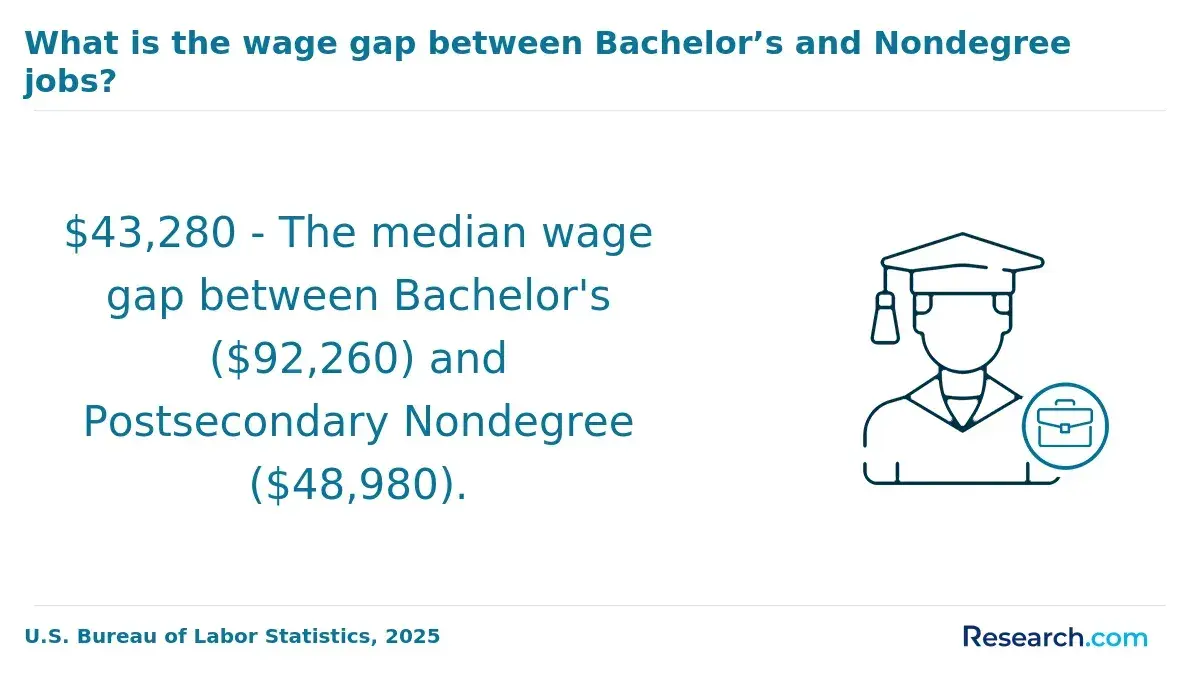
- Nursing education degree holders generally see higher salary potential, with a median wage about 15% greater than certificate holders, reflecting deeper expertise and credentials.
- Certificates provide targeted skill development suitable for current professionals seeking specialization, whereas degrees promote broader nursing education theory and research knowledge.
What are the differences between nursing education degree and certificate programs?
Both nursing education degrees and certificate programs offer valuable pathways into the nursing field, yet they vary in several key aspects. Recognizing these differences allows students to choose the best educational route based on their professional goals and available time.
Below is a comparison highlighting the main distinctions between these two options.
- Career Advancement: Degree programs generally prepare students for broader roles, including leadership and educational positions, while certificate programs focus on foundational skills suitable for entry-level or specialized clinical roles. Those aiming for long-term growth often prefer degrees, whereas certificates suit individuals seeking quicker entry into the workforce.
- Depth of Learning: Degrees provide comprehensive knowledge covering theory, research, and practice, fostering critical thinking and a deeper understanding of healthcare systems. Certificates are more concise and skill-oriented, ideal for learners needing specific competencies without extensive academic coursework.
- Time Commitment: Degree courses require a significant time investment, aligning with students who can dedicate multiple years to education. Certificates usually take less time to complete, making them attractive for those balancing work or personal responsibilities and desiring faster credential attainment.
- Flexibility and Focus: Certificate programs often offer specialized training targeting particular nursing areas, facilitating quick skill enhancement. Degrees encompass a wider curriculum, offering versatility and a strong foundation for various nursing paths or further study.
How long does it take to complete a nursing education degree vs. a certificate program?
Completion time is a key factor for students deciding between pursuing a nursing education degree versus a certificate program. Understanding the differences in duration helps prospective students align their educational goals with career timelines.
- Typical Duration: Nursing education degree program length usually ranges from two years for an associate degree in nursing (ADN) to four years for a Bachelor of Science in Nursing (BSN). Master's degrees often require an additional two to three years beyond the bachelor's level. In contrast, how long is a nursing education certificate? Most certificate programs can be completed in under a year, with some specialized or post-master's certificates taking between six months and two years.
- Flexibility: Degree programs frequently offer full-time and part-time options, where part-time study can significantly extend completion time, sometimes doubling the duration. Certificate programs often allow for self-paced or accelerated formats, enabling faster completion, especially in specialty areas.
- Factors Affecting Timeline: Several factors influence program length, including program structure, clinical requirements, prior experience, and transfer credits. Students with relevant coursework or professional history may reduce their nursing education degree program length through credit transfers or prior learning assessments. Specialized certificates typically have streamlined curricula that further shorten the timeline.
- Options for Quicker Completion: Students seeking faster paths might consider accelerated associate degree programs, which condense ADN degrees into shorter timeframes while maintaining rigorous standards.
Can you complete a nursing education degree or certificate entirely online?
The rapid growth of online education has expanded access for many students seeking advanced credentials from anywhere in the U.S. Numerous universities now offer nursing education degree programs online, allowing students to complete most coursework and assignments digitally.
For example, the University of Alabama provides a Master of Science in Nursing with Nurse Educator concentration described as "100% online." However, some programs, such as Texas A&M's MSN-Nursing Education, require limited on-campus attendance for clinical hours, making them hybrid rather than fully remote.
In contrast, fully online nurse educator certificate programs are more common because they emphasize theory and curriculum design over hands-on clinical skills, making them easier to complete without in-person requirements.
When selecting an online format, it is crucial to evaluate if a program includes hands-on training, internships, or licensure mandates.
Many fully online degrees still require clinical practicums or in-person immersions, either locally or on campus. Prospective students should review each program's structure carefully to ensure it aligns with their career goals. For those seeking to teach or develop curricula, a fully online nurse educator certificate may suffice.
However, for advanced practice or nurse educator certification preparation, a degree with hybrid clinical components may be necessary. For more information on educational pathways, consider exploring what is the easiest bachelor degree to get as part of your research.
What are the admission requirements for a nursing education degree vs. a certificate program?
Admission requirements are essential in guiding prospective students to select the nursing education path that best fits their background and career goals. Understanding the differences between a nursing education degree admission requirements and nursing certificate program prerequisites helps applicants evaluate their readiness and the level of commitment needed.
The following side-by-side comparison details what to expect when applying to each type of program.
Admission Requirements for Nursing Education Degree Programs
- Educational Background: Most master's programs require a Bachelor of Science in Nursing (BSN) from an accredited institution, while doctoral programs (Ed.D. or Ph.D.) expect a master's degree in nursing from a regionally accredited school.
- GPA Requirement: A minimum GPA of 3.0 on a 4.0 scale is standard, though some programs may admit students with slightly lower GPAs supplemented by additional qualifications.
- Registered Nurse (RN) License: An active, unencumbered RN license is required, usually valid in the state where study or practice is planned.
- Letters of Recommendation: Typically, two letters of recommendation are needed, often from supervisors, educators, or colleagues familiar with the applicant's skills and academic potential.
- Relevant Coursework: Foundational undergraduate courses like health assessment, pathophysiology, and statistics are often prerequisites or must be completed during the program.
- Personal Statement or Essay: A personal statement outlining professional goals, achievements, and reasons for pursuing advanced nursing education is usually required.
- Resume or CV: Applicants must submit a current resume or curriculum vitae highlighting nursing experience and accomplishments.
- Interview: Some programs include an interview as part of the admissions process.
- Additional Requirements: Doctoral applicants might need to provide a scholarly work sample or evidence of research experience.
Admission Requirements for Nursing Education Certificate Programs
- Educational Background: A nursing degree (BSN or MSN) from an accredited program is usually required, although these prerequisites tend to be less comprehensive than those for degree programs.
- GPA Requirement: A minimum GPA of 3.0 is commonly expected, especially for post-master's certificates.
- Registered Nurse (RN) License: An active RN license is necessary for admission.
- Relevant Coursework: Completion of a basic statistics course and other foundational courses may be required.
- Resume or CV: A current resume or CV demonstrating pertinent clinical experience may be requested.
- Letters of Recommendation: Some certificate programs ask for one or two letters of recommendation to evaluate readiness for advanced study.
- Personal Statement: A brief personal statement outlining career objectives and interest in nursing education might be necessary.
Degree programs generally require more extensive academic and professional credentials compared to certificate programs, which focus more on core nursing qualifications and experience.
For those curious about the financial aspect of advanced nursing education, it can be useful to explore how much does an online phd cost to better plan your investment in an education degree or certificate.
How many credits do you need to complete a nursing education degree vs. a certificate?
Knowing the number of credits required for nursing education programs helps students effectively plan their academic commitments and timelines. Credit loads vary significantly depending on whether one pursues a degree or a certificate, influencing the duration and depth of study.
Here's a clear comparison of credit expectations for nursing education programs:
- Nursing education degree (master's): These programs generally demand between 33 and 54 graduate credits, reflecting a comprehensive curriculum that covers both theoretical and practical aspects of nursing education.
- Nursing education certificate: Designed for those already holding a graduate degree, these certificate programs typically require 9 to 15 credits, focusing on core teaching skills and educational theory in a shorter timeframe.
When I spoke with a student who chose the nursing education certificate route, he shared how the lighter credit load felt manageable amidst his full-time nursing job but still demanding enough to deepen his understanding of education. He explained, "Opting for the certificate allowed me to balance work and study without feeling overwhelmed by extensive coursework. The targeted classes pushed me to develop practical teaching skills quickly."
He also appreciated the certificate's focus on essential content, saying it "gave me confidence to prepare for the Certified Nurse Educator exam without the longer commitment a master's degree required." While the journey was intense, he found it rewarding to gain specialized knowledge efficiently, emphasizing that understanding credit requirements upfront was crucial for aligning his goals with his capacity to commit time and energy.
What is the average tuition for a nursing education degree vs. a certificate?
Tuition costs are a critical consideration when choosing between a nursing education degree and a certificate, as these expenses directly affect financial stability and the return on investment throughout your career. Evaluating the typical cost differences can clarify which pathway aligns better with your goals and resources.
Below is a comparison of the average tuition ranges for nursing education degree programs versus certificate programs, highlighting key factors that impact overall expenses.
Average Tuition for Nursing Education Degree Programs
- Tuition Range: The average cost of nursing education degree program for undergraduates is about $7,647 per year for in-state students and $30,476 per year for out-of-state students.
- Graduate Degree Costs: Master's-level nursing education degrees like an MSN typically cost between $15,030 and $42,880 total, with an average yearly tuition of $12,480, excluding room and board.
- Institution Type: Costs vary significantly by school type, with public graduate nursing programs averaging $9,340 annually and private institutions charging up to $21,440 per year.
- Program Format: Online degree programs may have lower tuition than on-campus formats, though this depends on the school and may exclude certain fees.
- Program Length: Bachelor's degrees usually require 4 years while master's degrees take 1-2 years full-time, so total tuition accumulates according to program duration.
Average Tuition for Nursing Education Certificate Programs
- Certificate Tuition Range: Nursing certificate program tuition comparison shows post-master's certificates can cost as little as $4,080 total, making them substantially more affordable than full degree programs.
- Program Duration: Most certificate programs can be completed within a few months to one year, reducing both time and overall costs.
- Institution Type: Certificates from public universities or community colleges tend to be less expensive than those offered by private institutions, though all generally remain more affordable than degree options.
- Specialization Impact: While some variation exists depending on the focus area, nursing education certificates mostly fall within a modest tuition range compared to degree programs.
- Online Availability: Many certificate programs are offered online, providing savings on transportation and flexible scheduling for working professionals.
For those exploring affordable options, it is also helpful to consider the best online colleges with financial aid, which may offer further support in managing tuition expenses effectively.
Can you transfer certificate credits toward a nursing education degree later on?
Yes, you can often transfer certificate credits toward a nursing education degree, but this depends on several important factors. Institutional policies vary widely, with schools typically requiring that courses come from accredited programs and match the degree coursework in content and rigor. Credits for foundational subjects like anatomy or statistics tend to be more transferable than specialized clinical courses.
Accreditation of both the certificate program and the degree-granting institution plays a significant role in whether credits will be accepted. Ultimately, credit transferability hinges on these key institutional standards and course relevance.
Other important considerations include transfer caps, such as limits on the percentage or total number of credits accepted from certificates. Grade requirements usually specify a minimum of a "B" to qualify for transfer, and some schools apply time limits, only accepting credits earned within a certain number of years.
It is essential to confirm transfer policies with the degree program before enrolling in a certificate to avoid surprises. Taking these steps ensures you maximize your educational investment and plan your pathway effectively.
In speaking with a student who pursued a nursing education degree after completing a certificate program, she described the process as both reassuring and challenging. Initially, she was uncertain which credits would carry over and spent time reviewing course descriptions and accreditation details. "I had to reach out to multiple advisors and get written confirmation before enrolling in any classes," she recalled.
Ultimately, she was able to transfer a significant portion of her credits, which saved time and expense. Her experience underscored the value of patience and proactive communication in navigating credit transfer for nursing education.
Are certificate programs accredited the same way as nursing education degrees?
Certificate programs in nursing education are accredited differently than degree programs, though both types aim to meet high standards. Degree programs-such as bachelor's and master's degrees-are usually accredited by national agencies like the Commission on Collegiate Nursing Education (CCNE) or the Accreditation Commission for Education in Nursing (ACEN), which review the entire academic curriculum, faculty credentials, and clinical experiences.
Certificate programs include both academic certificates from colleges and professional certifications from credentialing bodies. While some academic certificates may hold accreditation from the same agencies as degree programs, many do not.
Professional certifications, such as the Certified Nurse Educator (CNE), are accredited by specialty organizations like the Accreditation Board for Specialty Nursing Certification (ABSNC), which assess the certification process rather than an educational curriculum.
Accreditation is essential as it ensures programs uphold nationally accepted quality standards, affecting a student's ability to transfer credits and qualify for federal financial aid. Employers and future academic institutions often require graduates to hold credentials from accredited programs.
When choosing between programs, students should verify accreditation from recognized bodies like CCNE, ACEN, or other U.S. Department of Education-approved agencies to confirm alignment with career goals and financial aid eligibility. Always check whether the program's accreditation meets employer expectations and supports advanced nursing roles before enrolling.
What jobs can you get with a nursing education degree vs. a certificate?
Both nursing education degrees and certificates open doors to various healthcare roles, but they prepare graduates for differing levels of responsibilities and career paths. Understanding the career options available with each credential can help guide your decision based on your professional goals. Below is a comparison of common job roles associated with degrees versus certificates in nursing education.
Jobs You Can Get with a Nursing Education Degree
- Registered Nurse (RN): Provides direct patient care, administers treatments, and coordinates with healthcare teams in diverse settings.
- Nurse Educator: Teaches nursing students or staff, develops curricula, and promotes evidence-based practices in academic or clinical environments.
- Clinical Nurse Leader: Oversees patient care coordination and quality improvement initiatives within clinical units.
- Nurse Administrator: Manages nursing staff, budgets, and policies in healthcare organizations to ensure efficient operations.
- Nursing Faculty: Engages in teaching, research, and mentorship at nursing schools or universities.
Jobs You Can Get with a Nursing Education Certificate
- Licensed Practical Nurse (LPN): Provides basic nursing care and monitors patient health under the supervision of RNs or physicians.
- Nursing Assistant: Assists patients with daily activities and supports nursing staff in care delivery.
- Clinical Instructor: Teaches specific nursing skills or clinical practices, often requiring prior nursing degrees.
- Specialized Nurse Educator: Focuses on teaching within a particular nursing specialty or skill area.
What is the average starting salary for a certificate vs. nursing education degree graduates?
Salary potential often varies significantly between holders of a nursing education certificate and graduates with a nursing education degree. These differences reflect the level of education, training, and responsibilities associated with each qualification. To better understand earnings expectations, it is helpful to examine the average starting salary for nursing education degree graduates alongside that of certificate holders.
A side-by-side look at starting salaries reveals key contrasts and influencing factors that every prospective student should consider.
- Typical Salary Range: Graduates with a nursing education degree, such as an MSN in education, usually start with salaries ranging from $80,000 to $110,000 annually, while specialized roles like nurse anesthetists can command starting pay above $170,000.
- Average Nursing Certificate Salary in the US: Those holding certificates, including Licensed Practical Nurses who often complete a 1-year program, have average starting salaries between $45,000 and $55,000 per year.
- Experience: Salary increases with experience apply across both groups, but degree holders often see steeper salary growth given opportunities for advancement into higher-level roles.
- Industry and Role Differences: Nurse educators tend to earn less than clinical nurses with similar credentials; for example, nurse educators can earn over $18,000 less annually than clinical staff nurses.
- Geographic Location: Urban regions and areas with high nursing demand typically offer better starting salaries for both certificate and degree graduates.
- Certification and Specialization: Additional certifications or specialty training can significantly boost pay, particularly for advanced clinical roles.
- Career Outlook: While certificates offer quicker entry into the workforce, investing in a nursing education degree often leads to higher long-term earning potential and expanded career options, though this requires more time and financial investment.
For those researching career options, detailed information on the trade school highest paying jobs can provide useful context on certificate earnings across fields.
Here's What Graduates of Nursing Education Programs Say About Their Degree or Certificate
- Levi: "Pursuing the nursing education certificate program was an excellent choice for me because it allowed for a faster pace of learning and was more affordable compared to a degree. The focused curriculum gave me the practical skills I needed without spending years in school, which was perfect to quickly advance my career. However, I also realized that while certificates are great for immediate job readiness, degrees often open more doors in leadership roles."
- Ahmed: "Choosing the nursing education degree program was a deliberate investment in my future. The comprehensive coursework and slower pacing helped me deeply understand the subject matter, which proved invaluable in my teaching career. Although the degree required a higher cost and time commitment than certificates, the broader opportunities and career advancement made it worthwhile. For anyone weighing options, consider how much time and financial resources you can invest versus where you want your career to lead. "
- Christopher: "Having completed both the certificate and degree programs in nursing education, I can confidently say each offers distinct benefits. The certificate provided immediate practical skills at a lower cost and quicker completion, which helped me start working sooner. Later, pursuing the degree expanded my theoretical knowledge and leadership potential, though it came with higher expenses and a longer timeline. Reflecting on both experiences, I suggest weighing your career goals and learning preferences carefully before deciding."
Other Things You Should Know About Nursing Education Degrees
Nursing education degree programs typically focus on developing comprehensive educational, leadership, and research skills alongside clinical expertise. They prepare students to design curricula, conduct research, and manage educational programs. Certificate programs, in contrast, usually emphasize practical teaching skills and targeted clinical instruction without extensive training in program development or research methodologies.
A nursing education certificate may qualify individuals for entry-level positions, such as certified nursing assistant (CNA) or licensed practical nurse (LPN), which typically require less educational commitment than a degree. However, a degree may be necessary for roles like Registered Nurse (RN) or Advanced Practice Nurse (APN).
In 2027, nursing education degree programs typically require more clinical practice hours compared to certificate programs. Degree programs often have a comprehensive curriculum that includes extensive hands-on training, preparing students for a broader scope of practice. Certificate programs may focus on essential skills with fewer clinical hours, suitable for specific, focused roles.
References
- Different Types of Nursing Education Programs Explained https://www.allnursingschools.com/articles/understanding-the-different-types-of-nursing-degrees/
- Nursing Education Graduate Certificate https://www.ucf.edu/degree/nursing-education-certificate/
- How to Become a Nurse Educator | Salary & Programs https://nurse.org/education/msn-nurse-educator-guide/
- Frequently Asked Questions https://www.acenursing.org/resources/frequently-asked-questions
- Nursing Education Certificate (NEC) https://www.ferris.edu/health-professions/Nursing/Nursing-Education-Certificate/homepage.htm
- Nursing Certificate Programs https://www.chamberlain.edu/academics/nursing-school/graduate-certificate-programs
- Types of Nursing Jobs and Their Salaries | Goodwin University https://www.goodwin.edu/enews/types-of-nursing-jobs-and-salaries/
- Certificate in Nursing Education - College of Nursing and Health Professions https://drexel.edu/cnhp/academics/certificates/Certificate-PB-Nursing-Education-Faculty-Role/
- I was dismissed from an RN program. Will my nursing credits transfer to another school? https://www.nurse.com/blog/i-was-dismissed-from-an-rn-program-will-my-nursing-credits-transfer-to-another-school/


