
2027 Online vs On-Campus Communication Management Degree Programs: Pros & Cons

Co-Founder and Chief Data Scientist
The rising popularity of online communication management degree programs reflects a significant shift in higher education, with recent data showing that over 40% of enrolled college students take at least one online course. This growth highlights the need to carefully examine how online programs compare with traditional on-campus options. Evaluating factors such as flexibility, cost, learning experience, and career outcomes provides prospective students with crucial insights to make informed decisions. This article explores the advantages and disadvantages of both formats to guide those considering communication management degrees toward the best path for their academic and professional goals.
Key Benefits of Online vs On-Campus Communication Management Degrees
- Online communication management degree programs offer flexible scheduling, allowing students to balance work and family commitments while earning their degree, which suits approximately 60% of adult learners in the US.
- Students in online programs can access a wider range of courses and faculty expertise from institutions nationwide, increasing specialization opportunities compared to most on-campus programs.
- On-campus communication management degrees provide valuable face-to-face networking opportunities, with studies showing that 75% of graduates find employment through in-person connections made during their studies.
Are Online vs. On-Campus Communication Management Programs Structured the Same Way?
The structure of online and on-campus communication management degree programs varies notably in course scheduling, delivery methods, and student engagement. Each format is designed to accommodate different learning preferences and lifestyle needs. The following comparison highlights key structural differences across important areas such as course delivery, class schedules, and interaction to help you evaluate which format aligns best with your circumstances:
- Course Delivery: On-campus programs require physical attendance in scheduled classes, offering immediate face-to-face interaction that fosters spontaneous discussions and real-time feedback. Online programs deliver content via digital platforms, either through asynchronous modules accessible anytime or synchronous live sessions, allowing flexible learning but with fewer opportunities for instant dialogue.
- Class Schedules: Campus-based programs usually follow fixed schedules on particular days and times, potentially requiring commuting and limiting flexibility, although some offer part-time or evening options for working students. In contrast, online programs provide greater flexibility, enabling students to access materials and participate on their own time, which benefits those balancing work, family, or other commitments.
- Interaction and Collaboration: On-campus students engage directly with peers and faculty, enhancing academic relationships and networking through group projects and informal meetings. Online students collaborate via discussion boards, video conferencing, and other digital tools, relying on written communication and planned virtual meetings, which can feel less immediate but still support meaningful connections.
- Access to Campus Resources: Students attending classes in person have direct use of campus facilities such as libraries and career centers, along with in-person office hours. Online learners typically access these resources digitally, which can be convenient but may lack some experiential elements available on site.
- Program Structure Options: Some institutions offer hybrid models combining online coursework with occasional on-campus sessions, blending flexibility with periodic face-to-face engagement to better tailor learning experiences.
Are Admission Requirements the Same for Online vs On-Campus Communication Management Degree Programs?
Colleges and universities strive to uphold consistent academic standards for both online and on-campus communication management degree programs, ensuring that graduates achieve the same learning outcomes regardless of delivery format. However, differences in admission requirements for online and on-campus communication management degrees often arise in how institutions assess applicants' preparedness for remote learning environments.
Below is a comparison highlighting common admission criteria, emphasizing where online vs on-campus communication management program entry criteria align and where they diverge.
- Academic Qualifications: Most programs require a high school diploma or equivalent for undergraduate studies and a bachelor's degree for graduate levels. Minimum GPA standards, such as a 2.0 or higher for bachelor's applicants, generally remain consistent across both formats.
- Standardized Test Scores: While on-campus programs typically emphasize SAT or ACT scores for undergraduate admission, many online programs adopt test-optional policies or waive these requirements, increasing accessibility for adult and nontraditional students.
- Work Experience: Online communication management programs, particularly at the graduate level, often place greater emphasis on relevant professional experience, valuing applicants' self-motivation and career backgrounds more than traditional programs, which focus primarily on academic records.
- Application Materials: Both online and on-campus applicants must submit completed applications, statements of purpose, and official transcripts. Online programs may additionally request evidence of technical proficiency to ensure readiness for digital learning platforms.
- Letters of Recommendation: Most programs ask for 1-3 letters from academic or professional references. Online programs tend to be more flexible in accepting recommendations from supervisors or colleagues, reflecting the importance of work-based skills.
- Interview or Digital Assessment: Some online programs incorporate interviews or digital readiness assessments to evaluate applicants' ability to manage virtual coursework, a step less common among on-campus offerings.
Prospective students interested in flexible study options might explore accelerated programs for bachelor's degree pathways that can accommodate varied schedules while maintaining rigorous admissions standards.
Do Online Communication Management Students Receive the Same Academic Support as On-Campus Students?
Universities have significantly expanded their academic support systems to ensure that online communication management students receive resources and assistance comparable to those available to on-campus peers. This evolution reflects a commitment to equalize educational opportunities regardless of the learning format.
To illustrate how support is provided across both formats, consider the following key academic services offered to online and on-campus communication management students:
- Tutoring Services: Both online and on-campus students have access to tutoring, with virtual platforms, chat, and scheduled video calls supporting remote learners, while in-person centers serve on-campus students. These services help clarify course concepts and boost academic performance.
- Career Counseling: Career support, including resume reviews and interview preparation, is accessible to all students. Online students typically engage with advisors through email, virtual workshops, or dedicated portals, whereas on-campus students benefit from face-to-face counseling and career fairs.
- Library Access: Digital library resources such as e-books, journals, and research databases are provided universally, ensuring online students have robust research support comparable to on-campus students who also enjoy physical library facilities and in-person assistance.
- Faculty Interaction: Faculty engage with online students via discussion boards, video meetings, and prompt email responses. On-campus students have direct interactions in classes and office hours, which may foster stronger relationships, though virtual tools aim to bridge this gap effectively.
- Technical Support: Online learners benefit from 24/7 technology help desks addressing login or software issues essential for remote study, while on-campus students access IT support in person, with immediate needs generally less frequent due to proximity.
How Long Does It Take to Complete an Online vs an On-Campus Communication Management Degree?
The time it takes to complete a communication management degree varies depending on whether the program is taken online or on campus, as well as a student's pace and the flexibility offered by the curriculum. These factors can significantly influence how quickly students are able to graduate. To clarify these differences, here is a comparison of the average completion timelines and scheduling flexibility for online versus on-campus communication management degree programs:
- Online communication management degree: Most online master's programs in communication management are structured to be completed within 1 to 2 years of full-time study, while part-time students generally take 2 to 3 years. Accelerated online bachelor's programs may be finished in 2 to 3 years, offering greater flexibility with multiple start dates and shorter course terms. This allows many students, especially working professionals, to balance their studies alongside other commitments and potentially graduate sooner.
- On-campus communication management degree: Traditional on-campus master's degrees commonly require 2 years of full-time study and 3 years or more for part-time students. Bachelor's degrees typically follow a standard four-year schedule with less flexibility, relying on fixed semester dates and limited opportunities for acceleration. On-campus students often face scheduling constraints and course availability issues, which can make finishing earlier more difficult.
A professional who pursued an online communication management degree shared his experience regarding the length of completion. He reflected that managing coursework alongside a full-time job was initially daunting, especially navigating the accelerated pace of 8- to 10-week sessions. "At times, it felt like a juggling act, but the flexible scheduling made it possible to prioritize urgent projects at work without falling behind academically," he explained. He completed his master's in just under two years by carefully planning his course load each term and taking advantage of multiple annual start dates. Looking back, he appreciated how the online format gave him control over pacing, noting, "Without that flexibility, finishing within this timeframe would have been far more challenging." This balance of flexibility and structure, he said, helped him stay motivated and successfully complete his degree on a timeline that suited his professional and personal life.
Are Online Communication Management Programs Cheaper Than On-Campus Ones?
Tuition, fees, and other expenses for communication management programs vary notably between online and on-campus formats. Generally, online programs tend to be more affordable due to differences in tuition rates and additional living costs.
Several key cost factors influence the total price of online versus on-campus communication management programs, affecting the overall cost of online communication management degree vs on-campus options:
- Tuition and Fees: The average tuition for online communication management programs is usually lower than for on-campus programs. For instance, online students paid about $12,216 per year in 2025-26, while on-campus students averaged $18,981, creating considerable savings for online learners. However, some universities charge similar tuition for both formats.
- Living Expenses: On-campus students often face additional costs such as room, board, parking, and commuting, which online students typically avoid by studying from home. These expenses add roughly $744 more annually for on-campus students compared to those living off-campus, highlighting a significant saving for online learners.
- Technology Costs: Online students may need to invest in reliable internet service and current computers. Although some programs provide laptops or stipends to help with these expenses, technology costs are generally lower than campus housing and commuting expenses.
- Financial Aid Availability: Both online and on-campus communication management students can access federal financial aid, scholarships, and grants if the program holds proper accreditation. Financial aid offerings for accredited online programs tend to be comparable to those for their on-campus counterparts.
- Schedule Flexibility and Opportunity Cost: Online programs' asynchronous nature allows students to balance work and study, reducing opportunity costs by enabling continued employment or caregiving. This flexibility offers an indirect financial advantage absent from many traditional on-campus schedules.
For those exploring options, reviewing the top online colleges with open enrollment can provide additional insights into affordable and accessible communication management programs tailored to varied student needs.
What Are the Financial Aid Options for Online vs On-Campus Communication Management Programs?
Both online and on-campus students pursuing communication management degrees may qualify for various forms of financial aid, though eligibility and accessibility can differ based on program format and the policies of the institution. Understanding these distinctions is critical for prospective students seeking support during their studies. Below is an overview comparing the main financial aid options available for both online and on-campus communication management students, highlighting key differences and considerations.
- Federal Student Aid (FAFSA): Most accredited institutions allow both online and on-campus students to apply for federal aid through FAFSA, which provides grants, loans, and work-study opportunities. Online students must confirm their program's accreditation and eligibility since some nontraditional programs may not qualify. On-campus students often benefit from more accessible work-study jobs tied to physical campus locations.
- State Aid: State grants and scholarships usually support residents enrolled in eligible programs. Eligibility can vary, as some states restrict aid to students attending campus-based programs, while others extend it to fully online students, particularly at public universities. Applicants should verify their state's policies related to residency and program format.
- Scholarships and Grants: Both online and on-campus communication management students can access many scholarships and grants based on merit or financial need. Requirements often include attending an accredited program and submitting FAFSA. Specialized awards, such as the Broadcast Education Association Scholarships and the Scripps Howard Endowed Journalism Scholarship, support communication fields specifically, making scholarships and grants for on-campus communication management programs and their online counterparts vital resources.
- Employer Tuition Reimbursement: This benefit is increasingly common for employees pursuing communication management degrees through either online or on-campus routes. Employers recognize the flexibility of accredited online education, though some require pre-approval or have preferred institutions. This option helps working students finance their education without taking on loans.
- Private Student Loans: Available to all students, private loans typically require credit approval and may have less favorable terms than federal aid. Online students should carefully compare lenders, as some may impose restrictions or additional requirements for online program enrollees, while on-campus students may find broader lender options.
Online communication management degrees often offer more affordable tuition and greater flexibility, enabling students to balance work and study effectively. This can enhance eligibility for employer assistance and reduce reliance on loans. For those considering cost-effective advanced options, exploring the cheapest doctoral programs may provide additional pathways to funding and career advancement.
Are Online Communication Management Programs as Credible as On-Campus Ones?
Accreditation plays a crucial role in establishing the credibility of both online and on-campus communication management programs. In the United States, while no specific accreditor targets communication management master's degrees exclusively, all programs must secure institutional accreditation from recognized agencies to verify they adhere to strict academic standards. Faculty qualifications and curriculum content tend to be consistent between online and campus formats, as many universities employ the same instructors and offer similar coursework regardless of delivery method. This consistency ensures that students receive equivalent educational quality whether they study online or on campus. Additionally, the flexibility of online programs makes them especially appealing to working professionals, offering the same curriculum with added convenience in scheduling, while hybrid models may incorporate occasional campus visits for networking or immersive learning experiences.
Employer and industry perceptions of online communication management degrees have evolved significantly. Recent data suggest that over 70% of employers now regard accredited online degrees as equally credible to their on-campus counterparts when awarded by reputable institutions. This shift reflects growing recognition of the shared faculty and curriculum standards across formats. Salary and career outcomes for graduates from both settings are generally comparable, reinforcing employer trust in online credentials. Technological advances such as interactive virtual classrooms and partnerships with industry leaders enhance the online learning experience, further increasing its acceptance. These innovations are transforming how credibility is perceived, making online education a viable and respected option for students seeking flexibility without sacrificing educational quality.
Do Employers Prefer Online vs On-Campus Communication Management Degrees?
Employers today generally regard online and on-campus communication management degrees as comparably valuable, with more than half of hiring managers rating graduates from both formats equally. While some employers, particularly in the US, still show a slight preference for in-person degrees, this bias often stems from long-standing traditions and assumptions about the rigor of face-to-face learning rather than concrete differences in curriculum or graduate outcomes.
Instead, factors such as the reputation of the awarding university and the accreditation status of the program carry more weight in hiring decisions. Employers are increasingly prioritizing whether candidates possess relevant skills and practical experience over the format through which the degree was earned. Research indicates that accreditation and demonstrable competencies have become key benchmarks for assessing the quality of communication management candidates.
Shifts in workplace norms, especially the rise of remote and hybrid work models, have significantly influenced employer attitudes toward online education. Surveys reveal that a large majority of HR professionals now regard accredited online degrees as equivalent to traditional ones, with a growing number of employers actively hiring candidates from online programs. Particularly in communication, PR, and management roles, the digital collaboration and leadership skills cultivated through online study are valued assets in today's tech-driven environments.
This evolving acceptance reflects broader acknowledgment that learning modality matters less than the ability to contribute effectively to organizational goals. Ultimately, salary prospects and career advancement opportunities for online graduates continue to align closely with those for on-campus peers when degrees come from reputable, accredited institutions.
When I spoke with a professional who completed an online communication management program, she shared how her experience challenged assumptions about online degrees during her job search. She noted that her employers valued her ability to adapt to virtual collaboration and lead digital campaigns-skills honed through her coursework and remote group projects. Though initially concerned that an online credential might appear less competitive, she found that presenting concrete examples of her practical experience and the program's accreditation helped employers see her as equally qualified. She reflected, "The flexibility of the online program allowed me to build a portfolio directly relevant to the roles I pursued, which made a tangible difference in interviews." Her journey underscores how focusing on skills, experience, and institutional quality can overcome outdated biases about degree format.
Do Online vs On-Campus Communication Management Program Graduates Earn the Same Salaries?
Salary comparisons between online and on-campus communication management graduates are increasingly shaped by factors beyond the learning format itself, such as program quality and professional experience. These evolving dynamics mean that whether a degree was earned online or on campus is less decisive in determining earning potential than it once was. The following points highlight the current salary trends and key factors influencing the pay gap for communication management graduates.
- Employer Perception and Accreditation: Employer attitudes have shifted to prioritize program reputation and accreditation over delivery method. Degrees from accredited, well-regarded institutions-both online and on-campus-are valued similarly, reducing salary disparities based solely on learning format.
- Program Quality and Specialization: The depth of curriculum and access to practical experiences like internships affect salaries more than program format. Leading online master's programs report starting salaries comparable to on-campus graduates, reflecting program rigor as a key salary driver.
- Professional Experience and Networking: On-campus programs traditionally offer more face-to-face networking, potentially boosting initial salaries, but online students compensate with virtual networking and alumni connections. Over time, these opportunities help online graduates achieve competitive salary outcomes.
- Flexibility and Career Advancement: Many online students study while working, enabling immediate skill application that often leads to promotions and pay increases before graduation. This flexibility can also lower debt burdens, indirectly enhancing financial well-being.
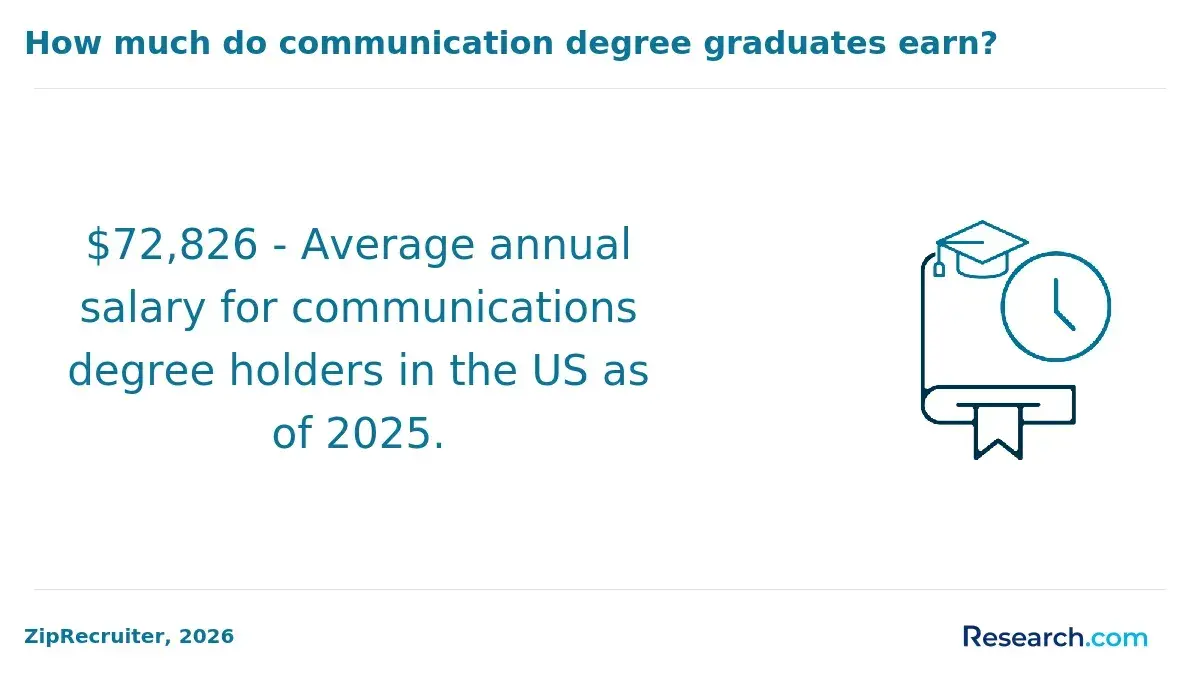
- Industry Demand and Location: Salaries for communication management graduates depend heavily on regional job markets and industry growth. For example, public relations managers earn a median salary near $132,870 regardless of whether their degree was earned online or on campus.
Prospective students interested in the best online colleges for communication management programs can find detailed information to compare options and evaluate outcomes at best online colleges.
How Do You Decide Whether an Online vs On-Campus Communication Management Program Is Right for You?
Choosing between online and on-campus communication management programs depends largely on your personal learning preferences, lifestyle, and long-term professional goals. Understanding these elements is crucial to selecting the type of program that will best support your academic success and career ambitions. Below are key factors you should consider before deciding which format fits you best.
- Learning style: On-campus communication management degrees are ideal for students who benefit from face-to-face interaction, structured class schedules, and immediate feedback from instructors and peers. Conversely, online programs suit self-motivated learners comfortable with independent study and digital communication platforms.
- Flexibility needs: Online programs offer significant flexibility, allowing you to access coursework anytime and from any location-perfect if you need to balance studies with a job or family commitments. On-campus programs require regular attendance at fixed times, which may pose difficulties if your schedule is demanding or you live far from campus.
- Budget: Although tuition rates for online and on-campus programs are often similar, online degrees may reduce additional costs such as commuting, relocation, and on-campus fees. This can make online study a more affordable option for many students.
- Networking opportunities: Students attending on-campus programs often enjoy richer opportunities for spontaneous in-person networking and direct access to faculty advisors, which can be valuable for career advancement. Online students interact through digital platforms, which, while effective, may not fully replicate the immediacy of face-to-face networking.
- Access to campus resources: Being on-campus provides direct access to libraries, career centers, and extracurricular events that enrich the learning experience. Online students usually have access to virtual equivalents; however, the level of support and immediacy varies between institutions.
For those exploring the best online communication management programs in the US or looking to compare on-campus and online communication management degrees, it is also helpful to consider how employer perceptions and career outcomes align with your choices. For additional insights into career pathways that can complement your degree, you might find it useful to explore what are all the trade school jobs.
Here's What Graduates of Online vs On-Campus Communication Management Programs Have to Say About Their Degree
- Nellie: "Completing my communication management degree entirely online was a game-changer. The flexibility allowed me to balance work and family while gaining skills that immediately boosted my career in digital media strategy. The curriculum's focus on real-world applications made me confident in handling communication challenges across industries. I'm especially proud of how I could connect with a diverse network of peers and professors despite the distance. This program truly prepared me to thrive in today's evolving communication landscape."
- Arvin: "Attending the on-campus communication management program was an enriching experience that extended far beyond the classroom. Immersed in face-to-face interactions, I developed strong leadership and interpersonal skills by collaborating with classmates on live projects and campus initiatives. This hands-on approach gave me a solid foundation to launch my career in corporate communications with a major firm. The campus community felt like a second family, and that support was vital in shaping my commitment to ethical and impactful communication practices."
- Solar: "Choosing the hybrid communication management degree offered the best of both worlds by combining in-person engagement with the flexibility of online learning. This format challenged me to be adaptable and self-disciplined, skills that have proven invaluable in my role as a nonprofit communications coordinator. The hybrid experience gave me access to unique networking events and workshops while allowing me to maintain my full-time job. Personally, this degree helped me grow into a more confident communicator passionate about driving positive change in my community."
Other Things You Should Know About Online & On-Campus Communication Management Degree Programs
Online communication management degrees in 2027 offer flexibility and access to a global network of peers, while on-campus programs provide face-to-face interactions and a structured learning environment. Effectiveness varies based on personal learning styles and career goals, with both formats offering unique advantages.
In 2027, on-campus communication management degrees provide direct access to faculty, hands-on learning experiences, and networking opportunities with peers. They enable real-time collaboration and discussions, fostering interpersonal skills crucial to communication management. Additionally, campus facilities often provide resources for practical projects and research.
Yes, online communication management degree programs offer greater flexibility than on-campus programs. Students can access coursework from anywhere, set their schedules, and balance studies with professional or personal commitments, which is particularly beneficial for working professionals or those with family responsibilities.
Effectiveness depends on the student's learning style and circumstances. On-campus programs may offer richer interpersonal experiences, but online programs can be equally rigorous with the right engagement. Both formats deliver core knowledge, so success largely relies on the student's commitment.
References
- Online Degree vs On Campus Degree - Making the Right Choice https://www.onlinecu.in/blog/uploads/2023/07/online-degree-vs-on-campus-degree.php
- In-person vs. Online Learning: The Pros and Cons https://www.mba.com/explore-programs/choose-and-compare-programs/in-person-vs-online-learning
- Online vs. In-Person Community College: Pros and Cons | Campus.edu https://campus.edu/blog/community-college/online-vs-in-person-community-college
- Tuition & Financial Aid | Master's in Communication https://www.gonzaga.edu/online-graduate-programs/online-programs/m-a-communication-leadership-studies/tuition-and-financial-aid
- Online Master of Communication Management Programs https://teach.com/online-ed/communications-degrees/online-masters-communication-management/
- On-Campus vs. Online Graduate Programs: Picking the Best Fit https://www.baker.edu/about/get-to-know-us/blog/on-campus-vs-online-graduate-programs/
- Most Affordable Online Master’s In Communication Programs | Grad School Hub https://www.gradschoolhub.com/affordable/online/masters/communications/
- How Long is a Master’s in Communication Program? Full-Time vs Part-Time https://www.mastersincommunications.com/faqs/length-of-masters-in-communication-programs
- ZipRecruiter. (2026). Communications degree salary in the United States. https://www.ziprecruiter.com/Salaries/Communications-Degree-Salary
- Zippia. (2026). Communications manager job outlook and trends in the United States. https://www.zippia.com/communications-manager-jobs/trends/


