
2027 What Does a Medical Coding Auditor Do: Responsibilities, Requirements, and Salary

Co-Founder and Chief Data Scientist
Key Benefits of Becoming a Medical Coding Auditor
- Becoming a medical coding auditor opens doors to specialized roles in hospitals, insurance companies, consulting firms, and government agencies, where auditing and compliance skills are in high demand.
- The median annual salary for certified medical auditors is about $75,000 in 2025, offering strong financial rewards for professionals with coding and compliance expertise.
- This career provides continuous learning opportunities, job stability, and the flexibility to work remotely while contributing to improved healthcare accuracy and efficiency.
What does a medical coding auditor do in healthcare?
A medical coding auditor reviews patient records, claims, and billing documentation to confirm that diagnosis codes, procedure codes, modifiers, and supporting documentation are accurate and compliant. Their work helps healthcare organizations reduce denials, prevent overbilling or underbilling, correct documentation gaps, and prepare for payer or regulatory reviews.
Unlike a medical coder, who assigns codes for daily claims processing, an auditor evaluates the quality and compliance of coding work after it is completed. Auditors look for patterns: repeated documentation issues, unsupported codes, incorrect modifier use, missed billable services, or claims that could expose an organization to repayment demands or penalties.
Professionals exploring related healthcare leadership paths—such as those asking what can you do with an MSN degree in clinical nurse leadership—may find auditing appealing because it focuses on quality improvement, compliance, and system-level accountability.
Common responsibilities include:
- Reviewing clinical documentation for accuracy, completeness, and medical necessity support
- Verifying ICD-10-CM, CPT, and HCPCS codes for diagnoses, procedures, supplies, and services
- Checking whether coding aligns with Medicare, Medicaid, private payer, and organizational policies
- Identifying coding errors, compliance risks, denial trends, and reimbursement issues
- Writing audit reports that explain findings clearly and recommend corrective action
- Training coders, providers, and billing staff on documentation and coding best practices
- Monitoring regulatory and payer guideline changes that affect claims and reimbursement
The role matters because coding accuracy affects revenue, patient billing, compliance exposure, and trust in healthcare data. A strong auditor does not simply “catch mistakes”; they help organizations build cleaner workflows and reduce repeat errors.
What are the skills and qualifications needed to become a medical coding auditor?
Medical coding auditors need a strong coding foundation, careful judgment, and the ability to explain errors without creating conflict. The role requires more than memorizing codes. Auditors must understand how documentation, coding rules, payer policies, reimbursement, and compliance standards fit together.
Most employers prefer candidates with at least an associate degree in health information management, medical coding, healthcare administration, or a related field. However, practical coding experience is often just as important as formal education because auditors must recognize real-world documentation problems and claim patterns.
Core technical skills
- Working knowledge of ICD-10-CM, CPT, and HCPCS coding systems
- Understanding of payer guidelines, Medicare and Medicaid rules, and healthcare compliance expectations
- Ability to review provider documentation for medical necessity and code support
- Familiarity with electronic health records (EHR), encoder tools, billing platforms, and audit software
- Ability to interpret denials, claim edits, modifier usage, and reimbursement issues
Professional skills employers value
- Attention to detail and consistency when reviewing large volumes of records
- Critical thinking and data analysis skills for identifying error trends
- Clear written communication for audit reports and corrective action plans
- Professional discretion when handling protected health information
- Time management, especially when audits have payer, compliance, or revenue deadlines
- Integrity and objectivity when findings may affect providers, coders, or revenue teams
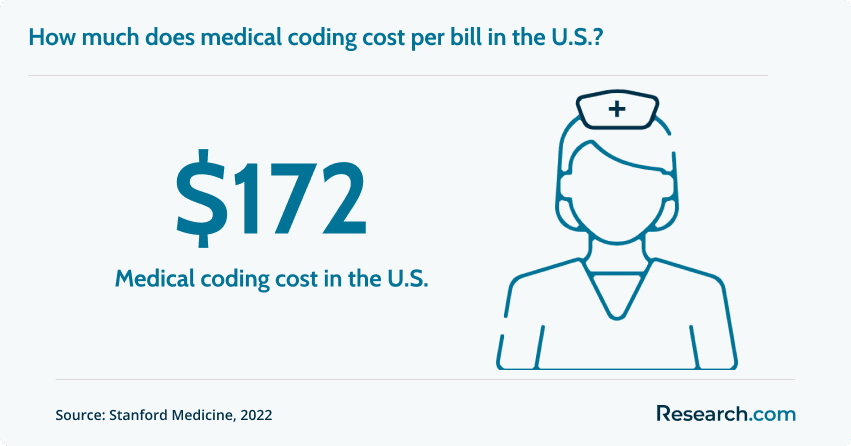
These skills are especially important because the cost of coding work is significant. In the U.S., each medical bill can cost approximately $172 to code, which shows why inaccurate coding can create financial and compliance pressure for healthcare organizations. Skilled auditors help reduce avoidable rework, denials, and risk.
How do you become a certified medical coding auditor?
To become a certified medical coding auditor, most professionals first build experience as a medical coder, then pursue a specialized auditing credential. The Certified Professional Medical Auditor (CPMA) credential from the AAPC is one of the most recognized certifications for this career path.
Certification is not just a resume credential. It signals that you understand audit methodology, documentation standards, coding compliance, risk areas, and how to communicate findings. Employers may still require hands-on coding experience because audit work depends on practical judgment.
Students comparing different academic options—such as the best online anthropology degree programs—should note that medical coding auditing is a narrower, career-specific healthcare route focused on compliance, documentation, and revenue integrity.
Typical path to certification
- Complete relevant education. Start with a certificate, diploma, associate degree, or related program in medical coding, health information management, or healthcare administration.
- Learn the major coding systems. Build fluency in ICD-10-CM, CPT, and HCPCS, along with payer guidelines and documentation rules.
- Gain coding experience. Many professionals work for at least two years as medical coders before moving into auditing so they can understand common claim, documentation, and workflow problems.
- Prepare for the CPMA exam. AAPC exam preparation may be completed online or in person, often taking a few months depending on the learner’s background.
- Pass the certification exam. Earning the CPMA can strengthen credibility for audit, compliance, revenue cycle, and quality roles.
- Maintain certification. Certified professionals must complete continuing education units (CEUs) annually to stay current with coding and compliance changes.
A common mistake is trying to move into auditing without enough coding exposure. Certification helps, but employers often want proof that you can review complex records, defend findings, and communicate with coders, providers, and billing teams.
How much do medical coding auditors earn in 2027?
In 2027, medical coding auditors earn a median annual salary of around $75,000. Entry-level auditors may start closer to $55,000, while experienced and certified professionals can exceed $90,000 annually. Actual pay depends on experience, certification, employer type, specialty area, location, and whether the role is remote, hybrid, or onsite.
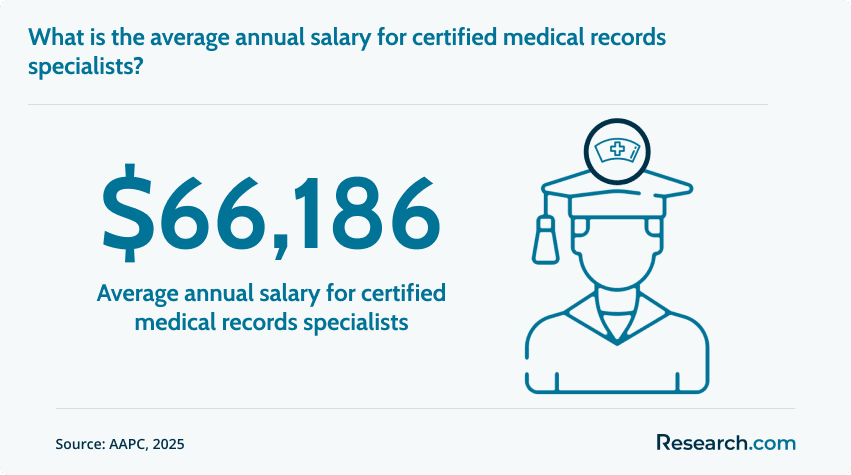
Auditing can offer a financial step up from general coding because it requires deeper compliance knowledge and the ability to evaluate other people’s work. For comparison, certified medical records specialists earn an average of $66,186 annually, highlighting the potential advantage of moving into auditing roles or adding specialized credentials.
Individuals researching broader academic pathways—such as the best online applied sciences degree programs—may find that medical coding and auditing offer a more specialized healthcare track with clear credentialing options.
Factors that influence pay
- Years of coding and auditing experience
- Credentials such as CPMA, CPC, or CCS
- Specialty expertise, such as inpatient coding, outpatient coding, risk adjustment, or professional fee auditing
- Employer type, including hospitals, insurers, consulting firms, and health systems
- Geographic region and cost of living
- Remote work eligibility, productivity expectations, and bonus structure
Large hospitals, insurance companies, and consulting firms may offer higher wages than smaller clinics because they often manage more complex claims, larger audit volumes, and greater compliance exposure. Salary prospects remain strong as healthcare organizations continue to invest in compliance, revenue integrity, and digital documentation systems.
What is the job outlook for medical coding auditors?
The job outlook for medical coding auditors is positive, with steady demand expected through 2030. Healthcare organizations need auditors because coding accuracy affects reimbursement, regulatory compliance, quality reporting, and payer relationships. According to projections from the U.S. Bureau of Labor Statistics, employment for medical records and health information specialists—including auditors—is expected to grow faster than average.
Demand is driven by several forces: an aging population, rising healthcare costs, more complex payer rules, digital health records, and continued regulatory oversight. For students exploring advanced healthcare pathways—such as the best online DNP adult-gerontology acute care NP programs—medical auditing represents a parallel career path centered on documentation quality, compliance, and organizational integrity rather than direct clinical practice.
Recent job-count trends show that hiring can fluctuate. In 2017 there were 1,287 medical auditor jobs, rising slightly to 1,315 in 2018, then jumping to 3,182 in 2019 before declining to 1,195 in 2020 and 1,138 in 2021. These changes may reflect shifts in staffing priorities, regulatory activity, outsourcing, and organizational demand.
Industries that hire medical coding auditors
- Hospitals and large healthcare systems
- Insurance companies and managed care organizations
- Medical billing companies and revenue cycle vendors
- Healthcare consulting and auditing firms
- Government and regulatory agencies
- Specialty practices with high documentation or reimbursement complexity
Auditors with current credentials, strong EHR skills, and experience in high-risk coding areas are likely to be more competitive. Remote and hybrid opportunities also make the field attractive, although employers may still require proven experience before allowing fully remote audit work.
How is technology transforming medical coding auditing?
Technology is changing medical coding auditing by making record review faster, more data-driven, and more consistent. EHR systems, coding software, audit dashboards, and analytics tools can flag unusual patterns, missing documentation, and potential claim errors before they become larger compliance or reimbursement problems.
AI and machine learning tools can help auditors scan large claim sets, identify anomalies, compare coding patterns across providers, and prioritize high-risk records for review. These tools are useful, but they do not replace human judgment. Auditors still need to interpret documentation, evaluate payer rules, and decide whether a code is actually supported.
Professionals exploring broader leadership pathways—such as those found in the best online graduate certificate nurse administrator programs—may benefit from understanding how these technologies affect healthcare compliance, revenue cycle management, and administrative decision-making.
Technologies shaping the field
- AI-assisted audit tools that scan claims for potential coding errors, outliers, and fraud indicators
- Electronic Health Records (EHR) systems that centralize documentation and make chart review more accessible
- Data analytics platforms that help auditors track denial trends, provider patterns, and corrective action results
- Computer-assisted coding tools that suggest codes but still require professional validation
- Remote audit platforms that support distributed compliance and revenue cycle teams
The best career strategy is not to compete with automation, but to learn how to supervise it. Auditors who can validate AI-generated flags, explain findings to stakeholders, and use data to prevent repeat errors will be better positioned as healthcare organizations adopt more advanced tools.
What are the challenges and ethical issues in medical coding auditing?
Medical coding auditing can be demanding because auditors work at the intersection of clinical documentation, revenue, payer rules, and compliance. A single audit may involve tight deadlines, incomplete records, conflicting interpretations, and pressure from departments affected by the findings.
The biggest ethical responsibility is objectivity. Auditors must report findings accurately even when the results could reduce reimbursement, require repayment, or create tension with providers or coding teams. They also must protect patient confidentiality and handle health information in accordance with HIPAA requirements.
Common challenges
- Keeping up with frequent coding, payer, and documentation guideline changes
- Reviewing large volumes of records without sacrificing accuracy
- Distinguishing between documentation gaps, coding mistakes, and legitimate clinical variation
- Communicating findings in a way that is clear, fair, and actionable
- Maintaining neutrality when audit results affect revenue or performance metrics
- Protecting patient confidentiality under HIPAA
Ethical risks to avoid
- Changing audit conclusions to satisfy productivity or revenue goals
- Ignoring unsupported codes because they increase reimbursement
- Failing to disclose repeat patterns that indicate compliance risk
- Sharing patient or provider information outside approved channels
- Using audit data to blame individuals instead of improving systems
Auditors come from a range of educational backgrounds, which can help teams approach problems from multiple angles. Health care administration degrees account for 21% of auditors, nursing 20%, business 17%, medicine 6%, and other majors 36%. This mix of backgrounds supports the analytical, clinical, operational, and ethical judgment required in the role.
Where can medical coding auditors work?
Medical coding auditors can work anywhere healthcare claims, documentation, and compliance need review. Their employers range from hospitals and physician groups to insurance companies, government agencies, and consulting firms.
Common workplaces
- Hospitals and health systems: Auditors review inpatient, outpatient, emergency, and specialty service documentation to support compliance and revenue integrity.
- Private clinics and specialty practices: Auditors may focus on provider education, modifier use, payer denials, and documentation improvement.
- Health insurance and managed care organizations: Auditors review claims for payment accuracy, medical necessity, and policy compliance.
- Government agencies such as Medicare and Medicaid offices: Auditors may support program integrity, claim review, and regulatory oversight.
- Consulting and auditing firms: Auditors may work with multiple clients, conduct external reviews, and advise organizations on corrective action.
- Medical billing and revenue cycle companies: Auditors help improve claim quality, reduce denials, and monitor coding performance.
Remote and hybrid work are common advantages in this field because many audits can be completed through secure EHR and billing systems. However, fully remote roles may require prior experience, strong productivity, and the ability to work independently with minimal supervision.
What career paths can medical coding auditors pursue next?
Medical coding auditors can move into advanced roles in compliance, revenue cycle management, health information leadership, education, or consulting. The best next step depends on whether the auditor wants to manage people, specialize technically, advise organizations, or move into broader healthcare administration.
Potential advancement paths
- Compliance officer or healthcare auditor: Focuses on regulatory risk, internal investigations, and organization-wide compliance programs.
- Health information manager: Oversees health records, documentation quality, coding operations, privacy, and data integrity.
- Coding supervisor or trainer: Manages coding teams, provides education, and improves coding quality.
- Revenue cycle manager: Oversees billing, denials, reimbursement, coding, and claims workflows.
- Independent consultant or educator: Advises healthcare organizations, trains coders and providers, or prepares professionals for certification.
Advanced certifications such as Certified in Healthcare Compliance (CHC) or Registered Health Information Administrator (RHIA) can expand options, especially for auditors who want leadership, compliance, or health information management roles. Continuing education is essential because coding and payer rules change regularly.
The profession’s demographics show that White auditors make up 60.2% of the workforce, followed by Hispanic or Latino 17.3%, Asian 8.7%, Black or African American 8.4%, Unknown 4.2%, and American Indian and Alaska Native 1.2%. As auditors advance into leadership and training roles, inclusive hiring, mentoring, and professional development practices can help strengthen the field.
How can students and professionals start a career in medical coding auditing?
The most practical way to start a career in medical coding auditing is to build coding competence first, then add audit training and certification. Employers want auditors who can identify errors, explain rules, and recommend realistic corrective actions—not just pass an exam.
Step-by-step starting plan
- Choose a relevant education path. Look for an accredited medical coding, billing, health information management, or healthcare administration program that covers coding systems, reimbursement, compliance, and medical terminology. Students comparing costs may also want to review options for the cheapest accounting degree online if they are considering a broader finance or revenue-focused healthcare career path.
- Learn the coding fundamentals. Focus on ICD-10-CM, CPT, HCPCS, anatomy, physiology, medical terminology, and payer documentation requirements.
- Gain hands-on coding experience. Entry-level coding, billing, records, or revenue cycle roles can help you understand how claims move through the system.
- Earn a coding credential. Credentials such as CPC can help demonstrate coding readiness before moving into audit-specific roles.
- Pursue audit certification. After building coding experience, prepare for the CPMA or another relevant credential aligned with your career goals.
- Build a professional network. Associations such as AAPC or AHIMA can provide continuing education, job leads, exam preparation, and industry updates.
- Keep a portfolio of results. Track examples of coding accuracy improvements, denial reductions, training contributions, or audit projects when possible.
Career changers should be realistic about timing. Auditing is usually not the first job in the field; it is often a next step after coding, billing, claims review, or health information work. The fastest path is to gain focused experience, earn respected credentials, and learn how to communicate findings professionally.
Here’s What Graduates Have to Say about Becoming a Medical Coding Auditor
- : "Becoming a medical coding auditor completely changed my career path. I like that the work is analytical but still connected to patient care, because every accurate audit helps improve billing quality and documentation. Remote flexibility has also made the role easier to balance with family responsibilities. — Lena"
- : "Moving from general coding into auditing was the best professional decision I have made. The role pushes me to think critically, stay current with healthcare regulations, and understand how coding decisions affect the entire revenue cycle. — Marcus"
- : "What I enjoy most about medical coding auditing is the constant learning. Each case is different, and it is rewarding to know that accurate audit work can help protect healthcare providers from costly mistakes and compliance problems. — Wallace"
Key Findings
- Medical coding auditors review clinical documentation and coded claims to identify errors, compliance risks, and reimbursement issues.
- The role is best suited for professionals with strong coding knowledge, attention to detail, ethical judgment, and clear communication skills.
- The CPMA credential from the AAPC is one of the most recognized certifications for medical coding auditors.
- In 2027, medical coding auditors earn a median annual salary of around $75,000, with entry-level auditors closer to $55,000 and experienced certified professionals able to exceed $90,000 annually.
- Technology is improving audit speed and pattern detection, but human auditors remain essential for interpreting documentation and applying compliance judgment.
- Career opportunities exist in hospitals, clinics, insurance companies, consulting firms, billing companies, and government agencies.
- The strongest starting path is education in coding or health information management, hands-on coding experience, professional certification, and ongoing continuing education.
References
- AAPC. (2025). Medical coding salary survey. https://www.aapc.com/resources/medical-coding-salary-survey?srsltid=AfmBOoottg9ghZM4RnjJt9a2NBSC_3_HST_2oSMfjif5XM0Kvgkfm49Y
- Flynn, L. (2022, August 23). Stanford‑led study points to ways to cut U.S. health care billing costs. Stanford Medicine. https://med.stanford.edu/news/all-news/2022/08/study-lower-us-billing-costs.html
- Zippia. (2025). Job outlook for medical auditors in the United States. https://www.zippia.com/medical-auditor-jobs/trends/
- Zippia. (2025). Medical auditor education and degree requirements. https://www.zippia.com/medical-auditor-jobs/education/


