
2027 What Does an LADC Do: Responsibilities, Requirements, and Salary

Co-Founder and Chief Data Scientist
Becoming a Licensed Alcohol and Drug Counselor (LADC) is a career decision that combines clinical training, state regulation, and daily work with people facing substance use disorders. It can be deeply meaningful, but it is not a simple “helping profession” path: requirements vary by state, supervised experience can take time, and the work often involves crisis support, documentation, relapse prevention, and coordination with healthcare and social service teams.
The demand is clear. In 2024, over 3.5 million people in the United States aged 26 years and older received treatment for alcohol use (Statista, 2024). For students, career changers, social workers, and behavioral health professionals, that demand creates real opportunity—but only if you choose the right education route, understand licensure rules early, and prepare for the realities of the job.
This guide explains what LADCs do, what education and licensing may be required, which skills matter most, where the career can lead, how salary varies, and what challenges to expect before committing to this field.
What are the benefits of becoming a Licensed Alcohol and Drug Counselor?
- Employment for substance abuse, behavioral disorder, and mental health counselors is projected to grow 17% from 2024 to 2034, providing excellent job security (U.S. Bureau of Labor Statistics [BLS], 2024).
- The median annual wage for professionals in this field is $59,190, with opportunities for higher earnings in hospitals and private practice (BLS, 2024).
- LADCs make a lasting impact by helping individuals recover from addiction and improve their overall quality of life.
What are the job responsibilities of a Licensed Alcohol and Drug Counselor?
A Licensed Alcohol and Drug Counselor helps people assess, understand, and manage substance use disorders through counseling, treatment planning, relapse prevention, education, and coordinated care. The exact scope of practice depends on state law, license level, employer policy, and the counselor’s education, but the core purpose is consistent: support recovery while protecting client safety and dignity.
In day-to-day practice, LADCs often begin with an intake assessment. This may include a client’s substance use history, physical and mental health concerns, family and social environment, prior treatment, legal issues, relapse triggers, and readiness for change. In some settings, LADCs contribute to diagnosis or clinical impressions; in others, diagnosis may be completed or reviewed by another licensed clinician.
Common responsibilities include:
- Assessment and screening. LADCs evaluate substance use patterns, recovery barriers, co-occurring mental health concerns, risk factors, and client strengths.
- Treatment planning. They create practical, measurable plans that may include counseling goals, relapse prevention strategies, referrals, family involvement, and aftercare supports.
- Individual counseling. Counselors help clients identify triggers, build coping skills, strengthen motivation, repair relationships, and work through setbacks.
- Group counseling and psychoeducation. Many LADCs facilitate recovery groups, skills groups, family education sessions, or structured substance use education programs.
- Crisis response and safety planning. They may respond to relapse risk, withdrawal concerns, suicidal ideation, domestic instability, or other urgent behavioral health needs according to agency protocol.
- Care coordination. LADCs often work with physicians, psychiatrists, social workers, case managers, probation officers, family members, and community organizations.
- Documentation and compliance. Progress notes, treatment updates, discharge plans, consent forms, and outcome tracking are a major part of the job.
- Advocacy and referral. Counselors connect clients to housing, employment support, medical care, medication-assisted treatment, peer recovery programs, and other resources when appropriate.
The role requires both compassion and structure. A strong LADC does not simply offer encouragement; they use evidence-informed counseling methods, maintain boundaries, document carefully, and help clients take realistic next steps toward recovery.
What educational qualifications do you need to become an LADC?
The education needed to become an LADC depends heavily on the state where you plan to practice and the level of license or certification you are seeking. Some jurisdictions offer multiple credential levels, while others require specific degrees, supervised experience, and addiction-focused coursework before independent practice is allowed.
In general, aspiring LADCs should expect to study addiction counseling, psychology, social work, human services, or another closely related behavioral health field. Coursework commonly covers substance use assessment, counseling theories, ethics, human development, group counseling, treatment planning, crisis intervention, co-occurring disorders, and multicultural counseling.
A practical way to compare education routes is to look at the level of responsibility each pathway may support:
| Education route | How it may fit an LADC career | Key consideration |
| Certificate or associate-level preparation | May support entry-level addiction counseling credentials or technician roles in some states. | Often not enough for advanced clinical practice or supervisory roles. |
| Bachelor’s degree | Common preparation for addiction counseling, case management, and many supervised counseling roles. | State rules may still require extensive supervised experience and approved addiction-specific coursework. |
| Master’s degree | Often preferred or required for advanced counseling, clinical, supervisory, or dual-licensure pathways. | Program accreditation, internship quality, and state alignment matter before enrolling. |
| MSW or related graduate degree | Can be a strong foundation for addiction counseling, behavioral health leadership, and integrated care. | Graduates may need addiction-specific training or additional supervised hours depending on state rules. |
Many professionals with a Master of Social Work degree consider LADC work among the career options available with an MSW degree. Social work training in case management, advocacy, systems thinking, crisis support, and therapeutic intervention can transfer well to substance use counseling. MSW graduates may also be positioned for supervisory, clinical director, or policy-focused work in behavioral health organizations, depending on licensure and experience.
Before choosing a program, verify three things: whether the degree is accepted by your state licensing board, whether the curriculum includes the required addiction-specific content, and whether the program helps students secure practicum or internship hours. A degree that is respected academically may still create licensing problems if it does not match state requirements.
The labor data chart below highlights that substance abuse, behavioral disorder, and mental health counselors lead all graduate-level occupations in projected yearly openings, with 48,900 job openings expected between 2023 and 2033. It surpasses fields like law (35,600) and nursing (29,000). This suggests that graduate preparation in counseling or a related field can support entry into a high-demand workforce, especially for students who want a behavioral health career with strong public need.
What are the certification or licensing requirements to become a certified LADC?
LADC licensing is state-regulated, so there is no single national checklist that applies everywhere. Most licensing pathways combine approved education, addiction-specific coursework, supervised counseling experience, an examination, ethics training, a background check, and continuing education for renewal. The title “LADC” itself may also differ by state, with some jurisdictions using related titles such as CADC, LCDC, or substance abuse counselor.
National credentials can strengthen a counselor’s qualifications and may support portability or employer recognition, but they do not automatically replace state licensure. Candidates should treat national certification as a complement to—not a substitute for—their state board’s requirements.
NAADAC offers three major credentials that reflect progressively advanced levels of education and training:
- NCAC I (National Certified Addiction Counselor, Level I). This credential requires candidates to hold at least a high school diploma or GED, complete 6,000 hours of supervised counseling experience, and obtain 270 hours of approved addiction-specific education.
- NCAC II (National Certified Addiction Counselor, Level II). This certification requires candidates to possess a bachelor’s degree in addiction counseling or a related field, complete 6,000 hours of supervised experience, and finish 450 hours of specialized training.
- MAC (Master Addiction Counselor). This advanced certification requires candidates to earn a master’s degree or higher in a related field, complete 6,000 hours of supervised experience, and undertake 500 hours of advanced clinical education.
Because state licensure requirements differ, applicants should confirm details such as acceptable degree majors, required supervision credentials, direct client-contact rules, exam requirements, ethics coursework, renewal cycles, and whether telehealth practice is permitted. These supervised-practice rules are similar in purpose to BCBA fieldwork hour requirements: they help ensure that professionals gain structured, hands-on experience before practicing independently.
A common mistake is completing a degree first and checking licensure rules later. The safer approach is to review your state board’s requirements before enrolling, then choose courses, internships, and supervisors that clearly satisfy those rules.
What skills do you need to be a successful LADC?
A successful LADC needs more than a desire to help. Addiction counseling requires clinical judgment, emotional steadiness, strong communication, and the ability to support clients without taking over their choices. The best counselors combine empathy with accountability: they build trust while helping clients face patterns that may be painful, risky, or deeply ingrained.
Key skills include:
- Empathy and professional compassion. Clients are more likely to engage in treatment when they feel respected rather than judged. Compassion must be paired with boundaries so the counselor can remain effective and ethical.
- Active listening. LADCs must hear not only what clients say, but also ambivalence, fear, shame, motivation, and relapse warning signs.
- Clear communication. Counselors explain treatment goals, safety plans, relapse prevention strategies, referrals, and expectations in language clients and families can understand.
- Motivational skills. Many clients enter treatment uncertain or resistant. LADCs need techniques that strengthen readiness for change without coercion.
- Assessment and case formulation. Strong counselors identify substance use patterns, co-occurring concerns, environmental risks, protective factors, and appropriate levels of care.
- Crisis management. Addiction counseling may involve relapse, overdose risk, withdrawal concerns, domestic instability, self-harm risk, or urgent psychiatric symptoms. LADCs must know when to intervene, refer, or escalate care.
- Ethical judgment. Confidentiality, mandated reporting, dual relationships, informed consent, and documentation standards are central to safe practice.
- Cultural competence. Substance use, stigma, family expectations, access to treatment, and recovery supports can vary by culture, community, identity, and lived experience.
- Documentation and organization. Accurate records protect clients, support continuity of care, and help agencies meet legal and payer requirements.
- Self-awareness and resilience. Counselors must manage their own stress, biases, and emotional reactions so they can stay present and professional.
LADCs play an important role in addressing alcohol misuse through early intervention, individualized treatment, and long-term recovery planning. Based on the chart below, men account for 61.74% of those affected, followed by women at 35.57% and adolescents at 2.69%, showing that alcohol misuse affects multiple age and gender groups and requires flexible, client-centered care.
What are the potential career advancement paths for an LADC?
An LADC license can lead to more than one career path. Some counselors remain in direct practice and deepen their clinical expertise, while others move into supervision, program leadership, private practice, teaching, or specialized treatment roles. Advancement usually depends on experience, state scope-of-practice rules, graduate education, specialty credentials, and demonstrated leadership.
- Senior or supervisory counselor (LADC-S). Experienced LADCs may pursue a supervisory credential, often called LADC-S, that allows them to oversee counselors, review documentation, support ethical practice, and help trainees meet licensure requirements.
- Clinical director or program manager. Counselors with strong administrative and leadership skills may manage treatment programs, supervise multidisciplinary teams, monitor compliance, oversee budgets, and improve clinical quality.
- Private practice counselor. After meeting state requirements for independent practice, some LADCs provide outpatient counseling through private practice. This path can offer flexibility but also requires business skills, referral networks, billing knowledge, and risk management.
- Specialized addiction therapist. LADCs may focus on trauma-informed care, dual diagnosis treatment, family recovery, adolescent substance use, justice-involved clients, or medication-assisted treatment support.
- Educator or trainer. Experienced counselors may teach in colleges, workforce development programs, continuing education workshops, or agency-based training programs.
- Policy, prevention, or community health roles. Some LADCs move into prevention programming, grant-funded initiatives, public health education, or recovery advocacy.
Career growth is usually strongest for LADCs who plan their next credential early. For example, a counselor who wants to become a supervisor should track supervision qualifications before accepting a promotion, while someone aiming for private practice should verify whether their state requires a graduate degree or additional clinical license.
Are there opportunities for advanced or specialized training for LADCs?
Yes. Advanced and specialized training is one of the most practical ways for LADCs to improve client outcomes, qualify for higher-responsibility roles, and remain current in a field where treatment models and best practices continue to evolve. The right training depends on the population you serve and the settings where you want to work.
- Co-occurring disorders or dual diagnosis. This training prepares LADCs to support clients who have both substance use and mental health concerns, with emphasis on integrated treatment rather than treating each issue in isolation.
- Trauma-informed care. Trauma can shape substance use, relapse risk, trust, emotional regulation, and treatment engagement. Training helps counselors avoid retraumatization and build safety into the counseling process.
- Family and couples counseling. Substance use often affects family systems. Advanced training can help LADCs address enabling patterns, communication breakdowns, boundaries, and recovery support at home.
- Cognitive Behavioral Therapy (CBT) and Motivational Interviewing (MI). These evidence-based approaches help clients challenge harmful thought patterns, build coping strategies, and strengthen motivation for change.
- Medication-Assisted Treatment (MAT) integration. LADCs do not prescribe medication unless separately licensed to do so, but training helps them coordinate with medical providers and support clients using medication as part of recovery.
- Clinical supervision and leadership training. Counselors who want to become supervisors or program leaders need training in feedback, ethics, documentation review, staff development, and regulatory compliance.
- Cultural competency and diversity training. This helps counselors provide respectful, relevant care to clients whose experiences, identities, communities, and treatment barriers differ from their own.
- Ethics and legal updates. Because confidentiality, mandated reporting, telehealth, and documentation rules can affect daily practice, ethics training should be treated as essential rather than routine.
Like other behavioral health professionals, LADCs are typically expected to complete continuing education to maintain their licenses. For comparison, Board Certified Behavior Analysts must meet specific continuing education requirements for BCBA renewal, which help ensure professionals stay current with ethics and research. LADCs can use continuing education units focused on addiction science, ethics, co-occurring disorders, and emerging treatment methods to maintain competence and strengthen their practice.
The best training choice is not always the most impressive-sounding certificate. Choose education that matches your client population, is recognized by your licensing board or employer, and improves your ability to deliver safe, evidence-informed care.
What is the average salary for an LADC?
LADC salary varies by state, employer, education level, license level, experience, and work setting. Pay may also differ depending on whether the role is entry-level, independently licensed, supervisory, or tied to a specialized treatment program.
According to ZipRecruiter (2025), annual salaries for LADCs range from $33,000 to $84,500, with most professionals earning between $49,000 (25th percentile) and $69,000 (75th percentile). The top 10% of earners can make up to $78,500 per year across the country (ZipRecruiter, 2025).
The U.S. Bureau of Labor Statistics (BLS, 2024) reports that the median annual wage for substance abuse, behavioral disorder, and mental health counselors, a broader category that includes LADCs, was $59,190 as of May 2024.
The chart below shows that pay also varies by industry of employment. Counselors working in hospitals earn the highest median wage at $61,930, followed by offices of other health practitioners ($59,570) and outpatient centers ($58,200). Counselors in individual and family services earn about $57,080, while those in residential facilities earn the lowest at $49,610.
When evaluating salary, look beyond the base number. Benefits, supervision support, student loan repayment options, caseload size, evening or weekend expectations, documentation burden, and opportunities for advancement can significantly affect the value of a position.
What certifications or advanced degrees can boost an LADC’s career?
Certifications and advanced degrees can help LADCs move into higher-responsibility clinical, supervisory, leadership, or specialized roles. They can also strengthen credibility with employers and clients. However, the best credential depends on your state’s scope-of-practice rules and your long-term goal, not simply on the title of the certificate.
- Master’s in Clinical Mental Health Counseling or Psychology. An advanced counseling or psychology degree may help LADCs qualify for additional licensure, such as LPC or LMHC pathways, and expand their ability to provide mental health counseling alongside addiction services.
- Certified Clinical Supervisor (CCS). This credential can prepare experienced counselors to supervise, mentor, and evaluate addiction professionals, which is often important for supervisory positions.
- Certified Co-Occurring Disorders Professional (CCDP). This certification focuses on integrated treatment for clients with both substance use and mental health disorders.
- Certified Trauma Professional (CTP). This specialization helps LADCs understand and address the relationship between trauma, coping behavior, substance use, and recovery.
- Doctorate in Counseling, Psychology, or Social Work (PhD or DSW). Advanced doctoral study can support pathways into research, higher education, executive leadership, or advanced clinical scholarship.
- Certified Alcohol and Drug Counselor (CADC) reciprocity. For LADCs who plan to relocate, CADC or IC&RC-recognized credentials may help with credential review or portability, depending on state rules.
Some states specify that applicants must hold degrees from Council for Accreditation of Counseling and Related Educational Programs or CACREP-accredited programs, while others also recognize Master's in Psychology and Counseling Accreditation Council or MPCAC-accredited degrees. Understanding CACREP vs. MPCAC accreditation differences can help you choose a program that aligns with your licensing plans.
Before investing in a credential, ask four questions: Is it recognized by my licensing board? Does my employer value it? Will it expand my scope or qualify me for promotion? Does it match the clients I want to serve?
What is the job outlook for LADCs?
The job outlook for LADCs is strong because addiction treatment remains a major behavioral health need, and the workforce is not projected to fully meet demand. This does not mean every job will be high-paying or low-stress, but it does indicate that trained addiction counselors are likely to remain important across healthcare, social services, rehabilitation, and community-based settings.
According to the U.S. Health Resources and Services Administration (HRSA, 2024), employment for Addiction Counselors is projected to grow by 49% between 2024 and 2037. This projected growth reflects continued need for professionals who can provide substance use assessment, counseling, recovery planning, and coordinated behavioral health support.
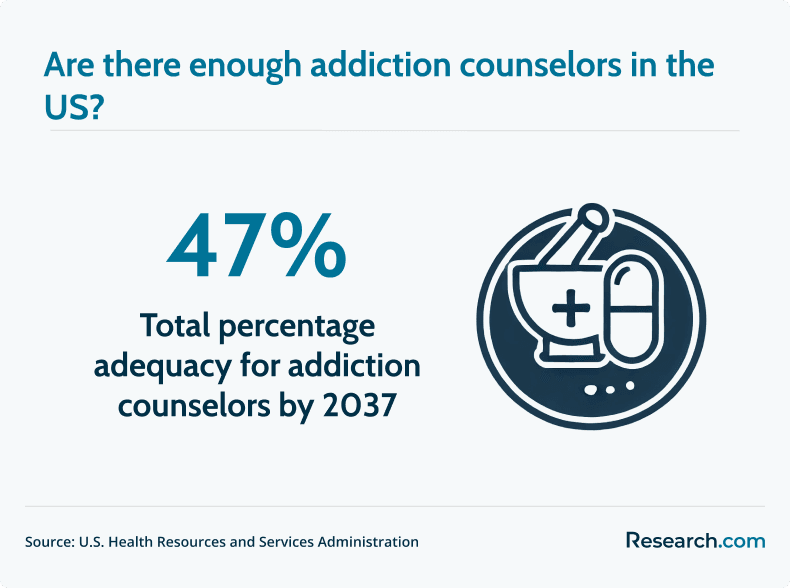
HRSA also reports that the total percent adequacy for addiction counselors by 2037 will be only 47% (HRSA, 2024). In practical terms, the projected workforce is expected to meet less than half of national demand. For students and career changers, that shortage may translate into more openings, especially in treatment centers, outpatient programs, hospitals, community health organizations, correctional or reentry programs, and integrated behavioral health settings.
The strongest candidates will likely be those who combine addiction counseling credentials with supervised experience, documentation skills, crisis readiness, cultural competence, and training in co-occurring disorders.
What are the biggest challenges LADCs face?
LADC work can be rewarding, but it is also emotionally and administratively demanding. Counselors may support clients through relapse, trauma, family conflict, legal pressure, housing instability, overdose risk, and co-occurring mental health concerns. As with career paths in MSN nursing education, the work can carry a heavy mix of professional responsibility, workforce pressure, and financial strain.
Based on data from the American Counseling Association’s Counseling Workforce Report (ACA, 2024), several challenges stand out:
- Increased demand and workload. Nearly 50%of counselors reported a surge in demand for their services in recent years, which has led to heavier caseloads and growing stress levels.
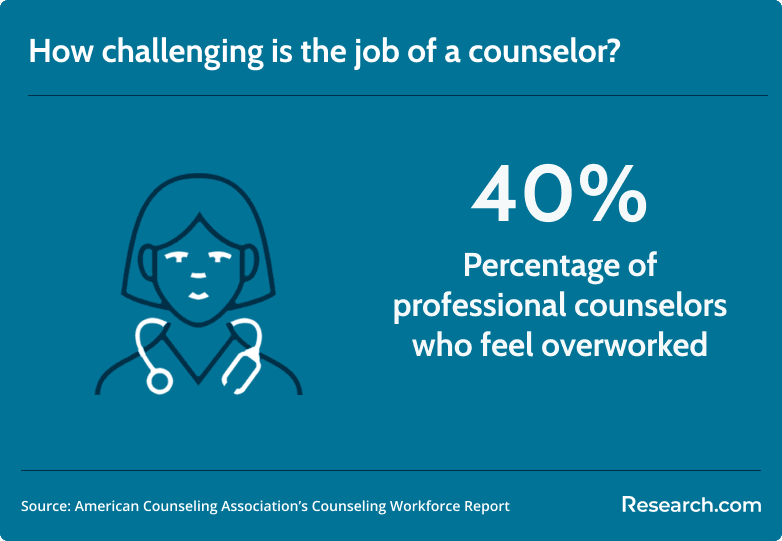
- Burnout and overwork. Around 40% of counselors said they feel overworked, and more than half identified the threat of burnout from managing high caseloads as a major concern. These pressures can affect both counselor effectiveness and personal mental health.
- High student loan debt. Over 50% of counselors report student loan debt, with amounts averaging 113% higher than the national average. Counselors from marginalized populations report the highest levels of educational debt, which adds financial strain to the profession.
- Low compensation and multiple jobs. About 34% of counselors hold a second job, most often to supplement their income. This indicates that many professionals in the field are not earning enough through counseling alone to meet their financial needs (ACA, 2024).
Other common challenges include documentation pressure, exposure to client trauma, ethical complexity, relapse-related frustration, limited resources, and navigating insurance or agency requirements. Prospective LADCs should evaluate employers carefully: manageable caseloads, quality supervision, crisis protocols, paid documentation time, and a healthy team culture can make a major difference in long-term sustainability.
What do LADCs Say About Their Careers
- Jessica: "Working as a licensed alcohol and drug counselor has shown me the power of resilience and recovery. Helping clients rebuild their lives and reconnect with their families is the most fulfilling part of my job. Every success story reminds me why I chose this path."
- Robert: "This career allows me to combine clinical skills with genuine human connection. I’ve learned that small moments of progress—like a client choosing sobriety for one more day—can mean everything. It’s challenging work, but incredibly meaningful."
- Elena: "As an addiction counselor, I’ve had the privilege of guiding people through some of their hardest battles. The field constantly teaches me about compassion, patience, and the human capacity for change. Seeing hope return to someone’s eyes never gets old."
Key Findings
- LADCs provide structured addiction counseling, not just general support. Their work may include assessment, treatment planning, individual and group counseling, relapse prevention, crisis response, referrals, and documentation.
- Education and licensure requirements vary by state. Students should verify degree, coursework, supervision, exam, and renewal rules before enrolling in a program.
- National credentials can strengthen a counselor’s profile. NAADAC credentials such as NCAC I, NCAC II, and MAC include defined education, training, and supervised experience requirements, but state licensure still controls legal practice.
- Demand is strong. HRSA projects Addiction Counselor employment to grow by 49% between 2024 and 2037, while total percent adequacy for addiction counselors by 2037 is projected at only 47%.
- Salary depends on role and setting. ZipRecruiter (2025) reports LADC salaries ranging from $33,000 to $84,500, while BLS (2024) reports a $59,190 median annual wage for substance abuse, behavioral disorder, and mental health counselors as of May 2024.
- Advancement is possible with the right planning. LADCs may move into supervision, clinical leadership, private practice, specialized treatment, education, or policy-related roles.
- The work can be emotionally demanding. Heavy caseloads, burnout risk, student loan debt, and compensation concerns are real challenges, so employer quality and self-care systems matter.
Other Things to Know About Licensed Alcohol and Drug Counselors
In 2027, Licensed Alcohol and Drug Counselors (LADCs) are responsible for assessing patients, developing treatment plans, and providing counseling for substance use disorders. Salaries vary by location and experience, averaging between $44,000 and $60,000 annually, with some potential for higher earnings based on advanced certifications and experience.
To become an LADC in 2027, you'll generally need a bachelor's degree in counseling, psychology, or a related field. Additionally, completing specific credentialing programs and supervised clinical hours dictated by state regulations is required to qualify for licensure.
In 2027, LADCs should focus on honing digital literacy skills, understanding telehealth platforms, and integrating technology into treatment plans. Additionally, expertise in culturally responsive care and trauma-informed approaches will be vital to adapting to diverse client needs and staying current in the profession.
References
- Bureau of Labor Statistics. (2024). Substance abuse, behavioral disorder, and mental health counselors. U.S. Department of Labor. https://www.bls.gov/ooh/community-and-social-service/substance-abuse-behavioral-disorder-and-mental-health-counselors.htm
- Bureau of Labor Statistics. (2024). Education level and openings, 2023–33. U.S. Department of Labor. https://www.bls.gov/careeroutlook/2024/article/education-level-and-openings-2023-33.htm
- Drug Abuse Statistics. (2024). Alcohol abuse statistics. https://drugabusestatistics.org/alcohol-abuse-statistics/
- Statista. (2024). People with alcohol use treatment in the U.S., by age group. https://www.statista.com/statistics/620295/people-with-alcohol-use-treatment-in-the-us-by-age-group/
- ZipRecruiter. (2024). LADC salary. https://www.ziprecruiter.com/Salaries/Ladc-Salary


