
2027 How to Become an Electrician in California

Co-Founder and Chief Data Scientist
Aspiring electricians in the state of California have decent potential in terms of income. Electricians in the Golden State had a 2023 median hourly wage that is higher than the 2024 median hourly wage for the role as well as those of all occupations in the state and across the United States (US), according to 2025 data from the US Bureau of Labor Statistics (BLS).
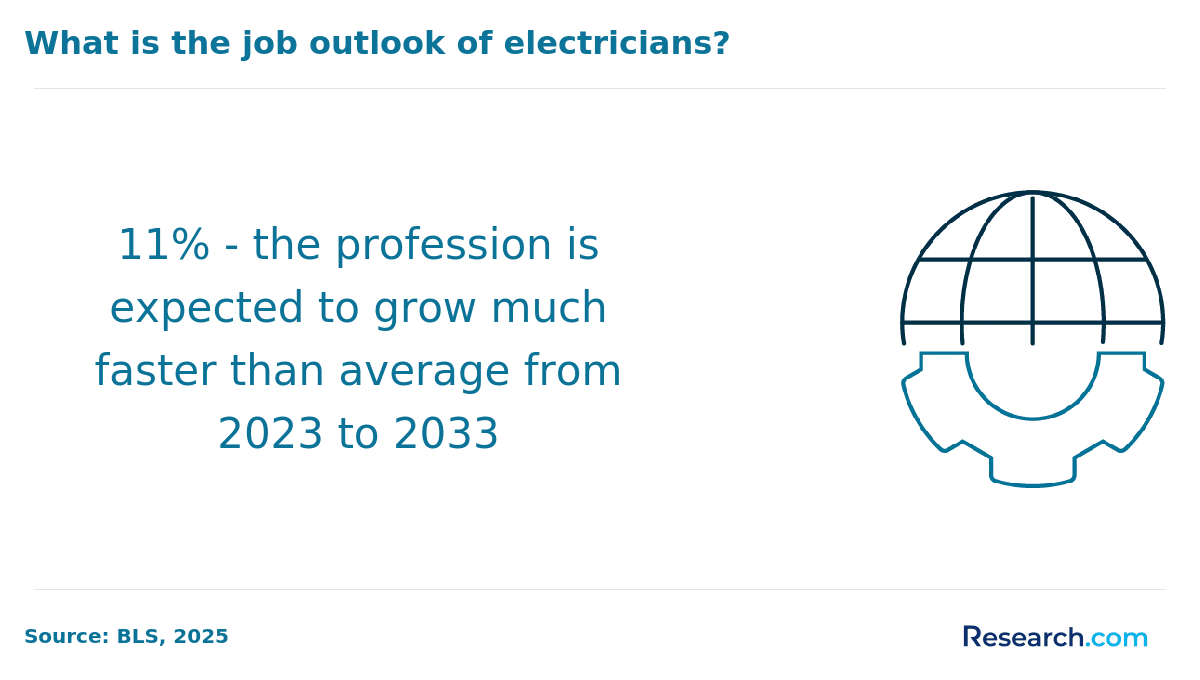
Moreover, electricians have a much faster job growth rate than the average for all US occupations between 2023 and 2033. Therefore, aspirants are looking at stable career opportunities in the state.
To help you get started on your career, I created an in-depth guide on how to become an electrician. Explore educational requirements, skill requirements, certification and licensure, salary potential, and career outlook.
Key Things to Know about Becoming an Electrician in California
- Electricians in California must complete an apprenticeship, which usually lasts between 4 and 5 years. It combines paid on-the-job training with classroom instruction.
- Between 2023 and 2033, employment for electricians in the US is expected to increase by 11%, which translates to an average of about 80,200 job openings annually over the decade (US BLS, 2025).
- Electricians in California had a 2024 median hourly wage of $36.80, which is much higher than the 2024 median hourly wages of all occupations in the Golden State ($27.38). It is also higher than the 2024 median hourly wage of electricians across the US ($29.98) (US BLS, 2025).
- Licensing is required of aspiring electricians in the Golden State. They must pass the California certification examination to work independently and ensure compliance with state electrical codes.
- What education is required to become an electrician in California?
- How do you get into an electrician apprenticeship program in California?
- How much do electricians make in California in 2027?
- What certifications do electricians need in California?
- How long does an electrician apprenticeship take?
- How much does electrician training cost?
- Can electricians expand their expertise by exploring HVAC opportunities?
- How are emerging technologies impacting electrician work in California?
- Can electricians benefit from business education to advance their careers in California?
- What license do you need to be an electrician?
- How often do you need to renew your electrician license?
- What are the essential skills needed to be a successful electrician?
- What is the job outlook for electricians over the next 10 years?
- What alternative career pathways can electricians pursue in California?
- What challenges do electricians face in California?
What education is required to become an electrician in California?
Becoming an electrician in California requires a structured combination of formal education and hands-on training. Aspiring electricians typically enroll in vocational programs or community colleges that offer specialized courses covering electrical theory, circuitry, blueprint reading, safety protocols, and the National Electrical Code (NEC). These courses form the essential foundation needed for understanding complex electrical systems and preparing for practical work environments.
Apprenticeships are a critical component of the training process, mandated by California law. These programs usually span four to five years and blend on-the-job training with classroom instruction. Apprentices must complete at least 8,000 hours of practical work experience alongside a minimum of 720 classroom hours. Sponsorship for apprenticeships commonly comes from unions, trade organizations, or electrical contractors, providing exposure to residential, commercial, and industrial electrical projects.
Among the top programs for electrician training in California are the State Center Community College District, Los Angeles Trade-Technical College, and the California Apprenticeship Coordinators Association. These institutions are well-regarded for their comprehensive curricula and close ties to the electrical industry, facilitating access to apprenticeships and employment opportunities. For example, Los Angeles Trade-Technical College offers an electrical training program that integrates practical labs with theory, specifically preparing students for the California Electrical Certification Exam.
To excel in licensing examinations, candidates should focus intently on mastering the NEC, electrical calculations, and safety standards. Utilizing review classes and attending seminars—such as those offered by the International Brotherhood of Electrical Workers (IBEW)—can significantly enhance exam preparedness. Additionally, engaging with local trade organizations provides valuable mentorship and current industry insights. Practice exam resources are also highly recommended to build confidence and identify knowledge gaps before the official test.
How do you get into an electrician apprenticeship program in California?
Several prominent organizations in California offer electrician apprenticeship programs, including the International Brotherhood of Electrical Workers (IBEW) Local 11 in Los Angeles, its Northern California chapter, and the California-Nevada Chapter of the National Electrical Contractors Association (NECA). These programs typically require applicants to be at least 18 years old, hold a high school diploma or GED, and successfully pass an aptitude test focusing on math and reading comprehension. Understanding how to apply for electrician apprenticeship California programs involves meeting these basic prerequisites and often engaging with local unions or trade organizations for guidance.
California’s apprenticeship requirements stand out due to their combination of extensive classroom instruction and on-the-job training. Apprentices must complete a minimum of 8,000 hours of supervised work experience alongside 720 hours of classroom education. This dual approach ensures apprentices gain both theoretical knowledge and practical skills. Additionally, the Contractors State License Board (CSLB) requires completion of this rigorous program before apprentices can advance to journeyman electrician status, reinforcing the state’s high standards for electrical professionals.
Participating in these apprenticeship programs delivers invaluable skill development, offering hands-on experience with electrical systems, safety protocols, and emerging technologies used in diverse settings. Apprentices also benefit from networking opportunities, connecting with experienced electricians, contractors, and industry leaders who can facilitate future career advancement. For those seeking to excel, supplemental resources such as review classes and seminars from organizations like the California Apprenticeship Coordinators Association (CACA) and local community colleges prove highly beneficial.
One electrician from California shared their personal journey through an apprenticeship program. They described the initial challenge of balancing demanding on-site work hours with evening classroom sessions but emphasized how this experience deepened their understanding of complex electrical codes and safety standards. The hands-on training exposed them to a wide range of installations, from residential wiring to commercial systems, accelerating their confidence and competence. They valued the strong mentorship from seasoned electricians, which not only refined their technical abilities but also helped them develop critical communication and time-management skills. This apprenticeship was instrumental in shaping their professional identity, making them aware of the evolving technologies in the field and the importance of continuous learning.
Aspiring electricians aiming to thrive in California’s competitive environment should embrace both the structured requirements and the wealth of educational resources available. Engaging actively in supplemental learning and networking can significantly enhance success in electrician apprenticeship programs in California. For those interested in understanding the broader context of skilled trades, consulting a list of high demand trades provides valuable insights into career prospects and industry growth.
How much do electricians make in California?
Electricians in California earn a competitive average annual salary of approximately $72,000, with monthly wages around $6,000. Entry-level electricians typically begin with salaries ranging from $40,000 to $50,000, reflecting their apprenticeship period where hands-on experience is crucial. As electricians progress, obtaining certifications and licenses, salaries increase notably. Mid-career professionals often earn between $60,000 and $80,000 annually, while highly experienced electricians or those in supervisory roles may exceed $90,000 per year.
The highest-paying locations for electricians in California include major urban centers such as San Francisco, San Jose, and Los Angeles. These cities offer wages 10% to 20% above the state average due to high living costs and robust construction sectors. In San Francisco particularly, electricians can earn between $85,000 and $95,000 annually, driven by extensive commercial and technological infrastructure projects.
Salary progression in California is closely linked to certifications and specialization. Electricians who pursue additional credentials, such as expertise in solar panel installation or industrial systems, often experience accelerated wage growth. Continuing education and apprenticeship programs through community colleges and trade schools enhance both skills and earning potential. For example, many aspiring electricians benefit from targeted training that complements exam preparation methods commonly used in related fields like medical billing and coding.
An electrician from California shared that early in their career, managing the balance between apprenticeship demands and personal growth was challenging but rewarding. They noted that the financial benefits were not immediate; however, as they obtained specialized certifications and worked on commercial projects, their compensation steadily improved. The electrician emphasized the value of networking within union groups and the importance of ongoing education to remain competitive. They reflected positively on the support systems available, including community colleges and trade associations, which helped navigate the complexities of wage negotiations and career advancement.
For those interested in advancing academically while working in California, pursuing anchors part-time Ph.D. in economics or related fields can broaden career opportunities and add valuable expertise within the state’s evolving labor market.
The chart below provides a visualization of the 2024 median annual wages for electricians in top industries in the US, according to 2025 data from the US BLS.
What certifications do electricians need in California?
To meet electrician certification requirements in California, individuals must first obtain the Electrician Trainee Certification from the California Division of Apprenticeship Standards (DAS). This credential authorizes apprentices to work legally under a licensed electrician’s supervision and is mandatory for enrollment in formal apprenticeship programs. These programs typically require a combination of 8,000 hours of hands-on work experience and at least 720 hours of classroom instruction, ensuring comprehensive training aligned with state standards.
Upon completing an apprenticeship, electricians can pursue the California Electrician Certification, a critical qualification regulated by the Division of Labor Standards Enforcement (DLSE). This certification includes classifications such as general electrician, residential electrician, and fire/life safety technician, each necessitating successful completion of both trade and law and business examinations. Holding this certification is essential for those aiming to become licensed contractors and enhances professional credibility and employment opportunities across the state.
For electricians seeking further specialization or career advancement, the Certified Electrical Inspector credential is highly recommended. Offered through organizations like the International Association of Electrical Inspectors (IAEI), this certification equips professionals to engage in code enforcement, compliance inspections, and safety evaluations, roles that are increasingly vital in California’s expanding urban and industrial environments.
Several institutions provide structured training programs tailored to these certifications. Noteworthy examples include California State University, Los Angeles, which offers an Electrical Construction and Maintenance program; Los Angeles Trade-Technical College, known for its robust apprenticeship and certification preparation courses; and the International Brotherhood of Electrical Workers (IBEW) Local 11, which integrates apprenticeship training with union-based work experience. These programs support electricians in meeting California licensed electrician qualifications efficiently and effectively.
Given California’s leadership in solar energy, electricians may also consider additional certifications in renewable energy systems, such as those provided by the North American Board of Certified Energy Practitioners (NABCEP). This specialized certification enhances employability in the renewable sector, which is rapidly growing within the state. For those exploring career pathways in technical trades, understanding what is the best automotive mechanic trade school program can offer comparative insights into vocational training frameworks.
How long does an electrician apprenticeship take in California?
In California, completing an electrician apprenticeship typically requires four to five years, encompassing roughly 8,000 hours of paid on-the-job training and 720 hours of classroom instruction. This duration aligns with the state’s electrician certification requirements and ensures apprentices acquire the comprehensive skills necessary for licensure. The exact length can vary based on the sponsoring organization, the apprentice’s prior experience, and the specific license sought, such as general electrician or specialized roles.
Some apprenticeship programs offer accelerated formats, allowing motivated individuals to finish in as little as three years. These fast-track options often come through union-affiliated programs or private electrical contractors with intensive schedules designed to accumulate hours more rapidly. However, such accelerated apprenticeships demand strong foundational knowledge and a significant time commitment to keep pace with the rigorous training and work requirements.
Factors influencing the apprenticeship duration include the apprenticeship provider’s structure—union programs tend to follow a fixed timeline, while non-union or private employers may offer more flexibility. Additionally, apprentices with prior electrical knowledge, technical schooling, or military training can progress faster, potentially shortening the time needed to obtain an electrician license in California. Local labor market conditions also affect opportunities to gain diverse work experience and hours.
To make the most of an apprenticeship and potentially accelerate completion, aspiring electricians should select reputable programs with strong industry ties and focus on certifications aligned with California’s requirements, such as the General Electrician Certification. Maximizing work hours, actively engaging in classroom instruction, and leveraging any prior experience can all contribute to a more efficient training period. For more insights on educational pathways, consider exploring the trade school vs vocational program differences.
How much does electrician training cost in California?
The cost to become an electrician in California varies widely depending on the educational path chosen. Generally, the electrician training cost in California ranges from approximately $5,000 to $20,000 or more. Certificate programs or apprenticeships at community colleges and trade schools typically fall between $5,000 and $10,000, focusing primarily on practical skills over one to two years. In contrast, associate degrees in electrical technology at community colleges usually cost between $10,000 and $20,000 and take about two years to complete. Private technical schools often charge higher tuition, sometimes exceeding these estimates.
Several factors influence the California electrician school tuition fees. The program’s duration is significant; longer training periods result in higher tuition and associated fees. Apprenticeships provide paid on-the-job training combined with classroom instruction, potentially reducing upfront costs, but require a commitment of four to five years to achieve full licensure. Additionally, apprentices and students must invest in personal tools, including hand tools, voltage testers, and wire strippers, adding roughly $1,000 to $2,000 to total expenses. Regional differences in tuition and living costs across California also impact affordability, with urban areas often being more expensive.
Financial aid plays a crucial role in making electrician training more accessible. Many institutions participate in federal aid programs such as Pell Grants and federal student loans. California offers state-specific assistance through grants like the Cal Grant, which can help eligible students reduce tuition costs. Apprenticeships usually provide wages during training, offsetting educational expenses. Furthermore, some unions and employer-sponsored programs offer scholarships or support for purchasing tools. Prospective students may also explore options at the best online vocational trade school to find additional financial aid opportunities.
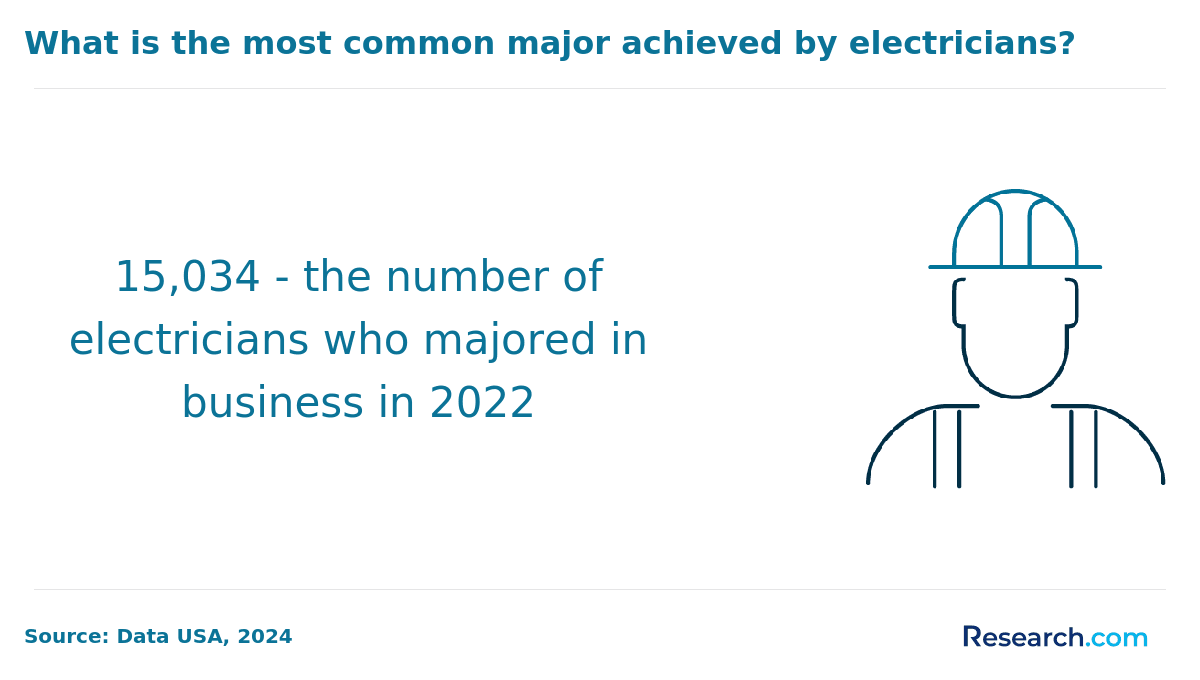
The chart below provides a visualization of the education attainment levels of electricians in the US, according to 2025 data from Zippia.
Can electricians expand their expertise by exploring HVAC opportunities?
Electricians who develop additional proficiency in related fields like HVAC can diversify their career prospects and enhance their adaptability in an evolving technological landscape. Integrating electrical systems with HVAC solutions is increasingly valuable in energy-efficient and smart infrastructure projects, where cross-disciplinary expertise promotes seamless troubleshooting and innovative system designs. For guidance on diversifying your technical skills, consider exploring resources on how to become an HVAC technician in California, which provides detailed pathways, certification requirements, and training options tailored to achieving proficiency in HVAC systems.
How are emerging technologies impacting electrician work in California?
Emerging technologies, including smart grid integration, advanced energy storage, and solar panel systems, are fundamentally altering the operational landscape for electricians in California. Practitioners are required to update their technical knowledge and use digital diagnostic tools that enhance system monitoring, predictive maintenance, and safety compliance. This evolution has led to specialized training programs focusing on automation and energy management solutions, ensuring that professionals remain aligned with both regulatory standards and industry innovations. For parallel career insights, consider exploring how to become a mechanic in California.
Can electricians benefit from business education to advance their careers in California?
Electricians who excel in technical fields can further broaden their career opportunities by acquiring business acumen. Integrating management skills, financial planning, and strategic marketing into their professional toolkit not only prepares them to oversee larger projects but also paves the way for entrepreneurial ventures and supervisory roles. This fusion of technical expertise with business education drives innovation and operational efficiency in competitive markets. For more insights on cultivating these skills, explore our guide on the top business schools in California.
What license do you need to be an electrician in California?
In California, becoming a licensed electrician requires obtaining specific certifications issued by two primary governing bodies: the California Contractors State License Board (CSLB) and the California Department of Industrial Relations, Division of Apprenticeship Standards. The most relevant credentials for electricians include the General Electrician (C-10) contractor license and the Journeyman Electrician certification. These licenses verify that an individual possesses the necessary safety knowledge, technical expertise, and practical experience to work legally and competently within the state.
The licensure process in California involves several essential steps:
- Education and Training: Candidates must complete a formal apprenticeship program combining classroom instruction with on-the-job training, with a minimum of four years (8,000 hours) of documented work experience under a licensed electrician or contractor.
- Examination: Applicants must pass a rigorous exam that assesses electrical theory, the National Electrical Code (NEC), California Electrical Code, safety standards, and business practices.
- Application and Background Check: Submission of an application to the appropriate licensing authority, accompanied by proof of education and experience, followed by a background check to ensure eligibility.
- License Issuance: Successful candidates receive their license or certification, enabling them to legally perform electrical work in California.
Key requirements include being at least 18 years old, providing proof of legal residency or citizenship, completing a recognized apprenticeship or equivalent experience, passing the licensing exam, and for contractor licenses, demonstrating financial solvency and securing a contractor’s bond.
California’s licensure system is distinguished by its dual oversight: the CSLB manages contractor licenses and renewals, while the Division of Apprenticeship Standards oversees apprenticeship programs and journeyman certifications. The state also mandates strict documentation of work hours—often notarized—and requires electricians to complete continuing education every two years focused on code updates and safety practices.
To navigate the licensure and renewal process effectively, aspiring electricians should maintain precise records of work hours and tasks, thoroughly prepare for exams using the latest electrical codes, engage in continuing education well before license expiration, seek mentorship within the industry, and stay informed about regulatory changes. These strategies help ensure compliance and smooth progression through California’s rigorous licensure requirements.
How often do you need to renew your electrician license in California?
Renewing an electrician license in California is a mandatory triennial process governed by the Contractors State License Board (CSLB), ensuring professionals remain compliant with evolving industry standards. The renewal must be completed before the license expiration date to maintain the legal ability to work within the state.
The key requirements for license renewal include:
- Submission of a renewal application to the CSLB in a timely manner.
- Payment of the renewal fee, which varies according to the electrician’s license classification.
- Completion of 32 hours of continuing education (CE) courses approved by the CSLB every renewal cycle.
- Providing proof of compliance with additional state mandates such as updated bonding or insurance documentation.
California’s renewal process is distinguished by its emphasis on continuing education. Electricians must complete coursework that covers the latest electrical code updates, safety protocols, and occasionally business management topics. This ongoing education ensures that licensees stay informed about new technologies and regulatory changes, critical in a state known for stringent and frequently updated electrical standards.
The CSLB works in conjunction with the California Department of Industrial Relations and the Division of Apprenticeship Standards to regulate and enforce licensure requirements. These agencies collectively oversee examinations, enforce disciplinary actions, and maintain industry standards to protect public safety and promote professional competence.
To navigate the renewal process efficiently, electricians are advised to maintain organized records of their continuing education credits and set reminders well before their license expiration date. Choosing accredited educational providers that offer flexible course options can also facilitate meeting CE requirements without disrupting work schedules.
Given California’s large construction workforce, with electricians forming a significant segment, adhering to these renewal requirements is essential for sustaining professional credentials and career advancement within a competitive market.
What are the essential skills needed to be a successful electrician in California?
Electricians in California must cultivate a diverse set of skills that encompass both technical expertise and interpersonal abilities to excel in a competitive industry.
- Technical proficiency: A thorough understanding of electrical systems, wiring, and circuitry forms the foundation of an electrician’s capabilities. Mastery of modern tools like digital multimeters and conduit benders is essential for effective and safe work.
- Technological adaptability: The increasing integration of smart technologies, including home automation and solar energy systems, requires electricians to stay current with emerging innovations and relevant software applications.
- Problem-solving skills: The capacity to quickly diagnose and resolve wiring or system issues ensures high-quality outcomes and adherence to safety standards.
- Physical dexterity and stamina: Electricians often work in physically demanding environments, requiring endurance and the ability to operate in confined spaces or at elevated heights.
- Communication skills: Clear dialogue with clients and team members minimizes errors and facilitates smooth project execution. Translating technical jargon into understandable language is a valuable asset.
- Attention to detail: Precision in following blueprints and compliance with safety codes prevents costly errors and hazards on the job.
- Time management: Balancing multiple projects and meeting deadlines efficiently is critical for productivity and client satisfaction.
To develop these competencies, prospective electricians should consider enrolling in apprenticeship programs accredited by the California Division of Apprenticeship Standards, which provide a blend of practical experience and classroom education.
Community colleges such as Los Angeles Trade-Technical College and Cypress College offer specialized courses that enhance both theoretical understanding and hands-on skills.
Additionally, participation in workshops and certification programs through organizations like the Independent Electrical Contractors (IEC) California Chapter helps maintain up-to-date expertise, particularly in emerging fields like renewable energy.
Continuous professional development and embracing technological advances are vital for electricians seeking to thrive in California’s expanding construction market.
What is the job outlook for electricians over the next 10 years in California?
The job outlook for electricians in California over the next decade remains robust, supported by steady demand across multiple industries and ongoing infrastructure investments. Data from the U.S. Bureau of Labor Statistics (BLS) updated in 2023 projects an 8% growth in electrician employment from 2023 to 2033, which aligns with the national average for all occupations. This growth is driven by California’s expanding construction sector, advances in technology, and the increasing installation of renewable energy systems that require specialized electrical expertise.
Employment opportunities for electricians are most concentrated in metropolitan areas such as Los Angeles, San Francisco, and San Diego. These urban centers have vibrant construction markets, including residential, commercial, and industrial projects. In 2023, Los Angeles employed the largest number of electricians in the state, followed by San Diego and San Jose. This urban concentration highlights where job seekers are most likely to find work within the state.
The majority of electrician jobs in California are found in the construction industry, which accounts for nearly 60% of employment in this field. Other significant sectors include manufacturing, utilities, and specialty trade contractors. Growth in residential and commercial construction, combined with public infrastructure upgrades, sustains demand for skilled electricians. Additionally, California’s aggressive clean energy policies—such as solar panel expansion and electric vehicle charging infrastructure—are creating niche markets for electricians with renewable energy certifications and experience.
Wages for electricians in California are higher than the national average, reflecting the state’s elevated cost of living. As of 2023, the mean annual wage for electricians stood at approximately $77,000, with experienced professionals earning more than $100,000. However, prospective electricians should consider that housing and living expenses in California, especially in major cities, are significantly above the national average. Achieving a comfortable standard of living depends on factors including experience, geographic location, and industry specialization.
What alternative career pathways can electricians pursue in California?
Electricians looking to broaden their professional horizons can explore diverse technical fields beyond traditional electrical work. Specializing in innovative areas—such as building automation, advanced renewable energy systems, or consulting on smart technology integration—can elevate career prospects and income potential. Moreover, some professionals consider transitioning into allied technical careers that leverage their problem-solving skills and technical precision. For instance, exploring opportunities in healthcare technology is an option for those interested in expanding their expertise; learn more about how to become a radiology technician in California. Such diversification not only reinforces long-term job stability but also enriches practical experience by integrating cross-disciplinary knowledge essential for success in California’s evolving industry landscape.
What challenges do electricians face in California?
Electricians in California must navigate evolving regulatory frameworks, frequent code updates, and increasing demands for specialized technical proficiency. They encounter challenges in balancing on-the-job safety with the pressures to adopt emerging technologies and adapt to stringent compliance standards. Additionally, high living costs in urban centers and the physically demanding nature of the work require continuous investment in both personal well-being and professional development. As the industry evolves, some professionals also consider diversifying their skill sets by exploring complementary technical roles, such as how to become an ultrasound technician in California, to broaden career opportunities and mitigate sector-specific risks.
What Electricians in California Say about Their Careers
- “Completing my apprenticeship through the California Electrical Training Institute was a game changer. The hands-on experience combined with classroom learning gave me the confidence to tackle any project. I love that my work directly improves people’s homes and businesses while keeping safety a top priority. This career has not only provided financial stability but also a deep sense of pride in contributing to my community’s well-being.” —Ruben
- “Attending San Diego State University’s electrical program opened doors I never imagined. The unique challenges of working in California's diverse climate and seismic zones keep every job interesting and push me to continually improve my skills. I appreciate how this career allows me to grow professionally while being part of a larger effort to advance sustainable energy solutions across the state. It’s rewarding to combine my passion for technology with real-world impact.” —Eugene
- “After graduating from Los Angeles Trade-Technical College, I found that being an electrician here means more than just wiring buildings—it’s about adapting to California’s fast-paced, innovative environment. The opportunities for career advancement are incredible, especially with the state’s focus on green energy and smart home technologies. This path challenges me daily and fuels my love of learning new systems and techniques. I’m proud to be part of a profession that evolves alongside California’s cutting-edge industries.” —James
Related Articles for Nearby States
- 2027 How to Become an Electrician in Nevada
- 2027 How to Become an Electrician in Oregon
- 2027 How to Become an Electrician in Arizona
- 2027 How to Become an Electrician in Idaho
- 2027 How to Become an Electrician in Utah
- 2027 How to Become an Electrician in Washington
- 2027 How to Become an Electrician in New Mexico
- 2027 How to Become an Electrician in Colorado
- 2027 How to Become an Electrician in Montana
- 2027 How to Become an Electrician in Wyoming
References:
- Ashworth College. (2025). Career Diploma Residential Electrician. https://www.ashworthcollege.edu/career-diplomas/electrician-training/tuition
- Calonia, J. (2025, January 08). Paying for Electrician School and How Much It Costs. SoFi. https://www.sofi.com/learn/content/electrician-school-cost
- Field Complete. (n.d.). What Is Electrician School Cost? A Complete Breakdown of Tuition and Fees. https://fieldcomplete.com/blog/uncategorized/what-is-electrician-school-cost-a-complete-breakdown-of-tuition-and-fees
- Huckleberry Insurance. (n.d.). How to become an electrician in California in 8 steps. https://huckleberry.com/blog/how-to-become-an-electrician-in-california
- Independent Electrical Contractors. (2022, February 11). How Much Does It Cost To Become An Electrician? https://www.iec-cincy.com/how-much-does-it-cost-to-become-an-electrician
- InterCoast Colleges. (n.d.). How to Become an Electrician: 5 Easy To Follow Steps. https://intercoast.edu/articles/become-an-electrician
- Learn with RSI. (n.d.). How Much is Electrician Trade School? https://www.rsi.edu/blog/skilled-trades/how-much-is-electrician-trade-school
- Outsource. (n.d.). How Much Will It Cost to Become an Electrician? https://outsource.net/how-much-will-it-cost-to-become-an-electrician
- State of California Department of Industrial Relations. (n.d.). General electrician. https://www.dir.ca.gov/dlse/ecu/1a.html
- Tradeskills4u.co.uk. (n.d.). Electrician Courses & Training. https://www.tradeskills4u.co.uk/electrical-courses
- US Bureau of Labor Statistics. (2025, April 18). Electricians. Occupational Outlook Handbook. https://www.bls.gov/ooh/construction-and-extraction/electricians.htm
- US Bureau of Labor Statistics. (2024, April 03). May 2023 State Occupational Employment and Wage Estimates, California. Occupational Employment and Wage Statistics. https://www.bls.gov/oes/2023/may/oes_ca.htm
- US Bureau of Labor Statistics. (2025, May 20). Occupational Employment and Wage Statistics, Area: California. Occupational Employment and Wage Statistics Query System. https://data.bls.gov/oes/#/area/0600000
- Zippia Team. (2025, January 08). Electrician Education Requirements. Zippia. https://www.zippia.com/electrician-jobs/education
Other Things You Should Know About Becoming an Electrician in California
To become a licensed electrician in California in 2027, start with a high school diploma, complete a state-approved apprenticeship, and accumulate 8,000 hours of work experience. Then, pass the California State Certification Exam to obtain your license. Continuing education is also required to maintain certification.
To become an electrician in California in 2027, you need to complete a high school diploma or GED. Then, enroll in an electrical training program and secure an apprenticeship to gain practical experience needed for licensure.
In California, electrician certification requires at least 8,000 hours of on-the-job training over four years. This experience must be supervised by a certified journeyman electrician and verified by your employer to qualify for certification exams in 2027.


