
2027 How to Become an Electrician in Nebraska

Co-Founder and Chief Data Scientist
Over 6,200 electricians are currently employed across Nebraska, supporting the state’s growing demand for skilled tradespeople in construction, manufacturing, and energy. Their work is essential to keeping homes, farms, and businesses running safely and efficiently.
As an electrician in Nebraska, you may install new systems, troubleshoot outages, or maintain electrical equipment in settings ranging from schools to grain silos. The job requires technical know-how, physical stamina, and a strong commitment to safety.
In this guide, we’ll explain how to become an electrician in Nebraska. We’ll also cover licensing requirements, salaries, job outlook, and other key information to help you plan your next steps.
Key Things to Know About Becoming an Electrician in Nebraska
- Nebraska requires electricians to complete a four-year apprenticeship and pass a licensing exam to become a journeyman electrician.
- The state offers strong job growth prospects, with demand fueled by construction and infrastructure projects.
- Electricians in Nebraska earn an average annual salary of around $62,000, slightly below the national mean or average for the profession.
- Continuing education is essential to maintain licensure and stay updated on Nebraska’s electrical codes and safety standards.
- What education is required to become an electrician in Nebraska
- How do you get into an electrician apprenticeship program in Nebraska?
- How much do electricians make in Nebraska?
- What certifications do electricians need in Nebraska?
- How long does an electrician apprenticeship take in Nebraska?
- How much does electrician training cost in Nebraska?
- What license do you need to be an electrician in Nebraska?
- How often do you need to renew your electrician license in Nebraska
- Can Business Skills Empower Electricians in Nebraska?
- Can Electricians Transition into Healthcare Technology Roles in Nebraska?
- Can Electricians Explore Alternative Technical Careers in Nebraska?
- What are the essential skills needed to be a successful electrician in Nebraska?
- What is the job outlook for electricians over the next 10 years in Nebraska?
- Can Electricians Transition into HVAC Roles in Nebraska?
- How can cross-training in related trades enhance career prospects in Nebraska?
What education is required to become an electrician in Nebraska
Many aspiring electricians in Nebraska start their journey by enrolling in a technical school or community college, where they can pursue certificate programs or associate degrees in electrical technology. For those aiming to become electrical contractors, a four-year degree in the field is required. These academic programs typically cover essential topics such as blueprint interpretation, electrical safety standards, and the National Electrical Code (NEC), laying the groundwork for a well-rounded skill set.
The state also requires completion of a state-approved apprenticeship, which combines extensive on-the-job training with classroom instruction, allowing apprentices to gain practical experience under the supervision of licensed electricians. Training includes exposure to residential, commercial, and industrial electrical systems, helping students develop a versatile skill base.
In Nebraska, Southeast Community College emphasizes hands-on training, and Central Community College integrates comprehensive apprenticeships into its curriculum. Meanwhile, the Metropolitan Community College in Omaha provides flexible scheduling and up-to-date industry courses. Each collaborates with local unions and contractors, facilitating pathways from education to employment.
Beyond self-study, engaging with review classes, online practice tests, and seminars offered by organizations, like the Nebraska Chapter of the National Electrical Contractors Association (NECA), can sharpen one’s readiness. Participating in study groups and workshops focusing on NEC updates also often proves invaluable.
How do you get into an electrician apprenticeship program in Nebraska?
To get into an apprenticeship program, applicants must be at least 18 years old, hold a high school diploma or GED, and have a valid driver’s license. These criteria ensure readiness for the practical and technical demands of the trade.
Organizations like the Nebraska Electrical Division, the International Brotherhood of Electrical Workers (IBEW) Local 265, and the Associated Builders and Contractors (ABC) Nebraska/South Dakota Chapter offer structured apprenticeship programs combining classroom learning with hands-on experience over four to five years. In addition, the Nebraska Electrical Division lists approved apprenticeship programs where students can complete their training.
These programs are designed to develop proficiency in wiring, electrical codes, blueprint reading, and safety. Moreover, they provide crucial networking opportunities with licensed electricians and contractors, which often lead to job placements after certification.
One Nebraska electrician I spoke with reflected on their journey: "The apprenticeship was challenging but rewarding. The blend of classroom instruction and on-the-job training pushed me to learn quickly, especially mastering local code nuances. The real benefit was the mentorship from seasoned journeymen who shared insights not found in textbooks. Working alongside them helped build confidence and opened doors to steady work. The toughest part was balancing work and study, but the support from the community made it manageable."
Lastly, active engagement in training, seeking mentorship, and attending supplemental seminars or review classes can make a significant difference. State workshops and local community colleges offering electrical technology courses provide valuable knowledge reinforcement. For those wondering about the future of skilled trades, exploring the easiest high demand trades highlights the growing opportunities in this sector.
How much do electricians make in Nebraska?
Electricians in Nebraska earn an average annual salary of approximately $61,890, or about $29.76 per hour. Depending on experience and specialization, wages typically range from $38,800 to $91,060. For those starting out, electrician helpers and apprentices earn a lower average of $51,930 annually, or $24.97 per hour, with earnings generally falling between $40,330 and $55,870.
In addition, the Nebraska Department of Labor reports that entry-level electricians typically earn between $38,000 and $43,000 per year. As electricians progress in their careers and obtain licensing, their earnings rise steadily. Mid-career professionals often see salaries ranging from $55,000 to $65,000, while those in advanced roles, such as contractors, foremen, or specialists in high-voltage systems, can exceed $71,000 annually.
Compared to the national average salary for electricians, which stands at $69,630, Nebraska's wages are slightly lower. However, wages vary by region. Omaha offers the highest average salary in the state at $65,230, followed closely by Sioux City at $64,660. In Lincoln, electricians typically earn $62,020 per year, while Grand Island professionals earn about $55,430. In the Northwest, Northeast, and South nonmetropolitan regions, annual wages generally range from $56,000 to $58,000.
Although Nebraska electricians may earn less than the national average, their earnings stretch further due to the state’s relatively low cost of living. With a cost of living index of 93.1—well below the national baseline of 100—residents benefit from more affordable housing, utilities, and daily expenses. This economic advantage can make a modest salary go farther, improving overall quality of life for those working in the skilled trades.
While wages for electricians in Nebraska may fall below the national average, the state's low cost of living helps balance the equation. It's no surprise that this career continues to appear on the list of highest paying trade school jobs nationwide.
An electrician from Nebraska I spoke with shared their personal journey, highlighting both the rewards and hurdles of the profession. They described the intense initial learning curve during their apprenticeship, balancing long hours on job sites with technical classes. Despite the modest starting pay, the experience provided invaluable skills and connections. Over time, they pursued certifications in renewable energy systems and advanced diagnostics, which not only increased their rates but also opened doors to more complex projects. They noted that networking through local trade organizations was pivotal in finding better opportunities. Yet, they also cautioned that consistent self-improvement and adapting to new technologies remain crucial to staying competitive.
This chart reveals the annual wages of electricians in the U.S.
What certifications do electricians need in Nebraska?
To become a licensed electrician in Nebraska, passing the state’s journeyman or electrician examination is typically required. In addition to this, professionals can pursue nationally recognized certifications to enhance their qualifications and specialize in certain areas of the trade.
One such credential is the Lighting Specialist Certification from the American Lighting Association, which equips electricians with in-depth knowledge of energy-efficient lighting systems and design principles. Another is the Electrical Plans Examiner certification from the International Code Council, allowing electricians to evaluate electrical schematics for compliance with codes, which is an asset for those pursuing roles in inspection or regulation.
Earning these additional certifications can lead to broader job opportunities and increased credibility in the field. Reflecting the growing importance of this profession, electricians in Nebraska moved up from the 14th position in the 2012–2022 High Skill, Wage, Demand (H3) occupations to the sixth spot in the 2022–2032 ranking (NE Department of Labor, 2025). This shift highlights both the rising demand for skilled electricians and the benefits of continuing education and specialization.
As demand continues to grow, electricians in Nebraska are finding more opportunities to advance and specialize within their field. This upward trend reflects the strong future of trades careers and the value they offer in today’s workforce.
How long does an electrician apprenticeship take in Nebraska?
Typically, completing an apprenticeship lasts about four to five years, matching national standards. However, factors such as the specific apprenticeship provider, the apprentice’s dedication, and their ability to meet competency requirements can either extend or reduce this timeframe. For example, apprentices who consistently log full-time hours and actively engage with instructors often finish sooner, while those facing part-time schedules or seasonal fluctuations may take longer.
Some Nebraska programs offer accelerated formats, especially union-affiliated ones that allow testing out of certain modules for those with prior experience or technical education. Technical colleges might also provide intensive classroom schedules or summer sessions, helping apprentices complete training faster. However, such accelerated apprenticeships remain uncommon, so most should anticipate a multi-year commitment.
Apprentices with military service or previous electrical work might receive credit, accelerating their path. Some technical schools even partner with apprenticeship programs to offer dual credit, allowing students to earn college credits while training. For those exploring how to get electrician license Nebraska, researching options at the best rated electrician trade schools can reveal programs that align with their goals and timing preferences.
How much does electrician training cost in Nebraska?
The expenses vary widely depending on whether you choose a certificate, diploma, or associate degree program. Trade schools typically charge between $5,000 and $15,000 for certificate or diploma courses, while community colleges may require $10,000 to $25,000 for an associate degree.
Moreover, students should anticipate additional costs for tools and equipment, which may add $500 to $1,500 more. In addition, aspiring electricians must pay application, licensing, and renewal fees. These vary from $20 to $125.
Nebraska supports aspiring electricians through federal aid like Pell Grants and student loans, as well as state-specific scholarships and grants. Union apprenticeship programs may also offer tuition assistance and tool allowances. Exploring these can substantially reduce your net costs.
For those seeking guidance on choosing the right program, reviewing a ranking of the best online vocational trade schools might provide valuable insights into cost-effective and reputable options tailored to your needs.
What license do you need to be an electrician in Nebraska?
The state requires individuals to obtain a specific electrical license issued by the Nebraska Electrical Division. This division operates under the Nebraska Department of Labor and mandates licensure for anyone performing electrical installation, repair, or maintenance work for compensation.
These are the primary types of licenses to consider:
- Electrical Contractor: A licensed professional qualified to plan, install, and oversee electrical systems for lighting, heating, and power in a wide range of settings.
- Class A Master Electrician: An expert authorized to design, coordinate, and supervise the installation of electrical systems for light, heat, and power.
- Class B Electrical Contractor: A contractor licensed to install and supervise electrical systems up to 400 amps in residential structures of up to four units, located in cities with fewer than 100,000 residents.
- Class B Master Electrician: A specialist permitted to plan and supervise electrical work on residential buildings with no more than four units in municipalities under 100,000 people, for systems limited to 400 amps.
- Class B Journeyman Electrician: A technician licensed to install wiring and electrical systems up to 400 amps in small residential dwellings in cities with populations under 100,000.
- Journeyman Electrician: A licensed electrician skilled in wiring and installing electrical systems and authorized to supervise apprentices on job sites.
- Residential Journeyman Electrician: A licensed professional who installs residential electrical systems and is qualified to oversee apprentice electricians.
The licensure process is rigorous and requires complete documentation and strict deadlines:
- Register as an apprentice and complete at least four years or 8,000 hours of on-the-job training. There is no exam for the apprentice electrician position.
- Complete classroom hours covering electrical theory, safety, and codes.
- Pass the Nebraska journeyman/electrician exam administered by the State Electrical Division to earn an initial license. This assessment covers the NEC, basic electrical theories, blueprint reading, emergency and fire alarm circuits, and the Nebraska State Electrical Act.
- Renew licenses with fees and continuing education.
Keeping meticulous records of training and education hours is crucial. Choosing accredited programs aligned with state requirements helps fulfill classroom hours efficiently. Preparing thoroughly using the latest NEC edition and Nebraska-specific laws increases exam success. Staying aware of renewal deadlines and continuing education requirements prevents lapses. Finally, joining professional groups can provide valuable networking and educational support.
This chart displays the causes of electrical fatalities.
How often do you need to renew your electrician license in Nebraska
The renewal process is not merely a formality but a rigorous checkpoint managed by the Nebraska Electrical Division. Electricians must renew their licenses every two years, ensuring they stay updated with current electrical codes and safety standards.
To renew a license, electricians need to:
- Submit a renewal application before the expiration date.
- Provide proof of completing 12 hours of continuing education courses approved by the Division.
- Pay the renewal fee, which varies by license classification. Journeyman electricians pay a $25 fee, while contractors and master electricians pay $125.
- Confirm that all personal and business information on file remains accurate.
Keeping detailed records of continuing education credits, scheduling renewal tasks well ahead of deadlines, and using state-approved online courses can streamline compliance. And when confusion arises, reaching out directly to the Nebraska Electrical Division can clarify any uncertainties.
This requirement reflects Nebraska’s commitment to public safety and professional competence. It challenges the notion that initial certification is enough, pushing electricians to stay current with rapidly evolving electrical technologies and regulations.
Can Business Skills Empower Electricians in Nebraska?
Electricians who expand their expertise into business management can unlock opportunities in entrepreneurship and project leadership. Gaining skills in budgeting, contract negotiation, and strategic planning may lead to managing installations more efficiently or even launching independent contracting firms. Familiarity with business fundamentals helps in optimizing operations, improving client relations, and streamlining project delivery. Exploring formal business education—such as courses offered by top business schools in Nebraska—can provide a competitive edge, empowering electricians to transition from technical roles to leadership positions without compromising on safety or quality standards.
Can Electricians Transition into Healthcare Technology Roles in Nebraska?
Electricians in Nebraska can leverage their technical expertise to explore roles in healthcare technology, where proficiency in complex electrical systems is highly valued. Specialized positions in maintaining and operating diagnostic imaging and related medical equipment require rigorous attention to safety, troubleshooting skills, and an ability to interpret technical schematics—competencies common in the electrical trade. Transitioning to such roles often involves targeted certification and formal training specific to clinical environments. For instance, pursuing additional education can open pathways to positions like radiology technician; see our article on how to become a radiology technician in Nebraska for detailed guidance on the necessary steps and certifications.
Can Electricians Explore Alternative Technical Careers in Nebraska?
Electricians in Nebraska can leverage their technical expertise to transition into emerging fields that demand precision and innovation. Beyond traditional roles, there are opportunities in sectors where electronic troubleshooting and systems maintenance are critical, such as medical technology. For instance, technical competencies acquired on the job can provide a solid foundation for roles that involve the operation and upkeep of advanced diagnostic equipment. In such environments, a detailed understanding of circuitry, analytical problem-solving, and adherence to strict safety protocols can be highly beneficial. Professionals considering a shift into these areas may find guidance on how to become an ultrasound technician in Nebraska particularly valuable for navigating the certification and training process required in the healthcare context.
What are the essential skills needed to be a successful electrician in Nebraska?
To thrive as an electrician in Nebraska, individuals need a well-rounded skill set that combines hands-on expertise with strong analytical and communication abilities. These core skills not only ensure safe and accurate electrical work but also support long-term success across a variety of job environments.
- Technical Proficiency: Electricians must interpret blueprints accurately and operate diagnostic tools, especially with smart home and renewable energy technologies on the rise.
- Problem-Solving Abilities: This skill ensures work is done efficiently without compromising safety.
- Physical Dexterity and Stamina: Physical fitness is crucial in working in confined spaces, at heights, or under harsh weather conditions.
- Communication Skills: Strong communication builds trust and teamwork and enables you to convey technical information to clients and collaborate with contractors.
- Technological Literacy: Embracing electrical technologies improves your adaptability and job performance.
- Attention to Detail: Meticulous work during installations or repairs prevents hazards and ensures code compliance.
- Time Management: Effective time management leads to client satisfaction and career growth.
Structured apprenticeship programs accredited by the Nebraska Electrical Board or local unions offer invaluable hands-on experience. Complementing this with courses at community colleges also sharpens your theoretical foundation.
Furthermore, joining the Nebraska Chapter of the National Electrical Contractors Association (NECA) provides workshops and networking opportunities to refine these competencies.
Ultimately, it’s the blend of ongoing education, hands-on experience, and active involvement in professional development that truly distinguishes successful electricians in Nebraska.
What is the job outlook for electricians over the next 10 years in Nebraska?
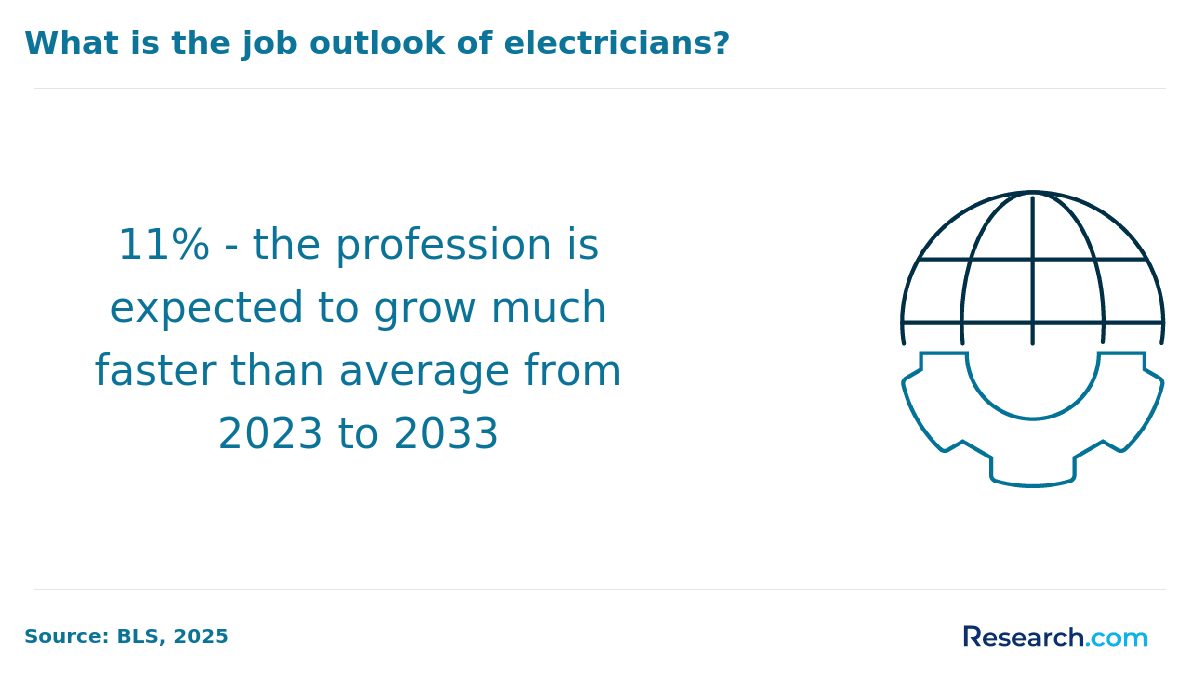
According to ONET OnLine, employment for electricians in Nebraska is projected to grow by 14% through 2030, generating approximately 680 job openings annually. This steady demand is driven not only by ongoing residential and commercial construction but also by the broader transformation of the state's energy and infrastructure systems.
Construction remains the leading sector for electrician employment, but manufacturing, utilities, and renewable energy are emerging as increasingly influential forces. Nebraska’s investment in wind farms, solar arrays, and other clean energy projects is creating new roles for electricians who are willing to adapt and specialize in sustainable technologies.
To meet these demands, the state continues to strengthen its network of apprenticeship programs and technical training options. As infrastructure modernizes and energy systems diversify, electricians with advanced skills and certifications may find themselves better positioned for stable, long-term careers. For those entering the trade, Nebraska offers not just job growth, but the opportunity to be part of a changing landscape where skilled labor is more essential than ever.
Can Electricians Transition into HVAC Roles in Nebraska?
Electricians in Nebraska possess a strong technical foundation that can serve as a stepping stone to related trades, such as HVAC. The analytical skills, familiarity with electrical systems, and strict adherence to safety protocols acquired on the job create natural opportunities for cross-training in the HVAC field. Professionals considering a transition should evaluate the differences in regulatory requirements, certification processes, and industry practices between the two trades. Detailed information on certification pathways and essential training modules can be found in this how to become an HVAC technician in Nebraska guide. This streamlined career pivot may not only diversify one’s skill set but also broaden employment prospects in sectors experiencing strong growth.
How can cross-training in related trades enhance career prospects in Nebraska?
Electricians in Nebraska can boost their career potential by diversifying their technical expertise into related fields. Expanding into complementary areas, such as mechanical systems or industrial machinery, not only enhances problem-solving skills but also opens new avenues for career advancement. This cross-training allows professionals to adapt to evolving market demands, increasing versatility and job security in an ever-changing work environment. For further insights into how diversifying skills can benefit your career, consider reviewing our article on how to become a mechanic in Nebraska.
What Electricians in Nebraska Say About Their Careers
- "Completing my apprenticeship through the Southeast Community College program gave me hands-on experience that was invaluable. Nebraska’s strong focus on renewable energy projects has allowed me to work on exciting solar and wind installations, which keeps my job interesting and forward-looking. I’ve grown not just as a technician, but also as a problem solver who contributes to sustainable solutions for my community. It’s rewarding to know my work supports both local families and the environment." - Jan
- "Attending the University of Nebraska–Lincoln’s electrical engineering program truly transformed my perspective on the trade. Beyond technical skills, I gained confidence in leadership and communication, which helped me mentor younger apprentices. Working in Nebraska’s rural communities has deepened my appreciation for the essential role electricians play in keeping homes and farms safe and operational. This career has allowed me to give back to the people who raised me, and that means everything." - Victor
- "After graduating from Metropolitan Community College, I started as a residential apprentice, but the winter months were tough—long hours outside, sometimes in freezing temperatures. I questioned whether I could stick with it, but my mentor helped me build confidence and reminded me it gets easier with time. Now, I wire custom homes and lead small teams, and I’m proud of how far I’ve come. This trade gave me a career I can rely on, and skills I can take anywhere." - Wayne
Related Articles for Nearby States
- 2027 How to Become an Electrician in Kansas
- 2027 How to Become an Electrician in South Dakota
- 2027 How to Become an Electrician in Iowa
- 2027 How to Become an Electrician in Colorado
- 2027 How to Become an Electrician in Missouri
- 2027 How to Become an Electrician in Wyoming
- 2027 How to Become an Electrician in Minnesota
- 2027 How to Become an Electrician in Oklahoma
- 2027 How to Become an Electrician in North Dakota
- 2027 How to Become an Electrician in Illinois
References:
- Majano, D. (2025, March 23). Workplace Injury & Fatality Statistics. Electrical Safety Foundation International. https://www.esfi.org/workplace-safety/workplace-injury-fatality-statistics
- Nebraska Department of Labor. (2025, March). Nebraska Workforce Trends. https://dol.nebraska.gov/webdocs/Resources/Trends/March%202025/Trends%20March%202025.pdf
- Nebraska Electrical Division. (n.d.). State Electrical Act. Retrieved May 20, 2025, from https://electrical.nebraska.gov/sites/default/files/doc/State%20Electrical%20Act%203272025.pdf
- Nebraska Electrical Division. (n.d.). Journeyman Electrician Qualifications. Retrieved May 20, 2025, from https://electrical.nebraska.gov/journeyman-electrician
- ONET OnLine. (2025, May 20). Nebraska Employment Trends - Electricians. Retrieved May 20, 2025, from https://www.onetonline.org/link/localtrends/47-2111.00?st=NE
- U.S. Bureau of Labor Statistics. (2025, May 19). Occupational Employment and Wage Statistics - Nebraska, May 2024. Occupational Employment and Wage Statistics Query System. Retrieved May 20, 2025, from https://data.bls.gov/oes/#/area/3100000
- World Population Review. (2025). Cost of Living Index by State 2025. Retrieved May 20, 2025, from https://worldpopulationreview.com/state-rankings/cost-of-living-index-by-state
Other Things You Should Know About Becoming an Electrician in Nebraska
In 2027, electricians in Nebraska must complete 12 hours of continuing education biennially to maintain their license. This includes 6 hours on the National Electrical Code and 6 on safety or code-related topics, ensuring electricians stay updated on industry standards and safety practices.
There are no specific age limitations for becoming an electrician in Nebraska. Prospective electricians must, however, complete an apprenticeship program, which requires them to be at least 18 years old. Many people successfully start their electrical careers later in life.


