
2027 How To Become an Ultrasound Technician in Connecticut

Co-Founder and Chief Data Scientist
In Connecticut, the demand for diagnostic medical sonographers is projected to grow by 20% over the next decade, outpacing many other states. This growth reflects both the aging population and advancements in medical technology. Pursuing this career offers strong job security and competitive wages within the state.
This article outlines essential steps to enter the field, including education options, certification requirements, and local industry insights, providing a clear roadmap to resolve common challenges in starting this profession.
Key Things to Know About Becoming an Ultrasound Technician in Connecticut
- Complete an accredited diagnostic medical sonography program, often requiring 1-2 years, to meet Connecticut’s employment standards and ensure eligibility for certification.
- Obtain certification from the American Registry for Diagnostic Medical Sonography (ARDMS), as most employers in Connecticut prefer or require certification for ultrasound technicians.
- Gain clinical experience through internships or externships offered by programs, which are critical for practical skills and enhance job prospects in Connecticut’s competitive healthcare market.
- What education is required to become an ultrasound technician in Connecticut?
- What specialties can ultrasound technicians choose from in Connecticut?
- Which certification exams are required to become an ultrasound technician in Connecticut?
- Is a license required to practice as an ultrasound technician in Connecticut?
- What to expect during ultrasound technician clinical training in Connecticut?
- How much does it cost to become an ultrasound technician in Connecticut?
- What role does continuing education play in advancing ultrasound technician careers in Connecticut?
- What is the average salary for ultrasound technicians in Connecticut?
- What is the job outlook and demand for ultrasound technicians in Connecticut?
- What are the career advancement steps for ultrasound technicians in Connecticut?
- What are the common challenges ultrasound technicians face in Connecticut?
- What professional organizations can ultrasound technicians in Connecticut join?
What education is required to become an ultrasound technician in Connecticut?
Meeting the educational standards to become an ultrasound technician in Connecticut demands a clear commitment to accredited study and hands-on clinical experience. These foundational steps ensure graduates enter the field with both theoretical knowledge and practical skills, reflecting the state’s emphasis on quality training.
- Minimum Degree Requirement: Most positions require at least an Associate of Science in Diagnostic Medical Sonography, a two-year program combining academic coursework with practical training.
- Program Accreditation: Completion through sonography programs in Connecticut accredited by the Commission on Accreditation of Allied Health Education Programs (CAAHEP) is essential, guaranteeing that the curriculum aligns with national standards for quality and rigor.
- Prerequisite Coursework: Candidates must have completed courses in biology, anatomy and physiology, English composition, mathematics, and physics before admission to the DMS program.
- Clinical Practicum: A mandatory, supervised internship integrated throughout the program provides invaluable real-world experience in hospital or clinic settings.
- GPA Requirement: Competitive programs often require a minimum GPA, such as 2.7 at Connecticut State Community College, to ensure academic readiness.
- Information Sessions: Prospective students may need to attend program-specific information sessions as part of the application process.
- Certification Exam Eligibility: Graduates become qualified to take the ARDMS certification exams before program completion, a requirement most employers enforce despite the absence of state licensure.
- Admissions Competitiveness: Entry into these programs is highly selective due to limited spots and rigorous standards.
Those who successfully navigate these Connecticut ultrasound technician education requirements can position themselves competitively in the job market, often reflected in a strong average starting salary for radiology tech.
What specialties can ultrasound technicians choose from in Connecticut?
Ultrasound technicians in Connecticut have access to a variety of focused career paths that reflect the evolving healthcare needs of the region. These specialties enable practitioners to develop expertise in certain body systems or patient groups, enhancing their clinical value and job opportunities. Below is an overview of the key ultrasound technician specialties in Connecticut.
- Abdominal Sonography: Centers on imaging organs like the liver, kidneys, and pancreas, forming the foundational knowledge base in many accredited programs.
- Obstetric and Gynecologic (OB/GYN) Sonography: Dedicated to monitoring fetal development and female reproductive health, this specialty is vital for prenatal care.
- Vascular Sonography: Focuses on assessing blood flow and detecting vascular diseases, a rapidly growing field linked to vascular and echocardiography sonography Connecticut job demands.
- Echocardiography (Cardiac Sonography): Involves heart imaging to diagnose cardiac conditions and is offered as a specialized track in institutions such as Yale New Haven Hospital.
- Pediatric Echocardiography: Requires supplementary training and targets cardiac imaging in infants and children, reflecting the need for tailored pediatric care.
- Neurosonology: A niche specialty focusing on ultrasound imaging of the brain, particularly in infants and cerebrovascular assessment.
For those seeking to understand how to enter these fields, the how do you become a ultrasound tech pathway includes accredited education combined with clinical experience, preparing technicians for these diverse specialties. To better illustrate where these skills are applied, the following chart highlights the different sectors that employ ultrasound technicians.
Which certification exams are required to become an ultrasound technician in Connecticut?
Certification exams serve as a vital benchmark for ultrasound technicians in Connecticut, ensuring they possess the specialized knowledge and skills needed in this precise medical field. Although the state does not mandate certification for diagnostic medical sonographers by law, employers often require recognized credentials to confirm competence and maintain high standards of patient care.
ARDMS Sonography Principles & Instrumentation (SPI) Exam
Administered by the American Registry for Diagnostic Medical Sonography (ARDMS), the SPI exam tests foundational knowledge including ultrasound physics, equipment operation, Doppler principles, and clinical safety. Candidates must pass the SPI before pursuing specialty credentials like RDMS or RDCS, and typically must complete this within five years. Eligibility usually requires graduation from an accredited sonography program, many of which in Connecticut include SPI preparation.
ARDMS Specialty Examinations (Abdomen, OB/GYN, Vascular Technology)
These exams evaluate advanced sonography knowledge in specific areas and require prior success on the SPI exam. Candidates must complete a CAAHEP-accredited program or equivalent. Leading Connecticut programs, such as those at community colleges and Yale-New Haven Hospital, prepare students for these credentials.
Cardiovascular Credentialing International (CCI) Exams
Focused on cardiac and vascular sonography, CCI credentials like Registered Cardiac Sonographer (RCS) and Registered Vascular Specialist (RVS) demand approved education or clinical experience. Connecticut employers recognize these credentials, especially for cardiovascular imaging roles.
American Registry of Radiologic Technologists (ARRT) Sonography Exam
Offered by ARRT, this exam grants the Sonography (S) credential, accepted in certain Connecticut facilities. Eligibility involves completing an ARRT-recognized program and passing the exam. While ARRT licensure is mandatory in Connecticut for radiographers, it is optional for sonographers but can enhance employability in multi-modality imaging settings.
Connecticut State Licensure (Radiographer Only)
Radiographers must be licensed in Connecticut, which includes passing the ARRT Radiography exam and graduating from an accredited program. This requirement does not extend to diagnostic medical sonographers but aligns closely with their collaborative work environment.
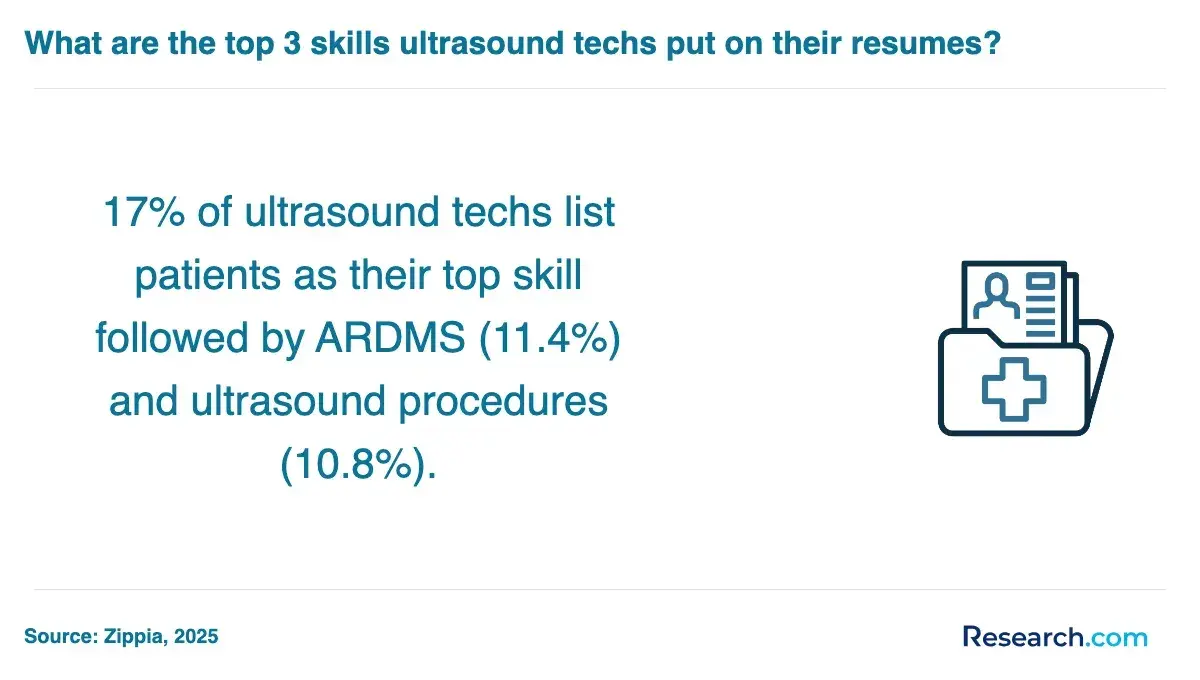
Achieving these certifications not only elevates professional credibility but also broadens career opportunities while ensuring compliance with Connecticut’s healthcare standards, fostering trust among employers and patients alike. To further demonstrate what contributes to success in this field, the image below highlights the top skills of ultrasound technicians.
Is a license required to practice as an ultrasound technician in Connecticut?
Connecticut does not require ultrasound technicians to hold a state license, which distinguishes the profession from other allied health careers that do mandate licensure. Instead, aspiring sonographers must focus on completing accredited educational programs and earning nationally recognized certifications. This structure ensures that candidates build the qualifications most valued by employers while avoiding additional layers of state regulation.
The framework for professional recognition in Connecticut relies on national certifying bodies such as ARRT and CCI. Students typically graduate from CAAHEP-approved schools before attempting exams like the Sonography Principles & Instrumentation (SPI) and a related specialty test, both of which are commonly required for employment in hospitals, imaging centers, and outpatient clinics.
By meeting these national certification standards, ultrasound technicians in Connecticut demonstrate technical expertise, commitment to quality, and adherence to industry-wide expectations for patient safety.
One local graduate reflected on this landscape, explaining that while the absence of state licensure felt freeing, it also increased the pressure to succeed in national exams. “You’re not navigating state processes, but you’re proving your qualifications entirely through certification,” he explained, noting how this balance ultimately strengthened his confidence and credibility as he entered the workforce.
What to expect during ultrasound technician clinical training in Connecticut?
Clinical training in Connecticut serves as a vital bridge between classroom theory and the practical demands of ultrasound technology. It equips students with critical skills and real-world experience necessary for certification and professional success. This hands-on phase offers invaluable exposure to patient care, equipment operation, and clinical settings, all under expert supervision.
- Hands-On Patient Care: Students perform ultrasound exams on actual patients, learning proper positioning, communication, and safety protocols essential for quality care.
- Supervised Use of Imaging Equipment: Clinical rotations provide in-depth practice with advanced sonography machines, guided by credentialed professionals to build technical competence.
- Specialty Rotations: Training covers key areas like OB/GYN, vascular, abdominal, and cardiac sonography, sometimes including pediatric echocardiography or vascular technology for broader experience.
- Mentorship from Licensed Professionals: Each student works closely with licensed sonographers and clinical instructors who offer feedback, mentorship, and guidance throughout their rotations.
- Program and State-Specific Requirements: Programs require completion of clinical hours—typically 24 months full-time for associate degrees or 12–13 months for certificates—along with health clearances, background checks, and competency evaluations.
These structured experiences prepare students to confidently approach national certification exams like the ARDMS and ensure they possess the clinical skills and professionalism needed to excel in healthcare settings. Through rigorous hands-on training and mentorship, graduates emerge ready to meet the challenges of modern sonography work environments.
How much does it cost to become an ultrasound technician in Connecticut?
The cost of the best diagnostic medical sonography programs in Connecticut varies depending on program type and institution. Typically, the total cost ranges from about $10,000 to $30,000 or more for in-state students, while out-of-state attendees may face higher tuition rates.
Here’s a general breakdown of the typical costs involved:
- Tuition and program fees: Certificate and associate-level programs in-state are generally at the lower end of the range, while private institutions and bachelor-level pathways tend to be at the higher end.
- Program-related and clinical fees: Additional charges may include lab access, clinical documentation systems, background checks, and supplies such as uniforms and scanning kits.
- Certification and exam fees: National exams like those administered by the ARDMS or CCI commonly cost around $200 per specialty, plus application or renewal fees.
- Books, supplies, and miscellaneous expenses: Expect to budget for textbooks, study materials, possibly software access, and travel for clinical placements—often adding up to several thousand dollars.
What role does continuing education play in advancing ultrasound technician careers in Connecticut?
Continuing education is a strategic asset for ultrasound technicians seeking to maintain and upgrade their clinical expertise. Targeted training and professional workshops help practitioners stay informed on the latest imaging technologies, regulatory updates, and emerging clinical practices. These ongoing educational opportunities not only support recertification requirements but also enhance practical competency and decision-making skills in high-pressure medical environments. Additionally, engaging in continuous learning can expand professional networking channels and open paths to specialized roles within the healthcare system. For further guidance on expanding your technical credentials, review how to become a radiology technician in Connecticut.
What is the average salary for ultrasound technicians in Connecticut?
The average annual salary for ultrasound technicians in Connecticut is about $93,486, which is roughly 15% below the national average hourly rate. While the pay may be lower compared to some states, Connecticut offers competitive wages that vary based on several important factors.
- Experience Level: Entry-level sonographers usually start around $69,625, while senior sonographers can earn up to $116,413 per year.
- Education and Certifications: Advanced credentials, such as ARDMS certifications, often lead to higher pay due to enhanced expertise.
- Work Setting: Hospitals typically offer better salaries compared to outpatient centers or physician offices, reflecting the clinical demands.
- Geographic Location: Urban areas like Greenwich provide higher hourly wages, sometimes reaching $100, while rural areas remain closer to the state average.
- Specialization: Focusing on OB/GYN, cardiovascular, or abdominal sonography can increase earning potential through specialized skills.
As shown in the chart below, Connecticut is one of the highest-paying states for ultrasound technicians. Salaries in Connecticut are shaped by local healthcare demands and regional cost of living, ensuring skilled sonographers are fairly compensated across diverse settings.
What is the job outlook and demand for ultrasound technicians in Connecticut?
Employment for ultrasound technicians in Connecticut is expected to grow around 10% by 2028, closely matching the national average. This steady increase reflects both broader healthcare trends and specific state factors shaping the demand for skilled imaging professionals.
- Population Growth and Aging: Connecticut’s aging population drives greater need for diagnostic imaging, as older adults require more frequent exams for health monitoring and treatment planning.
- Healthcare Expansion: New hospitals, outpatient centers, and clinics in the state are creating fresh opportunities for ultrasound technicians to support growing patient volumes and services.
- Technological Advancements: Innovations in ultrasound, including 3D imaging and vascular sonography, open specialized roles requiring technicians with advanced skills.
- Preventive Care Trends: Emphasis on early detection elevates ultrasound’s role, increasing demand for technicians who contribute to timely and accurate diagnoses.
- Regional Demand Variations: Urban centers tend to offer more positions due to larger healthcare networks, while rural areas may have fewer openings, affecting job search strategies.
All these elements come together to ensure ultrasound technology remains a resilient and evolving field within Connecticut’s healthcare landscape. When I spoke with an ultrasound technician who graduated from a local school, she described her journey navigating a competitive but promising job market. She recalled, “Starting out, I noticed the demand fluctuated depending on the hospital and its specialty.
Some places had waiting lists for technicians, while others were slower.” Despite those challenges, she found that building specialized skills and being open to varied clinical settings allowed her to find steady employment. “It’s rewarding to see how my role adapts as new technologies and healthcare needs emerge here,” she reflected, highlighting the importance of flexibility and ongoing learning in this profession.
What are the career advancement steps for ultrasound technicians in Connecticut?
Ultrasound technicians in Connecticut can enhance their careers by pursuing focused pathways such as specialization, advanced certifications, or leadership roles. These opportunities not only elevate professional standing but also provide greater influence within healthcare settings. Embracing such steps reflects a commitment to growth and excellence within this dynamic field.
- Specialization: Building expertise in ultrasound technician specializations in Connecticut—like OB/GYN, vascular, or cardiac sonography—addresses local healthcare demands and often leads to higher earning potential. Specialized training programs in the state support sonographers aiming to deepen their clinical knowledge.
- Advanced Certifications: Credentials from organizations such as ARDMS, CCI, or ARRT validate advanced skills and open doors to more competitive roles. Notably, Connecticut’s educational offerings prepare students for these certifications, enhancing their career advancement for ultrasound technicians in Connecticut.
- Higher Education: Obtaining a bachelor’s or master’s degree in sonography or related health sciences expands opportunities for supervisory, teaching, or clinical specialist positions. Local scholarship options further facilitate this educational progression.
- Leadership Roles: Experienced technicians often transition into supervisory or administrative roles within hospitals and clinics, overseeing teams and clinical operations in major Connecticut healthcare systems.
- Education and Training: Becoming an instructor or clinical trainer in accredited programs allows seasoned sonographers to shape the profession’s future while staying current with technological advancements.
- Research or Technology Development: Some professionals contribute to medical imaging innovation by engaging in research or collaborating with equipment manufacturers, leveraging hands-on experience to improve patient care.
Advancing in these ways not only increases earning potential but also broadens a sonographer’s professional impact across Connecticut’s healthcare landscape. Those interested in finding well-suited educational pathways can explore the best ultrasound technician certification programs to begin this journey.
What are the common challenges ultrasound technicians face in Connecticut?
Facing the challenges for ultrasound technicians in Connecticut requires both preparation and resilience. Recognizing the physical, emotional, and professional hurdles can guide aspiring sonographers in managing the realities of this demanding field efficiently. This understanding also nurtures workplace stress for Connecticut sonographers, helping them maintain focus and care quality.
- Physical Strain and Ergonomics: Repetitive scanning and long shifts often cause musculoskeletal issues, especially when handling patients of various sizes or performing bedside exams.
- Emotional Stress: Providing compassionate care in sensitive situations, such as high-risk pregnancies or cancer diagnoses, adds emotional weight to daily work.
- Workload and Staffing Shortages: Heavy caseloads and limited staff require technicians to work overtime and manage increased patient demands.
- Certification and Continuing Education Requirements: Balancing exam preparations and ongoing education with work schedules can challenge busy professionals.
- Technology Adaptation: Staying current with advancing ultrasound equipment and digital systems demands continuous learning and flexibility.
- Job Market Competition: Regional differences in demand and employer preferences call for strategic career planning and skill enhancement.
Being aware of these obstacles allows ultrasound technicians in Connecticut to adopt practical strategies, ultimately improving career satisfaction and patient care. Those preparing for this path can also consult a list of best schools for ultrasound technician to support their professional development.
What professional organizations can ultrasound technicians in Connecticut join?
Ultrasound technicians in Connecticut can benefit significantly from membership in professional organizations that offer industry insights, networking opportunities, and access to the latest technological advancements. Local chapters of national bodies provide opportunities to attend conferences, participate in specialized training sessions, and receive industry-specific updates, all of which contribute to career growth and informed practice. In addition, these organizations advocate for continuous professional development and can serve as a gateway to exploring complementary healthcare roles, such as how to become a nurse midwife in Connecticut.
What do ultrasound technicians in Connecticut say about their career?
- Completing my ultrasound technician program at Middlesex Community College was one of the best decisions I've made. The hands-on training and approachable instructors prepared me well for my career. Starting work at a local school gave me the chance to utilize my skills in a supportive environment while positively impacting student health. Connecticut’s close-knit community and excellent healthcare facilities offer unique opportunities for growth and collaboration in this field. I feel proud to contribute to the well-being of young people while continuing to develop professionally. Ayla
- After graduating from Naugatuck Valley Community College, I began my career as an ultrasound technician working in an academic institution here in Connecticut. The state’s investment in education and healthcare ensures job stability and career advancement potential. This profession challenges me daily but also allows me to make a meaningful difference in students’ lives. The ability to blend technology, healthcare, and education in this vibrant community has deepened my passion for patient care and lifelong learning. Connecticut’s diverse population enriches every day on the job. Leo
- My journey as an ultrasound technician started with a dedicated program at Capital Community College, and it has been a truly transformative experience. Connecticut’s rich medical network and the emphasis on community wellness give me unique chances to participate in impactful projects beyond typical clinical work. Working in a local school lets me witness firsthand the importance of early diagnostics and education in student health. This career has fostered both my professional skills and personal growth, motivating me to give back through mentoring future technicians from diverse backgrounds. Chen
Related Articles for Nearby States
- 2027 How to Become an Ultrasound Technician in New York
- 2027 How to Become an Ultrasound Technician in Rhode Island
- 2027 How to Become an Ultrasound Technician in Massachusetts
- 2027 How to Become an Ultrasound Technician in New Jersey
- 2027 How to Become an Ultrasound Technician in Pennsylvania
- 2027 How to Become an Ultrasound Technician in Vermont
- 2027 How to Become an Ultrasound Technician in New Hampshire
- 2027 How to Become an Ultrasound Technician in Delaware
- 2027 How to Become an Ultrasound Technician in Maryland
- 2027 How to Become an Ultrasound Technician in Maine
References:
- AHEC. (2025, April 25). Diagnostic Medical Sonographer - Health Occupations & Technology Careers in Connecticut. healthcareersinct.com.
- CareerExplorer. (2023, October 10). Diagnostic medical sonographer salary. careerexplorer.com.
- CT State. (n.d.). Diagnostic Medical Sonography. ctstate.edu.
- Salary.com. (2025). Ultrasound Technologist II Salary in Connecticut (August 01, 2025). salary.com.
- Ultrasound Schools Info. (n.d.). Ultrasound Technician Schools in Connecticut for 2024. ultrasoundschoolsinfo.com.
- Zippia. (2025, January 8). Ultrasound Technologist Demographics and Statistics [2025]: Number of ultrasound technologists in the US. zippia.com.
Other Things You Should Know About Becoming an Ultrasound Technician in Connecticut
To become an ultrasound technician in Connecticut in 2027, you'll need to complete an accredited ultrasound technician program, which typically involves earning an associate degree over two years. After that, you'll pass the ARDMS SPI and a specialty exam to become a certified ultrasound technician.
Completing an online ultrasound technician program can be a viable path for becoming qualified in Connecticut, provided the program is accredited and meets the necessary clinical experience requirements. Since ultrasound technicians must obtain certification through recognized bodies like the American Registry for Diagnostic Medical Sonography (ARDMS), online programs that include hands-on training components are essential.
Connecticut employers typically expect candidates to have completed an accredited program with clinical hours to ensure competency. Therefore, students should carefully select online programs that offer local clinical placements or partnerships to fulfill these practical training requirements and enhance their job prospects.
To become an ultrasound technician in Connecticut in 2027, you need to complete an accredited sonography program and obtain certification from the American Registry for Diagnostic Medical Sonography (ARDMS). It’s recommended to hold a Specialty Credential in areas like Abdominal or Obstetrics & Gynecology sonography.


