
2027 How to Become an Ultrasound Technician in Wisconsin

Co-Founder and Chief Data Scientist
Wisconsin’s healthcare sector is evolving with steady demand for imaging specialists. The state projects 290 annual job openings for radiologic and ultrasound technologists between 2022 and 2032, reflecting the region’s aging population and growing healthcare infrastructure. For scholars and professionals, this trend highlights how medical imaging careers align with long-term labor market needs.
In this article, I will share the steps to becoming an ultrasound technician in Wisconsin, from education and certification to job prospects and salaries. I will also discuss state-specific requirements, career growth opportunities, and how to position oneself for success in this vital field.
Key Things to Know About Becoming an Ultrasound Technician in Wisconsin
- In Wisconsin, you will need to complete an accredited diagnostic medical sonography program, typically lasting 1–2 years, to qualify for entry.
- Certification through the American Registry for Diagnostic Medical Sonography (ARDMS) is highly valued by employers and significantly improves career opportunities.
- Ultrasound technicians in Wisconsin earn an average annual salary of $99,192, with higher pay possible through specialization and experience.
- What education is required to become an ultrasound technician in Wisconsin?
- What specialties can ultrasound technicians choose from in Wisconsin?
- Which certification exams are required to become an ultrasound technician in Wisconsin?
- Is a license required to practice as an ultrasound technician in Wisconsin?
- What to expect during ultrasound technician clinical training in Wisconsin?
- How much does it cost to become an ultrasound technician in Wisconsin?
- How can ultrasound technicians in Wisconsin access ongoing professional development?
- How can interdisciplinary collaboration expand career opportunities for ultrasound technicians in Wisconsin?
- What is the average salary for ultrasound technicians in Wisconsin?
- What is the job outlook and demand for ultrasound technicians in Wisconsin?
- What are the career advancement steps for ultrasound technicians in Wisconsin?
- What are the common challenges ultrasound technicians face in Wisconsin?
What education is required to become an ultrasound technician in Wisconsin?
An accredited sonography program in Wisconsin provides the foundation needed to enter the field. These programs balance classroom instruction with hands-on clinical training to ensure graduates meet industry standards.
- Minimum Degree Requirement: Completion of an accredited Associate of Science degree in Diagnostic Medical Sonography (DMS) is the basic credential required for employment, though some institutions offer a Bachelor of Science for broader opportunities.
- Program Accreditation: Choose a program accredited by the Commission on Accreditation of Allied Health Education Programs (CAAHEP) to qualify for certification exams and employment in Wisconsin.
- Prerequisite Coursework: Typical prerequisites include algebra, physics, human anatomy and physiology, medical terminology, and ethics, with a minimum grade of C required in each course.
- Cumulative GPA: Maintain at least a 3.0 GPA across prerequisite and core courses to meet admission and progression standards.
- Clinical Practicum Hours: Complete a minimum of 400 hands-on clinical hours through supervised rotations or healthcare facility placements to gain practical experience.
- Background and Health Checks: Pass a criminal background check and health screenings, including drug testing, and provide proof of health insurance before clinical training begins.
- Credentialing Eligibility: Graduates from accredited programs become eligible to take the ARDMS certification exams, essential for employment.
- Patient Care Experience: Some programs require documented patient care experience and job shadowing to ensure readiness for clinical rotations.
These educational requirements align with the demand for ultrasound technicians in Wisconsin. For a detailed overview of potential career outcomes, visit the ultrasound technician career path.
What specialties can ultrasound technicians choose from in Wisconsin?
Ultrasound technicians in Wisconsin have several specialty options that enable focused expertise in specific areas of diagnostic medical sonography. These specialties address different patient needs and anatomical regions, offering a range of clinical career paths.
Below is a concise overview of the primary specialties available to ultrasound technicians in the state.
- Abdominal Sonography: Concentrates on imaging abdominal organs like the liver and kidneys to identify diseases. This specialty is widely accessible in Wisconsin programs, including at Moraine Park Technical College.
- Obstetric and Gynecologic (OB/GYN) Sonography: Focuses on female reproductive imaging and fetal monitoring, crucial for prenatal care and women’s health.
- Vascular Sonography: Examines blood vessels and flow to diagnose conditions such as deep vein thrombosis; often paired with general or cardiac sonography, tracked in Wisconsin’s vascular technology programs.
- Echocardiography (Cardiac Sonography): Involves heart imaging to evaluate cardiac function and detect disease, available through UW Hospitals and Clinics and related cardiovascular programs.
- Breast Sonography: Dedicated to imaging breast tissue for abnormalities, vital in breast cancer screening and diagnosis.
- Musculoskeletal Sonography: Assesses muscles and joints to identify injuries or disorders, offered as a specialized skill in some Wisconsin programs.
- Pediatric Sonography: Targets imaging of infants and children’s organs, requiring specialized knowledge of pediatric anatomy.
Technicians interested in gaining certification in these areas can benefit from completing accredited specialty training that prepares them for national registry exams. Those focusing on cardiac sonography and vascular technology in Wisconsin programs will find comprehensive pathways tailored to these in-demand skills.
For additional guidance on career development and certification, exploring resources like ARRT careers can provide valuable insights.
Which certification exams are required to become an ultrasound technician in Wisconsin?
Certification exams are essential for ultrasound technicians in Wisconsin to validate their expertise and meet employer expectations. While the state does not require a specific license for sonographers, most employers insist on national certification to ensure consistent professional standards and patient safety. These exams confirm knowledge in sonography principles, clinical skills, and specialty areas.
- American Registry for Diagnostic Medical Sonography (ARDMS) Exams: The ARDMS provides the Registered Diagnostic Medical Sonographer (RDMS) credential, a widely recognized certification across Wisconsin. Candidates must pass the Sonography Principles & Instrumentation (SPI) exam along with a specialty exam such as Abdomen or Obstetrics/Gynecology. Eligibility usually requires completing a CAAHEP-accredited sonography program or equivalent clinical experience. The ARDMS has no Wisconsin-specific mandates but is highly preferred by employers as the industry gold standard.
- American Registry of Radiologic Technologists (ARRT) Sonography Certification: ARRT offers primary and post-primary sonography credentials focusing on patient care, physics, and clinical procedures. Applicants need at least an associate degree plus completion of an ARRT-approved educational program. Though not mandatory in Wisconsin, ARRT certification is accepted by many employers and supports specialization in areas like vascular or breast sonography.
- Cardiovascular Credentialing International (CCI) Exams: CCI certifies cardiovascular specialists through credentials such as Registered Cardiac Sonographer (RCS) and Registered Vascular Specialist (RVS). These exams test cardiovascular anatomy, pathology, and sonographic methods. Candidates must meet education and clinical experience requirements. While less common than ARDMS, CCI certification benefits those aiming for cardiovascular ultrasound roles in Wisconsin.
Obtaining these certifications not only enhances professional credibility but also broadens employment opportunities by aligning with Wisconsin’s healthcare standards and employer expectations. Building on this, the chart from Zippia illustrates how ultrasound technician jobs are distributed across different sectors, highlighting the areas where certified professionals are most in demand.
Is a license required to practice as an ultrasound technician in Wisconsin?
Wisconsin does not require a state license to practice as an ultrasound technician, which shifts the focus to national certification and employer standards. Without state-level licensure, professionals must rely on meeting nationally recognized benchmarks to demonstrate their competency and remain competitive in the job market. This distinction shapes both how aspiring technicians enter the field and how they progress in their careers.
Unlike some healthcare professions, there are no Wisconsin laws or agencies overseeing the licensure of diagnostic medical sonographers. The state instead defers to national certification bodies such as ARDMS, ARRT, and CCI. To qualify, candidates typically graduate from a CAAHEP-accredited sonography program and pass the Sonography Principles and Instrumentation (SPI) exam, followed by a specialty exam in areas like abdomen, obstetrics, or vascular sonography.
For employment, most Wisconsin healthcare facilities require national certification as a condition of hire, making it essential for both entry and advancement in the profession.
An ultrasound technician from Wisconsin shared that while he was initially uncertain about the lack of a state license, the straightforward path of pursuing ARDMS credentials gave him structure and reassurance. He reflected, “Preparing for the SPI and specialty exams was demanding, but once I earned my certification, employers immediately recognized my qualifications. In many ways, relying on national certification made the process clearer and more consistent than dealing with state-specific licensing.”
What to expect during ultrasound technician clinical training in Wisconsin?
Clinical training is a vital stage in preparing ultrasound technicians in Wisconsin, offering essential hands-on experience under professional supervision. This phase bridges classroom learning with real-world application, ensuring students develop both technical skills and patient care expertise. Clinical rotations also meet state requirements critical for certification and employment.
- Hands-On Patient Care: Students actively engage with patients, learning how to gather medical histories, ensure comfort, and maintain safety during ultrasound procedures.
- Supervised Use of Imaging Equipment: Trainees operate ultrasound machines under the guidance of licensed sonographers, focusing on image quality and routine equipment maintenance.
- Exposure to Specialty Rotations: Clinical training covers multiple areas such as OB/GYN, vascular, abdominal, and cardiac sonography, helping students gain diverse skill sets and explore areas of interest.
- Mentorship from Licensed Professionals: Experienced sonographers and radiologists provide ongoing feedback, evaluate performance, and model clinical best practices.
- Program and State-Specific Requirements: Wisconsin clinical programs require about five semesters combining didactic and clinical hours, typically totaling 40 hours per week, plus mandatory background checks, drug screening, and health insurance proof.
- Competency Evaluations: Regular assessments ensure students demonstrate proficiency in examinations and image interpretation, confirming readiness for independent practice.
These clinical experiences build essential skills and professional habits, preparing students to pass national credentialing exams and confidently enter Wisconsin’s healthcare workforce.
How much does it cost to become an ultrasound technician in Wisconsin?
The cost of ultrasound technician programs in Wisconsin can range widely, from approximately $10,500 at community colleges to over $135,000 at private universities for a bachelor’s degree. Tuition is just one part of the total investment, as students must also plan for certification exams, clinical training expenses, and living costs that add up over time.
- Tuition and Fees: Programs vary significantly. Blackhawk Technical College offers an Associate of Applied Science in Diagnostic Medical Sonography for about $10,526 total, while Concordia University’s bachelor’s program can exceed $135,000 over four years. Mid-range options like Gateway Technical College and Chippewa Valley Technical College fall closer to $20,000–$25,000.
- Clinical Training Expenses: Wisconsin programs require extensive clinical rotations, with costs for uniforms, immunizations, lab fees, and travel adding $500 to $1,500, depending on site placement.
- Certification and Exam Fees: ARDMS exams cost $250–$350 per test, and most students sit for at least two, raising costs to about $500–$700 total.
- Licensing or State Fees: Wisconsin does not require state-specific licensing fees for ultrasound technicians, though professional memberships may add optional costs.
- Books and Materials: Textbooks, software, and specialty supplies usually total $400 to $600 for the full program.
- Living Expenses: Students should budget $8,000 to $12,000 annually for housing, food, and personal costs, which vary significantly depending on whether they study in urban hubs like Milwaukee or smaller communities.
The cost of becoming an ultrasound technician in Wisconsin ultimately depends on program type and location. Associate degrees at technical colleges provide a more affordable entry point, while bachelor’s programs at private universities represent the higher end of the spectrum. Financial aid, scholarships, and employer tuition assistance are common ways Wisconsin students offset these costs, making the field more accessible.
How can ultrasound technicians in Wisconsin access ongoing professional development?
Ultrasound technicians can leverage accredited continuing education programs, professional workshops, and local conferences to stay current with advanced imaging techniques and emerging industry standards. Industry-specific associations often provide resources for hands-on training and skill-enhancement courses, enabling professionals to improve diagnostic accuracy and patient care practices. Peer networking and targeted online platforms also play a role in developing new competencies and exploring alternative career pathways, including guidance on how to become a radiology technician in Wisconsin.
How can interdisciplinary collaboration expand career opportunities for ultrasound technicians in Wisconsin?
Ultrasound technicians in Wisconsin increasingly benefit from working within diverse healthcare teams that emphasize coordinated patient care and innovative diagnostic practices. Collaborative efforts with physicians, radiologists, and allied health professionals help these practitioners gain exposure to advanced clinical protocols and improve overall treatment outcomes. Moreover, engaging in interdisciplinary settings presents opportunities to diversify one’s skill set and transition into complementary roles. For example, technicians may explore pathways in patient-centered care by learning how to become a nurse midwife in Wisconsin, further broadening their career horizons.
What is the average salary for ultrasound technicians in Wisconsin?
The average annual ultrasound technician career salary in Wisconsin is approximately $99,192, with weekly earnings ranging from $718 to $3,018, depending on experience, education, and work setting. Most technicians earn between $1,232 (25th percentile) and $2,465 (75th percentile) per week, making ultrasound a competitive healthcare career in the state.
Location also plays a key role in pay. Columbus leads the way with salaries 11.7% higher than the state average, followed by Mauston and Wausau, where wages trend 6.2% above average. Technicians who pursue advanced certifications or specialize in areas like OB/GYN or cardiovascular sonography often see even higher earning potential. Salaries in Wisconsin reflect local healthcare demands and vary with experience, education, setting, and location, maintaining competitive compensation within the Midwest region.
What is the job outlook and demand for ultrasound technicians in Wisconsin?
Employment for ultrasound technicians in Wisconsin shows a steady but slower trajectory compared to the national trend. Related imaging professions, like radiologic technologists, were about 4,630 employees in 2022, with projections reaching 5,050 by 2032. This represents a 9% growth rate over the decade, which is more modest than the national 23% increase expected for diagnostic medical sonographers.
- Population Growth and Aging: Wisconsin’s increasing number of older adults requires more frequent imaging for cardiovascular, musculoskeletal, and reproductive health issues, directly raising the need for ultrasound services.
- Healthcare Expansion: The rise of new clinics, hospitals, and outpatient centers statewide has created a steady influx of job openings, with hundreds of positions currently available.
- Technological Advancements: Improvements in imaging quality and portable ultrasound devices have led to more specialized roles, boosting demand for technicians skilled in various modalities.
- Preventive Care Trends: Growing emphasis on early detection means ultrasounds are more routinely used, increasing the importance and frequency of sonography in healthcare.
- Regional Demand Variations: Urban centers like Milwaukee offer the most jobs, while rural areas see occasional shortages, encouraging roles in travel sonography and temporary assignments.
When I spoke with an ultrasound technician from Wisconsin who graduated locally, she emphasized the constantly evolving nature of job openings across the state. “Right after finishing school, I noticed how many clinics in Milwaukee were aggressively hiring,” she explained, “but I also had to consider rural placements because some smaller towns struggled to keep sonographers full-time.”
She also described the process of applying for multiple positions as both challenging and rewarding, given the flexibility and variety it offered. Her experience highlighted how the broad demand means new graduates can tailor their careers geographically or specialize further, making the outlook for ultrasound technicians here genuinely optimistic.
For students exploring healthcare pathways, some start with easy radiology programs before advancing into more specialized sonography training, creating a pipeline that supports ongoing workforce demand.
What are the career advancement steps for ultrasound technicians in Wisconsin?
Employment for ultrasound technicians in Wisconsin shows a steady but slower trajectory compared to the national trend. Related imaging professions, like radiologic technologists, were about 4,630 employees in 2022, with projections reaching 5,050 by 2032. This represents a 9% growth rate over the decade, which is more modest than the national 23% increase expected for diagnostic medical sonographers.
Exploring these options allows technicians to align their career growth with market demands and personal goals.
- Specialization: Focus on high-demand fields like OB/GYN, vascular, or cardiac sonography, which are sought after in Wisconsin healthcare. Specializing typically leads to greater responsibility and eligibility for advanced positions.
- Advanced Certifications: Obtain credentials from respected bodies such as the American Registry for Diagnostic Medical Sonography (ARDMS), Cardiovascular Credentialing International (CCI), or the American Registry of Radiologic Technologists (ARRT). These certifications validate expertise and open doors to more specialized and higher-level roles.
- Higher Education: Pursue bachelor’s or master’s degrees through advanced sonography degree programs Wisconsin offers, expanding career prospects into management, education, or research. Some programs accept prior experience or credentials, enabling more efficient degree completion.
- Leadership Roles: Gain experience and training to move into supervisory, administrative, or department manager positions within healthcare organizations. These roles include staff oversight and involvement in operational decision-making.
- Education and Training: Experienced technicians can become instructors or clinical trainers at technical colleges or universities, contributing to the education of future sonographers. These roles often require advanced credentials and teaching experience.
- Research or Technology Development: Engage in medical imaging innovation by participating in research, development, or technical advising for equipment manufacturers. This path benefits from advanced education and a strong clinical background.
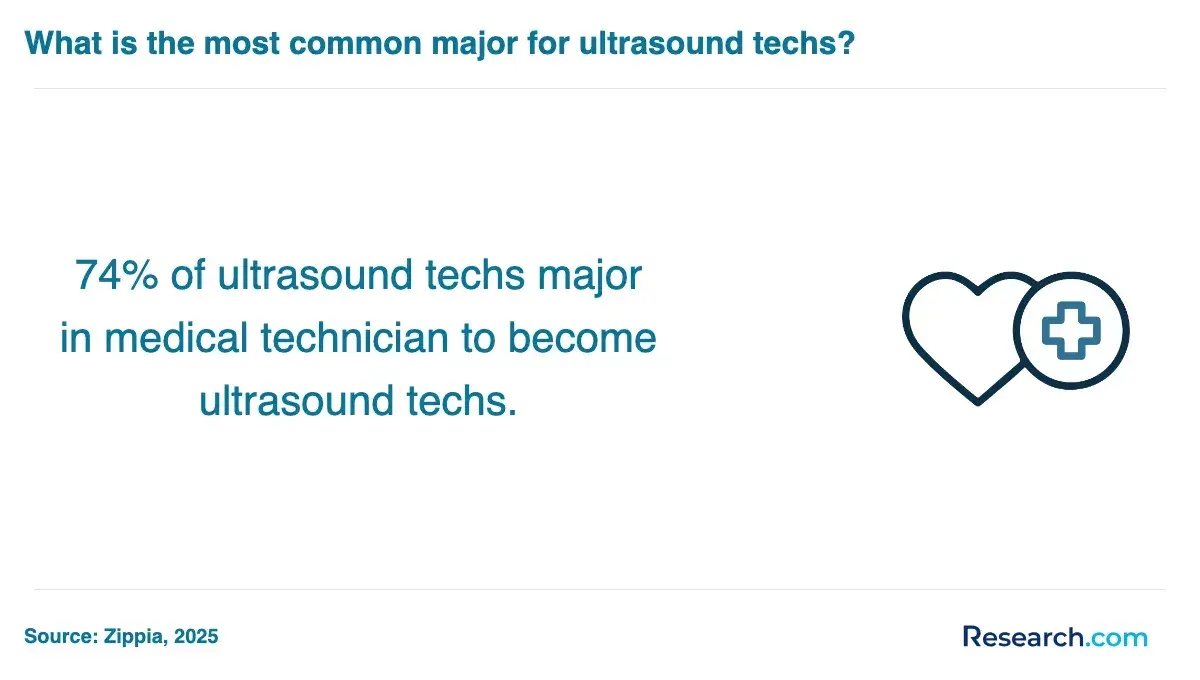
Those interested in pursuing these opportunities should consider exploring the best ultrasound technician certification programs to prepare for growth in this field. To better understand the educational backgrounds that shape these career paths, the chart below from Zippia highlights the most common college majors among ultrasound technicians.
What are the common challenges ultrasound technicians face in Wisconsin?
Recognizing workplace challenges helps ultrasound technicians in Wisconsin plan for a sustainable career. It allows them to adopt strategies that reduce risks and improve job satisfaction in demanding environments.
- Physical Strain and Ergonomics: Repetitive scanning and long hours increase the risk of musculoskeletal injury for sonographers in Wisconsin. Proper ergonomic techniques and regular self-care protect long-term health.
- Emotional Stress: Technicians often handle sensitive patient cases, requiring resilience and strong communication skills to manage emotional demands effectively.
- Workload and Staffing Shortages: Heavy caseloads combined with limited support create pressure, making time management and stress relief essential.
- Certification and Continuing Education Requirements: Maintaining credentials through ongoing education can be challenging alongside full work schedules, but it is key to career growth.
- Technology Adaptation: Staying updated on evolving ultrasound equipment requires continual skill development and flexibility.
- Job Market Competition: Entry and advancement depend on academic and practical qualifications, so understanding required skills for medical sonographers is vital.
Being aware of these challenges enables technicians to seek resources and prepare effectively for a successful career in Wisconsin healthcare settings.
What do ultrasound technicians in Wisconsin say about their careers?
- Completing my ultrasound technician program at Milwaukee School of Health Sciences gave me a solid foundation and hands-on experience that truly prepared me for the workforce. Starting my career working in a local academic institution allowed me to apply what I learned directly to help educate students and support their health needs. Wisconsin’s close-knit communities make every day rewarding because I feel like I’m contributing directly to the wellness of young people in our state. The job stability here is incredible, and I appreciate how my work positively impacts families around me. This career has become more than just a job; it’s a chance to give back in meaningful ways. - Anaia
- Reflecting on my journey, graduating from Fox Valley Technical College’s ultrasound program opened doors I didn’t expect. The opportunity to start my career in a local school setting helped me grow personally and professionally while addressing unique challenges here in Wisconsin, such as rural access to healthcare. Working within the school system has given me a new appreciation for how ultrasound technology can support early diagnosis and student well-being. I value the chance to continuously advance my skills and stay connected to a supportive community. It’s fulfilling to know my work directly influences health outcomes in this great state. - Mia
- The University of Wisconsin’s ultrasound program provided an exceptional education that prepared me for a vibrant career full of opportunities. Beginning my work at a local school enabled me to embrace Wisconsin’s cultural diversity and various environmental health factors influencing student care. I am passionate about professional growth and have taken advantage of continuing education and certification options available here. It’s rewarding to see how technology and compassionate care come together in a place where I can truly make a difference. This career pushes me to be my best daily, knowing I’m contributing positively to the community’s health landscape. - Krisha
Related Articles for Nearby States
- 2027 How to Become an Ultrasound Technician in Minnesota
- 2027 How to Become an Ultrasound Technician in Iowa
- 2027 How to Become an Ultrasound Technician in Illinois
- 2027 How to Become an Ultrasound Technician in Michigan
- 2027 How to Become an Ultrasound Technician in Indiana
- 2027 How to Become an Ultrasound Technician in Missouri
- 2027 How to Become an Ultrasound Technician in Ohio
- 2027 How to Become an Ultrasound Technician in South Dakota
- 2027 How to Become an Ultrasound Technician in Nebraska
- 2027 How to Become an Ultrasound Technician in Kentucky
References:
- Data USA (n.d.). Diagnostic Medical Sonographers. Retrieved from https://datausa.io/profile/soc/diagnostic-medical-sonographers?redirect=true
- O*NET OnLine (n.d.). Wisconsin Employment Trends 29-2034.00 - Radiologic Technologists and Technicians. Retrieved from https://www.onetonline.org/link/localtrends/29-2034.00?st=WI
- Zippia (2025). Ultrasound Technologist Demographics and Statistics in the US. Retrieved from https://www.zippia.com/ultrasound-technologist-jobs/demographics/
- ZipRecruiter (2025). Ultrasound Technician Salary in Wisconsin. Retrieved from https://www.ziprecruiter.com/Salaries/Ultrasound-Tech-Salary--in-Wisconsin
Other Things You Should Know About Being an Ultrasound Technician in Wisconsin
To become an ultrasound technician in Wisconsin in 2027, you must complete an accredited associate degree or certificate program in diagnostic medical sonography. Accredited programs are recognized by the Commission on Accreditation of Allied Health Education Programs and typically include clinical training. **Question** Can you become an ultrasound technician in Wisconsin with an online program? **Answer** While some coursework for ultrasound technician programs in Wisconsin can be completed online, clinical training and hands-on labs must be done in person. Hybrid programs may offer a balance between online coursework and in-person clinical experiences. **Question** What certification is necessary after completing an ultrasound technician program in Wisconsin in 2027? **Answer** After completing the education program, aspiring ultrasound technicians in Wisconsin need to obtain certification from the American Registry for Diagnostic Medical Sonography (ARDMS) by passing their exams, such as the Sonography Principles & Instrumentation (SPI) examination. **Question** Are there freelance or travel ultrasound technician opportunities in Wisconsin? **Answer** Yes, freelance and travel ultrasound technician opportunities are available in Wisconsin. Hospitals, medical centers, and agencies often hire travel technicians to fill temporary staffing needs, offering flexible schedules and the chance to work in various locations.
Completing an online ultrasound technician program can help you qualify for a career in Wisconsin, but it is important to choose a program that meets state and national accreditation standards. Many accredited online programs offer comprehensive coursework paired with local clinical training, which is essential for the hands-on experience required in this field.
Since Wisconsin does not have state licensure requirements for ultrasound technicians, certification through recognized organizations such as the ARDMS is typically necessary to improve employment prospects. Therefore, an online program combined with proper clinical practice and certification can effectively prepare you for work as an ultrasound technician in Wisconsin.
To become an ultrasound technician in Wisconsin in 2027, you need to complete a CAAHEP-accredited program, which typically takes 1-2 years, followed by passing the ARDMS certification exam. Costs can vary, but financial aid opportunities may be available.


