
2027 Men in Nursing: Trends, Benefits, and Opportunities

Co-Founder and Chief Data Scientist
The nursing profession has traditionally been dominated by women, but the landscape is changing as more men choose this career path. According to the 2024 National Nursing Workforce Survey, there are 473,631 men in nursing in the U.S. Although this figure is modest compared to the more than 4 million female registered nurses (RNs), it reflects steady growth since initial records.
Today, male nurses benefit from more accessible entry points through flexible educational programs and workplace policies that encourage diversity and inclusion. With persistent global shortages of RNs, challenging outdated gender stereotypes in nursing is crucial to meeting healthcare demands.
In this guide, we will examine the history of men in nursing. We will also highlight the unique benefits of this career path and outline professional opportunities available for men considering joining the field.
Key Things to Know About Men in Nursing
- Male nurses have been present as long as female nurses have, conducting roles as medics and religious caregivers.
- Enrollment of male nurses across all educational levels has remained steady in recent years, consistently ranging from 11% to 13%.
- Depending on the specialization, men in nursing can earn around $41,270 as nursing assistants or up to $231,700 as nurse anesthetists.
- How common are men in nursing? Male Nurses
- How has the role of men in nursing changed over time? Men's Role
- What factors influence men in nursing to pursue the profession? What factors influence men in nursing to pursue the profession?
- How much do women vs. men in nursing earn? Male vs. Female Pay
- What are the advantages of being men in nursing? Advantages
- What challenges do men in nursing face in the workplace? Challenges
- What specializations are most popular among men in nursing? Specializations
- Are there leadership opportunities available for men in nursing? Are there leadership opportunities available for men in nursing?
- What initiatives promote gender diversity in nursing schools? What initiatives promote gender diversity in nursing schools?
- Will the number of men in nursing continue to rise in the future? Job Outlook
How common are men in nursing?
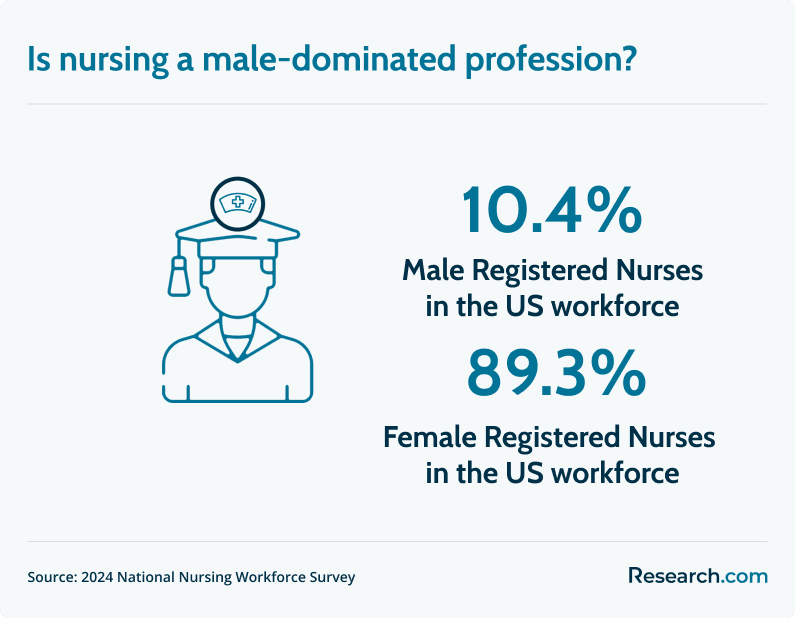
Men are no longer rare in nursing, but the profession is still predominantly female. According to the National Nursing Workforce Survey (Smiley et al., 2025), men accounted for 10.4% of RNs in 2024. A similar pattern appears among licensed vocational and practical nurses (LVN/LPNs), where 9.1% were male.
The gender distribution among nurse practitioners (NPs) reflects the same demographics. The 2024 Nurse Practitioner Practice Report found that 11.5% of NPs were male. Despite these relatively small proportions, the gradual increase of men in nursing points to broader acceptance of gender diversity in healthcare. Understanding these trends can also shed light on compensation patterns, such as the average Med Surg nurse salary, which may vary by gender, experience, and geographic region.
Enrollment numbers reinforce this trajectory. Data from the American Association of Colleges of Nursing (AACN) show that men comprised 11.9% of undergraduate nursing students in 2024. Although this represented a slight decline from the previous year, the long-term trend reveals steady growth in the number of men both working in nursing and pursuing nursing education.
How has the role of men in nursing changed over time?
Men have long played roles in caregiving though not always under the title of a nurse. Historically, monks, religious figures, and military medics cared for the sick and wounded across the world. In the U.S., nursing systems took shape during the American Revolution, where women staffed most positions while men fought in battle.
According to the Army Nurse Corps Newsletter Historical Articles and the Military Health System, men in nursing provided care during the Civil War, the Spanish-American War, and World War I, even as women filled the majority of nursing roles. Similar to how analysts track finance job growth to understand shifts in workforce trends, examining the historical role of men in nursing helps reveal broader patterns of gender inclusion and professional evolution over time.
In 1940, a Men Nurses’ Section was established within the American Nurses Association, but opportunities remained limited even amid World War II. It wasn’t until 1955 that Congress authorized male nurses to serve in the Army Nurse Corps, followed by the Navy Nurse Corps opening its doors to men in 1964.
The next decades brought further breakthroughs. The American Assembly for Men in Nursing (AAMN), which sought to encourage men to pursue the profession, was founded in 1971. Finally, in 1982, the U.S. Supreme Court struck down gender-based admissions policies in Mississippi University for Women v. Hogan, 458 U.S. 718, opening nursing schools nationwide to men.
Today, men are increasingly visible in the profession, contributing to greater diversity and addressing critical workforce needs. Their presence reflects both a shift in societal attitudes and a growing recognition that quality nursing care transcends gender.
What factors influence men in nursing to pursue the profession?
Men in nursing decide to enter the profession due to a combination of practical opportunities and personal motivations. Just as students carefully consider the top online MBA programs to align with their career goals, men in nursing weigh factors such as job stability, salary potential, growth opportunities, and the chance to make a meaningful impact when deciding to pursue this career path. These factors include the following:
- Accessible Educational Pathways: Nursing programs today provide flexible routes to enter the field, from accelerated bachelor’s programs to hybrid learning formats that accommodate different schedules. These lower barriers to entry and allow more men to pursue nursing at various stages of their lives.
- Various Specializations: The profession provides a wide range of specialties, which allows nurses to continually evolve their careers. Men often pursue roles in critical care, anesthesia, or technology-driven positions such as MSN nursing informatics jobs.
- Financial Security: RNs earn salaries above the national average, and their compensation increases further with advanced degrees or certifications.
- Strong Job Outlook: The U.S. Bureau of Labor Statistics (BLS) projects a 4.9% growth rate for RNs from 2024 to 2034, and nurses who pursue advanced practice roles, like NPs, will see even higher demand, at 40.1%. This strong outlook assures long-term stability and career advancement.
- Dynamic Patient Care: Some patients might feel more comfortable sharing sensitive concerns with male nurses. This kind of representation in healthcare not only helps patients feel at ease but also contributes to stronger relationships, better care, and improved outcomes.
Together, these factors show why nursing continues to attract a more diverse workforce.
How much do women vs. men in nursing earn?
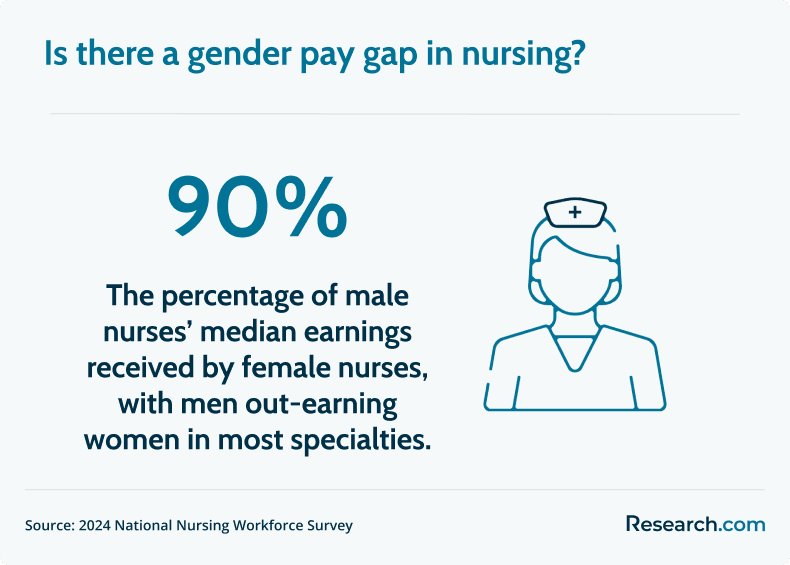
On average, RNs earn $98,430 annually, with salaries ranging from $66,030 to $135,320. Despite the overall stability of nursing as a profession, data reveal a persistent gender gap in earnings. According to Zippia (2025), male RNs earn $78,969, while female RNs earn $74,483.
Male nurses also report higher salaries across most specialties. In family health, male RNs reported a median salary of $165,000, compared with $100,000 for women in the same specialty. In acute and critical care, one of the most common nursing areas, female nurses earned $90,000, while men earned roughly $7,000 more.
Similar to the analysis of highest demand engineering jobs, examining salary differences by gender and specialty helps highlight which roles are most valued and in demand within the nursing workforce.
This evidence suggests that pay inequities still shape the nursing workforce. While progress has been made in addressing gender gaps across healthcare, salary transparency and equity initiatives may help ensure fair compensation.
It is also worth noting that gender alone does not determine pay, since location, educational attainment, experience, specialty, work hours, and employer type also influence income.
What are the advantages of being men in nursing?
The nursing profession continues to expand with opportunities that reward skill, education, and dedication. For men in nursing, the field offers unique benefits that extend beyond financial security or job stability.
- Educational Attainment: Slightly more men hold advanced degrees in nursing compared to women. For example, 20.7% of men have an MSN versus 20.6% of women, and men also lead at the doctoral level with 3.2% holding a PhD compared to 2.6% of women. These statistics suggest that men may find particular encouragement to pursue advanced academic pathways.
- Scholarships and Financial Aid: Dedicated nursing scholarships for men create pathways into the profession while easing the financial burden of education. These programs often seek to address gender imbalances by supporting male students in their academic and professional goals.
- Leadership Opportunities: Men can move into leadership roles, which allow them to shape healthcare delivery systems while building influence within hospitals and organizations.
- Research and Academic Roles: Nursing research and faculty positions benefit from gender diversity. Men’s involvement helps strengthen nursing’s knowledge base and ensures that education remains inclusive and well-rounded.
- Mentorship and Role Modeling: As more men enter the field, they become important mentors for future students. Representation helps normalize diversity in nursing and inspires others to see the profession as accessible.
The advantages of being a nurse are not limited by gender, but the presence of more men enhances diversity and strengthens the profession as a whole. These opportunities show that nursing welcomes individuals from all backgrounds to make lasting contributions to healthcare.
What challenges do men in nursing face in the workplace?
Despite the steady growth of men in nursing, challenges that often stem from cultural or gender expectations and workplace dynamics remain. These issues create barriers and can affect career satisfaction and professional development. Understanding them is key to building a more supportive and inclusive nursing profession.
- Persistent Stereotypes and Bias: Male nurses are typically steered toward labor-intensive roles or critical care specialties, rather than being seen as equally capable across all areas of nursing. These assumptions can limit fair skill recognition and reduce opportunities to explore diverse practice settings.
- Perceived Lack of Compassion: Male nurses are sometimes seen as less caring or empathetic than their female colleagues. This misconception can affect how patients, peers, and supervisors view their abilities.
- Lack of Peer Connection: In workplaces where men are minorities, feelings of social isolation can emerge. Male nurses may find fewer peers to share experiences with, leading to a sense of exclusion in team dynamics.
- Doubts About Professional Identity: Constant exposure to gender-based assumptions can contribute to self-doubt. This can affect male nurses' confidence, which can then also affect their ability to build trust with patients and deliver care effectively.
- Caring for Female Patients: Some female patients may feel uneasy receiving care from male nurses, particularly during sensitive procedures or in specialties like obstetrics and gynecology. This challenge requires sensitivity and clear communication to build trust while respecting patient preferences.
Overcoming these challenges requires more than policy changes. Rather, it also means reshaping how nursing is perceived.
In one study published in the Nurse Education in Practice journal, researchers suggested reframing nursing narratives to highlight diverse roles, increasing exposure to male and female role models, and promoting media literacy to counter stereotypes (Ghimire & Qui, 2025). These strategies can help create a more inclusive profession where every nurse is empowered to succeed.
What specializations are most popular among men in nursing?
Nursing offers a wide range of specialties that match different skills, interests, and patient needs. While men in nursing work in nearly every area, some fields consistently attract higher representation. These include the following:
- Acute and Critical Care: Nurses in this specialty care for patients with life-threatening conditions, often in intensive care or cardiac units. The focus is on stabilizing patients and supporting recovery in high-pressure environments. This specialty was composed of 1,859 male nurses and 7,666 female RNs in 2024.
- Emergency and Trauma Care: Emergency nurses respond to urgent medical situations ranging from minor injuries to severe trauma. They perform rapid assessments, deliver immediate treatments, and coordinate care under unpredictable circumstances.
- Nurse Anesthesia: Nurse anesthetists prepare patients for surgery, administer anesthesia, and monitor vital signs throughout procedures. They play a critical role in ensuring patient safety before, during, and after operations.
- Medical-Surgical Nursing: Nurses in this broad specialty care for patients with a wide range of conditions, often in hospital settings. They manage medications, assist with procedures, and coordinate with interdisciplinary teams.
- Psychiatric, Mental Health, and Substance Abuse: Nurses support patients experiencing mental health disorders or substance use challenges by providing counseling, administering medications, and collaborating with mental health professionals. Many also advance into PMHNP jobs, where they diagnose and manage complex behavioral health conditions.
These popular specialties highlight common paths, but men can thrive in any area of nursing. Venturing into less traditional fields can open new opportunities and help challenge gender stereotypes in healthcare.
This chart highlights the top specializations among male RNs, shown alongside the number of female nurses for comparison.
Are there leadership opportunities available for men in nursing?
Leadership plays a vital role in shaping the future of healthcare, and nurses increasingly step into positions that influence patient outcomes, workplace culture, and policy decisions. For men in nursing, leadership opportunities are as varied as they are impactful, ranging from administrative roles to advanced clinical practice.
- Nurse Educators ($87,090): They prepare the next generation of nurses by teaching in academic and clinical settings. They design curricula, evaluate student performance, provide mentorship, and contribute to nursing research.
- Clinical Nurse Leaders ($91,900): Those curious about what is a clinical nurse leader will find that this role involves coordinating patient care at the microsystem level. Clinical nurse leaders integrate evidence-based practices, monitor outcomes, and improve efficiency in care delivery.
- Nursing Consultants ($95,965): These nurses provide expert advice to healthcare organizations, legal teams, or businesses on nursing practices, patient care, and regulatory compliance. They analyze systems, recommend improvements, and help facilities adopt best practices to enhance quality and efficiency.
- Nurse Managers ($99,901): They oversee units or departments, handling staffing, budgeting, and overall operations. This role combines organizational leadership with a strong grounding in clinical practice.
- Health Policy Advisors ($104,760): They analyze healthcare regulations, legislation, and policies to guide organizations in improving patient care and operational efficiency. Their work ensures that healthcare systems remain effective, equitable, and responsive to emerging public health needs.
- Chief Nursing Officers ($155,833): CNOs manage nursing departments, ensuring that patient care standards align with organizational goals and regulatory requirements. As top-level leaders, these nurses play a critical role in shaping healthcare policies and advancing the profession.
What initiatives promote gender diversity in nursing schools?
Building gender diversity in nursing education is key to creating a workforce that reflects the populations it serves. Schools, as well as healthcare systems, are increasingly adopting strategies to recruit and retain underrepresented groups, including men in nursing, to foster inclusivity and innovation in healthcare.
- Faculty and Leadership Development Programs: Many nursing schools invest in training faculty and administrators to lead diversity and inclusion efforts. National initiatives such as the AACN’s Diversity Symposium and Diversity Leadership Institute provide resources that help schools create long-term strategies.
- Holistic Admissions Review: This process evaluates applicants beyond grades and test scores, considering experiences, backgrounds, and potential contributions to the profession. It allows schools to identify candidates who may bring unique perspectives to healthcare.
- Diversity Grants and Fellowships: These initiatives cover tuition, living expenses, or research opportunities. Notably, male RNs are generally more racially diverse than their female counterparts, with 29.5% representing non-White racial groups, so these financial aid options help promote both gender and racial diversity within the profession.
- Mentorship Programs: Mentors provide guidance on coursework, clinical practice, and career paths, including explaining what does a nurse educator do. These relationships foster belonging and confidence among underrepresented nursing students.
- Nursing Community Programs: Outreach initiatives with local organizations, schools, and health centers help showcase diverse role models, offer career exploration workshops, and challenge traditional stereotypes. They are particularly effective in encouraging students from underrepresented groups to see nursing as an inclusive profession.
By embracing these initiatives, nursing schools ensure that the future nursing workforce is equipped with diverse perspectives, improved cultural competency, and a stronger commitment to equitable healthcare.
This chart shows the share of RNs by race and gender.
Will the number of men in nursing continue to rise in the future?
The nursing profession continues to expand, driven by increasing patient needs, retirements, and the demand for specialized care. According to the BLS, the workforce expects about 54,400 annual openings for LPNs/LVNs, 189,100 for RNs, and 29,500 for NPs from 2024 to 2034. These numbers underscore that opportunities are plentiful, which may encourage more individuals, including men in nursing, to enter and advance in the field.
Enrollment data also show that male students have maintained a steady presence in nursing programs, though their overall representation has grown slowly. The AACN reports that men have consistently accounted for 11% to 13% of undergraduate nursing students over the past five years.
Expanded access to flexible educational options, such as the direct entry MSN for non nurses online or accelerated degree options, could help attract career changers who are looking for quicker ways to transition into nursing.
While progress may not be rapid, the long-term outlook suggests a gradual increase in male representation across nursing roles. As societal perceptions of gender and caregiving become more welcoming, and as healthcare organizations continue to highlight the importance of diversity, more men are likely to see nursing as a viable profession.
This chart highlights the share of male nursing students.
Here’s What Male Nurses Have to Say About Their Careers
- Jacob: "During nursing school, I often heard that men weren’t naturally compassionate, but I quickly learned that compassion is really about listening and being fully present. Today, as a pediatric nurse, I see the difference it makes when families feel genuinely cared for. Every day at work, I feel that my skills are recognized and valued."
- Randell: "As a man in nursing, I wanted to challenge myself academically, so I pursued my MSN and am now on track to become a nurse practitioner. Balancing coursework with clinical rotations wasn’t easy, but strong mentorship helped me stay on course. Being part of a smaller group of men in the field has allowed me to stand out, and I feel ready to take on leadership opportunities."
- Damien: "I never expected nursing to be so fulfilling until I started working in mental health. Some patients told me they felt more comfortable opening up to a male nurse, which made my role even more meaningful. It wasn’t always easy, but over time, I learned to focus on my patients and the impact I could make."
Key Findings
- Men accounted for 10.4% of RNs, 9.1% of LVN/LPNs, and 11.5% of NPs in 2024.
- According to Zippia (2025), male RNs earn $78,969, while female RNs earn $74,483.
- 20.7% of men have an MSN versus 20.6% of women, and men also lead at the doctoral level with 3.2% holding a PhD compared to 2.6% of women.
- Acute and Critical Care Nursing was composed of 1,859 male nurses and 7,666 female RNs in 2024.
- Male RNs are generally more racially diverse than their female counterparts, with 29.5% representing non-White racial groups.
References:
- AMEDD Center of History & Heritage. (n.d.). Proud to Serve: The Evolution of Male Army Nurse Corps Officers. Army Nurse Corps Newsletter Historical Articles. Retrieved September 19, 2025, from https://achh.army.mil/history/articles-malenurses
- American Association of Colleges of Nursing. (2024). Setting a New Standard for Nursing Education: 2024 Annual Report. https://www.aacnnursing.org/Portals/0/PDFs/Publications/Annual-Reports/2024-AACN-Annual-Report.pdf
- American Association of Nurse Practitioners. (2024). 2024 AANP Practice Report. https://www.aanp.org/practice/practice-related-research/research-reports
- Landivar, L. C. (2013, February 25). Men in Nursing Occupations. U.S. Census Bureau. https://www.census.gov/newsroom/blogs/random-samplings/2013/02/men-in-nursing-occupations.html
- Military Health System. (n.d.). Nurses and Nursing in the Military. Retrieved September 19, 2025, from https://www.health.mil/About-MHS/Military-Medical-History/Historical-Timelines/Nurses
- PayScale. (2025, April 5). Average Clinical Nurse Leader Hourly Pay. Retrieved September 19, 2025, from https://www.payscale.com/research/US/Job=Clinical_Nurse_Leader/Salary
- Smiley, R. A., Kaminski-Ozturk, N., Reid, M., Burwell, P., Oliveira, C. M., Shobo, Y., Allgeyer, R. L., Zhong, E., O’Hara, C., Volk, A., & Martin, B. (2025b). The 2024 National Nursing Workforce Survey. Journal of Nursing Regulation, 16(1), S1–S88. https://doi.org/10.1016/s2155-8256(25)00047-x
- University of Pennsylvania. (n.d.). American Nursing: An Introduction to the Past. Nursing, History, and Health Care. Retrieved September 19, 2025, from https://www.nursing.upenn.edu/nhhc/american-nursing-an-introduction-to-the-past
- U.S. Bureau of Labor Statistics. (2025, August 28). Registered Nurses. Occupational Outlook Handbook. https://www.bls.gov/ooh/healthcare/registered-nurses.htm
- Zippia. (2025, December 15). Registered nurse salary insights by state. Zippia. https://www.zippia.com/salaries/registered-nurse/
- ZipRecruiter. (2025, September 12). Chief Nursing Officer Salary. Retrieved September 19, 2025, from https://www.ziprecruiter.com/Salaries/Chief-Nursing-Officer-Salary
Other Things You Should Know About Men in Nursing
In 2027, men in nursing benefit from increased mentoring programs, broader acceptance in specialized fields, and leadership opportunities. These benefits contribute to diversity and representation, making the profession more inclusive and appealing to men.
In 2027, male nurses can pursue growing opportunities in leadership roles, nursing informatics, and specialized fields like critical care and anesthesia. Increasing demand for diverse perspectives in patient care encourages more men to advance in these areas.


