2027 Steps to Become a Registered Dietitian in Massachusetts

Co-Founder and Chief Data Scientist
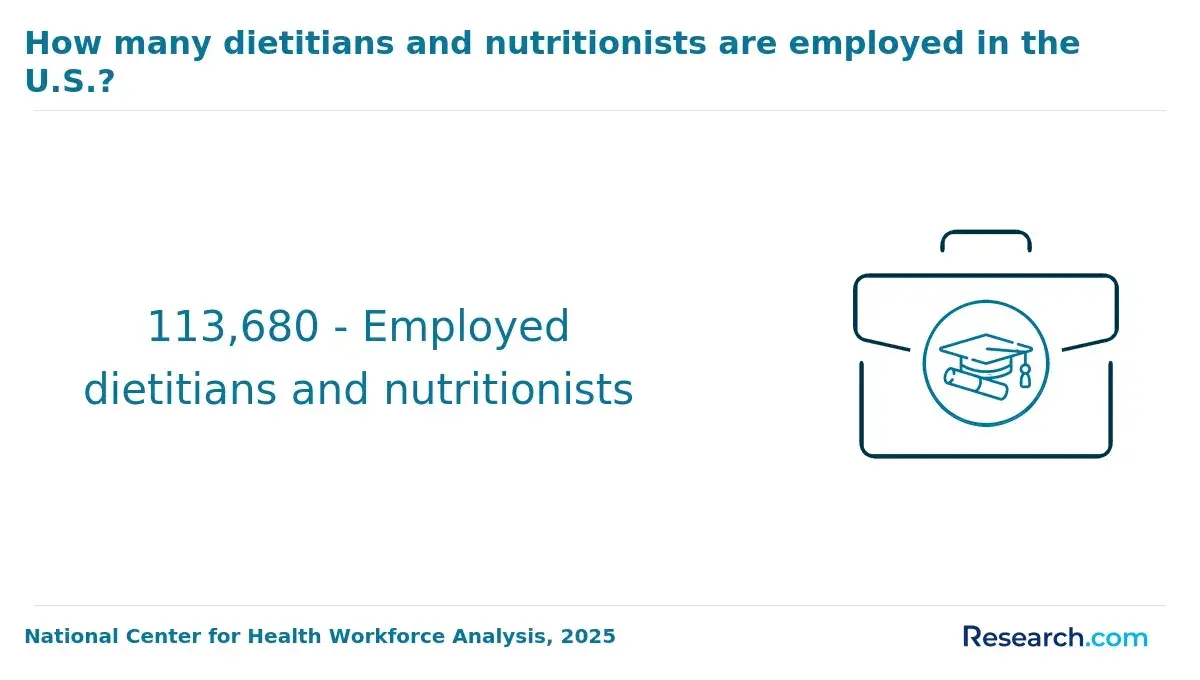
Massachusetts faces growing demand for registered dietitians, yet many aspiring professionals struggle with the certification process. With over 2,500 dietitians employed and 12% job growth projected by 2030, career prospects are strong.
This article, prepared by career planning experts, outlines education, supervised practice, and licensure requirements, providing practical guidance to help readers build a successful dietitian career.
Key Things to Know About Becoming a Registered Dietitian in Massachusetts
- To become a dietitian in Massachusetts, you need ACEND-accredited degrees, an internship, and the CDR exam.
- Completing at least 1,000 supervised practice hours provides essential hands-on experience in multiple nutrition settings.
- Dietitians in Massachusetts earn about $82,380 per year, which is higher than the national average.
- What degree is required to become a registered dietitian in Massachusetts?
- How many supervised practice hours are needed to become a registered dietitian in Massachusetts?
- What are the eligibility requirements for the dietetic registration exam in Massachusetts?
- How can you get a license after passing the dietetic registration exam in Massachusetts?
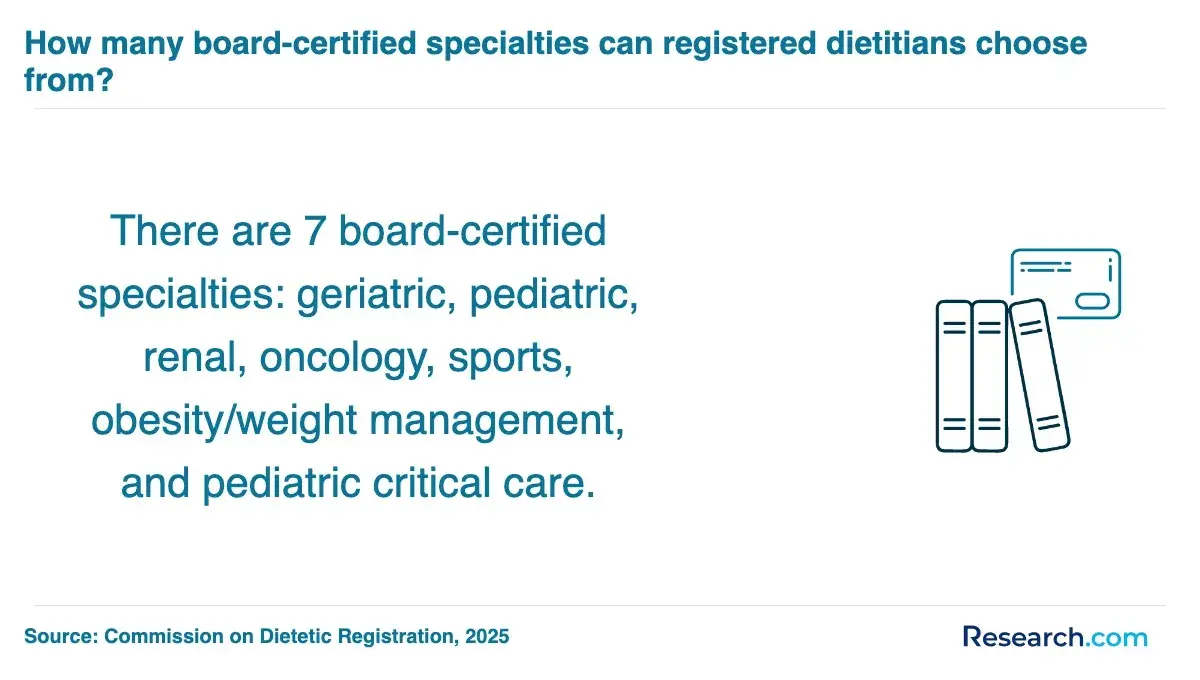
- What types of dietitian specializations can you pursue in Massachusetts?
- What is the average salary of a registered dietitian in Massachusetts?
- What do you need to keep your dietitian registration active in Massachusetts?
- How long does it take to become a registered dietitian in Massachusetts?
- What challenges might I encounter in pursuing a registered dietitian career in Massachusetts?
- Can international students qualify to become registered dietitians in Massachusetts?
- What career paths can registered dietitians pursue in Massachusetts?
- What professional organizations can support my registered dietitian career in Massachusetts?
What degree is required to become a registered dietitian in Massachusetts?
Becoming a registered dietitian in Massachusetts requires completing accredited academic programs that combine classroom instruction with supervised practical training. Below are the key degree requirements:
- Bachelor’s Degree in Nutrition or Related Field: Candidates must earn a bachelor’s degree from an ACEND-accredited program in nutrition or a closely related field. This foundational education provides essential knowledge in nutrition science and dietetics.
- Completion of Didactic Program in Dietetics (DPD): A DPD program delivers coursework approved by the Accreditation Council for Education in Nutrition and Dietetics (ACEND). It prepares students for supervised practice and establishes eligibility for professional registration.
- Supervised Practice or Internship: Following coursework, candidates must complete a supervised internship lasting 6 to 12 months. This training provides real-world experience in clinical, community, and foodservice nutrition settings.
- Passing the Registration Examination: Graduates are required to pass the national registration exam administered by the Commission on Dietetic Registration (CDR). This credential is necessary to qualify for licensure and professional practice in Massachusetts.
While the pathway is structured, potential students should consider flexible options such as part-time or online courses, especially if balancing other commitments. For a broader perspective on career options available with such credentials, reviewing a list of the best careers to pursue with a nutrition masters degree can be insightful.
How many supervised practice hours are needed to become a registered dietitian in Massachusetts?
Becoming a registered dietitian in Massachusetts requires completing supervised practice hours through an ACEND-accredited program. These hours provide hands-on experience in clinical, community, and foodservice settings. Below are the key points regarding supervised practice hours in Massachusetts:
- ACEND-Accredited Program Requirement: Supervised practice must be completed through an ACEND-approved dietetic internship or coordinated program to ensure compliance with national standards.
- Minimum Hour Requirement: Candidates must complete at least 1,000 supervised practice hours, in line with national guidelines.
- Enhanced Local Programs: Some Massachusetts programs, including Mass General and Beth Israel Deaconess Medical Center, offer 1,200 to 1,400 hours to provide additional clinical experience.
- State Board Standards: The Massachusetts Board of Registration of Dietitians and Nutritionists adheres to ACEND standards and does not require extra hours beyond the national minimum.
- Verification Statement: Completion of supervised practice results in a Verification Statement from the program director, required for the national registration exam and state licensure.
- Program Duration and Settings: Supervised practice typically spans 10 to 12 months full-time and includes rotations in clinical, community, and foodservice management settings.
- Consistency with National Standards: Local program hour variations remain aligned with ACEND requirements, with no additional state-specific mandates.
What are the eligibility requirements for the dietetic registration exam in Massachusetts?
To take the dietetic registration exam in Massachusetts, candidates must meet specific educational and program requirements. These standards ensure applicants are prepared to pursue licensure and practice competently in the state.
Below are the key requirements:
- Minimum Educational Qualification: Candidates must hold at least a graduate degree, such as a master’s or doctoral degree, from a U.S. Department of Education-accredited institution or an equivalent foreign credential.
- Required Nutrition Coursework: Completion of an ACEND-accredited program is mandatory. Acceptable pathways include Didactic Programs in Dietetics (DPD), Coordinated Programs (CP), or Graduate Programs (GP) to ensure foundational knowledge in nutrition and dietetics.
- Verification Statement Submission: After completing educational and supervised practice requirements, the program director submits a verification statement to the Commission on Dietetic Registration (CDR), confirming eligibility to apply for the exam.
- Registration and Passing the National Exam: Candidates must register online with the CDR, pay the required fee, and pass the computer-based national exam administered at Pearson VUE centers across Massachusetts to earn the Registered Dietitian (RD) credential.
- State-Specific Licensure Considerations: Massachusetts generally requires the RD credential for licensure as a Licensed Dietitian Nutritionist (LDN). The CDR’s internship and exam satisfy state requirements, though alternative pathways may exist for candidates without RD credentials, involving additional education and experience.
While supervised practice hours are a prerequisite, their details are typically addressed within the ACEND-accredited program requirements. For those exploring the pathway to becoming a nutrition professional, understanding what requirements are needed to become a nutritionist can provide useful context alongside the Massachusetts dietitian registration exam qualifications.
How can you get a license after passing the dietetic registration exam in Massachusetts?
After passing the dietetic registration exam, candidates must complete several steps to obtain licensure in Massachusetts. These steps ensure compliance with state regulations and professional standards.
Below are the key steps:
- Verify Eligibility: Confirm completion of a bachelor’s degree in dietetics or a related field and an ACEND-accredited supervised practice program, which are required for RDN credentialing.
- Receive RDN Credential: Obtain formal recognition as a Registered Dietitian Nutritionist by passing the CDR exam, a prerequisite for licensure.
- Prepare Application Materials: Collect official transcripts, verification from the CDR, and proof of supervised practice completion to meet educational and experiential requirements.
- Complete Application: Submit the licensure application via the Massachusetts Board’s online portal, ensuring accuracy and proper attachment or mailing of all required documents.
- Pay Licensing Fee: Submit the required fee online or by other approved methods, noting that fees may change and should be confirmed in advance.
- Await Review: Allow the Board time to review your application, which may take several weeks and could require additional documentation.
- Receive License: Upon approval, obtain the Licensed Dietitian Nutritionist credential, authorizing legal practice in Massachusetts.
- Maintain Records: Keep your license accessible for employers or clients who may request verification at any time.
What types of dietitian specializations can you pursue in Massachusetts?
Massachusetts offers a variety of dietitian specializations, each designed to serve specific populations or healthcare settings. These roles provide opportunities to apply expertise in clinical care, community health, research, or consulting, supporting diverse nutritional needs across the state.
Below are the key dietitian specializations available in Massachusetts:
- Clinical Dietitian: Provides medical nutrition therapy in hospitals and clinics, collaborating with healthcare teams to manage chronic diseases such as diabetes and cardiovascular conditions.
- Food Service Management Dietitian: Oversees large-scale meal planning, food safety, and nutrition standards in institutions, emphasizing cost efficiency.
- Pediatric Dietitian: Focuses on the nutritional needs of infants and children, managing growth concerns, allergies, and other pediatric health issues.
- Geriatric Dietitian: Specializes in nutrition for older adults, supporting chronic disease management and healthy aging in senior care settings.
- Sports Dietitian: Provides nutrition counseling to athletes and active individuals to enhance performance and recovery.
- Research Dietitian: Conducts scientific studies to advance nutrition knowledge, often working with universities or government agencies.
- Consultant Dietitian: Offers expert nutrition guidance to organizations or private clients, including menu planning and wellness program development.
- Oncology Dietitian: Supports cancer patients’ nutritional needs during treatment and recovery in hospitals or specialized centers.
- Renal Dietitian: Develops dietary plans for individuals with chronic kidney disease to support kidney function and overall health.
- Community Dietitian: Works in public health or government agencies to develop nutrition programs addressing population health issues like obesity prevention and maternal-child health.
What is the average salary of a registered dietitian in Massachusetts?
Registered dietitians in Massachusetts earn salaries that vary by location, experience, and work setting. Below are key factors influencing compensation:
- Average Annual Salary: Dietitians in Massachusetts earn approximately $82,380 per year, or $39.60 per hour.
- Comparison to National Average: This is notably higher than the national average of $74,770, making Massachusetts a top-paying state for dietitians.
- Location Variations: Major metropolitan areas such as Boston offer higher salaries due to elevated demand and cost of living.
- Experience Level: Entry-level dietitians earn around $66,700, while experienced professionals can reach $103,490 or more annually.
- Work Setting Influence: Hospital, research, and private consulting roles generally provide higher pay than school or community health positions.
- Demand and Market Trends: Strong healthcare infrastructure and focus on preventative care drive competitive wages. Salary growth is expected as specialized roles expand and healthcare needs increase.
What do you need to keep your dietitian registration active in Massachusetts?
Maintaining an active dietitian registration in Massachusetts ensures legal compliance and professional credibility. Staying current supports uninterrupted practice and demonstrates commitment to high standards in nutrition care.
Below are the key requirements:
- License Renewal Frequency: Renew your license every two years by your birthday. Submit the application at least 30 days before expiration to avoid lapses.
- Continuing Education: Complete a minimum of 30 hours of relevant continuing education every two years. This ensures adherence to Massachusetts Board standards.
- Renewal Fee: Pay a $130 fee with each renewal. Late renewals may incur additional charges.
- Documentation: Keep detailed records of continuing education activities. These may be audited by the Board to verify compliance.
- National Registration: If holding the RD credential, maintain national registration by completing 75 hours of continuing professional education every five years.
- Contact Information: Keep mailing and electronic contact details current with the Board to receive notifications and renewal reminders.
- Reciprocity and Late Renewal: The Board may accept equivalent credentials from other states. Certain late renewals are allowed under specified conditions.
How long does it take to become a registered dietitian in Massachusetts?
The pathway to becoming a registered dietitian in Massachusetts typically spans five to eight years, encompassing undergraduate and graduate education, supervised practice, and successful completion of the national registration exam. This timeframe reflects the comprehensive academic and experiential preparation required for professional credentialing, though individual circumstances such as program structure, part-time study, or internship availability may cause variation in overall duration.
Aspiring dietitians generally complete a four-year bachelor’s degree followed by a master’s degree, now required for exam eligibility. Supervised practice, often undertaken through a dietetic internship, represents a critical component of training and can require several months to a year to complete. Integrated or accelerated programs that combine academic coursework with practical experience may shorten the timeline, while delays in internship placement or exam scheduling can extend it.
Those exploring options should also review alternatives such as the best online bachelors degrees in nutritional science to plan an efficient route forward.
What challenges might I encounter in pursuing a registered dietitian career in Massachusetts?
Candidates often face competitive placement for dietetic internships and must navigate evolving state licensure requirements alongside rigorous academic standards. Financial constraints, such as high tuition fees and limited funding opportunities, can add to the challenges during training. In addition, balancing academic commitments with extensive practical experience may require careful time management and planning. Exploring alternative healthcare roles, such as learning how to become a medical assistant in Massachusetts, can offer additional perspectives on building a robust career path.
Can international students qualify to become registered dietitians in Massachusetts?
International students have a clear but demanding path to become registered dietitians in Massachusetts. Meeting U.S. education and credentialing standards ensures their qualifications are recognized and valued.
Below are the key requirements:
- Degree Equivalency Evaluation: Students must verify that their foreign degree matches a U.S. regionally accredited degree in nutrition, dietetics, or a related field, typically through a credential evaluation recognized by the Commission on Dietetic Registration (CDR).
- Completion of ACEND-Accredited Programs: All required coursework and supervised practice must be completed through an ACEND-accredited program, either in the U.S. or select internationally recognized programs, to ensure consistent educational quality.
- Supervised Practice Requirement: A minimum of 1,200 hours of supervised dietetic internship is required through an ACEND-accredited program. In Massachusetts, these internships can cost between $9,000 and $14,000, with some programs offering acceptance rates exceeding 80%.
- Pass the CDR National Registration Examination: Candidates must successfully pass the national exam administered by the CDR after completing all academic and internship prerequisites.
- State Licensure Application: Once registered, applicants must apply for licensure with the Massachusetts Board of Registration of Dietitians and Nutritionists, submitting official documentation such as sealed transcripts directly from their institutions.
- Visa and Work Authorization: Maintaining legal immigration status throughout training is essential, along with securing appropriate work authorization such as OPT or H-1B to practice professionally in Massachusetts.
For those seeking a flexible and reputable academic route, some may consider becoming a nutrition nurse as an example of how specialized education pathways can be pursued, reflecting the diverse options available to international students aiming to advance their careers.
What career paths can registered dietitians pursue in Massachusetts?
Registered dietitians in Massachusetts can pursue diverse careers across clinical, community, corporate, research, and educational settings. Each path offers unique responsibilities, stable demand, and competitive salaries.
Below are the key career options:
- Clinical Dietitian: Provide medical nutrition therapy in hospitals and specialty centers. Salaries average $82,380 statewide, with strong job outlooks in healthcare.
- Community Nutritionist: Develop nutrition programs in public health and nonprofit sectors. Salaries align with state averages, with steady demand for population health initiatives.
- Private Practice Dietitian: Offer independent or group counseling. This path allows flexibility, with potential for higher earnings for experienced practitioners.
- Food Service Management: Oversee nutrition programs in schools, hospitals, or institutions. Roles have positive outlooks, with pay at or above median salaries.
- Sports and Performance Nutritionist: Advise athletes on nutrition for optimal results. This growing field offers competitive salaries reflecting specialized expertise.
- Research Dietitian: Conduct clinical studies at universities or companies. Positions benefit from Massachusetts’ research climate, offering higher salary potential.
- Industry and Corporate Wellness Consultant: Design workplace wellness programs or advise health companies. Roles have anticipated growth with above-average pay.
- Director of Clinical Nutrition: Lead nutrition departments in major healthcare facilities. Senior positions provide strong job security and salaries often exceeding $100,000.
For those considering advanced education to enhance these career opportunities for registered dietitians in Massachusetts, pursuing an online nutrition masters degree benefits provides flexible pathways to specialization and leadership roles.
What do registered dietitians in Massachusetts say about their career?
- Starting my career as a registered dietitian in Massachusetts allows me to directly impact children’s health while applying science-based nutrition practices. The state’s strong support networks and focus on wellness help me grow professionally and make a meaningful difference. —Jim
- Working as a dietitian in Massachusetts provides opportunities to innovate school nutrition programs while addressing diverse cultural dietary needs. This career has strengthened my skills and passion for helping students make healthier choices. —Faye
- Being a registered dietitian in Massachusetts offers both professional growth and community impact. Tailoring nutrition programs to diverse populations and seeing tangible improvements in students’ health makes this work fulfilling and motivating. —Andre
What professional organizations can support my registered dietitian career in Massachusetts?
In Massachusetts, aspiring and practicing dietitians can leverage various professional associations to expand their networks, access continuing education opportunities, and remain updated on industry standards. Key organizations, such as the Massachusetts Dietetic Association, offer targeted mentorship programs, specialized workshops, and exclusive career development resources that complement formal education and supervised practice requirements. Engaging with both state and national bodies provides a strategic advantage by connecting professionals with emerging research, policy updates, and collaborative projects. For additional insights into alternative nutritional career pathways, review how to become a nutritionist in Massachusetts.
Related Articles for Nearby States
- 2027 Steps to Become a Registered Dietitian in Rhode Island
- 2027 Steps to Become a Registered Dietitian in Connecticut
- 2027 Steps to Become a Registered Dietitian in New Hampshire
- 2027 Steps to Become a Registered Dietitian in New York
- 2027 Steps to Become a Registered Dietitian in Vermont
- 2027 Steps to Become a Registered Dietitian in New Jersey
- 2027 Steps to Become a Registered Dietitian in Maine
- 2027 Steps to Become a Registered Dietitian in Pennsylvania
- 2027 Steps to Become a Registered Dietitian in Delaware
- 2027 Steps to Become a Registered Dietitian in Maryland
References:
- Become a Registered Dietitian Nutritionist. (n.d.). Academy of Nutrition and Dietetics. Retrieved from eatright.org
- Commission on Dietetic Registration. (n.d.). Graduate degree. Retrieved from cdrnet.org
- Coordinated Program in Dietetics (CPD). (n.d.). Framingham University. Retrieved from framingham.edu
- Career opportunities at the Department of Public Health. (n.d.). Mass.gov. Retrieved from mass.gov
- Evans, M. C. (2025, August 18). U.S. adults rate their diet as healthy, worry about food safety. Gallup. https://news.gallup.com/poll/693497/adults-rate-diet-healthy-worry-food-safety.aspx
- How to become a licensed or non-licensed nutritionist in Massachusetts - MA. (n.d.). Retrieved from becomeanutritionist.org
- How to become a registered dietitian in Massachusetts - MA: Exam, license, and education requirements in Massachusetts. (n.d.). Retrieved from nutritioned.org
- Kikuchi, E., Pula, I., Tyson, A., & Yam, E. (2025, May 7). Americans on healthy food and eating. Pew Research Center. https://www.pewresearch.org/science/2025/05/07/americans-on-healthy-food-and-eating/
- Massachusetts Academy of Nutrition and Dietetics. (n.d.). Jobs. Retrieved from eatrightma.org
- Nutritional Sciences BS, Dietetics Option. (n.d.). UMass Lowell. Retrieved from uml.edu
- Pathway to become a registered dietitian (RDN). (n.d.). UMass Amherst, School of Public Health & Health Sciences. Retrieved from umass.edu
- Training to become a registered dietitian nutritionist (RDN) at Simmons. (n.d.). Simmons University. Retrieved from simmons.edu
Other Things You Should Know About Becoming a Registered Dietitian in Massachusetts
In 2027, aspiring registered dietitians in Massachusetts must earn a bachelor’s degree in dietetics or a related field from an ACEND-accredited program. This foundational step includes coursework in nutrition, biology, and chemistry, preparing students for supervised practice and the CDR exam.
In 2027, most dietetic internships in Massachusetts do not offer financial compensation as they are part of the educational pathway required to become a registered dietitian. These internships focus on providing hands-on experience in clinical settings, community nutrition, and food service management.
Yes, scholarships and financial aid are available to dietetics students in Massachusetts through state, national, and institutional programs. The Massachusetts Dietetic Association offers scholarships, while many universities provide program-specific awards. National funding from the Academy of Nutrition and Dietetics Foundation and federal financial aid, such as grants and loans, also help students reduce the costs of completing dietetics education.