2027 Steps to Become a Registered Dietitian in New Mexico

Co-Founder and Chief Data Scientist
New Mexico faces significant public health challenges, with 32% of adults classified as obese, highlighting the need for skilled nutrition professionals. A career as a registered dietitian offers growing opportunities in healthcare and community settings.
This article, prepared by career planning specialists, guides aspiring dietitians through education, certification, and professional requirements for a successful career in New Mexico.
Key Things to Know About Becoming a Registered Dietitian in New Mexico
- Aspiring dietitians in New Mexico must complete an ACEND-accredited bachelor’s or master’s program with core nutrition coursework and supervised practice.
- Candidates must complete at least 1,000 supervised hours and meet educational criteria to qualify for the national dietetic registration exam.
- After passing the exam, professionals obtain state licensure and can pursue clinical, community, or specialized dietitian roles with competitive salaries.
- What degree is required to become a registered dietitian in New Mexico?
- How many supervised practice hours are needed to become a registered dietitian in New Mexico?
- What are the eligibility requirements for the dietetic registration exam in New Mexico?
- How can you get a license after passing the dietetic registration exam in New Mexico?
- What types of dietitian specializations can you pursue in New Mexico?
- What is the average salary of a registered dietitian in New Mexico?
- What do you need to keep your dietitian registration active in New Mexico?
- How do registered dietitians impact public health in New Mexico?
- How do registered dietitians collaborate with other healthcare professionals in New Mexico?
- How long does it take to become a registered dietitian in New Mexico?
- Can international students qualify to become registered dietitians in New Mexico?
- What career paths can registered dietitians pursue in New Mexico?
What degree is required to become a registered dietitian in New Mexico?
Becoming a registered dietitian in New Mexico requires specific academic preparation to ensure expertise in nutrition science and practical skills. Below are the key degree requirements:
- ACEND-Accredited Dietetics Degree: Candidates must complete a program accredited by the Accreditation Council for Education in Nutrition and Dietetics (ACEND). These programs provide validated coursework and supervised practice experiences necessary for professional credentialing.
- Bachelor’s Degree in Dietetics or Nutrition: Earning a bachelor’s degree in dietetics, nutrition, or a closely related field from an accredited institution is required. This degree serves as the foundational academic credential for advanced training and supervised practice.
- Supervised Practice Component: Accredited programs include practical, supervised experience in clinical, community, or foodservice settings. This hands-on training is critical for developing professional competency.
- Curriculum Covering Core Competencies: Degree programs must offer coursework in areas such as medical nutrition therapy, food science, community nutrition, and counseling techniques. These subjects equip candidates with the knowledge necessary for effective practice as a registered dietitian.
Prospective dietitians should select programs that emphasize evidence-based nutrition education and practical competencies. For those exploring flexible study options, the best nutrition certification online can complement formal degrees and enhance professional readiness.
How many supervised practice hours are needed to become a registered dietitian in New Mexico?
Becoming a registered dietitian in New Mexico requires completing a defined number of supervised practice hours through an ACEND-accredited internship. Below are the key considerations and standards regarding supervised practice hours in New Mexico:
- Minimum Hour Requirement: Candidates must complete at least 1,000 supervised practice hours. Some programs nationally may require up to 1,200 hours, but New Mexico follows the baseline standard.
- ACEND-Accredited Program Standards: All dietetic internships in New Mexico must be approved by ACEND, guaranteeing adherence to national minimum requirements for supervised practice hours.
- Structured Learning Environment: Hours are distributed among clinical dietetics, community nutrition, and foodservice management, often within a two-year full-time master’s plus internship framework.
- No State-Specific Hour Increase: New Mexico does not mandate additional hours beyond ACEND’s minimum requirements.
- Supervision Requirements: Interns receive direct supervision, including at least four hours of on-site oversight per month, supplemented by telehealth or remote guidance as needed.
- Licensure Application Documentation: Completion of supervised practice hours must be fully documented and submitted as part of the state licensure application process.
- Continuing Education Distinction: Post-licensure continuing education is required for maintaining credentials, but is separate from the initial supervised practice hour requirements.
To give further context on career outcomes, the chart below shows the top employers of registered dietitians in the U.S.
What are the eligibility requirements for the dietetic registration exam in New Mexico?
To sit for the dietetic registration exam in New Mexico, candidates must meet specific eligibility criteria. These requirements confirm that applicants have the proper educational background and meet both state and national standards.
Below are the key requirements:
- Educational Degree Requirement: Candidates must hold a minimum of a master’s degree or higher from a U.S. Department of Education-accredited institution. This reflects updated national standards effective from 2024.
- Completion of ACEND-Accredited Coursework: Applicants are required to complete nutrition coursework through an ACEND-accredited Didactic Program in Dietetics (DPD), Coordinated Program (CP), or Graduate Program (GP). New Mexico institutions such as the University of New Mexico and New Mexico State University offer programs meeting these standards.
- Verification Statement Submission: Upon completing academic and supervised practice requirements, the program director must submit a verification statement to the Commission on Dietetic Registration (CDR). This confirms all requirements are fulfilled before exam registration.
- Registration and Passing the National Exam: Candidates must register with the CDR and pass the national Registered Dietitian Nutritionist (RDN) exam. This exam is mandatory for obtaining the RD credential and for state licensure in New Mexico.
- State-Specific Licensure Pathways: New Mexico requires current CDR registration for dietitian licensure. Reciprocity may apply for professionals licensed in states with similar standards, while other nutrition-related licenses have separate entry-level exam requirements.
These eligibility requirements align with the state’s regulatory framework and ensure candidates are prepared for dietitian licensure. For those exploring related career options, the nutritionist how to become pathway provides valuable insights beyond registered dietitian credentials.
How can you get a license after passing the dietetic registration exam in New Mexico?
After successfully passing the dietetic registration exam, candidates must follow a structured process to obtain licensure in New Mexico. Clear steps ensure compliance with state regulations and verification of national credentials.
Below are the key steps:
- Submit Completed Application: Complete the official Licensure Application in full and have it notarized before submission.
- Provide Proof of CDR Registration: Include a certified copy of your valid Commission on Dietetic Registration card to confirm national registration status.
- Pay Required Fees: Submit a total of $200, comprising a $50 application fee and a $150 initial license fee payable to the Nutrition and Dietetics Board.
- Mail Application Packet: Send the notarized application, supporting documents, and fees to the New Mexico Regulation and Licensing Department at the designated address.
- Verification by the Board: The Nutrition and Dietetic Practice Board reviews submitted materials to confirm eligibility, credentials, and compliance with registration standards.
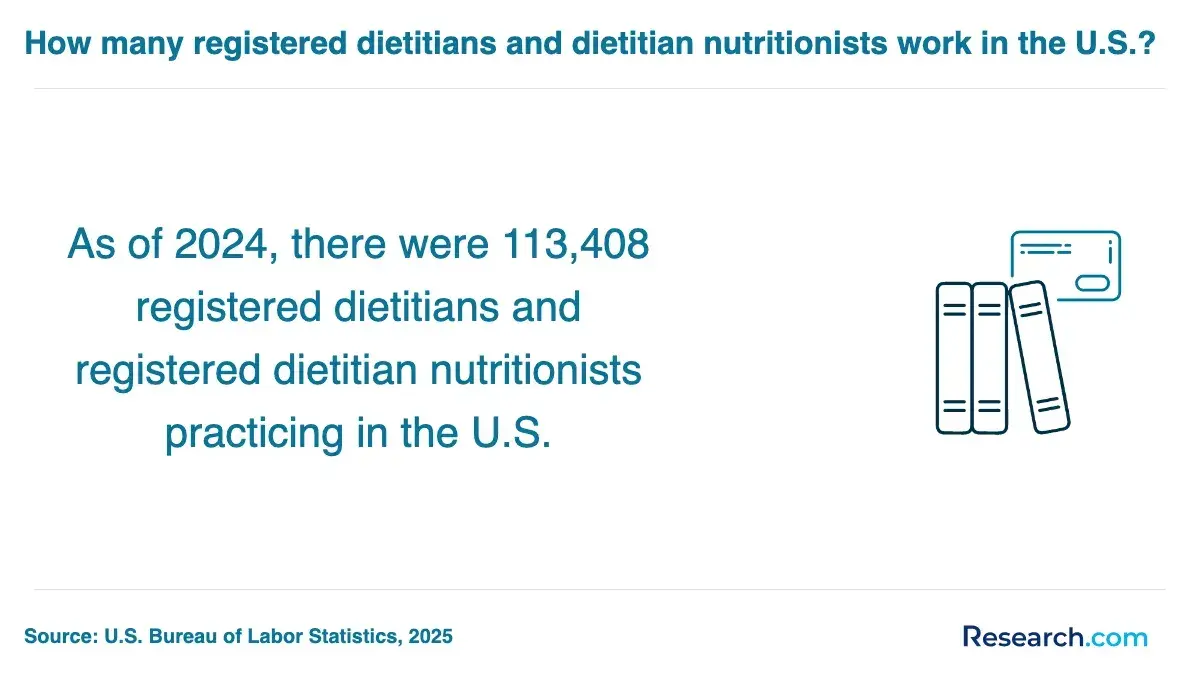
- Approval and Issuance of License: Upon verification, the Board grants licensure, authorizing practice as a registered dietitian in New Mexico, and becoming part of the country's dietitian and nutritionist workforce as shown below.
What types of dietitian specializations can you pursue in New Mexico?
Dietitian specializations in New Mexico provide diverse career opportunities that cater to healthcare, community, and organizational needs. These roles allow professionals to apply their nutrition expertise in focused settings, addressing a variety of health and wellness challenges.
Below are the key dietitian specializations available in New Mexico:
- Clinical Dietitian: Provides medical nutrition therapy in healthcare facilities, managing diets for patients with chronic or acute illnesses.
- Community Dietitian: Develops and implements nutrition programs in public health,schools, and community organizations to promote wellness on a population level.
- Food Service Management Dietitian: Oversees meal planning and preparation in institutions, ensuring safety, nutrition standards, and cost efficiency.
- Pediatric Dietitian: Specializes in nutrition for children and adolescents, addressing growth, allergies, and pediatric health conditions.
- Geriatric Dietitian: Focuses on nutritional care for older adults, managing age-related health issues and promoting healthy aging.
- Sports Dietitian: Advises athletes and active individuals on nutrition for performance, recovery, and injury prevention.
- Renal Dietitian: Tailors nutrition therapy for kidney disease patients, working closely with dialysis and nephrology teams.
- Diabetes Educator Dietitian: Provides education and individualized meal planning to manage diabetes, a prevalent condition in New Mexico.
- Research Dietitian: Conducts nutrition studies and collaborates on developing evidence-based dietary guidelines.
- Consultant Dietitian: Offers expert guidance on menu planning, compliance, and wellness programs to organizations and private clients.
What is the average salary of a registered dietitian in New Mexico?
Registered dietitians in New Mexico earn competitive salaries that reflect experience, location, and work setting. Below are key factors influencing compensation:
- Average Annual Salary: The typical salary for a registered dietitian in New Mexico is approximately $68,830 per year, with an hourly wage near $34.80.
- Comparison to National Average: This salary is about 3% below the national average of $71,650 for dietitians in the United States.
- Location Variations: Albuquerque dietitians earn around $69,710 annually, while those in Las Cruces earn about $67,200, reflecting regional differences.
- Experience Level: Entry-level professionals start near $59,480, while late-career dietitians can earn up to $87,730.
- Work Setting Influence: Salaries tend to be higher in hospitals and government agencies compared to schools or private practices due to available resources and advancement opportunities.
- Regional and Demand Trends: Metropolitan areas, especially Albuquerque, generally offer higher wages, while rural towns report lower pay. Increased public health initiatives and nutrition demand are expected to support salary growth.
What do you need to keep your dietitian registration active in New Mexico?
Maintaining an active dietitian registration in New Mexico ensures compliance with state regulations and supports high-quality nutrition care. Dietitians must meet specific requirements to avoid lapses and continue practicing professionally.
Below are the key requirements:
- Annual License Renewal: Licenses must be renewed every year. Renewal is due one year from the date of issuance and can be completed online or by mail.
- Renewal Fee: Each renewal requires a $75 fee. Late renewals within 30 days incur additional reinstatement fees. Licenses lapsed over three years require full reapplication.
- Continuing Education: Dietitians must complete at least 15 clock hours of continuing education annually. Alternatively, proof of current Commission on Dietetic Registration (CDR) status can be submitted.
- CDR Registration: For those maintaining national credentials, submit proof of active CDR registration annually. CDR requires 75 hours of continuing education every five years.
- Reinstatement Procedures: Licenses not renewed within 30 days require a reinstatement application, applicable fees, and documentation of continuing education.
- State-Specific Compliance: New Mexico does not automatically accept licenses from other states. Understanding local rules prevents lapses and ensures seamless practice.
How do registered dietitians impact public health in New Mexico?
Registered dietitians play a pivotal role in addressing community health challenges by designing and implementing nutrition initiatives that directly target prevalent issues such as obesity and chronic disease. Their work extends beyond individual patient care to include collaborations with local health departments, educational institutions, and community organizations, ensuring that evidence‐based nutritional strategies are integrated into public health policies and outreach programs. In addition, professionals enhancing their expertise through alternative pathways, such as how to become a nutritionist in New Mexico, further strengthen the framework needed to drive sustainable public health advancements in the state.
How do registered dietitians collaborate with other healthcare professionals in New Mexico?
Registered dietitians in New Mexico work within interdisciplinary teams to enhance patient outcomes and community health. They coordinate with physicians, nurses, and other allied health professionals to develop personalized nutritional care plans. This collaboration includes integrating nutritional therapy into broader treatment strategies, sharing evidence-based insights during case reviews, and aligning with public health initiatives. Professionals interested in expanding their interdisciplinary roles may also explore opportunities to cross-train and understand complementary functions, such as learning how to become a medical assistant in New Mexico, to further enhance team effectiveness.
How long does it take to become a registered dietitian in New Mexico?
The process of becoming a registered dietitian in New Mexico typically requires six to seven years, encompassing undergraduate and graduate education, supervised practice, and professional credentialing. This timeline reflects the rigorous academic and experiential requirements established by the Commission on Dietetic Registration (CDR) and the Accreditation Council for Education in Nutrition and Dietetics (ACEND). Variations may occur depending on individual circumstances, including program structure, internship availability, or scheduling constraints.
Most aspiring dietitians begin with a four-year ACEND-accredited undergraduate degree in nutrition or a related field, followed by a mandatory graduate degree to qualify for the registration exam as of 2024. After completing academic requirements, candidates must undertake supervised practice, often through an eight- to twelve-month internship. Coordinated programs that integrate coursework with practical training, as well as prior relevant coursework or part-time study, can influence the overall duration of this pathway.
For those researching academic pathways, reviewing options such as the best online bachelors degrees in nutritional science may offer flexible opportunities aligned with career goals.
Can international students qualify to become registered dietitians in New Mexico?
International students can pursue a career as registered dietitians in New Mexico by meeting both national and state licensure requirements. These steps ensure that foreign education and experience align with U.S. professional standards.
Below are the key requirements:
- Degree Equivalency Evaluation: Academic degrees must be assessed by recognized credentialing agencies to confirm they are equivalent to a U.S. regionally-accredited bachelor’s or master’s degree. This evaluation is required to enter ACEND-accredited programs.
- Completion of ACEND-Accredited Coursework and Supervised Practice: International applicants must finish all required coursework and supervised internships through ACEND-accredited programs to qualify for the CDR exam and New Mexico licensure.
- Verification Statement Requirement: After completing an ACEND program, students must obtain a verification statement from the program director to confirm eligibility for dietetic internships or the CDR examination.
- English Language Proficiency: Applicants whose prior education was not in English may need to demonstrate proficiency via standardized tests such as TOEFL or IELTS, as required by the program or internship.
- CDR Registration Examination: Passing the national CDR Registration Examination for Dietitians is mandatory to ensure all candidates meet uniform professional standards.
- Visa and Legal Authorization: Maintaining proper visa status, typically F-1, is necessary for study and supervised practice. Post-graduation work authorization is also required for internships or employment in New Mexico.
For those interested in advancing their qualifications further, exploring options such as an anchors part-time Ph.D. in economics can provide valuable expertise and career flexibility.
What career paths can registered dietitians pursue in New Mexico?
Registered dietitians in New Mexico can pursue diverse career paths across clinical, community, and specialized settings. Opportunities are growing, with competitive salaries and a positive job outlook.
Below are the key career options:
- Clinical Dietitian: Provide nutrition therapy in hospitals, outpatient clinics, or long-term care facilities. Focus on acute and chronic illnesses, with steady demand and hourly rates around $30–$40.
- Community Nutritionist: Work in public health agencies, schools, or non-profits. Emphasize nutrition education and food security, earning $50,000–$70,000 annually.
- Certified Diabetes Care and Education Specialist: Specialize in diabetes management within clinical settings. High demand supports salaries from $68,000 to over $100,000 per year.
- Renal/Nephrology Dietitian: Deliver nutrition care for kidney disease patients in dialysis centers. Moderate to high demand with pay around $30–$40 per hour.
- Nutrition Manager or Dietary Director: Lead food service and nutrition staff in healthcare or senior living facilities. Annual salaries range from $70,000 to $90,000+.
- Outpatient Dietitian (Pediatrics or Adult): Counsel patients on medical nutrition therapy in clinics. Opportunities are growing, with salaries between $60,000 and $85,000.
- Remote/Telehealth Dietitian: Offer virtual nutrition consultations. Experienced professionals can earn $100,000–$140,000 annually with flexible schedules.
- Health & Nutrition Manager (Public Programs): Oversee nutrition content for government programs such as Head Start. Positions pay $60,000–$80,000 with stable job prospects.
For individuals exploring clinical dietitian career opportunities New Mexico offers, these varied paths provide both stability and advancement potential. Those interested can also consult the ranking of cheapest online masters degrees in nutrition to further their education and enhance career prospects.
What do registered dietitians in New Mexico say about their career?
- Becoming a registered dietitian in New Mexico has allowed me to work across hospitals, clinics, and community programs, gaining diverse experience in patient care. Collaborating with healthcare teams and seeing measurable health improvements has been highly rewarding. Each success motivates me to continue learning and supporting healthier lifestyles. Sophia
- Starting my career as a registered dietitian in New Mexico focused me on preventive care and lifestyle-based nutrition strategies. Working with patients from different cultural backgrounds has expanded my knowledge and creativity in designing personalized interventions. Knowing that my guidance improves people’s well-being gives me a deep sense of purpose every day. Diego
- Working in New Mexico as a dietitian provides hands-on opportunities to impact community and individual health directly. Creating nutrition programs for schools and clinics has strengthened my communication and problem-solving skills. Witnessing real improvements in patients’ health outcomes is incredibly fulfilling and inspires me to continue advancing my expertise. Leilani
Related Articles for Nearby States
- 2027 Steps to Become a Registered Dietitian in Arizona
- 2027 Steps to Become a Registered Dietitian in Colorado
- 2027 Steps to Become a Registered Dietitian in Texas
- 2027 Steps to Become a Registered Dietitian in Utah
- 2027 Steps to Become a Registered Dietitian in Oklahoma
- 2027 Steps to Become a Registered Dietitian in Nevada
- 2027 Steps to Become a Registered Dietitian in Kansas
- 2027 Steps to Become a Registered Dietitian in Wyoming
- 2027 Steps to Become a Registered Dietitian in Nebraska
- 2027 Steps to Become a Registered Dietitian in California
References:
- Become a dietitian — New Mexico Academy of Nutrition and Dietetics. (n.d.). Retrieved from New Mexico Academy of Nutrition and Dietetics
- HB0147. (n.d.). Retrieved from New Mexico Legislature
- How to become a registered dietitian in New Mexico - NM | Exam, license, and education requirements in New Mexico. (n.d.). Retrieved from NutritionED.org
- Human nutrition and dietetic science (pre-dietetics/dietetics) - Bachelor of Science in Family and Consumer Sciences | New Mexico State University academic catalog. (n.d.). Retrieved from New Mexico State University
- Human nutrition & dietetic sciences (NUTR). (n.d.). Retrieved from New Mexico State University
- New Mexico Nutrition and Dietetics Board - NM RLD. (n.d.). Retrieved from New Mexico Regulation & Licensing Department
- Nutrition program at CNM. (n.d.). Retrieved from Central New Mexico Community College
- Registration exam | New Mexico State University. (n.d.). Retrieved from New Mexico State University
- Requirements to become a registered dietitian nutritionist (RDN) | UNM College of Education & Human Sciences. (n.d.). Retrieved from University of New Mexico
- Welcome to nutrition & dietetics | UNM College of Education & Human Sciences. (n.d.). Retrieved from University of New Mexico
Other Things You Should Know About Becoming a Registered Dietitian in New Mexico
To become a registered dietitian in New Mexico in 2027, you need to earn a bachelor's degree accredited by ACEND, complete a dietetic internship, pass the CDR exam, and obtain state licensure. Continuous professional education is also required for maintaining your dietitian registration.
To become a registered dietitian in New Mexico by 2026, complete a bachelor's degree in dietetics, nutrition, or a related field, followed by an Accreditation Council for Education in Nutrition and Dietetics (ACEND) accredited dietetic internship. Pass the Commission on Dietetic Registration (CDR) exam and obtain licensure from the New Mexico Dietetic Practice Board.