2027 Steps to Become a Registered Dietitian in Washington

Co-Founder and Chief Data Scientist
The demand for registered dietitians in Washington is rising, with the state expecting to see a 12% growth in dietitian employment by 2030. As such, pursuing this career offers stability and meaningful impact on public health. However, navigating education requirements, supervised practice, and licensure can be complex.
The good news is that this article, prepared by career planning specialists, clarifies each step required in Washington, helping you make informed decisions and avoid the common pitfalls on the route to registration.
Key Things to Know About Becoming a Registered Dietitian in Washington
- Complete a Didactic Program in Dietetics accredited by the Accreditation Council for Education in Nutrition and Dietetics (ACEND), ensuring foundational knowledge and eligibility for supervised practice.
- Fulfill a minimum of 1,200 hours of supervised practice through a Dietetic Internship or coordinated program, a crucial step before licensure.
- Pass the Commission on Dietetic Registration (CDR) exam; Washington requires this for licensure, which is mandatory to practice legally as a registered dietitian.
- What degree is required to become a registered dietitian in Washington?
- How many supervised practice hours are needed to become a registered dietitian in Washington?
- What are the eligibility requirements for the dietetic registration exam in Washington?
- How can you get a license after passing the dietetic registration exam in Washington?
- What types of dietitian specializations can you pursue in Washington?
- What is the average salary of a registered dietitian in Washington?
- What are the financial costs of becoming a registered dietitian in Washington?
- Can additional certifications boost your dietetics career in Washington?
- What do you need to keep your dietitian registration active in Washington?
- How long does it take to become a registered dietitian in Washington?
- Can international students qualify to become registered dietitians in Washington?
- What career paths can registered dietitians pursue in Washington?
What degree is required to become a registered dietitian in Washington?
Becoming a registered dietitian in Washington involves adhering to specific educational standards, reflecting a balance between formal degree requirements and accredited program completion. The following outlines the core degree pathways generally recognized by state authorities.
- Bachelor’s Degree in Nutrition or Related Field: This is the foundational academic qualification, often necessary before pursuing advanced training or supervised practice components.
- Master’s Degree Requirements for Registered Dietitian Washington: Increasingly, a master’s degree is recommended or required, emphasizing deeper expertise in dietetics and nutrition science as part of meeting state licensure standards.
- Completion of ACEND Accredited Dietetics Programs Washington: Accreditation from the Accreditation Council for Education in Nutrition and Dietetics (ACEND) is essential for ensuring the curriculum meets national competencies and state expectations for professional preparation.
- Supervised Practice: While not a degree, completing a supervised practice program accredited by ACEND remains a critical step, tightly coupled with academic credentials to fulfill licensure requirements.
These elements collectively reflect a system designed to maintain high professional standards, though prospective dietitians should carefully verify that their chosen programs align with Washington’s licensure criteria. For those assessing career options, resources outlining the highest paying medical jobs example may provide additional context on the value of such qualifications.
How many supervised practice hours are needed to become a registered dietitian in Washington?
To become a registered dietitian in Washington, candidates must complete a standardized minimum of 1,000 supervised practice hours as required by national accreditation standards.
Washington follows the Accreditation Council for Education in Nutrition and Dietetics (ACEND) baseline without imposing additional state-specific hour requirements. Below are key factors that provide context and important distinctions regarding supervised practice hour standards in Washington.
- National Accreditation Baseline: Supervised practice hours must be completed through ACEND-accredited programs, such as those offered by the University of Washington and Central Washington University, ensuring consistency with national standards.
- Practical Settings: Hours are accumulated in various environments including hospitals, community clinics, and school nutrition programs, offering diverse hands-on experience critical for professional competence.
- Program Structure: Most programs span 8-9 months with a weekly commitment of 30–40 hours, organized into rotations that expose students to multiple dietetic disciplines.
- No State-Specific Hour Increase: Washington does not require more than the ACEND-standard 1,000 hours, aligning state requirements with national guidelines without added burden.
- Additional Requirements: Beyond supervised hours, candidates must complete a master’s degree and meet other eligibility criteria before sitting for the Commission on Dietetic Registration (CDR) exam.
- Distinction from Nutritionist Requirements: The certified nutritionist credential in Washington has a separate supervised practice requirement of 900 hours over 36 months, underscoring a clear differentiation from registered dietitian pathways.
What are the eligibility requirements for the dietetic registration exam in Washington?
Becoming a registered dietitian in Washington involves meeting a set of eligibility requirements before sitting for the dietetic registration exam. These requirements combine national standards with state-specific credentialing rules, ensuring candidates are adequately prepared.
Here are the key eligibility criteria focusing on educational background, program verification, exam registration, and state licensure considerations:
- Minimum Educational Qualification: Candidates must hold at least a master’s degree from an institution accredited by the U.S. Department of Education or an equivalent foreign school, completed prior to applying for the exam.
- Required Nutrition Coursework: Completion of nutrition-related coursework through an ACEND-accredited program—such as a Didactic Program in Dietetics (DPD), Coordinated Program (CP), or Graduate Program (GP)—is mandatory to meet national curriculum standards.
- Submission of Eligibility: After meeting degree and coursework requirements, the program director must submit the candidate’s eligibility to the Commission on Dietetic Registration (CDR) before exam registration is permitted.
- Registering for the National Exam: Upon eligibility approval, candidates register for the computer-based national exam, administered at Pearson VUE test centers in Seattle and Yakima, with a fee of $225 per attempt or $325 for a two-attempt bundle.
- Passing the Exam: The exam requires a minimum passing score for registration as a dietitian; unsuccessful candidates may retake the exam after 45 days without limit on attempts.
- State-Specific Licensure: Washington aligns with national standards but may impose additional licensure requirements; candidates should verify current regulations with state authorities to ensure compliance in their credentialing pathway.
While supervised practice is also a critical component, this overview emphasizes academic and procedural prerequisites. For those exploring career prospects or potential nutrition salary outcomes, understanding eligibility requirements for the registered dietitian exam in Washington and engagement with ACEND-accredited dietetics programs in Washington is essential to navigating this professional pathway effectively.
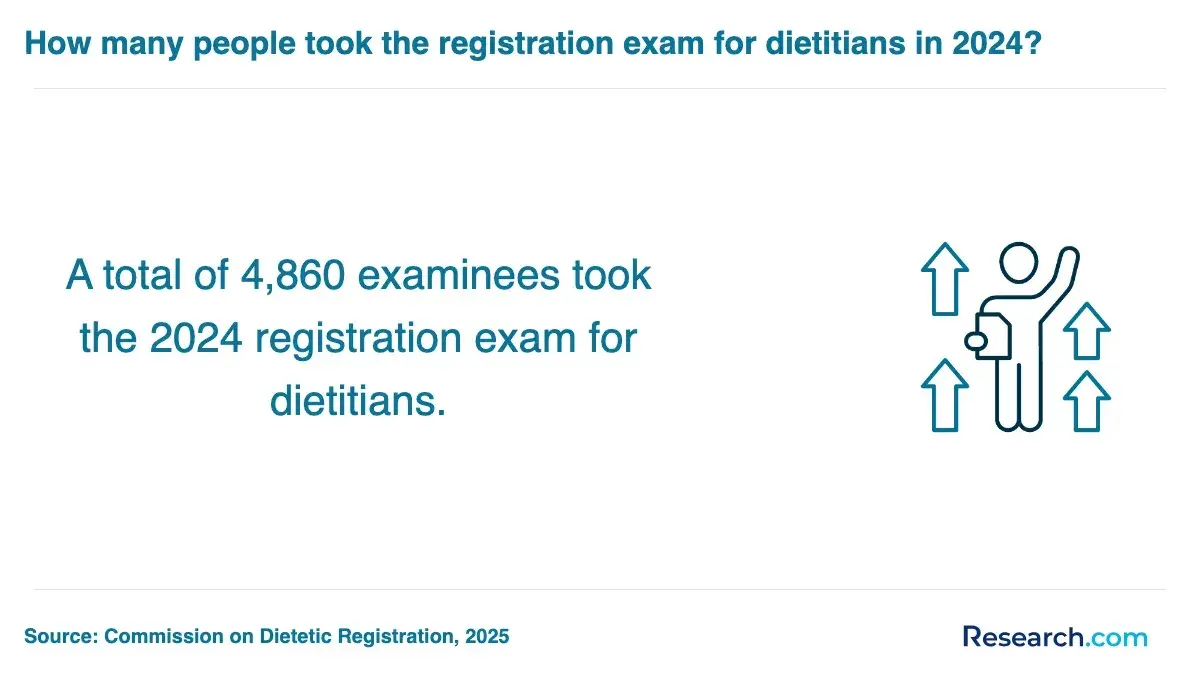 Number of 2024 dietitian registration examinees" width="1200" height="680" loading="lazy">
How can you get a license after passing the dietetic registration exam in Washington?
To obtain certification as a dietitian/nutritionist in Washington after passing the RD exam, follow these essential steps carefully, as the state uses certification rather than a traditional license system.
- Credential Verification: Submit proof of your active RDN credential from the Commission on Dietetic Registration to confirm exam passage.
- HIV/AIDS Training: Complete four hours of state-mandated HIV/AIDS education required for all applicants.
- Transcripts and Experience: Provide official transcripts showing a bachelor’s degree and at least 900 hours of supervised dietetic practice, typically met through ACEND-accredited programs.
- Personal Data Questionnaire: Disclose any disciplinary or legal issues with explanations and documentation if applicable.
- Application Submission: Complete and sign the official certification application packet including all supporting materials.
- Fee Payment: Include the non-refundable $100 application fee when mailing your packet to the Department of Health.
- Application Mailing: Send materials to the specified Olympia address and follow up with additional documents if requested.
- Processing and Approval: Await the Department of Health’s review and issuance of certification, contacting them for status updates as needed.
A registered dietitian from Washington who graduated from a local university reflected on her path beyond passing the RD exam. She found the certification approach less straightforward than licensure in other states, noting, “It felt like navigating a unique system where having no formal license posed questions during job searches.” However, she appreciated the clarity once she understood the equivalency of certification to licensure within Washington. “The annual renewal keeps me engaged with current standards,” she said.
While the lack of reciprocity with some states initially complicated moves, she viewed it as an opportunity to deepen her local professional network and regulatory knowledge. Her experience underscores that, although the terminology differs, the certification process demands the same rigor and commitment as traditional licensure, offering a meaningful credential for practice in Washington.
What types of dietitian specializations can you pursue in Washington?
Dietitians in Washington have access to a broad range of specializations that reflect the state’s diverse healthcare and community needs. These options allow professionals to tailor their careers to specific populations, settings, or interests, enhancing both expertise and impact. Below is an outline of key dietitian roles commonly pursued in Washington.
- Clinical Dietitian: Works in healthcare settings providing medical nutrition therapy for patients with chronic or acute conditions, collaborating closely with medical teams.
- Community Nutritionist: Focuses on population health by developing nutrition programs with public health agencies and non-profits to promote wellness and prevent disease.
- Food Service Dietitian/Manager: Oversees nutrition, meal planning, and food safety in institutions like hospitals and schools, ensuring compliance with dietary and regulatory standards.
- Sports Dietitian: Specializes in optimizing nutrition for athletic performance, often working with sports teams, universities, or individual athletes.
- Research Dietitian: Conducts scientific studies on nutrition and dietary patterns to inform evidence-based guidelines in academic or governmental settings.
- Health and Wellness Coach: Provides personalized coaching focused on lifestyle modifications and preventive care, frequently operating in corporate or private practice environments.
- Dietetic Technician, Registered (DTR): Supports registered dietitians in clinical and community settings after completing accredited education and credentialing requirements.
- Nutrition Consultant: Offers expert advice on food trends, menu development, or supplements, working independently or with consulting firms.
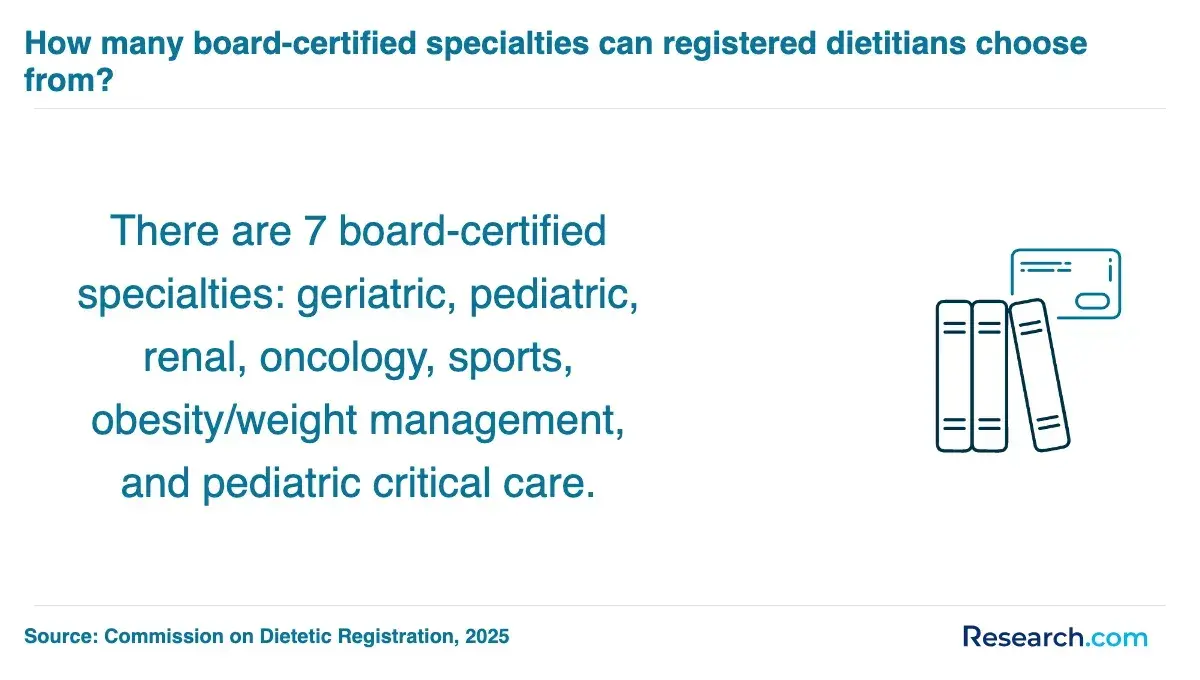
What is the average salary of a registered dietitian in Washington?
The average salary for a registered dietitian in Washington is approximately $76,267 per year, which translates to about $34 per hour as of August 2025. This salary is slightly higher than the national average, where registered dietitians typically earn between $69,000 and $74,000 annually. Hourly wages in Washington can reach up to $40.67, reflecting competitive pay rates in the region.
There are, however, factors that influence exactly how much you will earn as a registered dietitian in the state. These factors are:
- Location: Urban areas such as Seattle, Tacoma, and Spokane tend to offer higher salaries due to increased living costs and demand, while rural areas may provide lower pay but sometimes include additional benefits like loan repayment programs.
- Experience: Entry-level dietitians often earn less, whereas those with advanced certifications or management roles can expect higher compensation.
- Work Setting: Salaries vary by employer type, with hospitals and specialty clinics generally providing the highest pay compared to schools or public health agencies.
- Demand: The job market is stable but moderately active, with salary growth linked to rising healthcare needs and expanding roles for dietitians in preventive care.
Notably, salary growth projections suggest continued upward trends, especially in metropolitan healthcare systems, although economic fluctuations and regional differences may influence these outcomes.
What are the financial costs of becoming a registered dietitian in Washington?
The financial investment required encompasses several components, including tuition fees for accredited programs, costs related to supervised practice, exam and registration fees, and expenses for study materials. Variations in program duration and institution type can result in significantly different overall costs. Prospective candidates should evaluate current program fee structures and explore scholarships, grants, and financial aid options to offset these expenses. For a broader perspective on cost considerations and alternative routes in the nutrition field, review the detailed guide on how to become a nutritionist in Washington.
Can additional certifications boost your dietetics career in Washington?
Pursuing complementary healthcare credentials can enhance clinical expertise and expand professional opportunities. Registered dietitians may benefit from acquiring certifications in related fields to support interdisciplinary collaboration and broaden their scope of practice. For instance, a certification that equips professionals with skills in clinical support can provide practical insights and strengthen patient care strategies. Consider reviewing information on how to become a medical assistant in Washington for guidance on integrating additional healthcare competencies into your career pathway.
What do you need to keep your dietitian registration active in Washington?
Maintaining an active dietitian registration in Washington ensures legal authorization to practice and supports ongoing professional competence. This status also facilitates employment opportunities and adherence to state and national standards, which can sometimes be overlooked but remain critical for career continuity.
- Annual State Certification Renewal: Certification must be renewed yearly on your birthday, either online, by mail, or in person, to stay legally authorized.
- Renewal Fee: A $70 fee is required at each renewal to maintain state registration.
- Continuing Education Requirements: Specific CE hours are communicated before renewal, ensuring you meet professional development standards.
- National CDR Registration: Must be renewed every five years, requiring 75 approved continuing professional education units.
- Updating Personal Information: Keeping contact details current with the Department of Health is essential to receive timely renewal notices.
- Verification of Credential Status: Regularly checking your status through the state’s provider credential tool helps avoid lapses.
A registered dietitian from Washington, who graduated locally, shared that navigating the renewal process can be both reassuring and challenging. He noted, “Maintaining my registration felt like managing a complex puzzle, especially balancing state and national requirements.”
He highlighted that the lack of license reciprocity with some states meant extra diligence was needed when considering relocation, but the clear communication from Washington’s Department of Health helped him stay compliant. “It’s a commitment, but knowing I’m meeting rigorous standards gives me confidence in my professional integrity,” he reflected, emphasizing the value of proactive information updates and continuing education in sustaining an active credential.
How long does it take to become a registered dietitian in Washington?
The timeline to become a registered dietitian in Washington generally spans six to seven years, beginning with undergraduate education and concluding with passing the registration exam. While the process follows a standardized pathway, individual circumstances can affect the total duration. Factors such as program structure, pacing, and internship availability all play a role in how quickly one attains credentialing.
Typically, candidates complete a bachelor’s degree followed by a master’s degree, as mandated starting in 2024, along with supervised practice hours. These requirements form the core of registered dietitian education requirements Washington, but variations exist. Some students might accelerate their progress through coordinated programs or heavier course loads, while others may experience delays due to part-time study or gaps between stages.
It is also worth considering alternative pathways and resources to optimize one’s timeline. Exploring options like the best online masters in dietetics degree program can offer flexibility and potentially shorten the time to credentialing. Ultimately, realistic planning and awareness of potential barriers are essential for those pursuing this career path.
The chart below shows the primary work settings for registered dietitians and nutritionists in the U.S.. Leading the list is acute-care - inpatient setting, employing 27% of the workforce.
Can international students qualify to become registered dietitians in Washington?
International students have a viable pathway to become registered dietitians in Washington by meeting specific national and state requirements designed to ensure their qualifications align with U.S. standards. Although the process demands careful navigation, it offers clear steps for credential recognition and professional practice.
- Foreign Degree Evaluation: Applicants must have their academic credentials assessed by a recognized evaluation service to confirm equivalency with U.S. dietetics education standards relevant to Washington state requirements.
- Admission to ACEND-Accredited Programs: International students need to complete coursework and supervised practice in programs accredited by ACEND, such as those offered by the University of Washington or Washington State University.
- Minimum Master’s Degree Requirement: As of 2024, candidates must hold a master’s degree or higher, verified as equivalent to a U.S. graduate degree, to qualify for the RDN exam.
- Supervised Practice Completion: A minimum of 1,200 hours of supervised practice within an ACEND-accredited program in Washington is mandatory before taking the national credentialing exam.
- Pass the CDR Registration Examination: Successfully passing the Commission on Dietetic Registration exam is essential to earn the Registered Dietitian Nutritionist credential.
- Washington State Application: After national credentialing, applicants must submit their credentials and apply through the Washington State Department of Health to obtain state certification.
For those looking for flexible academic options to meet these requirements while balancing other commitments, exploring programs such as part-time Ph.D. in economics may offer insight into how part-time study can support professional advancement in related fields.
What career paths can registered dietitians pursue in Washington?
Registered dietitians in Washington have access to diverse career opportunities across multiple sectors, each offering distinct professional experiences and salary ranges. Exploring these options reveals a dynamic job market that supports a variety of interests and expertise.
- Clinical Dietitian: Provides personalized nutrition therapy in hospitals and specialized units, with salaries averaging $81,140 and reaching $102,960 for experienced practitioners; demand remains strong due to healthcare needs.
- Community/Public Health Dietitian: Works with public agencies and nonprofits to design nutrition programs, earning between $65,900 and $81,140, supported by expanding public health initiatives.
- Private Practice/Consulting Dietitian: Offers individualized counseling or business wellness services independently or with firms; income varies widely but can approach upper averages as interest in preventative health grows.
- Academic/Research Dietitian: Involves teaching or conducting nutrition research, often requiring advanced degrees; pay depends on institution and rank, with stable prospects as nutrition science evolves.
- Food Service Management Dietitian: Manages menu planning and food safety in schools or corporations, with salaries aligned to the statewide average and advancement potential in larger organizations.
- Corporate Wellness Dietitian: Develops employee health programs for companies, focusing on disease prevention; salaries are competitive and the sector is expanding.
- Specialty Dietitian: Provides expert care in areas like pediatrics or oncology, often with salaries above average and high demand for specialized credentials.
- Long-Term Care Dietitian: Ensures nutritional care in nursing homes or rehabilitation centers, earning $36-$41 per hour for per diem roles, with full-time wages matching or exceeding averages.
- Government/Policy Dietitian: Advises on nutrition policies in state or federal agencies, with competitive pay and growth linked to evolving public health regulations.
For those exploring registered dietitian jobs in Washington state, understanding this landscape helps clarify where to focus career development. Pursuing the best careers with a online nutrition masters degree can further enhance opportunities across these varied paths.
What do registered dietitians in Washington say about their careers?
- Completing my dietetic program at Seattle Pacific University truly prepared me for the unique demands of working in Washington's diverse educational settings. Starting my career as a registered dietitian in a local school allowed me to blend my love for nutrition with my passion for supporting young learners' health. The opportunity to influence students' eating habits positively while navigating the state's rich agricultural resources has been incredibly rewarding. I feel a deep sense of fulfillment knowing my work contributes to a healthier future generation in our community. Jean
- Reflecting on my journey through the University of Washington’s dietetic program, I appreciate how it shaped my professional growth and adaptability. Beginning my career in a local academic institution challenged me to address the varied nutritional needs of students from different cultural backgrounds. Washington's emphasis on sustainability and farm-to-table initiatives provided unique opportunities to integrate environmental awareness into my practice. This experience has deepened my commitment to fostering wellness and inclusivity in school nutrition programs. Alondra
- Graduating from Eastern Washington University opened doors to a stable and fulfilling career as a registered dietitian within the state's school systems. The Pacific Northwest's emphasis on community health and wellness aligns perfectly with my goal to make a tangible impact on student well-being. Working in this environment has enhanced my professional skills and offered continuous advancement opportunities. I am passionate about mentoring future dietitians and contributing to innovative nutrition education that respects Washington's cultural diversity. Kylie
Related Articles for Nearby States
- 2027 Steps to Become a Registered Dietitian in Oregon
- 2027 Steps to Become a Registered Dietitian in Idaho
- 2027 Steps to Become a Registered Dietitian in Montana
- 2027 Steps to Become a Registered Dietitian in California
- 2027 Steps to Become a Registered Dietitian in Nevada
- 2027 Steps to Become a Registered Dietitian in Utah
- 2027 Steps to Become a Registered Dietitian in Wyoming
- 2027 Steps to Become a Registered Dietitian in Arizona
- 2027 Steps to Become a Registered Dietitian in Colorado
- 2027 Steps to Become a Registered Dietitian in New Mexico
References:
- Become a Nutritionist. (n.d.). Becoming a Registered Dietitian in Washington. becomeanutritionist.org.
- Become a Nutritionist. (n.d.). Ultimate Guide to Becoming a Registered Dietitian. becomeanutritionist.org.
- Commission on Dietetic Registration. (n.d.). Registered Dietitian (RD) Examination - Eligibility Requirements. CDRNET.org.
- Commission on Dietetic Registration. (n.d.). Registered Dietitian (RD) or Registered Dietitian Nutritionist (RDN) Certification. CDRNET.org.
- Healthier Washington Collaboration Portal. (n.d.). RDN Pathway | The path to becoming a Registered Dietitian Nutritionist (RDN). WA Portal.
- NutritionED.org. (n.d.). Steps to Become a Registered Dietitian in Washington. nutritioned.org.
- Washington State Academy of Nutrition and Dietetics. (n.d.). Washington State Certification | Certification for Dietitians in Washington State. eatrightwashington.org.
- Washington State Department of Health. (n.d.). Certification Requirements: Dietitian and Nutritionist. WA DOH.
- Washington State University | Elson S. Floyd College of Medicine. (n.d.). How a Dietitian Is Different from a Nutritionist -- and Why It Matters. medicine.wsu.edu.
Other Things You Should Know About Becoming a Registered Dietitian in Washington
To become a Registered Dietitian in Washington in 2027, earn a Bachelor's degree from an ACEND-accredited program, complete a supervised practice program, pass the CDR exam, gain state licensure, and maintain registration through continuing education. Verify state-specific requirements with the Washington State Department of Health.
Scholarships and financial aid are available for dietetics students in Washington through various sources, including university-specific awards, professional organizations, and state programs. Many Washington universities with dietetics programs offer merit-based and need-based scholarships to help offset tuition costs.
Additionally, the Academy of Nutrition and Dietetics provides scholarships and grants nationally, which Washington students can apply for to support their education. Prospective dietitians should also explore federal financial aid options, such as FAFSA, to access loans and work-study opportunities that can make their studies more affordable.