
2027 Best Bachelor's Degree for an MBA Program

Co-Founder and Chief Data Scientist
While 26% of business school graduates majored in business, admissions committees today expect more than a conventional academic path. With top MBA programs accepting only a small percentage of applicants, the competition is fierce, and finding ways to differentiate yourself is essential. Choosing the right undergraduate degree goes beyond meeting academic requirements and demonstrates leadership potential, adaptability, and long-term vision.
To help you stand out, our career planning experts with over 10 years of experience created this guide. It provides a new framework for building a powerful profile and finding the best bachelor degree for MBA success, no matter your starting point.
What are the benefits of getting a bachelor’s degree before pursuing an MBA?
- This degree prepares you for high-impact roles in foundational fields like consulting, finance, and technology that are highly respected by admissions committees.
- Graduates establish a strong financial base with an average salary of around $109,100, providing a solid return on investment.
- The bachelor's programs provide the essential time and structure to build a powerful and unique profile that will make you a standout MBA applicant.
What can I expect from a bachelor’s degree program for MBA preparation?
You can expect a program that combines a foundational curriculum in your chosen field with vital opportunities outside the classroom. A typical bachelor’s degree program requires about 120 credits and takes four years of full-time study to complete. Your coursework will provide you with deep knowledge in a specific area, whether that's finance, biology, or art history.
However, the curriculum is only one part of your preparation. The most valuable experiences often come from internships, research projects, and leadership roles in student clubs. These activities are where you build the compelling, real-world proof of your skills that admissions committees want to see. Finding the best bachelor degree for MBA preparation means choosing a program where you can be proactive and build this complete profile.
Where can I work with a bachelor’s degree before pursuing an MBA?
Graduates can work in a wide range of foundational industries that are highly respected by MBA admissions committees. The quality and impact of your work experience matter far more than the reputation of your organization.
- Fortune 500 Companies: A significant 16% of graduates find roles in large, established corporations that offer structured training and clear advancement paths.
- Education Sector: The education industry is a common employer, hiring 17% of business administrators for roles in operations and management.
- Finance Industry: The finance sector is a major destination, employing 12% of graduates in positions that build critical quantitative skills.
- Large-Scale Organizations: A full 33% of administrators work in organizations with over 10,000 employees, reflecting opportunities for impact at scale.
- Private Companies: Private companies are a very common employment setting, hiring 40% of business administrators across various sectors.
How much can I make with a bachelor’s degree before pursuing an MBA?
A business-related bachelor’s degree provides a strong financial foundation, with an average annual salary of $109,100. This strong base allows you to save and strategically plan for your MBA as a long-term investment.
- Degree Level: A bachelor's degree commands an average salary of $109,100, which is nearly identical to the $109,800 average for a master's degree. Professionals with a doctorate (JD, MD, PhD) report the highest average salaries at $110,100 annually.
- Geographic Location: The District of Columbia is the top-paying location with an average salary of $123,937, followed closely by California.
- Years of Experience: Salaries peak at the expert level, where professionals with over eight years of experience earn an average of $116,696.
- Long-Term MBA Potential: While the bachelor's provides a strong start, the median MBA compensation package is $166,334, showing significant long-term growth.
- List of the Best Bachelor’s Degrees for an MBA Program for 2027 List of Programs
- How long does it take to complete a bachelor’s degree before entering an MBA program? Completion Time
- How does an online bachelor’s degree for MBA preparation compare to an on-campus program? How does an online bachelor’s degree for MBA preparation compare to an on-campus program?
- What is the average cost of a bachelor’s degree for students planning to pursue an MBA? Program Cost
- What are the financial aid options for students enrolling in a bachelor’s degree for MBA preparation? Financial Aid
- What are the prerequisites for enrolling in a bachelor’s degree program for MBA preparation? What are the prerequisites for enrolling in a bachelor’s degree program for MBA preparation?
- What courses are typically in a bachelor’s degree program for MBA preparation? What courses are typically in a bachelor’s degree program for MBA preparation?
- What types of specializations are available in a bachelor’s degree program for MBA preparation? Specializations
- How to Choose the Best Bachelor’s Degree for an MBA Program How to Choose the Best Bachelor’s Degree for an MBA Program
- What career paths are available for graduates with a bachelor’s degree before pursuing an MBA? Career Paths
- What is the job market for graduates with a bachelor’s degree preparing for an MBA? Job Market
- Can Networking and Mentorship Accelerate MBA Admission Success? Can Networking and Mentorship Accelerate MBA Admission Success?
List of the Best Bachelor’s Degrees for an MBA Program for 2027
How do we rank schools?
Recognizing that paying for a degree is a significant investment, our ranking methodology ensures that students can make informed decisions based on comprehensive and transparent information. The ranking draws upon reliable sources such as the IPEDS database, Peterson's database, the College Scorecard database, and The National Center for Education Statistics.
These sources provide a robust foundation of data to evaluate and rank bachelor's degree programs. For more details on our methodology, please visit Research.com’s methodology page.
1. Oregon State University – Business Administration Bachelor’s Degree
Oregon State University provides a comprehensive business curriculum that emphasizes experiential learning through internships or projects. Students can tailor their degree by choosing from specialized options like digital marketing, family business, and sports business to align with their specific career goals.
- Program Length: 4 years
- Required Quarter Credits to Graduate: 180
- Cost per Credit: $411
- Accreditation: Association to Advance Collegiate Schools of Business (AACSB)
2. Southern New Hampshire University – BS in Business Administration
Southern New Hampshire University offers a flexible program focused on developing 10 core business competencies for today's workforce. The curriculum is designed to build practical skills in management, international business, and data-driven strategy, preparing graduates for a wide range of industries.
- Program Length: 4 years
- Required Credits to Graduate: 120
- Cost per Credit: $342
- Accreditation: Accreditation Council for Business Schools and Programs (ACBSP)
3. Purdue University – Bachelor of Science in Business Administration
Purdue University delivers a business degree designed for working adults, offering the prestige of the Purdue University system. The program provides practical experience and allows students to accelerate their studies with the ExcelTrack® option and credit for prior work experience.
- Program Length: 2–4 years
- Required Credits to Graduate: 180
- Cost per Credit: $371
- Accreditation: Accrediting Council for Business Schools and Programs (ACBSP)
4. University of Florida – Business Administration (BSBA and BABA)
The University of Florida offers two distinct business degrees through its nationally recognized Warrington College of Business. Students can choose the fully business-focused BSBA or the interdisciplinary BABA, which pairs a business foundation with one of eleven specialized areas.
- Program Length: 4 years
- Required Credits to Graduate: 120
- Cost per Credit: $129 (in-state); $552 (out-of-state)
- Accreditation: Association to Advance Collegiate Schools of Business (AACSB)
5. Arizona State University – Bachelor of Arts in Business – Business Administration Concentration
Arizona State University’s program, offered through the W. P. Carey School of Business, equips students with versatile general management skills. The curriculum focuses on leadership, financial management, and strategic thinking to prepare graduates for diverse roles across the public and private sectors.
- Program Length: 4 years
- Required Credits to Graduate: 120
- Cost per Credit: $580
- Accreditation: Association to Advance Collegiate Schools of Business (AACSB)
6. Texas Tech University – Bachelor of Business Administration
Texas Tech University offers a flexible BBA through its AACSB-accredited Rawls College of Business, designed for working professionals with prior college experience. The program focuses on strategic management and data-driven decision-making to prepare students for a dynamic business future.
- Program Length: 2–4 years
- Required Credits to Graduate: 120
- Cost per Credit: $415 (in-state); $500 (out-of-state)
- Accreditation: Southern Association of Colleges and Schools Commission on Colleges (SACSCOC)
7. Maryville University – Bachelor’s in Business Administration
Maryville University’s business administration program is structured to develop leadership skills for high-demand industries. It focuses on providing a strong return on investment by equipping students with the knowledge needed to thrive in a competitive business environment.
- Program Length: 4 years
- Required Credits to Graduate: 120
- Cost per Credit: $515
- Accreditation: Higher Learning Commission (HLC)
8. Georgia Southwestern State University – BBA eMajor (Business Administration)
Georgia Southwestern State University provides an affordable and fully accessible BBA degree through the University System of Georgia's eMajor platform. The program offers the same AACSB-accredited curriculum as on-campus students, focusing on core business principles in a flexible format.
- Program Length: 4 years
- Required Credits to Graduate: 124
- Cost per Credit: $199
- Accreditation: Association to Advance Collegiate Schools of Business (AACSB)
9. University of Oklahoma – BA in Business Administration
The University of Oklahoma offers a degree completion program designed for adult learners who have already earned at least 60 college credits. This program provides a fast and flexible path to finishing a bachelor's degree, focusing on practical management and leadership skills.
- Program Length: 1–4 years
- Required Credits to Graduate: 120
- Cost per Credit: $515
- Accreditation: Higher Learning Commission (HLC)
10. Liberty University – Bachelor of Science in Business Administration
Liberty University provides a flexible business administration degree with a Christian worldview, delivered in 8-week courses. The program allows students to tailor their education by choosing from multiple specializations to match their specific career interests and goals.
- Program Length: 4 years
- Required Credits to Graduate: 120
- Cost per Credit: $390 (full-time); $455 (part-time)
- Accreditation: Accreditation Council for Business Schools and Programs (ACBSP)
How long does it take to complete a bachelor’s degree before entering an MBA program?
A bachelor's degree requires four years of full-time study, but the total timeline to begin an MBA is typically six to eight years. Top business schools require two to five years of professional work experience after graduation. This period is a non-negotiable component of building a competitive application profile.
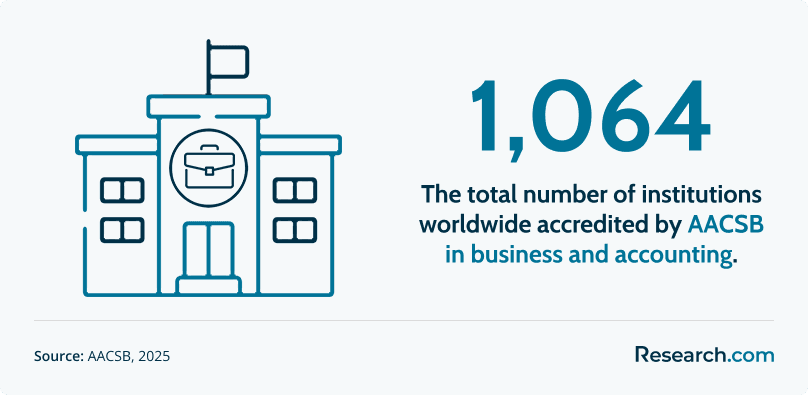
This professional experience provides the essential real-world context needed to contribute to classroom discussions and case studies. Admissions committees at the more than 1,000 AACSB-accredited institutions look for this demonstrated maturity and industry knowledge. Securing quality work experience is a critical step in pursuing the best bachelor degree for MBA preparation.
For students concerned about academic performance, it’s also worth researching the best MBA programs that accept low GPA, as these programs focus on professional experience, leadership potential, and holistic application review, giving applicants with less-than-perfect undergraduate grades a strong opportunity to advance their careers.
How does an online bachelor’s degree for MBA preparation compare to an on-campus program?
Both online and on-campus programs are viable paths to an MBA, and the best choice depends on your specific needs for flexibility and networking. The quality of the program and its accreditation matter far more than the delivery format.
Online Bachelor's Degree Programs
Online programs offer superior flexibility, which is ideal for students who need to balance work, family, or other commitments. This format allows you to continue gaining valuable professional experience while you study, which can strengthen your MBA application. The flexibility of online learning also makes it possible to find specialized, accelerated options, such as some of the shortest online entrepreneurship MBA programs available today.
On-Campus Bachelor's Degree Programs
On-campus programs provide the benefits of in-person immersion and traditional networking. You have direct access to professors, structured career fairs, and campus resources that facilitate strong professional connections. For students who thrive in a structured environment and want to build a deep network, the on-campus experience is often preferred, with data showing that 70% of students in specialist programs still choose in-person learning.
What is the average cost of a bachelor’s degree for students planning to pursue an MBA?
The average total tuition for a four-year bachelor’s degree is approximately $51,000. However, this cost can vary significantly based on the type of institution and other factors. Public in-state universities often represent the lower end of the cost spectrum, while private universities typically have higher tuition rates.
Several key factors will influence the final cost of your degree. In-state students at public universities generally pay much lower tuition than out-of-state students. Additionally, some programs may have extra fees for labs, technology, or specialized materials. Understanding these variables is a critical first step in your financial planning. While these costs represent a significant investment, it is helpful to view them in the context of future earning potential.
The chart below illustrates the average salaries at different degree levels.
What are the financial aid options for students enrolling in a bachelor’s degree for MBA preparation?
Students have robust financial aid options, including scholarships, grants, and loans, to make their degree affordable. Strategic borrowing for a high-ROI degree can be a very smart financial decision that unlocks future career potential.
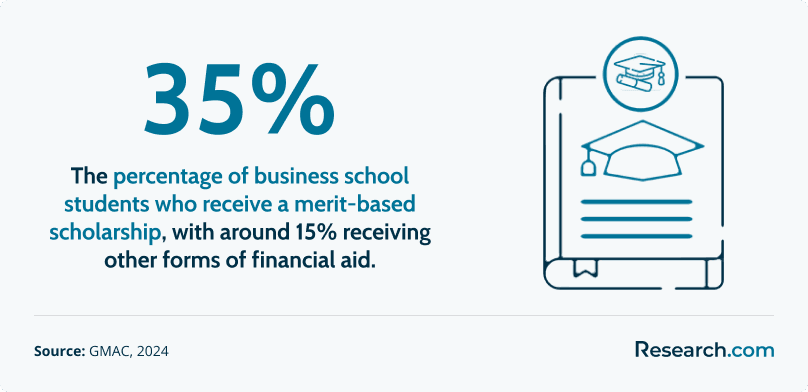
- Merit-Based Scholarships: These are awarded for academic achievement, and data show that 35% of business students receive them.
- Federal Grants: This is need-based aid from the government, such as the Pell Grant, which does not need to be repaid.
- Federal Student Loans: Government loans are a common tool, used by 61% of graduate students, and they offer flexible repayment options.
- Work-Study Programs: These are federally funded programs that allow students to earn money through part-time, on-campus jobs.
- Employer Tuition Assistance: This is a significant benefit for future studies, with 47% of employers offering educational assistance to their employees.
Understanding and taking advantage of these financial aid pathways can also position students more competitively for future graduate admissions. Many applicants researching how to get into the top MBA programs find that planning financial aid early, minimizing debt where possible, and selecting programs with strong outcomes can play an important role in long-term academic and professional strategy.
What are the prerequisites for enrolling in a bachelor’s degree program for MBA preparation?
The main prerequisite for enrolling in a bachelor’s program is a high school diploma or equivalent. However, the key to preparing for an MBA is demonstrating your quantitative readiness, which can be done regardless of your major.
- High School Diploma/GED: This is the universal baseline for admission into any bachelor's program in the country.
- Standardized Test Scores: Many universities require SAT or ACT scores as a standard part of the undergraduate application.
- Demonstrated Quantitative Competency: This is the real prerequisite for MBA readiness and can be proven through your major, a minor, or supplemental courses.
- Letters of Recommendation: Strong recommendations from teachers or mentors who can speak to your abilities are often required.
- A Compelling Personal Essay: This is your chance to tell your story, articulate your goals, and show your writing skills.
- A Strong GMAT/GRE Score: For the MBA application itself, a high quant score is critical. You can see targets by looking at the average GMAT scores for MBA programs.
As you can see in the chart below, a large number of students enroll in business administration programs at all degree levels, making it a popular but not mandatory path.
What courses are typically in a bachelor’s degree program for MBA preparation?
While course requirements vary by major, students preparing for an MBA should prioritize building a quant portfolio with foundational analytical courses. These courses provide the analytical language and skills that are essential for success in business school.
- Calculus: This course provides the essential mathematical foundation for advanced business and economic theory.
- Statistics: It teaches you how to interpret data, test hypotheses, and make informed decisions in a business context.
- Microeconomics: This explains the core principles of supply, demand, and market behavior that underpin modern business strategy.
- Financial Accounting: You will learn the fundamental language of business used for tracking and reporting financial performance.
- Communications and Writing: These courses develop the critical soft skills needed to present complex ideas clearly and persuasively.
- Core Business Subjects: For those interested in a deeper dive, exploring business administration course subjects provides a comprehensive overview of the field.
What types of specializations are available in a bachelor’s degree program for MBA preparation?
You can successfully prepare for an MBA with a wide variety of specializations, from traditional business fields to the humanities and sciences. The key is to build a strong, well-rounded profile, as a unique academic background can be a major strength.
- Business and Economics: This is the most direct path, providing a strong foundation in core business principles and quantitative analysis.
- Science, Technology, Engineering, and Math: STEM majors are highly valued for developing rigorous analytical and problem-solving skills that translate directly to business challenges.
- Humanities and Social Sciences: These fields are excellent for honing critical thinking, communication, and qualitative analysis skills, which are essential for leadership.
- Interdisciplinary Studies: This approach allows you to combine elements from multiple fields to create a unique, well-rounded profile that stands out.
- Specialized Quantitative Fields: Majors like accounting provide an undisputed analytical foundation, and students can explore detailed accounting degree requirements to understand this path.
How to Choose the Best Bachelor’s Degree for an MBA Program
Selecting the right undergraduate program requires a strategic evaluation of several key factors. A thoughtful assessment of these areas will help you choose a degree that aligns with your long-term MBA aspirations. Making a decision based on these factors will help you find the best bachelor degree for MBA success.
- Accreditation: Ensure the program is offered by a regionally accredited institution, as this is the baseline standard for quality and recognition by graduate schools.
- Curriculum Relevance: Review the curriculum to confirm it offers foundational courses in calculus, statistics, and economics to build your quant portfolio.
- Specialization Opportunities: Look for programs that allow you to pursue a specialization you are passionate about, which will help you build a unique and compelling narrative.
- Career Outcomes: Research the program’s career support services and the typical pre-MBA jobs that graduates secure in fields like finance, consulting, and tech.
- Flexibility and Format: Consider whether an on-campus or online format best suits your learning style and professional commitments, as both are viable paths.
For those planning to pivot into public administration or government leadership roles after completing their bachelor’s degree, exploring the best one-year online MPA programs can provide an accelerated, flexible path to gain graduate-level credentials while building relevant professional skills.
What career paths are available for graduates with a bachelor’s degree before pursuing an MBA?
Graduates with a strong bachelor’s degree are prepared for a variety of high-growth career paths that serve as an excellent launchpad into a top MBA program. The right pre-MBA job offers a clear path for advancement and opportunities to demonstrate quantifiable impact.
1. Management Consultant
Analyze business problems and provide strategic advice to help organizations improve performance. This role develops the analytical and client-facing skills highly valued by MBA programs.
Median salary: $95,000 per year.
2. Financial Analyst
Evaluate investment opportunities and manage financial assets for corporations or financial institutions. This path provides a deep, quantitative foundation for a future in finance.
Median salary: $90,000 per year.
3. Marketing Manager
Develop and execute strategies to promote products or services and build brand awareness. This role hones skills in market analysis, consumer behavior, and strategic communication.
Median salary: $85,000 per year.
4. Project Manager (Tech)
Lead teams to develop and launch new technology products, managing timelines, budgets, and stakeholders. This demonstrates leadership and impact in a high-growth industry.
Median salary: $98,000 per year.
5. Healthcare Administrator
Manage the business operations of hospitals or clinics, a field with growing demand for leaders who understand both healthcare and business, such as those in MSN/MBA dual degree jobs.
Median salary: $104,000 per year.
What is the job market for graduates with a bachelor’s degree preparing for an MBA?
The job market for graduates with the analytical and strategic skills valued by MBA programs is strong and stable, with a projected 5% growth rate for business administrator roles. This positive outlook provides confidence that your investment in education will lead to tangible opportunities. A flexible, skills-based approach focused on critical thinking and quantitative reasoning offers more long-term career security than a narrow focus on a single job title.
This growth is built on a large and established foundation, with over 104,000 existing jobs for business administrators. Furthermore, the steady growth in business program enrollments signals continued demand for skilled leaders. Choosing the best bachelor degree for MBA preparation positions you to enter a healthy and expanding field.
For students who want to build additional technical expertise alongside business management skills, pursuing an online database management masters after or alongside MBA preparation can be a strong strategic move. This combination allows graduates to blend decision-making and leadership abilities with data-focused technical competency—an increasingly valuable profile in today’s analytics-driven business environment.
As the chart below shows, the number of business administrator jobs has seen consistent growth, signaling an expanding market.
Here’s What Graduates Have to Say about Their Bachelor’s Degree for MBA Preparation
- Andrei: "My background was in communications, and I was seriously worried about the quantitative side of MBA applications. Taking the core curriculum online was perfect for me. I could replay lectures on statistics until they clicked and built a strong analytical foundation. It gave me the confidence I needed to even apply to top-tier schools."
- Jaden: "The coursework was rigorous, but the real value came from the opportunities outside the classroom. The bachelor's program for MBA reputation helped me land a competitive internship in consulting after my junior year. That experience became the most important part of my application and my interviews. I learned how to apply theory to real business problems."
- Jancel: "I was so stressed about picking the perfect major, thinking one wrong move would ruin my MBA chances. This program taught me to focus on building skills, not just checking a box. I ended up majoring in history but loaded up on the core quant courses, which made my application unique. It was a huge relief to know I could follow my interests and still be strategic."
Key Findings
- The job market for business administrators is expanding, with a projected 5% growth rate that provides long-term career security for graduates.
- A bachelor's degree offers a strong immediate return on investment, with an average salary of $109,100 that provides a solid financial base for future MBA plans.
- Quality is a key factor in program selection, and there are over 1,000 AACSB-accredited institutions that meet the high standards expected by graduate schools.
- While 26% of graduates majored in business or law, this highlights that a majority of successful MBA candidates come from diverse academic backgrounds.
- Long-term financial planning is supported by the professional landscape, with 47% of employers offering tuition assistance that can help fund an MBA.
Can Networking and Mentorship Accelerate MBA Admission Success?
A reputable bachelor's degree program can serve as a launchpad for building a robust professional network that extends well into your MBA journey. Evaluate programs offering structured mentorship, active alumni communities, and opportunities for real-world engagement with industry leaders. These connections can enhance internship prospects, secure strategic references, and ultimately strengthen your MBA application profile. Additionally, consider institutions that complement on-campus experiences with digital networking platforms, such as the cheapest online MBA, to ensure a versatile and dynamic approach to career advancement.
References:
- AACSB. (2022). Diversity: The story in the stats. Retrieved from AACSB.
- AACSB. (2025). Masters enrollment trends at AACSB schools. Retrieved from AACSB.
- AACSB. (n.d.). Accredited schools. Retrieved from AACSB.
- Education Data Initiative. (2024). Student loan debt statistics. Retrieved from EducationData.
- MBA.com. (n.d.). MBA scholarships. Retrieved from MBA.com.
- National Center for Education Statistics. (2024). Graduate degree fields. Retrieved from NCES.
- National University. (2024). MBA statistics. Retrieved from National University.
- Poets & Quants. (2024). Is the MBA poised for a rebound? New research finds upward trends in enrollment, jobs & more. Retrieved from Poets & Quants.
- Salary.com. (2025). MBA salary. Retrieved from Salary.com.
- Zippia. (2025). Business administrator demographics. Retrieved from Zippia.
Other Things You Should Know About Bachelor’s Degree for MBA Programs
The best bachelor's degrees for an MBA in 2027 include Business Administration, Economics, and Finance, as they provide foundational knowledge in business concepts. However, degrees in Engineering, Psychology, or even Liberal Arts might also stand out by offering diverse perspectives or critical skills valued in MBA programs.
Yes, a bachelor's degree is typically required for enrolling in an MBA program in 2026. Most MBA programs consider a bachelor's degree as an essential prerequisite, ensuring that candidates have a foundation in higher education and relevant coursework before pursuing advanced business studies.


