
2027 How to Get a Bachelor's Degree Fast

Co-Founder and Chief Data Scientist
Students and working adults want a bachelor’s degree but feel discouraged by the idea of spending four or more years in school. For those balancing jobs, family responsibilities, and rising education costs, a traditional path can seem overwhelming. The pressure is real—especially when the Bureau of Labor Statistics reports that bachelor’s degree holders earn about 67% more weekly than those with only a high school diploma.
The good news is that there are faster, flexible options available in 2027. This article explores proven strategies such as accelerated programs, online learning, credit for prior experience, and transfer opportunities. Prepared by experts in career planning, it will give readers the insights they need to complete a bachelor’s degree more quickly and confidently.
Key Benefits of a Bachelor’s Degree
- Access to a wider range of professional careers, including roles in business, healthcare, education, and technology that typically require a bachelor’s degree for entry.
- Median weekly earnings of $1,493 for bachelor’s degree holders, compared to $853 for those with only a high school diploma.
- Increased job security, higher earning potential over a lifetime, and flexible options such as online programs that let you study while working or managing family responsibilities.
- What are the fastest ways to get a bachelor’s degree? Fast Degrees
- Examples of Fast Bachelor's Degrees Examples
- How do online bachelor’s degree programs work? Online Degrees
- How do transfer credits speed up graduation? Transfer Credits
- What are the admission requirements for fast bachelor’s degrees? Admission Requirements
- How much do fast bachelor’s degree programs cost? Cost
- What career opportunities come with a bachelor’s degree? Career Opportunities
- How do majors affect the speed of completing a bachelor’s degree? How do majors affect the speed of completing a bachelor’s degree?
- How do life and work experience count toward a bachelor’s degree? How do life and work experience count toward a bachelor’s degree?
- Do fast bachelor’s degrees offer the same value as traditional programs? Do fast bachelor’s degrees offer the same value as traditional programs?
- What challenges come with getting a bachelor’s degree fast? Challenges
- How do you choose the best fast bachelor’s program? How do you choose the best fast bachelor’s program?
What are the fastest ways to get a bachelor’s degree?
A fast bachelor’s degree is a bachelor’s completion strategy that shortens the usual four-year path through accelerated courses, transfer credits, prior learning credit, year-round enrollment, or online scheduling. It can be a smart option for working adults, transfer students, military learners, career changers, and students who want to enter the workforce sooner. The key is not simply finding the shortest program; it is choosing a properly accredited degree that fits your schedule, accepts your existing credits, and supports your career goal.
This guide explains how fast bachelor’s degrees work, which majors are commonly available in accelerated formats, how transfer credits and work experience can reduce your timeline, what admission and cost factors to compare, and when a faster program may not be the best choice.
Quick answer: how can you finish a bachelor’s degree faster?
The fastest practical route is usually a combination of transfer credits, an accredited online or accelerated program, year-round courses, and credit for prior learning. Students who already have college credits or an associate degree may finish much faster than first-time students. Some programs allow up to 90 credits to transfer, which can leave only upper-division major requirements to complete.
| Acceleration strategy | How it saves time | Best for | What to verify before enrolling |
| Accelerated bachelor’s program | Uses shorter academic terms and a more intensive course schedule | Motivated students who can manage a heavy workload | Accreditation, workload expectations, graduation requirements |
| Online degree format | May offer multiple start dates, asynchronous classes, and year-round enrollment | Working adults, parents, military learners, and remote students | Student support, technology requirements, exam format, internship or lab rules |
| Transfer credits | Applies previous college coursework toward the new degree | Community college graduates, returning students, and stop-out students | Maximum transfer limit, grade requirements, course equivalencies |
| Credit for prior learning | Turns documented work training, military learning, exams, or certifications into academic credit | Adult learners with professional or military experience | Portfolio fees, credit limits, accepted documentation, whether credits count toward the major |
| Year-round scheduling | Removes long breaks between terms so students can complete more credits each year | Students who can study continuously without extended time off | Course availability in summer or short terms |
Enroll in an accelerated bachelor’s program
Accelerated bachelor’s programs compress the academic calendar so students complete courses in shorter sessions instead of traditional semester-length terms. Some schools offer 18- to 24-month bachelor’s tracks, especially for students who enter with previous college credit or a completed degree in another field. Business, healthcare, technology, psychology, criminal justice, and communication are common areas where accelerated options are available.
Use online degree options strategically
Online bachelor’s programs can reduce delays because many are built around flexible pacing, multiple yearly start dates, and continuous enrollment. Students often avoid commuting time and may be able to take classes during evenings, weekends, or asynchronous weekly modules. The fastest online route still requires discipline: shorter terms usually mean more reading, assignments, and exams in less time.
Maximize transfer credits
Previously completed courses from a community college, another university, AP exams, IB exams, or an associate degree can shorten the number of credits left to finish. Before choosing a school, students should request an official transfer evaluation rather than relying on general transfer promises. A program that accepts many credits overall may still reject credits that do not match its general education or major requirements.
Ask about credit for prior learning and work experience
Prior Learning Assessment, often called PLA, allows some colleges to award credit for verified learning gained outside a traditional classroom. This may include professional training, military education, industry credentials, exams, or a portfolio showing college-level knowledge. Students with healthcare backgrounds, for example, may compare their experience with academic pathways after reviewing medical assistant specialties and career options.
Choose a school with year-round scheduling
Programs with summer sessions, quarter terms, eight-week courses, or continuous enrollment can help students complete more credits in a calendar year. This matters because a “fast” program is only fast if required courses are offered when students need them. Ask whether core major courses are available every term or only once per year.
Admissions speed can also affect total time to degree. Some colleges that do not require standardized tests may allow qualified applicants to begin sooner, especially when they evaluate transcripts, prior coursework, and work history instead of waiting for SAT or ACT scores.
Is a fast bachelor’s degree right for you?
A fast bachelor’s degree is most useful when the shorter timeline supports a clear goal: qualifying for a promotion, changing careers, meeting a credential requirement, preparing for graduate school, or finishing a degree after stopping out. It may not be ideal for students who need a lighter course load, extensive campus involvement, repeated breaks, or a field with strict clinical, lab, or licensure sequencing.
| Choose a fast bachelor’s degree if... | Consider a traditional pace if... |
| You already have transferable college credits. | You are starting with no college credits and need time to adjust academically. |
| You can study several hours most days during short terms. | You have unpredictable work hours or caregiving responsibilities. |
| Your target career values the bachelor’s credential and does not require extensive in-person training. | Your major requires labs, clinical placements, studio work, or field experiences that cannot be rushed. |
| You have employer tuition support or need to qualify for advancement quickly. | You want a broader campus experience, internships over several years, or a slower exploration of majors. |
| You are comfortable with online learning platforms and independent study. | You learn best through frequent in-person instruction and structured classroom time. |
Examples of fast bachelor’s degrees
Accelerated bachelor’s options exist across many fields, but the realistic timeline depends on transfer credits, clinical or lab requirements, course availability, and whether the program is designed for first-time students or degree completers. The examples below show common fast-track pathways and the students they typically serve.
Accelerated BSN in nursing
An accelerated BSN is typically intended for students who already hold a bachelor’s degree in another discipline. These programs combine intensive nursing coursework with supervised clinical practice and may run 11–18 months. They are best suited for students who can commit to a demanding schedule and who understand that graduation is only one step; graduates must still meet RN licensure requirements.
Accelerated BBA in business administration
A fast-track BBA may allow completion in 2–3 years when students take heavier course loads, enroll year-round, or bring transfer credits. The curriculum usually covers management, finance, accounting, marketing, operations, and business communication. This option can work well for students seeking entry-level business roles, advancement into supervisory positions, or a foundation for graduate business study.
BS in information technology
Accelerated information technology programs often focus on programming, systems administration, databases, networking, cybersecurity fundamentals, and project-based technical skills. Some programs can be completed in 2–3 years depending on transfer credit and pacing. Students should compare whether the curriculum aligns with their target roles, such as software development, network administration, systems support, or IT project coordination.
BS in psychology
A fast psychology bachelor’s degree may be completed in 2 years by students who transfer substantial general education credits or enroll in an online completion program. Courses commonly cover human development, research methods, statistics, social behavior, abnormal psychology, and applied psychology. Graduates may pursue human services, case management support, research assistance, or graduate study, but independent counseling roles usually require additional education and licensure.
BS in criminal justice
Accelerated criminal justice programs may take 2–2.5 years when students follow an intensive schedule or enter with credits. Coursework typically examines courts, law enforcement, corrections, criminology, ethics, public policy, and legal systems. This degree can support roles in policing, corrections, victim services, security, probation support, and legal or public safety administration, depending on employer and jurisdiction requirements.
BS in healthcare administration
A fast healthcare administration bachelor’s program commonly takes 2–3 years and focuses on healthcare operations, policy, finance, quality improvement, compliance, human resources, and leadership. It is often a strong fit for students with prior healthcare experience who want to move into administrative or supervisory roles in clinics, hospitals, insurance organizations, or health systems.
BA in communication
An accelerated communication degree may be completed in 2–2.5 years with transfer credits, online coursework, or an intensive schedule. Students usually study public relations, media writing, digital communication, persuasion, organizational communication, and audience analysis. Graduates may pursue work in marketing, media, public affairs, corporate communication, nonprofit outreach, or content strategy.
BS in finance
Fast-track finance programs can take 2–3 years and typically include accounting, investments, risk analysis, corporate finance, economics, financial modeling, and planning. This path can prepare students for entry-level roles in banking, insurance, financial services, corporate finance, or analyst support, although some advanced finance roles may require experience, licensure, or graduate education.
Students interested in science-related careers may also find accelerated options in chemistry, forensic science, or related laboratory fields. Before choosing one, compare how the curriculum introduces forensic chemistry specialization areas such as toxicology, DNA analysis, trace evidence, and environmental forensics, since hands-on lab requirements can affect both speed and career preparation.
How do online bachelor’s degree programs work?
Online bachelor’s programs deliver college coursework through a digital learning platform instead of requiring regular campus attendance. Students access lectures, readings, assignments, exams, discussions, and instructor feedback through a learning management system. For working adults, parents, military learners, and students far from campus, online study can make a bachelor’s degree more realistic, but it still requires weekly deadlines, academic writing, exams, and consistent time management.
Course structure and learning format
Most online courses are organized into weekly modules through platforms such as Canvas or Blackboard. Students may watch recorded lectures, join discussion boards, complete quizzes, submit papers, and collaborate on projects. Programs may be asynchronous, meaning students complete weekly work on their own schedule, or synchronous, meaning live attendance is required at specific times.
Career-focused programs may connect coursework to real roles. For instance, applied psychology students might study workplace behavior while examining the responsibilities of industrial-organizational psychologists.
Scheduling and pace
Many online programs use eight-week, five-week, or other shortened terms, although formats vary by school. Multiple start dates can help students begin sooner instead of waiting for a fall semester. Students who enroll continuously may graduate faster, but the pace can be intense when courses overlap with work or family obligations.
Student interaction and academic support
Online learning is not necessarily isolated. Strong programs offer instructor office hours, tutoring, academic advising, library access, career services, peer discussion, group projects, and technical support. Students should ask whether these services are available during evenings or weekends, not just standard business hours.
Exams, projects, and assessments
Online assessment can include timed tests, essays, quizzes, presentations, case studies, discussion participation, labs, capstone projects, or proctored exams. Some schools use remote proctoring software, while others emphasize project-based evaluation. Students should check whether proctoring requires extra fees, a webcam, or specific technology.
Technology requirements
Most programs require a reliable computer, stable internet, word processing software, video conferencing tools, and the ability to upload assignments. Some majors, especially design, IT, analytics, or media programs, may require specialized software or higher-performance hardware.
How do transfer credits speed up graduation?
Transfer credits reduce the number of new courses a student must complete by applying previous academic work toward a bachelor’s degree. Credits may come from community college, another university, AP or IB exams, dual enrollment, or an associate degree. The more credits that apply to general education, electives, and major prerequisites, the shorter the remaining path may be.
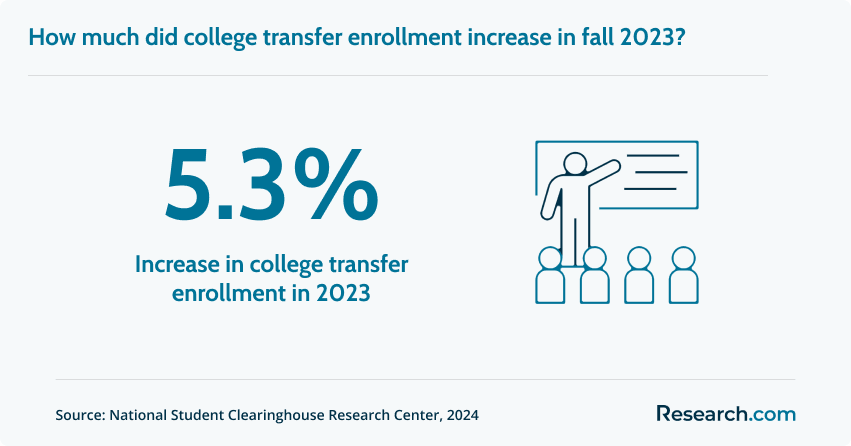
Transfer pathways are becoming more important for students trying to finish efficiently. College transfer enrollment grew by 5.3% in fall 2023, showing that more learners are using transfer routes to continue or complete their degrees.
Some institutions accept a large transfer block, and some allow up to 90 credits toward a fast bachelor’s degree. However, the number accepted is not always the same as the number that applies to your degree plan. A student may receive elective credit for a course but still need to complete required major courses.
Transfer credit is especially valuable for adults returning to college because it prevents them from repeating coursework they have already completed. It can also lower costs by reducing the number of credits billed by the new institution.
Programs such as accelerated online fashion merchandising degrees often encourage students to transfer general education credits so they can focus their remaining time on industry-specific courses.
| Transfer credit question | Why it matters |
| How many credits can I transfer into the program? | This determines whether you are starting near the beginning, middle, or end of the degree plan. |
| Will my credits count toward requirements or only electives? | Elective credit may not shorten the path as much as credit that fulfills core or major requirements. |
| Is there a minimum grade for transfer? | Some schools do not accept courses below a certain grade. |
| Are older credits accepted? | Some technical, science, or professional courses may expire or require review if completed long ago. |
| Can I get an official evaluation before enrolling? | An official audit gives a clearer estimate of remaining time and cost. |
What are the admission requirements for fast bachelor’s degrees?
Fast bachelor’s programs usually require the same baseline documents as traditional bachelor’s programs, but accelerated tracks may review applicants more carefully because the workload is compressed. Schools want evidence that students can handle shorter terms, independent study, and a heavier academic pace.
- High school diploma or equivalent — First-time bachelor’s applicants generally need proof of high school completion or a GED.
- Minimum GPA — Many accelerated programs set a GPA requirement, often around 2.5 to 3.0, though standards vary by school and major.
- Standardized test scores — Some programs still request SAT or ACT results, while many schools have test-optional policies.
- Previous college transcripts — Transfer and degree-completion programs require official transcripts from every institution previously attended.
- Work or professional experience — Some adult-focused programs consider employment history, military service, certifications, or relevant training.
- Personal statement or recommendations — Competitive or specialized programs may ask applicants to explain their goals and readiness for accelerated study.
Specialized options, including accelerated online animation degrees, may also request portfolios, software experience, or creative samples. Always review program-specific requirements instead of assuming every fast bachelor’s degree uses the same admissions checklist.
How much do fast bachelor’s degree programs cost?
The total cost of a fast bachelor’s degree depends on tuition, fees, transfer credits, program length, books, technology, residency status, and whether the school charges by credit, term, or subscription period. A faster program can cost less overall if students complete fewer terms, transfer more credits, or avoid relocation and commuting expenses. However, tuition per credit may be similar to a standard bachelor’s program.
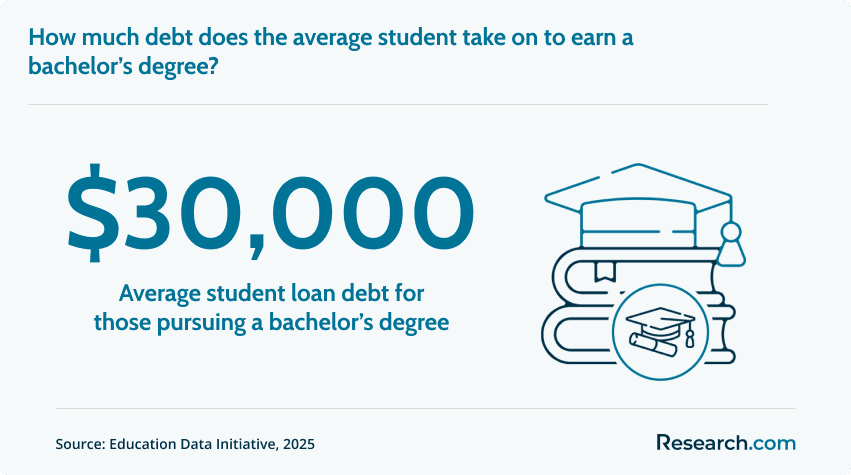
Cost planning matters because the average student borrows more than $30,000 to earn a fast bachelor’s degree. Even when the timeline is shorter, students should compare the full price of attendance rather than focusing only on advertised tuition.
| Cost factor | How it affects affordability | What to ask |
| Tuition model | Per-credit tuition rewards students who transfer more credits; flat-rate or term-based pricing may benefit students who can complete more courses quickly. | Do I pay by credit, semester, term, or subscription period? |
| Transfer credits | Accepted credits reduce the number of courses you must pay for. | How many credits will apply directly to my degree plan? |
| Fees | Technology, online learning, graduation, lab, proctoring, and student service fees can raise the final cost. | What fees are mandatory for online or accelerated students? |
| Books and software | Some majors require digital platforms, subscriptions, equipment, or specialized software. | Are course materials included in tuition? |
| Financial aid | Federal aid, scholarships, grants, military benefits, and employer tuition assistance can reduce out-of-pocket cost. | Is the program eligible for federal financial aid and employer reimbursement? |
Students can lower costs by transferring credits, using prior learning credit, applying for scholarships, comparing public and private options, and asking employers about tuition assistance. Those pursuing education-related degrees should also compare likely career outcomes; for example, reviewing higher-paying early childhood education career paths can help students evaluate whether a program supports their income goals.
What career opportunities come with a bachelor’s degree?
A bachelor’s degree can expand career options by meeting minimum education requirements, building specialized knowledge, and signaling persistence, communication ability, and analytical skill. The value varies by major, institution, local labor market, experience, and licensing requirements, so students should connect the degree to a specific career plan before enrolling.
Access to professional roles
Many fields use the bachelor’s degree as a baseline credential for professional entry. Accounting, nursing, software development, teaching, business operations, public administration, health services, and technical roles often require or strongly prefer bachelor’s-level preparation. Majors tied to specific occupations can show strong returns: engineering majors see a 326.6% ROI within five years, while computer science majors follow closely at 310.3%.
Greater earning potential
Bachelor’s graduates generally have stronger long-term salary prospects than workers with less education, though outcomes differ widely by major and career path. Nursing graduates, for example, have a 280.9% ROI within five years, showing how a career-connected bachelor’s program can combine labor market demand with a clear credential requirement.
Career flexibility
Some bachelor’s degrees build transferable skills that can be used in multiple industries. Communication, analysis, project coordination, data interpretation, writing, and management skills can help graduates move across sectors as opportunities change. Accounting, with a 261.3% ROI within five years, is one example of a field that can support work in business, government, nonprofit, and financial settings.
Preparation for advanced study
A bachelor’s degree is also the usual gateway to graduate certificates, master’s programs, and professional degrees. A business graduate, for instance, might add a fast online graduate certificate in logistics and supply chain management to build focused skills in operations, procurement, transportation, or supply chain leadership.
Lower unemployment risk
Research shows that people with bachelor’s degrees have lower unemployment rates than those with less education. That does not guarantee job security, but it does show why many students view the bachelor’s degree as a long-term employment and mobility credential.
How do majors affect the speed of completing a bachelor’s degree?
Your major can either shorten or lengthen your path. Some programs, such as business administration, communication, criminal justice, psychology, and liberal studies, often have flexible electives and online course availability. That can make transfer credits easier to apply and scheduling easier to manage.
Other majors are harder to accelerate because they require prerequisites in a fixed order, labs, clinical placements, studio courses, fieldwork, or supervised practice. Nursing, engineering, education, laboratory science, and some computer science pathways may have sequencing rules that limit how many courses can be taken at once.
The fastest major is not always the best major. Bachelor’s degree holders earn a median annual salary of $80,236, compared with $57,148 for those with only an associate degree, but earnings depend heavily on field, experience, location, and role.
Students focused on speed should look for majors with generous elective space, strong transfer pathways, frequent course availability, and online upper-division classes. Students focused on long-term return should also consider whether a slightly longer program leads to stronger licensing, graduate school, or career outcomes.
Higher-level credentials can raise earning potential further. Master’s and professional degrees correspond to median annual earnings of $95,680 and $122,876 respectively, which shows why some students choose a bachelor’s major that prepares them for advanced study instead of selecting only the shortest option.
Degree requirements also vary by profession. Students considering library-related careers, for example, should review whether a degree is required to work as a librarian before selecting a bachelor’s pathway.
| Major type | Usually easier to accelerate? | Why |
| Business, communication, criminal justice, liberal studies | Often yes | These programs often offer online courses, electives, and broad transfer compatibility. |
| Psychology and social sciences | Often yes, with transfer credits | General education and elective credits may apply well, but graduate study may be needed for licensed roles. |
| Information technology | Sometimes | Online options are common, but technical prerequisites and project requirements can affect pace. |
| Nursing and healthcare clinical programs | Sometimes limited | Clinical hours, licensure preparation, and cohort schedules may prevent extreme acceleration. |
| Engineering, lab sciences, and some STEM fields | Often more difficult | Sequential prerequisites, labs, and technical course availability can extend the timeline. |
How do life and work experience count toward a bachelor’s degree?
Adult learners often bring college-level knowledge from employment, military service, certifications, volunteer leadership, apprenticeships, or professional training. Some colleges evaluate this learning for academic credit so students do not repeat material they already know. The process can reduce both time and cost, but policies differ widely.
Prior Learning Assessments
Prior Learning Assessments evaluate learning that happens outside formal classrooms. A student may submit a portfolio, complete a challenge exam, provide training records, or document professional learning that matches specific college outcomes.
Military and professional training
Military service members may receive credit for approved training, leadership education, or technical instruction. Similarly, some healthcare, business, public safety, and technology certifications may be reviewed for academic credit when they align with the degree curriculum.
Competency-based education
Competency-based programs allow students to progress by demonstrating mastery rather than spending a fixed number of weeks in class. This can be useful for learners who already understand a subject through work experience, but it requires strong self-direction and careful attention to assessment rules.
| Experience type | Possible credit method | Important limitation |
| Professional certifications | Credential review or credit recommendation | Credits may count only as electives unless aligned with major outcomes. |
| Military training | Transcript evaluation or institutional review | Acceptance depends on school policy and program fit. |
| Work experience | Portfolio or prior learning assessment | Experience alone is not enough; students must document college-level learning. |
| Exam-based knowledge | Challenge exams or standardized credit exams | Programs may cap the number of exam credits accepted. |
Do fast bachelor’s degrees offer the same value as traditional programs?
A fast bachelor’s degree can carry the same academic value as a traditional degree when it is properly accredited, academically rigorous, and aligned with employer or graduate school expectations. Employers generally care less about whether a program was accelerated and more about the institution’s credibility, the degree field, relevant experience, skills, and whether the program meets any licensure or certification requirements.
The risk is choosing speed over quality. A short timeline is not helpful if credits will not transfer, financial aid is unavailable, employers question the credential, or the program does not meet professional requirements. Students comparing options such as the fastest online degrees that can lead to good-paying careers should treat acceleration as one factor among accreditation, curriculum, cost, outcomes, and support.
What challenges come with getting a bachelor’s degree fast?
Accelerated programs can save time, but they demand focus. Students complete the same general degree requirements in a compressed calendar, which can make the experience more stressful than a traditional schedule. The best candidates plan their weekly study time before classes begin and avoid overloading themselves without support.
Heavy workload
Short terms require students to absorb material quickly. A course that might normally unfold over a full semester may require frequent assignments, readings, discussions, and exams within a much shorter window.
Burnout risk
Year-round enrollment leaves fewer recovery periods. Students balancing jobs, families, and accelerated coursework may experience fatigue if they do not schedule breaks, communicate with instructors early, and use advising or tutoring services.
Limited acceleration in some fields
Programs with labs, clinicals, internships, student teaching, or sequential prerequisites may not allow students to move as quickly as fully online lecture-based majors. In these fields, the fastest safe timeline may still be longer than advertised completion estimates.
Less room for exploration
Fast programs work best when students already know their goal. Changing majors, failing a prerequisite, withdrawing from a short course, or missing a required term offering can slow progress significantly.
How do you choose the best fast bachelor’s program?
The best fast bachelor’s program is not simply the one with the shortest advertised completion time. It is the program that lets you finish efficiently while protecting credit transfer, financial aid, career value, and academic quality. Before enrolling, compare programs using official documents rather than marketing claims.
Confirm accreditation
Choose a school with recognized accreditation because accreditation can affect transfer credit, employer recognition, graduate school admission, and financial aid eligibility. If your field requires licensure, also check whether the program meets requirements in your state.
Request a transfer evaluation
Ask the school to review your transcripts before you commit. Many students enter bachelor’s completion programs after earning an associate degree, so transfer policy can determine both timeline and price.
In 2021–22, about two-thirds of the 1 million associate’s degrees conferred were concentrated in three fields: liberal arts and sciences (383,300), health professions (177,400), and business (113,100). Because many students from these fields continue into bachelor’s programs, transfer rules are a major decision point.
Review flexibility and course availability
Check whether the program offers online classes, evening options, multiple start dates, summer terms, and required courses every term. A program can be labeled accelerated but still delay students if upper-level courses are offered infrequently.
Evaluate support services
Look for academic advising, tutoring, writing support, library access, career services, technical help, and faculty availability. Accelerated students often need fast responses because short terms leave little time to recover from confusion or missed assignments.
Compare total cost, not only tuition
Calculate tuition, fees, books, software, proctoring, residency charges, prior learning assessment fees, and lost income if you reduce work hours. Then subtract grants, scholarships, employer assistance, military benefits, or transfer savings to estimate realistic out-of-pocket cost.
| Common mistake | Better approach |
| Choosing the shortest advertised timeline | Ask for a personalized degree plan showing exactly which courses remain. |
| Assuming all credits will transfer | Get an official transfer evaluation before enrolling. |
| Ignoring accreditation | Verify institutional accreditation and any programmatic requirements for your field. |
| Focusing only on tuition | Compare total cost, including fees, books, technology, and assessment charges. |
| Overloading every term | Build a realistic weekly schedule and leave room for work, family, and emergencies. |
| Assuming online means self-paced | Confirm whether courses are asynchronous, synchronous, competency-based, or deadline-driven. |
| Overlooking licensure rules | Check whether the program meets state requirements for teaching, nursing, counseling-related pathways, or other regulated fields. |
Questions to ask before enrolling in a fast bachelor’s degree
- Is the institution accredited by a recognized accrediting agency?
- Does my intended career require programmatic accreditation, licensure, certification, or supervised hours?
- How many of my credits will apply to the degree, not just transfer as electives?
- Can I see a term-by-term graduation plan based on my transcript?
- How often are required major courses offered?
- What happens if I need to pause for one term?
- Are classes asynchronous, live online, hybrid, or campus-based?
- What is the expected weekly time commitment per course?
- Which fees are not included in tuition?
- What academic, technical, and career support is available to online or accelerated students?
What graduates say about fast bachelor’s degrees
- Hannah: "Completing my bachelor’s on an accelerated schedule helped me reduce tuition costs and finish much sooner than I expected. The pace was demanding, but it taught me how to manage work, school, and deadlines with more confidence."
- Kyle: "My program accepted a large portion of my transfer credits, so I did not have to repeat courses I had already completed. Instead of spending four more years in school, I finished in two and used the degree to qualify for a better role."
- Jai: "The fast format kept me focused because every week mattered. Earning the degree sooner helped me apply to graduate school earlier and gave me a strong sense of momentum."
References
- EducationData.org. (2025). Average student loan debt. Education Data Initiative.
- Freese, K. (2025, June 10). The most popular college degrees ranked by return on investment (ROI) after 5 years in the workforce. StudentChoice.org.
- National Center for Education Statistics. (2024). Undergraduate degree fields: Condition of education indicator. U.S. Department of Education.
- National Student Clearinghouse Research Center. (2024). College transfer enrollment grew by 5.3% in the fall of 2023. National Student Clearinghouse.
- U.S. Bureau of Labor Statistics. (2025). Education pays: Unemployment rates and earnings by educational attainment. U.S. Department of Labor.
Key Insights
- A fast bachelor’s degree is most effective when students combine an accredited accelerated program with transfer credits, year-round enrollment, online scheduling, and prior learning credit.
- The shortest program is not automatically the best choice. Accreditation, transfer policy, course availability, licensure alignment, student support, and total cost matter more than marketing claims.
- Transfer credits can dramatically reduce completion time, but students should confirm how credits apply to the actual degree plan, not just whether the school accepts them.
- Majors differ in how easily they can be accelerated. Business, communication, psychology, criminal justice, and liberal studies are often more flexible, while nursing, engineering, education, and lab-based fields may have fixed sequencing.
- Fast programs can lower overall cost when they reduce the number of terms required, but students should still compare tuition, fees, books, software, proctoring, and prior learning assessment charges.
- Accelerated study requires strong time management. Students should plan for heavier weekly workloads, fewer breaks, and less room for changing majors or repeating courses.
- The best next step is to request an official transcript evaluation and a personalized completion plan from each school before enrolling.
Other Things You Should Know About Fast Bachelor’s Degrees
In 2027, students can consider online courses, hybrid programs, summer sessions, and credit-for-prior-learning options to accelerate their degree completion. Many institutions offer self-paced online courses as part of their flexible approaches to speed up the academic journey without compromising the quality of education.
To enroll in an accelerated bachelor's degree program in 2027, you'll typically need a high school diploma or equivalent and a minimum GPA, often around 3.0. Some programs may require prerequisite coursework in relevant subjects before admission.


