
2027 Is a General Studies Degree Worth It

Co-Founder and Chief Data Scientist
A general studies degree is a flexible academic program that allows you to choose courses from a wide range of subjects. For many students, this raises a critical question: Is it a smart investment that leads to a good career, or a risky choice? In short, is a general studies degree worth it? The answer depends entirely on how you use that flexibility.
According to the most recent education data, graduates with a general education degree earned a median annual income of about $55,030 (women) to $68,420 (men) in the U.S. This guide, prepared by career planning experts with more than 10 years of experience, uses real-world data to help you answer that question for your goals. We’ll cover salary potential, job opportunities, and the specific strategies required to succeed with this degree.
Key Things You Should Know About General Studies Degrees
- Expect a modest starting salary with solid long-term growth. Graduates typically start in the low-$40,000s, but mid-career salaries average in the upper-$70,000s, showing significant potential for financial advancement.
- You will develop highly valuable soft skills. The curriculum is designed to strengthen in-demand abilities like communication, critical thinking, and problem-solving, which are prized by employers in nearly every industry.
- The degree’s flexibility is its biggest asset and liability. Without a clear plan, the freedom to choose any course can lead to a transcript that looks unfocused. With a plan, it allows you to build a unique, targeted skill set.
- Strategic additions are non-negotiable. To be successful, you must supplement the degree with a specialized minor, multiple internships, and a portfolio of work that provides tangible proof of your abilities.
- The burden of proof is on you. Unlike a specialized degree that speaks for itself, you will need to confidently articulate to employers how your unique educational path has prepared you for a specific career.
- How much can you earn with a general studies degree? Degree Earnings
- What is the direct ROI of a general studies degree? ROI
- What transferable skills do you learn in a general studies program? Transferable Skills
- What are the most common jobs for general studies graduates? Common Jobs
- What are the main benefits of getting a general studies degree? Benefits
- What are the biggest disadvantages of a general studies degree? Disadvantages
- Why does a general studies degree have a bad reputation? Why does a general studies degree have a bad reputation?
- Who should not get a general studies degree? Who should not get a general studies degree?
- How can you make a general studies degree more valuable? How can you make a general studies degree more valuable?
- What additional credentials can enhance my general studies degree? What additional credentials can enhance my general studies degree?
- How does a general studies degree compare to a specialized degree? How does a general studies degree compare to a specialized degree?
- Are there better alternatives to a general studies degree? Are there better alternatives to a general studies degree?
- Is a general studies degree ultimately worth it? Is a general studies degree ultimately worth it?
How much can you earn with a general studies degree?
You can expect a starting salary of around $42,000 with a general studies degree, with mid-career earnings averaging a solid $78,000 per year. For any student concerned about the financial viability of their education, this data shows a clear pathway for salary growth that is comparable to many other non-STEM bachelor's degrees.
Students often ask “is psychology a good pre-med major” to understand how their academic choices can impact earnings and career trajectory, highlighting the importance of planning internships and electives strategically.
These figures represent a wide range of outcomes. The modest entry-level salary reflects the fact that the degree does not lead to a single, high-paying job right after graduation.
However, the significant jump to the mid-career salary shows that graduates successfully leverage the degree's versatile skills to advance over time. This means your choices, like the minor you select and the internships you complete, will have a major impact on where you fall within that salary range.
What is the direct ROI of a general studies degree?
The direct financial return on investment (ROI) for a general studies degree is less predictable than for a specialized program, but the foundational value of any bachelor's degree is clear and data-backed. Students often wonder “is psychology a good pre-law major” when considering how their undergraduate choices influence career flexibility and ROI, similar to how general studies provides broad foundational skills.
According to the U.S. Bureau of Labor Statistics, a bachelor's degree holder has a median annual salary of $77,948 and a 2.2% unemployment rate. This provides a significant advantage over a high school graduate, who earns a median of $47,788 and faces a 4% unemployment rate.
This confirms that completing a four-year degree is a powerful financial tool. The general studies degree's purpose is not to offer a single, predetermined career path but to provide broad career optionality. This is a strategic feature, not a weakness.
So, when asking, "Is a general studies degree worth it?" the question shifts from if a degree is valuable to how you will unlock that value. The ROI of this particular degree is directly tied to your personal strategy. It's an investment in a flexible foundation that you must then build upon with specific minors, internships, and skills to maximize your return.
What transferable skills do you learn in a general studies program?
A general studies degree is intentionally structured to develop the broad, transferable skills that are in high demand across all industries. Many students also ask “is double majoring worth it" when considering how to maximize skill development and career flexibility, highlighting the importance of transferable competencies across multiple fields. Instead of focusing on a single technical area, the curriculum hones these foundational professional abilities:
- Critical Thinking and Problem-Solving: You learn to analyze information from multiple disciplines, identify core issues, and develop well-reasoned solutions. This is the single most sought-after skill by employers, with 88.6% seeking it on resumes according to NACE.
- Written and Verbal Communication: Coursework across various subjects requires you to articulate complex ideas clearly and persuasively, both in writing and in discussions. This directly maps to the 74.3% of employers who prioritize written communication skills.
- Teamwork and Collaboration: By engaging with diverse subjects and classmates, you build the ability to work effectively in teams, a skill desired by 79.7% of hiring managers.
- Adaptability and Research: You gain experience quickly learning the fundamentals of new subjects and conducting research to find credible information—a critical skill for any role that requires learning on the job.
These are not just abstract concepts; they are tangible assets that prepare you for the long-term realities of a changing job market.
What are the most common jobs for general studies graduates?
The transferable skills from a general studies degree lead to jobs where strong communication, organization, and adaptability are critical. This degree provides a foundation for roles that manage projects, people, and information, rather than highly technical tasks.
Much like students who pursue accelerated online philosophy degrees, general studies graduates find success in professional fields that reward versatile thinkers.
Here are the top job titles held by general studies graduates five years after college:
- Project Coordinator: You help plan, organize, and direct projects to ensure they are completed on time and within budget, using strong organizational skills.
- Account Manager: You serve as the main point of contact for clients, building relationships and ensuring their needs are met, which requires excellent communication.
- Sales Associate: You assist customers and drive sales by using strong interpersonal and communication skills to explain products and services.
- Marketing Specialist: You help develop and execute marketing campaigns, using creative and analytical skills to promote a brand.
- Human Resources Assistant: You support HR functions like recruiting, onboarding, and employee relations, which rely on strong interpersonal skills.
- Customer Service Manager: You lead a team of representatives to ensure customers receive excellent support, requiring problem-solving and communication abilities.
- Business Analyst: You analyze an organization's processes and systems to identify improvements, a role that demands strong critical thinking.
- Executive Assistant: You provide high-level administrative support to executives, requiring exceptional organizational and communication skills.
- Office Manager: You oversee the daily operations of an office, managing staff, budgets, and procedures.
- Social Media Coordinator: You manage a company's social media presence, creating content and engaging with the community.
The visual below details the traits that employers prefer when filling vacancies.
What are the main benefits of getting a general studies degree?
The primary advantages of a general studies degree center on its unique structure, which is designed to create a well-rounded and adaptable professional. Instead of locking you into a single track, it offers these strategic benefits. Just as students look for top online PMHNP programs with best clinical placement rates to ensure strong outcomes and career readiness, a general studies degree provides flexibility and foundational skills that prepare you for long-term success.
- Unparalleled Academic Flexibility: This degree offers the unique freedom to design a curriculum that matches your specific interests and career goals. It's an ideal choice for the self-directed student who wants to combine subjects in a way that traditional majors don't allow.
- Development of In-Demand Soft Skills: The curriculum is built to strengthen durable soft skills like communication and critical thinking. A key insight is that 92% of hiring professionals state these skills are as important as hard skills, meaning this degree directly addresses a core need of the modern job market.
- Enhanced Career Adaptability: When asking, "Is a general studies degree worth it?" consider that it prepares you for a full career, not just a first job. The broad foundation makes it easier to pivot between industries and roles as the economy evolves.
- Efficient Path to Graduation: For students who are undecided, transferring, or changing majors late, this degree can be the most direct route to graduation. Its flexibility often allows you to maximize the use of existing credits, saving both time and money.
- Strong Foundation for Advanced Degrees: The degree's emphasis on research, writing, and critical analysis provides excellent preparation for graduate or professional programs, including law school or MBA programs, where broad knowledge is an asset.
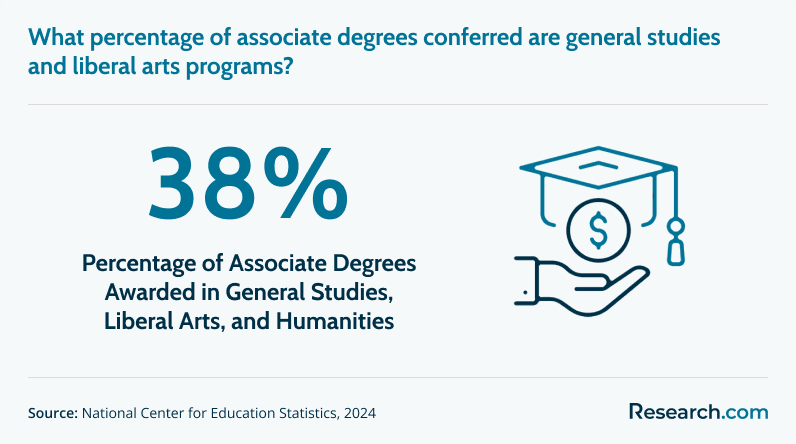
This approach means you are investing in a versatile toolkit that can be applied to many different professional environments. After all, general studies is a popular choice for associate degrees, along with liberal arts and humanities.
What are the biggest disadvantages of a general studies degree?
The biggest disadvantages of a general studies degree are its lack of specialization, the negative perception it can carry, and the fact that the student bears the full responsibility for proving its value. For any student worried about making a poor investment, it's crucial to understand these challenges before committing to this path.
Unlike a specialized degree in a field like accounting or nursing, a general studies program does not have a clear, built-in career path. Some recruiters and hiring managers may view it as a sign of indecision, which means you will have to work harder to make your case.
The burden of proof is entirely on you to connect the dots for an employer. You must build a compelling narrative that explains how your unique combination of courses, internships, and skills makes you the right candidate for a specific role.
These challenges are not insurmountable, but they are significant. They require a level of self-direction and strategic planning that isn't demanded by more structured degree programs. Understanding the source of the degree's reputation is the first step in learning how to overcome it.
Why does a general studies degree have a bad reputation?
The stigma surrounding a general studies degree isn't random; it's a holdover from a different economic era. For much of the 20th century, the purpose of a college education shifted toward specialization, creating direct pipelines into specific professions.
A degree in engineering led to a job as an engineer; a degree in accounting led to a job as an accountant. This created a powerful but narrow expectation: a degree's title should equal a job title.
The bad reputation exists because a general studies degree fundamentally breaks this old model. It doesn't offer a single, clear destination, which led to the perception that it was for students who were unfocused or undecided. This is a common challenge for many non-vocational programs; students pursuing even a fast track online humanities degree often face similar questions about direct career applicability.
Today, adaptability and interdisciplinary thinking are highly valued, but the perception of the degree is still catching up. Knowing this history empowers you to reframe the conversation and explain why your choice is a strategic fit for today's job market, not a relic of the past. But given these challenges, it’s clear this degree isn’t for everyone.
Who should not get a general studies degree?
A general studies degree is the wrong choice for two specific types of students: those who plan to enter a career that requires a professional license and those who are not self-directed planners who thrive on building their own structure. For these individuals, the degree’s flexibility becomes a significant barrier rather than an asset.
Understanding the "why" behind this advice is key to making a confident decision for your future.
For Careers with Licensing Requirements
Many respected and high-paying professions have legally mandated educational paths. Fields like nursing, K-12 education, engineering, and accounting require students to complete a specific, accredited curriculum to qualify for state licensing exams.
A general studies degree does not contain the specialized coursework necessary to meet these strict requirements. This is also true for highly technical creative fields; a future audio engineer, for instance, would be far better served by one of the best online audio and music degree programs than a generalist degree.
For Students Who Thrive on Structure
The success of a general studies major hinges on the student's ability to be the architect of their own education. This requires a high degree of self-motivation to choose a strategic minor, seek out relevant internships, and build a portfolio.
Some students work best and achieve more when they have a clearly defined, step-by-step academic plan with a predictable outcome. If you thrive on that kind of structure, a more traditional major is a much safer and more effective choice.
If you recognize yourself in these descriptions, this degree is likely a poor fit. However, if you've examined the pros and cons and are still considering this path, the final step is to create a concrete plan to maximize its value.
How can you make a general studies degree more valuable?
You can make a general studies degree more valuable by treating it as a strategic foundation that you must intentionally build upon. The degree's flexibility is a blank canvas; its ultimate worth is determined by the specific, marketable assets you add to it. Here is the four-part strategy to transform your degree into a powerful career tool.
- Pair it with a marketable minor. This is the most critical step. Combining your broad general studies coursework with a specialized minor in a field like business, data analytics, communications, or project management adds a layer of concrete expertise. It immediately signals a career direction to employers and gives you a tangible skill set.
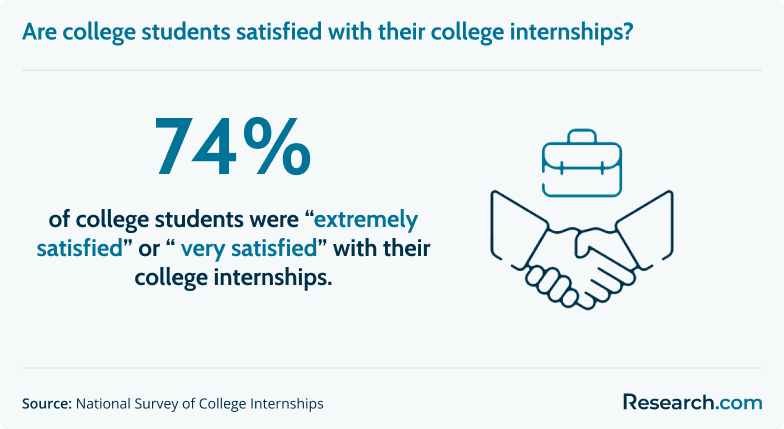
- Complete multiple real-world internships. For a general studies major, professional experience is not optional, it is essential. Internships provide the proof that you can apply your versatile skills in a real-world setting. Aim for at least two different experiences to build a stronger resume and expand your professional network.
- Build a portfolio of tangible work. Don't just tell employers you have communication and problem-solving skills; show them. Create a professional portfolio that includes writing samples, presentations, project plans, or research you've completed. This provides concrete evidence of your abilities and directly counters the stereotype of the degree being "unfocused."
- Learn specific hard skills with certifications. Supplement your academic work by earning certifications in high-demand areas. This could include project management software, digital marketing tools, or basic data analysis programs. This demonstrates initiative and adds specific, technical qualifications to your resume.
These actions are the core of making this degree a success. By following this plan, you create a unique and compelling professional profile that stands out. This strategy of building a hybrid skill set is key, so let's directly compare this approach to the traditional specialized path.
What additional credentials can enhance my general studies degree?
For many graduates, further education and targeted certifications serve as a strategic complement to a general studies degree. Advanced credentials—whether graduate certificates, specialized short courses, or professional licenses—can help narrow the focus of a broad academic background. For example, professionals looking to advance into leadership roles may explore opportunities such as the fastest online EdD programs, which combine academic depth with practical management skills. By securing additional specialized training, graduates reinforce their marketability and foster long-term career growth without undermining the versatility that defines their undergraduate experience.
How does a general studies degree compare to a specialized degree?
A general studies degree offers a fundamentally different career trade-off than a specialized degree. The choice between them comes down to a strategic decision about your tolerance for initial risk versus your desire for long-term adaptability. There is no single better option; the right choice depends entirely on your personal goals and work style.
A Direct Comparison: Generalist vs. Specialist
To help you decide, here is a direct comparison of the two paths across the factors that matter most to students.
General Studies Degree:
- First Job Prospects: More challenging. It requires a strong narrative and supporting experience (internships, a portfolio) to connect your broad skills to a specific role.
- Starting Salary: Generally lower. For example, a generalist in political science might start around $54,000.
- Long-Term Flexibility: Higher. A broad, adaptable skill set makes it easier to pivot between industries and roles over a long career.
- Required Effort: High. The student is the architect and bears full responsibility for building the degree's value through strategic minors and internships.
Specialized Degree:
- First Job Prospects: More straightforward. A degree title like nursing, computer science, or even a top digital photography degree online serves as a direct credential for entry-level jobs in that field.
- Starting Salary: Generally higher. A computer science major, for instance, can expect a starting salary of around $80,000.
- Long-Term Flexibility: Lower. Deep expertise is valuable, but it can be more difficult to switch industries if your specialized field declines or is not a good personal fit.
- Required Effort: Lower (in terms of strategic planning). The curriculum itself provides the primary value and a clear, structured path forward.
The Long-Term Bet: Predictability vs. Adaptability
Ultimately, the answer to the question "Is a general studies degree worth it?" is reflective of your long-term strategy. A specialist is betting that their chosen field will remain in high demand. A generalist is betting that adaptability will be the more valuable asset over a 40-year career. This requires more effort upfront but prepares you to navigate economic changes more easily.
The chart below compares the average pay of general studies graduates with those of business and computer science majors.
Are there better alternatives to a general studies degree?
Yes, for many students, a Liberal Arts or Interdisciplinary Studies degree offers similar flexibility with a stronger and more widely respected reputation. While all three are generalist degrees, the subtle differences in their branding and structure can have a significant impact on how they are perceived by employers and graduate schools.
One tip is to understand the story each degree title tells. A liberal arts degree is structured around a traditional core of humanities and sciences, signaling a classic, rigorous education.
An interdisciplinary studies degree is a more modern and focused version of a generalist education, allowing you to formally combine two or more fields into a coherent theme, which often has a clearer career application. General studies offers the most freedom, making it an excellent tool for combining disparate credits or exploring varied interests, but it carries the weakest brand recognition of the three.
Ultimately, choosing the right program is about finding the one that best aligns with your goals and the professional narrative you want to build. If the absolute flexibility of a general studies program is still the best fit for your situation, you can explore options for the shortest online general studies degree to make your path as efficient as possible. With a clear understanding of all your options, it's time to render a final verdict.
So, is a general studies degree ultimately worth it?
Yes, a general studies degree is worth it, but with a critical condition: its value is unlocked only by the self-directed student who treats its flexibility as a tool for intentional career building. The degree itself is not a credential that opens doors; it is a foundation upon which you must strategically build with a marketable minor, real-world internships, and a portfolio of tangible work.
For the proactive student, the answer to the question, "Is a general studies degree worth it?" is an enthusiastic yes. It offers a unique opportunity to design a customized education that develops the durable, human-centered skills—like communication and critical thinking—that are highly valued in a changing economy.
Ultimately, the power of this degree lies in your hands. If you are prepared to be the architect of your own education and career path, it can be an incredibly smart and valuable investment.
Here’s What Graduates Have to Say About Their General Studies Degree
- Helen: "I switched into the general studies program after my second year in a rigid engineering major, and I was so worried about losing all my credits. The flexibility of the program was exactly what I needed. It allowed me to salvage most of my previous coursework and combine it with a communications minor, letting me graduate on time. It felt like a smart pivot, not a step back."
- Maggie: "My family was skeptical when I switched out of a pre-law track, and I worried I was making the wrong choice. But I realized I was more passionate about building relationships than arguing cases. I now work in corporate communications, and the broad perspective from my degree is an asset every single day; it was a much better fit for my actual talents."
- Diana: "I'll admit, I was worried the general studies program wouldn't provide me with any "real" skills for the job market. But the demanding research projects and writing-intensive courses were surprisingly practical. They sharpened my analytical abilities and taught me how to present complex information clearly—the exact skills I now use every day in my role as a business analyst."
Key Findings
- The significant salary growth from a starting average of $42,000 to a mid-career average of $78,000 demonstrates that the degree's value is realized through long-term career advancement, not immediate entry-level pay.
- The fact that 92% of hiring professionals view soft skills as equal to hard skills validates the core curriculum of a general studies degree, reframing it as a strategic choice for a skills-based economy.
- The skills central to a general studies program align directly with what employers seek most, including problem-solving (88.6%) and written communication (74.3%), providing a clear, data-driven language for graduates to market themselves.
- A specialist degree like computer science has a higher average starting salary of $80,000, confirming that the initial financial return for a general studies degree is lower and that it is a long-term investment in adaptability.
- The degree's value is not inherent in the diploma but is created by the student's strategic actions, such as pairing it with a marketable minor and completing multiple internships, which is the central condition for success.
- Earning any bachelor's degree provides a significant financial advantage, with graduates earning a median of $77,948 annually compared to $47,788 for those with just a high school diploma, establishing a baseline of value for the degree.
References:
- Bankrate. (2025). The financial ROI of your college major*. Retrieved September 25, 2025, from https://www.bankrate.com/loans/student-loans/roi-by-college-major/
- National Association of Colleges and Employers. (2024). What are employers looking for when reviewing college students’ resumes?. Retrieved September 25, 2025, from https://www.naceweb.org/job-market/trends-and-predictions/what-are-employers-looking-for-when-reviewing-college-students-resumes/
- Reuben Sinclair. (2024). Top 10 soft skills employers are looking for [backed by data]. Retrieved September 25, 2025, from https://www.reuben-sinclair.com/resources/top-10-soft-skills-employers-are-looking-for-backed-by-data
- Site Selection Magazine. (2025). Education level is only one part of the lifetime earnings picture. Retrieved September 25, 2025, from https://siteselection.com/education-level-is-only-one-part-of-the-lifetime-earnings-picture/
- U.S. Bureau of Labor Statistics. (2024). Education pays. Retrieved September 25, 2025, from https://www.bls.gov/careeroutlook/2024/data-on-display/education-pays.htm
- University of Iowa. (2024). Why General Studies?. Retrieved September 25, 2025, from https://generalu.uiowa.edu/about/why-general-studies
- Zippia. (2024). General Studies Major. Retrieved September 25, 2025, from https://www.zippia.com/general-studies-major/
Other Things You Need To Know About General Studies Degrees
In 2027, a general studies degree remains versatile, preparing graduates for roles in management, sales, human resources, or administration. The degree's flexibility is ideal for those planning to work in diverse fields or continue with specialized graduate studies, offering a strong foundation in critical thinking and communication skills.
In 2027, a general studies degree can offer practical skills like critical thinking, effective communication, and problem-solving. These skills are adaptable across diverse industries, making graduates versatile candidates for roles in management, education, and media. Employers value these competencies for their capacity to navigate complex work environments and contribute innovatively.
Enrollment requirements typically include a high school diploma or equivalent and meeting any specific GPA criteria set by the institution. Some programs might require completion of prerequisite courses or standardized test scores to assess readiness for the curriculum.


